Indigenous Education

News and Events

Pathway to Engineering Technology Programs: A Rundown

March 12, 2024

Did you know that you can start a career in engineering at any level?

With an education in engineering, you can help plan the layouts of communities, design buildings to meet the needs of the people in them, and specialize in creating sustainable solutions for the construction industry.

If you’re a…

  • Big-picture thinker
  • Creative problem solver
  • Team player
  • Logical thinker
  • Hands-on learner

… The Pathway to Engineering Technology can help you build the foundation you need to launch your education in engineering. Whether you want to plan vast city architecture or develop infrastructure in smaller communities, engineering technology can get you there.

Committing to a full-time diploma program is a huge decision. You could spend a lot of time, money, and effort before even knowing what you want to do with your career. With Pathways, you can explore the different options in a specific industry while preparing for the overall dedication and hard work that come with college diploma programs.

Pathway to Engineering Technology prepares you for Civil Engineering Technology, Electrical Engineering Technology, Mechanical Engineering Technology, and Power Engineering Technology 4th Class, which are what we call “progression programs” because you progress into them following completion of the Pathway!

Prepare for an Education in Engineering Technology

Each of the progression programs have wide applications and specializations which you will explore in-depth in the Pathway program.

Once you finish the Pathway Program, all students in the progression programs share a common first year in which they build fundamental skills, develop theoretical knowledge and use state-of-the-art software and equipment to explore different disciplines within engineering. Students then choose a specialization program to pursue until graduation.

Civil Engineering Technology

The Civil Engineering Technology program has the widest array of options in terms of specializations, allowing you to develop a diverse skillset that you can use in any number of potential careers, like:

  • Contractor
  • Project manager
  • Building and site inspector
  • Structural Designer
  • Construction/legal land surveyor

Students in the Civil Engineering Technology program explore the design, construction and maintenance of man-made and natural environments, including roads, water supplies, infrastructure projects and building systems.

Architectural Engineering Technology

You will develop your knowledge of engineering principles and construction practices to pursue careers in building system construction and design, computer-aided design and drafting, site inspection and supervision, construction project and administration management, technical sales and support, building sciences and environmental systems.

  • Building commissioning technician/technologist
  • Energy advisor
  • CAD technician
  • Architectural technologist
  • Contract administrator

Check out the Program Explorer page for more information.

Enviromental Engineering Technology

The Environmental Engineering Technology program focuses on the stewardship of environmental resources, including water resources management and protection, water supply and treatment, wastewater collection and treatment, soil remediation, solid waste management, air quality, Geographic Information Systems (GIS) and remote sensing, project management, environmental management and health and safety.

  • Environmental consultant 
  • Research and development specialist
  • Regulatory enforcer
  • Project manager
  • Water/wastewater operator

Check out the Program Explorer page for more information.

Geomatics Technology

Geomatics is the collection, analysis, management and application of geographical data in physical spaces. This data helps determine how humans interact with the land and shows impacts on residential and commercial property development, road construction and maintenance, and the use of public lands.

  • Control survey specialist 
  • Topographical mapping technologist
  • Remote sensing technologist
  • Land survey technologist
  • Municipal asset manager

Check out the Program Explorer page for more information.

Municipal Engineering Technology

You will study a broad range of content areas and develop a diverse skillset that you can bring to a wide variety of positions. You may find work in construction, design and supervision, highways and transportation engineering, water resources engineering, geotechnical engineering, and environmental engineering and protection.

  • Field technician
  • Materials testing technologist
  • Materials testing technician
  • Civil quality representative
  • Construction inspector

Check out the Program Explorer page for more information.

Structural Engineering Technology

Learn to work in teams to design, plan and build the buildings and infrastructure that make up our world. Through the Structural Engineering Technology program, you will develop the technical and practical skills you need for a successful career in consulting, contracting, designing, fabrication or project management, whether you’re working in Manitoba or abroad.

  • Estimator
  • Structural analyst
  • Contract administrator
  • Structural designer
  • Quality assurance inspector

Check out the Program Explorer page for more information.

Electrical Engineering Technology

The Electrical Engineering Technology (EET) program prepares you for employment as an engineering technologist in this rapidly evolving industry. You’ll develop in-depth knowledge and versatile skills in design, installation, maintenance, production, technical support and sales. You’ll build specialized skills and explore the electrification of new economic sectors such as transportation.

  • Designer, circuit – railway
  • Trouble-shooter, quality control
  • Technologist, design – electrical
  • Repairer, electrical production
  • Technologist, lines distribution design

The Electrical Engineering Technology program prepares you for entry-level employment as an engineering technologist in the electrical industry, with careers in electrical utility systems, consulting engineering and electrical manufacturing. RRC Polytech trains EET students to be highly skilled, safe and career ready as soon as they graduate.

Electrical Engineering Technology

You will continue with the Electrical Engineering stream and learn to harness high voltage and large currents to explore electrical generation, transmission and distribution technology. Gain experience with programmable logic controllers, motor drives, transformers and communication systems that drive manufacturing systems.

  • Technologist, transformers tester
  • Technologist, radio frequency
  • Technologist, production support 
  • Technologist, underground power distribution
  • Repairer, electrical production

Check out the Program Explorer page for more information.

Electronic Engineering Technology

You’ll develop in-depth electronics knowledge, build industry-standard technical skills and explore various digital and analog circuits applications, including amplifiers, industrial electronics, radio and wireless communications, microprocessor programming and interfacing, programmable logic and control systems. 

  • Technologist, radar / radar systems / sonar
  • Technologist, biomedical engineering
  • Repairer, research laboratory equipment
  • Technologist, fibre optics
  • Technologist, communications / telecom

Check out the Program Explorer page for more information.

Instrumentation Technology

You’ll explore data acquisition, networking, distributed control systems and remote terminal units. You’ll also learn the configuration/programming language of various microprocessor-based devices. As an Instrumentation and Control Engineering Technology graduate, you’re eligible for apprenticeship recognition under the Red Seal trade of Instrumentation and Control Technician. RRC Polytech’s experiential lab sessions provide credit hours for field experience requirements, and classes are recognized as equivalent to the four levels of apprenticeship schooling.

  • Technologist, production support 
  • Technologist, HVAC 
  • Technologist, QC (quality control)
  • Technologist, field service engineering
  • Technologist, tester, calibration 

Check out the Program Explorer page for more information.

Mechanical Engineering Technology

The Mechanical Engineering Technology program combines foundational knowledge with experiential projects and labs to prepare you for a career designing and producing high-quality manufactured goods. The skills and techniques you learn as a student can be applied immediately upon graduation and transferred across industries and organizations.

  • Mechanical designer
  • Design engineer / manufacturing technologist
  • Mechanical engineer, research and development
  • Product designer
  • Field test technician

As a co-op program, Mechanical Engineering Technology alternates between academic study and co-op employment terms, allowing you to build vital on-the-job experience and earn money while learning. Students study design, manufacturing methods, quality assurance, equipment selection, computer-aided engineering, building systems design and control, mechanical analysis, computer applications, communication and project management.

Power Engineering Technology (4th Class)

In this program, you’ll explore the operation and maintenance of power plants and build the skills needed to challenge Manitoba’s licensing exam and obtain a 4th Class Power Engineer’s certificate. As a 4th Class Power Engineer, you’ll be responsible for the safe and efficient operation of process equipment in residential, institutional, commercial and industrial establishments.

  • Power engineer (4th class)
  • Chief engineer
  • Building manager
  • Plant manager

Pathway to Engineering Technology Programs Courses

At-a-glance descriptions to help you know what to expect in the Pathway.

Term 1 (4 months)

  1. Science for Engineering Technology Programs: Chemistry: Introduces you to the use of different building materials and how energy is absorbed/released to heat/cool substances for practical application in designing infrastructure.
  2. Communication Skills for Engineering Technology 1: Prepares you to effectively communicate in an academic context. You will develop skills in reading comprehension, listening, oral presentation, and technical and academic writing.
  3. Computer Skills for Engineering Programs: Introduces you to the principles of software applications including Windows, Microsoft Word, PowerPoint and Excel. You will be able to graph data, create, edit and manipulate documents, spreadsheets, and other files to create a technical paper.
  4. Math for Engineering Technology 1: Equips you with a strong foundation in the basic mathematical concepts necessary to be successful in the technological fields. This is a hands-on course and a large portion of time will be invested in using and applying mathematical concepts, including arithmetic, measurement and algebra.
  5. Introduction to Professional Studies: Teaches you the necessary skills to be successful in college. Topics include goal setting, time management, study and test taking skills, self-assessment, reflective practice, critical thinking skills, stress management and developing strategies to become a more self-directed learner.
  6. WHMIS: The Workplace Hazardous Materials System (WHMIS) is a system for ensuring that important information about hazardous products is communicated where products are used, stored and handled. This course provides Information necessary to understand and interpret information about hazardous products, including pictograms (symbols), labels and Safety Data Sheets.
  7. General Safety Training: General Safety Training (GST) teaches basic general safety content to arm students with the core information necessary for them to protect themselves in workplaces on all descriptions. Although some examples may consider Manitoba legislation, this course has been developed by occupational safety and health professionals using generic information that is not provincially specific.

Term 2 (4 months)

  1. Communication Skills for Engineering Technology 2: Prepares you to effectively communicate in a technical environment. Course material will include basic technical communication, business correspondence, plain English, document design, reports, proposals and oral presentations. Students will also implement their research skills using Red River College’s online data base and the internet.
  2. Introduction to Engineering Technology Professions: Introduces you to a range of professions within Engineering Technology. You will learn about different career options in the technology industries through participation in a series of industry tours and seminars led by industry experts.
  3. Math for Engineering Technology 2: Builds on the skills developed in Math for Engineering Technology 1. This is a hands-on course; a large portion of the time will be invested in using and applying mathematical concepts.
  4. Science for Engineering Technology Programs: Physics: Introduces you to the basic concepts of physics required in the technology fields. Emphasis is on concepts and basic calculations in mechanics, electrostatics and magnetism.

Term 3

  1. Applied Learning Project: Engineering Technology: Introduces you to some of the technical skills required in the engineering technology professions. Working in a lab setting, students will learn the basic skills and apply principles of workplace safety. Students will also work in teams on an applied, industry-related project.

Frequently Asked Questions

How much does the Pathway to Engineering Programs cost?

The total cost of the Pathway to Engineering Technology is about $8,755. The prices are broken down into tuition ($6,250); books, laptop, and supplies ($2,250); and health and dental coverage ($255).

If you need help locating financial aid, you can connect with one of our Navigation Coaches or the Financial Aid Officer through the Indigenous Student Support Team. They can also help you navigate processes for awards, scholarships and bursaries, which you can start researching to help offset the cost of tuition.

Some Indigenous-specific and engineering-specific awards include:

  1. Accutech Engineering Resident of Nunavut Award ($3,000)
  2. Business Council of Manitoba Indigenous Education Awards ($2,000+)
  3. Indspire Post-Secondary Education Bursary Award (multiple)
  4. RRC Introduction or Pathway Program Indigenous Student Bursaries ($750)
  5. Viterra Inc. Scholarships for First Nations, Inuit, Metis Electrical Engineering ($500)
  6. Akman Construction Environmental Engineering Technology Award ($1500)
  7. American Concrete Institute (ACI) Manitoba Chapter Scholarship ($1,000+)
  8. Architectural Technology Achievement Award ($1,000)
  9. Bell MTS Academic Excellence Award for Electronic Engineering Technology ($500)
  10. Canadian Public Works Association (CPWA) Civil Engineering Tech Entrance Award ($1,000)

The Library and Academic Services have a laptop-loaning program for a period of 4 weeks in case you need more time to secure a reliable laptop. You can see the laptop specifications here if you’re not sure what you’re looking for.

When does the program start? Where is it?

The Pathway to Engineering Technology Programs starts on August 26, 2024, at the Notre Dame Campus in Winnipeg.

Is the program in-person?

Due to the hands-on learning needed for engineering, some courses will require you to be present in-person. Some courses will allow you to work remotely as part of the college’s current hybrid approach to content delivery.

What do I need to apply?

You’ll need to provide proof of graduation from or enrolment in high school, your academic history and to declare that you have Indigenous ancestry.

If you’ve been out of school for more than a year and are older than 19, you can apply as a mature student and just need to declare that you have Indigenous ancestry.

You’ll need a Future Student Account with RRC Polytech so you can keep track of any document submissions you make. You can sign up here and everything will be displayed on your account. You can submit documents via PDF files using a digital signature or you can scan your physical paper document using a scanner or a scanner on your phone. Linked here are tutorials on both creating a digital signature in Google Docs and using the scanner on iPhones in the Notes app.

You’ll need to provide proof of completion of the admission requirements within 15 days from when you applied.

If you apply after July 15, 2024, you’ll need to provide proof of completion of the admission requirements within 5 days of applying. So, for example: if you apply on July 14, 2024, you have until September 10, 2024, to submit proof of completion. If you apply on July 15, 2024, you’ll need to provide proof by July 20. Seems odd at first, but we need to make sure that we get in all applications in before the program starts and we don’t want to keep changing the deadline requirements every week of July and August, so we settled on 5 days for the proof submission within the last six weeks before the program starts.

How do I benefit from going into the Pathway?

Completing the Pathway to Engineering Technology will earn you a Statement of Achievement and eligibility for a reserved seat in any of RRC Polytech’s Engineering programs: Civil Engineering Technology, Electrical Engineering Technology, Mechanical Engineering Technology, and Power Engineering Technology 4th Class.

Completion of the Pathway can bypass some of the program entry requirements and fees for the progression programs. To learn more, connect with an Indigenous Student Recruiter at indigenous@rrc.ca.

Pathway to Engineering Technology will help you build connections at the college that will support you through your education—you’ll meet other students with common interests and goals, support staff eager to help you achieve your dreams, and instructors with real-world engineering experience to guide you into the industry.

Where can I find more information?

You can check out the program explorer page on our website for Pathway to Engineering Technology Programs as a source for accessing all the information you need. If you prefer to talk to a person, you can contact an Indigenous Student Recruiter at indigenous@rrc.ca.

If you’re ready to apply for the Pathway to Engineering Technology Programs, contact an Indigenous Student Recruiter at indigenous@rrc.ca, or you can fill out the PDF form and submit it to the Student Service Centre at documents@rrc.ca.

Two-Spirit and Indigenous LGBTQIA+ Celebration and Awareness Day – March 20

March 6, 2024

Join us to celebrate Two-Spirit and Indigenous LGBTQIA+ Celebration and Awareness Day.

RRC Polytech is hosting a Two-Spirit Film Festival to showcase the radiance and diversity of Two-Spirit identities, expression and experience.

Both campuses will feature screenings of First Stories – Two Spirited; Second Stories – Deb-we-win Ge-ken-am-aan, Our Place in the Circle; and Woman Dress.

  • Wednesday, March 20 • 1pm – 2pm
  • The Spectrum, Notre Dame Campus
  • Wednesday, March 20 • 1pm – 2pm
  • E155, Manitou a bi Bii daziigae, Exchange District Campus

No registration is required.

About the films

First Stories – Two Spirited is a documentary that presents the empowering story of Rodney “Geeyo” Poucette’s struggle against prejudice in the Indigenous community as a Two-Spirited Person. Two Spirited was produced through First Stories, an emerging filmmaker program for Indigenous youth. The program saw three separate collections of short films from Manitoba, Saskatchewan and Alberta

Second Stories – Deb-we-win Ge-ken-am-aan, Our Place in the Circle is a representation of Lorne Olson’s vision of Two-Spirited people dancing, laughing and smiling. His vision spurs him to rediscover the strength of the past to better face the challenges of today—this funny and buoyant film documents his touching journey. Second Stories followed the success of First Stories and continued training with Indigenous filmmakers from the first program.

Woman Dress is a pre-contact story about a Two-Spirit person named Woman Dress, who travels the Plains while gathering and sharing stories. Woman Dress features archival images, recounts scenes of dramatized re-enactments, and shares a Cuthand family oral story while honouring and respecting Woman Dress without imposing colonial binaries on them.

Wiisinin Diner opens next Tuesday

March 5, 2024

The Indigenous Culinary Skills students are putting their newly-acquired skills into action!

The annual pop-up Wiisinin Diner will be serving delicious breakfast and lunch for staff and students between Tuesday and Friday from March 12 until April 19 in Prairie Lights Dining Room at Notre Dame Campus. Pick up your vouchers from the Campus Store and check out the menu on our website.

Indigenous Career Fair – March 21

February 21, 2024

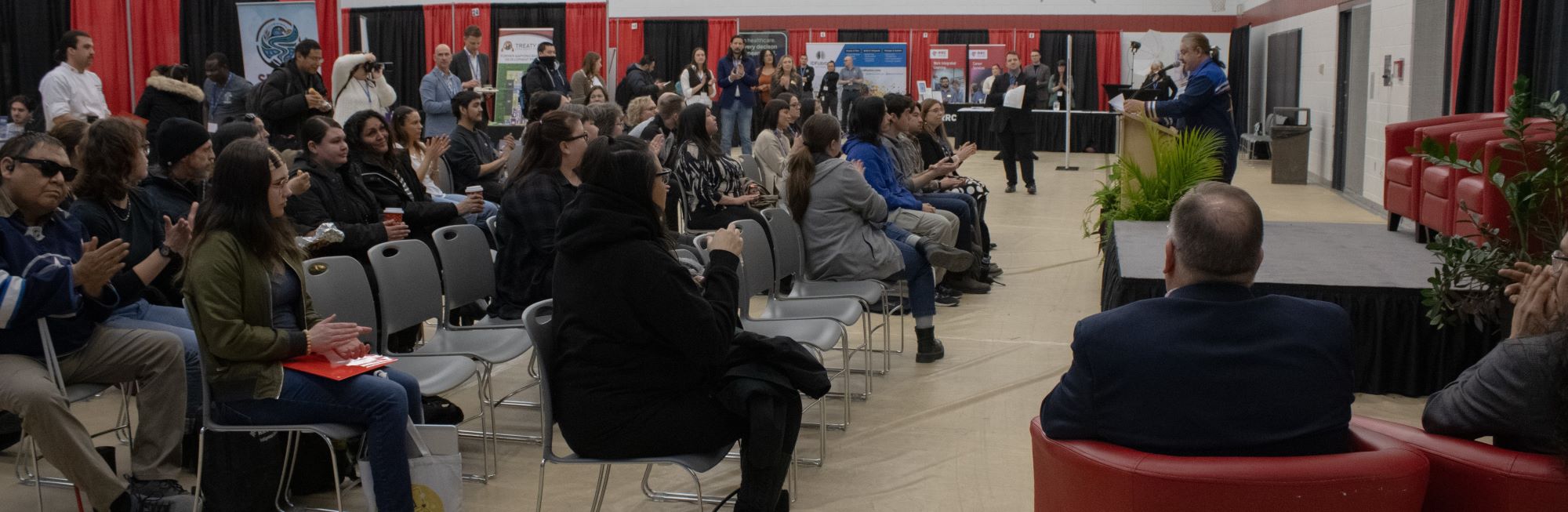
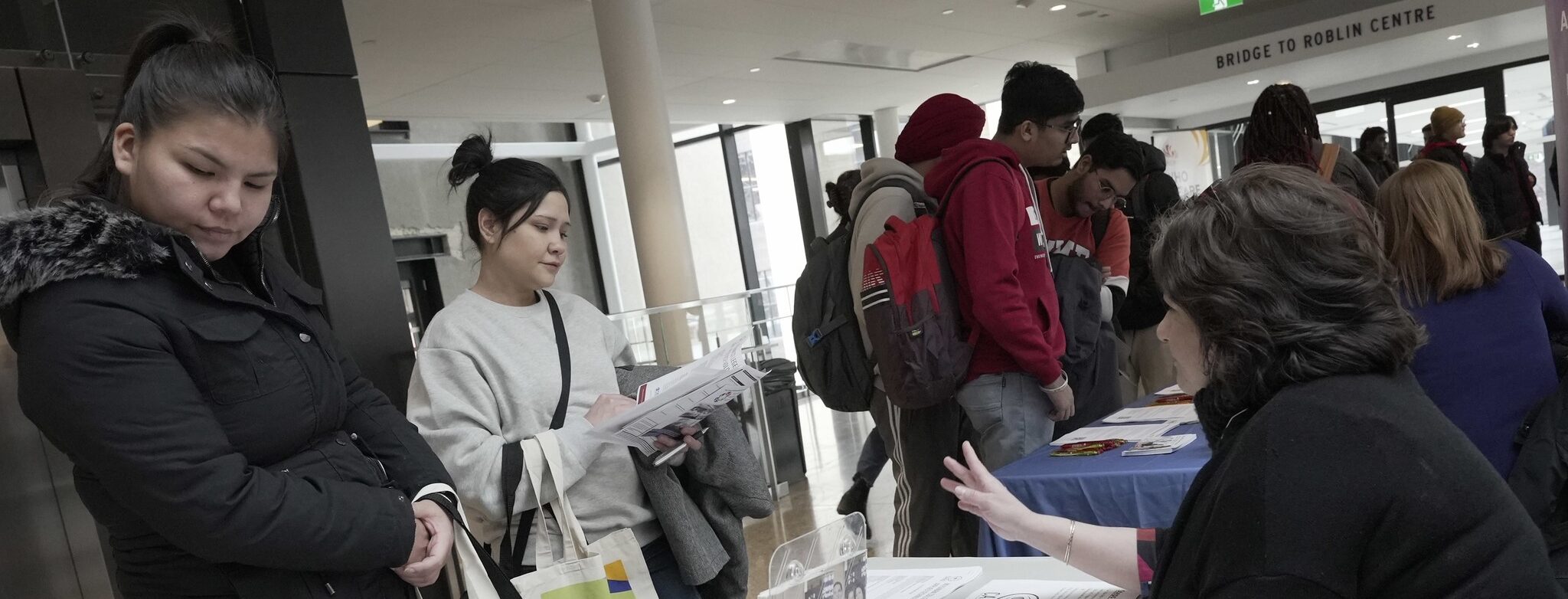
Get your resume ready and join us for the Indigenous Career Fair, an RBC Reaction by Collision event!

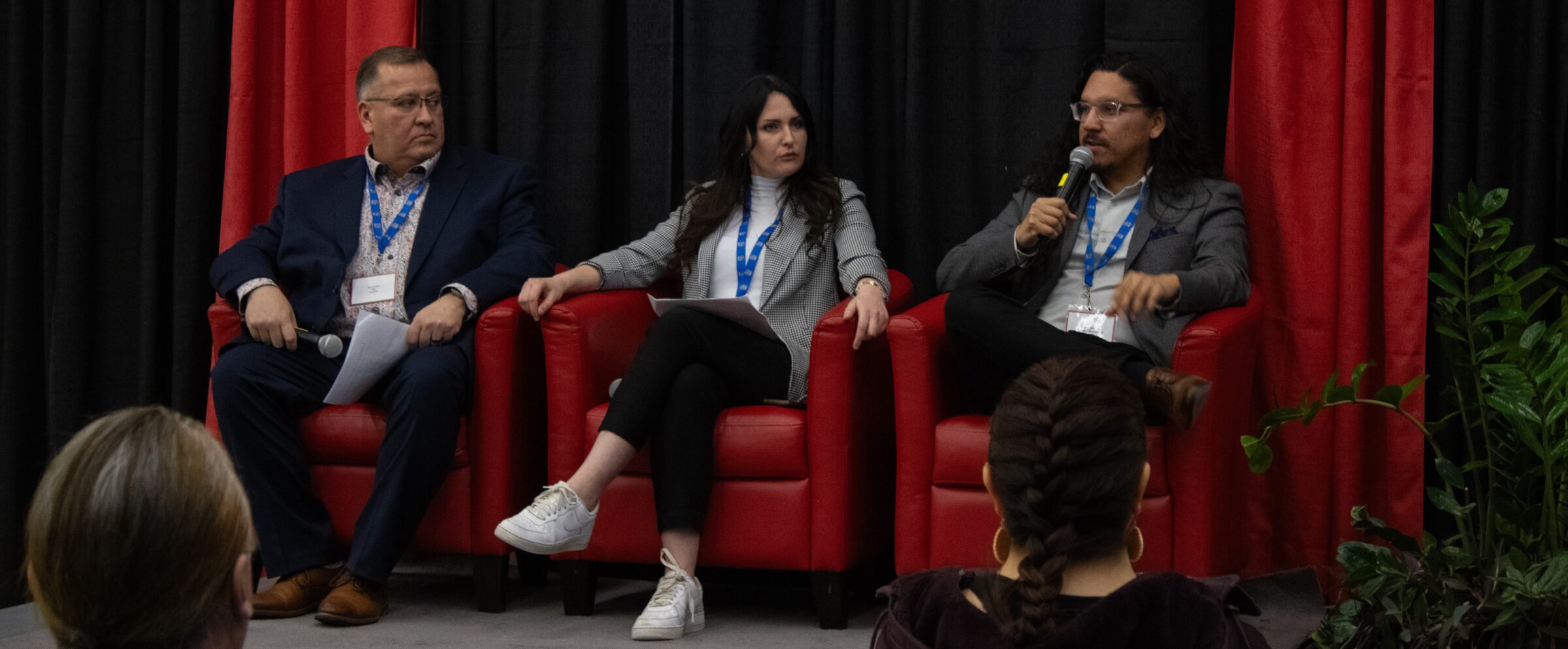
Speak with employers from over 30 organizations representing various industries who have job openings and opportunities for Indigenous students and graduates. View the job listings online and learn about the kind of opportunities available to you! The Indigenous Career Fair will kick off with a panel of Indigenous professionals to discuss breaking into industry and navigating the job search.

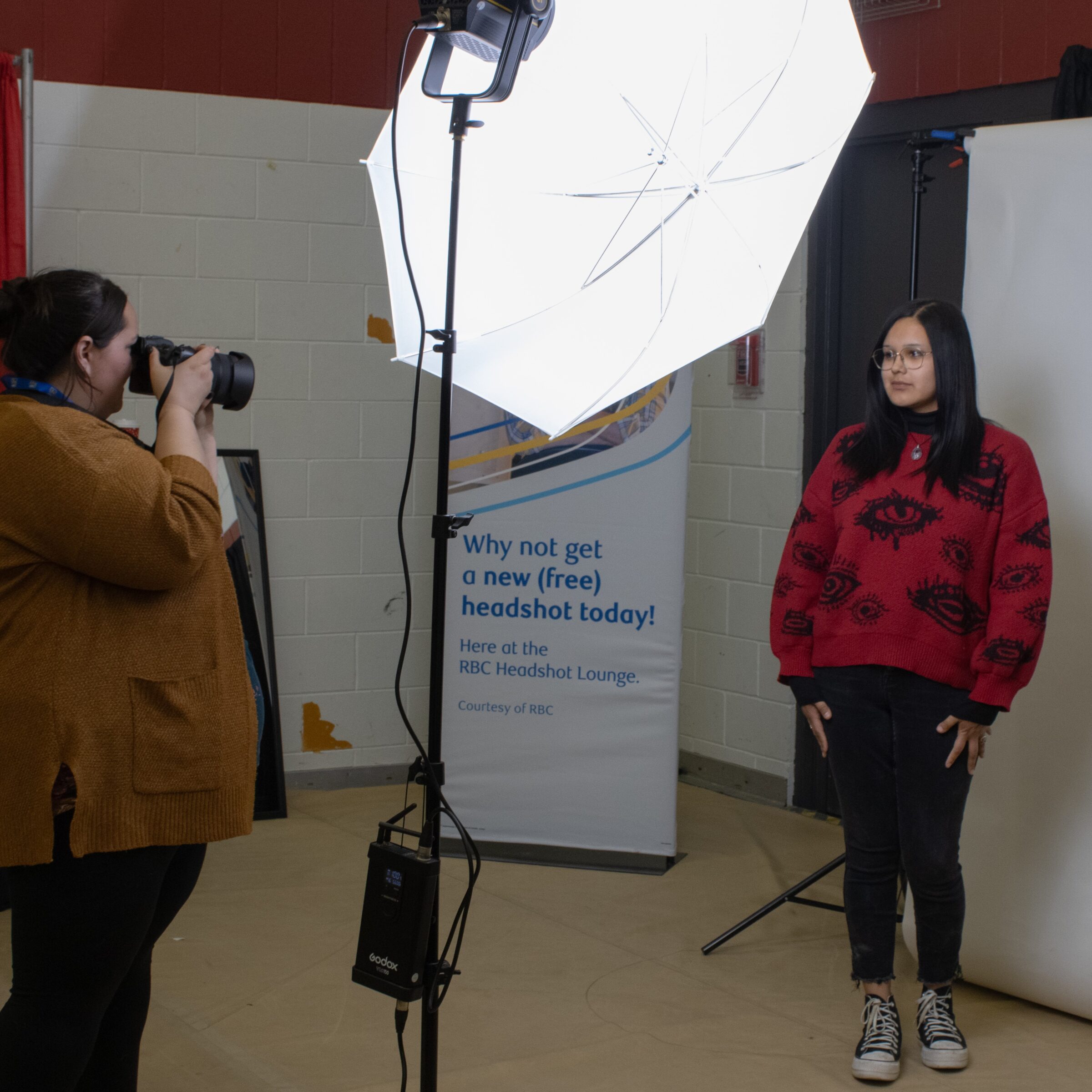
The RBC Headshot Lounge, courtesy of RBC, will be open for you to take professional headshot photos for your LinkedIn and other bios.

A hot dog lunch will be available for attendees. Students that register ahead of time will be entered to win awesome prizes!

Keep an eye on Student News or subscribe to the Indigenous blog for up-to-date information and reminders for our events!

Thank you to RBC for their generous support of the Indigenous Career Fair – An RBC Reaction by Collision Event.

Career Fair Tips

If this is your first Career Fair or one of many you’ve been to, it’s better to be prepared ahead of time so you know what to expect! Knowing what you want will increase your chances of finding a career that fits you.

What should I wear?

There’s no dress code for the Indigenous Career Fair, so what you usually wear to class will work! T-shirts, long-sleeved shirts, or button-up shirts with solid colours or simple patterns paired with jeans, pants, or skirts are usually what you might see at networking events like career fairs. Just keep in mind—you’re making a first impression with potential employers!

What should I bring?

The main things you’ll want to bring are your resume and an idea of what kind of job you want. Print a few copies of your resume in case you want to leave some with employers. Five to ten copies should be fine, but if you need to print more, printers are available throughout the campus that you can access using Paperclip.

The other thing you might want to bring is a notepad, in case there’s information you want to keep track of when you’re chatting with employers. We’ll provide pens at the registration desk, so we’ve got you covered!

I made a connection! What now?

Fantastic! You’ve hit it off with an employer, you left your resume with them, and they said they’d follow up; or, best-case scenario, they schedule an interview with you. What do you do now?

First thing’s first: get their contact information. It can be a general intake email or phone number, or the direct contact information of the hiring manager. Direct contact information with the hiring manager is better, since you’ll be able to address them by name in the follow-up.

Once the career fair is over, make the first move! The next day or the day after, send them an email or call to confirm the appointment if you’ve made one, or if not, just to thank them for their time at the career fair. Reference anything you might’ve talked about, and that will solidify you in their minds as a strong, interested, and confident candidate. If you didn’t get an interview at the career fair, this might just be the thing that tips the balance in your favour and land you that interview.

If that’s too bold for you, that’s okay too—just make sure that you remember their number, save it in your phone, or be open to calls from unknown numbers. It might be them following up with you!

Questions for Employers

You know what’s most important in a job for you, but here are some questions to get you started. These questions to ask employers can help you decide if you want to throw your hat in the ring for their job posting.

What position are you hiring for?

The most important answer for you to know.

You might know which positions you want, but then again you might not—it’s a good idea to go over your own skillset and to research roles you think you would be good at beforehand.

Even if the position sounds like it doesn’t align with your skillset, keep chatting! Be curious, find out what kind of person they want for the role. It might surprise you—you may actually have the right skillset, or they might ask for your resume to keep on file if a more fitting position opens up in the next few weeks or months. Every booth is an open door!

What responsibilities come with this role?

Usually this is the follow-up information when they tell you the title of the position. This information will help you determine if the role is aligned with your current skills and goals.

If only half of the responsibilities sound like things you know how to do, don’t worry! Organizations might have opportunities for their employees to develop professionally and may provide training for things you don’t know how to do yet. It can pay off in the end for an organization to train the employees they have or the employees they hire on (like you!), rather than continually look for someone that checks off all their boxes right off the bat. What’s valuable to them is your willingness to learn with them.

So, if you want to stand out, be honest! You don’t have to share what you can or can’t do right now, but if you snag an interview with them later, be honest about what you can do or have experience with. Even if you don’t check all their boxes, let them know that you’re willing to learn on the job! It gives them a sense of what to expect of you in that position and where they can help you grow, and what you can provide them with when you start (and so they aren’t overloading you with things you don’t know how to do yet).

What is the pay rate?

Pay is a huge factor when considering your job options. If they don’t volunteer this information, don’t be shy to ask! Everybody needs to know what their compensation will look like to know if they want to pursue an opportunity.

A good thing to know when deciding if a wage or salary is sufficient for you, a living wage in Winnipeg is $18.35 an hour full-time (or $36,700 annually) for both parents of a family of four, according to the Canadian Centre for Policy Alternatives as of August 2022. (Living wage means to be able to pay off all your expenses like groceries and bills from month to month.)

A lot of employers will say the pay varies, but generally they’ll give you a range like $40,000 – $45,000 a year, which is something you can negotiate when you get to the interview part of the hiring process. It’ll depend on what you ask for and your qualifications.

What are the benefits?

This will depend on the hours of the job. If it is full-time, salaried, then there will usually be benefits like dental coverage, eyecare coverage, mental health care coverage, among others. Positions that are not full-time will have limited additional benefits.

Coverage means the organization will reimburse the cost up to a specified amount each year. For example, you could claim up to $1000.00 per year in coverage for mental health services like therapy or psychological evaluations. They will pay up to $1000.00 to your provider, and after that amount, you will be responsible for the costs.

Another way organizations might cover your benefits is providing a certain percentage for each instance you use a covered service. For example, your employer might cover 80% of your dental cleaning service, so you only have to pay the remaining 20%.

Organizations will often use a third-party service, like Blue Cross or Canada Life. They’ll go over your benefit coverage in more detail once you’ve been hired on.

What’s your favourite part about working for this organization?

Anyone who enjoys their career and is trying to get new people on their team will love this question! Knowing what current employees like about their jobs can help you decide if the job and organization has potential to meet your expectations.

Asking a personal question like this is a great way to make a connection with people at the booths. It shows interest in the organization and the people that manage it. This question also serves a practical purpose: knowing why current employees like their organization might sell you on that organization too!

We’re looking forward to seeing you at the 2024 Indigenous Career Fair – An RBC Reaction by Collision Event! Students can register ahead of time for a chance to win awesome prizes!

Culinary Skills (Indigenous) instructor featured on The Current

February 16, 2024

Chef Patrick Anderson was recently featured on The Current, a podcast from the CBC!

Chef Patrick discusses how his class learns to think differently about the ingredients in the local environments around them, the food they currently eat, and how integrating traditional ingredients can be a strong way to engage with culture and be cognizant of health impacts.

Listen to the episode here.

Calling all past Indigenous Pathway program students!

February 14, 2024

As a past Pathway Program student, you’re invited for a special event!

Join us for lunch in the Indigenous Support Centre F209 at Notre Dame Campus to meet other Pathway progression students and reconnect with the supports and faculty in the School of Indigenous Education. Be part of a community of Indigenous trailblazers and continue to build your network of peers.

  • Tuesday, Feb. 27 • 11:30am – 1:30pm
  • F209, Notre Dame Campus

If you’re interested in attending, please RSVP by emailing Terri-Lynn, Navigation Coach, at tlanderson@rrc.ca.

Know of any other Pathway students in your program? Invite them to join the lunch! Pathway graduates from all years are welcome. Charcuterie, dainties and refreshments will be served.

Mínwastánikéwin Award application deadline – Feb. 26

February 5, 2024

Mínwastánikéwin is a Cree word that means ‘to set it right.’

General RRC Polytech Application Required

The deadline to submit applications for the Mínwastánikéwin Truth and Reconciliation Award has been extended to February 26, 2024.

Information sessions on submitting applications will take place on Tuesday, Feb. 13 in F209 at NDC and on Wednesday, Feb. 14 in P407 at EDC from 12pm – 1pm. Learn more about what to include in the one-page essay and how to submit a General RRC Polytech Application. No registration required.

The Mínwastánikéwin Truth and Reconciliation Award was made possible through collaboration between Truth and Reconciliation and Community Engagement, College & Public Relations and the Campus Store. The award is funded by the generous support of RRC Polytech students, staff and faculty through campaigns at the RRC Polytech Campus Store that bring awareness to Truth and Reconciliation and Indigenous-led initiatives such as Orange Shirt Day: Every Child Matters and Missing and Murdered Indigenous Women, Girls and Two Spirit People Day of Honour and Awareness.

In 2023, the Orange Shirt was designed by Ininew artist Leticia Spence, the design of which incorporates motifs from First Nations, Métis and Inuit art. The Red Shirt was created by Métis artist Shayre Curé, which features the iconic handprint over a woman’s mouth to pay homage to Missing and Murdered Indigenous Women, Girls and Two Spirit People.

“[The award] represents a lot of resilience in Indigenous People, it’s not only just me—there’s a lot of people that have been through similar things. You can overcome that. You can still pursue your dreams as long as you put your mind to it.”

– Rebecca Choken, 2023 Mínwastánikéwin Truth and Reconciliation Award recipient.

We know that over the last 150 years, 150,000 Indigenous children attended Canadian Residential Schools. We know that 90% of children in Manitoba’s foster care system are Indigenous and more than one-third of Winnipeg’s Indigenous population, nearly 70,000 people, live in poverty. We also know that despite making up almost 17% of the provincial population, Indigenous peoples are typically underrepresented in post-secondary institutions.

This award is for Indigenous full-time students. Recipients will be selected based on an essay response on what Truth and Reconciliation means to them. To be eligible, applicants are required to submit a General RRC Polytech Application, proof of Indigenous heritage, and a one-page essay submission. The deadline for applications is February 26, 2024.  Completed application forms should be submitted by email to financialaid@rrc.ca.

For more information about the Mínwastánikéwin Truth and Reconciliation Award, see the Awards, Bursaries, and Scholarships Catalogue.

Last year, the Mínwastánikéwin Truth and Reconciliation Award was awarded to two recipients: Rebecca Choken and Wendy Monias.

Information Sessions

  • Tuesday, Feb. 13 • 12pm – 1pm
  • F209, Notre Dame Campus
  • Wednesday, Feb. 14 • 12pm – 1pm
  • P407, Exchange District Campus

No registration required.

Welcoming the new Event & Facility Rental Coordinator

February 1, 2024

The Indigenous Student Supports Team is pleased to welcome the new Event & Facility Rental Coordinator for the School of Indigenous Education: Sara McIvor-Prouty.

Sara is a Red River Métis woman and a registered member of the Manitoba Métis Federation. Sara is a mother, auntie, medicine grower, tea harvester and maker, and found-item and ceramics artist. Sara’s maternal grandparents were of Irish and Hungarian descent. Her Métis dad grew up in Carman, Manitoba, with roots in Îlet De Bois. His parents were both from Métis families that span generations. 

She has a Recreation and Community Leadership Diploma from University College of the North (previously Keewatin Community College). 

Sara is a returning staff member (Indigenous Centre Coordinator), Graduation Pow Wow organizer and was a member of the Medicine Wheel Garden, RRC Daycare and Graduation committee member.

Sara brings a wealth of knowledge and expertise with 7 years at FortWhyte Farms guiding Indigenous youth from all over Winnipeg, leading various programming connecting youth to the land and helped to create a medicine garden classroom. While at Ndinawe, she brought together culture and recreation in Winnipeg’s North End and spent 6 years in Family and Youth Special Projects on the land, online and in ceremony.

She is so excited to bring her experience and to be back at the College!

Welcoming Grandmother Ivy Chaske

January 25, 2024

RRC Polytech is excited to welcome Grandmother Elder Ivy Chaske to our community!

Grandmother Ivy will be joining the Indigenous Student Support Team once a week to provide additional support to Indigenous students. Join us in the Indigenous Support Centre for a come-and-go Meet and Greet with Grandmother Ivy. Drop by the centre for a chat and some coffee as your schedule allows.

  • Wednesday, Jan. 31 • 3pm – 4pm
  • P407, Exchange District Campus

About Grandmother Ivy Chaske

Grandmother Elder Ivy is a full-blood Dakota with strong family ties to Sioux Valley First Nation and a connection to Sayisi Dene First Nation through marriage. She was raised in a traditional family and community, grounded in her culture and teachings.

As a Residential School Survivor, Grandmother Ivy is considered a Warrior by her family. She escaped Residential School and made her way to Winnipeg, where she connected with others who had also fled. She endured and overcame life on the streets and the challenges of gang involvement in the city.

Despite these hardships, she completed high school and attended the University of Manitoba. Grandmother Ivy is unapologetic in her belief that Indigenous people do not need colonial validation to prove their intelligence or worth.

She has dedicated her life to serving her people and building a strong urban community for future generations. She is especially proud of helping to organize the first annual walk for Missing and Murdered Indigenous Women. Over the years, she has played a key role in founding numerous organizations and has contributed her knowledge and guidance to schools, post-secondary institutions, health educators, and government departments.

As a Grandmother, she is deeply committed to supporting youth who face barriers, along with the individuals who work alongside them. This work fuels her hope and belief that our young people have the power to change the world.

RRC Polytech campuses are located on the lands of the Anishinaabeg, Ininiwak, Anishininwak, Dakota Oyate, and Denésuline, and the National Homeland of the Red River Métis.

We recognize and honour Treaty 3 Territory Shoal Lake 40 First Nation, the source of Winnipeg’s clean drinking water. In addition, we acknowledge Treaty Territories which provide us with access to electricity we use in both our personal and professional lives.