Library

Library and Academic Services

General

Stay Bright in Fall and Winter! Borrow a Therapy Lamp From Your Library

October 12, 2023

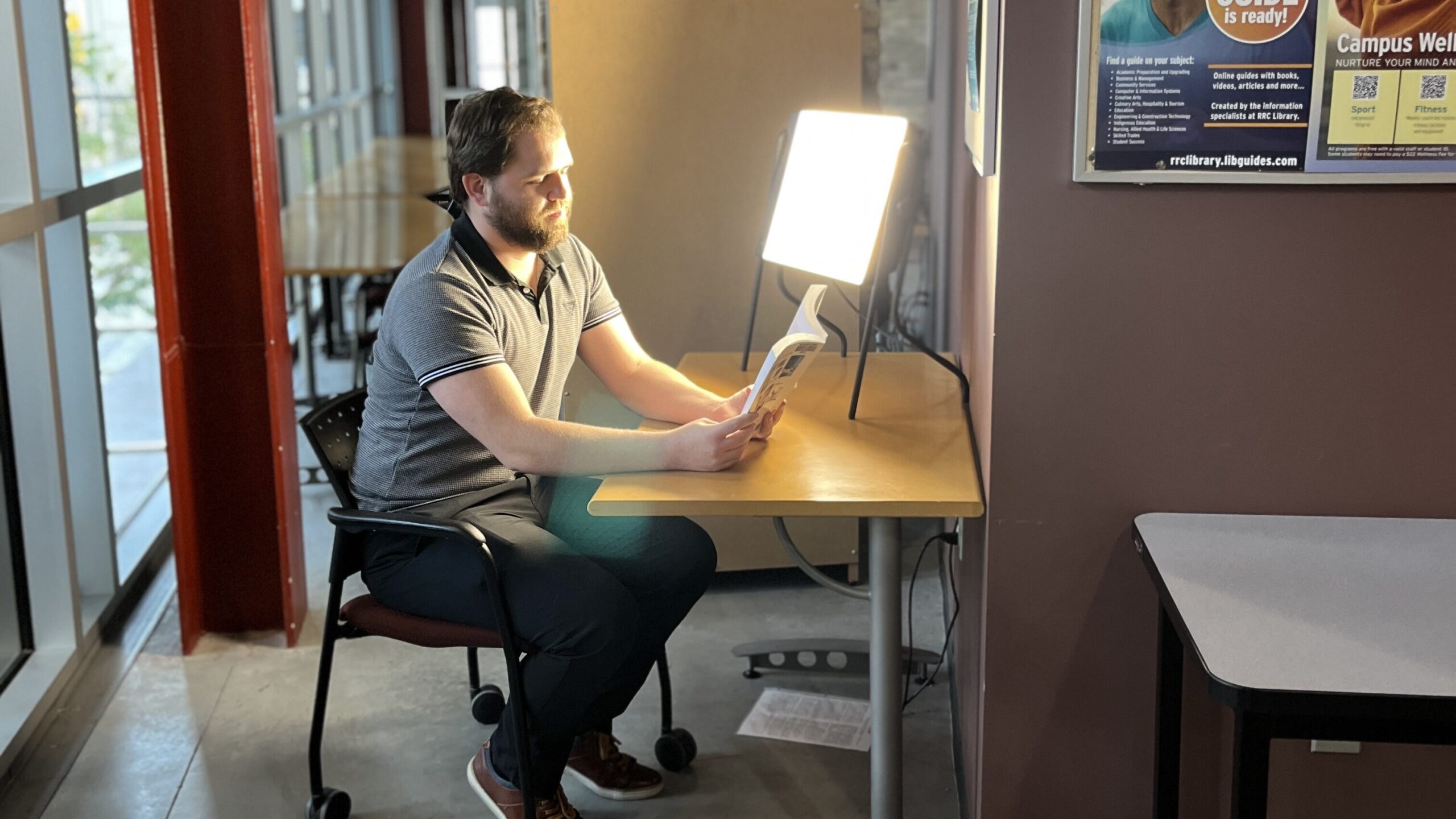
Photo of a pseron reading a book in front of a therapy light at the EDC Library
Therapy Light Station in use at the Exchange District Campus Library

What is light therapy?

Light therapy, also known as bright light therapy or phototherapy, uses a light box to mimic outdoor lighting. Light therapy is used to treat a variety of conditions, including auto-immune disorders, wound healing, depression, seasonal affective disorder, and circadian rhythm sleep disorders. It is often used in winter to help with depression, lack of sunlight, and listlessness.

Exposure to artificial light helps adjust the body’s regulation of melatonin, a hormone that controls the body’s sleep cycle, and serotonin, a natural mood-stabilizing hormone.

Three main benefits of using light therapy are:

  • Increased energy
  • Improved sleep patterns
  • Enhanced mood

It is easy to use, safe (UV-free) and can be done in your own home. The light box needs to be placed at a 45-degree angle, 2-3 feet away on a flat surface. For maximum benefit, use consistently every morning for 20-30 minutes. Improvements can be felt within 2-4 days.

Light Therapy is not recommended for everyone, consult a physician first if you have an eye disorder or are taking medications that may cause your skin to be light-sensitive.

Interested in “lightening” up your mood?

Light boxes are available at the RRC Polytech Library for a one-month loan period.

To reserve a light box, use the Library’s Equipment Shopping Cart system. Begin by selecting your preferred location below (log in with RRC Polytech credentials may be required).

Permanent light therapy stations are also available on a first-come, first-served basis at the Exchange District and Notre Dame Campus Libraries.

Questions?

If you have any questions, you may connect with a Library staff member through Ask Us Chat or in person during Library hours!


Adapted from Winter Blues Setting In? Brighten up those dark days of winter with light therapy! (posted on November 25, 2021).

National Day of Action for Missing and Murdered Indigenous Women, Girls and Two Spirit People

October 4, 2023

A vertical shot of a red dress hanging from a branch of a tree.
Image source: Adobe Stock

October 4 marks the Day of Action for Missing and Murdered Indigenous Women, Girls, and Two-Spirit People (MMIWG2S). While marches and vigils happened in the past, the 2015 Truth and Reconciliation Commission made looking into why violence happens towards this group its 41st call to action, with a final report from the inquiry released in 2019. The introduction from the executive summary of the final report states what has changed regarding attention to the issue:

The fact that this National Inquiry is happening now doesn’t mean that Indigenous Peoples waited this long to speak up; it means it took this long for Canada to listen.

The Library provides books and streaming video to support both formal studies of issues within regular classes and for those wanting to educate themselves about Missing and Murdered Indigenous Women, Girls and Two Spirit. At the centre, now and always, are those individuals who are no longer here, taken too soon, with friends, family, hopes, and dreams.

Browse a range of resources in our updated Guide >> Missing and Murdered Indigenous Women, Girls, & Two-Spirit (MMIWG2S)

Featured Videos

National Film Board (NFB)

The National Film Board continues to provide access to films and documentaries with attention to boosting Indigenous filmmakers.

CBC’s Curio

CBC’s Curio assembles videos from News in Review to The National.

Viewing streaming videos: Click on an image to go directly to a video. You may be required to log in with your RRC Polytech credentials to access it.

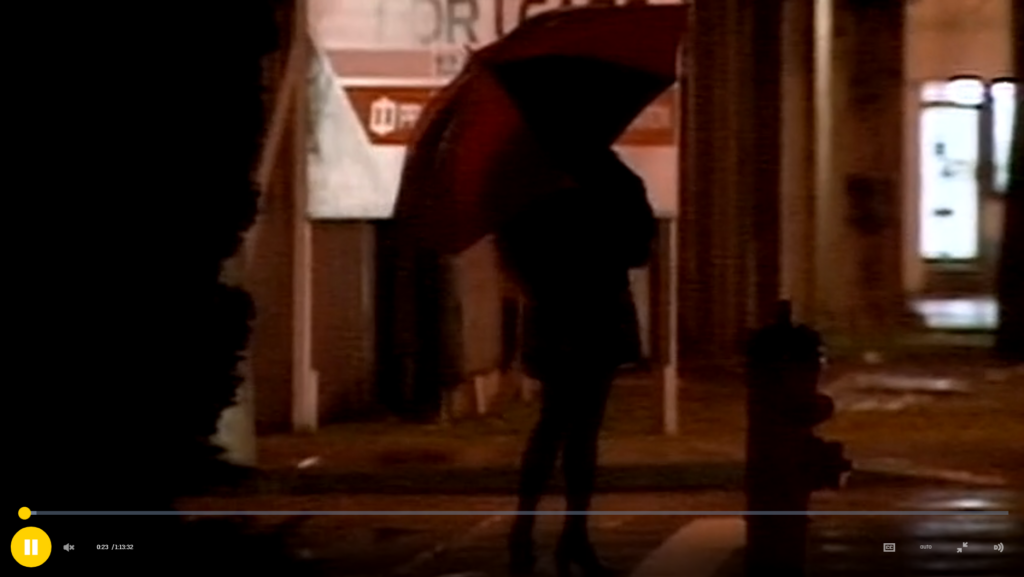
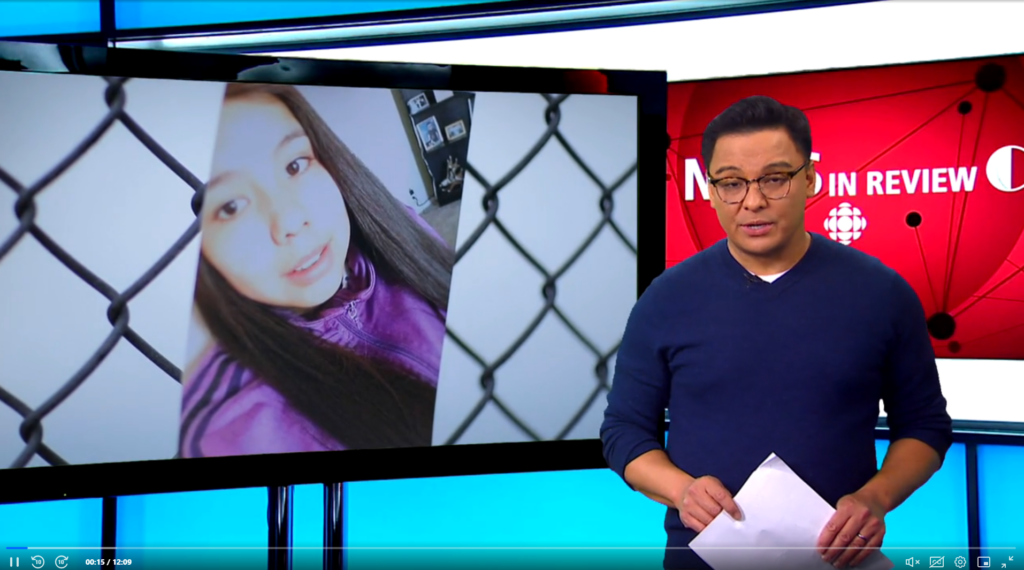
Tina Fontaine: A Murdered Girl’s Legacy. October 2019

Tina Fontaine was just 15 when her body, wrapped in a duvet cover and weighed down by rocks, was pulled from Winnipeg’s Red River. A report from the Manitoba Advocate for Children and Youth says in the years since her murder, not enough has changed to ensure other children in circumstances similar to Tina’s are not at risk. But Tina has left a legacy. Her death focused attention on missing, murdered Indigenous women and girls and inspired volunteer groups such as the Bear Clan Patrol to work at protecting vulnerable people on the streets. Warning: This program contains disturbing images and subject matter. Viewer discretion is advised.

Public Forum on Missing and Murdered Indigenous Women and Girls

This special edition of The Current is a public forum held at the Museum of History in Gatineau, Que. – the fifth in a series of forums on missing and murdered Indigenous women and girls (MMIWG). Anna Maria Tremonti and panellists explore the work of the National Inquiry into MMIWG, leadership and reconciliation.

Featured Books

The Library’s newly curated MMIWG2S (Murdered and Missing Indigenous Women, Girls, and 2 Spirits) Collection is a great way to explore physical and electronic resources on the topic. Two titles from this collection are featured below.

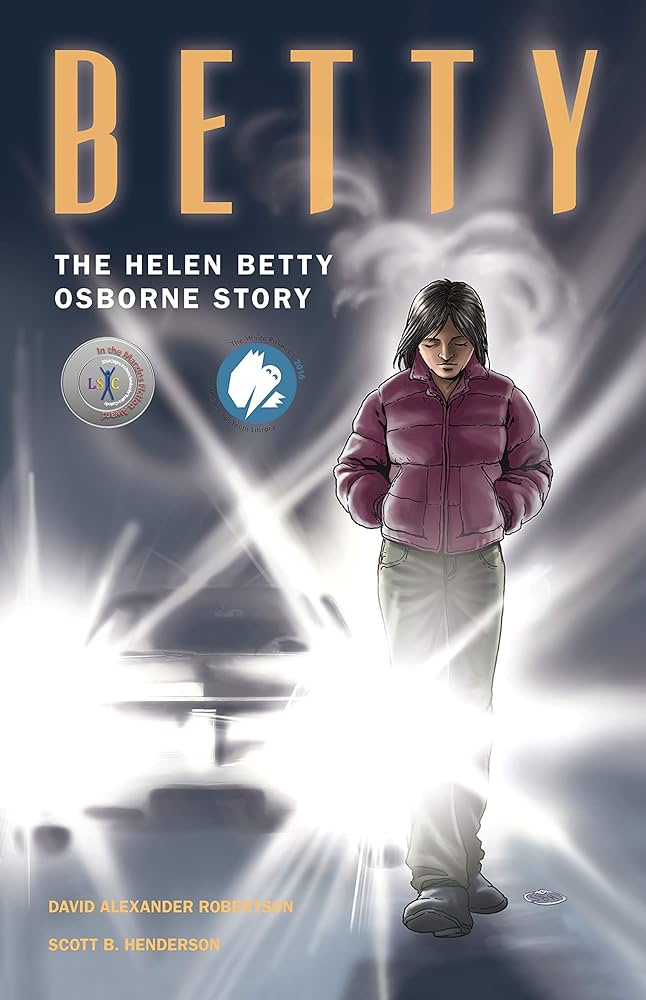
Betty: the Helen Betty Osborne story

In the early hours of November 13, 1971, Helen Betty Osborne, a young Aboriginal woman living in La Pas, was walking home alone when she was abducted by four young white men, sexually assaulted, and then viciously beaten and stabbed with a screwdriver. Despite the horrific nature of her murder, and the identities of her killers being known to many in The Pas, no arrests were made until 1986, and the subsequent trial resulted in only one conviction.

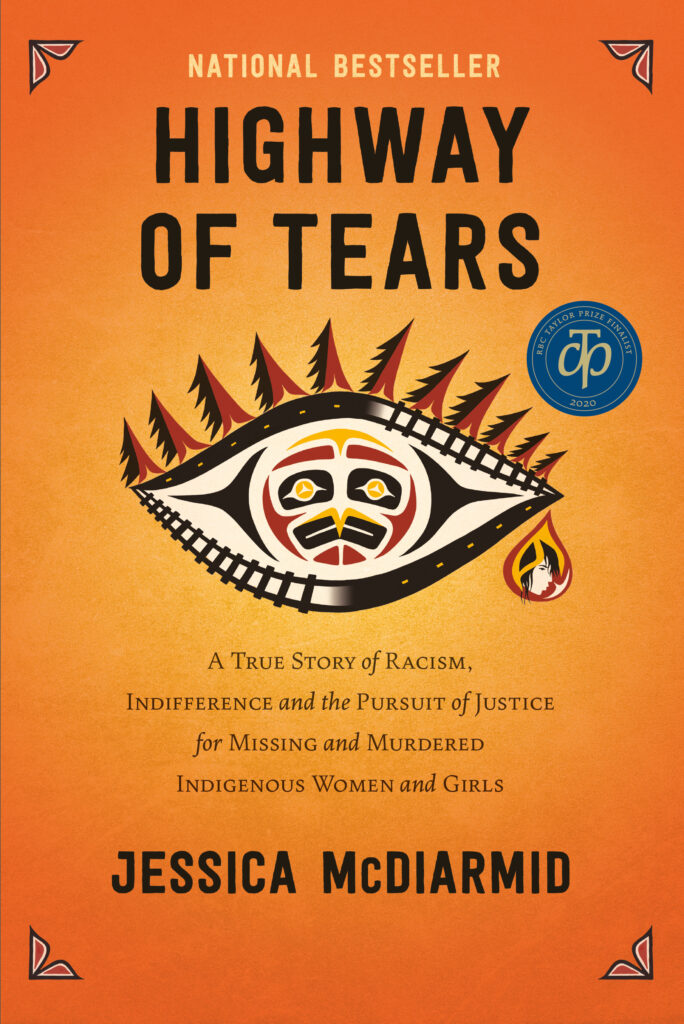
Highway of tears: a true story of racism, indifference and the pursuit of justice for missing and murdered Indigenous women and girls

For decades, women–overwhelmingly from Indigenous backgrounds–have gone missing or been found murdered along an isolated stretch of highway in northwestern B.C. The highway is called the Highway of Tears by locals, and it has come to symbolize a national crisis. In Highway of Tears, Jessica McDiarmid explores the effect these tragedies have had on communities in the region, and how systemic racism and indifference towards Indigenous lives have created a culture of “over-policing and under-protection,” simultaneously hampering justice while endangering young Indigenous women.

Questions or Comments?

Library staff love to assist staff and students with our collection! Feel free to connect with us in person at the Notre Dame and Exchange District Campus Libraries or through Ask Us Chat at library.rrc.ca.

Written by Fatima DeMelo–Reference Technician, Library and Academic Services

The Library’s Chatbot: Powered by “LI” Instead of AI

October 3, 2023

Background on the New Chatbot Feature

In June 2023, the RRC Polytech Library expanded our Ask Us Chat (the service) with the launch of the Library chatbot. This was the result of several months of work by Meagan Acquisto and me, Christina Janzen. The main goal of adding a chatbot to our Ask Us Chat was to provide consistent, basic help—especially after-hours. 

For those who may not know, a chatbot is a computer program designed to simulate conversation with human users. There are many different types of chatbots, ranging from complex AI-powered chatbots that can learn and adapt to user behaviour, to simple scripted bots.  

Without further preamble, let’s jump into the chatbot’s creation story… 

Building the Library’s Chatbot

A Rules-Based Chatbot Run by “Librarian Intelligence”

Library managers took notice when the Saas library software vendor, Springshare, launched a new chatbot feature in LibAnswers.  

(Having a hard time understanding the jargon? You’re not alone. Throughout the Library chatbot development process, I learned a lot of computing language. A few definitions are listed at the bottom of this post.)

Meagan and I were tasked to build the Library chatbot; we took a deep dive into training webinars. Immediately, we noticed that the LibAnswers Chatbot is rules-based and uses simple if/then logic to link actions together. Springshare advertises this by stating their chatbot is not run by AI, but “LI” or Librarian Intelligence. Humorous. As implied, the benefit to a rules-based model is that each library that subscribes to LibAnswers Chatbot has better control over its users’ experience (this can also pose challenges, but I won’t get into that). 

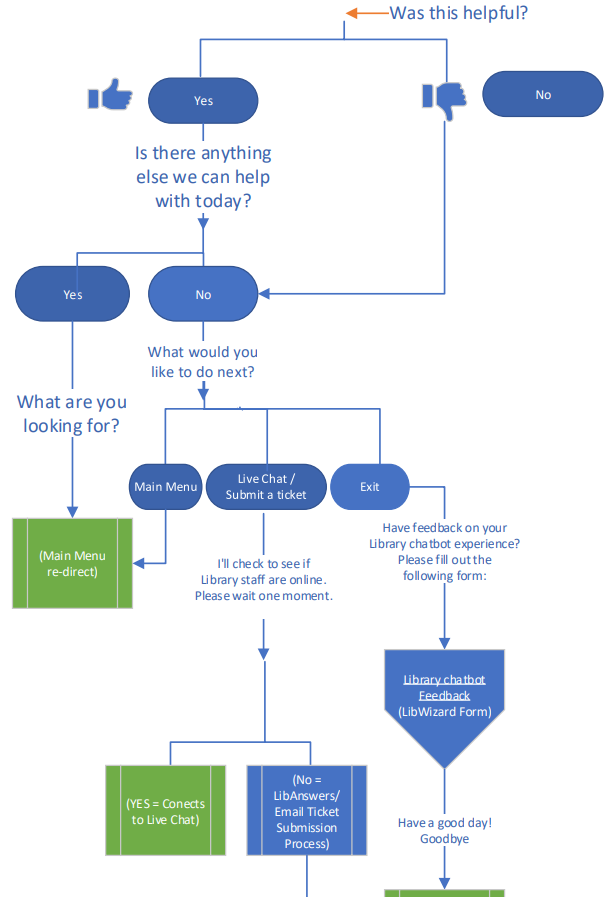
Before jumping into the Chatbot application, we consulted LibAnswers statistics and came up with a list of common questions that Library users ask. Most questions fall into five categories: directions & general information, equipment bookings, printing/photocopying, tutoring & academic coaching, and referrals to College departments outside the Library, in that order. Next, we checked to make sure the answers—instructions, materials, etc.—were up to date and could be found online. Finally, we mapped out the ideal user experience in a flow chart (shown below).  

Snippet from preliminary user-experience flowchart

Building the User-Experience Flow in LibAnswers Chatbot

Once we started building within Chatbot, we hit a wall: Springshare has a maximum of 50 actions per “flow.” Initially, we thought this would limit the scope of our chatbot, but quickly found a solution by linking several flows together. Other small inconveniences in the build process were expected because software developers often lean on early adopters to find bugs and suggest new features to improve the software (which we did). 

In the end, Meagan and I chose to use self-led prompts instead of keyword searches because open-ended text input requires extensive keyword tagging. We hope to develop the scaffolding for free-response queries in the future. For now, our menu/button-based, or ‘choose-your-own-adventure’ system has enjoyed limited, yet generally positive, feedback. Staff testers reported that the bot was “a good little jumping off tool,” “designed well,” and appreciated that users could quickly connect to a live chat with staff. 

Your Opportunity to Provide Feedback

The Ask Us Chat bubbles logo that when clicked on initiates a chat.

Have you used the Library chatbot (available by clicking on the Ask Us Chat bubble)? Please rate our chat or share your thoughts by answering our survey! The survey is available here, but a link is also found at the end of every Library chatbot interaction. 

Definitions

Ask Us Chat (the service)

The RRC Polytech Library’s online reference service where Library staff answer inquiries, provide research guidance, and reference assistance to the RRC Polytech community. 

SaaS

‘Software as a service’ or cloud-based subscription access distribution model.

Springshare

A company that sells library software.

LibAnswers

One suite of services offered by Springshare 

LibAnswers Chatbot (Chatbot)

Springshare’s name for their chatbot feature.

Written by Christina Janzen, Reference Technician/Library Chatbot Builder

Six ways your Library is here to help you succeed

September 5, 2023

There has never been a better time to start using your Library!  With a variety of useful resources and services offered at both the Notre Dame and Exchange District Campuses, as well as through our website, your Library is here to help you succeed!  

1. USE THE LIBRARY 

Coming to the library is as easy as walking through the door! Once inside, you are free to browse the collection of print materials, use our computers for printing, ask questions, or simply find a space to study and work on assignments.  

We strive to make the Library an inclusive, welcoming, and safe space, where you can feel comfortable working toward your academic goals! So, come in, say “hello” to our friendly staff, and start using the space today. We’ll be happy to see you!  

Learn more >> Use the Library

2. ASK QUESTIONS 

If you have a question, we encourage you to ask the Library staff for help! You can do this by approaching the service desk and asking them directly, or you can also ask a question through our Ask Us Chat.

To use the chat, simply click on the Ask Us Bubble on the Library website. This will connect you with our Library chatbot, which uses self-led prompts to answer a variety of common questions. If you have a more detailed question, you can also choose the option to connect with a Library staff member over live chat, and they will be happy to help!  

Learn more >> Library and Academic Services website

3. GET ASSIGNMENT HELP

If you are starting an assignment and need help finding research on a particular topic, or if you just want to learn how to search more effectively on your own, Library staff can help with that!  

They will go step-by-step through the search process with you, ensuring you find the best resources to satisfy the requirements of your assignment. On top of that, they will also help you to improve your search skills for future assignments by showing you how to search more effectively. 

Learn more >> Research & Write

4. BOOK A TUTOR 

If you are struggling with a particular course, or if you just want to learn the skills needed to be a better student, the Academic Success Centre (ASC) is a great resource within the Library to check out!  

The ASC offers tutoring services for a variety of courses and topics, as well as drop-in workshops and exam prep sessions! You can sign up for tutoring online, or you can come in and speak with a tutor who will help you find the tutoring solution for your particular needs!  

Learn more >> Tutoring Services

5. BROWSE THE COLLECTION 

If you would like to borrow something from our collection, there are a couple of ways to go about it. You can browse the shelves on your own, or, if you are looking for something specific, you can search online through our website. Searching through OneSearch, or through a specific database, allows you to filter your search results according to a variety of parameters, ensuring you find the best and most relevant resources available!  

In addition to an extensive and varied collection of print resources — which includes books, magazines, and DVDs — students have free online access to thousands of electronic resources, such as ebooks, academic journal articles, and industry manuals.  

Learn more >> Browse & Borrow

6. BORROW EQUIPMENT 

Finally, we also lend out equipment at both Library locations! This includes everything from phone chargers and various types of cables and adaptors to larger equipment such as cameras and tripods, speakers, microphones, projectors, and even laptops!  

In the modern college, a laptop is an essential piece of equipment to own. However, if you are waiting for your laptop to be repaired or for funding to come in for you to purchase a new one, the Library can help you get through that time! We lend out laptops for up to a month. To see the complete inventory of equipment items and their availability, check out the website! 

Learn more >> Equipment

Written by Dylan MacDougall, Reference Technician – Library and Academic Services

Have a question? Your Library can help with that!

August 28, 2023

The RRC Polytech Library is here to help with any of your questions, big or small. We offer two ways to connect: in-person or online.

In-person

When on campus, visit our Service Desk at the following locations:

Notre Dame Campus
CM18 – 2055 Notre Dame Avenue

Exchange District Campus
P214 – 160 Princess Street

Online

When off-campus, visit the Library and Academic Services’ website and click on the “Ask Us” bubble. You will go through some self-led prompts that offer responses to our most common questions.

Alternatively, you can skip the questions and select ‘Live Chat’ to connect with a Library staff member during our open hours or submit an email question after hours.

Written by Meagan Acquisto and Christina Janzen – Reference Technicians

Assessment Services: Spotlight on External Exams

June 6, 2023

Part of a series introducing the multi-faceted Assessment Services team.

The External Exams subunit of Assessment Services coordinates, hosts, and invigilates certification exams, regulatory exams, business exams, and provides services to students studying at other educational institutions and business organizations across Canada and internationally.

Our external exams specialist is Susan Kleppe, who has worked at the College for 20 years in this area, when it was under the auspices of School of Continuing Education. Since seamlessly integrating into the wider Assessment Services unit, Susan has become a deeply valued member of the new, amalgamated unit at Manitou a bi Bii daziigae.

Susan Kleppe, External Exams Specialist

Other posts in the series

Submitted by Piers Smettem, Assessment Specialist

“Guide” your Pride with Library Guides!

June 1, 2023

Note: This post was previously published on May 26, 2022, and has been updated for the current year.

Pride is a celebration of confidence, self-respect, and solidarity as expressed by 2SLGBTQIA+ people, associated with openness about one’s own sexual and/or gender identity, and the celebration of Queer culture and history. It is also a protest in support of human rights and equality for all those who express sexual and gender diversity. This protest demands political, industry, health care, and community leaders address the human rights concerns of the Queer community and move toward positive and informed change.

Library Guides are subject and database-specific curated collections of library and external resources, that provide instruction, and “jumping off points” for unlocking your full capacity to find well-sourced and high-quality resources and information.

Encouraging allyship is important for everyone and helps to make the world a more inclusive and affirming place.  We encourage you to activate your allyship by exploring queer resources, data, and history. Library Guides are subject and database-specific curated collections of library and external resources, that provide instruction, and “jumping off points” for unlocking your full capacity to find well-sourced and high-quality resources and information.

Below we have highlighted Guides that support learning about gender and sexual diversity. Learning is an important part of allyship. The impact of 2SLGBTQIA+ -specific allyship also extends beyond benefiting Queer identities by decreasing the likelihood of implicit and explicit bias, and removing barriers to true inclusion.

Why Diversity Matters

As part of our efforts to foster respect and inclusion, we need to recognize our cultural biases or assumptions, regarding expectations of gender roles/expressions. Rather than either/or, gender and sexual identities are unique, fluid, and complex.

When talking about the complexities of cultural identities, we sometimes focus on ethnicity, language, or religion. However, gender and sexual diversity also play a key role in our identities and day-to-day lives. As part of our efforts to foster respect and inclusion, we need to recognize our cultural biases or assumptions, regarding expectations of gender roles/expressions. Rather than either/or, gender and sexual identities are unique, fluid, and complex.

Featured Guide:

>> Intercultural Competence & Diversity – Gender and Sexual Diversity

Why Health and Well-Being Matters

Sexual health can be a challenging issue to discuss in the clinical context. Studies have reported that some healthcare providers may face barriers to discussing sexual health with their 2SLGBTQIA+ patients, including a lack of knowledge of same-sex sexual practices.

“Although 2SLGBTQIA+  people are as diverse as the general Canadian population in their experiences of mental health and well-being, they face higher risks for some mental health issues due to the effects of discrimination and the social determinants of health.”[i]

Featured Guides:

>> Gender Studies for Health Professionals 

>> Indigenous Health & Well-Being, Two-Spirit Resources

>> Sexual Violence Awareness – Education, Prevention and Supports – 2SLGBTQIA+ Perspectives

Why Statistics Matter

Statistics around gender and sexual diversity help us gain a better understanding of the Queer experience and help researchers, advocates, and the Queer community use data to illustrate the concerns of 2SLGBTQIA+ people. Statistics can also be used to track the impact of policy changes that affect 2SLGBTQIA+ people as a whole, or within more specific identity groups. This helps ensure data-informed decisions are made when advocating for positive change or advocating against changes that will negatively impact the needs of gender and sexually-diverse people. Statistics are a powerful lens through which we can view the Queer experience and community.

Queer statistics are often in short supply.  “…Canada made history by becoming the first country in the world to provide census data on transgender and non-binary people!

Queer statistics are often in short supply.  “…Canada made history by becoming the first country in the world to provide census data on transgender and non-binary people! This type of data is so important not only because it allows all Canadians to see themselves in national statistics, but also because it helps to fill a long-standing information gap on gender diversity.”

Featured Guides:

>> Health Indicators & Health-based Statistics (See “Looking for Specific Populations”)

>> Statistics Canada See (“Looking for Specific Populations”)

You’re Invited! Join RRC Polytech in the Pride Parade

The Pride Parade is coming up on Sunday, June 4, 2023!

Everyone in the College community is invited and encouraged to bring friends, family, and pets downtown for a few hours to celebrate inclusivity and share the love, as we show off our support for the 2SLGBTQIA+ community.

On behalf of Library and Academic Services, we wish everyone a safe and happy Pride! We remain dedicated to providing a respectful atmosphere that is diverse, inclusive, and equitable to our students, staff, and external partners. Our diversity is one of our greatest strengths and our goal is to provide a barrier-free environment for individuals to succeed in their academic, employment, and research goals.

Written by Ebony Novakowski, Copyright Officer; edited by Linda Fox, Program Support and Promotion


[i] “Lesbian, Gay, Bisexual, Trans & Queer identified People and Mental Health”, Canadian Mental Health Association, https://ontario.cmha.ca/documents/lesbian-gay-bisexual-trans-queer-identified-people-and-mental-health/

[ii] “Representation is an essential part of treating everyone with dignity and equality (SDG 10)”, Colleges and Institutes Canada, last modified May 16th 2022, Perspectives, May 16 (collegesinstitutes.ca)

Book Tasting: Feast on Words and Ideas from Indigenous Writers Across Canada

May 31, 2023

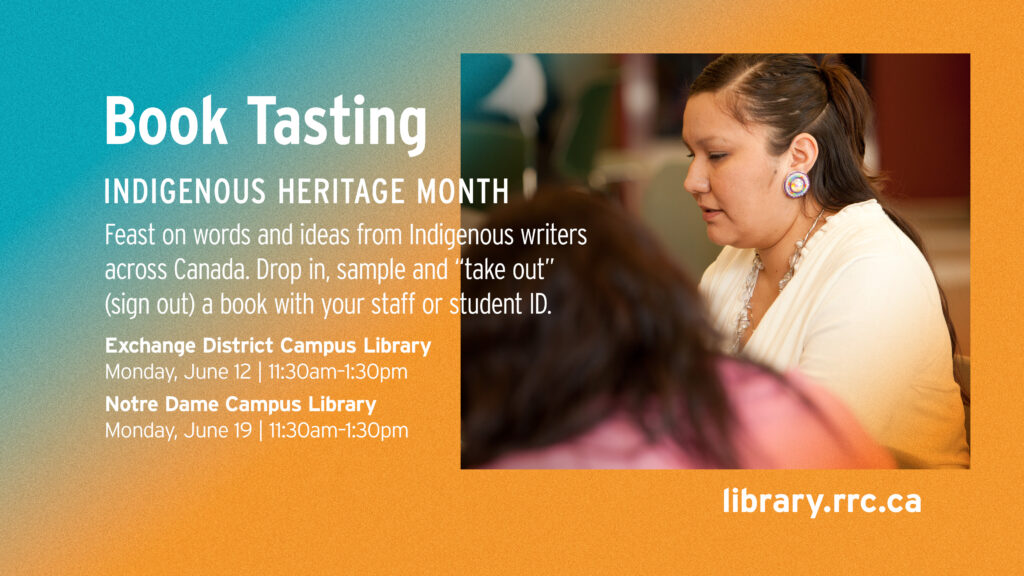
Photo of an Indigenous person. Text: Book Tasting  - Indigenous Heritage Month. Feast on words and ideas from Indigenous writers across Canada.

A Book Tasting in Honour of Indigenous Heritage Month

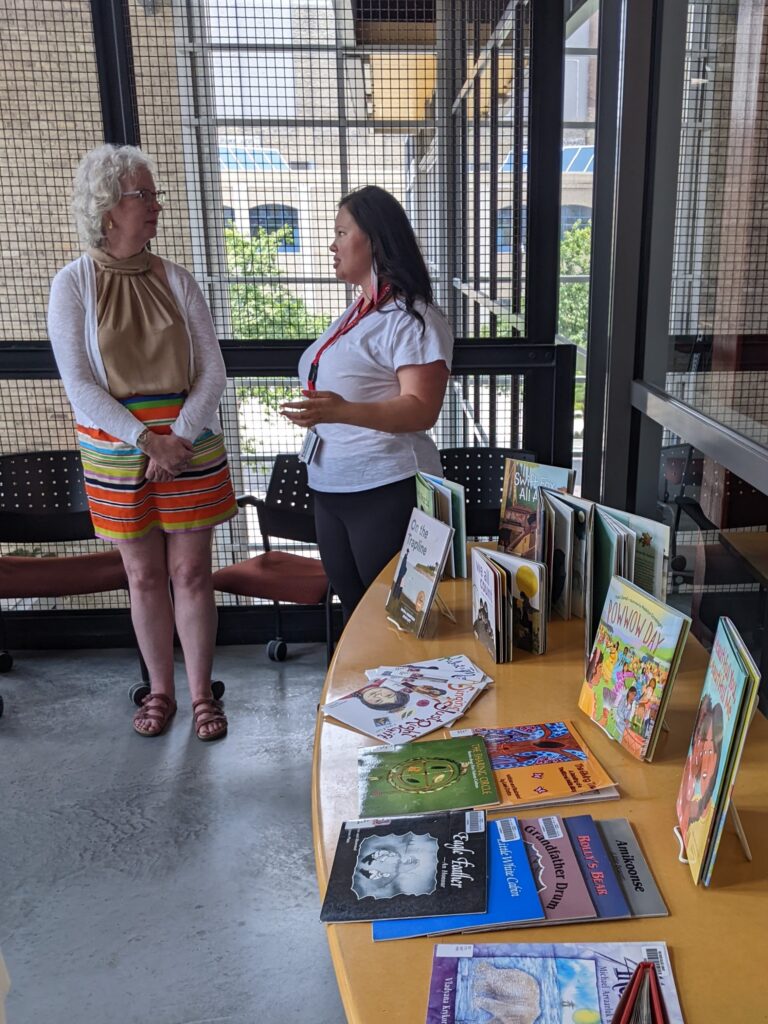
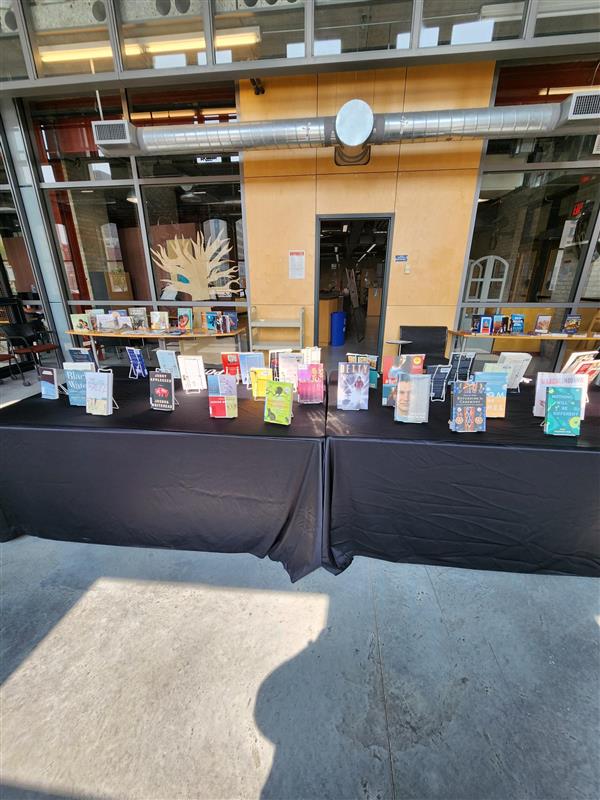
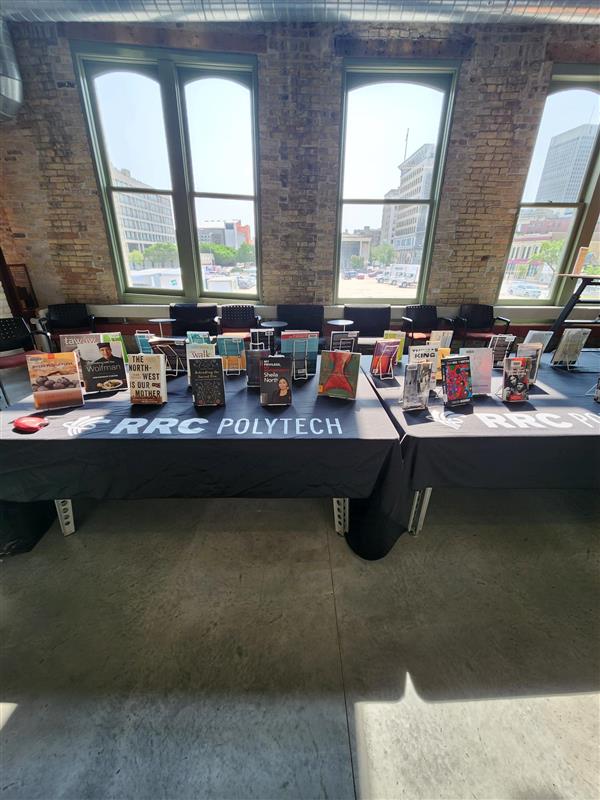
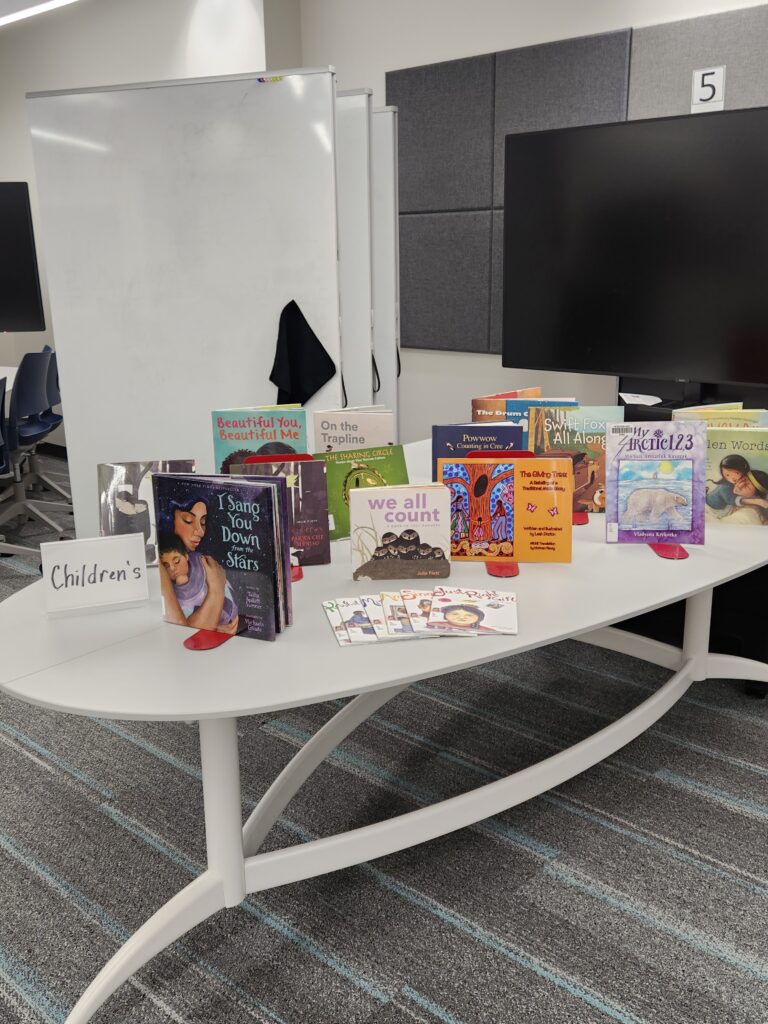
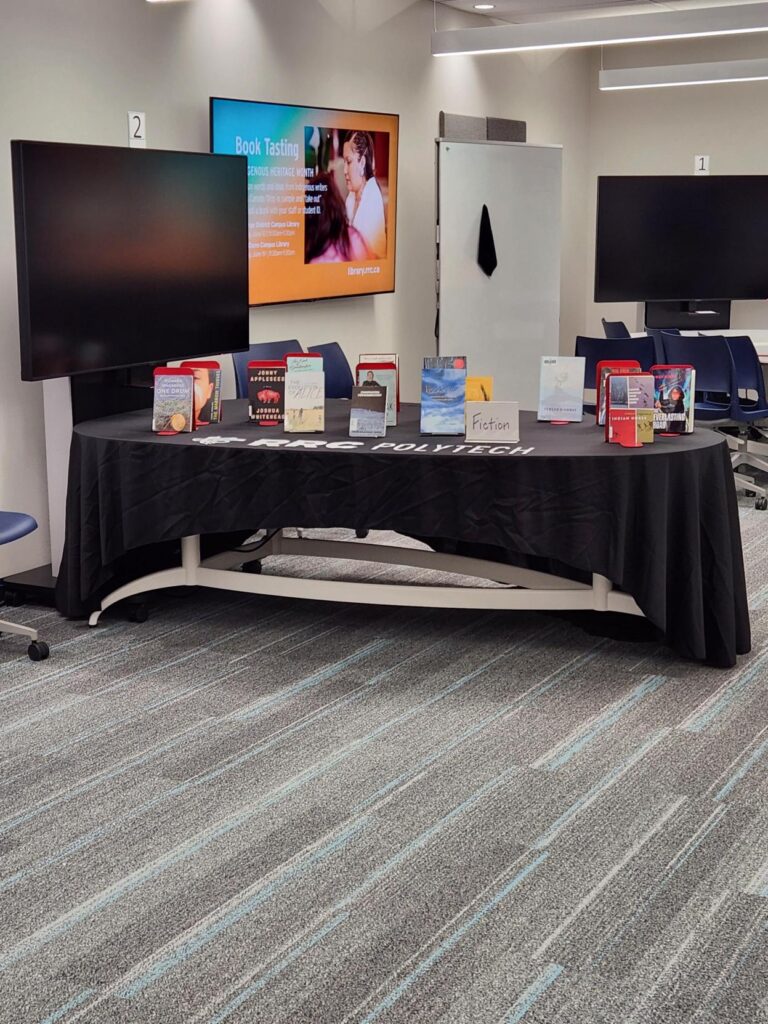
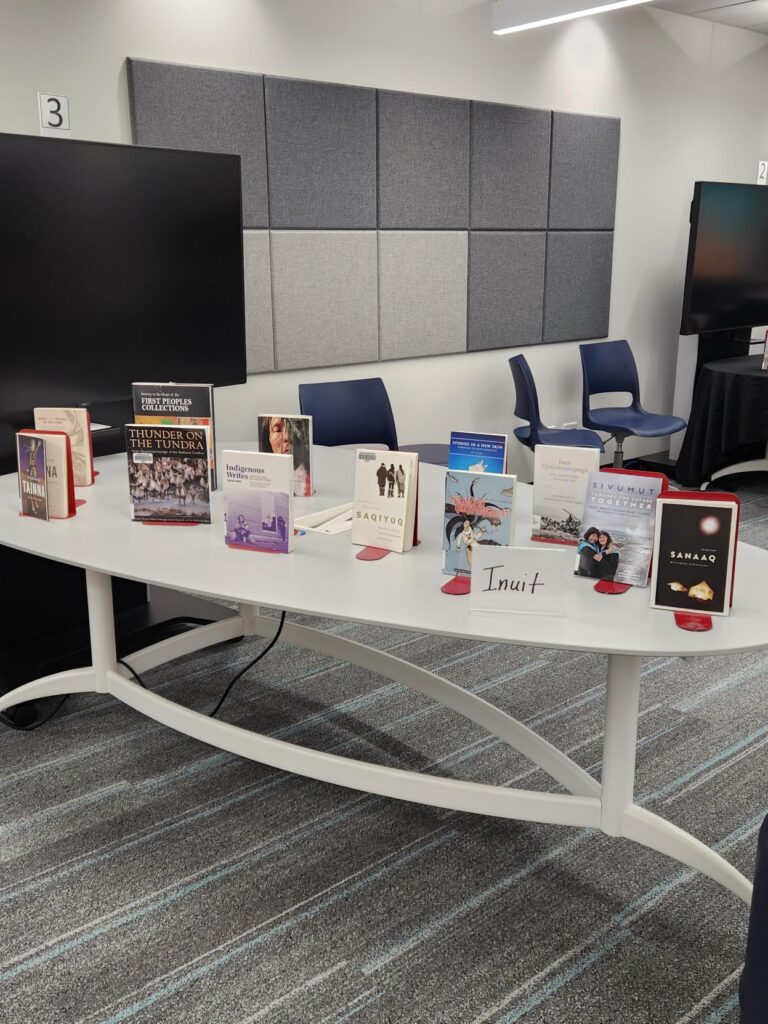
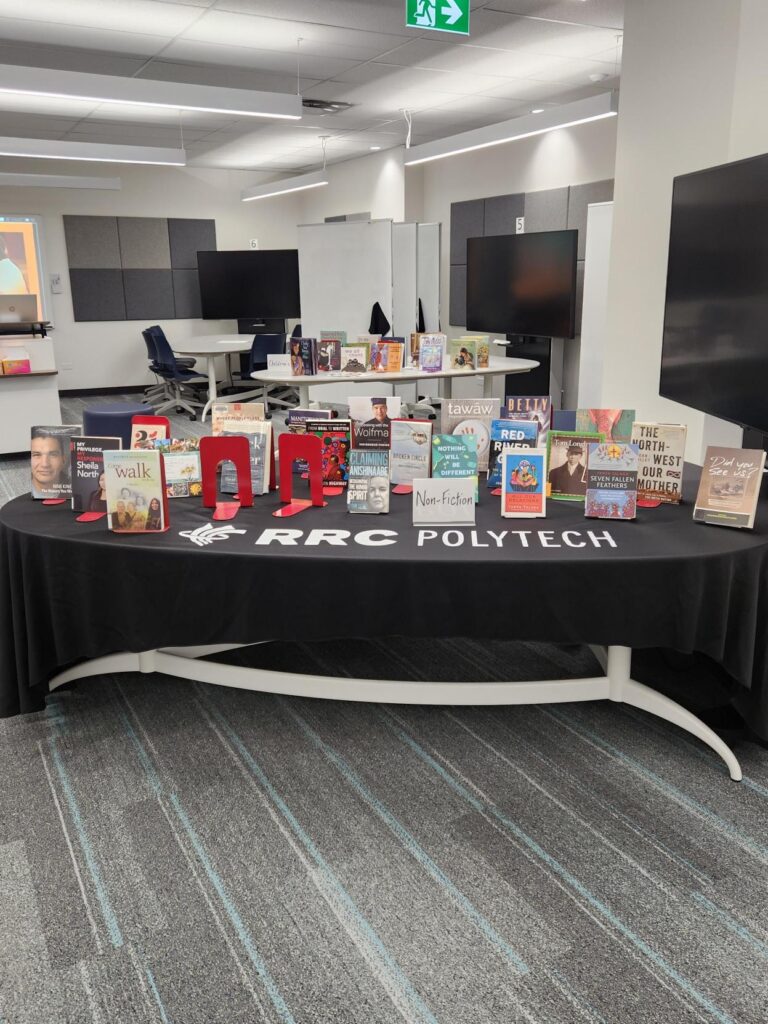
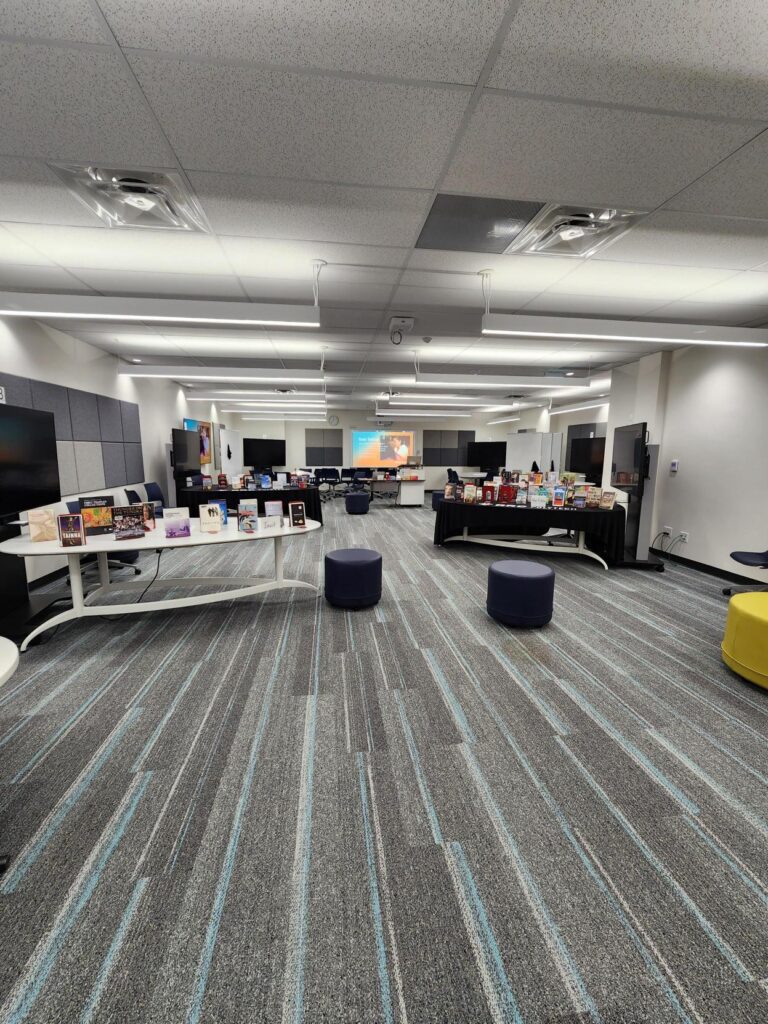
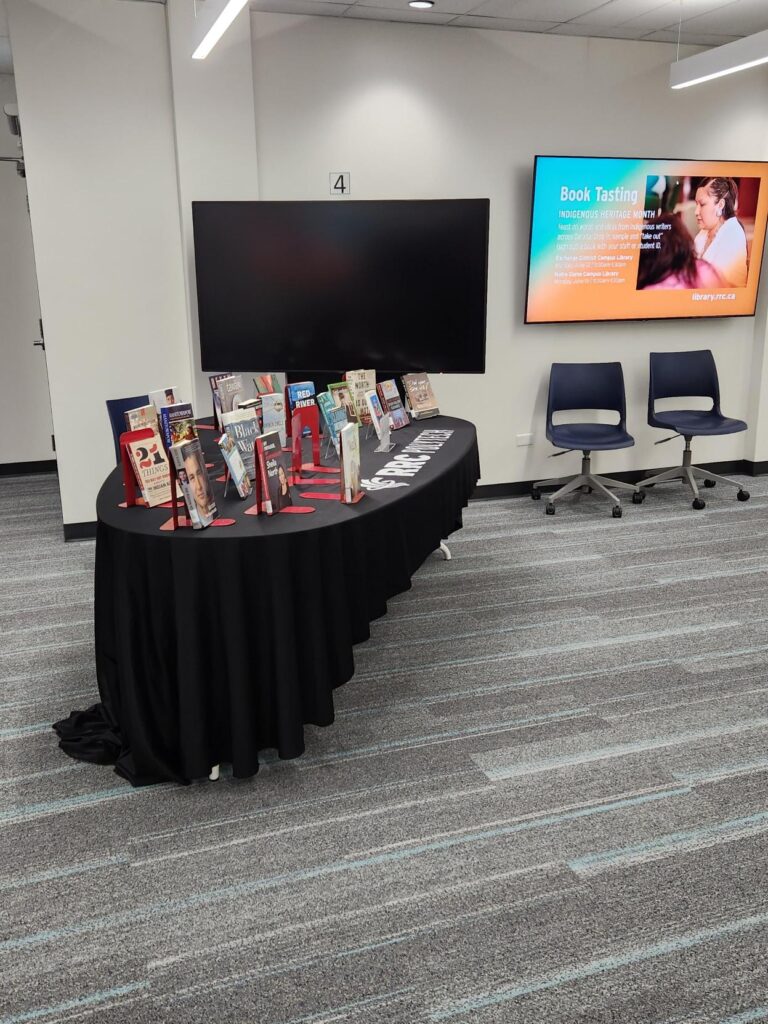
You are invited to drop in, sample, and “take out” (sign out) a book with your staff or student ID at the upcoming book tasting in the Library. Our menu will feature a selection of works by Indigenous authors in honour of Indigenous Heritage Month.

When and where?

Exchange District Campus Library

Monday, June 12
11:30am-1:30pm

Notre Dame Campus Library

Monday, June 19
11:30am-1:30pm

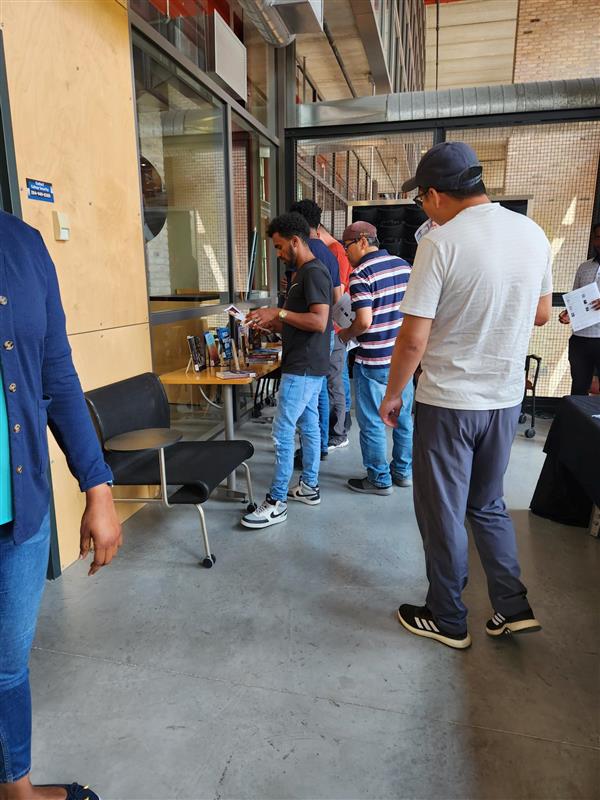
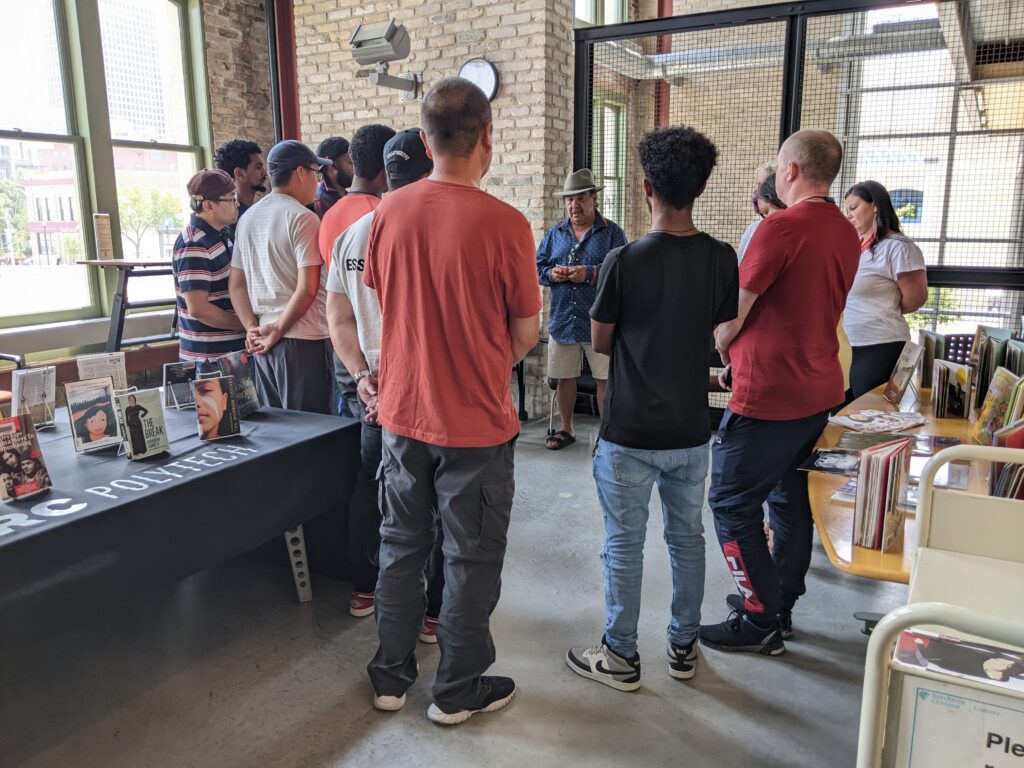
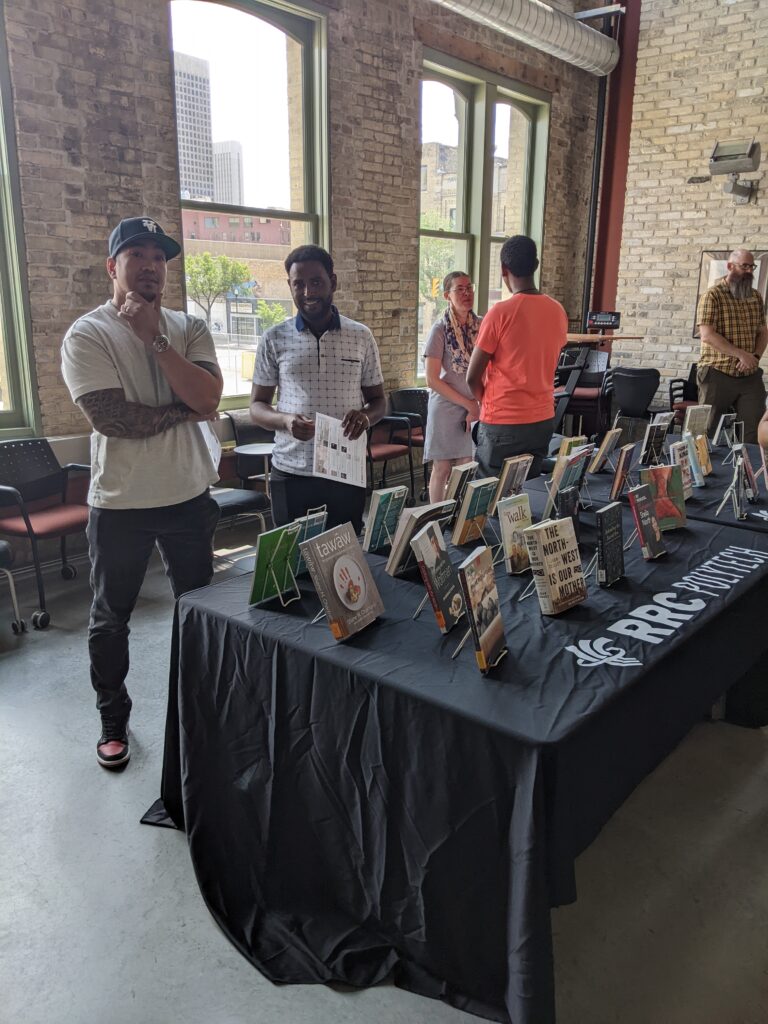
Photo Gallery

Exchange District Campus Library – June 12, 2023

Notre Dame Campus Library – June 19, 2023

Sneak Preview: A Book Sampling by Category

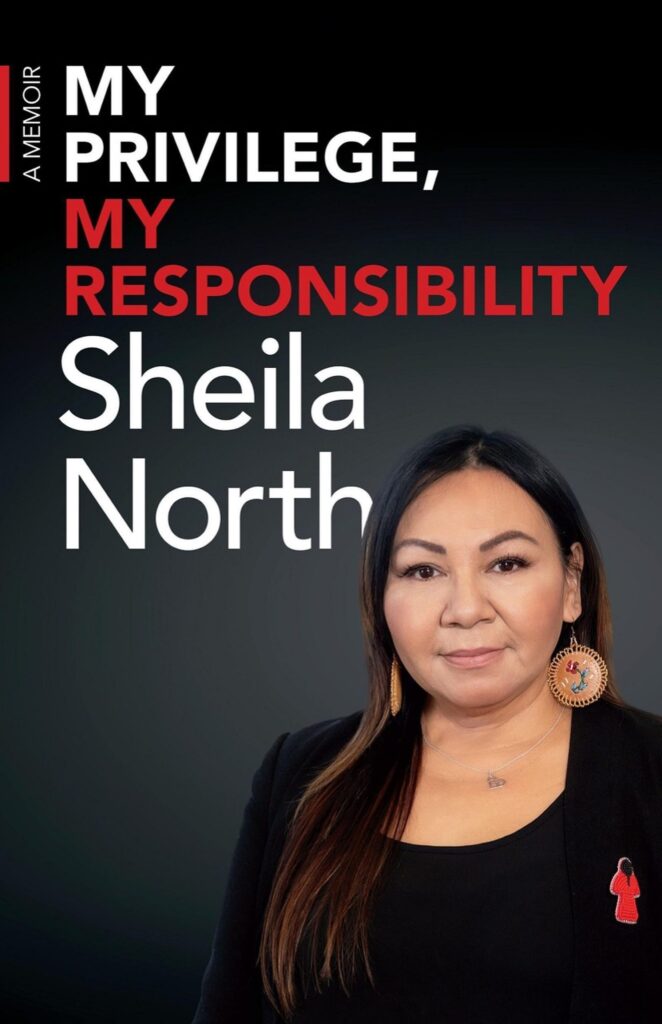
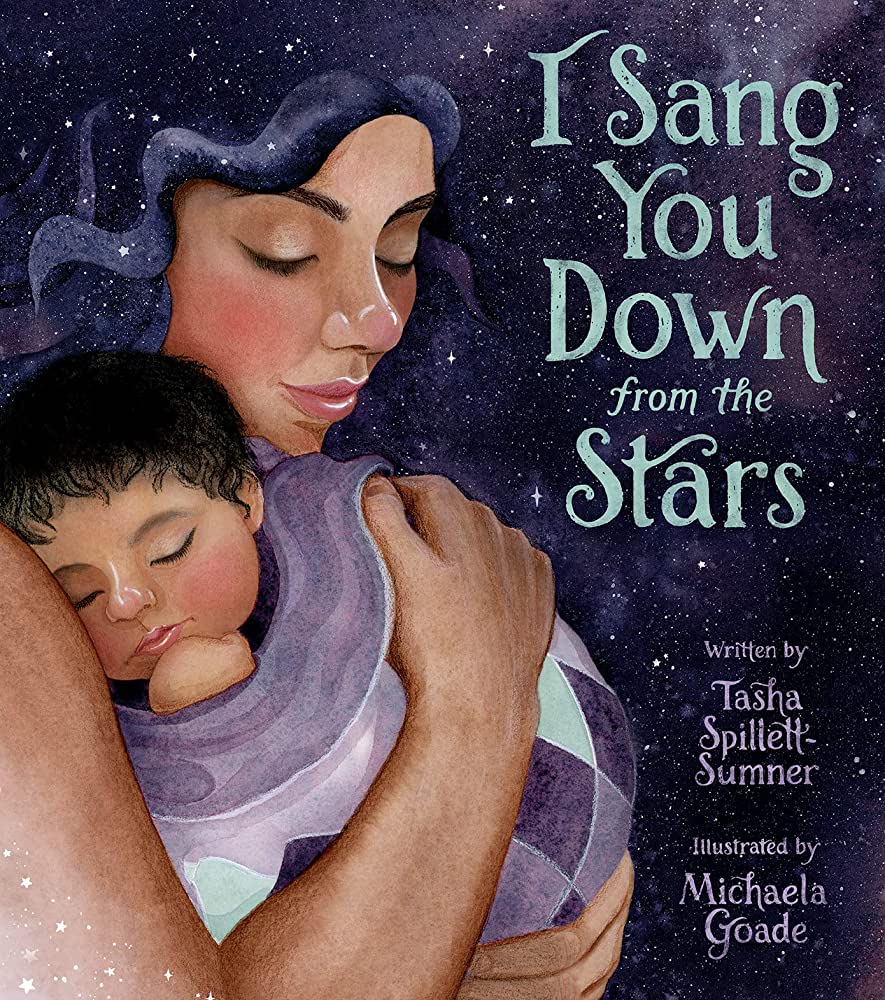
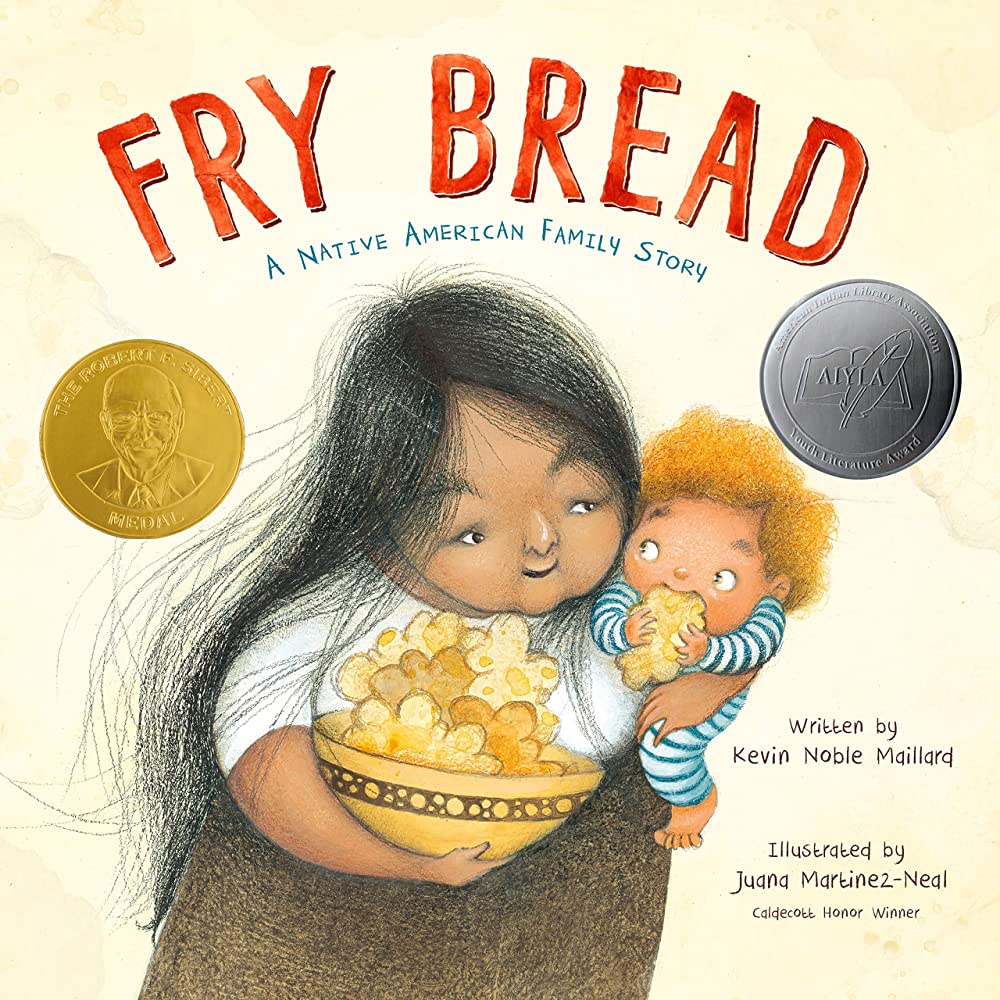
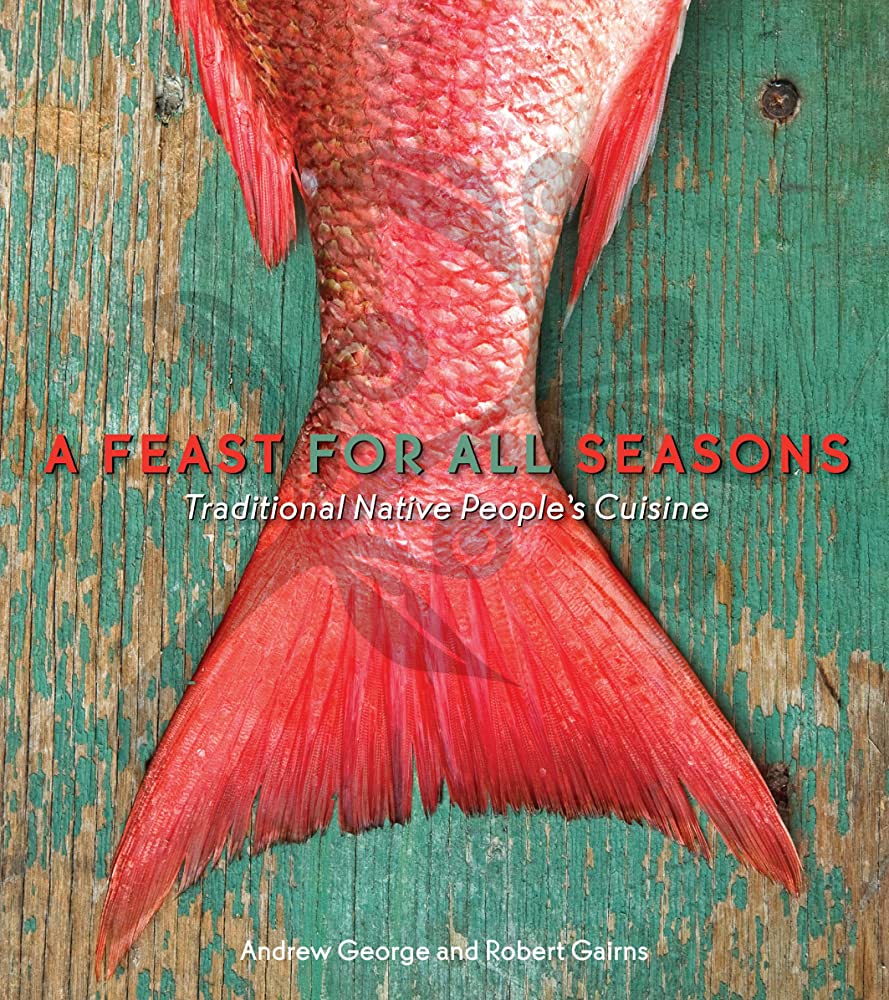
The menu will feature five genres of books, such as the sampling you see below. Click on the book covers for more information about each title.

Memoir and Biography

cover art

My privilege, my responsibility : a memoir
North, Sheila, author.
2021

cover art

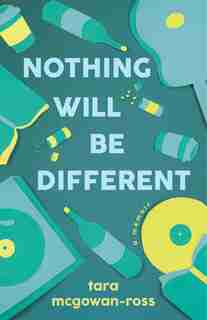
Nothing will be different : a memoir
McGowan-Ross, Tara, 1992- author.
2021

Children and Youth

cover art

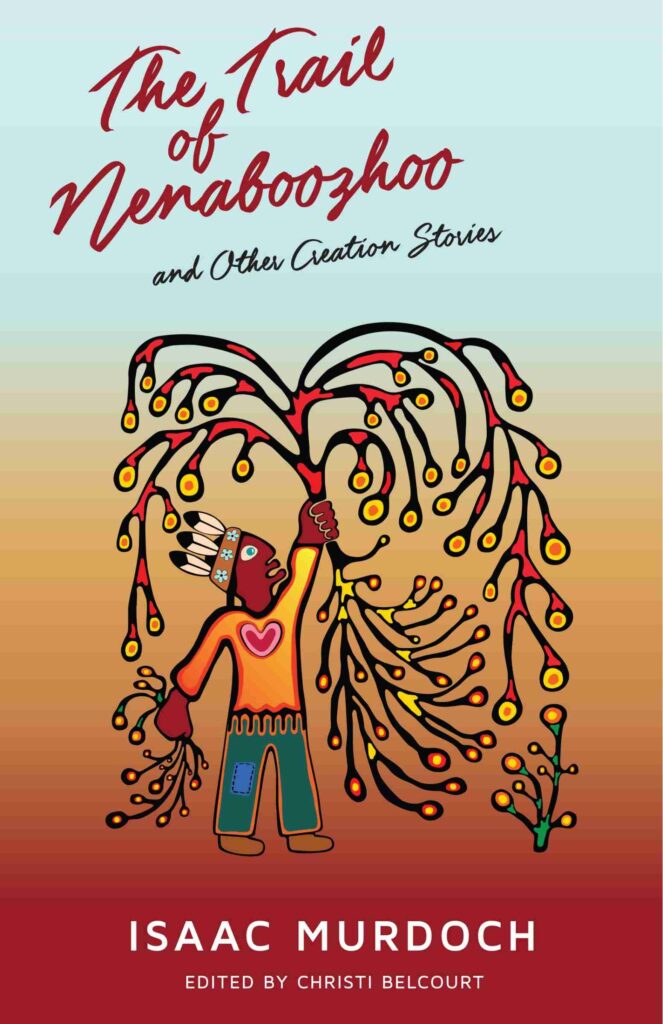
The trail of Nenaboozhoo and other creation stories
Bomgiizhik, 1975- author, illustrator. ; Belcourt, Christi, illustrator, editor.
2020

cover art

I sang you down from the stars
Spillett-Sumner, Tasha, 1988- author. ; Goade, Michaela, illustrator.
2021

cover art

Fry bread : a Native American family story
Maillard, Kevin Noble, author. ; Martinez-Neal, Juana, illustrator.

Culinary Arts

cover art

A feast for all seasons : traditional native people’s cuisine
George, Andrew, Jr., 1963- author. ; Gairns, Robert, author.
2010

cover art

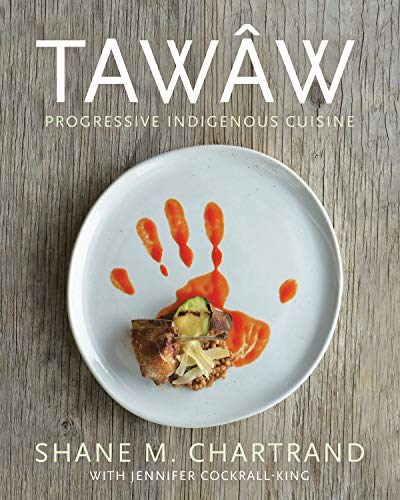
Tawaẃ : progressive Indigenous cuisine
Chartrand, Shane, author.
2019

Ebooks

cover art

Blue Bear Woman
Bordeleau, Virginia Pesemapeo
2019

cover art

Bones
Pennock, Tyler
2020

cover art

A two-spirit journey : the autobiography of a lesbian Ojibwa-Cree elder
Chacaby, Ma-Nee, author. ; Plummer, Mary Louisa, author.
2016

Literature

cover art

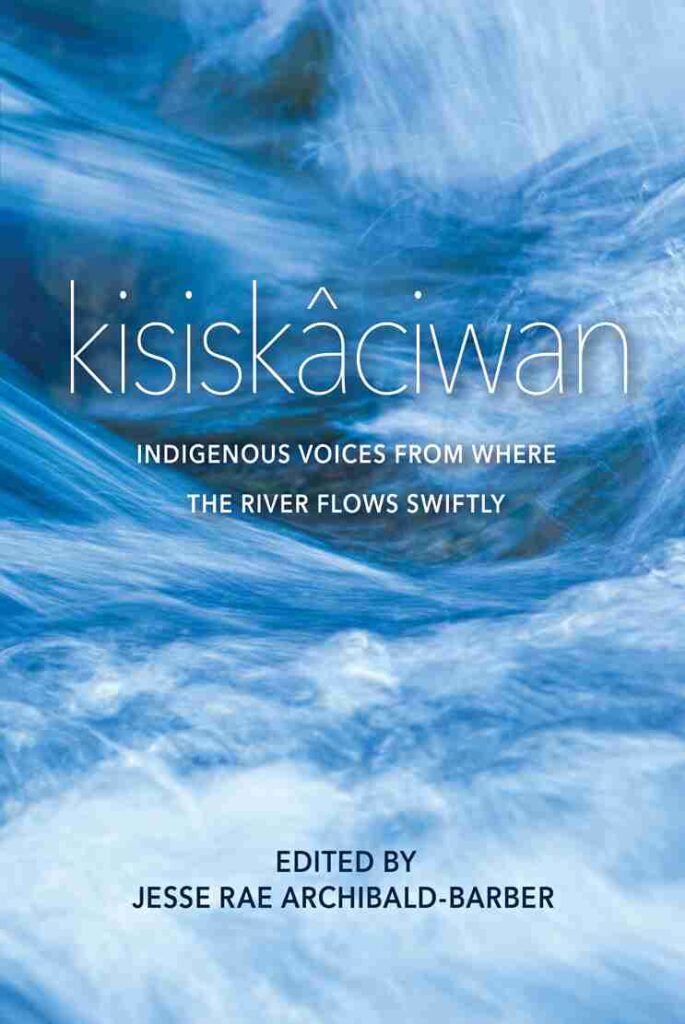
Kisiskâciwan : Indigenous voices from where the river flows swiftly
Archibald-Barber, Jesse Rae, 1972- editor.
2018

cover art

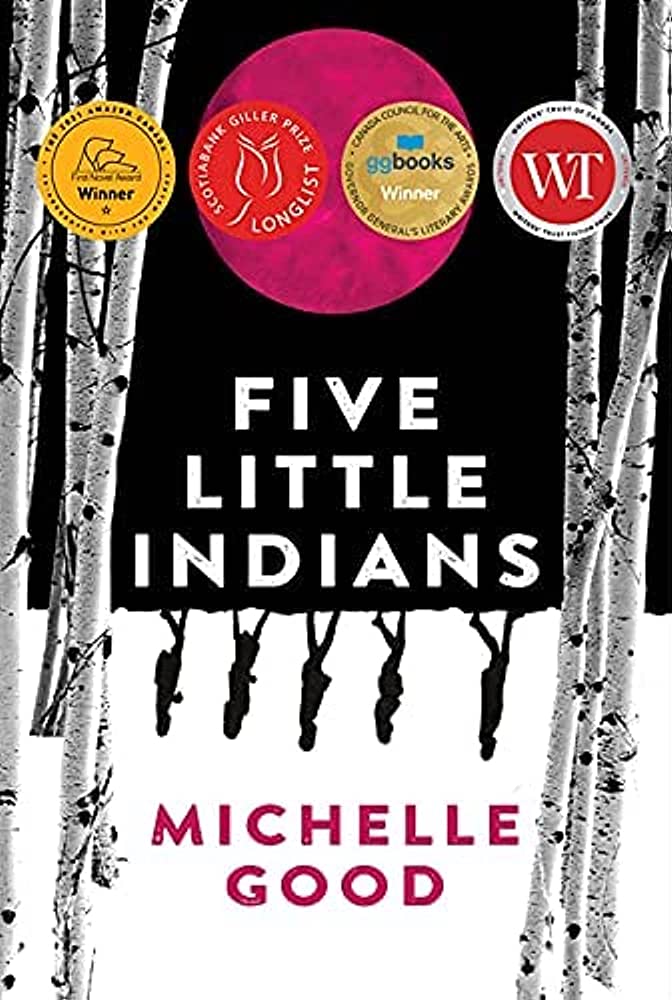
Five little Indians
Good, Michelle, author.
2020

cover art

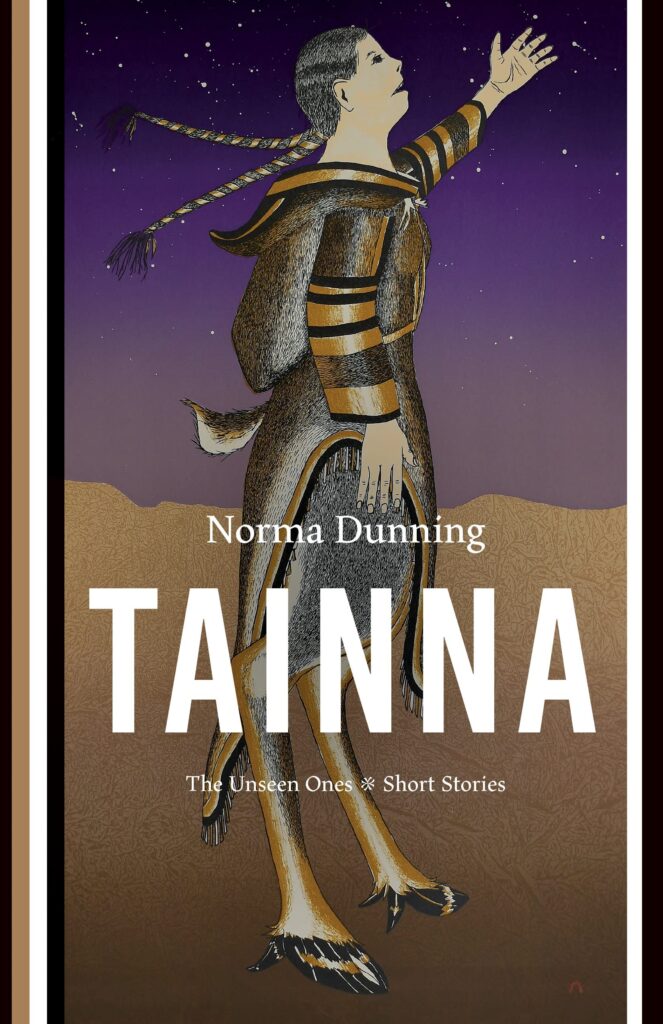
Tainna = The unseen ones : short stories
Dunning, Norma, author.
2021

cover art

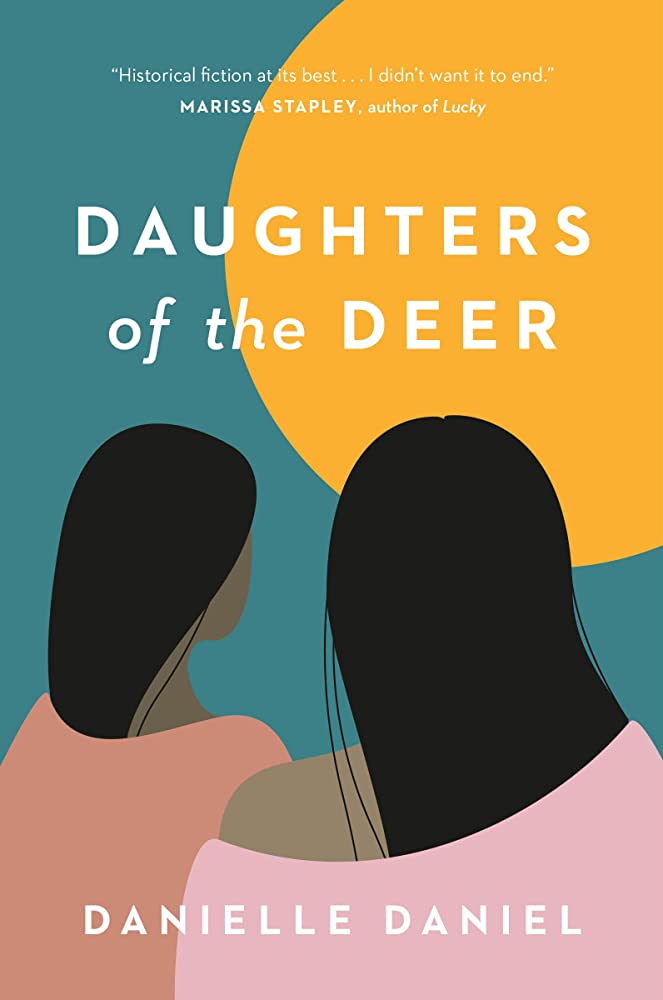
Daughters of the deer
Daniel, Danielle, author.
2022

Non-Fiction

cover art

Indian in the cabinet : speaking truth to power
Wilson-Raybould, Jody, 1971-, author.
2021

cover art

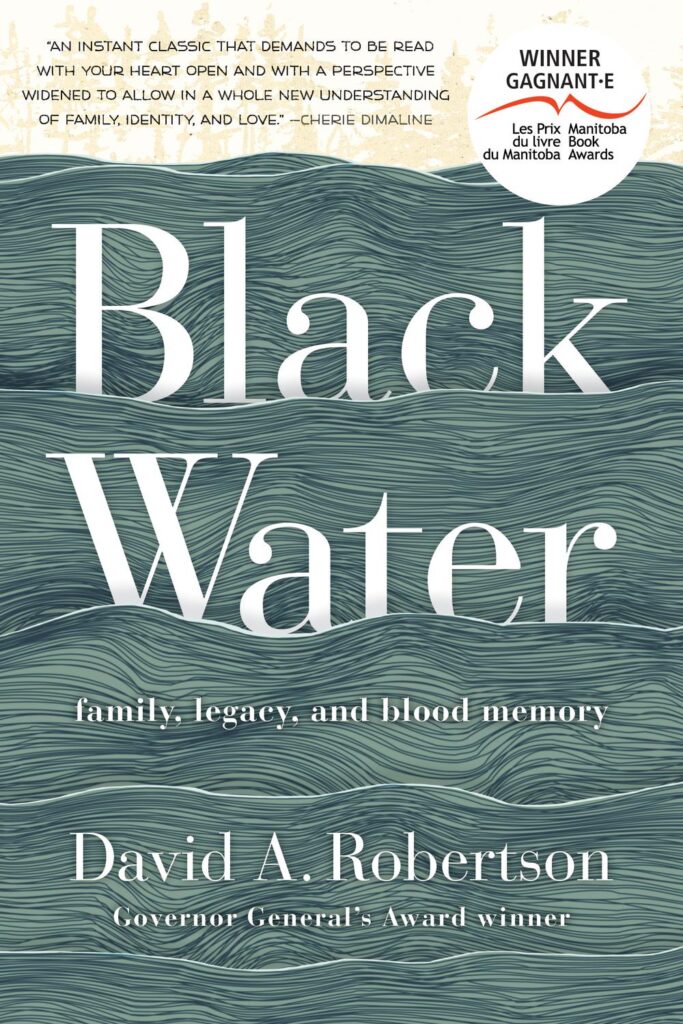
Black Water : family, legacy and blood memory
Robertson, David, 1977-, author.
2020

Hope to see you there! If you have any questions or feedback for the Library, come and visit us in person or send us a message through our Ask Us Chat — we’d love to hear from you.

Written by Linda Fox – Library Technician, Program Support and Promotion

Know Your Resources! Part 2: Alexander Street Nursing Video Collections

May 29, 2023

The Library at RRC Polytech has an abundance of resources to help you with your studies, research, and even pastimes. Over the next few weeks, we will highlight some of the fantastic databases that you have access to.

What are databases?

So, databases. What are they? How are they useful? And why are there so many? The databases we subscribe to are specifically chosen to align with the college’s programs, initiatives, and individual courses that are offered to our students. Each database has specific information on areas of interest to help with your studies. Some databases are specifically ebooks, some are journals on the latest information in the field, and some are entirely composed of videos.

To optimize the availability of information, there are several databases we subscribe to. The great thing about this is you simply choose one database and search for what you need as opposed to having too many results about irrelevant topics.

Each database has different tricks and tips to make sure you’re able to search for the right information. They’re not all set up the same and each will have its own set of rules to make sure you’re getting the most out of it.

Let’s explore one of our newest additions to the database collection.

Two collections offer over 600 videos on nursing topics

This week’s featured resources are collections within a new database that RRC Polytech’s library has decided to try out. The database itself is called Alexander Street. We have subscribed to two different collections, which are also referred to as channels, within it: Nursing and Mental Health in Video: A Symptom Media Collection and Nursing Education in Video: Third Edition. Together, both collections provide over 600 videos on healthcare topics to help with studying or teaching.

Collection 1: Nursing and Mental Health in Video: A Symptom Media Collection

If you’re looking for information related to mental health, this will be a resource for you. This extensive collection has real case studies of different forms of mental illnesses and their symptoms. The information provided will help to understand patients and key takeaway videos for case studies. 

Collection 2: Nursing Education in Video: Third Edition

Medcom has been providing high-quality, award-winning training videos for healthcare professionals for years. Luckily, all their up-to-date videos can be found within this collection. Useful for professionals and students alike, the training videos are real examples of clinical practice.

Since Alexander Street is a database and there are many different channels, searching for information can be a little overwhelming and even frustrating. Below are some ways to maximize your results and make sure you’re finding relevant content.

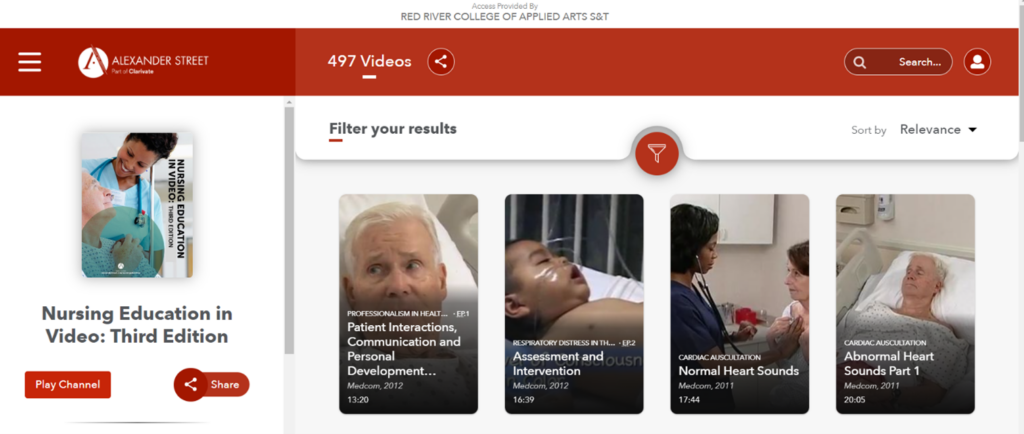
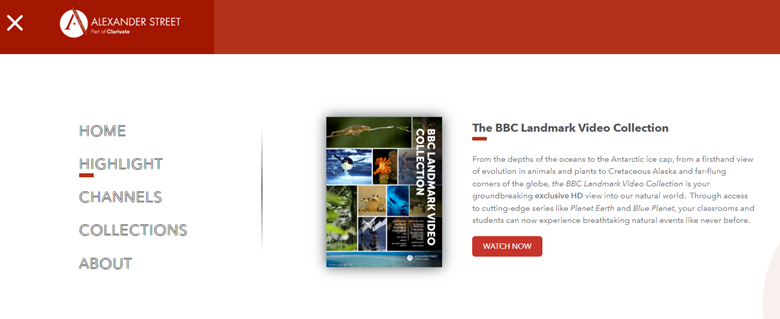
When you first open the database, you’ll be on the front page of the collection that you’ve chosen, from the Databases A-Z List, which will look like the image below.

The opening page of the collection within the Alexander Street database.

From the front page of the collection, you can see there are a few ways to browse videos by using a search bar, filtering, or playing the entire channel.


When Using the Search Bar, Filter to “Current Channel”

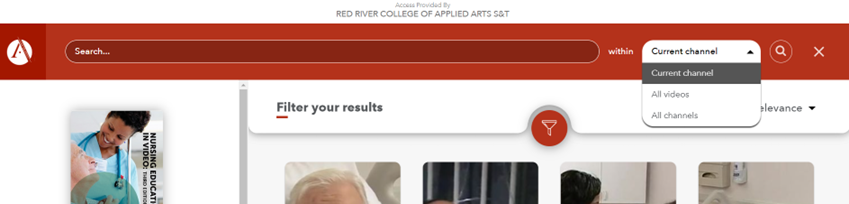
The search bar of this database is finicky. As mentioned, Alexander Street hosts many different collections/channels. If you search for something incorrectly, it may show you content that you will not have access to. When you begin a search, make sure that the filter is set to “Current channel” (as shown in the image below).

This image shows how the filter beside the search bar is set to “Current channel.”

If you use this filter, you’ll be able to find the appropriate results which you can either filter through or browse through later.

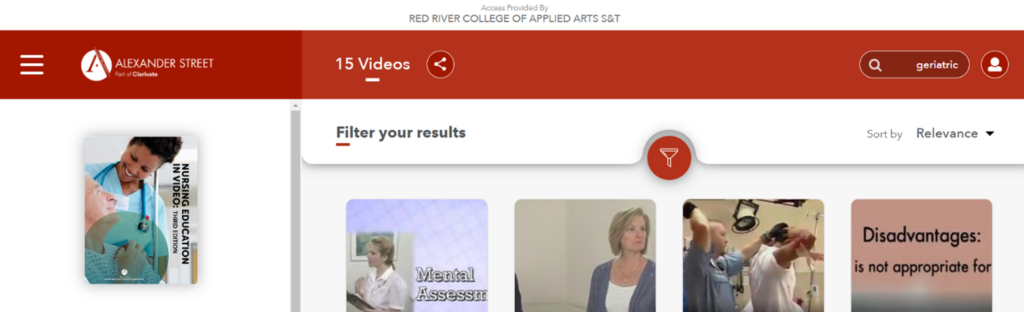
Search results for the keyword “geriatric,” using the “Current Channel” filter.

Without the “Current Channel” filter

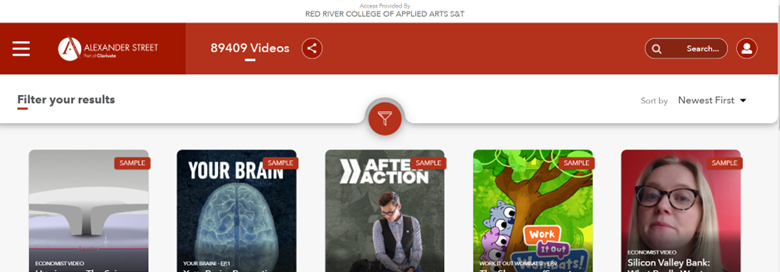
What happens if you forget to do that and you search in “All videos” or “All channels?” Then your results are going to be skewed, as shown in the image below.

This search didn’t filter to “Current Channel,” and produced results with irrelevant topics and videos that aren’t available to us.

Return to the Nursing Video Channels

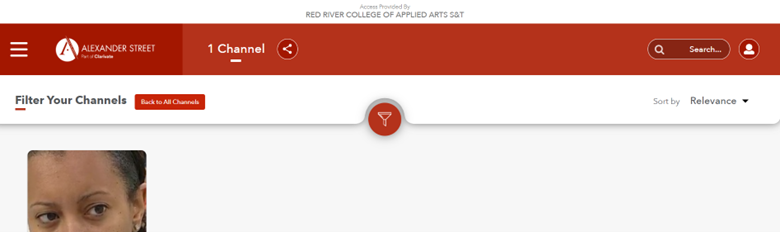
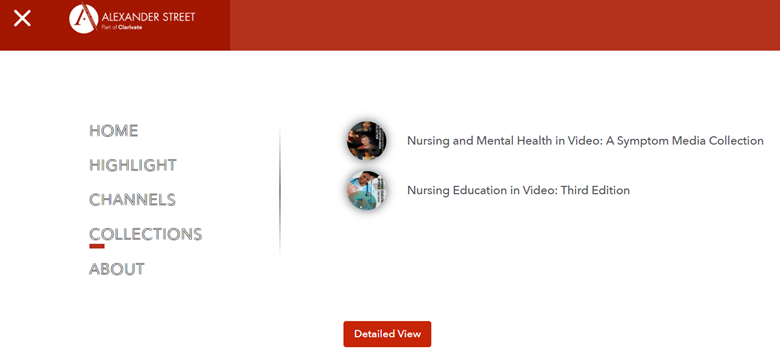
You can get back to the channels owned by RRC Polytech by clicking the menu bar on the upper left corner of the page (shown below).

From here, select “Collections”

You will be taken to this page where you can go back to browsing our subscriptions.


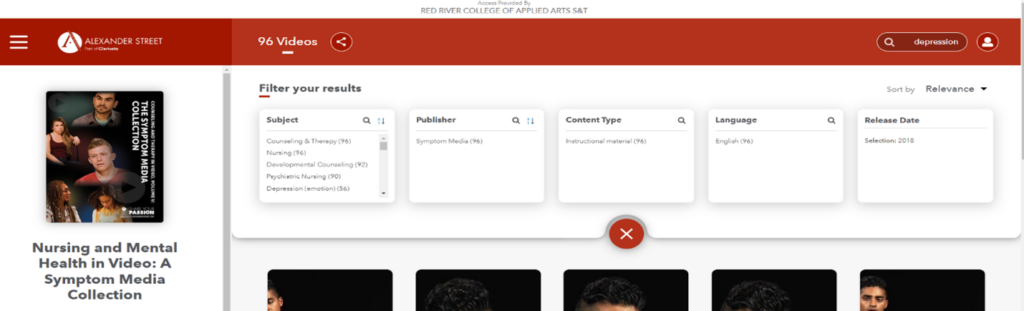
Filtering results in conjunction with a keyword search

You can use filtering alongside search terms, as shown below searching with the keyword “depression.”

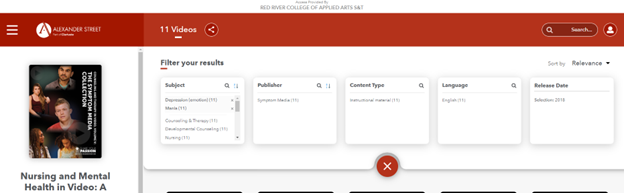
Filtering results without a keyword search

Generally, when you’re searching through databases the filters go alongside a search term. However, in this database filtering can be used on its own without having to use search terms. It’s very convenient because it lets you see what kind of options are available to browse and you’re able to narrow down your results significantly.


With your new knowledge of Alexander Street, you’re now ready to look at these resources on your own. Keep your skills fresh and expand your existing knowledge by looking at these great healthcare resources.

Stay tuned for more of “Know Your Resources!”

Keep an eye out for the next installment of Know Your Resources! where we will continue to explore all the great resources the Library has to offer. If you have any questions on how to access or navigate something come and visit us in the Library or send us a message through our Ask Us Chat — we’d love to assist you.

The previous edition of Know Your Resources! is available here >> Part 1: SafetyHub

Written by Justine Hawley – Library Resource Management Technician

RED Forum Spotlight! Building and Using Open Educational Resources

May 25, 2023

At RRC Polytech, faculty and staff have begun using existing Open Educational Resources (OER’s) to support their work with students. This past year, Rebecca Hiebert and Emilie Jackson, while working in the Academic Success Centre in Library and Academic Services, adapted a compilation of OE resources to create College Success for Newcomers, an OER in the form of an e-book.

What are Open Educational Resources (OERs)?

OERs can come in many different formats. In general, OERs are educational materials such as: textbooks, problem sets, assessments, slide decks, videos, lesson plans, study guides, handouts, info graphics, and other educational content that can be used for free and without permission.  

OERs are resources published under an open license, such as Creative Commons allowing these resources to be freely adapted. Under an open license instructors and students can retain, revise, remix, reuse and redistribute these educational resources. 

Want the full story on how to adapt an OER?

Be sure to join us at the RED Forum session Success for Newcomers: Building and Using Open Educational Resources, on Friday, June 2 from 1:15-2:15pm.

Rebecca Hiebert and Ebony Novakowski will present about the journey to adapting an OER as well as best practices for OER Licensing and information on accessing OERs.

How Rebecca and Emilie got started

At the start of the pandemic, Rebecca struck on a brilliant idea to help students learn how to write outlines when taking notes in class or brainstorming to write reports. Rebecca hoped to create a video of herself using PowerPoint slides with a TED Talk clips to inform a step-by-step guide that demonstrated how to listen to content in a video, analyze the main ideas, and capture these in an outline. Being proactive and respectful of copyright concerns, she reached out to the TED Talks people to request permission to use their video in this way. After a long month of waiting, she received an answer, but not the one she was hoping for. 

This led to a conversation with RRC Polytech’s Copyright Officer, Ebony Novakowski, who introduced Rebecca to an online repository of open videos that she could use in the resource she wanted to create. With the new resource under her belt, Rebecca was intrigued by the possibility of creating additional OER. A few months later, with help from Emilie Jackson, and funding support for the Campus Manitoba PressbooksEDU Network grant they were on their way to creating a localized version of College Success for Newcomers: a guide to provide language and academic supports for new students in Manitoba.

Want to learn more about the OER College Success for Newcomers?

This OER resource supports newcomer students and can be used by anyone in North American (or anywhere really!) The goal is to reduce duplication where instructors and support staff are all trying to create and recreate similar resources to help international students adapt to the Canadian college setting. This resource is free to be used and adapted further by instructors and support staff worldwide. Additionally, the resource provides multiple perspectives so that international students can learn about Canadian culture and the diverse experiences of the people who live here.  

Where is the College Success for Newcomers OER available?  

The OER is available online (worldwide) through the platform Pressbooks. The OER can be downloaded into a variety of formats including PDF which could be printed out or viewed offline as well as Pressbooks XML which can be used to adapt the content into future OERs. The OER can be used by anyone, anywhere without permission. It is entirely open and free to access.

Click on the button to view the OER:

How is this OER being used at RRC Polytech?  

One perk of Open Educational Resources is that they benefit multiple departments, schools, and educators. and by creating resources under open licenses, they can be easily shared without preventative restrictions to instructors who want to use and modify the resource. They can also be shared without cost to students.

College Success for Newcomers will be used in the following departments and programs: 

  • The Academic Success Centre will use College Success for Newcomers OER when working with international students both in 1:1 tutoring and when leading workshops. 
  • The Social Innovation and Community Development department will use the OER in courses that are blended with international students, Canadian born students of diverse (European) ancestry, and Indigenous students.  
  • Communications instructors will be implementing the OER into the fall version of COMM 1173, Communication Strategies, that will reach over 1,200 students at RRC Polytech.  
  • Instructors will be using the OER in the Department of LINC English Language Learning and Newcomer Integration (previously the Language Training Centre) IRCC English Language Programming. 

Looking for Personal or Departmental OER Support?

Open Educational Resources are accessible online and free to share and use in any educational setting. There are already many existing OERs available so if you are looking for a resource to support students, reach out to the library staff and they can help you search for an OER to meet your needs.

If you have an idea for a resource that would benefit others, you may want to consider adapting it into an OER to make it available to everyone. Reach out to the Copyright Officer to learn more! 

Submitted by Ebony Novakowski – Copyright Officer, Library and Academic Services
RRC Polytech campuses are located on the lands of the Anishinaabeg, Ininiwak, Anishininwak, Dakota Oyate, and Denésuline, and the National Homeland of the Red River Métis.
We recognize and honour Treaty 3 Territory Shoal Lake 40 First Nation, the source of Winnipeg’s clean drinking water. In addition, we acknowledge Treaty Territories which provide us with access to electricity we use in both our personal and professional lives.