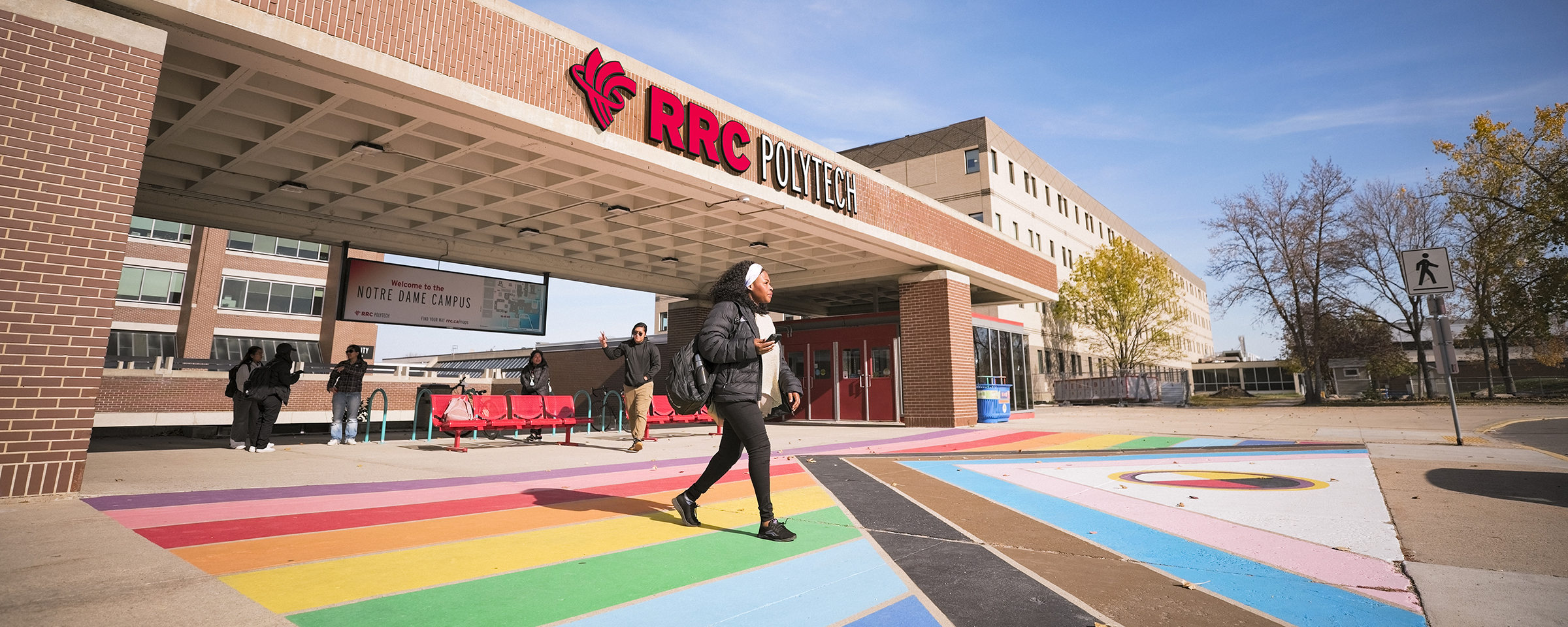
Woman walking in front of RRC Polytech's Notre Dame Campus

News

Equity, Diversity and Inclusion

Eight annual Truth and Reconciliation and Community Engagement Week underway

September 29, 2026

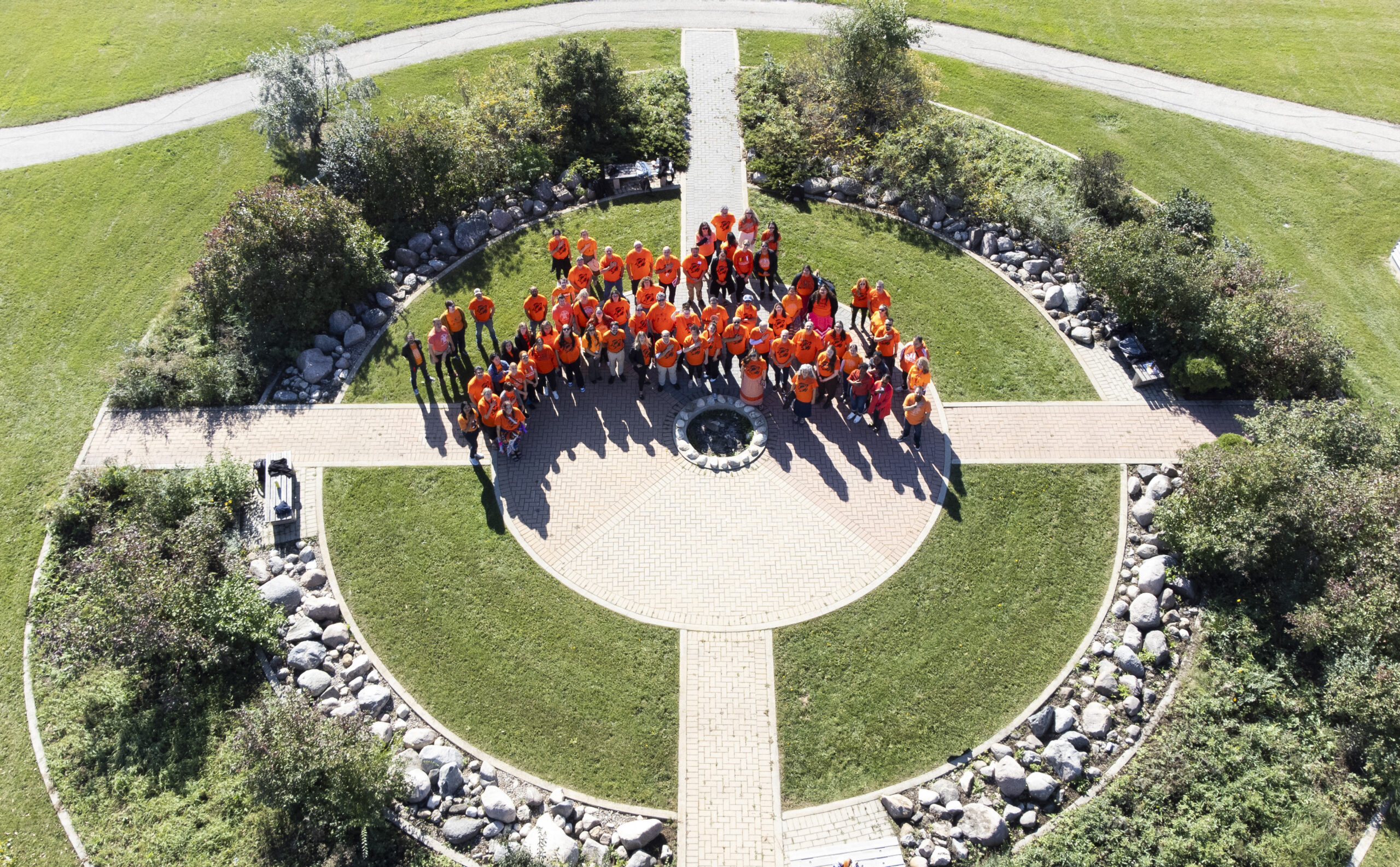
RRC Polytech is hosting its eighth annual Truth and Reconciliation and Community Engagement Week to mark the National Day of Truth and Reconciliation, also known as Orange Shirt Day, on Wed., Sept. 30.

While Truth and Reconciliation is a year-round commitment for RRC Polytech, this week is a focal point that aims to deepen understanding of Indigenous histories, cultures and perspectives while encouraging meaningful action toward reconciliation through a series of presentations, workshops, cultural teachings and immersive experiences.

“Truth and Reconciliation is an ongoing process of learning and integrating new information, disentangling ourselves from misinformation and unlearning what we think we know, and opening ourselves to truths that might surprise or challenge us,” says Carla Kematch, Director, Truth and Reconciliation and Community Engagement.

“Every session we host this week is something that each participant can take back to the classroom, to the workplace and to their personal lives, so they can continue the lifelong journey of learning today into the future as we work towards building a better future for all Canadians.”

Truth and Reconciliation and Community Engagement Week began yesterday with a special Author’s Talk with former Manitoba MLA and community leader Kevin Chief, who discussed his new memoir With a Name Like Chief: Reflections on Recovery and Identity Through the Seven Sacred Teachings at the Roundhouse Auditorium in Manitou a bi Bii daziigae.

RRC Polytech is also launching the immersive anti-racism experience How the Dog Learned to Dance, created in partnership with its Emerging Media Production and Truth and Reconciliation and Community Development departments, as well as Ininew artist Heather Endall and Swampy Cree author Michael Hutchinson.

Sessions scheduled throughout the week include Anishinaabemowin language workshops with instructor Corey Whitford, explorations of traditional cedar teachings for wellness and balance, hands-on cultural learning opportunities with Knowledge Keeper Richard — including buffalo hide tanning and scraping and buffalo skull cleaning — and a closing keynote address by former Assembly of First Nations National Chief Ovide Mercredi, focusing on leadership and the ongoing work of removing barriers to Indigenous student success in post-secondary education. Read More →

New partnership to provide ASL training for Indigenous women

September 22, 2026

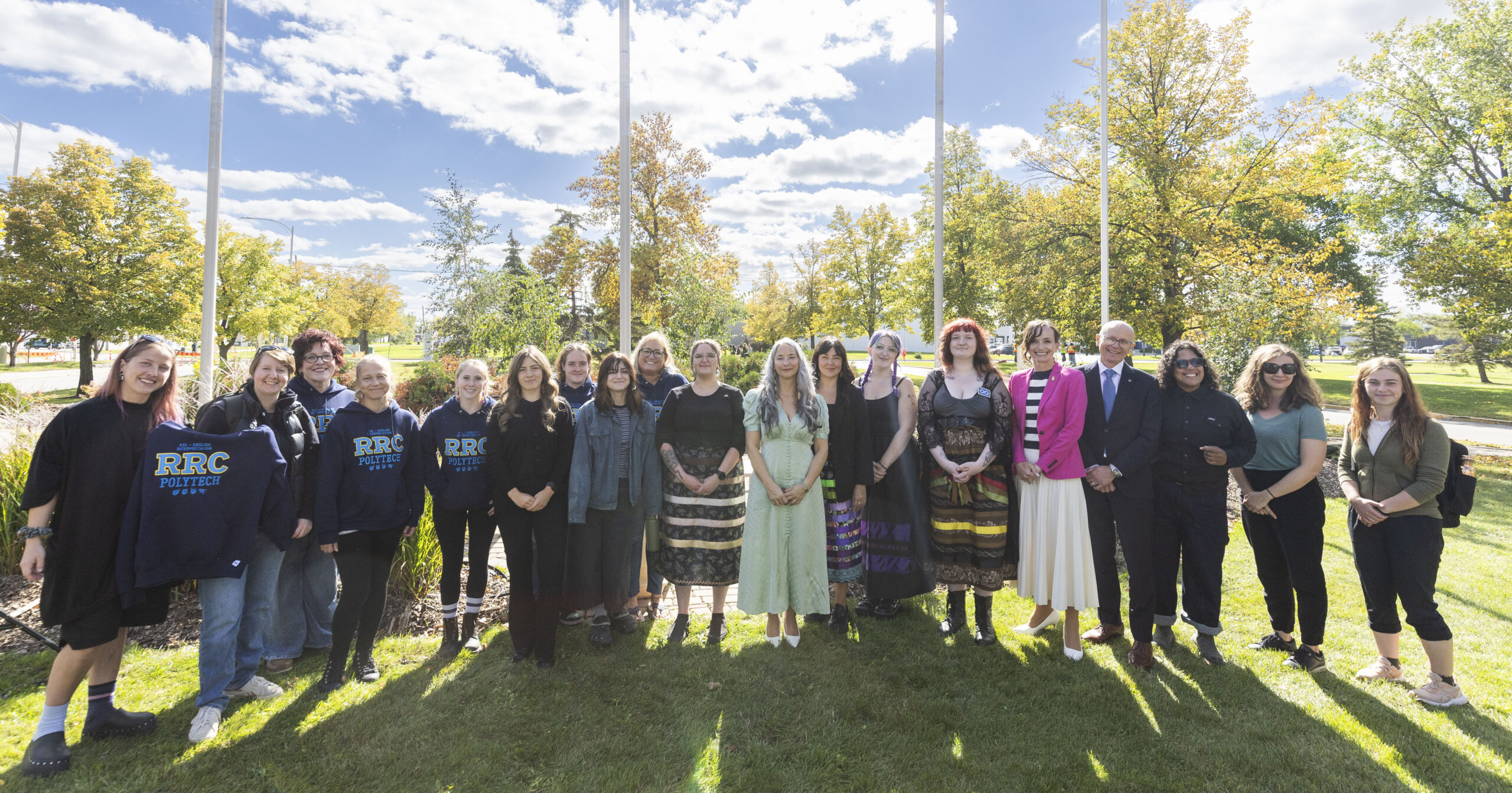
The Manitoba government will invest $146,000 in new American Sign Language (ASL) training opportunities for Indigenous women through a partnership with RRC Polytech, it was announced yesterday.

Provided through the province’s Mino’Ayaawag Ikwewag (All Women Doing Well) Strategy, the funding includes $18,000 for the development and delivery of three ASL micro-credentials on reserve and $138,000 over three years to fund four reserved seats for Indigenous women in RRC Polytech’s ASL-English Interpretation program.

Seats will be fully funded and will include tuition, books, fees and access to wraparound student supports.

“This important partnership … reflects our shared commitment to creating more inclusive communities and expanding educational opportunities for Indigenous learners,” says RRC Polytech President Fred Meier.

“By increasing access to ASL education through new micro-credentials and fully funded seats in our ASL-English Interpretation program, we are helping to remove barriers, strengthen representation in the profession and build capacity to support Deaf and hard-of-hearing individuals in Indigenous communities across Manitoba.”

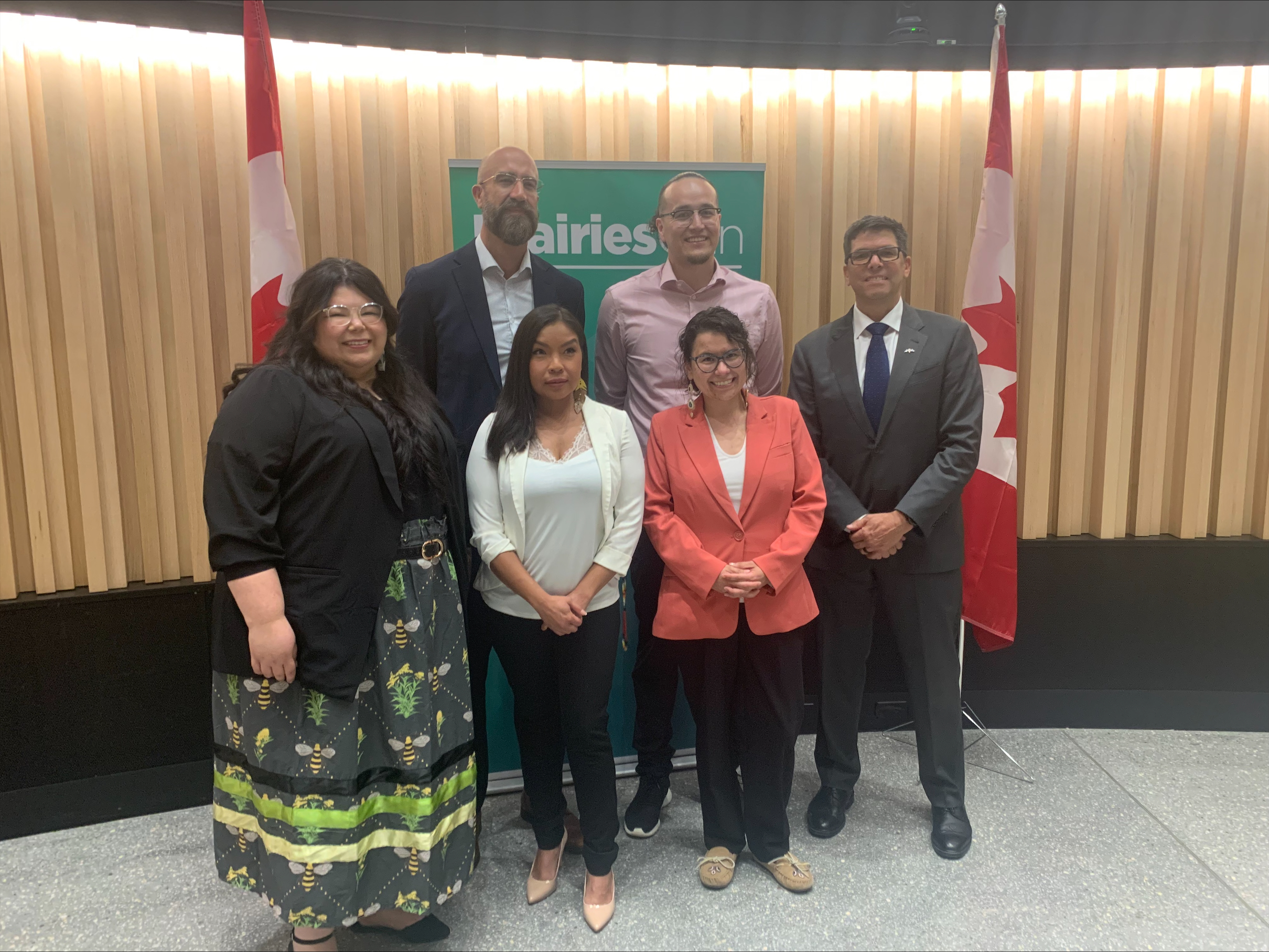
The partnership was announced yesterday at RRC Polytech’s Notre Dame Campus by provincial Families Minister Nahanni Fontaine, who noted the new micro-credentials will provide an introduction to ASL and Deaf culture and will be equivalent to ASL 1, a prerequisite for entry into the ASL-English Interpretation program.

Training will be delivered in community to help reduce barriers to participation, and will accommodate up to 15 learners per cohort. The curriculum will incorporate Indigenous perspectives and approaches, and be developed in partnership with Indigenous communities to ensure training reflects local needs and experiences. Read More →

Commitment in action: Truth and Reconciliation advanced through collective bargaining

January 26, 2026

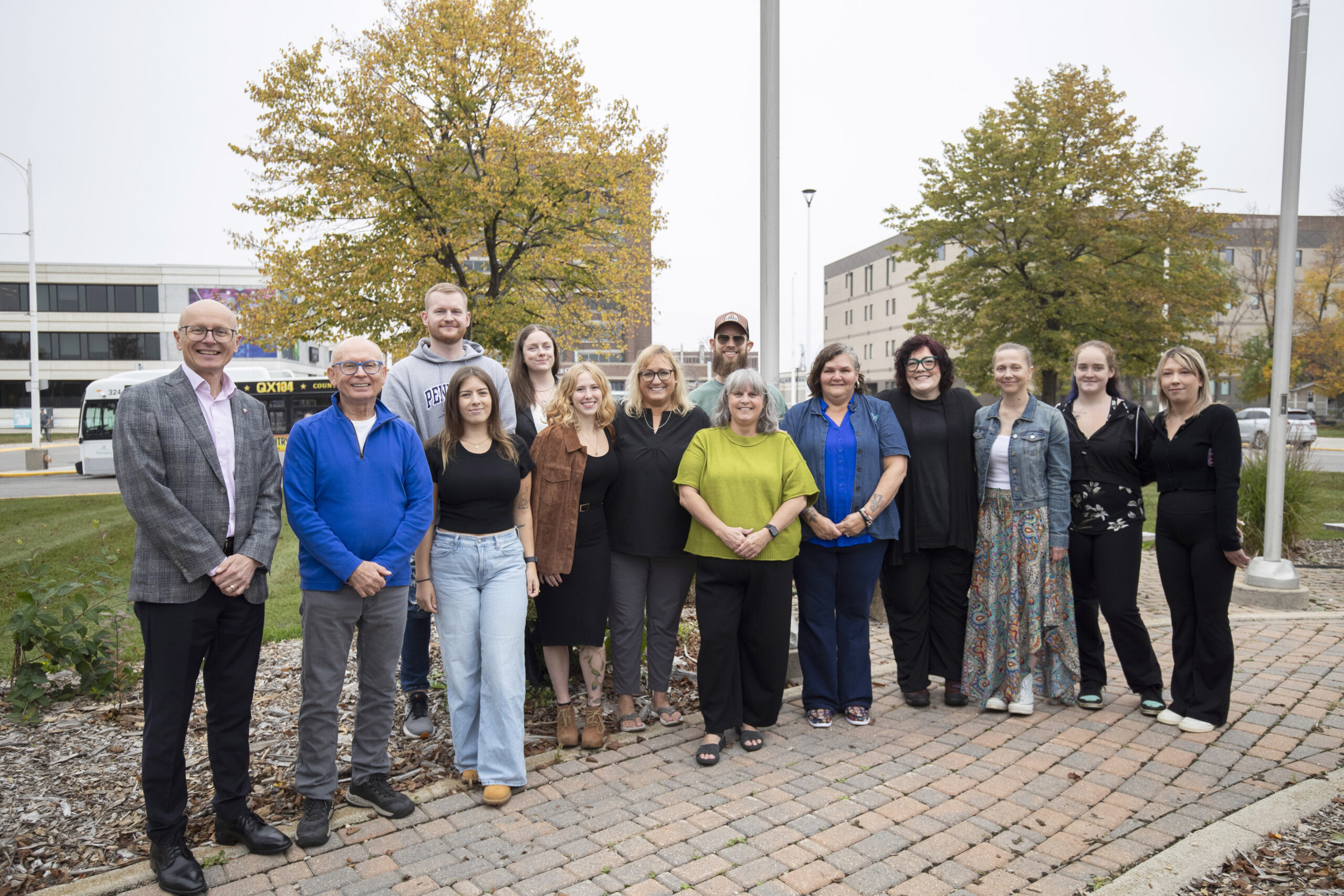
Today, RRC Polytech and the Manitoba Government and General Employees’ Union (MGEU) Local 73 celebrated the signing of an agreement that puts change into action to decolonize and enhance equity and inclusion within the Polytech’s Collective Agreement.

This collaboration — the first of its kind — represents a new and transformative approach to advancing the Truth and Reconciliation Commission of Canada’s Calls to Action within labour relations and the collective bargaining process. What sets it apart is the intentional approach rooted in Indigenous knowledge and ways of being, guided by a Knowledge Keeper and supported by both RRC Polytech and MGEU.

“The signing reflects the collaborative work of RRC Polytech and MGEU to live our shared values, advancing Truth and Reconciliation organizationally and within Manitoba,” says Fred Meier, President and CEO, RRC Polytech.

“This process stands out across Canada, setting a precedent for other post-secondary institutions by aligning with Truth and Reconciliation and Community Engagement (TRCE) and Equity, Diversity, Inclusion and Accessibility (EDIA), honouring Indigenous Knowledge Protocols, and fostering leadership, mentorship and systemic change at the Polytech.”

To review RRC Polytech’s collective agreement, a joint Truth and Reconciliation Working Group was established through an expression of interest, comprised of eight staff and faculty representing both parties.

Guided by Kookum Barbara Bruce’s teachings, ceremony and wisdom, the group ensured the process moved forward in a good way, grounded in Indigenous Knowledge Protocols. Using priority-setting and Design Thinking — a non-linear, iterative process that reflects true Indigenous engagement — the working group developed recommendations under key themes for the collective agreement. Read More →

Flag raising marks International Week of Deaf People

September 23, 2025

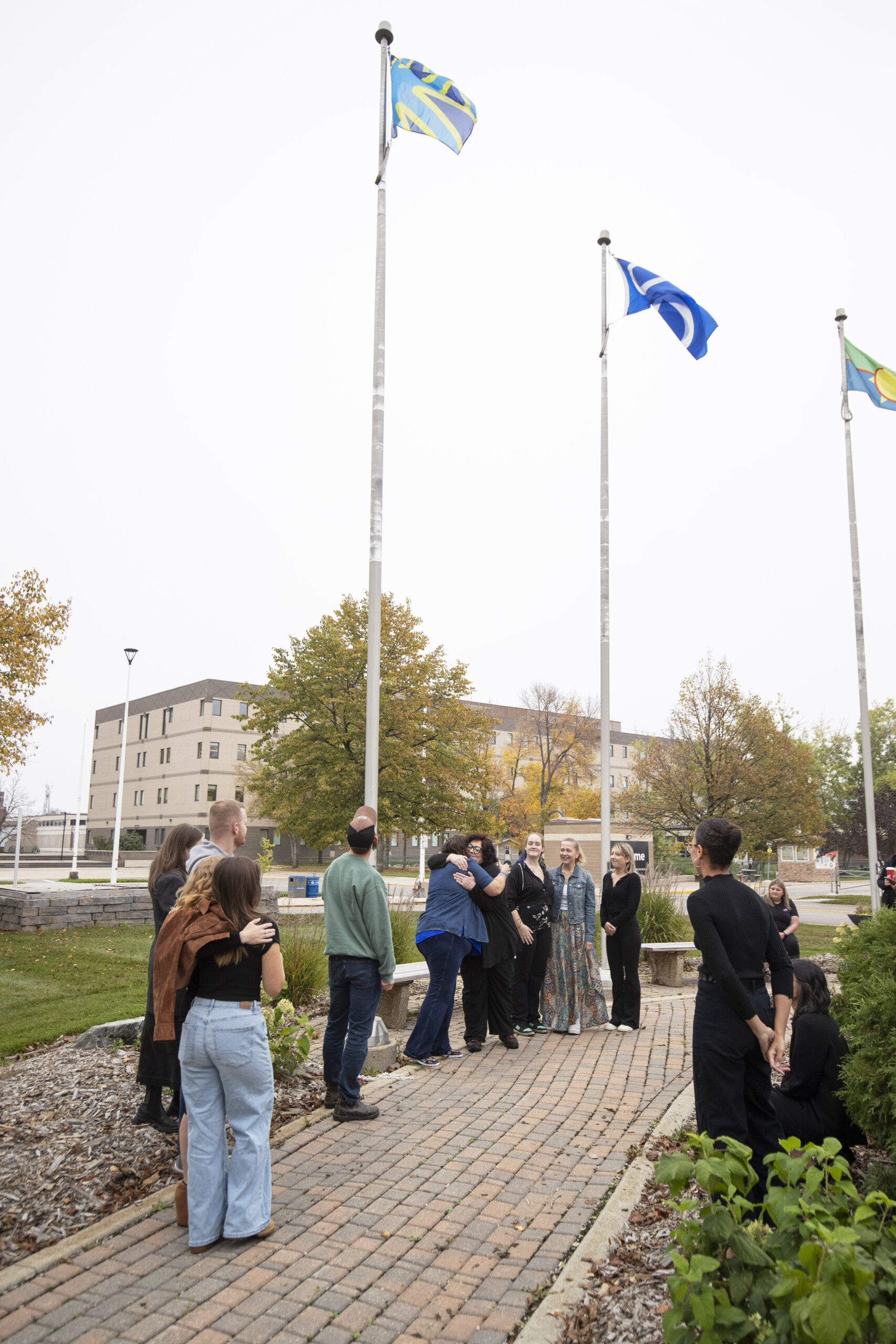
There’s a meaningful new addition to the flags that fly on the front lawn at RRC Polytech’s Notre Dame Campus. This morning, in recognition of the International Week of Deaf People and the International Day of Sign Languages, the Polytech raised the Deaf Flag for the first time in its history, following a short ceremony open to the community.

“Today is a wonderful celebration of our values in action,” says Fred Meier, President and CEO. “RRC Polytech strives to be a place where all members of our community can learn, work and thrive. Our hope is that through raising this flag, we are sending a powerful message to the Deaf and Hard of Hearing community that they are welcome and supported on our campuses.”

Deaf staff and faculty members initially raised the idea of flying the flag to demonstrate the Polytech’s ongoing commitment to accessibility, and to show all members of the Deaf and Hard of Hearing community that they have a place at RRC Polytech.

People looking upwards at the newly raised Deaf Flag outside RRC Polytech's Notre Dame Campus.

“The Deaf Flag is a symbol of unity and inclusiveness, making the timing of today’s event all the more significant as we welcomed the return of the ASL-English Interpretation program to RRC Polytech this fall,” says Cheryle Broszeit, an instructor at RRC Polytech.

The ASL (American Sign Language)-English Interpretation program recently underwent an academic transformation of its content, design and delivery to better meet the emerging needs of learners and the community and was led by feedback from the Deaf and interpreting communities. This fall, there are nine students enrolled in the renewed program.

“The ASL-English Interpretation program underscores the value of the connection between the Deaf and Hard of Hearing and interpreting communities,” says Broszeit. “The new and improved program now has a stronger foundation for our students, so they can begin their careers as interpreters confidently and competently once they graduate.” Read More →

RRC Polytech hosts seventh annual Truth and Reconciliation Week

September 23, 2025

RRC Polytech is hosting its seventh annual Truth and Reconciliation and Community Engagement (TRCE) Week to mark the National Day of Truth and Reconciliation, also known as Orange Shirt Day, on September 30.

This year, TRCE Week began on Monday, Sept. 22, with a virtual keynote from Phyllis Webstad, whose story of Residential Schools started the Orange Shirt movement in 2013.

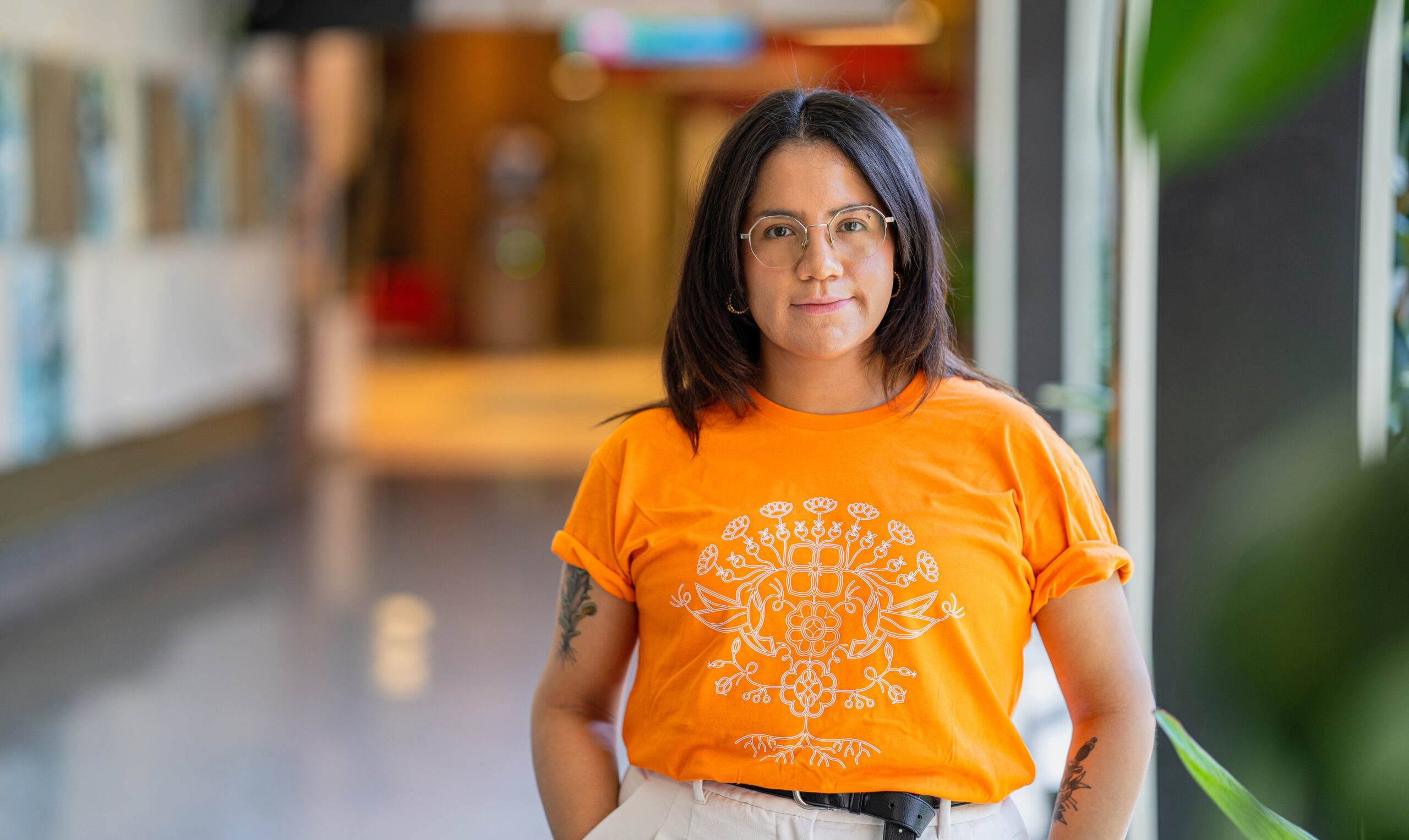
Portrait of RRC Polytech Nursing student Dasia Chatkana, wearing the t-shirt she designed for Orange Shirt Day.RRC Polytech has also partnered with Nursing student Dasia Chatkana, whose original design is featured on the RRC Polytech Orange Shirt in support of the Mínwastánikéwin Truth and Reconciliation Award, which is awarded to Indigenous students every year in January.

“Every year for seven years, the RRC Polytech community has come together to learn about Truth and Reconciliation and Canada’s true history from Indigenous perspectives,” says Jamie Wilson, RRC Polytech’s Vice-President, Indigenous Strategy, Business Development and Research.

“It’s important for us as an educational institution to not only affirm these histories centring Indigenous Peoples, but also to raise awareness to non-Indigenous Canadians that what they were taught in school doesn’t necessarily reflect all realities.”

TRCE Week is five days filled with sessions to educate the RRC Polytech community about the many different responsibilities of Truth and Reconciliation.

While Truth and Reconciliation is a year-round commitment for RRC Polytech, the National Day for Truth and Reconciliation is a focal point that encourages employees and students to immerse themselves in Indigenous Teachings, storytelling and experiences.

Opportunities to cultivate understandings of the true history and current issues impacting Indigenous Peoples, and reconciliation efforts by society as a whole, contribute to a stronger, more unified community that benefits all members. Read More →

RRC Polytech launches new incubator for Indigenous entrepreneurs

June 26, 2024

This week, RRC Polytech unveiled its new Indigenous entrepreneurship acceleration and incubation initiative, Mittohnee Pogo’ohtah (Mittohnee), in the Roundhouse of Manitou a bi Bii daziigae — the College’s downtown hub for technology, collaboration and community.

A first of its kind in Manitoba, Mittohnee transforms experiential learning, entrepreneurship and innovation into business opportunities for Indigenous Peoples in Manitoba.

“Creating opportunities to advance Indigenous entrepreneurship is a role that RRC Polytech must play as we continue to support student success in Manitoba,” says Jamie Wilson, the College’s Vice-President, Indigenous Strategy, Research and Business Development.

“Lifelong learning is second nature and something we pass down from generation to generation. Mittohnee Pogo’otah (Mittohnee) is such a lesson, one my father learned in his youth from an older member of our community on a hunting trip. It means ‘If you are going to do it, do it right. If you don’t know how to do it right, learn how.’ This is where we can bring together the discipline and innovation to learn how.”

Mittohnee helps Indigenous students start their own businesses as they graduate out of RRC Polytech’s entrepreneurship-based Social Innovation and Community Development program.

It does so by connecting them with a network of resources and expertise focused on process, people, leveraging existing capacity and addressing relevant recommendations of the Truth and Reconciliation Commission of Canada’s 96 Calls to Action.

It also supports established Indigenous entrepreneurs or band-operated businesses looking to pivot, scale up or enter new joint ventures by serving as an experienced, independent third party.

The College’s ability to remove barriers and create better access for Indigenous entrepreneurs to become successful and drive the province forward is made possible by the power of partnerships with the federal and provincial governments, and generous corporate partners like TD Bank Group and Canada Life.

“Through Mittohnee, we will create the space and provide the right resources and mentorship to help transform the business ideas that Indigenous students develop in the classroom into successful ventures that can positively impact their community,” says Wilson.

“This is a uniquely Manitoba example of economic reconciliation in action, and with support from the province, alongside other funders, this will be the first post-secondary institution to offer this unique initiative here in the province.” Read More →

RRC Polytech trades camp takes early approach to equal representation

October 5, 2023

As Manitoba continues to grow, there’s no question that the demand for skilled tradespeople is as high as its ever been.

According to the province’s labour gap statistics, trades such as automotive service technicians, carpenters, electricians and construction labourers are some of the most in-need career paths over the next five years.

Trades, though, can be a male-dominated space. According to a 2020 study by BuildForce Canada, just five per cent of the 1.1 million trades people in Canada identify as female. While this is a significant increase from where the industry was 10 years ago (3.7 per cent in 2008), it shows just how important equal representation and creating space is when it comes to young women entering trades.

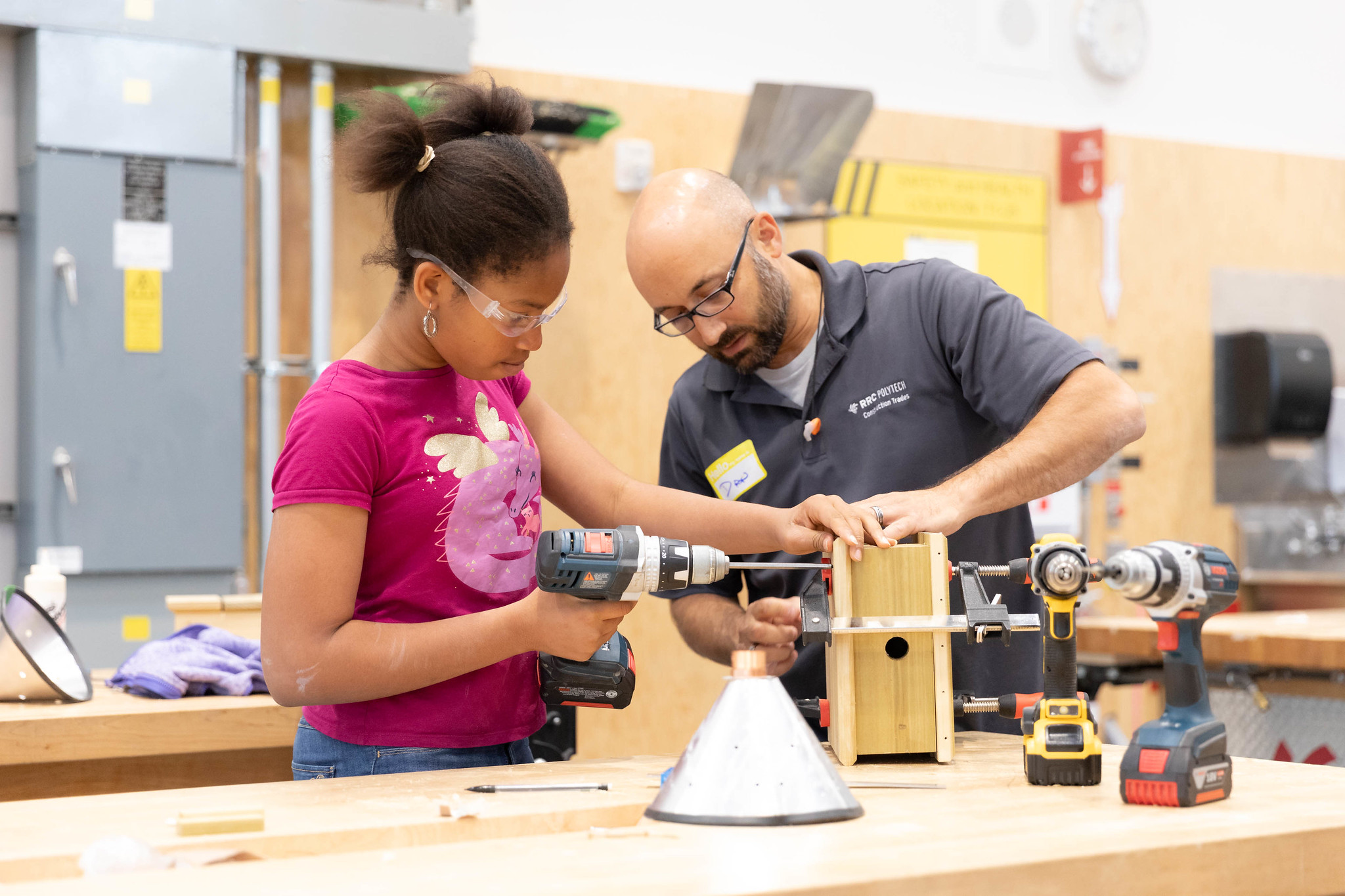
Enter the Girls Exploring Trades and Technology camp, or GETT. Started by RRC Polytech in 1999, GETT is a summer camp at the College’s Notre Dame Campus where instructors and staff help introduce young girls aged 12 to 14 to a variety of trades — free of charge.

Male instructor and preteen girl using power drill in RRC Polytech's carpentry lab “The girls get exposure to a whole lot of different non-traditional career options for them,” says Christina Lambert, who has been running the camps since 2006.

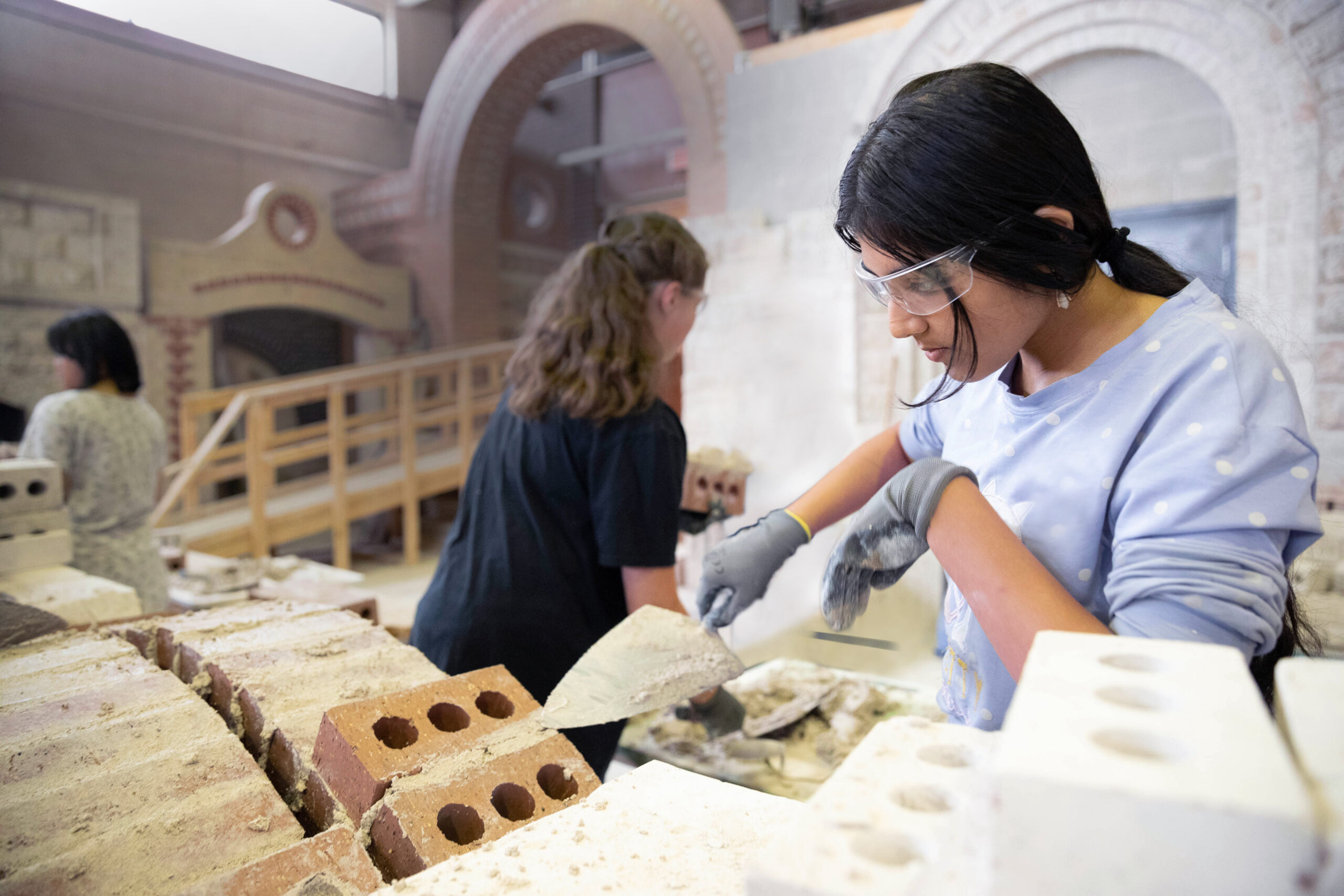
In a whirlwind four days, camp participants are introduced to plumbing, woodworking, cabinetmaking, welding, robotics, transportation, bricklaying, and more. At the end of their camp experience, each participant brings home a project made using experience earned in the camp: a desk lamp built with iron pipe. Read More →

College partners with Métis artist on Red Shirt design to honour MMIWG2S

October 4, 2023

Tattoo and multimedia artist Shayre Curé says her art is often specifically created for the enjoyment of clients and customers, whether it’s displayed in their houses or on their skin.

This year, Curé partnered with RRC Polytech to create an original Red Shirt design to honour Missing and Murdered Indigenous Women, Girls and Two Spirit People (MMIWG2S) and to support the Mínwastánikéwin Truth and Reconciliation Award for Indigenous students.

“As a Métis artist, my goal is to create art that brings awareness to this important issue,” says Curé. “I want my art to not only reflect cultural heritage, but to inspire future generations to continue the fight for justice, equality, and empowerment.”

The new design portrays a woman with the emblematic handprint over her mouth representing the “No More Stolen Sisters” movement, which was launched to express the outrage and grief over the loss of so many women, girls and Two Spirit people that — in many cases — could have been prevented. Curé worked in collaboration with a committee of Indigenous staff at the College to come up with the concept.

Her relationship with RRC Polytech first began earlier this year, when the Indigenous Student Support Centre purchased a piece from her entitled “The Silent Genocide on Turtle Island.” Read More →

RRC Polytech partners with Ininew artist and grad on original design for Orange Shirt Day

September 29, 2023

RRC Polytech has partnered with Graphic Design graduate Leticia Spence — an Ininew artist and entrepreneur from Pimicikamak in Treaty 5 Territory — to create an original design for Orange Shirt Day and Canada’s National Day for Truth and Reconciliation, which is tomorrow, Sept. 30.

“Orange Shirt Day: Every Child Matters is a solemn day where we recognize and honour residential school survivors and those who never made it back to their families,” says Carla Kematch, Director, Truth and Reconciliation and Community Engagement at RRC Polytech.

“It’s a day where we take action and raise awareness of the efforts that Indigenous communities and advocates make to find Indigenous children and bring them home. The world needs to know what happened at residential schools and why this work is important. Expressing our message through Indigenous art, teachings and symbolism is how we can heal.

“We’re so honoured to have worked with artist and alumna Leticia Spence. She shared her knowledge and skill to help convey this message of justice and created such a striking and meaningful representation of Every Child Matters.”

Spence graduated from the College in 2019 and has done work for Indigenous Tourism of Canada, the Winnipeg Jets and Manitoba Moose, and the Truth and Reconciliation Commission of Canada, among many other organizations. She created the new Orange Shirt design in consultation with a committee of Indigenous staff members at RRC Polytech.

Spence’s design is intricate and intentional. As with the beadwork she observed family members creating while she was growing up, she wanted to ensure that the Orange Shirt design incorporated the intended energy represented by the Every Child Matters movement.

Close-up of the graphic designed by RRC Polytech grad Leticia Spence for Orange Shirt Day.“I want whoever is wearing this t-shirt to feel a sense of hope and strength as they honour those who are currently being found, while also knowing that it’s okay to create space to honour themselves, as either direct residential school survivors or intergenerational survivors,” says Spence. Read More →

College aims to amplify Indigenous voices, foster learning and healing during Truth and Reconciliation Week

September 25, 2023

RRC Polytech is hosting its fifth annual Truth and Reconciliation Week to mark the National Day of Truth and Reconciliation, also known as Orange Shirt Day, on Sat., Sept. 30.

The week begins Monday, Sept. 25, with the Fall Equinox celebration at Manitou a bi Bii daziigae, and will span over two weeks of student-, staff- and community-led sessions aimed at educating participants about the many different facets and responsibilities of Truth and Reconciliation.

“When RRC Polytech held its first Truth and Reconciliation Week five years ago, two people were leading the charge,” says Jamie Wilson, Vice-President, Indigenous Strategy, Business Development and Research.

“Today, Truth and Reconciliation Week is supported by almost 90 volunteers across all campuses, allowing the College community to come together to learn from and engage with Indigenous People.”

The Truth and Reconciliation Commission of Canada calls on post-secondary institutions to create a more equitable and inclusive society by closing gaps in social, health and economic outcomes between Indigenous and non-Indigenous communities and people.

RRC Polytech’s second strategic commitment is to “commit to Truth and Reconciliation, and pursue equity, diversity and inclusion in everything we do.”

Truth and Reconciliation is not just about providing equal opportunities to Indigenous learners — it is also about educating the publics RRC Polytech serves of the true histories that have often been neglected by western textbooks and reconciling potential dissonance with facts as related by Indigenous scholars, historians and Knowledge Keepers. Read More →

RRC Polytech campuses are located on the lands of the Anishinaabeg, Ininiwak, Anishininwak, Dakota Oyate, and Denésuline, and the National Homeland of the Red River Métis.

We recognize and honour Treaty 3 Territory Shoal Lake 40 First Nation, the source of Winnipeg’s clean drinking water. In addition, we acknowledge Treaty Territories which provide us with access to electricity we use in both our personal and professional lives.