Library

Library and Academic Services

News

Testing the Library and Academic Services Website

November 17, 2021

Earlier in the fall term, we arranged for a small sample of students to review and critique our new Library and Academic Services website. Since we had redesigned the site last summer, we were wondering how it was performing.

In our site redesign we used principles of user centric design. In a nutshell, we attempted to create a site for our users, who were defined in two personas: “Average Student User” and “Average Instructor User.”

This particular test targeted students.

Our Academic Support Coordinator, Melissa Coyle, arranged for meetings with students. Melissa designed the test questions (with input from Linda Fox and Mark Nelson), and she facilitated the meetings, which were formatted in a focus group format, and included a standardized set of questions and a slate of tasks she asked students to perform on our web site.

The students were chosen from different programs and with varying tech literacy and language skills.

There were two sessions for each student. An individual meeting (in Webex) where each peer tutor met with Melissa for 1-hour to complete a list of twenty-three tasks. Afterward, all students met in a group meeting, where the whole group met (in Webex) and discussed, provided feedback, and shared ideas.

In some cases the questions were designed to discover the accuracy of our student persona. In other cases the tasks were prescribed to see if students could satisfy a task, again based on their persona. I.e. Average students wants to “Discover and attend Library and ASC workshops.”

The facilitator used some “Guiding Questions,” to focus on some specific topics:

  • Is the website well-organized and easy to navigate?
  • What do students expect to find on the website?
  • Which features and tools are most helpful?
  • Are the names for each service clear?
  • What tasks are most difficult for students and how can we fix this?

We immediately learned that students felt our top navigation menu was well-named, well-organized, and easy to navigate. The search panel was well-noticed and easy to interact with, and use. Students felt the icon panel presented a clear way to navigate to important places, and it broke down language barriers.

In response to the question, “What do students expect to find on the website?” we discovered many points that were contained in our Student Persona. For example “conducting research for a paper that requires sources for information,” “asking a question,” learning about “copyright,” discovering “Library hours and locations,” “finding a tutor,” and “learning about Library services.”

Students felt the icon panel presented a clear way to navigate to important places, and it broke down language barriers.

Tasks

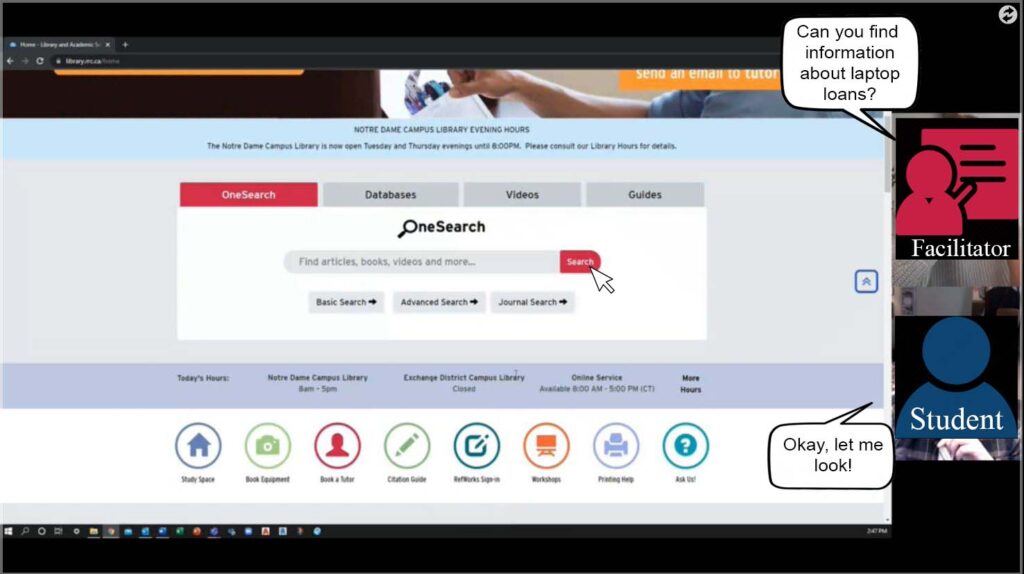
The facilitator asked the students to attempt a slate of twenty-three tasks. The tasks were important, because they showed whether a student could actually use the website for the purpose it was intended. Interestingly, the technology for accomplishing this type of test was made easy by WebEx and the ability of the student to share their screen while the facilitator monitored their progress.

Our facilitator was able to follow the student’s progress as they worked through web site tasks. Problem areas became obvious, and changes required for resolution sometimes became apparent. (Note: Facilitator and student images have been obscured)

In our testing, some of the tasks we asked students to complete immediately indicated that adjustments were necessary.

In trying to find the “Inter-Library Loan” service, we discovered that students simply identified it as a “request” service, which we also have a page for on our web site. Of course, from a student’s point-of-view these are both “requesting” services, and should be found in the same place. It seems it is only Library staff who consider these two services to be vastly different.

Our new icon bar was well used, however we discovered some changes were necessary. For example, the “Book Equipment” icon took our patrons to a booking form, when it would have been better to send users to a page that described what equipment can be booked (which has a link to the booking form.)

On pages like “Browse & Borrow,” we discovered there is a perception of the importance of the photo tiles being much greater than the icon panels. We thought this was probably true, but it just confirmed that we need to keep important items as photo tiles and move less-important options into the icon panel area.

We also discovered that “Guides” is a generic term used by Library staff, and a student does not know to click “Guides” unless an Instructor had previously used that term to describe the content on the web site. Students felt that the term “Program Guides” might alert them that there are program specific resources on the site.

Students looked for past events on our web site, especially when looking for workshops or sessions that may have been recorded. We did not have a good way for students to accomplish this task.

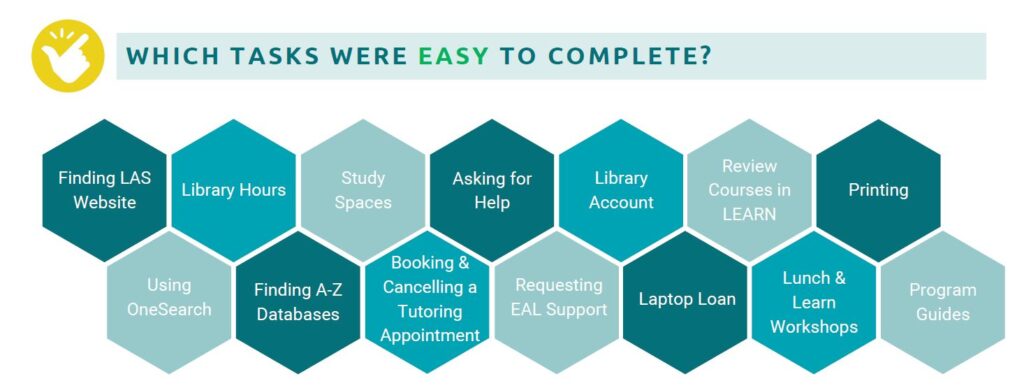
It was not all bad. We did discover that students found many tasks easy to complete. (Graphic by Melissa Coyle)

It was also noticed that the easiest to complete tasks had an icon or image tile available on the homepage, demonstrating the power of these sub-navigation areas.

Conclusion

When we build a web site, we think we can do plenty by considering how users will interact with the site. However, until we have some real users try the site, and we watch how they do it, we cannot know the whole story.

At RRC we did this testing with a relatively small set of four students. Truth be told, we may have learned more if we had included more students in our test. However, a study by the Nielsen Norman Group discovered that the amount discovered in such a test does not greatly increase when you add more individuals to the test. In fact, they found the magic number is five.

So, grab some users and test your web site. You will learn so much!

Mark Nelson
Library Systems Specialist
Red River College Polytechnic

We Remember

November 10, 2021

Remembrance Day, November 11th

Each year in Canada we observe Remembrance Day on November 11th.  Originally observed as Armistice Day, it marked the signing of the armistice agreement to end the First World War, at 11 am, on the 11th day, of the 11th month, 1918.   

In 1931, the name was changed to Remembrance Day in Canada. Traditionally marked by a moment of silence and ceremony, Remembrance Day honours the men and women who have served and currently serve Canada during times of peace, conflict and war. In Manitoba it is a statutory holiday.

The poem In Flanders Fields, by Canadian Lieutenant-Colonel and physician, John McCrae, gave rise to the poppy being forever associated with Remembrance Day.

Canada is not alone in marking this day; the United Kingdom, France, Belgium, Poland, Australia, and others also observe November 11th. Other nations observe similar days, such as ANZAC Day in New Zealand or Veteran’s Day in the United States.

National Aboriginal Veterans Day, November 8th

National Aboriginal Veterans Day was first observed in 1994 in Winnipeg, and has since spread nationally.  It honours aboriginal contributions to service in the First and Second World Wars, the Korean War, and all military service.  It is observed on November 8th each year.

HTM Students Serve Clear Communication and Caper Olive Tapenade at Jane’s Restaurant!

November 2, 2021

You may recall a story featured in Student and Staff News this past April titled Lunch (and Language) is servedEAL Support for Jane’s Restaurant Practical Students.   The story described how a small group of Hospitality and Tourism Management students taking Restaurant Service Practical (HOSP-1019) attended a communication workshop series led by Emilie Jackson of the Academic Success Centre (LAS).  With the goal of preparing students to provide professional tableside service in Jane’s fine dining restaurant, workshop students poured over the language of menu items and role-played server scripts with classmates to get ready for their first day serving tables in the restaurant.   

Fast-forward to the start of a new fall term with a new group of first-year HTM students.   ASC’s Emilie Jackson again delivered a communication workshop series for students preparing to serve tables at Jane’s.  Throughout September students met three times weekly for three weeks completing their training series with a virtual lunch event where they served guests via Webex breakout rooms and received feedback on their tableside communication.  With the pronunciation of menu items mastered and scripts memorized, students were set to serve their first tables at Jane’s.  And a few days later, they did.  

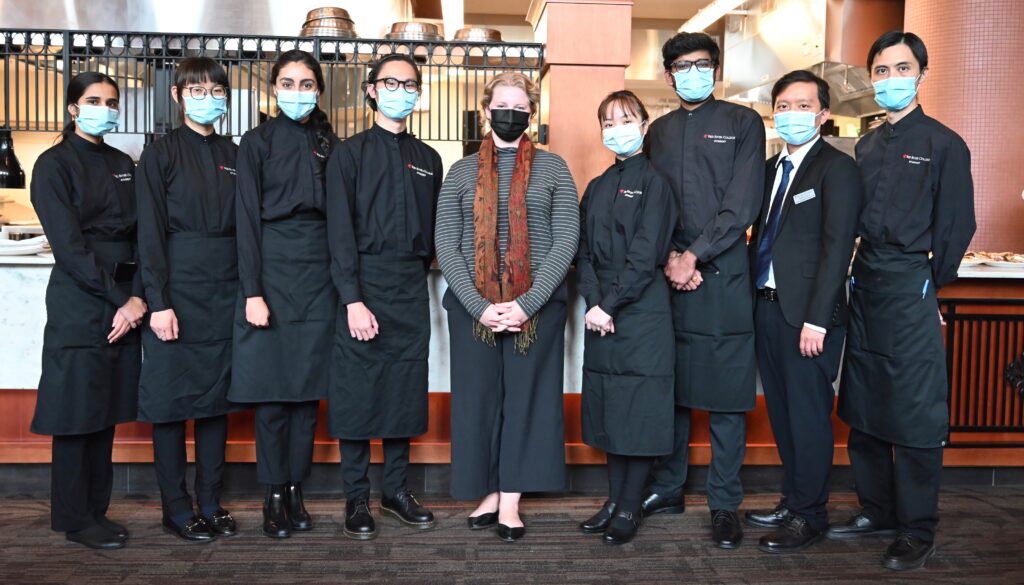
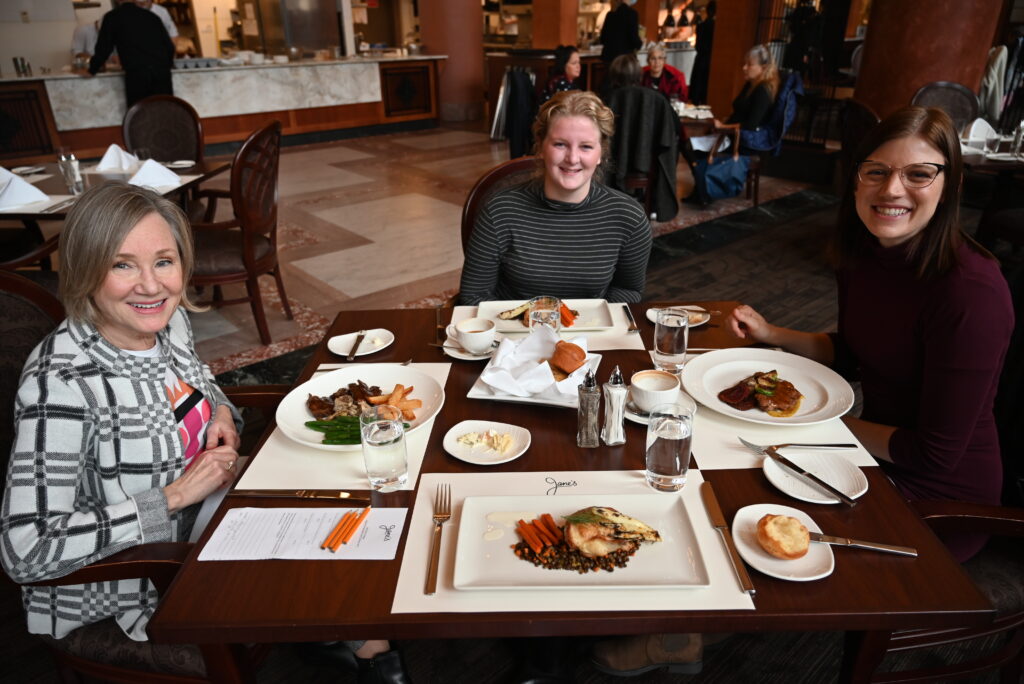
After pressing pause on a long-standing tradition of regular lunch dates at Jane’s with colleagues, I recently found myself again enjoying one of the unique restaurant experiences in Winnipeg. I walked into western Canada’s oldest skyscraper, flashed my vaccine QR code, joined my colleagues at a table for four, and ordered the Pan seared chicken breast with du puy lentils, glazed carrots, grilled fennel, caper olive tapenade and crème fraiche.  It was wonderful to meet with colleagues outside of their video call boxes (‘I don’t remember you being so tall, Carleigh’), but the real stars of the show were the HTM students working the room.   Looking sharp and confident seating guests, tending bar and serving tables, students were three weeks into a six-week dining room practical experience, and it was fantastic to see (and hear) these students in action, an experience even sweeter than the White Chocolate Pumkin, Lemon Matcha and Dark chocolate Espresso Pot de Crème Trio we all had for dessert.  From start to finish, the students provided a warm welcome and excellent service.   They even agreed to smile through their masks for a photo.  Don’t they look great!   

Through workshops, small group tutoring, and 1:1 tutoring, the Academic Success Centre provides integrated communication support for many college programs including Hospitality and Tourism Management, Ace Project Space, Science Laboratory Technology, Pharmaceutical and Food Manufacturing, Nursing, Creative Communications, Early Childhood Education, Technology Management, International Business, Civil Engineering Technology, and more.  For faculty looking for information on ASC program integrated communication supports and for students looking for EAL tutoring, contact Kaleigh Quinn or Stephen Sawchyn at EALsupport@rrc.ca.   

To check the menu and book your lunch or dinner table at Jane’s, look no further: https://www.rrc.ca/janes/

Written by Stephen Sawchyn, EAL Specialist (Academic Success Centre)

Integrating Communication and Writing Supports across RRC Polytech Programs

October 27, 2021

It has been a busy fall within the English as an Additional Language (EAL) Centre and the Writing Centre of the Academic Success Centre. We have been working collaboratively with many programs to support the language and writing skill development of students, expanding our reach of program supports across the college. We have been expanding the self-directed resources available to students and instructors. Additionally, we have been continuing to support students with individual tutoring, for both language and writing skill development. We invite you to learn about the range of supports we have been delivering this term, and to find out more about how to get involved with our team! 

Integrated EAL Supports: 

Our team has continued to demonstrate flexibility and creativity this fall, in our delivery of language development in the online environment. Some examples of our current range of EAL supports integrated across academic programs include: 

  • The practice, delivery, and assessment of hosting and serving role-plays for Hospitality and Tourism Management students in the Jane’s dining experience. 
  • The development and delivery of professional presentation skills for students in International Business, to address both technology and speaking skill development.  
  • Language support to prepare for employment-related language tasks, including developing resume and cover letters, with Civil and Electrical Engineering Technology students, including collaboration with Student Employment Services. 
  • The development of speaking skills critical for program and coop success for Early Childhood Education students through small group and individualized online speaking practice. 

For more information about Integrated EAL Supports across programs, visit us online or email EALsupport@rrc.ca

Integrated Writing Supports: 

The Writing Centre has continued to work closely with a range of college programs to offer support for students with larger writing assignments in the fall term.   Some examples of current integrated writing support include: 

  • Weekly participation in Nursing’s Scholarly Writing-1501 writing communities peer-review sessions, offering ongoing guidance with research techniques and writing process questions and conversations. 
  • Planning with Diagnostic Medical Sonography faculty to provide research paper support starting in November. 
  • The development of a peer-tutor writing program and the hiring of three peer-tutors to support Creative Communications students to address identified needs. 
  • Writing workshops and individual consultations for students in Disability and Community Support, Comm-1174 and DCSP 2190 courses. 

A range of synchronous group supports are also available through the Writing Centre, including workshops on the following topics:  

  • Writing for College 
  • APA Basics and APA Advanced 
  • Research Papers 
  • Professional Writing 
  • Proposal Writing 
  • Quoting, Paraphrasing, and Summarizing 

If these topics will not address your needs, Writing Centre staff is happy work with faculty to customize workshop content. For more questions about or to book Writing Centre workshops, visit us online or contact Nick Schroeder at writing@rrc.ca

“Communication Strategies” Resources: 

With the launch of the newly developed suite of Communication courses, including COMM-1162, COMM-1173, COMM-2174, and COMM-3175, the EAL and Writing Centres have developed a “Communication Strategies Student Resources” landing page with a range of self-directed supports to assist students to develop the communication strategies required for success across these courses, including advocating, clarifying, investigating, making decisions, organizing, participating, planning, questioning, reflecting, repairing, and setting goals. We invite students to explore these resources to continue to strengthen these human skills, which are critical for success in both the college and the workplace. 

We have also developed a parallel “Communication Strategies Faculty Resources” landing page to support instructors with students’ skill development relating to the 11 core strategies within the core Communication courses at Red River College. The resources in this webpage incorporate tools to develop and apply the 11 core strategies in class, at work, and at home for students to communicate and enhance their human skills. 

For more information or questions about these resources, or our collaboration with the Math, Science, and Communication department, please contact us at EALsupport@rrc.ca

Self-Directed Learning Resources: 

We have continued to expand the range of self-directed learning resources available to both students and faculty to support language and writing skill development. A small selection of our vast range of resources includes the following: 

  • 15 Hybrid LEARNing modules: These offer learning strategies and resources that faculty can share with their students to further develop foundational skills for success in their studies; they can be embedded directly into LEARN courses, or students can self-enroll. 
  • Get Red River Ready: This hub helps students to get oriented and ready for their studies, including many recordings and resources on academic skills, communication and language skills for college, Diversity training, International Education, library research, technology skills, and more! 
  • Use the following videos as a starting point to learn on your own about three writing skills essential to student success. 
  • Student Success Skills.  These resources and website links can help you as you complete your course work. 

Individual and Small Group Tutoring: 

As always, we have individual and small group EAL tutoring and writing tutoring available for free, at students’ request and by instructor referral. Learn more about helping your students connect with us, and connect with us at EALsupport@rrc.ca or writing@rrc.ca with any questions. 

We look forward to collaborating with and supporting you and your students! 

EAL and Writing Centre Team 

Library and Academic Services presents new Neurodiversity Guide

October 22, 2021

“If we are to achieve a richer culture, rich in contrasting values, we must recognize the whole gamut of human potentialities, and so weave a less arbitrary social fabric, one in which each diverse human gift will find a fitting place.” 

- Margaret Mead 

When people think of ADHD (Attention Deficit Hyperactive Disorder), autism, and other conditions, we often see those from a disease-based perspective originating from human brain science and outdated ideas regarding disability. These perspectives lack an anthropology or sociology framework and disregard individual differences from the standpoint of a diversity model.

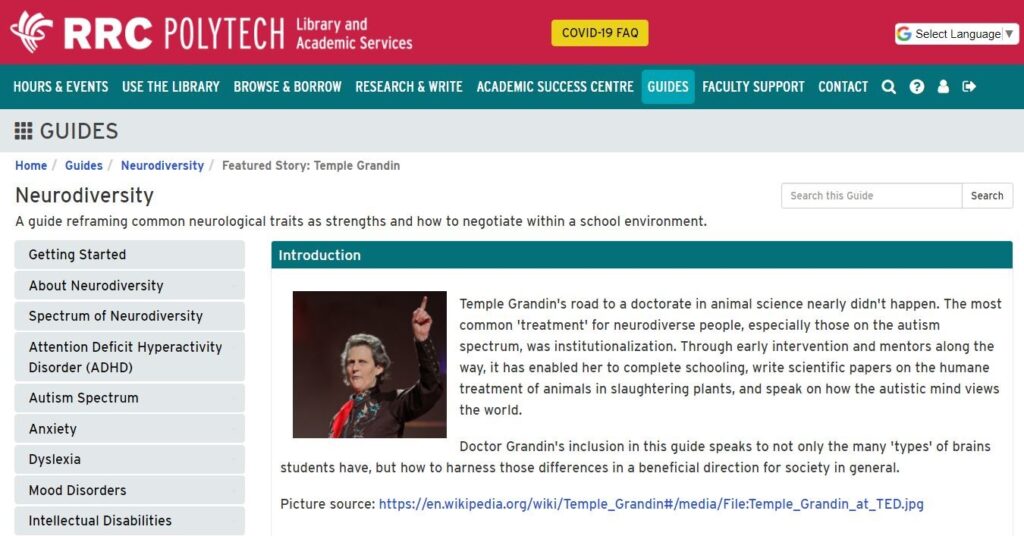
The new Neurodiversity Library Guide provides learning resources to understand some brain conditions from a diversity perspective, highlighting how some cultural values affect our perceptions of these brain conditions.

In addition, without ignoring the challenges and barriers that individuals within the spectrum of neurodiversity navigate during every-day life, this guide takes a strength-based approach focusing on an individual’s hidden strengths and talents as a way to advance efforts towards inclusion and removing stigmas.

The Neurodiversity Library Guide includes sections on Attention Deficit Hyperactivity Disorder (ADHD), Autism Spectrum, Anxiety, Dyslexia, Mood Disorders, and Intellectual Disabilities. The content includes recommended books, articles, videos, and podcasts, as well as some additional College and community resources.

Special attention was paid towards selecting films and videos with testimonies sharing lived experiences within the spectrum of neurodiversity. Books can provide a foundation of knowledge, but it is the personal stories that can contribute to make emotional connections in order to build understanding and empathy.

The guide was developed by Fatima DeMelo (Information & Program Delivery) and Nora Sobel (Academic Success Centre). The content of the guide is based on the work of Thomas ArmstrongHoward Gardner, and Norman Doidge, and has been reviewed by staff from the Disability & Community Support program, and Student Support Services.

The guide is being launched in October, during Disability Employment Awareness Month, and it is already available at https://library.rrc.ca/neurodiversity.

Written by Nora Sobel (Academic Success Centre)

Nursing Instructors Discuss Benefits of Library Guides

October 21, 2021

Library staff member, Rosemary Woodby, recently worked with three RRC Polytech Nursing instructors – Joanne Loughry, Krystal Boyce-Gaudreau, and Carla D. Andreamatteo – on the creation of specialized Library Guides for their courses. It was a rewarding experience for everyone, but most importantly, it made the learning materials required for these programs easier for their students to access.

Before diving into the benefits of Guides, are you familiar with what they are?

What are Library Guides?

Library Guides pull together and organize Library books, videos, and databases, along with a variety of online sources such as webpages, videos, and reports. Guides present all of this information in one place, where any student can access them. You can link to Guides in your LEARN site, and we can update content as needed.

Learn more >> Visit the Library Guides

How do Library Guides benefit students?

“The guide has the potential to save the students valuable research time and cultivates a supportive and progressive learning opportunity… These essential research skills and increased exposure to credible resources will prepare our students to be practice ready when entering the workforce.”

— Joanne Loughry, Nursing instructor

At RRC Polytech, our mission is to help students succeed in their studies and move on to rewarding and successful careers. The greatest benefit of Library Guides is felt by the students, which is one of the main reasons our instructors request them. Feedback from Nursing instructors confirms this fact.

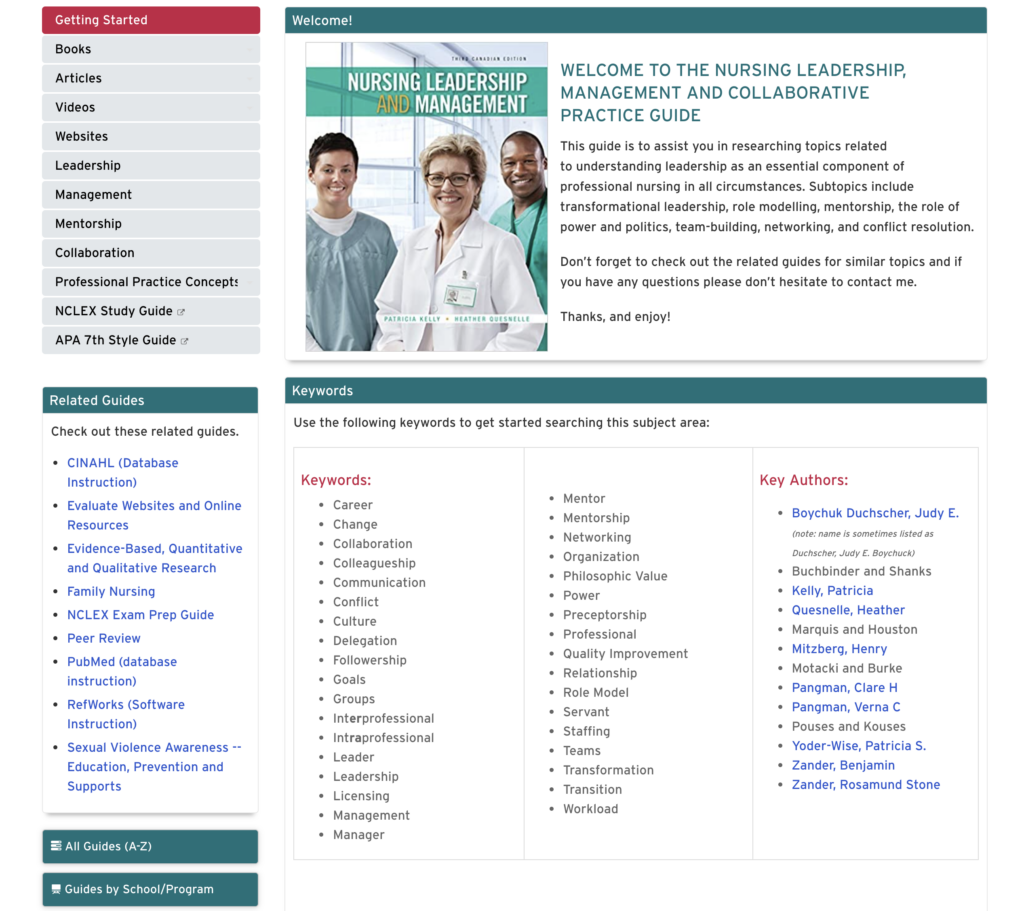
Krystal Boyce-Gaudreau describes her newly developed guide, Leadership, Management and Collaborative Practice, as a time-saving and learning opportunity for her students. Through the Guides, students are presented with a gateway to high-quality information categorized by topic, saving “students time searching through website and journal articles for relevant and appropriate resources.” Carla D Andreamatteo, who requested the Nutrition and Lifestyle Guide for her students, describes it as “a great one-stop location for students to access resources to assist with their learning in the course.”

Joanne Loughry requires her students to utilize several kinds of resources from varied sources. In her opinion, Library Guides help students learn to develop their research skills and gain exposure to navigating credible sources. In her words, “The guide has the potential to save the students valuable research time and cultivates a supportive and progressive learning opportunity… These essential research skills and increased exposure to credible resources will prepare our students to be practice-ready when entering the workforce.”

Screenshot of Nursing Leadership Guide
Screenshot of the Nursing Leadership Guide

How does an instructor set up a Library Guide?

Guides are created by the Library staff member assigned to your program area, as listed in our Collection Development Contacts. You may send a request to your subject specialist directly, or send a general inquiry to the Library through our Contact Us page.

Follow Library and Academic Services on social media!

For everything from fun series to service and programming updates, follow us on social media. We’re active on FacebookInstagram, and Twitter!

Written by Linda Fox – Library Technician, Program Support and Promotion

Reading for Change: Book Clubs and Anti-Racism

October 13, 2021

Book clubs have a long history of attracting people wanting to connect with others to discuss books and the ideas within their pages. While fiction dominates book club selections, more and more people are using book clubs as a way to explore issues such as systemic racism or Truth and Reconciliation. These clubs also seek to pick books written by writers whose identities intersect across cultures, sexual orientations, and genders. While not a substitution for allyship, book clubs, if done right, enables the difficult conversations about race and privilege as a catalyst to true inclusion within society. This leaves two questions:

  1. Where to start?
  2. What are some good recommendations?

Assembling the Book club

Looking to start a book club amongst your friends or colleagues? There are a number of places to learn how to assemble people for an Anti-Racism Book. Indigo has a section on how to start a book club with some simple tips and made for the video chatting in mind. Libraries have not only hosted book clubs but also provides details on matters like logistics and book choice. Edmonton Public Library has 8 things to think about when starting a book a club, while our own Winnipeg Public Library also has tips for starting and sustaining book clubs as well as book club kits for those wanting to stay with fiction and read more BIPOC (Black, Indigenous, People of Colour) authors.

Book Recommendations

The Diversity Training Team within Library and Academic Services has conducted its own Book Club with books either within Red River’s own collection or through Winnipeg Public Library. Below is a list of titles discussed for anyone looking for ideas:

Even without a book group, each of the titles is worth reading on your own or if you want more on this topic, check out the Anti-Racism Learning Toolkit.

Written by Fatima DeMelo – Reference Technician, Information and Program Delivery

National Day for Truth and Reconciliation, September 30

September 16, 2021

September 30, National Day for Truth and Reconciliation. A day for reflections and conversations about residential schools and their imapcts.

We respectfully acknowledge that Red River College campuses are located on the original Lands of the Anishinaabeg, Cree, Oji-Cree, Dakota, and Dene peoples, and on the homeland of the Métis Nation.

In June 2021 the Federal Government of Canada passed legislation to make September 30th a federal statuary holiday as the National Day for Truth and Reconciliation. This day provides the opportunity to recognize the legacy of the Canadian Residential School Systems. Undoubtedly before this federal legislation, September 30th has been recognized and observed as Orange Shirt Day or as Every Child Matters throughout Canada to recognize the victims of the Canadian Residential School System, and in support of Truth and Reconciliation. Library and Academic Services staff are honoured and eager to show our continued support for Truth and Reconciliation.

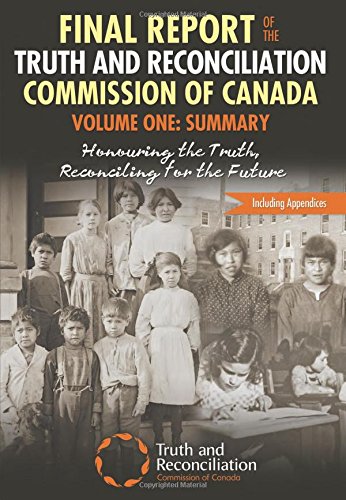
This past year has ignited national attention towards Truth and Reconciliation after the unmarked graves of 215 children were found near a former Residential School in Kamloops, BC. This number soon increased to over 1300 across Canada as more former Residential School sites across Canada were investigated. With these discoveries, it seemed Residential Schools and Truth and Reconciliation became pertinent conversations in our households and global environment. However, the Truth and Reconciliation Commission of Canada (TRCC) was formed in June 2008, releasing its final reports and the 94 Calls to Action in 2015, and has been a pertinent conversation for a long time.

The unsettling news from Summer 2021 was a reminder that the past cannot be forgotten and that education about the truth is the way forward.

Library Resources: Helpful Starting Points to Build Your Understanding of Truth and Reconciliation

Our library contains many resources about Truth and Reconciliation, Residential Schools, and Indigenous Experiences throughout its’ collections. These resources are helpful starting points towards building understanding of Truth and Reconciliation in Canada. We invite you to look at some of these resources to acquaint yourself with Truth and Reconciliation.

Guides

Guides like Residential Schools and Missing and Murdered Indigenous Women and Girls highlight books, videos, articles, and websites that help build understanding and educate about these issues.

Books

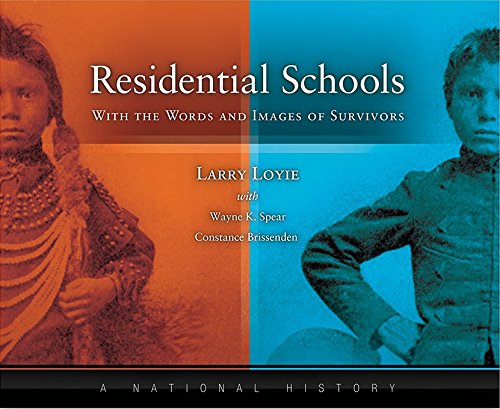
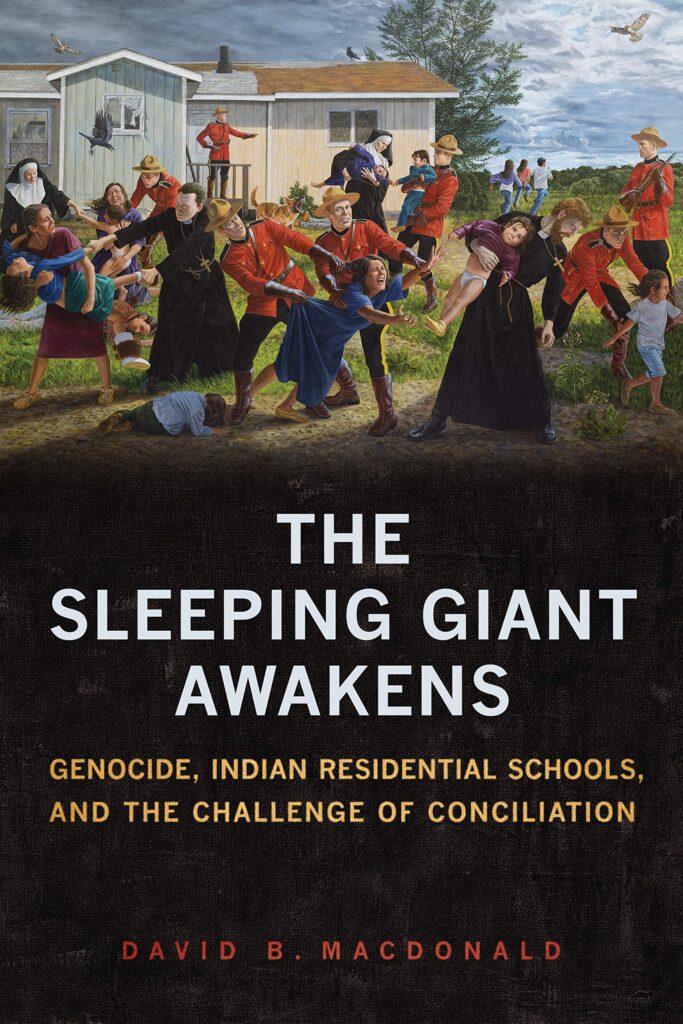
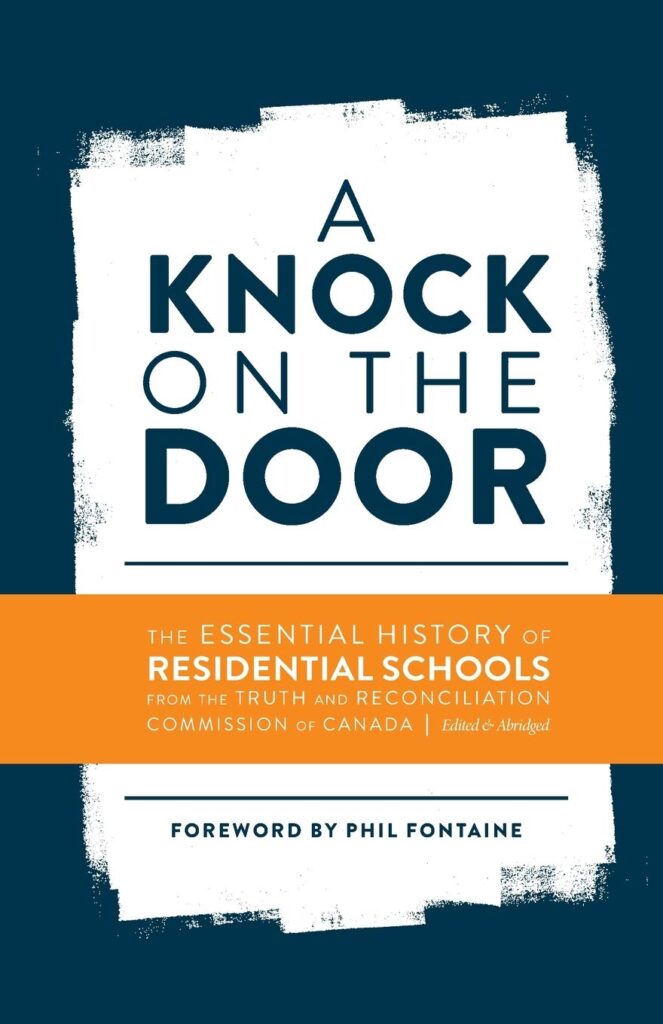
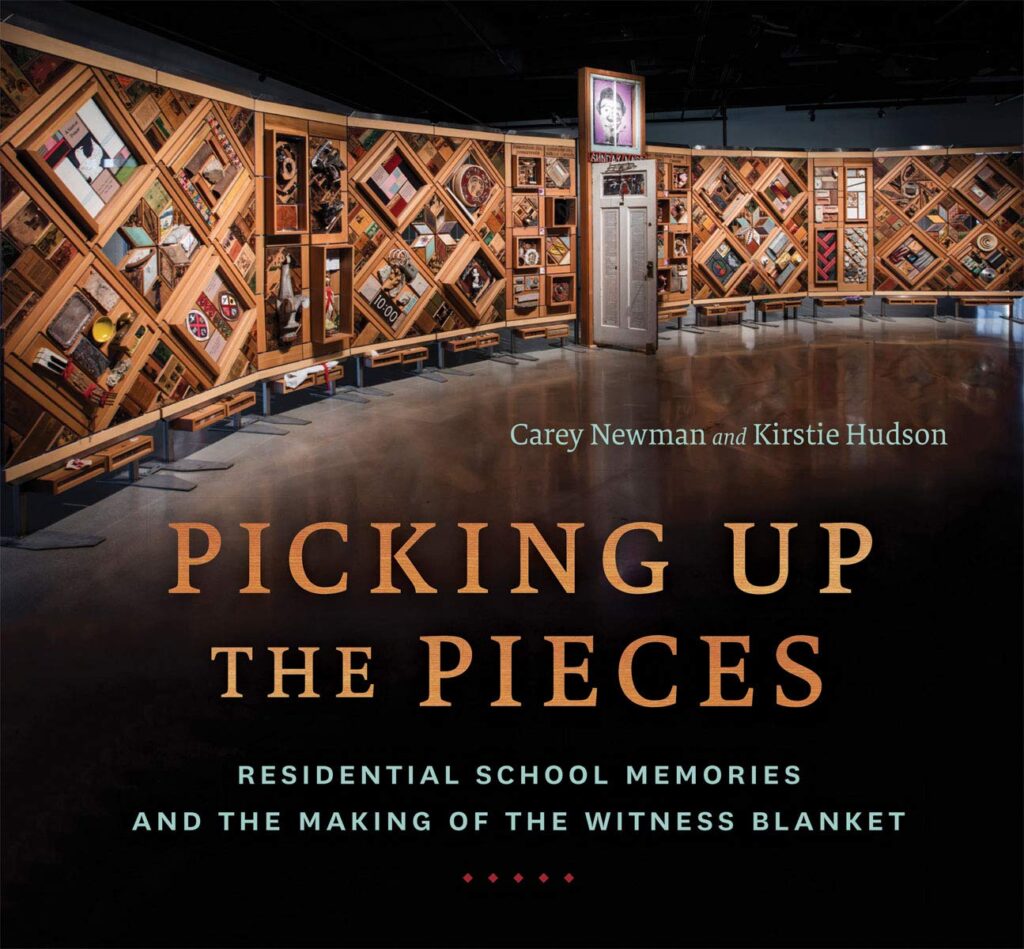
Books that are available from the library include:  

Videos

We also have streaming videos available through our collections. Video Databases like Curio have collections like Beyond 94: Truth and Reconciliation in Canada and Residential Schools: A Sad Chapter in Canadian History.

Videos you might consider to learn more about Canadian Truth and Reconciliation include:

Truth and Reconciliation at Red River College

grass field and sunset. Text reads: Truth and reconciliation week 2021. Sept 27 - Oct 1

Red River College is hosting its third annual Truth and Reconciliation Week virtually from September 27 to October 1, 2021. The week is dedicated to deepening our understanding of Canada’s history, Indigenous cultures, and sparking a conversation around Truth and Reconciliation.

We also encourage visiting Indigenous Education’s Truth and Reconciliation and Community Engagement to learn more about Indigenous Events and Initiatives at Red River College and its communities.

Written by Sarah Lee, Library Resource Management Technician

Library Website Built with Users in Mind

September 15, 2021

New Library Website - September 2021

Last spring, if you were to look at our old Library website, you would be looking at a somewhat dated “Library-centric” web, with two Academic Support departments, and new features, i.e., LibAnswers and LibCal, tacked on. We knew our web site was due to be reorganized, and at the same time given a fresh look and feel. As with many changes, the summer period  gave us a window of opportunity when there was a break in classes. How could we take advantage of this opportunity and create a new-look website designed with our users in mind?

User-centric Design

We began by looking toward user-centric design principles that have been the cornerstone of effective web design for decades. Some web sites look great, but are completely ineffective to their users. We wanted to avoid this, and achieve a greater level of usability. So, we began by studying users.

On our Library web site, the greatest metric we had were analytics of what users did on our site. Where did they go? What did they click on? Generally, top traffic resources on our website were: OneSearch, A-Z List, Ask Us, the Academic Services landing page, Tutoring, Supports for Students, Library Subject Guides, Workshops, Self-Directed Learning Modules, Stem Centre, and College Readiness.

We took this information as a starting point, and began to develop two personas that represent Library web users: Average Student User and Average Instructor User.

Built with Library users in mind

PERSONA 1:
Average Student User
wants to…

  • Average Student UserDiscover and borrow Library materials.
  • Browse for Academic Supports.
  • Access digital resources such as electronic articles and databases.
  • Discover and attend Library and ASC workshops.
  • Refer to a course-related subject guide.
  • Access Tutoring services.
  • Access a Library service.
  • See when the Library is open.
  • Find study space.
  • Book AV equipment, laptops and chargers.
  • Locate an instructor-recommended resource.
  • Ask a question or get help.
  • Learn how to cite.

PERSONA 2:
Average Instructor User
wants to…

  • Average Instructor UserDiscover Library materials and resources for planning, research

    and teaching.
  • Set up course reserves.
  • Access a Library service such as ILL or Digitization.
  • Refer their students to Library or ASC workshops.
  • Refer their students to specific ASC resources.
  • Request materials for their courses and students, i.e., Suggest a Purchase.
  • Book AV equipment, laptops and chargers.
  • Find copyright information and help.
  • Get Academic Integrity advice and assistance.
  • Ask a question or get help.

Redesign Process

With these two personas in mind, we began a three phase process.

Phase 1: Content reorganization. A cross section of library staff were brought together to make decisions about the web site organization and hierarchy. With our user personas in mind, staff individually performed card sorting exercises and compared results. This group also investigated other academic Library web sites. The final product was a new main menu structure, built with users in mind.

New Library Nav Bar

Phase 2: Home page re-design. With our users in mind, a second working group reviewed the information and features on the current Library home, and formulated a plan to build a more modern and concise home page. This group also took the time to review other academic websites, and recommended features which we could adopt for our new home page.

Phase 3: Overall web site re-skin. A smaller team of experts worked on a new header, footer and colours for the new site. The goal was to give the new Library web site a fresh look, new colours, and improvement in accessibility.

A cornerstone of this project was to involve many people from across Library and Academic Services. Each one of the above teams consisted of different people, thus enhancing our staff’s ability to influence decisions made in the new web site design. Their awesome contributions are reflected throughout the new web site.

Technical Details

The website is built on the LibGuides CMS platform by Springshare. Pages on this platform are responsive (mobile-friendly) through the Bootstrap framework. We have also taken advantage of other Springshare platforms such as LibAnswers, LibWizard and LibCal. We needed to add custom CSS and JavaScript for many of the features we built, however the Springshare platform allows for a sufficient level of customization.

The site is built with accessibility in mind, and accomplished through accessibility features built in to the LibGuides platform, and attention to detail in the added customizations. Our current home page tests as 100% accessible in the Google Lighthouse tool.

Looking Forward

We are planning focus groups this fall, where we hope to further determine how our patrons use our web site, and gauge the effectiveness of our new site design. In doing so, we expect slight revisions to the current web site, and an update of our personas.

Story by Mark Nelson ~ Library Systems Specialist

Have you ever thought about Academic Integrity?

September 9, 2021

Whether this is your first year at RRC or you’ve been here before, you are probably looking forward to the promise of a new school year. I remember from my student days, the excitement of buying textbooks and school supplies, forming new schedules to get to class on time, and the curiosity of meeting new instructors and classmates. The ongoing COVID-19 pandemic brings a new normal where things look a little different than they used to. Still, the opportunities to learn, grow and connect will still be found. Starting the school year off with the intention to succeed and recognizing that there will surely be challenges, is a great way to get mentally prepared for college.

What does academic integrity mean to me?

As you get settled into your program, I encourage you to ask yourself – “What does academic integrity mean to me?” People often reply that academic integrity means “don’t cheat,” and while that is partly true, there is so much more to consider. If integrity is about good character and decision making, then academic integrity is about the good character and decision making in school. We know that handing in assignments on time and being a good teammate in a group project are signs of good character and decision making, but what happens when things get tough? What happens when there is a deadline, and you haven’t started the assignment? What happens when you are writing a test remotely and you want to google the answers rather than think it through yourself? What happens when you are scared of failing your program and disappointing your family and friends?

Six fundamental values

These are the situations where academic integrity gets real. Without a guidebook that tells us exactly how to react in every situation, we need foundational principles to help us make decisions. Academic integrity encourages all members of the college community to be guided by these six fundamental values: honesty, trust, respect, responsibility, fairness, and courage. When challenges come our way, and they will come, we can look to these fundamental values to grow our success.

Use our self-directed tutorial

To help students think about academic integrity and how it is applied at Red River College, Library and Academic Services offers a self-directed tutorial that maps out strategies and resources for academic integrity, to build students’ reputation in the classroom and prepare them for their future careers. You can access the tutorial here: https://library.rrc.ca/self_directed_learning/academic_integrity

You can also visit the Academic Integrity webpage for students at: https://library.rrc.ca/ai_student

I wish you all the excitement and promise of a new school year. Talk to your instructors if you have questions about academic integrity in your course, or send me an email at lvogt@rrc.ca

Written by Lisa Vogt, Academic Integrity Specialist

RRC Polytech campuses are located on the lands of the Anishinaabeg, Ininiwak, Anishininwak, Dakota Oyate, and Denésuline, and the National Homeland of the Red River Métis.

We recognize and honour Treaty 3 Territory Shoal Lake 40 First Nation, the source of Winnipeg’s clean drinking water. In addition, we acknowledge Treaty Territories which provide us with access to electricity we use in both our personal and professional lives.