Health Minds Healthy College

Campus Well-Being

Resources

Mindfulness Challenge: Prize Winners Announced

March 3, 2021

To start 2021 on a mindful note, dozens of staff and students engaged in a 30 Day Mindfulness Challenge. The Challenge involves participating in short online lessons and practice for, you guessed it, 30 days.

While mindfulness practice can’t take away all of our stressors, it can certainly build up our ability to cope with these in healthy ways. By improving our ability to be in the present moment with openness and non-judgement, we can strengthen our mental resilience.

Everyone who completed was entered in a prize draw and we’re happy to announce the winners.

Grand Prizes

Grand prize winners each receive a $50 gift card to Good Local. Good Local is an online marketplace that makes it easy for Manitobans to buy local. Congratulations to winners Mavis McRae and Tim Reyes.

Second Prizes

Second prize winners each receive a $25 gift card to Good Local. Congratulations to winners Rita Zuba Prokopetz and Jaewook Park.

The Challenge

We asked our winners what they thought of the Challenge and here’s what they had to say.

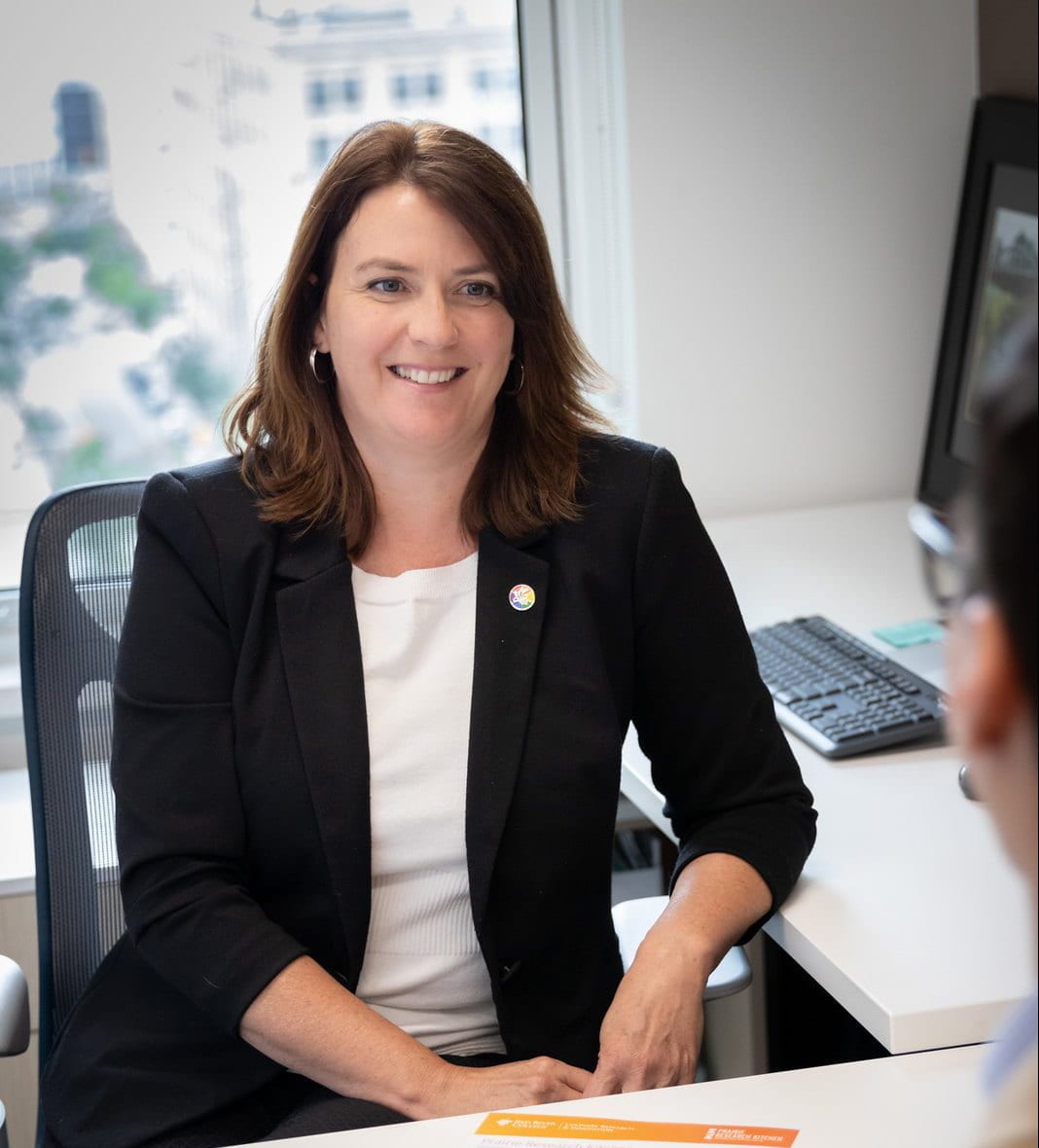
Prize winner and challenge completer, Mavis McRae.

“The 30 day challenge is perfect for a task oriented person. The quick tips and bite sized info was just enough to remind me to take a second before reacting or switching tasks. Since habits build over time, 30 days is unlikely enough to build new good habits, but at least it is a start.  It was a good wake up call to all the things I do on autopilot.” – Mavis McRae, Director, Prairie Research Kitchen
Remember, the Challenge is available all year round and you can even do it with a buddy to keep you on track. Create your account to get started.

“The Mindwell training took me longer than 30 days because I wanted to ensure I was in the moment during every 5-minute session. We discussed some of the concepts in class, and some students ended up taking the training as well – some have completed it already. We used the learning to discuss self-discoveries, metacognition, etc. in one of our classes.” – Rita Zuba Prokopetz, Instructor

For any questions about the Mindwell resources, please contact Mental Health Coordinator, Breanna Sawatzky.

Shorter Days Bringing You Down?

November 17, 2020

This time of year, the shortened days and chilly temperatures can take a toll on our mental health. Even in a usual November, less daylight, more time spent indoors, and less physical activity can lead to a case of the winter blues. This year, as many of us are studying and working from home with less reason to leave our home, those winter blues can really drag us down.

Yes, it’s not technically winter yet, but here in Manitoba, we feel it already. Many people report having less energy, experiencing lower mood, and having more intense food cravings.

There are things we can do, however, to help promote good mental health. Here are some suggestions:

  • Get outside during daylight hours. Even if it’s only for a few minutes, the light and air will help.
  • Exercise regularly. Whether indoors or outdoors, regular exercise boosts your mood and energy levels. Movement of any kind helps. Try our livestreamed Friday lunchtime yoga class.
  • Connect with friends virtually. Make a point of spending time with people with whom you can chat and laugh.
  • Develop good sleep habits. Whenever possible, go to sleep and wake up at the same time each day. Leave smartphones and tablets in another room.
  • Eat a balanced diet. We tend to crave carbs more in the winter, so make sure you’re still eating some veggies and fruit daily.

Seasonal Affective Disorder

Sometimes, the seasonal change can trigger the onset of Seasonal Affective Disorder (SAD), a treatable mental health condition. SAD is a type of Clinical Depression that is related to changes in the seasons. According to the Mayo Clinic, SAD symptoms that are specific to winter depression are:

  • Irritability
  • Tiredness or low energy
  • Problems getting along with other people
  • Hypersensitivity to rejection
  • Heavy, “leaden” feeling in the arms or legs
  • Oversleeping
  • Appetite changes, especially a craving for foods high in carbohydrates
  • Weight gain

If you’re feeling low for days at a time, have thoughts of suicide, or are using alcohol/drugs to cope, see your doctor or access RRC supports for students or staff.

Getting Better

Treatments for SAD can include medication, talk therapy, and light therapy. Light therapy involves sitting near a special lamp so that you’re exposed to bright light. Light therapy mimics natural outdoor light and appears to cause a change in brain chemicals linked to mood.

Borrow a Light Therapy Lamp from Library Services

Interested in trying light therapy? SAD Lamps are availaible on loan from Library Services. Simply complete the booking request to arrange the loan.

If you’re feeling the winter blues, whether it’s SAD or not, please reach out to someone and talk about it.

Mental Illness Awareness Week: A time for understanding

October 6, 2020

Mental Illness Awareness Week (MIAW) is an annual national public education campaign designed to help open the eyes of Canadians to the reality of mental illness. At any given time, 1 in 5 Canadians are experiencing a mental illness, yet the topic is often surrounded by silence and shame.

The rapid change and stress brought about by the COVID-19 pandemic has put even more strain on people, making this the ideal time to talk about mental illness openly and respond to everyone with compassion. There are many ways that you can observe Mental Illness Awareness Week; below are a few suggestions.

Faces of Mental Illness Campaign

The Faces of Mental Illness is a national outreach campaign featuring the stories of Canadians living in recovery from mental illness. Each year several Faces of Mental Illness are highlighted.  Check out these lived experience stories to expand your own understanding.

Movies for Mental Health Event

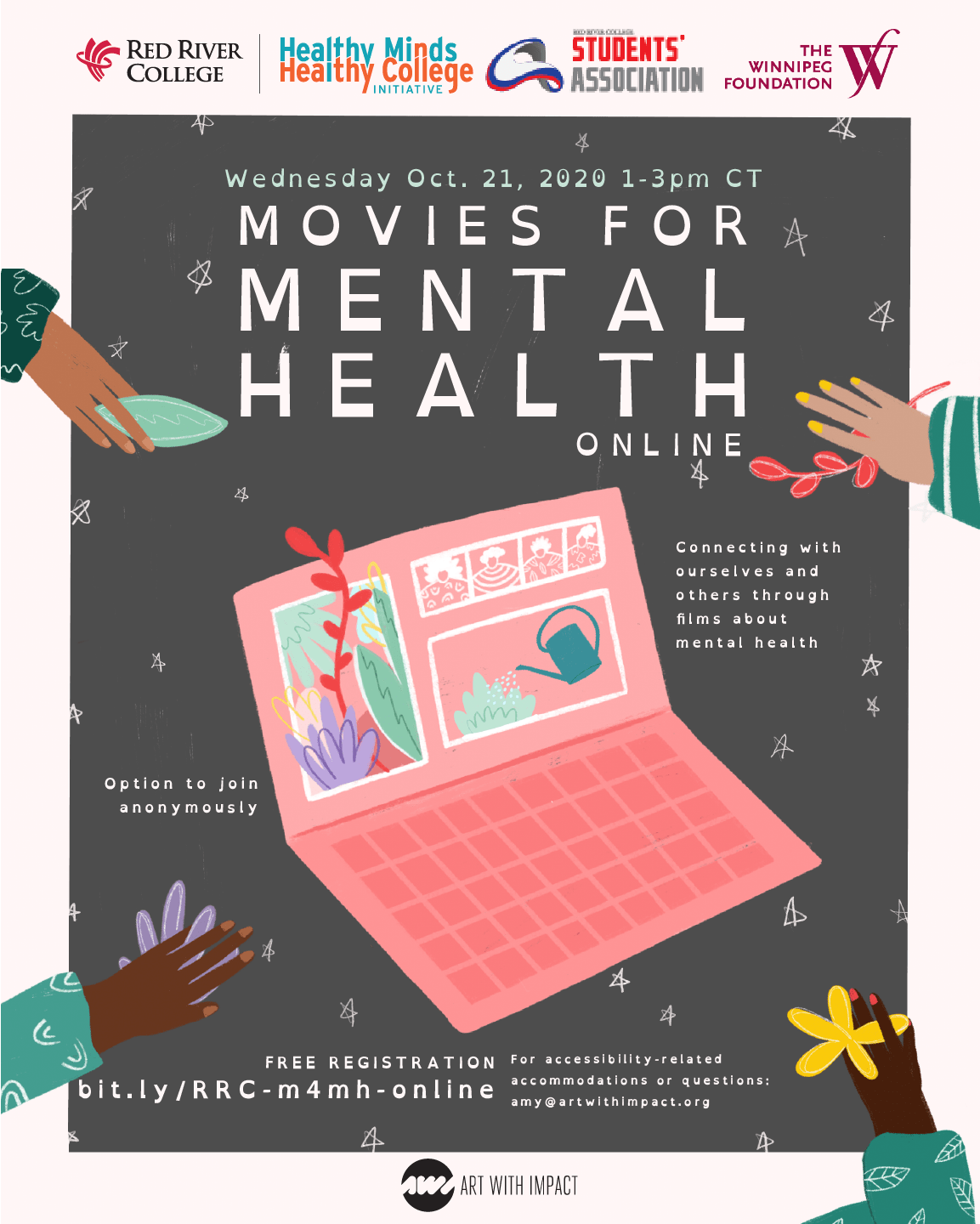
Register for our first virtual Movies for Mental Health event, which takes place the afternoon of Wednesday, October 21. This free virtual workshop uses the power of film to unite folks in community, connection, and conversation.

Learn About Supports Available to RRC Staff and Students

Exploring available mental health services prepares you to take those important first steps when you need to seek help. It also prepares you to support others, directing them to supports when they are in need.

The Wellness microsite contains information on supports for students, supports for staff, crisis resources, and supports for all. Spend a bit of time exploring these.

A Confidential Consultation

If you feel overwhelmed by the many options, book a confidential consultation with Mental Health Coordinator, Breanna Sawatzky, who can help you select a place to begin.

Mental illness is a reality for many, including our coworkers, students, family members, friends and ourselves. Having solid knowledge about the realities of mental illness as well as resources for healing can help us all feel more understood and supported. So, this Mental Illness Awareness Week, take some time to enhance your own understanding.

Movies for Mental Health: Join Us Virtually

September 22, 2020

On October 21 RRC is hosting Movies for Mental Health, a virtual workshop that uses the power of film to unite folks in community, connection, and conversation. This FREE event is delivered by a non-profit called Art With Impact and will be hosted online.

The interactive, online experience will feature an anonymous, chat-based discussion on mental health, the stigma that frequently surrounds mental illness, and media portrayals of mental health issues.

Following this will be a live screening of three award-winning short films and therapeutic activities to consciously connect minds and bodies.

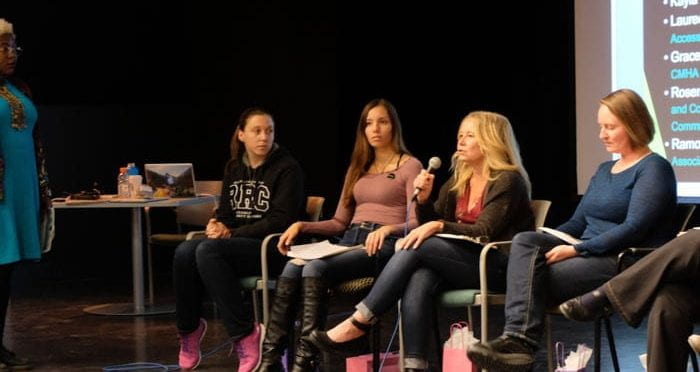
The event will culminate in a panel of lived-experience speakers and mental health resources, empowering us to share our own stories and access support available to us in these uncertain times.

Last year, students who attended found the workshop helped increase awareness of mental health, reduce stigma, and improve knowledge about where to go for help.

The Details

Date: Wednesday, October 21

Time: 1-3 pm

Location: Online! Register here.

For any questions or accessibility needs, please contact Amy.

This event is sponsored by the Healthy Minds Healthy College Initiative and RRC Students’ Association. All students and staff are welcome.

Want to Share Your Story?

We’re looking for a student participate the panel discussion. By volunteering your time and expertise, you play a crucial role in creating an event that will reduce the stigma around mental illness and encourage others to seek the help they need.

Being a Student Panelist

As a student panelist, your role is to share a real, lived-experience story to show the power that live storytelling can have in reducing mental health stigmas. Your generosity in talking about your experiences – the good parts and the bad – will actively help your peers to overcome their own inhibitions that might prevent them from getting help. You are living, breathing proof that recovery and healing are possible and that mental wellness is real and attainable!

As you begin to put together your five-minute story, we invite you to reflect on what your main message is – what you’d like the audience to take away from your story. That can help guide you as you decide what you’d like to share. It can also be helpful to decide what pieces of your story, if any, you’d prefer not to share. You are in charge of what you share, and there is no pressure to go beyond what is comfortable for you.

If you’re interested in this opportunity, please contact Breanna today.

How I Completed My Diploma During a Pandemic: One student’s story

May 8, 2020

Guest post by RRC student, Stuart Maddocks

The COVID-19 pandemic was one of the hardest experiences I have faced as a student. It disrupted my routine of having to leave my home to sit in a classroom with my friends and classmates. Additionally, being at home made me more distracted than I would be in the classroom. To overcome these challenges, I had a few strategies to help me get through the rest of my program. Here are some highlights of the methods I used to complete my final year as a Red River College Library and Information Technology student.

RRC Student, Stuart Maddocks

Work on Mental Fitness

For my first strategy, I used the Headspace meditation app. This application is a subscription-based service that provides meditation and yoga exercises for overcoming negative feelings. Exercises on Headspace range from simple guided meditations to “Everyday Exercises” with a different theme each day. As a student, I love Headspace’s student support section which covers topics from presentation stress to job interview anxiety. These exercises helped me get a good night’s sleep after a stressful day of online learning.

Current and future students can visit Headspace at: https://www.headspace.com/ or download the Headspace app on Apple Store or Google Play.

Get Moving

In addition to Headspace, I exercised at least 30 minutes each day. I would go for walks around my neighbourhood and through parks. It helped me get some fresh air after an intense study session. Walking outside provided me a change in scenery away from my usual surroundings at home. These daily exercises also helped me stretched my legs after sitting at my desk for a few hours. Lastly, walking helped me be more active with the gym being unavailable during the pandemic.

Reward Yourself

As a Red River College Alumnus, I cannot stress enough the importance of awarding yourself. In my case, I would watch movies after I complete assignments. Additionally, watching movies allowed me to escape my day to day life from the stresses of the pandemic and college life. I usually watch escapist movies from the Star Wars or James Bond franchises. The locations and settings transported me to another world for a much-needed distraction.

I hope these strategies will be useful for you when you are studying or starting your careers.

If you are an RRC student, staff or alumnus who would like to write a guest post, please contact Breanna Sawatzky.


Mental Health and Counselling Supports Available

March 19, 2020

You don’t have to go through this stressful time alone. Many of our supports are ready to assist you, using telephone or video conferencing technology.

For Students and Staff

Mental Health Coordinator

Breanna Sawatzky, the Mental Health Coordinator provides supportive listening, connection with resources, and consultation. Services are available for all students and staff, over the phone or via video conferencing.

Appointments can be made by sending an email to Breanna.

For Staff Only

Homewood Health (EFAP)

Homewood Health is an Employee and Family Assistance Program for RRC employees. It’s part of your employee benefit package and comes at no cost to you or your dependents.

Homewood offers short-term counselling and support related to a wide variety of issues.

The EFAP is completely confidential; they will not release any personal information to Red River College.

Connect via the 24-hour toll-free access number at 1-800-663-1142. You can also access support and information online.

For Students Only

Counselling Services for Students

Counselling is available for students during study week and for upcoming weeks as may be necessary. At this time, counselling is available by phone and soon video conferencing.

If you are already have a counsellor, contact your counsellor by email.

If you wish to connect with a counsellor and book a first time appointment, please complete our online form.

For students attending Regional Campuses, counselling is available through a local provider.

Please contact your Regional Campus counsellor directly for appointments. They will advise regarding their current mode of service delivery.

Indigenous Student Supports

A variety of supports are being offered virtually at this time. To arrange an online meeting or phone call, please contact Marshall Richard at marichard@rrc.ca.

Beacon Digital Therapy

Designed to improve your mental health and build your resilience to life’s challenges, BEACON provides Cognitive Behavioural Therapy (or CBT), an evidence-based form of psychological therapy. It’s also considered the gold standard when it comes to helping people with mild to moderate depression or anxiety. BEACON is provided by registered mental health professionals, digitally, through your computer, smart phone or tablet. Read more here.

Wellness in the time of COVID-19

March 17, 2020

We are going through an unprecedented time at Red River College. Many of us have been asked to work or study from home, and aren’t participating in our usual activities. When our usual routine is disrupted, it can have an effect on both our physical and mental health.

Below you will find some resources to help maintain physical and mental wellness during a time of social distancing. Whenever possible, the following resources are free to either Red River College staff and students (look for the ^), or free for t0 general public (look for the *). For additional information, continue to check www.rrc.ca for updates.

Fitness and Physical Health Options

RRC Recreation Services ^

Fitness Apps

Several are free, but check to ensure before you download. Some examples include:

Fitness Bloggers

Follow your favourite fitness professional on social media, or check out a new community to share your progress.

Fitness Streaming

Many fitness facilities and companies are live streaming classes or providing online content. Check your local yoga studio, gym or other fitness facility to see if they are hosting anything. Alternatively, check out one of the options below.

  • Planet Fitness – Facebook
  • Host your own! Use a video chat or meeting service to join your friends in a virtual group workout.

Subscription Services

Please note that these options may involve fees.

Mental Health and Wellness Options

Mindfulness & Meditation

Relaxation

  • ADAM* audio guided relaxation
  • Get outside and observe nature
  • Clear the Deck exercise to calm worry*
  • Have a cup of tea
  • Enjoy a warm bath or shower

Social Connection

  • Schedule an informal coffee break on WebEx. Grab your beverage and just chat about whatever you feel like.
  • Send voice messages or hold video calls with friends and family
  • Virtual friends/family meals
  • Proactive #COVIDkindness, while keeping physical distance
  • Send thank you notes
  • If children are home from school, consider creating a daily schedule

Creativity

Remember, taking care of your wellness will help sustain you through this challenging time. Be sure to make your well-being a priority.

Movies for Mental Health: Join Us!

September 19, 2019

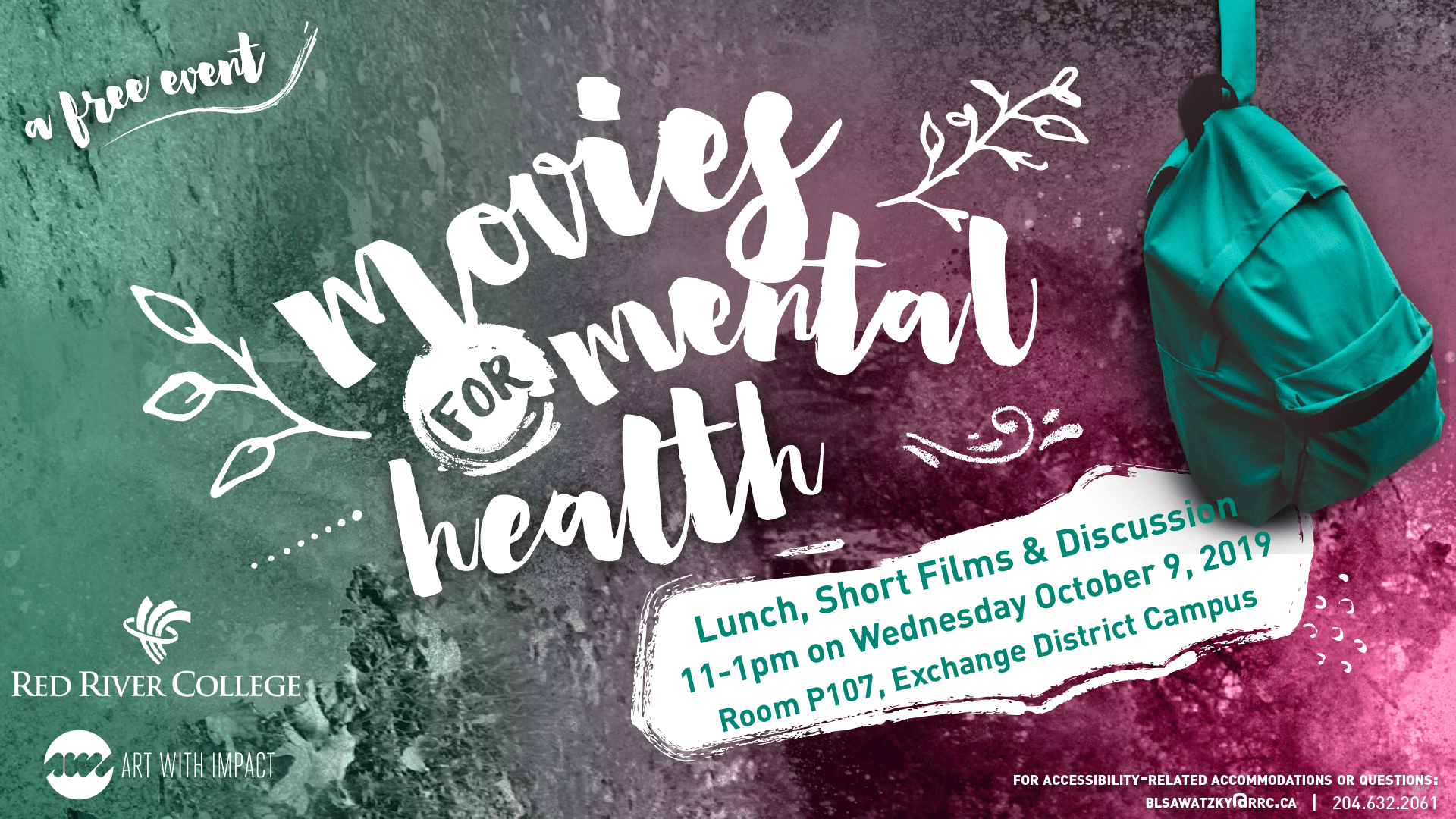
On October 8 and 9 RRC is hosting Movies for Mental Health, an interactive workshop that uses the emotional power of short film to initiate dialogue with students on the topic of mental health. This FREE event is delivered by a non-profit called Art With Impact and will be hosted at both the Notre Dame and Exchange District campuses.

This peer-to-peer learning event is two hours long and features:

  • free pizza lunch for all who attend the workshop,
  • facilitated discussion,
  • three short films from Art With Impact’s library, and
  • a resource panel with campus and community services.

Join us in creating a healthy environment at RRC through dialogue and growth!

Last year, students who attended found the workshop helped increase awareness of mental health, reduce stigma, and improve knowledge about where to go for help.

Wednesday, October 9, 11am – 1pm in room P107 The Roblin Centre at Exchange District Campus

Tuesday, October 8, 1-3pm in the White Lecture Theatre at Notre Dame Campus.

For any questions or accessibility needs, please contact Breanna Sawatzky.

This event is sponsored by the Healthy Minds Healthy College Initiative and RRC Students’ Association as we observe Mental Illness Awareness Week. All students and staff are welcome.

New Light Therapy Stations in the Library

November 13, 2018

Due to our northern latitude, many Winnipeggers experience Seasonal Affective Disorder (SAD), while others experience a milder form of winter blues. SAD is a form of depression that occurs mostly during the fall and winter months, when days shorten and sunlight decreases.

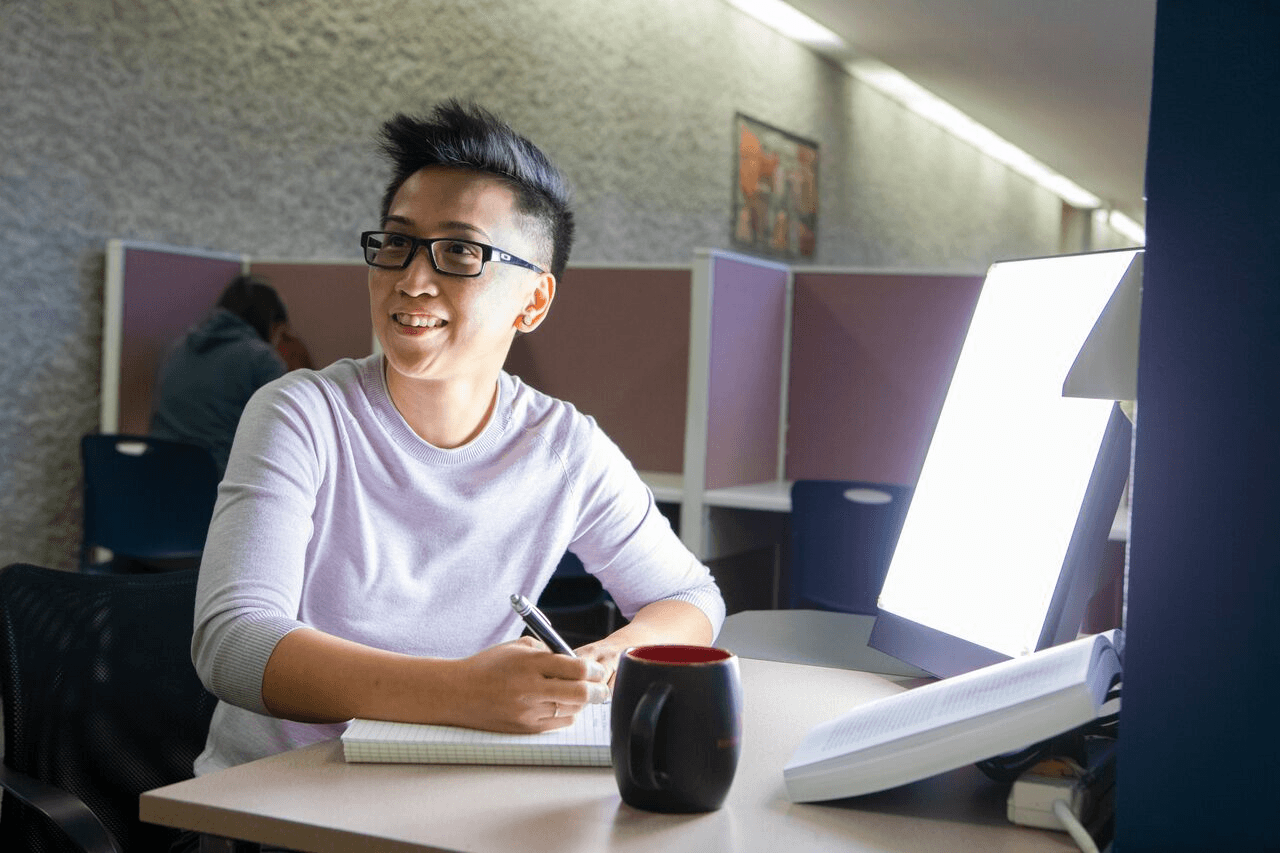
Light therapy, sitting near a specialized light each day, is one form of treatment. This is why we’re pleased to announce that both the Notre Dame and Exchange District Campus Libraries now have light therapy stations.

If you’ve been feeling changes to your mood, lower energy levels, or any of the symptoms listed below, you may want to give light therapy a try. Staff and students are invited to work or study at the station anytime the library is open.

You may also loan a smaller, portable lamp from A/V Services. That lamp may be used anywhere in the library that is near a power outlet. You’ll find instructions on proper use as well as important notes posted above the lamp.

To be effective, light from the lamp must enter your eyes indirectly. While your eyes must be open, don’t look directly at the light. Keep your session to 30 minutes, unless otherwise directed by a physician.

Symptoms of Seasonal Affective Disorder (S.A.D.)

  • Feeling tired, depressed or sad
  • Increased appetite
  • Craving for carbohydrates and starchy foods
  • Weight gain
  • Sleeping more than usual
  • Social withdrawal
  • Lack of interest in usual activities
  • Inability to concentrate, to focus
  • Loss of sexual desire
  • Body aches and pains

If you feel that you may be experiencing any form of depression, including SAD, please speak to your primary health care provider.

Sources: The Mayo Clinic Website – www.mayoclinic.org and Northern Light Technologies Product Instructions


New Red River ReliefLine: Online peer support for students

March 23, 2017

Students here at RRC have so much on their plates that life can easily become overwhelming. Sometimes connecting with a peer who really listens can be just what someone needs in order to feel validated, put problems in perspective, and move forward in a healthy way.

We’re happy to announce the launch of Red River ReliefLine – a confidential, anonymous, online, 24/7 peer support service that is available free of charge to students.

Students can link to the service here to connect with a trained peer listener, using their computer, tablet or smart phone.

To become a user, you’ll be asked to share your email address, date of birth and a unique username. Other users and listeners will not be able to see your email address or date of birth.

Listeners From Around the World

Listeners complete online training in active listening and providing compassionate support over chat. Listeners are not counsellor or therapists and do not give advice or conduct therapy. Listeners do, however, provide emotional support and a safe space to sort out what happening in your life.

Red River ReliefLine is a customized version of the service called 7 Cups of Tea that has users and listeners from all over the world. This means that students can access listeners who speak a wide variety of languages. We hope this feature will be particularly helpful for our refugee, immigrant, and international students.

In addition to supportive chat conversations, students can access simple therapeutic exercises through ReliefLine, using the Growth Path feature.

It can feel risky to reach out for the first time, but getting support from a kind listener can be so worth it! We encourage students to use ReliefLine whenever they need it.

If you’d like more information about ReliefLine, have comments about your experience with it, or are interested in becoming a listener, please contact Breanna at blsawatzky@rrc.ca or 204-632-2061.

RRC Polytech campuses are located on the lands of the Anishinaabeg, Ininiwak, Anishininwak, Dakota Oyate, and Denésuline, and the National Homeland of the Red River Métis.

We recognize and honour Treaty 3 Territory Shoal Lake 40 First Nation, the source of Winnipeg’s clean drinking water. In addition, we acknowledge Treaty Territories which provide us with access to electricity we use in both our personal and professional lives.