

Posted: July 19, 2017
Posted: July 14, 2017
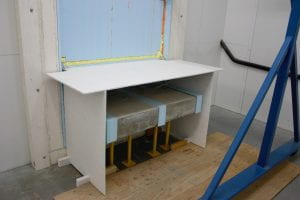
The objective of this project is to investigate and assess the energy efficiency, effectiveness, and performance of vertical, sloped and horizontal DWHR systems for MURB applications. BETAC will be working with Gary Proskiw, Manitoba Hydro, and Manitoba Housing on this project.
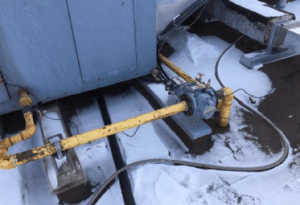
Drain-water heat recovery (DWHR) systems recover heat from a building’s wastewater and use it to preheat the fresh incoming water, thereby reducing the overall domestic hot water (DHW) load.
All new Part 9 (residential) construction in Manitoba, as part of the province’s review of Section 9.36 of the National Building Code (other than for houses with slab-on-grade or crawl space foundations), now require a DWHR system. Their introduction into mid/high-rise multi-unit residential buildings (MURBs) has been extremely limited.
The majority of information and testing available for DWHR performance was developed for vertical installations. However, the accessible portions of the drain lines in MURBs are predominately horizontal or sloped at 45°.
Posted: July 14, 2017
For this project, BETAC is working with Manitoba Housing on three case studies for three sets of “twin MURBs” (pairs of multi-unit residential buildings that have identical size, floor area and floor plans) located in Winnipeg, Manitoba.
One building from each pairing has undergone an extensive building retrofit and the other building pairing remains in its original condition.
These case studies will document the pre- and post- retrofit energy performance of the buildings, as well as review each set of buildings to identify the extent of the renovations to each building, and their associated timelines.
Posted: July 14, 2017
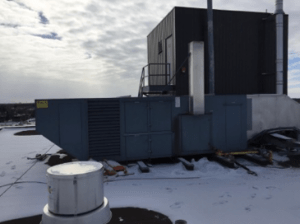
This project involves BETAC working alongside Manitoba Hydro and Manitoba Housing to monitor the energy usage of Donwood Manor – a 119-unit personal care home located in North Kildonan that recently completed major upgrades to its building envelope and mechanical systems (heating, cooling and ventilation).
Findings from this project will be of benefit to others in the building industry; therefore, a presentation of these results will be developed to share at industry association meetings, seminars, and speaking engagements (e.g. Manitoba Building Envelope Council, Building Energy Management Manitoba, Manitoba Chapter of the Canada Green Building Council, ASHRAE Manitoba Chapter), and events such as the annual Better Buildings Conference in Winnipeg.
Posted: July 10, 2017
• Differences between residential and commercial tests
• Building science and driving forces of air leakage
• Testing standards and code requirements
• Test considerations and planning
• Required materials and equipment
• First-hand experience with setup and use of blower door equipment
• Trouble-shooting common problems encountered during testing
This workshop concludes with a full live test at the Centre for Applied Research in Sustainable Infrastructure (CARSI) at Red River College, which will incorporate diagnostic tools and data analysis.
Cory Carson
Cory is a Mechanical Engineering Technologist with over five years of experience in applied research related to energy efficiency, who has tested over 40 large buildings for airtightness.
Kevin Knight
Kevin is a building envelope authority with over 30 years of experience in field observation and testing, commissioning, research, education and training.
Gary Proskiw
Gary is a mechanical engineer with 40 years of experience; he has conducted hundreds of airtightness tests on houses and commercial buildings and has been active in code and standard development.
Location: Red River College, 2055 Notre Dame Avenue, Winnipeg, MB CA
Dates: September 27-29, 2017
Times: 8:30am-4:30pm (will end at 2pm on Sept. 29 to allow travel time)
Cost: $1,495 + GST (Cost includes parking, lunch and morning coffee)
Registration Form: TechSolutionsRegistration
Call or Email:
Cory Carson (204-631-3325 | ccarson31@rrc.ca)
Louise Wood (204-632-3017 | lowood@rrc.ca)
ADDITIONAL COURSE INFORMATION:
Rob Spewak, TAC Manager
204-632-2357 | rspewak@rrc.ca | rrc.ca/betac
Posted: June 30, 2017
Aileen Lopez is a second year Culinary Arts student currently doing her second co-op placement with the Culinary Research & Innovation program at Red River College. We chatted with Aileen about her path to culinary arts and research.
What got you interested in Culinary Arts?
I got interested in Culinary when I moved here to Canada with my two sisters. None of us knew how to cook meals that we usually eat back home in the Philippines. Since none of us was trying hard enough to make “good” dishes, I decided to step up and watch videos online on how to prep ingredients correctly.
I also read different recipes everyday so I can incorporate it into the dishes I wanted to make for my sisters. As time went by, I gained more interest in cooking, and I was seeing improvement on the dishes that I was creating. The biggest factor that made me want to pursue Culinary was seeing the happiness and appreciation for the meals I have prepared. That was reason enough for me to enter Culinary school. Read More →
Posted: June 28, 2017
On April 6, 2017, industry leaders, students, instructors and researchers came together for our first-annual Applied Research & Innovation Day to celebrate student applied research and our research partnerships at Red River College. Thank you to the eTV team for putting this video together. View here:
Posted: June 20, 2017
The Canadian En[tour]preneur Experience is an exciting new initiative for young Canadians, aged 18 to 24, with an interest in entrepreneurship and tourism.
Young Canadians from across the country are encouraged to apply to join the initiative in Ottawa from August 13 to 15, 2017, to share ideas on tourism and learn about entrepreneurship in the sector, as well as network and engage with tourism operators and industry partners.
Posted: June 20, 2017
Oyedele Ola, Manager, Technology Access Centre for Aerospace and Manufacturing at Red River College, published this article in the latest issue of the Canadian Manufacturers & Exporters.
It is no news that robotics will play a pivotal role in the imminent 4th industrial revolution. With the rapid expansion and evolution of robotics, it is essential for manufacturing to stay ahead of the curve. There is a plethora of technology and knowledge gaps across industries, so Red River College is working to bridge this gap with applied research and partnerships, technology demonstration and specialized training programs to help with successful technology adoption and implementation. Robotics is fast-changing the manufacturing landscape, so let’s collaborate to keep up with this rapidly changing environment.
Read full piece here.
Posted: June 20, 2017
Sean Audet will be leaving the Culinary Research & Innovation team to launch a project of his own. We caught up with Sean for this brief Q&A, and to wish him well on his next culinary adventure.
You’re an expressive character and we love that about you. Do you have any fun or funny stories during your time at the College?
Read More →
RRC Polytech campuses are located on the lands of the Anishinaabeg, Ininiwak, Anishininwak, Dakota Oyate, and Denésuline, and the National Homeland of the Red River Métis.
We recognize and honour Treaty 3 Territory Shoal Lake 40 First Nation, the source of Winnipeg’s clean drinking water. In addition, we acknowledge Treaty Territories which provide us with access to electricity we use in both our personal and professional lives.