Research Partnerships and Innovation

Research Partnerships & Innovation

News and Events

NVDIA hosts keynote address on Manitoba’s Future in HPC-2019

May 22, 2019

All are invited to attend a special keynote address hosted by NVDIA on Wednesday, June 5.

Griffin Lacey will present the keynote address on Manitoba’s Future in HPC-2019. Lacey is a deep learning solutions architect for NVIDIA. In his current role, he assists Canadian customers in designing and deploying their scientific compute infrastructure to solve artificial intelligence problems.

This event is open to the general public. It is being hosted by the Enterprise Machine Intelligence & Learning Initiative and is being held in conjunction with Manitoba’s Future in HPC-2019, Digital Ag conference, which takes place the following day (June 6th at the University of Winnipeg’s Eckhardt Gramatté Hall).

To register, please click here.

Robotic End-of-Arm Tooling for Specific Load Application on Medical Sensor Mats: Vista Medical

May 16, 2019

The Opportunity

Vista Medical manufactures pressure sensors in the form of fabrics and mats for the medical and sports industries. In the case of hospital beds, Vista’s pressure fabrics can help to identify uncomfortable parts of a patient’s body through pressure maps. The pressure maps can then be used to redistribute pressures on the bed for attaining the required comfort level. Vista uses a pressure table connected to a computer software for calibration and pressure verification, where load application is done manually. Vista collaborated with TACAM to develop a robotic solution.

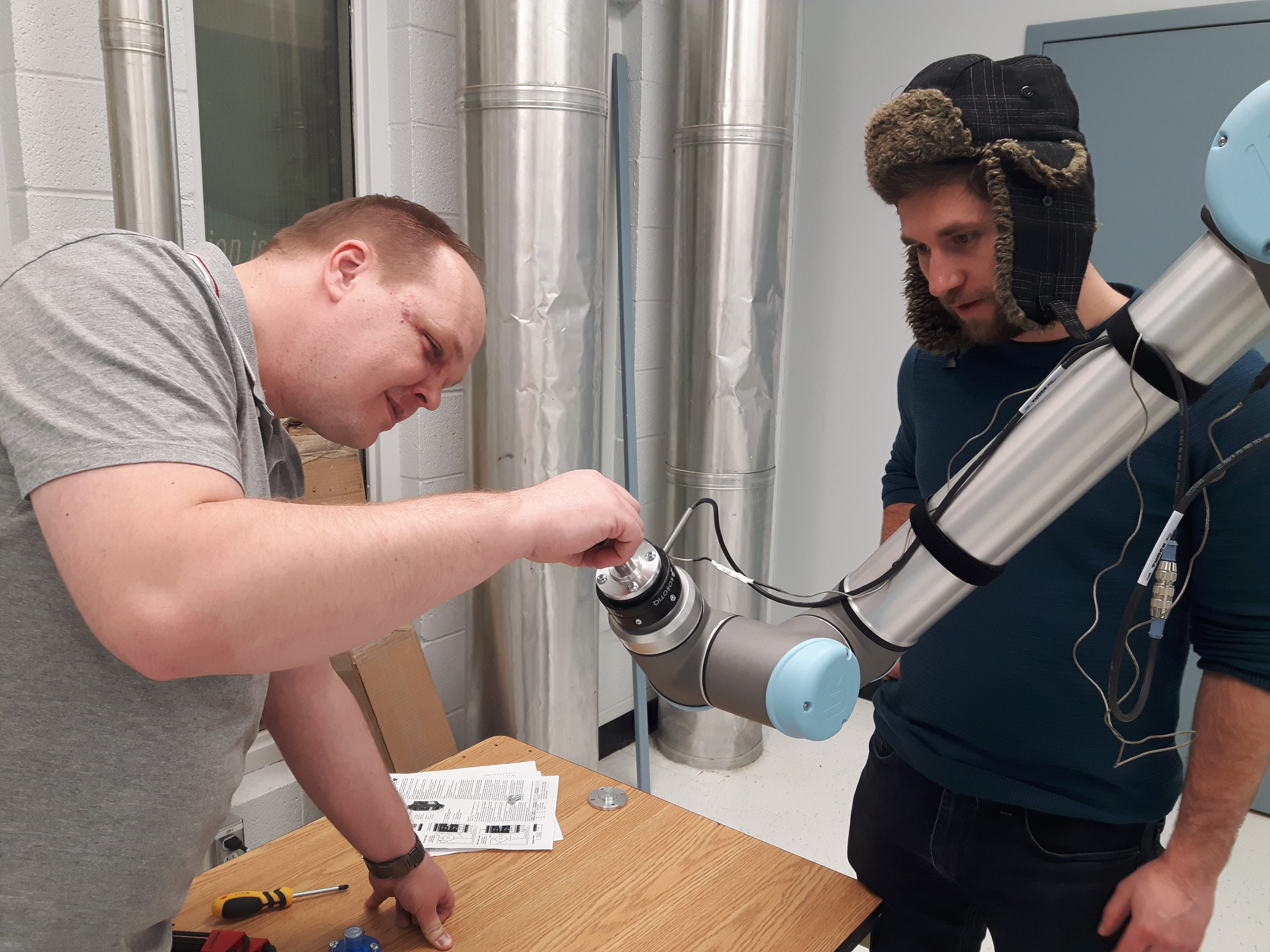
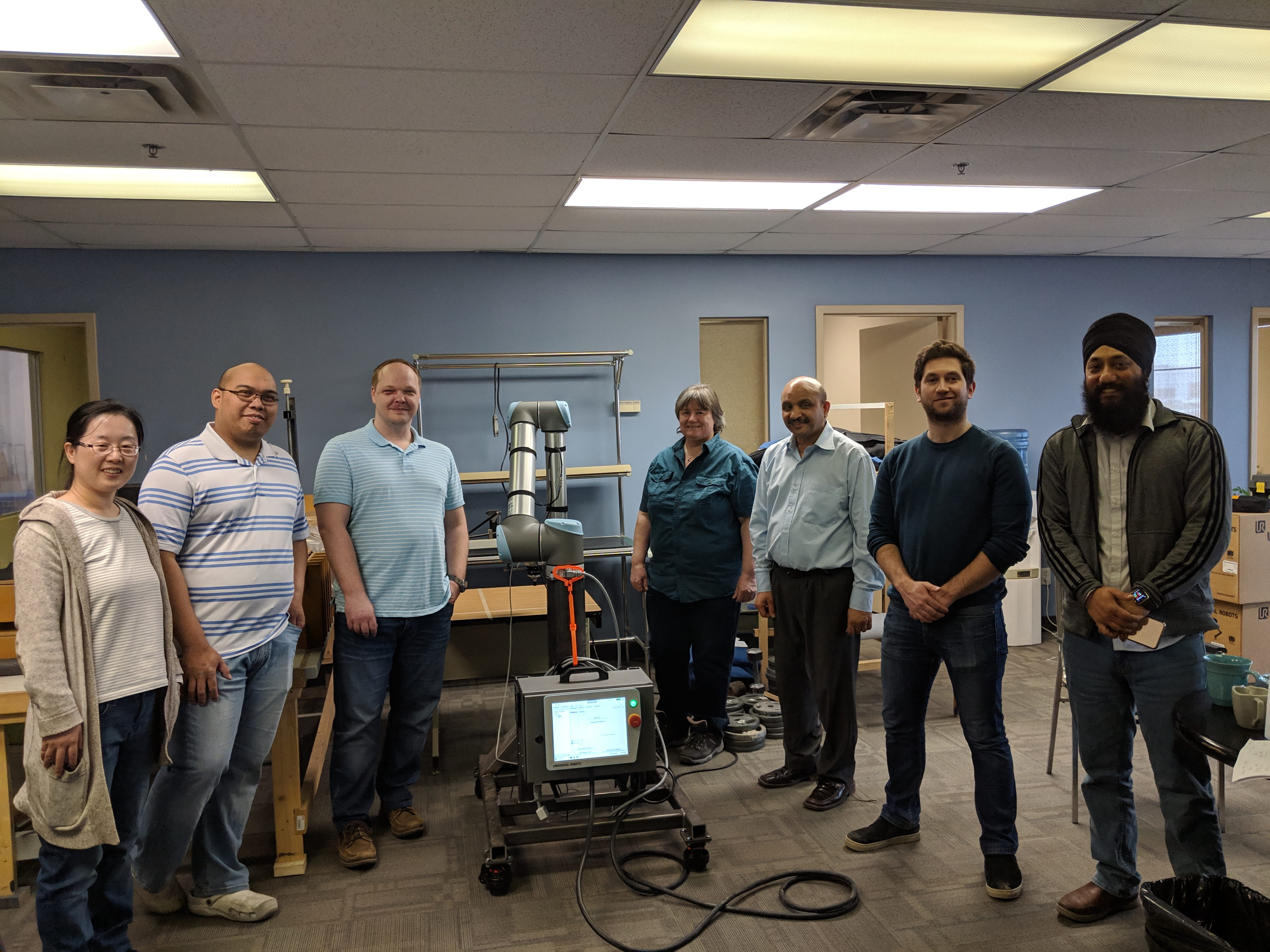
TACAM staff assembling the robotic tooling system

The Approach

A tool system to be used for specific load application on Vista’s sensor mat was designed, fabricated and integrated with the UR10 collaborative robot. This work included 3D CAD design of the end-of-arm tool, tool fabrication and integration, implementation of a load measurement device and testing of the tool at Vista Medical.

The Outcomes

A prototype robotic tool was developed to address the problem of lack of accurate predetermined loads on Vista’s verification system.

The Benefits

  • Improvement in accuracy of calibration and verification process for Medical sensor mats
  • Efficient and reliable product design and testing

Testimonial

 “RRC Team understood the mechanism of the pressure sensor array and was prompt in developing the proof of concept to demonstrate what could be accomplished by using Universal COBOT, an important step in moving forward with automating verification system. “

—Ashok Dhawan P.Eng, Engineering Manager

The project team

Collaborators:


With support from:


Building Repair Welding Capability for MRO Services – CARIC DPHM 711

May 14, 2019

The Opportunity

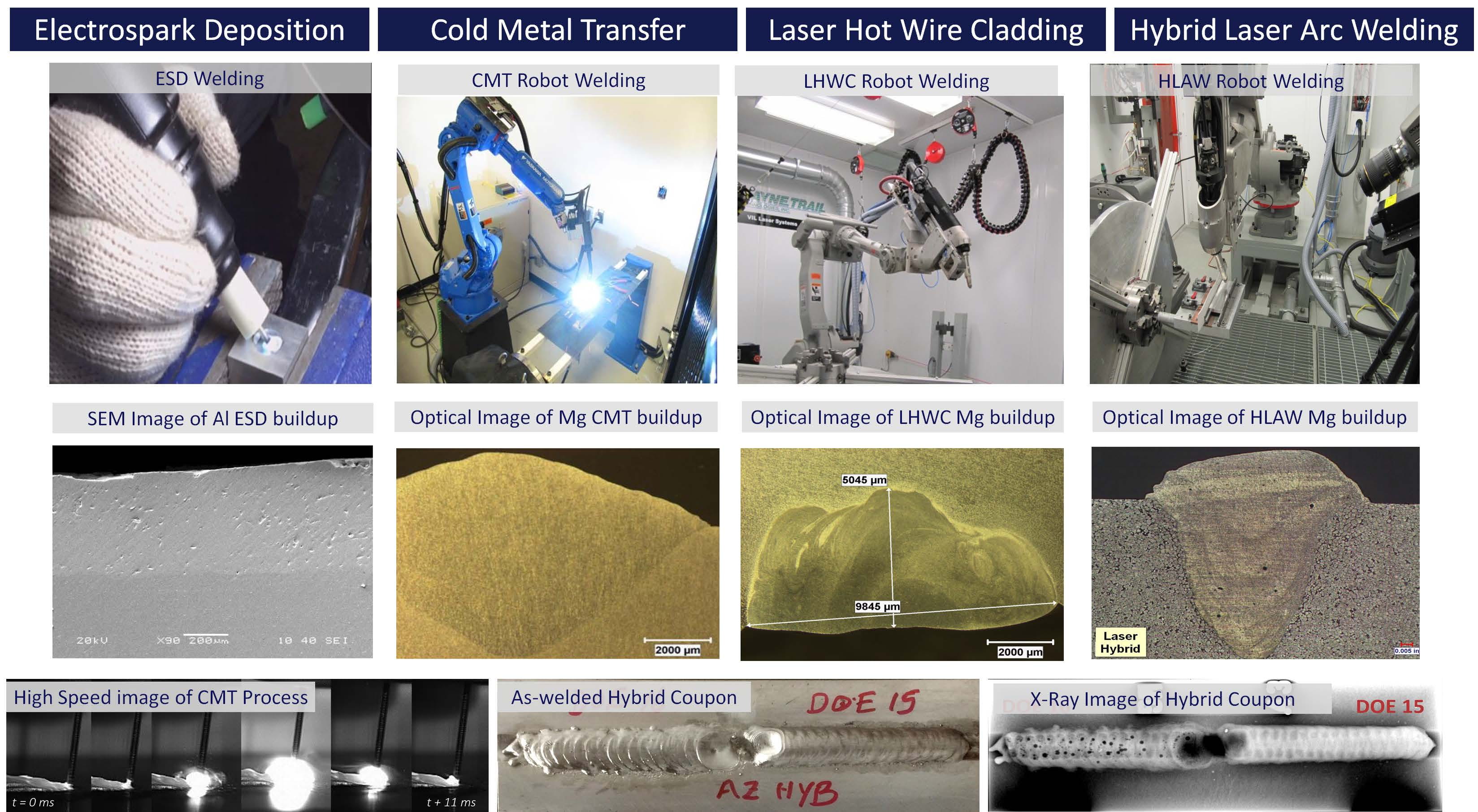
Selected figures from the DPHM 711 project

At TRL levels 4-6, the CARIC DPHM 711 was a multi-party, 2.5 year-long, $1.4M project. The objective was to determine the suitability of select advanced welding technologies for the repair of Al and Mg alloys for applications in the repair of fan frames, fan cases, and gearbox housing.

Comprehensive research including process development and optimization, metallurgical analysis, and standardized testing efforts was conducted to address the welding challenges leading to quality problems in selected aerospace Al and Mg alloys.

The Approach

CMT and Laser equipment set up and training of key technical staff, initial experimentation to establish process parameter, design of experiment (DOE) and statistical analysis, process optimization, metallurgical, mechanical and corrosion evaluation, and simulated weld repair demonstrations were performed on scrap gearbox housing and engine case.

The Outcomes

Following a comprehensive study, DOE, process optimization, iterative experimentation, quality evaluations, microstructure analysis, mechanical tests, and corrosion studies, simulated weld repair demonstrations were performed on scrap gearbox housing and engine case. 

The Benefits

  • Generation of new innovative processes
  • Improvement in competitiveness and unique MRO services
  • Expanding the frontiers of knowledge in advanced welding

Testimonial

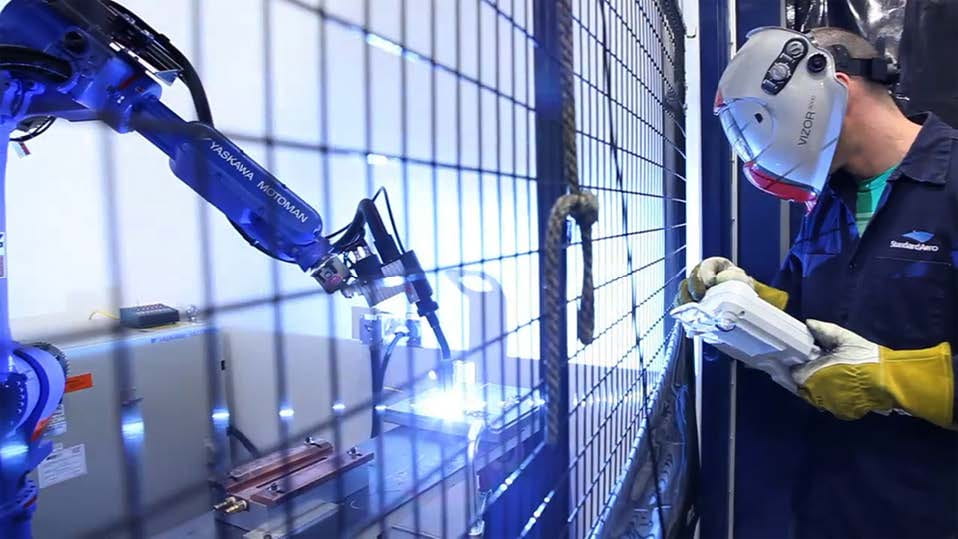
Cold Metal Transfer (CMT) welding in operation

“The DPHM 711 project was StandardAero’s first foray into a CARIC research project. We had a very successful partnership with Red River College and the other project collaborators. The project results will be used for both research reference and strategic repair development planning – allowing us to position ourselves as a market leader in MRO activities.”

— Andrew Harvey C.E.T., Manager, Repair Development Engineering, StandardAero Component Services – Canada

Collaborators

Save the date: 2019 Vehicle Technology International Conference

May 7, 2019

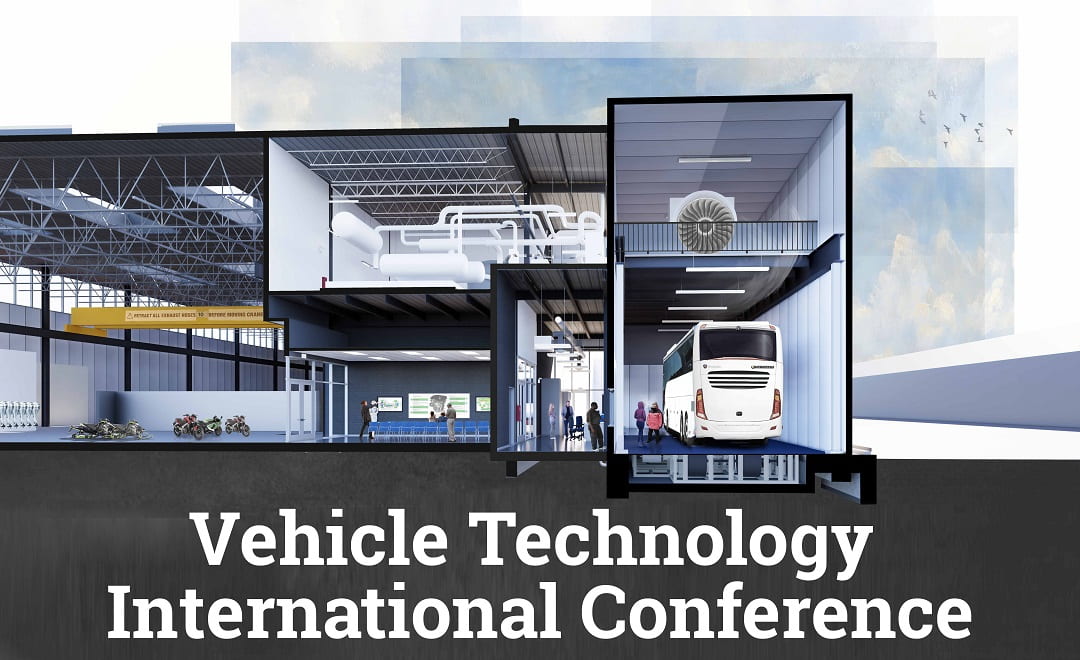
Red River College is proud to introduce the inaugural 2019 Vehicle Technology International Conference, September 30th through October 2nd in Winnipeg, Manitoba.

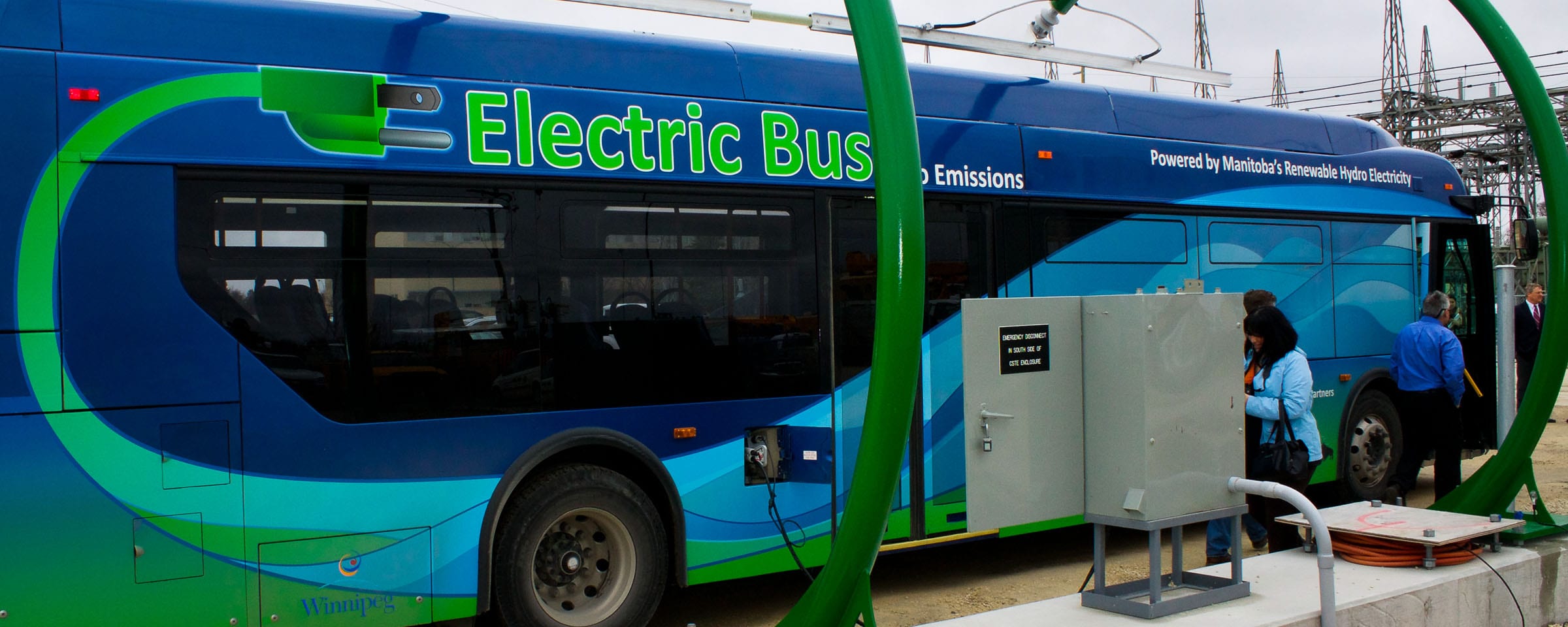
The Conference is oriented to researchers and practitioners involved with advances in and practical applications of vehicle technologies. The conference focus includes alternative propulsion technologies, heavy-duty and specialized vehicle applications, vehicle simulation, vehicle testing, data analysis and modeling, “smart” vehicle technologies, improving vehicle sustainability performance, and addressing barriers for new technologies. A particular tour-feature is Red River College’s newly completed MotiveLab, an advanced heavy-duty vehicle capable, extreme temperature climatic-chamber and chassis dynamometer test facility.

For more information and to register, please click here.

Fast Food: CRI co-op students dish up innovative apps at Ag Awareness Day

March 25, 2019

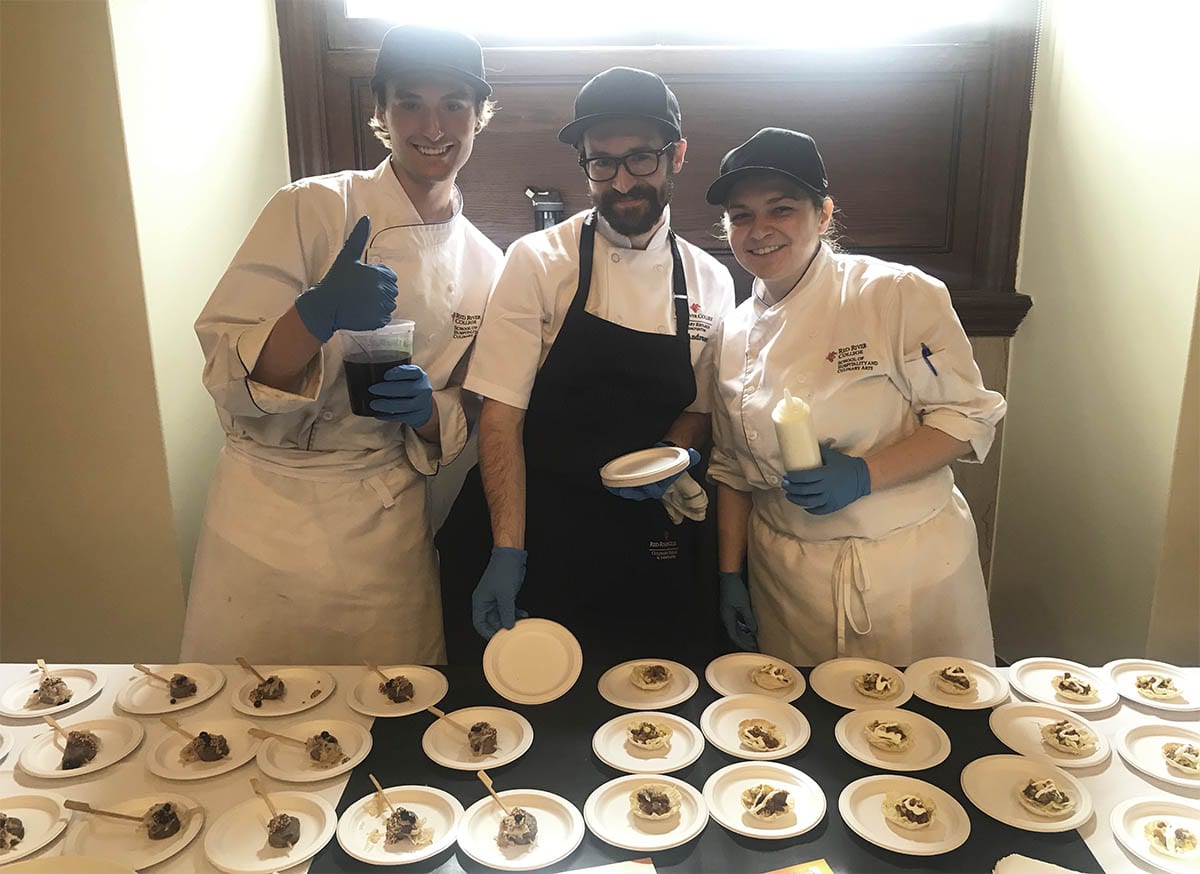
Peter Matkowski, CRI Research Coordinator Kyle Andreasen, and Anna Borys at Ag Awareness Day 2019

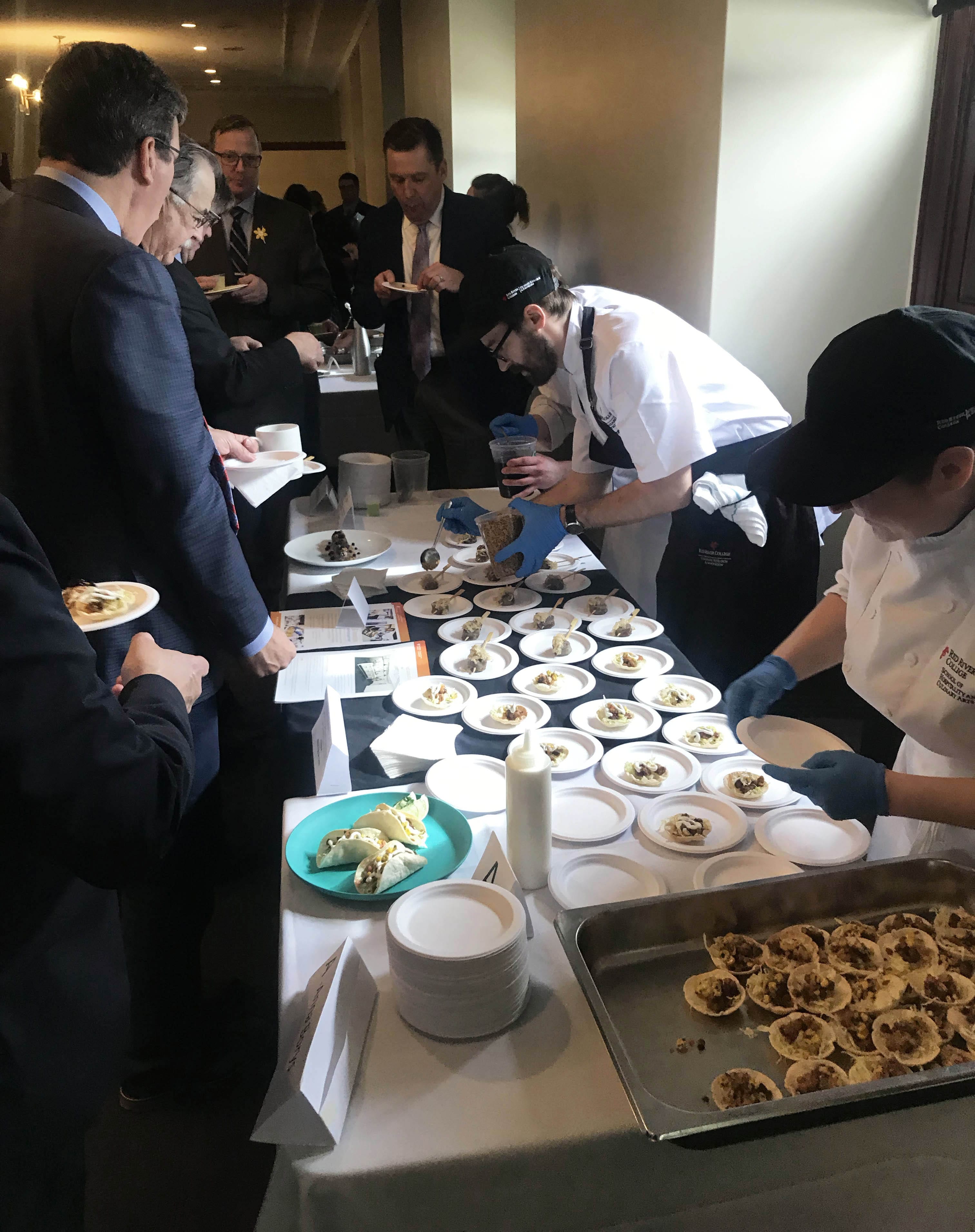
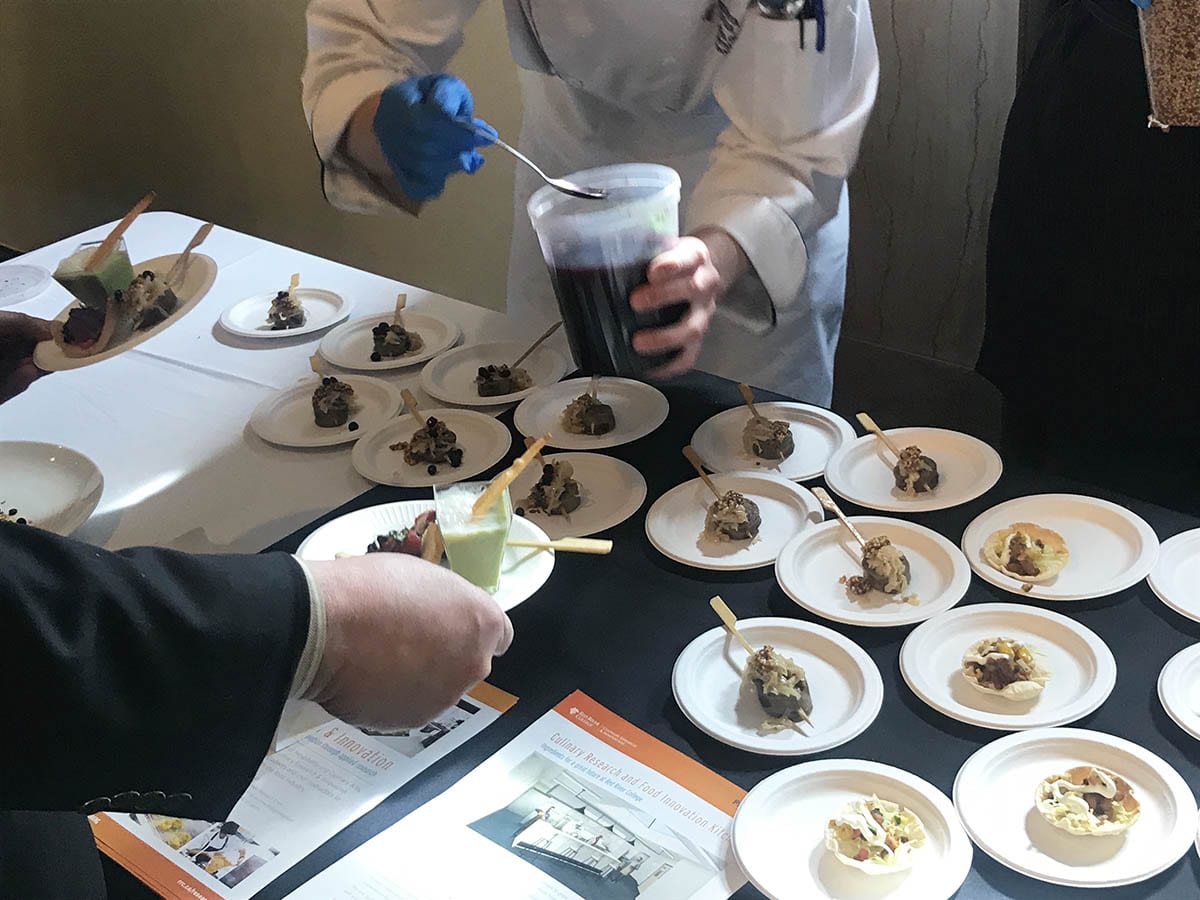
Culinary Arts and Culinary Research & Innovation (CRI) co-op students Anna Borys and Peter Matkowski showed off their chops at Ag Awareness Day on March 19th. While dozens of dignitaries, government officials and supporters filled the Golden Boy Dining Room at the Manitoba Legislative Building, students from both RRC and Assiniboine Community College were busy prepping their innovative appetizers to serve to guests following the program.

The Manitoba Provincial government has been celebrating Agriculture Awareness Day during the third week of March since 2005. The event promotes greater awareness of the contributions agriculture makes to this province and the industry’s role as a key driver of the Manitoba economy.

To add a dash of spice to this year’s event, culinary students were invited to compete in a protein-based appetizer challenge. Each of the four students were tasked with preparing a creative animal or plant protein-based snack, featuring either peas or bison.


Anna Borys dished up yellow pea tempeh chorizo tacos, while Peter Matkowski served bison bratwurst with braised cabbage, pickled blueberries and fermented mustard. While both dishes were flying off the table faster than the students could dish them up, it was Peter Matkowski’s bison bratwurst that was ultimately crowned most innovative at the friendly competition. The students’ efforts proved there’s plenty of room for creativity and flavour in value-added protein products in Manitoba.

Anna Borys’s yellow pea tempeh chorizo taco with roasted corn cilantro salsa and lime crema

Peter Matkowski’s bison bratwurst with braised cabbage, pickled blueberries, and fermented mustard

Apply for funding under the Research and Workplace Innovation Program from WCB

March 7, 2019

Please note this opportunity from the Workers Compensation Board (WCB):

“Working with its partners, the WCB promotes safe and healthy workplaces, facilitates recovery and return to work, provides compassionate and supportive compensation services for workers and employers, and ensures responsible financial stewardship.  As part of this commitment, the WCB has created the Research and Workplace Innovation Program (RWIP) to promote and fund scientific research, workplace innovation, training and education projects and knowledge transfer related to prevention of occupational injuries, diseases and return to work of injured or ill workers.

RWIP Projects are funded under three streams:

  • Scientific Research
  • Training and Education
  • Workplace Innovation

Generally, each project would be up to two years in duration and funded up to a maximum of $100,000 each year. A total of $1 million is available to fund qualified projects.”

For more information and to apply, please visit wcb.mb.ca.

Three-Day Training Course: Large Building Airtightness Testing

March 5, 2019

What You Will Learn

  • Differences between residential and commercial tests
  • Building science and driving forces of air leakage
  • Testing standards and code requirements
  • Test considerations and planning
  • Required materials and equipment
  • First-hand experience with setup and use of blower door equipment
  • Troubleshooting common problems encountered during testing

This workshop concludes with a full live test at the Centre for Applied Research in Sustainable Infrastructure (CARSI) at Red River College, which will incorporate diagnostic tools and data analysis.

Each session will be limited to 12 participants.

Course Dates and Cost

Dates: April 24-26, 2019 (spots available)

Times: 8:30am to 4:30pm (will end at 2pm on the last day to allow time for travel)

Cost: $1,495 + GST (includes parking, lunch and morning coffee)

Location: Red River College, 2055 Notre Dame Ave., Winnipeg, Manitoba, Canada

Registration

To register, call or email:

Sheila Allarie
sallarie@rrc.ca
204-632-2038

Cancellation policy: Students who withdraw from a course seven days or less before the start date will be charged a $100 cancellation fee.

Instructors

Cory Carson
Cory is a Mechanical Engineering Technologist with over five years of experience in applied research related to energy efficiency, who has tested over 50 large buildings for airtightness.

Kevin Knight
Kevin is a building envelope authority with over 35 years of experience in field observation and testing, commissioning, research, education and training.

Gary Proskiw
Gary is a mechanical engineer with 40 years of experience; he has conducted hundreds of airtightness tests on houses and commercial buildings and has been active in code and standard development.

Additional Course Information

Cory Carson
204.631.3325 | ccarson31@rrc.ca

Other course offerings can be found at rrc.ca/techsolutions.

Reach for the STAR: Strategic Transformation & Applied Research internal funding program

March 1, 2019

The Strategic Transformation & Applied Research (STAR) fund is a new internal funding program at Red River College. An evolution from previous internal funding (PIF and CARD), the new fund aims to support a broad range of activities at the College with emphasis on interdisciplinary and multi-department projects.

Proposals must clearly demonstrate innovation, must be unique and/or have elements of strategic transformation.

There are three main categories for applications:

  1. Academic Innovation
  2. Applied Research
  3. College-wide Improvements

To learn more about the categories, as well as the application process and timeline, please visit the website or contact Jojo Delos Reyes at jdelosreyes@RRC.CA.

Please note: deadline has been extended to April 5, 2019.

BETAC in the news: Journal of Commerce

February 13, 2019

Red River College’s Building Envelope Technology Access Centre (BETAC) was in the news this week, with a mention in the Journal of Commerce by ConstructConnect. The article highlights BETAC’s partnership with SMT Research Ltd. to monitor the health of the Skilled Trades and Technology Centre as it was being built.

“SMT partnered with Red River College’s (RRC) Building Envelope Technology Access Centre (BETAC) to monitor the structural health of the Skilled Trades and Technology Centre (STTC) as it was being built on the RRC Notre Dame campus in Winnipeg.

Structural health monitoring helps to ensure that new buildings are energy-efficient, durable and perform as expected.

BETAC and SMT installed a wide network of sensors throughout the building as it was under construction.

A total of seven different building envelope types were instrumented throughout the exterior building envelope, as well as the roof and green roof assemblies.

The effectiveness of the STTC’s building envelope, which helps protect its occupants from the extremes of Winnipeg’s climate, will continue to be monitored in real time.”

Read the full article here.

Applications now open for CIRA’s Community Investment Program

February 1, 2019

The Canadian Internet Registration Authority (CIRA) has opened up applications for the next round of the Community Investment Program.

The application period is open until 2:00 p.m. on February 28, 2019. Grants are open to researchers at universities and colleges working on projects that contribute to building a better online Canada, as well as to non-profits and registered charities. Grants are available up to $100,000, with one grant available up to $250,000.

This year, CIRA is focused on the following key funding areas:

  • Infrastructure: Developing connectivity services for regional, rural, remote and/or underserved communities
  • Access: Providing individuals and communities with the ability to connect to the internet
  • Digital Literacy: Enhancing Canadians’ knowledge and skills to use the internet effectively and safely
  • Engagement: Research and knowledge-sharing activities that broaden public understanding and participation in Internet policy development and governance and cybersecurity
  • Services: Building online apps and platforms that address social, economic and/or environmental needs

Visit the CIRA website for more information!

RRC Polytech campuses are located on the lands of the Anishinaabeg, Ininiwak, Anishininwak, Dakota Oyate, and Denésuline, and the National Homeland of the Red River Métis.

We recognize and honour Treaty 3 Territory Shoal Lake 40 First Nation, the source of Winnipeg’s clean drinking water. In addition, we acknowledge Treaty Territories which provide us with access to electricity we use in both our personal and professional lives.