Research Partnerships and Innovation

Research Partnerships & Innovation

DTTI

Prepared for Takeoff – RRC Polytech supports local company TABAQ to advance aircraft inspection technology

June 18, 2026

‘The sky is the limit’ is a saying that has guided the aerospace industry’s push of innovative engineering from the very first atmospheric flights to the edge of the universe – where the sky is now only the beginning. Canada’s aerospace sector invests over a billion dollars annually into research and development to stay competitive in the air, and as the country’s third-largest aerospace hub, Winnipeg has a growing reputation for identifying challenges and finding solutions.

With a robust, highly specialized supply chain that services global aerospace and defence markets, Winnipeg-based firms generate billions in economic activity and employ thousands of workers. And from established leaders to ambitious startups, they often rely on support from the local innovation ecosystem – including RRC Polytech, the province’s largest institute of applied research and practical training – to help solve their industry-specific problems.

A well-documented shortage of qualified Canadian General Standards Board (CGSB) level II and III Non-Destructive Testing (NDT) inspectors in the aerospace maintenance, repair, and overhaul sector created a recent opportunity for a successful applied research partnership.

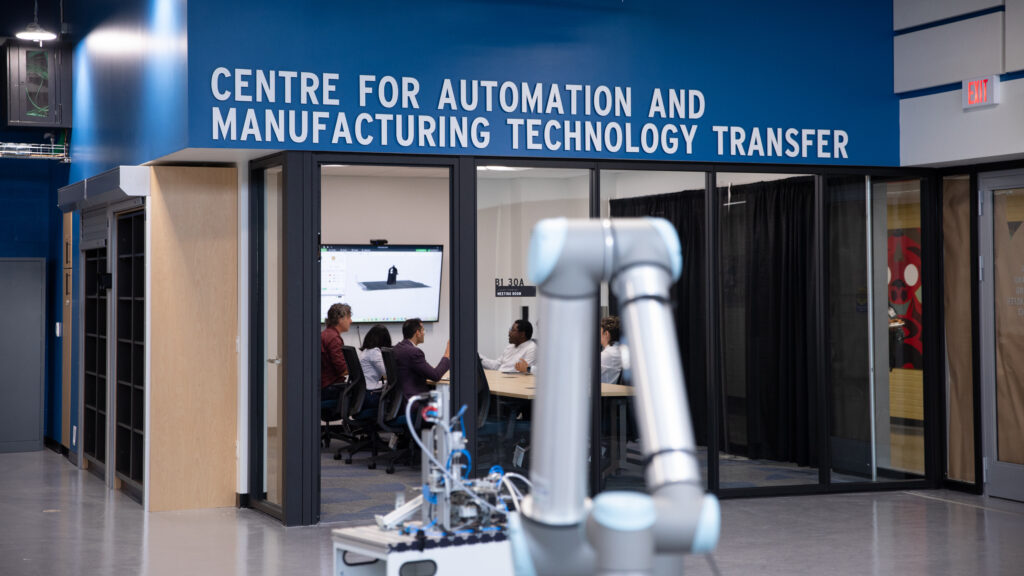
Looking for help to advance mobile technology to support their technicians with non-destructive testing of aircraft components, TABAQ Smart Aerotech Manufacturing Inc. found the expertise and specialized facilities it needed at RRC Polytech’s Centre for Automation and Manufacturing Technology Transfer (CAMTT)

a robotic arm sits outside of the boardroom of RRC Polytech’s Centre for Automation and Manufacturing Technology Transfer (CAMTT).

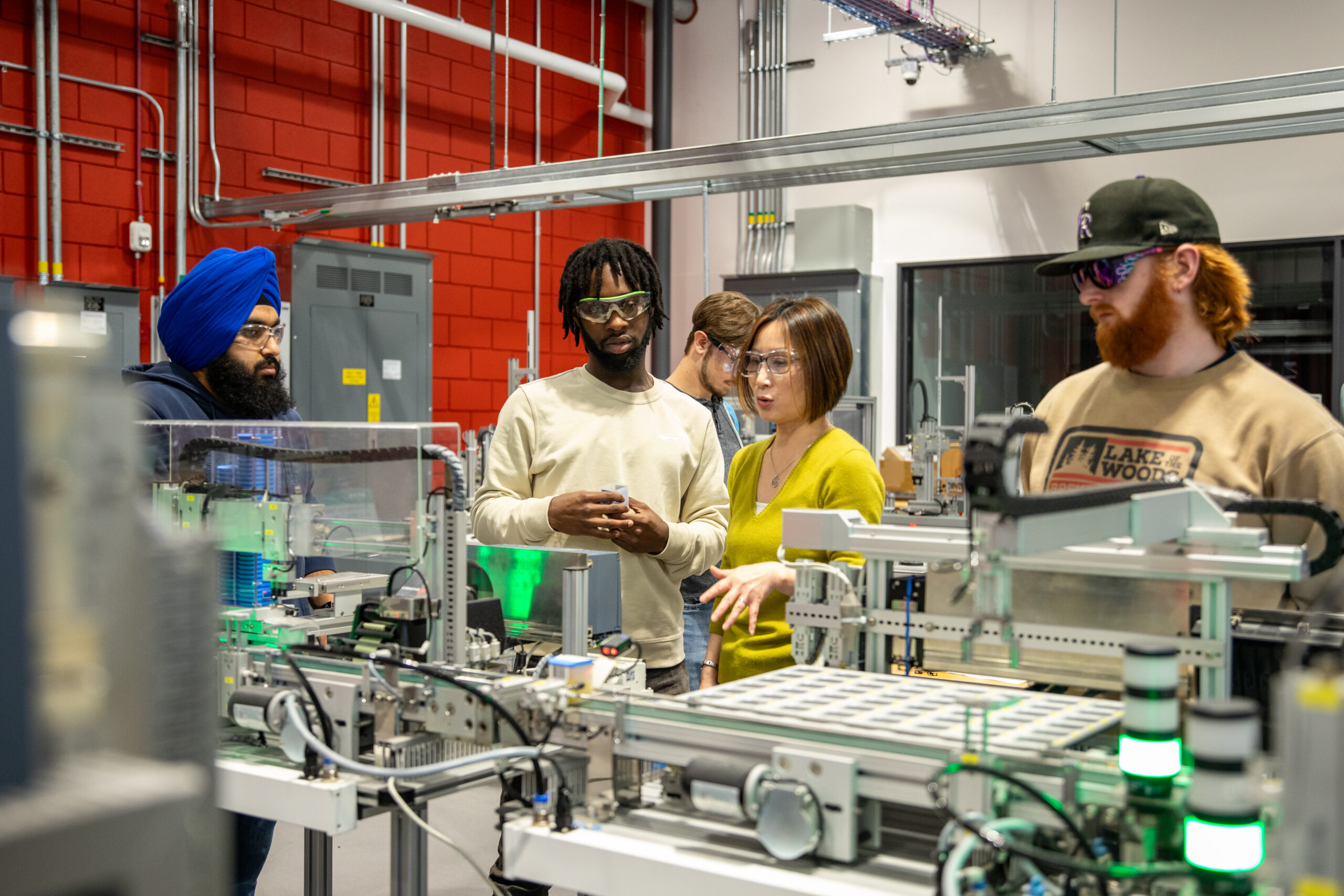
“CAMTT is the research and innovation centre of the Price Institute of Advanced Manufacturing and Mechatronics. It was created to accelerate Manitoba’s digital transformation and adoption of Industry 4.0,” said Dr. Vikram Banthia, Director of the Price Institute. “Our partnership with TABAQ is an excellent example of how our professional researchers, faculty, and students collaborate with industry experts on projects to develop and implement emerging technologies that improve efficiency and reliability through AI, Internet of Things (IoT), robotics, automation, and additive manufacturing.”

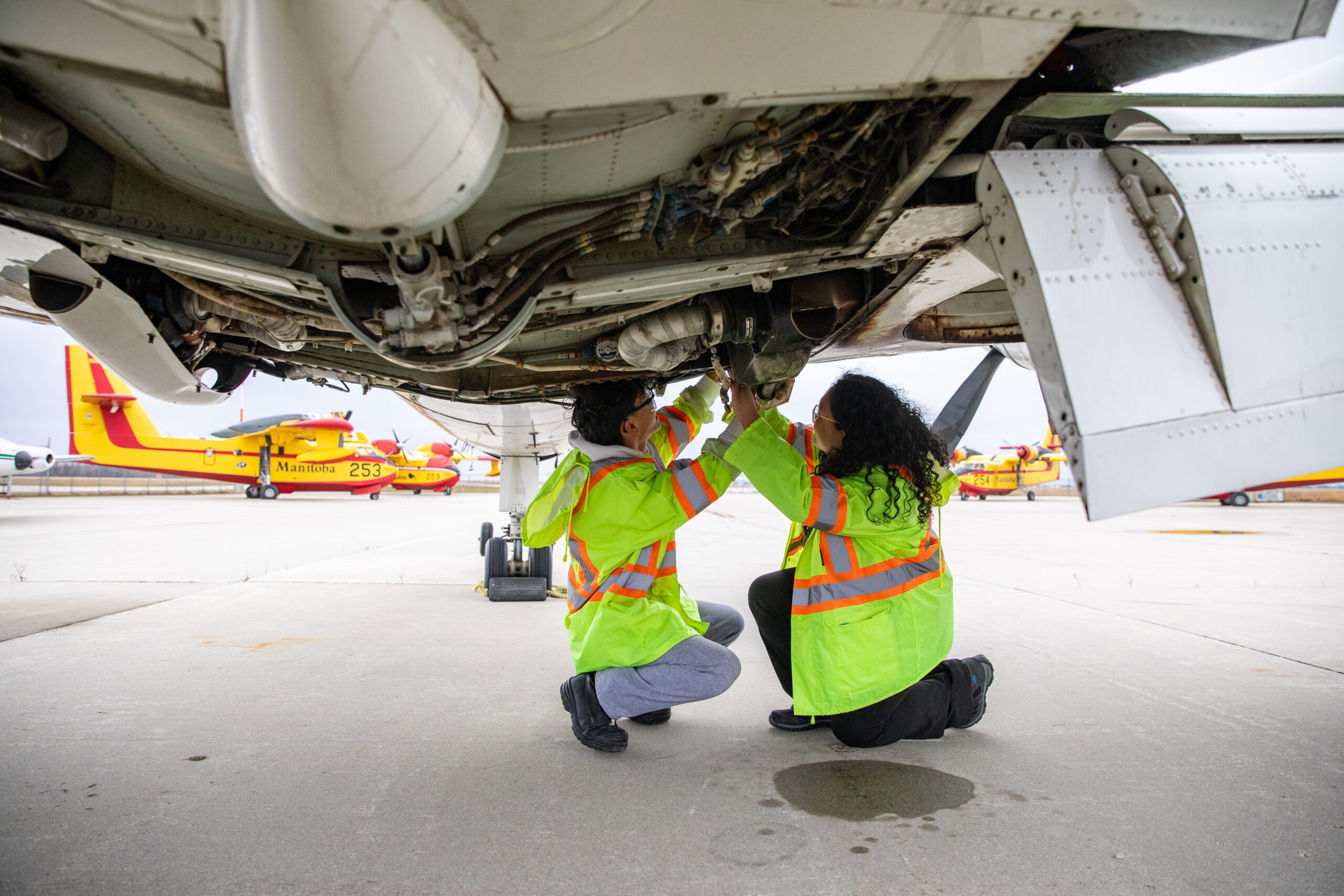
TABAQ is a local startup dedicated to delivering rapid response, high-quality non-destructive testing to optimize resources, cost, and schedule for aerospace and aviation firms. An Approved Maintenance Organization (AMO) by Transport Canada, TABAQ adheres to the industry’s highest safety and regulatory standards, offering NDT services at the customer’s site whether in factory, in hanger, or on wing.

“Our local team of CGSB Level II NDT technicians can deliver high-quality, certified, traceable services anywhere in Manitoba within 72 hours,” said Ramzy Farrag, Founder and CEO of TABAQ Smart Aerotech Manufacturing Inc. “We are building our services from the ground up to align with our customers’ needs and keep our skies safe. By working with CAMTT to improve the current available inspection technology, we will be able to maximize our responsiveness, flexibility, and efficiency.”

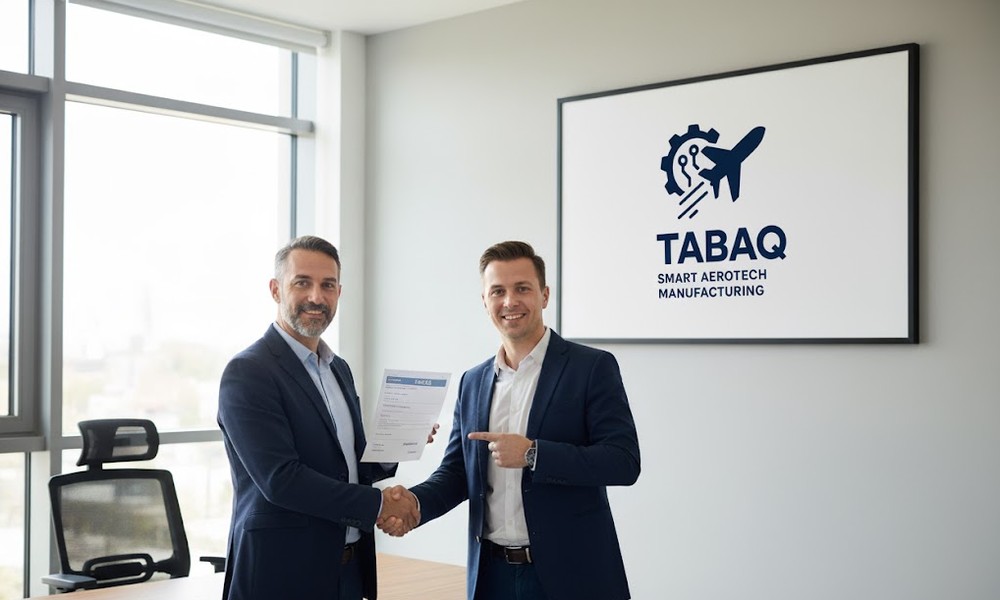
two people shake hands in the TABAQ boardroom

Together, they’re working on a computer vision system called Project Axion – an artificial intelligence (AI) technology that enables machines to capture, process, and interpret visual data from the physical world. It automates the evaluation of materials, welds, and structural components by converting sensory data into actionable, measurable images.

Phase 1 of Project Axion aims to digitally transform their conventional Liquid Penetrant NDT system to automatically identify internal cracks, voids, and surface flaws which will accelerate the inspection process, rather than replace skilled human inspectors – a common misconception of digital transformation.

“The technology is designed to support technicians, not replace them,” said Dr. Baltej Rupal, Research Chair, Advanced Manufacturing and Mechatronics at RRC Polytech. “Our team at CAMTT works at the intersection of industrial data, digital inspection, and process optimization to close the gaps between what AI technology promises and what a shop floor actually needs. We also help manufacturers navigate the funding landscape and innovation programs to de-risk technology adoption and make the business case for R&D investment.”

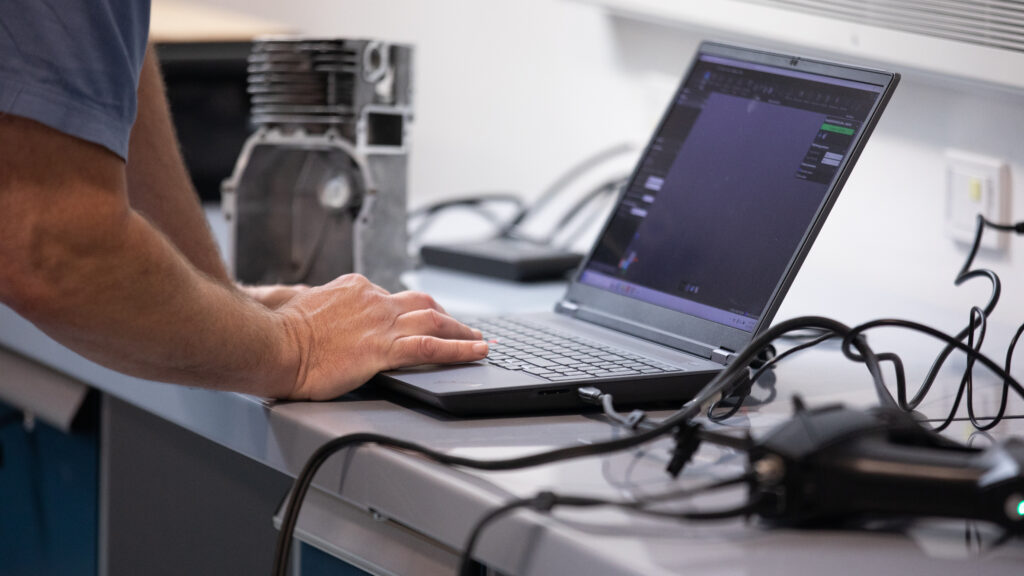
a hand typing on a laptop computer

The bottom line is a key factor for all organizations, but for a startup like TABAQ, access to RRC Polytech’s Digital Technology Transformation Initiative (DTTI) is a huge advantage – subsidizing some of the researcher’s time, specialized equipment and other associated resources on their ongoing project. Funded by a $3.4 million Mobilize grant from the Natural Sciences and Engineering Council of Canada (NSERC), the DTTI helps to offset the costs of qualified applied research collaborations that advance digital transformation and drive sustainability in Manitoba.

The project should be completed in September, but their initial results have been so positive that a Phase 2 is already being planned to develop new sensors and explore additional non-destructive testing technologies that will continue digitizing TABAQ’s inspection process.

“By combining technology; innovation; traceability; high-precision and skilled craftsmanship, we aim to build long-term partnerships and contribute to a stronger, more resilient aerospace supply chain,” said Farrag. “RRC Polytech’s DTTI program is one of the strongest enablers for our success in digital transformation, allowing us to explore cost-effective solutions to achieve our ambitious goals, so we look forward to working with the experts at CAMTT to improve our NDT service and make our clients’ experience as simple and convenient as possible.”

DTTI Funding Injects Augmented Reality into Electric School Bus Conversion Project

April 29, 2026

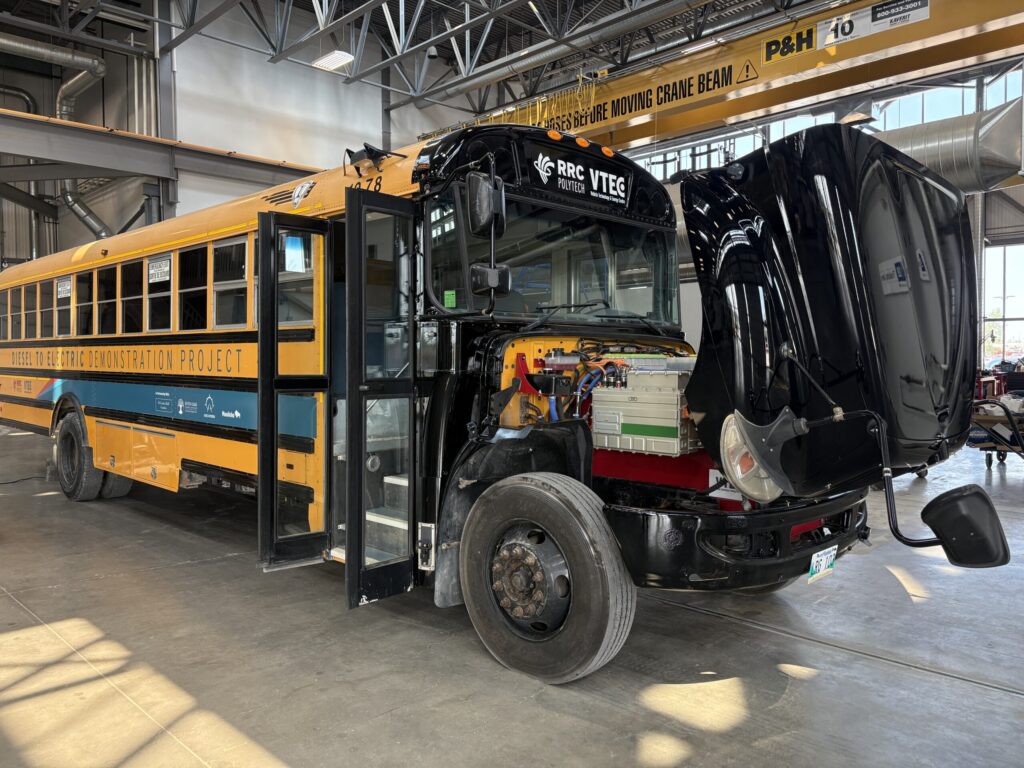
As Manitoba celebrated the rollout of its first low-carbon school bus converted from diesel to electric at RRC Polytech’s Vehicle Technology and Energy Centre (VTEC), another quiet but critical revolution was also taking place behind the scenes – the use of Augmented Reality (AR) to document and guide the electrification process, moving forward.  

“Augmented Reality will play a key role as the province looks to scale EV conversions, ensuring that the workforce is not only ready but empowered to drive change,” said Jojo Delos Reyes, Director of RRC Polytech’s VTEC. “While the positive environmental impacts and cost-saving potential of the school bus conversion kit may transform the transportation sector, the outgrowth of adaptable AR innovation resulting from VTEC’s ongoing applied research with industry partner, Noble Northern, could resonate across all sectors.”  

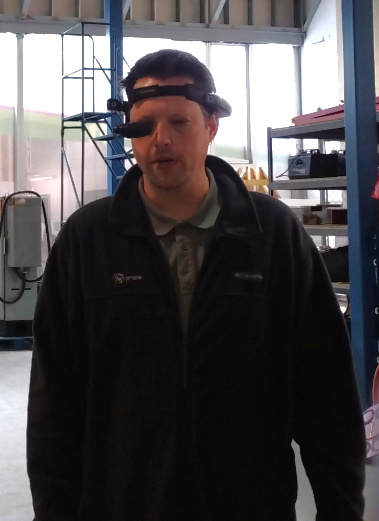
a researcher in AR headset

This additional outcome helped to qualify the project for funding through RRC Polytech’s Digital Technology Transformation Initiative (DTTI). Funded by a Mobilize grant of just over $3.4 million from the Natural Sciences and Engineering Council of Canada (NSERC), the DTTI is a cross-institutional program created to support collaborations that aim to advance digital adoption and drive sustainability in Manitoba.

On this project, DTTI funding provided the AR goggles and software, offset a portion of the research technologist’s time and supported the input of three students who gained valuable experience working directly with an industry leader to solve a real-world problem.

“The DTTI enables research partners to explore how digital technology like AR can be used not only to achieve their project’s primary goals but, in this case, to reimagine how complex mechanical tasks are taught, understood, and replicated,” explained Delos Reyes. “It’s all about lowering the risk for our industry partners to pursue automation, efficiency, and optimization. Together, we’re developing these new processes, today.” 

Static paper manuals are no longer a match for an AR headset that can overlay interactive 3D instructions directly onto items like physical bus components. This project validated that mechanics and students can now visualize each step of the conversion in real time – from removing the diesel engine to installing electric motors and controllers – with the added benefit of contextual guidance that can adapt to their actions. 

This immersive approach: 

  • Reduces errors by showing rather than telling 
  • Speeds up training for new technicians 
  • Improves retention of technical knowledge 
  • Enables remote support and collaboration 
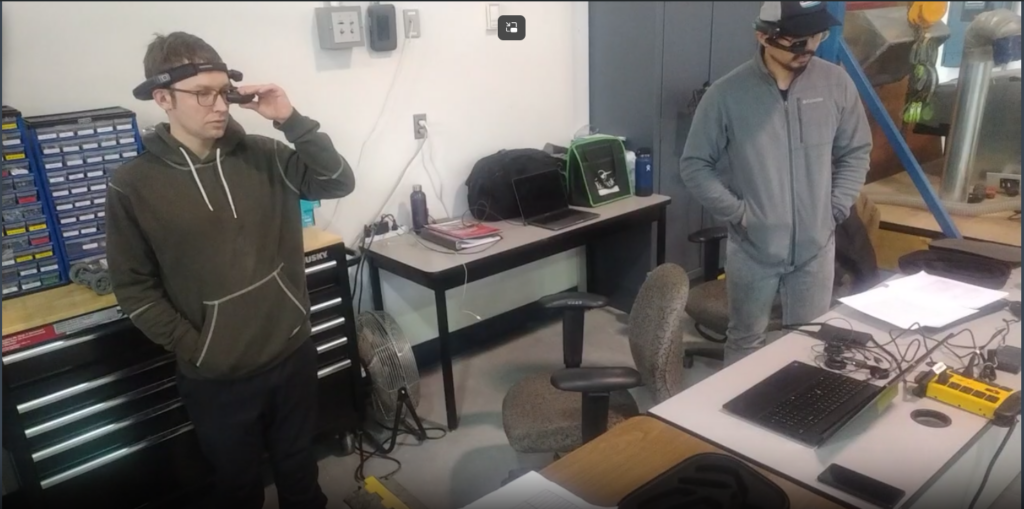
two researchers at VTEC wearing AR headsets

By digitizing the project’s documentation along the way, VTEC and Noble Northern’s experts are also creating a living knowledge base that can evolve with each innovation. AR-enhanced records are easier to update, share, and scale, making them ideal for fleet-wide adoption and future commercialization in virtually any industry.  

“We’re determined to use our manufacturing and metal fabrication expertise to become a force for change in creating a greener future, so it’s pretty cool that a co-product of us adopting cleaner technology has a universal application,” said Tye Noble, President, Noble Northern. “Our teams love working with RRC Polytech on research and development projects because they not only offer leading-edge facilities and resources, their staff and students are always looking for new ways to maximize on opportunities that arise from our work.”                 

This project demonstrates how access to funding streams like the DTTI act as a catalyst for the innovation, collaboration, and skill development that is positioning RRC Polytech and its partners at the forefront of Manitoba’s digital transformation and sustainability efforts.

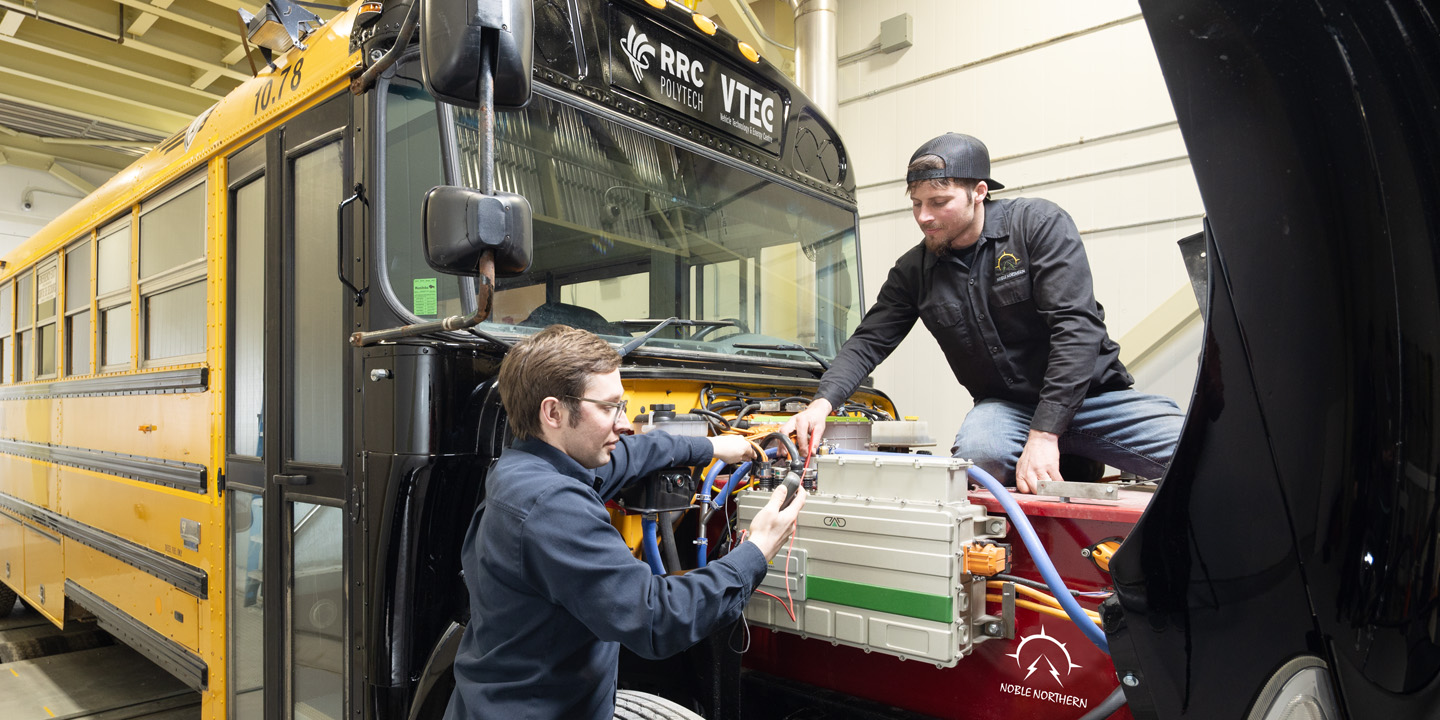
school bus with engine compartment open to show electric motor

RRC Polytech campuses are located on the lands of the Anishinaabeg, Ininiwak, Anishininwak, Dakota Oyate, and Denésuline, and the National Homeland of the Red River Métis.

We recognize and honour Treaty 3 Territory Shoal Lake 40 First Nation, the source of Winnipeg’s clean drinking water. In addition, we acknowledge Treaty Territories which provide us with access to electricity we use in both our personal and professional lives.