Prepared for Takeoff – RRC Polytech supports local company TABAQ to advance aircraft inspection technology

‘The sky is the limit’ is a saying that has guided the aerospace industry’s push of innovative engineering from the very first atmospheric flights to the edge of the universe – where the sky is now only the beginning. Canada’s aerospace sector invests over a billion dollars annually into research and development to stay competitive in the air, and as the country’s third-largest aerospace hub, Winnipeg has a growing reputation for identifying challenges and finding solutions.
With a robust, highly specialized supply chain that services global aerospace and defence markets, Winnipeg-based firms generate billions in economic activity and employ thousands of workers. And from established leaders to ambitious startups, they often rely on support from the local innovation ecosystem – including RRC Polytech, the province’s largest institute of applied research and practical training – to help solve their industry-specific problems.
A well-documented shortage of qualified Canadian General Standards Board (CGSB) level II and III Non-Destructive Testing (NDT) inspectors in the aerospace maintenance, repair, and overhaul sector created a recent opportunity for a successful applied research partnership.
Looking for help to advance mobile technology to support their technicians with non-destructive testing of aircraft components, TABAQ Smart Aerotech Manufacturing Inc. found the expertise and specialized facilities it needed at RRC Polytech’s Centre for Automation and Manufacturing Technology Transfer (CAMTT).
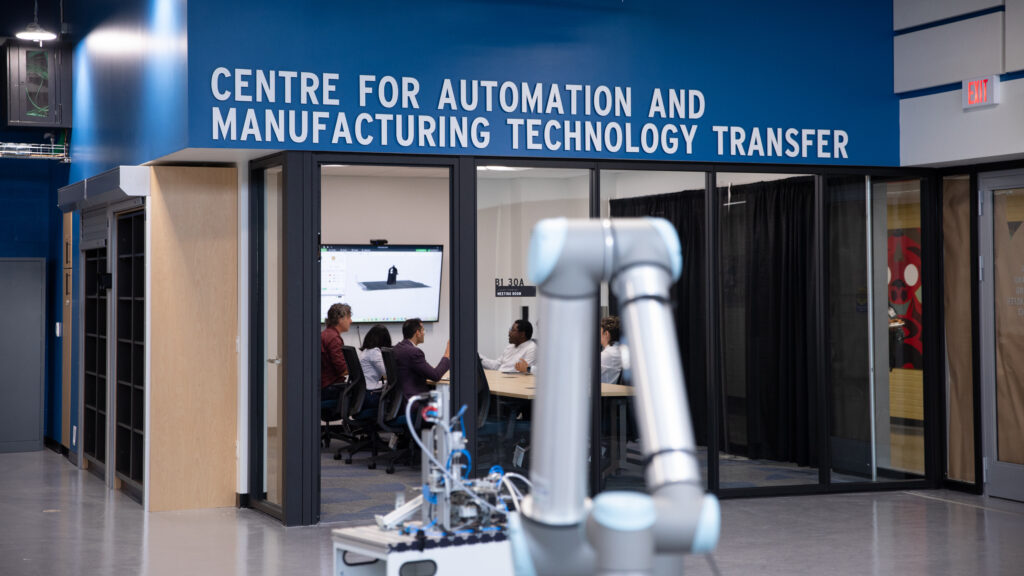
“CAMTT is the research and innovation centre of the Price Institute of Advanced Manufacturing and Mechatronics. It was created to accelerate Manitoba’s digital transformation and adoption of Industry 4.0,” said Dr. Vikram Banthia, Director of the Price Institute. “Our partnership with TABAQ is an excellent example of how our professional researchers, faculty, and students collaborate with industry experts on projects to develop and implement emerging technologies that improve efficiency and reliability through AI, Internet of Things (IoT), robotics, automation, and additive manufacturing.”
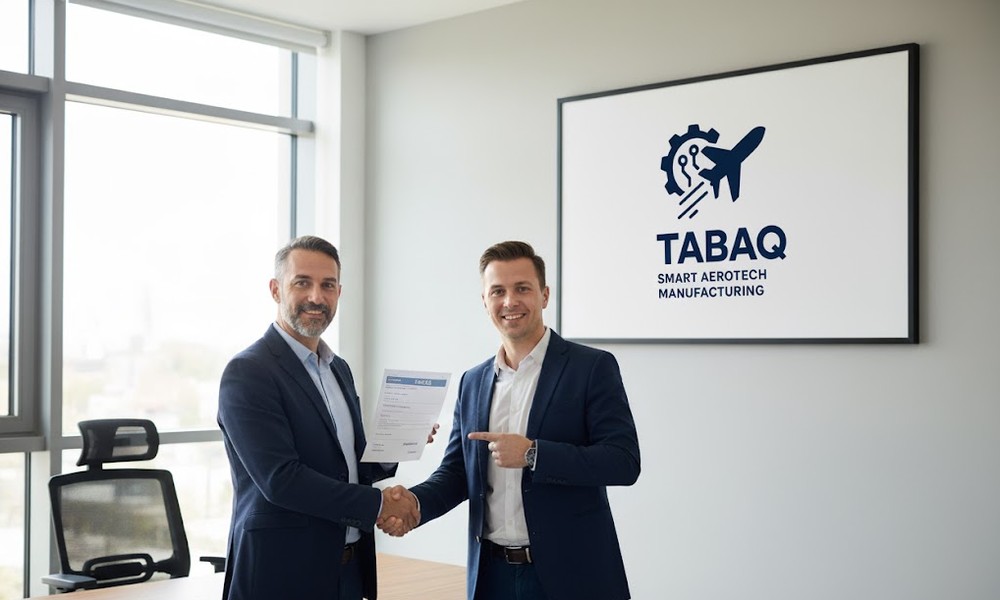
TABAQ is a local startup dedicated to delivering rapid response, high-quality non-destructive testing to optimize resources, cost, and schedule for aerospace and aviation firms. An Approved Maintenance Organization (AMO) by Transport Canada, TABAQ adheres to the industry’s highest safety and regulatory standards, offering NDT services at the customer’s site whether in factory, in hanger, or on wing.
“Our local team of CGSB Level II NDT technicians can deliver high-quality, certified, traceable services anywhere in Manitoba within 72 hours,” said Ramzy Farrag, Founder and CEO of TABAQ Smart Aerotech Manufacturing Inc. “We are building our services from the ground up to align with our customers’ needs and keep our skies safe. By working with CAMTT to improve the current available inspection technology, we will be able to maximize our responsiveness, flexibility, and efficiency.”
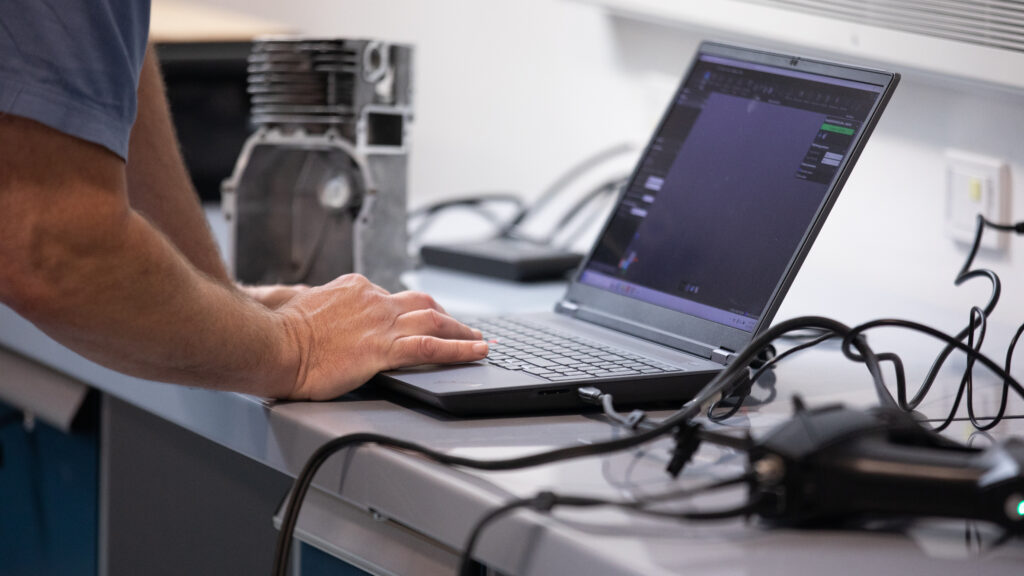
Together, they’re working on a computer vision system called Project Axion – an artificial intelligence (AI) technology that enables machines to capture, process, and interpret visual data from the physical world. It automates the evaluation of materials, welds, and structural components by converting sensory data into actionable, measurable images.
Phase 1 of Project Axion aims to digitally transform their conventional Liquid Penetrant NDT system to automatically identify internal cracks, voids, and surface flaws which will accelerate the inspection process, rather than replace skilled human inspectors – a common misconception of digital transformation.
“The technology is designed to support technicians, not replace them,” said Dr. Baltej Rupal, Research Chair, Advanced Manufacturing and Mechatronics at RRC Polytech. “Our team at CAMTT works at the intersection of industrial data, digital inspection, and process optimization to close the gaps between what AI technology promises and what a shop floor actually needs. We also help manufacturers navigate the funding landscape and innovation programs to de-risk technology adoption and make the business case for R&D investment.”
The bottom line is a key factor for all organizations, but for a startup like TABAQ, access to RRC Polytech’s Digital Technology Transformation Initiative (DTTI) is a huge advantage – subsidizing some of the researcher’s time, specialized equipment and other associated resources on their ongoing project. Funded by a $3.4 million Mobilize grant from the Natural Sciences and Engineering Council of Canada (NSERC), the DTTI helps to offset the costs of qualified applied research collaborations that advance digital transformation and drive sustainability in Manitoba.
The project should be completed in September, but their initial results have been so positive that a Phase 2 is already being planned to develop new sensors and explore additional non-destructive testing technologies that will continue digitizing TABAQ’s inspection process.
“By combining technology; innovation; traceability; high-precision and skilled craftsmanship, we aim to build long-term partnerships and contribute to a stronger, more resilient aerospace supply chain,” said Farrag. “RRC Polytech’s DTTI program is one of the strongest enablers for our success in digital transformation, allowing us to explore cost-effective solutions to achieve our ambitious goals, so we look forward to working with the experts at CAMTT to improve our NDT service and make our clients’ experience as simple and convenient as possible.”

We acknowledge the support of the Natural Sciences and Engineering Research Council of Canada (NSERC).
Nous remercions le Conseil de recherches en sciences naturelles et en génie du Canada (CRSNG) de son soutien.