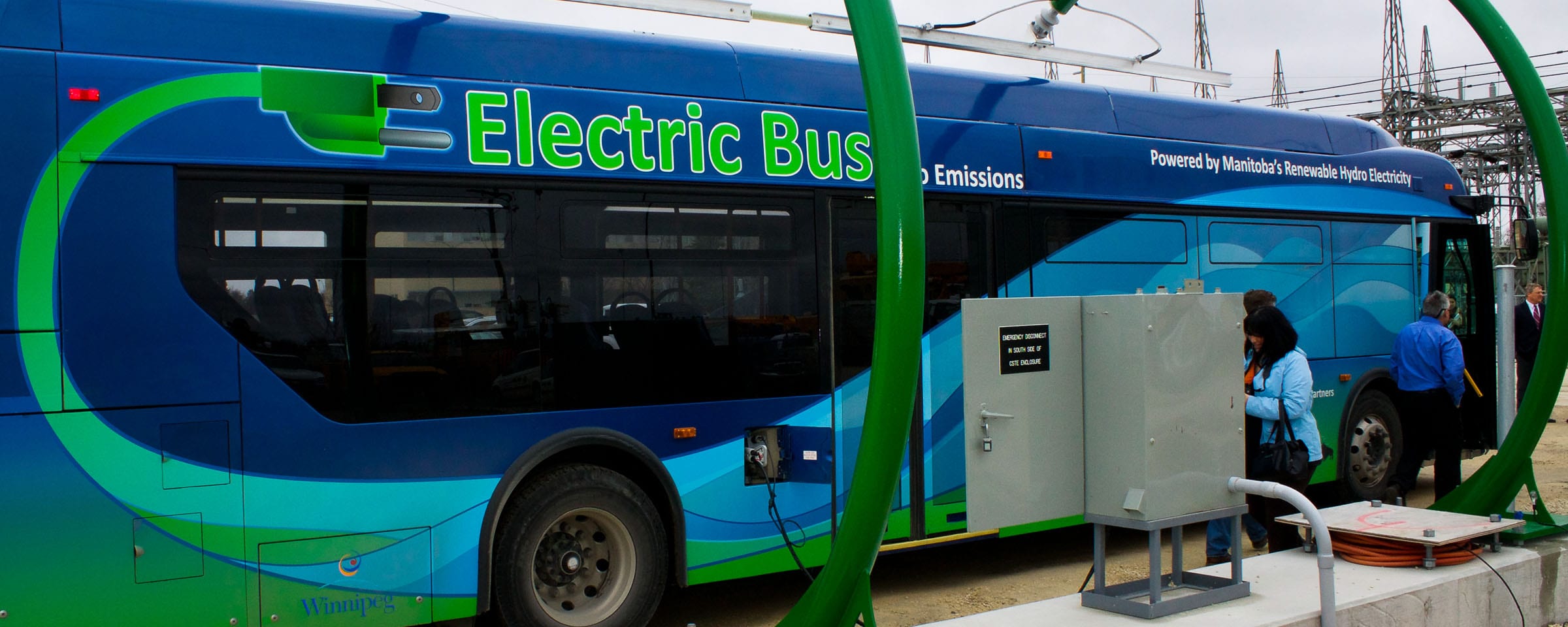
DTTI Funding Injects Augmented Reality into Electric School Bus Conversion Project
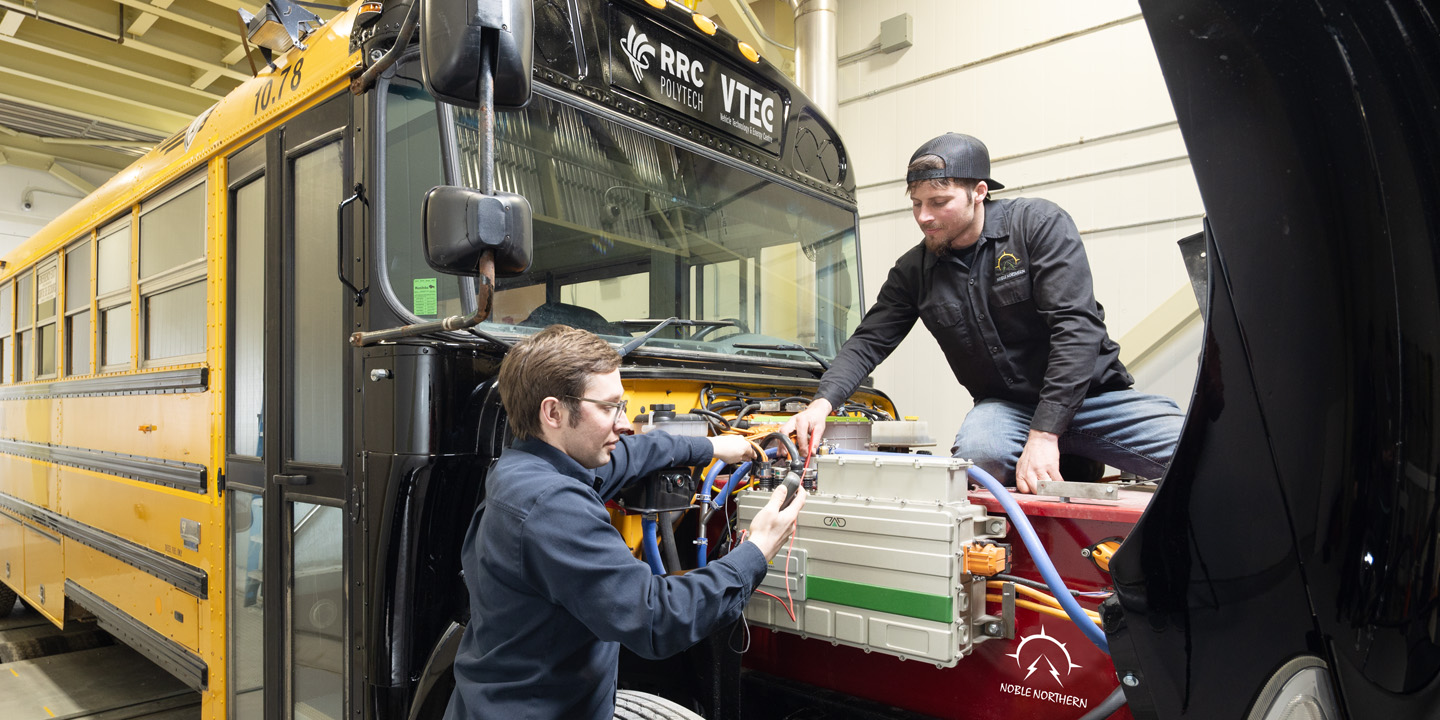
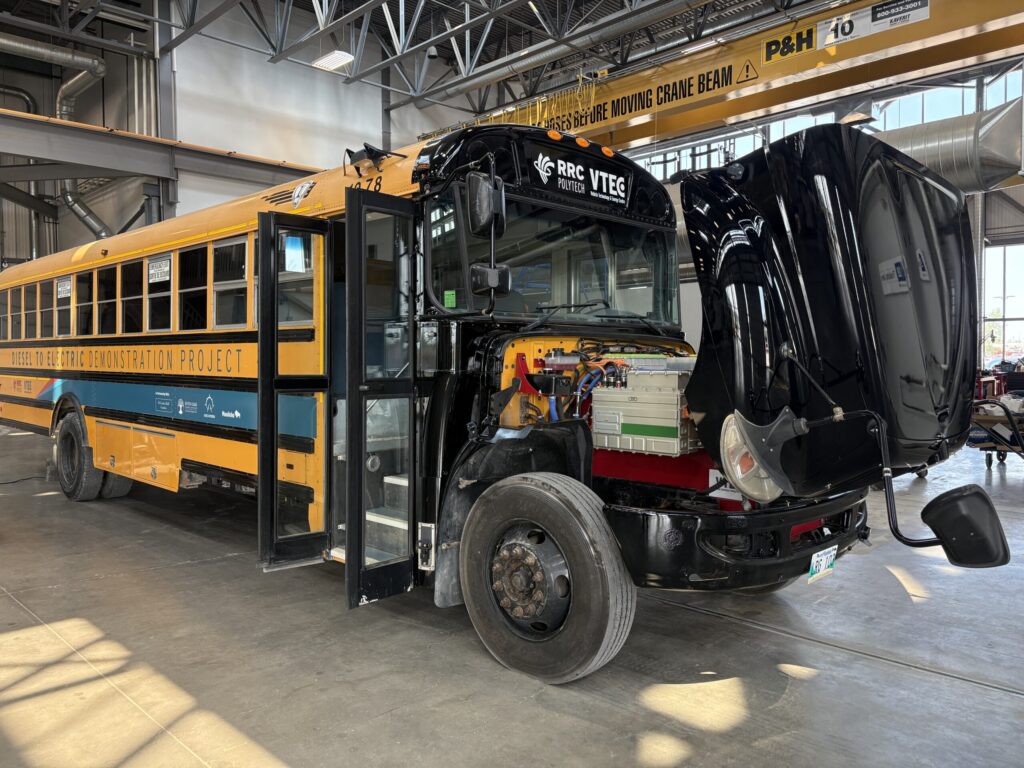
As Manitoba celebrated the rollout of its first low-carbon school bus converted from diesel to electric at RRC Polytech’s Vehicle Technology and Energy Centre (VTEC), another quiet but critical revolution was also taking place behind the scenes – the use of Augmented Reality (AR) to document and guide the electrification process, moving forward.
“Augmented Reality will play a key role as the province looks to scale EV conversions, ensuring that the workforce is not only ready but empowered to drive change,” said Jojo Delos Reyes, Director of RRC Polytech’s VTEC. “While the positive environmental impacts and cost-saving potential of the school bus conversion kit may transform the transportation sector, the outgrowth of adaptable AR innovation resulting from VTEC’s ongoing applied research with industry partner, Noble Northern, could resonate across all sectors.”
This additional outcome helped to qualify the project for funding through RRC Polytech’s Digital Technology Transformation Initiative (DTTI). Funded by a Mobilize grant of just over $3.4 million from the Natural Sciences and Engineering Council of Canada (NSERC), the DTTI is a cross-institutional program created to support collaborations that aim to advance digital adoption and drive sustainability in Manitoba.
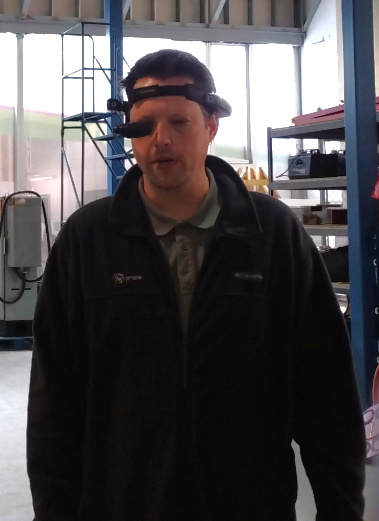
On this project, DTTI funding provided the AR goggles and software, offset a portion of the research technologist’s time and supported the input of three students who gained valuable experience working directly with an industry leader to solve a real-world problem.
“The DTTI enables research partners to explore how digital technology like AR can be used not only to achieve their project’s primary goals but, in this case, to reimagine how complex mechanical tasks are taught, understood, and replicated,” explained Delos Reyes. “It’s all about lowering the risk for our industry partners to pursue automation, efficiency, and optimization. Together, we’re developing these new processes, today.”
Static paper manuals are no longer a match for an AR headset that can overlay interactive 3D instructions directly onto items like physical bus components. This project validated that mechanics and students can now visualize each step of the conversion in real time – from removing the diesel engine to installing electric motors and controllers – with the added benefit of contextual guidance that can adapt to their actions.
This immersive approach:
- Reduces errors by showing rather than telling
- Speeds up training for new technicians
- Improves retention of technical knowledge
- Enables remote support and collaboration
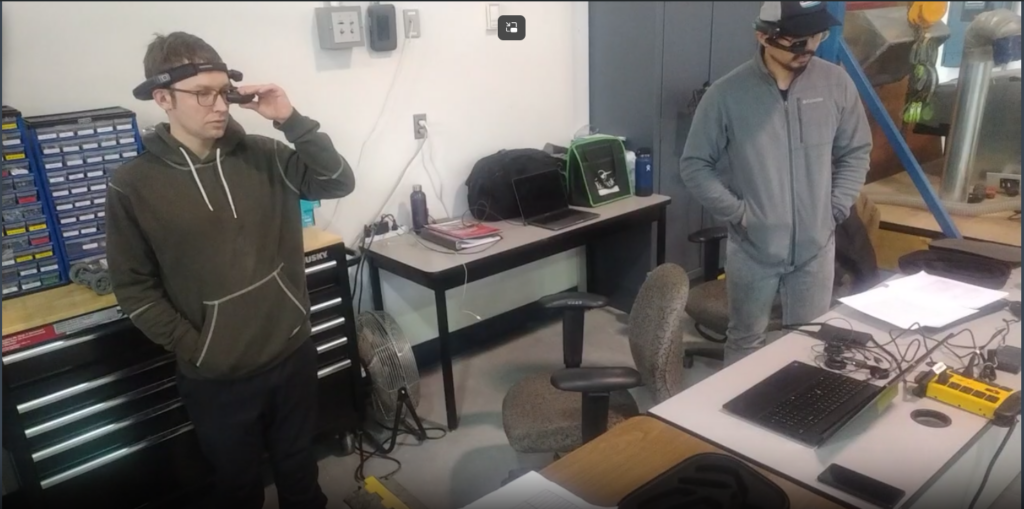
By digitizing the project’s documentation along the way, VTEC and Noble Northern’s experts are also creating a living knowledge base that can evolve with each innovation. AR-enhanced records are easier to update, share, and scale, making them ideal for fleet-wide adoption and future commercialization in virtually any industry.
“We’re determined to use our manufacturing and metal fabrication expertise to become a force for change in creating a greener future, so it’s pretty cool that a co-product of us adopting cleaner technology has a universal application,” said Tye Noble, President, Noble Northern. “Our teams love working with RRC Polytech on research and development projects because they not only offer leading-edge facilities and resources, their staff and students are always looking for new ways to maximize on opportunities that arise from our work.”
This project demonstrates how access to funding streams like the DTTI act as a catalyst for the innovation, collaboration, and skill development that is positioning RRC Polytech and its partners at the forefront of Manitoba’s digital transformation and sustainability efforts.

We acknowledge the support of the Natural Sciences and Engineering Research Council of Canada (NSERC).
Nous remercions le Conseil de recherches en sciences naturelles et en génie du Canada (CRSNG) de son soutien.