
Nature Journaling
Imagine stepping outside on your break, opening a notebook, and taking five minutes to observe your surroundings. Instead of reviewing notes or checking your phone, you write down what you see, hear, and feel. This simple practice—nature journalling—can serve as a brief but impactful mental reset during the school or work day.
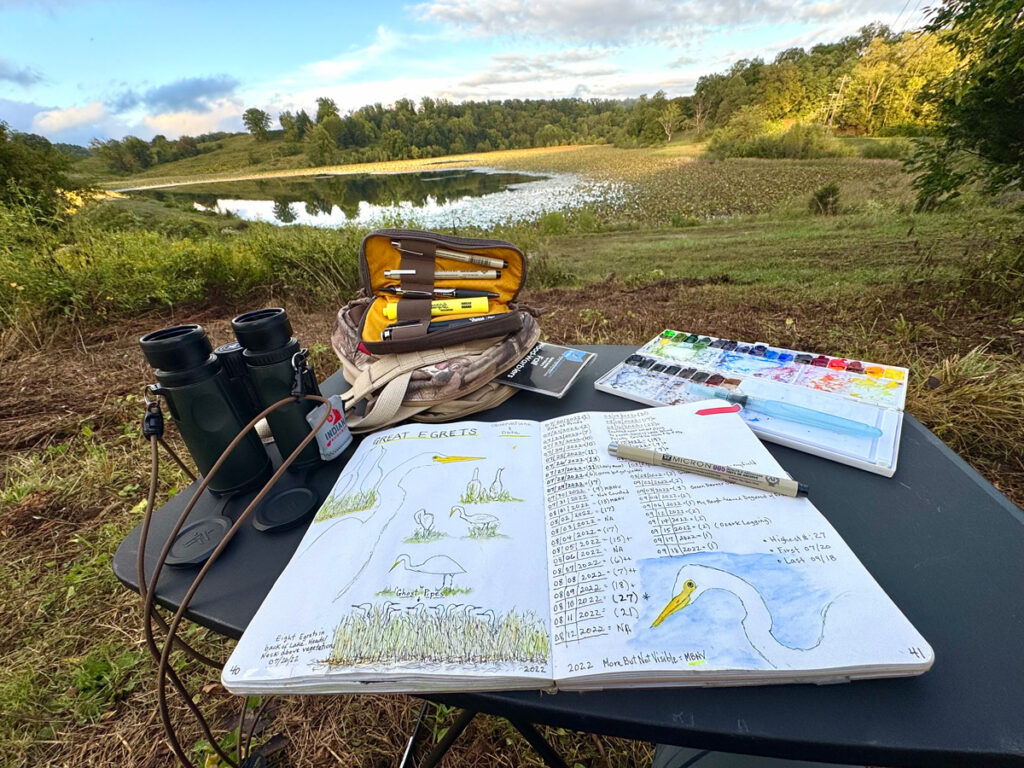
Nature journaling is about slowing down and taking time to observe nature with intention. This can be through drawing, writing, painting, collaging or anything that works for you. By observing, recording, and reflecting on life around you, we can take a step back from our day-to-day, and raise our self awareness and ground ourselves to the nature around us. This combination of activities can help maintain or improve our mental health and reduce stress.
Here are a few of the benefits of nature journaling to your mental health:
- Nature journaling promotes mindfulness which helps to anchor the mind in the present moment. Mindfulness can help improve emotional regulation, decrease the physiological impacts of stress, and help with excessive worry or rumination.
- Creative self-expression can help to support emotional processing and psychological well-being. According to Jean-Berluche (2024), engaging in arts, whether it is visual art, writing or music, lowers cortisol levels while boosting feel good neurotransmitters like dopamine and serotonin.
- For people who are experiencing intense emotions, nature journaling can be a vehicle for emotional release as writing allows grief, sadness, anger, and longing to surface in a contained and safe way.
- Your brain constantly lays down new neurons, yes even in adulthood. What we have to do us to use them so that they become incorporated into networks. If we do not use them, the atrophy. Nature journaling is active and dynamic and thereby great brain food. The more we practice it, the more we build up the neurons that support it. You literally rewire your brain by using it (Laws, 2024)
Interested in giving nature journaling a try? On Thursday July 16 at 12 pm in the NDC Courtyard, join Campus Well-Being and the Canadian Parks and Wilderness Society (CPAWS) for a free nature journaling session. Registered participants will receive a free journal. Register here.
Sources:
Creative expression and mental health