Indigenous Education

News and Announcements

National Day of Action for Missing and Murdered Indigenous Women, Girls and Two Spirit People

October 4, 2022

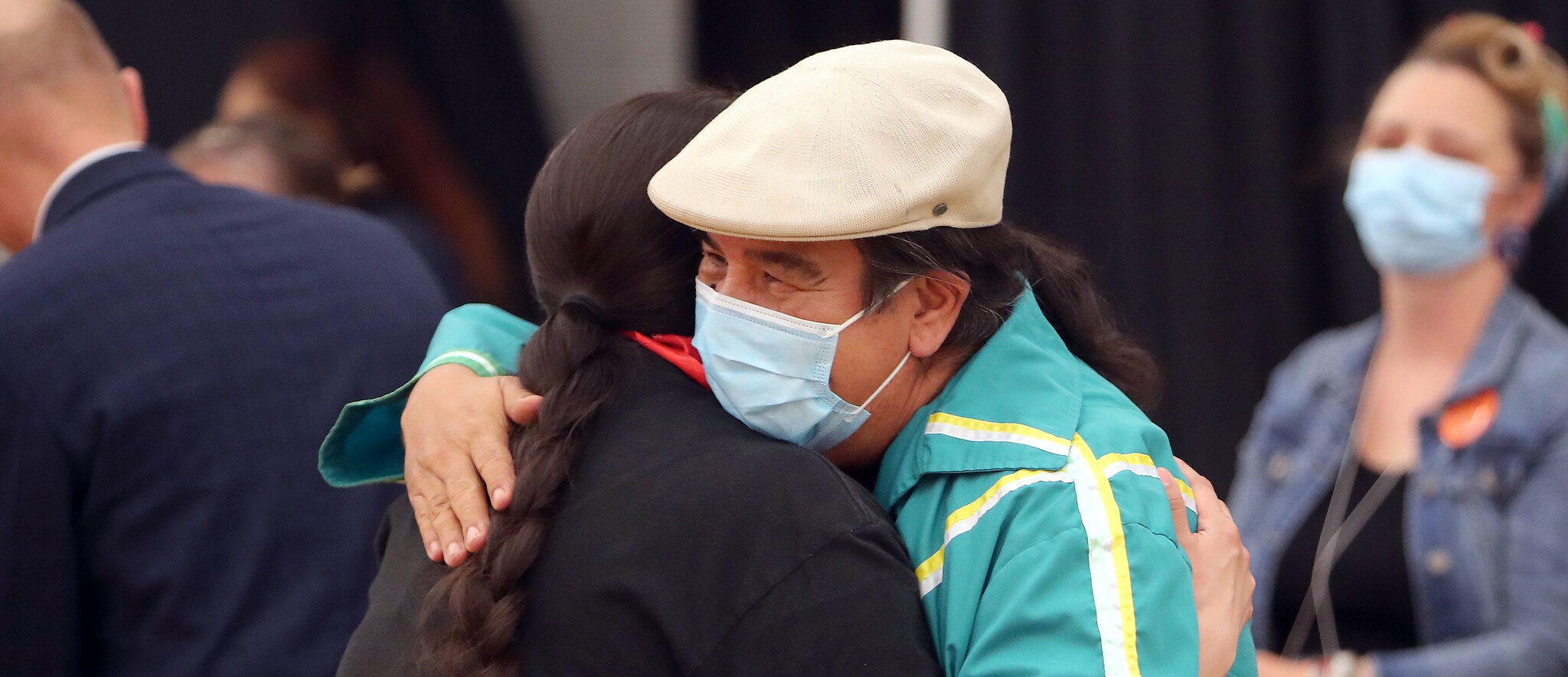
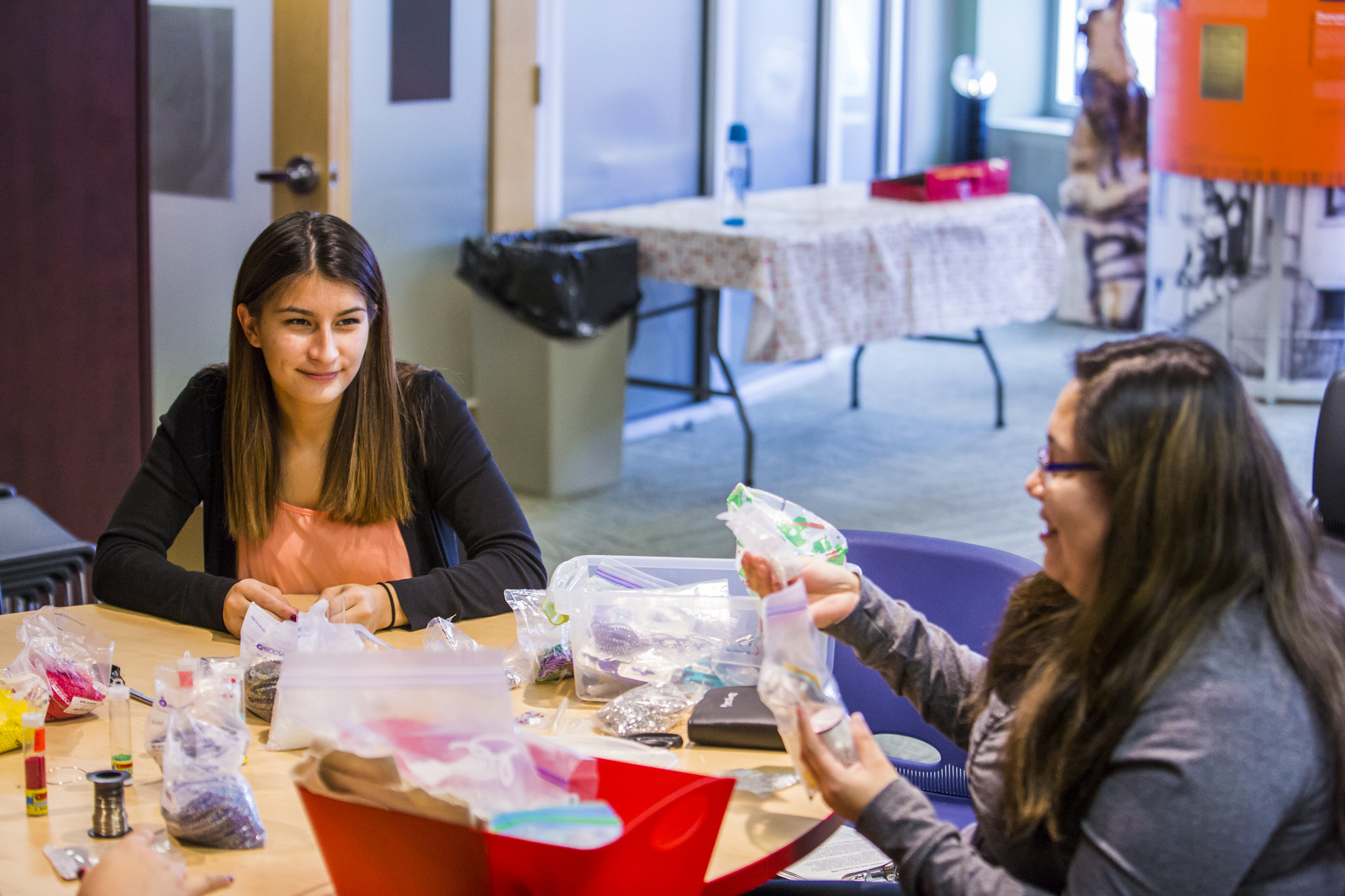
Pictured above: participants from the red dress pin workshop.

The following message includes topics that may trigger strong emotions, especially for those with lived experiences. It is recommended that we all check in on ourselves and access the resources available to us to ensure we are taking good care of our mental health. For mental health and self-care resources, visit here.

The National Inquiry into Missing and Murdered Indigenous Women, Girls, and Two Spirit People (MMIWG2S) released their Final Report in June 2019. The report detailed over 2,380 accounts from family members, survivors of violence, experts and Knowledge Keepers during two years of evidence gathering. Two volumes of the report conclude that persistent human and Indigenous rights violations are the root cause of Canada’s high rates of violence against Indigenous women, girls, and Two Spirit people.

Sections 11.1 – 11.2 call on educators across all levels to provide awareness to the public about missing and murdered Indigenous women, girls and Two Spirit people and about the issues and causes of violence they experience. In this digital age, we have the ability to spread the truth, but we are also at odds with misinformation borne from ignorance and racism. It is our duty to their families and communities to advocate for the truth of Canada’s complacency in crimes against Indigenous women, girls, and Two Spirit people.

Oct. 4, the National Day of Action for MMIWG2S, is dedicated specifically to raise awareness for people to learn more about the violence against Indigenous women, girls, and Two Spirit people and how they can support the 231 Calls to Justice of the National Inquiry’s Final Report.

We encourage staff to use and share resources like Sheila North’s and Leonard Yakir’s documentary 1200+ and its introduction, which the College has free access to until Oct. 9.

The Government of Canada’s National Inquiry into Missing and Murdered Indigenous Women and Girls always has free resources available, including direct access to the Final Report itself.

Many Indigenous organizations have additional programs that support the National Inquiry and education on Missing and Murdered Indigenous Women, Girls, and Two Spirit People like the Southern Chiefs’ Organization Inc. MMIWG2S and Violence Prevention.

Educating yourself and challenging misinformation will help motivate social and structural change in which Indigenous women, girls, and two spirit people and their families won’t have to suffer from violence or injustice.

Staff and students can express their learning efforts by displaying a red dress in their windows, or by visiting the Indigenous Student Support Centre (F209) at the Notre Dame Campus on Oct. 4 to write a message of remembrance or hope on a red dress cutout.

We also acknowledge that this observance may be emotionally taxing, especially for Indigenous employees. Please remember that, outside of formal events in which they agree to participate, our Indigenous colleagues may decline discussing this observance because of its emotional and cultural impact.

Mental Health and Self-Care Supports

October 4, 2022

We recognize that days/weeks of observance, e.g., Truth and Reconciliation Week and National Day of Action for Missing and Murdered Indigenous Women, Girls and Two Spirit people, may trigger many powerful emotions. It is recommended that you check in on your mental health and use self-care techniques. If you need help, please don’t hesitate to reach out or access any of the following resources:

Self-care is a powerful tool to help us work through emotions and take better care of our minds, bodies and spirits and can come in many forms and is not one-size-fits-all.

  • Here are some recommendations:
  • Spend time with a loved one
  • Phone a friend
  • Ask a loved one for a hug
  • Read a book, watch a favourite movie, or listen to music
  • Go for a walk, do yoga, or exercise
  • Take a warm bath or shower
  • Cook yourself a nice meal
  • Meditation or prayer
  • Download a meditation app
  • Write in a journal
  • Get proper sleep

Celebrating the anniversary of Treaty No 1.

August 3, 2022

Today is the 151st anniversary of Treaty No 1, the original lands of the Anishinaabe, Cree, Oji-Cree, Dakota, and Dene peoples, a place many of us call home, including a majority of our Campuses.

Treaties were signed between Indigenous peoples and settlers based on principals of friendship, peace, and mutual thriving. They acknowledge inherit Indigenous rights to land, resources, and economy, and they remain in place “as long as the sun shines, the grass grows, and the rivers flow.”

As we know, in the past, Treaties were not honoured and great harms were brought upon Indigenous communities through policies and structures of assimilation and genocide; the lasting impacts still effecting Indigenous peoples today.

Treaty relationships did not grow and evolve with society, and that’s why it’s so important that concerted efforts are made to strengthen these relationships and define how we approach being in a Treaty relationship in the present and into the future.

Last year, RRC Polytech partnered with The Winnipeg Chamber of Commerce and the Indigenous Chamber of Commerce to extend the 4 Seasons of Reconciliation Education e-modular training program to the business community to support reconciliation efforts in Treaty 1 in honour of the 150th anniversary. We also held a virtual event for Indigenous students to learn and connect with Chamber business leaders. 

While institutions, government, and industry strive towards stronger and more equitable Treaty relationships, there’s many things we can do as individuals and groups to support our community towards reconciliation and greater understanding.

The College has made a public commitment towards advancing truth and reconciliation within its 2022-2026 strategic plan In Front of What’s Ahead. This includes addressing the Truth and Reconciliation Commission of Canada’s Calls to Action to advance Indigenous education in Manitoba, while also reflecting on the harms of the past, working to reconcile a broken trust in our education system and supporting the key role Indigenous peoples must play for our province to realize its fullest potential.

There are many ways to create action and movement towards reconciliation with the first being education and creating an open space for dialogue and inclusion.

A wonderful example is the initiative Paul Bourget, lead instructor in the Educational Assistant Certificate Program, took with the Origami Project with guidance from Elders. He connected the significance of the Japanese tradition of “Senba Zuru” and Indigenous teachings to his course content. The many layers of this project integrated creating 1,000 Origami cranes with students, the teachings of the Medicine Wheel, a traditional pipe ceremony and feast, and classroom assignments. One of the main takeaways for students is cultural safety as they work to enter the school system. You can watch the video on his project here.

Resources to learn about Treaties:

Stay tuned for the fourth annual RRC Polytech Truth and Reconciliation Week held during the last week of September.

Welcoming our new Navigation Coach!

July 6, 2022

We are proud to welcome Brittany Ross as our new Navigation Coach as part our Indigenous Student Supports team. She brings her extensive experiences to support Indigenous students on their learning journey.

Navigation Coaches are a first point of contact for current Indigenous students and can help with everything from finding your way around campus, problem-solving, sharing important resources and information, understanding College processes and accessing community services. They will also help connect you with other important support team members, who together, can ensure you receive the help you need.

Brittany has spent over 10 years supporting, advocating and mentoring Indigenous students in the adult education, and post-secondary education sectors. Through Brittany’s previous experience, she has a fundamental understanding of the importance of creating safe, respectful and positive environments. 

Click here to learn more about Brittany and connect.

Honouring Spring Equinox

March 24, 2022

Earlier this week, Miss Una Swan held a small pipe ceremony (watch her message) with students to honour and welcome in the Spring Equinox, a day where day and night are equal. Not only is the Spring Equinox recognized by many Indigenous cultures ceremoniously as new beginnings and rebirth, but there are many teachings and stories about Spring.

We’ve pulled together a few tales and teachings on the blog. (Click on the title to watch.)

Sisikwun: The Rattle by Wilfred Buck

Wilfred Buck is a local Elder who shares many teachings, including star teachings. Here he shares a teaching about Spring constellations and the rattle.

K’i Tah Amongst the Birch (National Film Board of Canada)

Filmmaker/activist Melaw Nakehk’o has spent the pandemic with her family at a remote land camp in the Northwest Territories, “getting wood, listening to the wind, staying warm and dry, and watching the sun move across the sky.” In documenting camp life—activities like making fish leather and scraping moose hide—she anchors the COVID experience in a specific time and place.

The Lake Winnipeg Project (National Film Board of Canada)

As our lakes and rivers begin to thaw and we all start to take advantage of these gifts, it’s important to know the context and history of our lakes and Indigenous communities. We also recommend viewing this series.

The Lake Winnipeg Project is a four-part documentary series that calls attention to stories of ingenuity and resilience in four diverse communities surrounding Lake Winnipeg, at a time when many external forces are imposing change.

Call for Participation in Indigenous Nursing Students and Alumni

March 18, 2022

Research Interviews with Red River College Polytechnic

We are looking for Indigenous students that are currently enrolled, or those who have recently graduated from the Pathways to Nursing, Nursing Baccalaureate, or Licences Practitioner Nursing programs at Red River College Polytechnic. Those who choose to participate will be asked to complete a short anonymous survey and participate in a 1-hour one-on-one interview with the researcher.

The Purpose of the Interviews

The interviews will assist in developing the parameters for the Bill and Shirley Loewen Indigenous Nursing annual bursary. The parameters will be co-developed by the Truth and Reconciliation – Indigenous Strategy and Business Development Department, Dean – School of Indigenous Education, Department of Advancement and Development, and the Student Financial Aid and Bursaries. 

The fund purpose:

This fund will support Indigenous students attending the Pathways to Nursing program and related Nursing programs at RRC Polytech. The fund’s goal is to ensure that Indigenous students who want to devote their careers to Nursing have all the support needed to graduate and gain their desired employment. 

The fund will support all Indigenous student needs, including but not limited to:

  • student support (educational and mental), 
  • equipment required for successful completion of the program, 
  • external accommodations, 
  • scholarship/awards/bursaries (the goal is to provide full tuition support), 
  • room and board.

Questions on the research or interested in participating?

Please contact Kyra De La Ronde

kdelaronde2@rrc.ca

Matthew Monias performs at Directions 2021

November 9, 2021

Oji-Cree artist Matthew Monias, who goes by MattMac, recently performed at Directions 2021 powered by RBC Future Launch.

Directions is an annual business and applied arts conference showcasing Red River College Polytech students and local industry practitioners. Students spent the day in Breakout Sessions, in the Networking Lounge, and at the various Roundtables.

Hailing from Garden Hill First Nation, Manitoba, Mattmac has been blind from birth. He grew up surrounded by music both on the radio and singing in his community’s gospel choir. Mattmac began to struggle with depression at a young age and credits music for helping him cope. A fully self-taught artist, he first began to make beats and write songs when he was 13-years-old, and later taught himself how to play piano and guitar. He also has impressive skills with beat production software and equipment, and attributes his creative competencies to the support of the Blind & Famous group, a USA based collective of blind music artists who collaborate and connect with one another through the internet. Mattmac hopes to continue to use his platform to inspire others to know that they can accomplish anything they set their mind to.

Watch his performance here:

Meet our new Navigation Coach!

October 7, 2021

We are proud to welcome  Terri-Lynn Anderson as our new Navigation Coach as part our Indigenous Student Supports team. She brings her extensive experiences to support Indigenous students on their learning journey.

Navigation Coaches are a first point of contact for current Indigenous students and can help with everything from finding your way around campus, problem-solving, sharing important resources and information, understanding College processes and accessing community services. They will also help connect you with other important support team members, who together, can ensure you receive the help you need.

Terri-Lynn Anderson

Terri-Lynn Anderson is a proud, Métis woman and mother of four. Her passion is to continue helping Indigenous students become successful in their post-secondary studies and future careers.

Click here to learn more about Terri-Lynn.

National Day for Truth and Reconciliation

September 29, 2021

Content Warning: Residential Schools

Tomorrow, September 30, is a day we’ve come to know as Orange Shirt Day, a day that encourages conversation and education on all aspects of Residential Schools. It is an opportunity to create meaningful discussion about the intergenerational effects of Residential Schools and the legacy they have left behind that affect us all.

This movement was sparked by the story of Phyllis Webstad from the Stswecem’c Xgat’tem First Nation. Phyllis was proud to wear the orange shirt her grandmother gifted to her for her first day of Residential School. The shirt was taken from her and she never saw it again. Phyllis represents the 150,000 First Nations, Inuit, and Métis children who were forcibly removed from their homes and families and taken to Residential Schools. 

September 30 has now been declared as the National Day of Truth and Reconciliation by the federal government, and so the College will be closed tomorrow; giving us all an opportunity to listen, learn, reflect, and honour the victims and survivors of the Residential School System. As the College is closed tomorrow, we have invited staff and students to wear orange today as a symbol of recognition and support.

The work of reconciliation has just begun, and it’s important for all living on Turtle Island to know, understand and have respect for the truth before real change can take effect.

Tomorrow, there are events and activities you can take part in your community or online from many organizations including the National Centre for Truth and Reconciliation. You can also explore resources on our website rrc.ca/trc, including the Truth and Reconciliation Commission’s Calls to Actions, the Library and Academic Services Resources’ National Day for Truth and Reconciliation Book & Video Guide. You can also listen to Indigenous peoples and influencers online and share their content as well as talk to your friends and family about reconciliation and share what you have learned.

This day may be difficult for some, and we want to remind you to take care of yourself and take care of each other. Please don’t hesitate to reach out to those you trust, or to one of the supports we’ve listed below.

You can be a supportive alley by respecting boundaries as many Indigenous peoples experience this trauma and pain.

Supports and Resources:

National Indian Residential School Crisis Line 1-866-925-4419

Klinic Crisis line 204-786-8686 or toll free 1-888-322-3019

RRC student supports:

Counselling: rrc.ca/counselling

Mental Health Coordinator: rrc.ca/wellness/contact/

Elders in Residence: rrc.ca/staff/resources/indigenous-supports/  

RRC Staff: Employee Family Assistance Plan: rrc.ca/staff/resources/healthy-minds-healthy-college/supports/

Self-Care Suggestions:

 *   Call a friend you trust

 *   Go for a walk outside, exercise, do some light yoga, or move your body in a way that feels accessible to you

 *   Ensure you are getting good sleep and nutrition

 *   Connect with your culture, smudge

 *   Do a mindful meditation (find online)

 *   Have a warm bath or shower

Truth and Reconciliation Week 2021 will continue on Friday, October 1st with two live events. Click here to learn more and access events.

New training launched for goods movement and supply chain sectors

July 20, 2021

FREE SIX-WEEK PILOT PROGRAM OFFERS SOUGHT-AFTER CERTIFICATION FOR CAREERS IN WAREHOUSES OR DISTRIBUTION CENTRES

Are you ready to prepare for in-demand career opportunities in warehousing and distribution?

Red River College is launching a new six-week Material Handling 4.0 pilot program that provides industry-driven training, individualized student supports and hands-on work experience to those who face barriers to employment and education.

Participants will also enhance their soft skills, and be provided a full slate of wraparound supports, including opportunities for child care, all required personal protective equipment and supplies for work safety, and referrals to support services such as legal clinics, housing and health care.

The program builds on the successful training model used by Mohawk College’s City School in Hamilton, Ont. Upon completion of the training, participants receive a micro-credential and employment services to help them successfully transition into long-term, stable employment.

Red River College joins Mohawk College, Vancouver Community College and Nova Scotia Community College in piloting the new training, which is designed to help people transition into careers in the supply chain sector, while also supporting economic recovery in their regions. Funding for the pilot is provided by the government of Canada under the Future Skills program.

“Red River College is committed to building more pathways for our students — especially our Indigenous, newcomer and immigrant learners — to move from classroom to career with the human and technical skills they need to access gainful employment, all while helping to rebuild the Manitoba economy,” says Dr. Christine Watson, RRC’s Vice-President, Academic and Research.

What You’ll Learn

  • Supply chain logistics environment
  • Using technology in the material handling workplace
  • Product receiving, storage, packing and shipping
  • Important 21st-century workplace skills that employers are looking for

Eligibility

Applicants must meet all of the following criteria:

  • 18 years of age or older
  • Legally entitled to work in Canada
  • Unemployed or working less than 20 hours per week
  • Not enrolled in full-time education

Course Details

  • Starts September 2021
  • Online and virtual delivery
    • Six weeks training
    • Two weeks paid work placement
  • Access to RRC student supports, including Indigenous supports Opportunity for child-care supports

If you would like to be contacted about the Materials Handling 4.0 program at Red River College, please visit rrc.ca/indigenous/materials-handling-4-0

RRC Polytech campuses are located on the lands of the Anishinaabeg, Ininiwak, Anishininwak, Dakota Oyate, and Denésuline, and the National Homeland of the Red River Métis.

We recognize and honour Treaty 3 Territory Shoal Lake 40 First Nation, the source of Winnipeg’s clean drinking water. In addition, we acknowledge Treaty Territories which provide us with access to electricity we use in both our personal and professional lives.