Bluebird Lodge – Airtightness Testing
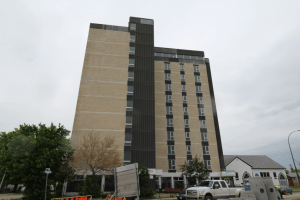
The objective of this applied research project is to conduct air tightness testing on the Bluebird Lodge, a mid-rise, multi-unit residential building (MURB) located in northwest Winnipeg.
Background
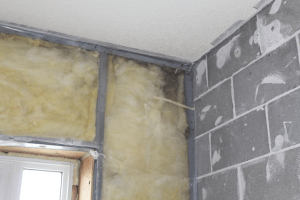 The Bluebird Lodge is currently undergoing a major building envelope upgrade, which got underway in late 2016. The upgrade is focused primarily on the exterior wall system.
Services Provided
- Air tightness testing measuring the pre-and-post retrofit airtightness of the building.
Results
 Test results will be used to further expand BETAC’s growing database on airtightness characteristics of large commercial-style buildings which began in 2013 with the testing of 26 buildings in Manitoba.
- Post-retrofit airtightness testing will be carried out once the retrofit is completed. This is anticipated to occur in 2017 or 2018.
- Manitoba Housing has expressed interest in collaborating with RRC to further these research activities as they apply to their portfolio of buildings, located around the province.





 Transforming students, faculty, staff and clients through education, partnerships, entrepreneurship and applied research has been Mark’s focus since joining the college sector in 2007. This has been accomplished by developing strong internal and external networks with creative, driven and passionate people; leveraging the expertise of faculty and staff; engaging students in addressing real-world problems and opportunities; and collaborating closely with industry, government and community organizations.