Tour of RRC Polytech showcases applied research capabilities to NSERC President
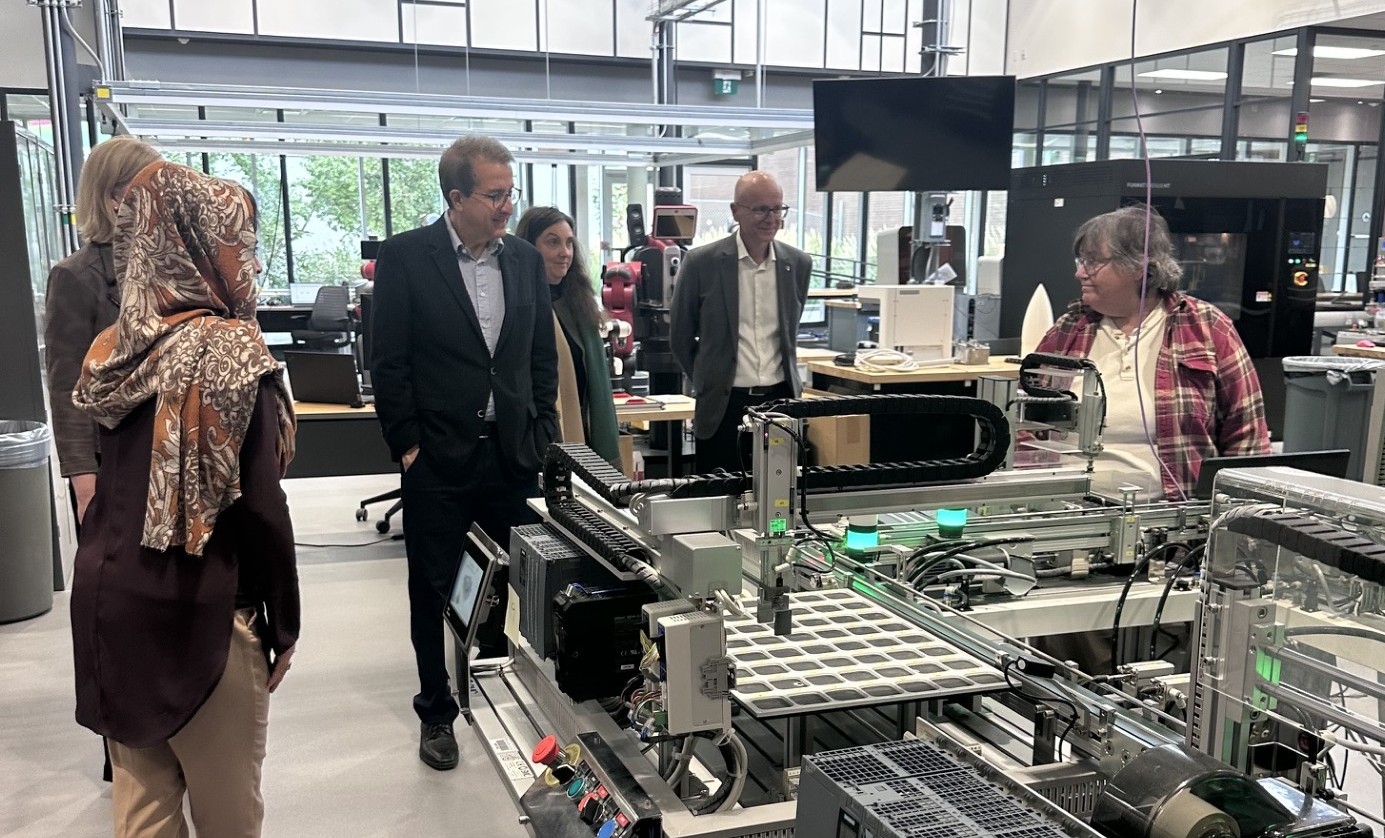
RRC Polytech recently welcomed Dr. Alejandro Adem, President of the Natural Sciences and Engineering Research Council of Canada (NSERC) to its Notre Dame Campus for a first-hand look at how federal investments in Manitoba’s applied research ecosystem are fueling real‑world impact.
NSERC’s mission is to foster a country of discoverers and innovators for the benefit of all Canadians and polytechnics are essential engines of research and development, commercialization, technology adoption, and workforce development.
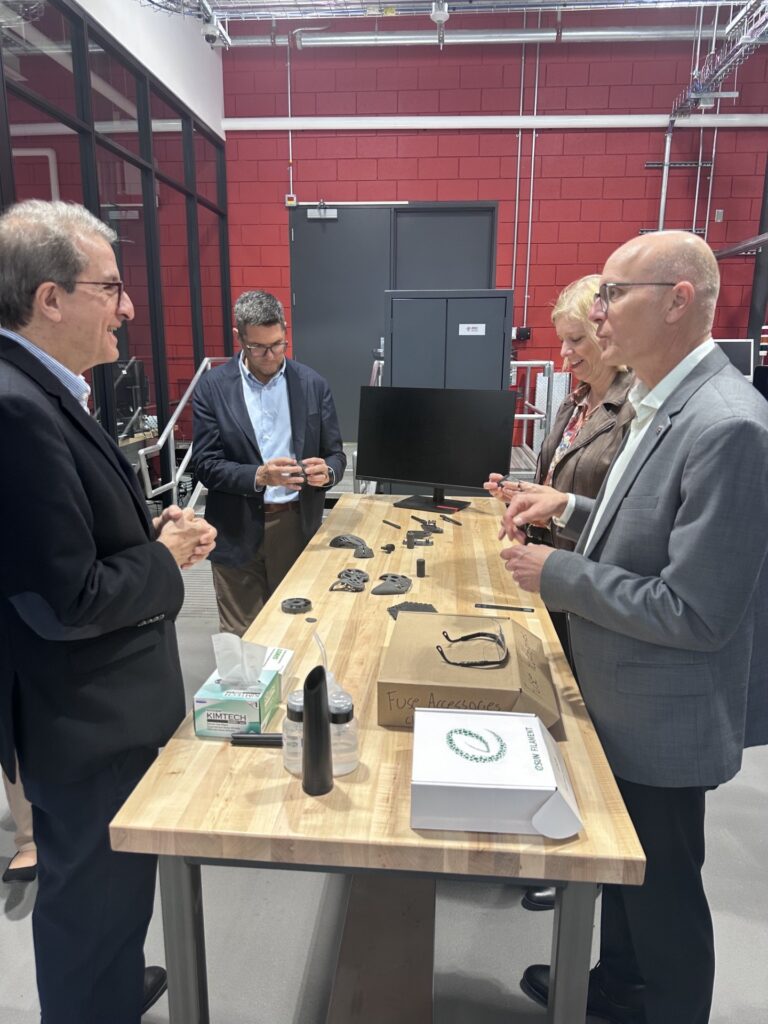
A productive day of facility tours, demonstrations, presentations, and discussions showcased RRC Polytech’s collaborative approach that connects small- and medium-sized enterprises (SMEs) with cost-effective, problem-solving experts and government support from NSERC and other funding agencies to drive economic growth across all sectors.
Through applied research projects, administered by Research Partnerships & Innovation (RPI), partners work together to advance new products and processes from concept to validation to market while students gain practical experience that prepares them to be the leaders of tomorrow.
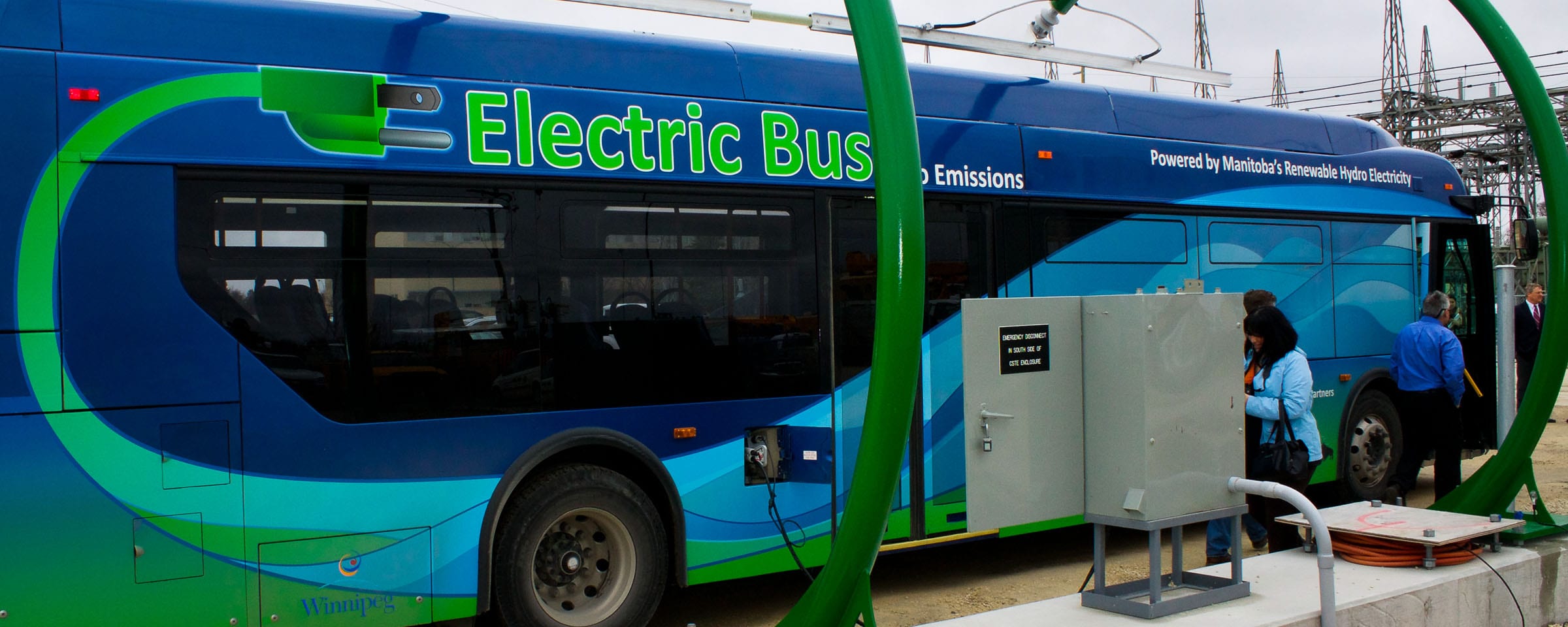
Dr. Adem visited the Technology Access Centre for Aerospace and Manufacturing’s smart factory and advanced composites lab, Building Efficiency Technology Access Centre, Vehicle Technology & Energy Centre, and the Centre for Automation and Manufacturing Technology Transfer at the Price Institute for Advanced Manufacturing and Mechatronics.
Along the way, executive leadership, professional research staff, faculty, and students provided tangible examples of how NSERC funding has enabled RRC Polytech’s research capacity to evolve and discussed emerging opportunities in energy transition, AI, defence, and dual-use technologies.
Dr. Adem’s visit celebrated the shared momentum created by RRC Polytech turning NSERC investments into progress – new technologies, stronger companies, safer communities and career pathways – and provided inspiration for what comes next.
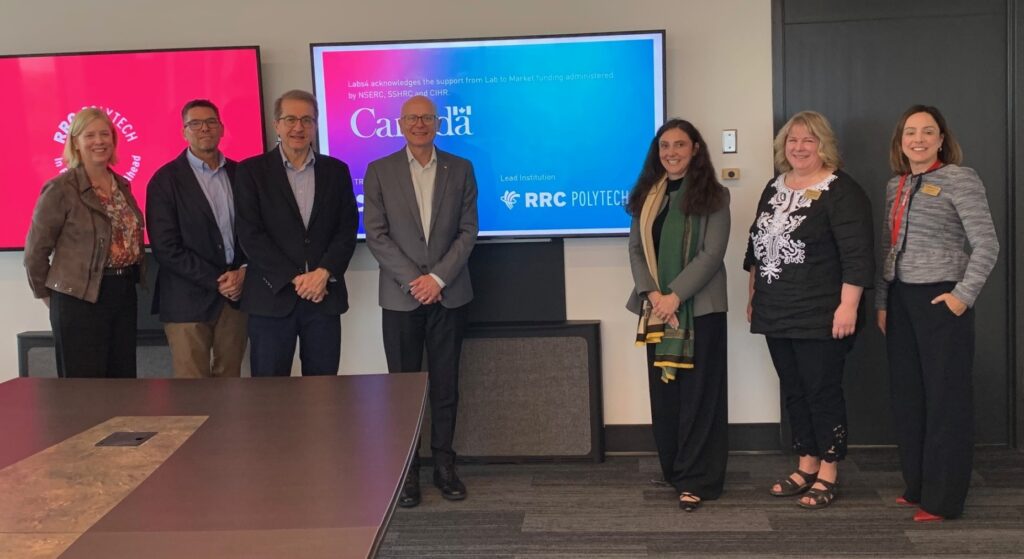

We acknowledge the support of the Natural Sciences and Engineering Research Council of Canada (NSERC).
Nous remercions le Conseil de recherches en sciences naturelles et en génie du Canada (CRSNG) de son soutien.