Academic News

Service-Learning as a Pedagogical Tool

November 21, 2019

Taking the learning out of the classroom and out of our control is scary, but I can tell you from experience that it is worth it.

Over the past two years, I integrated the College’s Step Out of Your Box (SOYB) program into my Gender Studies for Health Professionals course for the Nursing department. SOYB helps students explore a dimension of diversity different from their own. The program uses service-learning as a pedagogical tool, taking students out of the classroom and into the real world. Students complete 7 hours of volunteer time at a community organization of their choice, coordinate with the organization to plan a leave-behind project, and then write a reflection on their experience. What better way to connect students with course material than to have them experience it first-hand, give something back, and reflect on it all? As a bonus, students can submit their reflections to be eligible for four $500 awards.
Although the prospect of including service-learning into my course was unfamiliar and somewhat intimidating, implementation was surprisingly easy. I worked with the RRC mentorship coordinator to implement the program as an alternate assignment to a paper within the constraints of a 12-week term. We also adapted SOYB to the objectives of the course by stipulating that the dimension of diversity had to connect with gender and including a couple nursing-specific reflection questions. I then created an assignment guideline and a rubric to evaluate the program requirements and depth of reflection. The mentorship coordinator joined my class on day 1 to introduce SOYB, at which point I turned control of the learning experience over to the students, under her guidance. Implementing SOYB did not add to my workload. With the initial materials in place, it allowed me to focus on other course objectives while the students focused on developing their power skills and cultural competence.

With its self-directed nature, service-learning is shown to increase self-efficacy and responsibility as well as elevate student success. Students were not only learning about the communities they were volunteering with; they were also learning about themselves. What better way for a student to face their fears in an ever-changing world? What better way for students to check their own privilege? As an instructor, I can give my students readings, lectures, and discussions. With the help of SOYB, I can also give my students that ‘a-ha’ moment when theory comes to life. As one student put it, “I finished this experience not learning what I wanted but learning what I needed.”

The College-wide learning outcomes emphasize that community engagement is crucial to the learning process, and students must be able to collaborate and work in a growingly diverse country. Learning about diversity can often be difficult, though. The theoretical can stereotype and generalize. Lectures, class discussions, and guest speakers are incredibly useful, but often being surrounded by or exposed to diversity does not mean that we internalize it or appreciate it. Through SOYB, students are meeting individuals different from themselves, face to face, in their environment. They are talking to and learning from individuals that they might never have otherwise interacted with. They get to humanize someone even if they don’t understand or agree with them. Service-learning has been shown to increase empathy and cultural competence. Students can collaborate with community organizations toward social inclusion, social justice, and building a better future, while also meeting the College values of learning, respect, inclusiveness, integrity, and service to community.

The first term that I offered SOYB as an alternate assignment, most of the students chose it. Since then, every single student has chosen service-learning over writing a paper. From the growing popularity of the program and the comments in their reflections, students see the value of this experience. For me, it has been a shift in my perspective of my role as an instructor. I had to let go of control over what and how exactly a student will learn.

As instructors, we’re constantly looking for new and innovative ways to get our content across to students. SOYB won’t replace course content, but it will reinforce it. It is experientially robust and employer relevant. Our students are diverse and their future employers, coworkers, and clients are diverse. Whether as an alternate assignment or a small portion of work placement focused on social responsibility, the Step Out of Your Box program is a rewarding addition to any course.

Instructors:

To find out how to integrate SOYB into your course, contact the mentorship coordinator, Vera Godavari, at soyb@rrc.ca or visit https://www.rrc.ca/diversity/mentorship-awards/step-out-of-your-box/

For more on the experience of using SOYB as an alternate course assignment, contact Meagen Chorney at machorney@rrc.ca

Students:

Interested in taking part in the Step Out of Your Box program?

It’s open to all students even if you’re not in a course integrating it. Contact Vera at soyb@rrc.ca or visit https://www.rrc.ca/diversity/mentorship-awards/step-out-of-your-box/ to sign up today.

Post written by Meagen Chorney – Nursing Instructor
and Vera Godavari – Mentorship Coordinator

Where Are You Now: Paige Procter

November 14, 2019

Paige shares her experience and insight since graduating from the BN program in 2017:

Where are you now?

I never expected to end up working in paediatrics. I thought I wanted “hard core nursing” (whatever that meant). However, after one clinical day at children’s hospital I knew I had found my home. I feel lucky, not everyone finds their niche right away and they have to entertain a few different positions before finding what is right for them. That is the beauty of nursing. We have a skill set that can allow us to work in a variety of settings, in varying roles, and we don’t have to stay in the same position forever if we don’t want to! The diversity of nursing has always appealed to me!

I currently work on CH5 a long-term/transitional/acute paedatric medicine ward where we see almost everything! It is challenging and I learn something new every day! I work with kids and their families from ages 1 day old to 17 years old. Our ward takes on children who have cystic fibrosis, eating disorders, traumatic brain injuries, and cerebral palsy, but we are equipped to take on whatever walks through emerge’s doors. Every day is a fun new challenge sprinkled with peppa pig stickers and popscicles. When I started nursing school I thought that peds was cute and fluffy but every day on CH5 proves me wrong. These kids are strong and resilient and as their nurses we have to be even stronger while keeping a smile on our faces and make them forget they are sick in a hospital even for a moment. That’s hardcore.

How easy was it to find a job after graduation?

I started applying for positions halfway through practicum and had secured a job in the child health float pool by the end of my practicum. I started in a term position and after 7 months I was in a permanent. I stayed in this position for a year and then took a term on CH5 and eventually took a permanent. I loved the float pool and I encourage any new nurse who is unsure of where they want to nurse to consider a position. You get to explore different areas and take care of populations you never expected. Through the float pool I learned that I did not care for NICU nursing and that I loved the challenging fast pace of acute mixed with long term patient continuity that I get to experience on CH5. The float pool definitely helped me become a more well rounded nurse and find a ward I wanted to call home.

How did you manage the responsibility of going from student to nurse?

Make friends with other nurses! I cannot stress this enough! Learn from your peers, learn from your seniors, learn from your mentors and educators. The transition from student to nurse is a lot less scary if you surround yourself with people you feel safe asking questions to and who will help you when you are feeling overwhelmed. I was pleasantly surprised at how willing nurses were to help because we hear horror stories of nurses eating their young. While I believe that this does still exist unfortunately I do believe that the culture is changing and I think that nurses are realizing by helping raise each other up we are all becoming stronger nurses and a more efficient team.

How did you build your confidence as a new nurse?

Again, through meeting other nurses who lift you up instead of tear you down! (see above)

Thinking back, what were the most important lessons from school that you took into the workforce?

In a nutshell, the best way to describe nursing is “nothing like what I expected”. When I started nursing school I thought I was doing it simply because I liked helping people, but I quickly learned that nursing is not only about heart. Nursing is a science, an art, a discipline, and a public service. Being nice is just a small sliver of the character, skill, leadership, and brainpower you need to develop and exercise in this profession. There were definitely many days in nursing school when I didn’t think I was cut out to be a nurse and even on my worst days as an RNBN I doubt myself. That is to be expected in a field that is forever growing and changing and I feel privileged to be able to learn from within it.

I completed my practicum on a pediatric unit. I loved my placement, but I had a very challenging practicum that tested me mentally and emotionally and I almost didn’t complete the program as a result. I had a difficult preceptor who expected more from me than I was capable of as a student; she intimidated me and made me feel unsure and incompetent. Fortunately, other nurses on the ward took note of what was going on and advocated for me on my behalf and encouraged me to speak with my practicum advisor. Ultimately our preceptorship ended and I was placed with 2 other preceptors who helped me rebuild my confidence and skill set and I graduated on time. I never regret the way my practicum journey played out; while I didn’t appreciate being bullied I learned valuable lessons that can’t be taught in school about managing conflict and maintaining professionalism. Practicum taught me that nursing is not black and white but a complicated web of technical and assessment skills and knowledge intertwined with teamwork, collaboration, personality differences, social inequities, and emotional burnout.

What do you know now that you wish you knew when you were a student?

It’s okay to make mistakes; being unsuccessful on a proficiency test doesn’t mean you are incompetent! You are in school because you are not perfect and you are learning. The best advice I was ever given in school was that learning is uncomfortable and if you are not feeling queasy at least once on a daily basis then you are not going to get any better. You won’t learn from doing things right; you will learn from making mistakes and getting feedback. Feedback is your friend! Don’t take yourself so seriously!

What piece of advice would you give to current students?

1) Take every bad experience and learn from it! There is a lesson you can learn about yourself and about nursing in everything that you do!
2) Maintain your professionalism during conflict. It is easy to get hot headed and say mean things but you will gain more respect from staying professional.
3) You don’t need to be perfect in practicum and you don’t need to know everything. Your practicum is a safe place for you to learn prior to being on your own.
4) Where you do your practicum is not where you have to get a job after.
5) Make friends with unit clerks. They know the ward better than anyone else.
6) Advocate and stand up for yourself; just because you are a student doesn’t mean that you are always wrong.
7) Get involved with your professional bodies like ARNM while you are still a student. It will open doors.
8) Get your assignments done early! All nighters suck!
9) When you feel like you are alone remember there is always someone else going through the same thing. Reach out to your friends, teachers, coworkers; they have all probably been there before!
10) Nursing school goes by way too fast! Enjoy it while you can!

Thank you Paige for sharing your experience and words of wisdom!

Nursing Faculty Member Wins Christine A. Tanner Scholarly Writing Award

November 7, 2019

The Christine A. Tanner award is an annual award given to the best major article submitted to the Journal of Nursing Education. Nursing department Research, Scholarship and Quality Assurance Coordinator, Kim Mitchell was the 2019 winner of this award for her article “Constructing Writing Practices in Nursing” published in the July 2018 issue of the journal. Kim’s article explores writing practices in nursing from the undergraduate to the professional level, which are influenced by the academicization of nursing education that accompanied the movement of nursing education from the hospital to the university environment. She proposes that writing assignments can be a mechanism to close the gap between theoretical nursing knowledge and practical knowledge. The paper introduces a socially constructed model of writing that identifies the domains of writing to include identity development, creative and emotional knowing, relational aspects, and context.

Kim’s research work, including this paper, are part of her doctoral studies exploring writing self-efficacy in nursing education. The model described in the award-winning paper has been used to develop a measurement tool for assessing writing self-efficacy and is currently being tested with undergraduate nursing students at Red River College, the University of Manitoba, and Brandon University. The Journal of Nursing Education has made Kim’s article publically available on their website for one year.

The Journal of Nursing Education is one of the leading high impact nursing education journals. Further information about the Christine A. Tanner Award and a link to Kim’s award-winning publication can be found here.

Industrial Arts Education Student Helps Winnipegger in Need

November 7, 2019

We’re feeling proud!

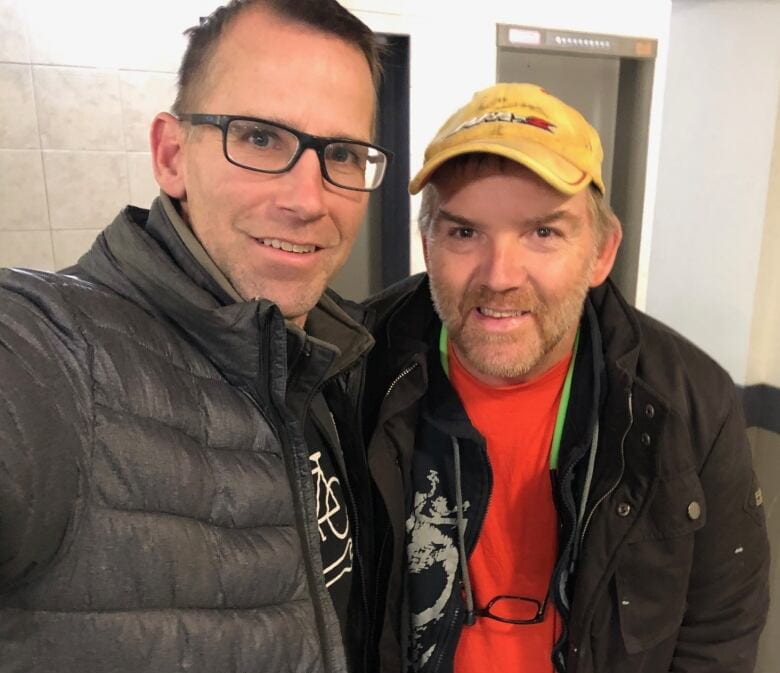
RRC Accelerated Industrial Arts Education student Dan Spiers is using his time and skills to help a Winnipegger in need. RRC Instructors are coming alongside with the offer of space and tools.

It all began when Dan heard the story on CBC that Stuart Irvine’s bike trailer had been stolen. Mr. Irvine had just launched a small start up picking up recycling and compost and delivering groceries using his bike and trailer. Dan’s passion for cycling and helping people caused him to want to step in.

For all the details, check out the story on CBC: https://www.cbc.ca/news/canada/manitoba/stuart-irvine-cart-stolen-1.5347782

Image: Dan Spiers (left) with Stuart Irvine. Source: Dan Spiers

ISACA Student Group Hosts 1st Annual Mini-Conference at the ACE Project Space

November 1, 2019

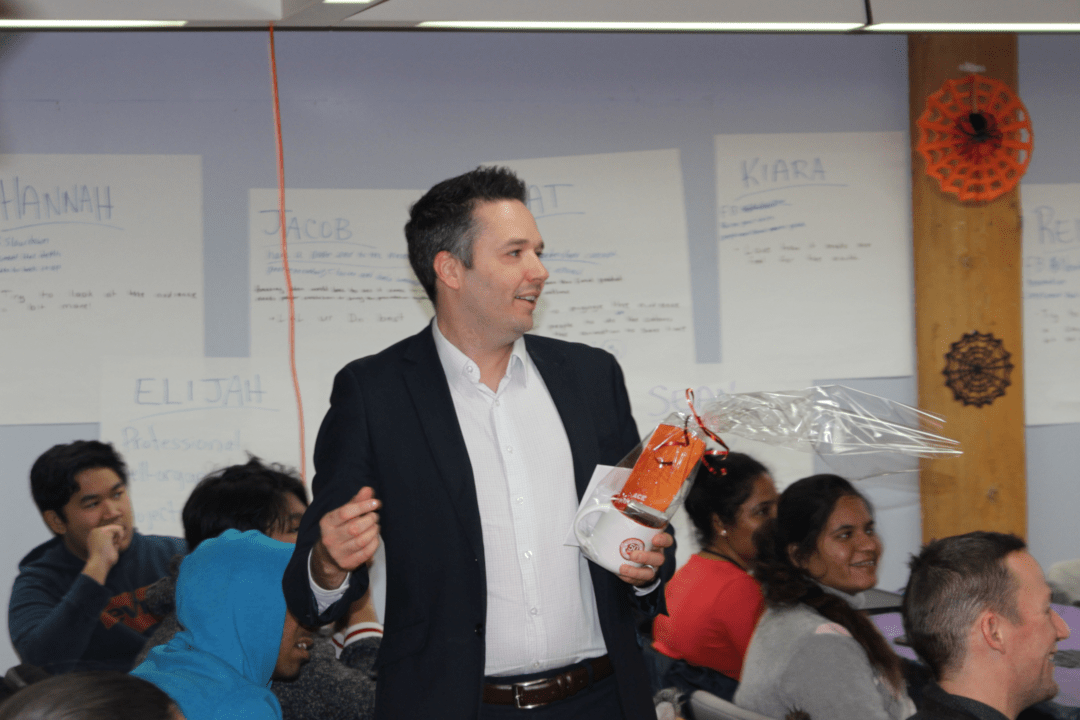
The Information Security program from the Applied Computer Education department at Red River College is only in its second year, yet interest in the program and the field of information security has never been greater. And it shows. The Information Systems Audit and Control Association (ISACA) student group at Red River College hosted its first ever annual mini-conference on Halloween at the ACE Project Space and it was a full house with over 70 students in attendance. Part of this group included high-school students from Seven Oaks School Division Met School and Maples Met School. Students enjoyed presentations from industry experts and one of our own information security instructors.

Along with a free pizza lunch and Halloween themed treats, students were treated to the following presentations by Deloitte, Manitoba Liquor & Lotteries, Auditor General of Manitoba, and Red River College:

Introduction to ISACA (Certifications and Resources)

Presented by: Fraser McLean, CPA, CA, CISA, CRISC, Senior Manager, Risk Advisory at Deloitte Canada

Fraser described the information security landscape, the ISACA organization, career options available for students as well as key activities including penetration testing, incident response handling, and cybersecurity red team versus blue team scenarios. He also talked about the certifications and resources recognized by industry.

Fraser McLean, a senior manager for risk advisory at Deloitte Canada, discusses the career opportunities in information security

Fraser McLean, a senior manager for risk advisory at Deloitte Canada, discusses the career opportunities in information security

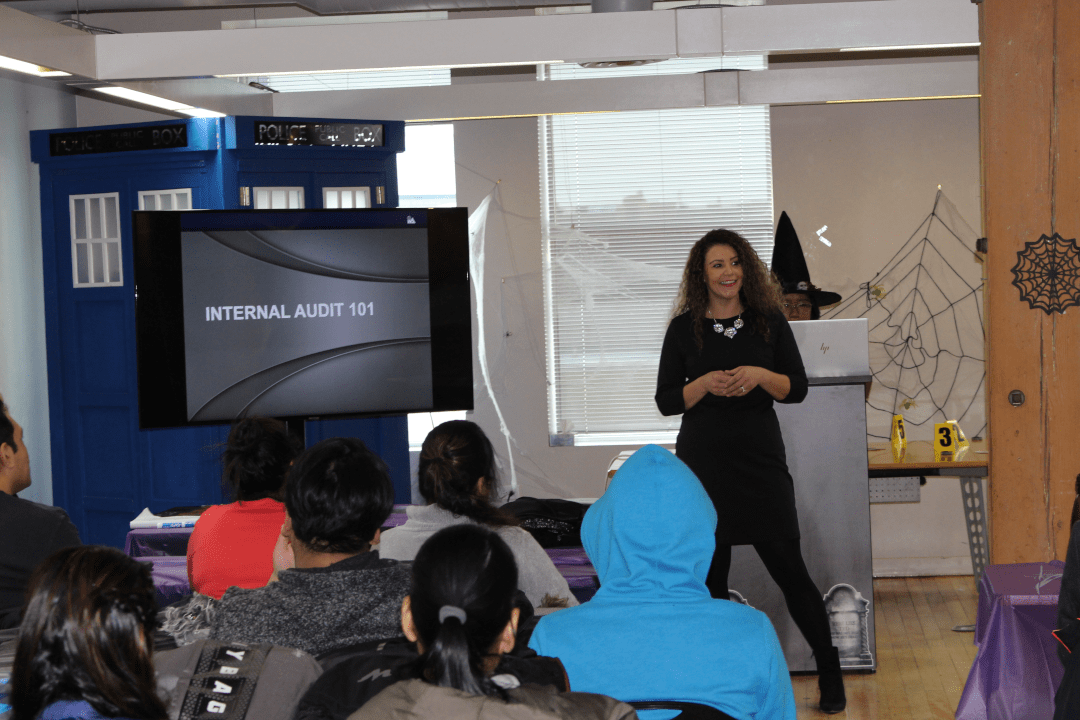
Internal Audit 101

Presented by: Catarina Sousa Machado, CPA, CGA, CISA, Senior Audit and Risk Management Professional at Manitoba Liquor & Lotteries Corporation

Catarina educated students on the internal audit profession from an accounting perspective and contrasted it with the technology focus of information security professionals. She described the roles comprising internal audit, the importance of internal auditing to organizations, as well as the certification paths that are available.

Catarina Sousa Machado, a senior audit and risk management professional at Manitoba Liquor & Lotteries Corporation, talks about the internal auditing profession

Catarina Sousa Machado, a senior audit and risk management professional at Manitoba Liquor & Lotteries Corporation, talks about the internal auditing profession

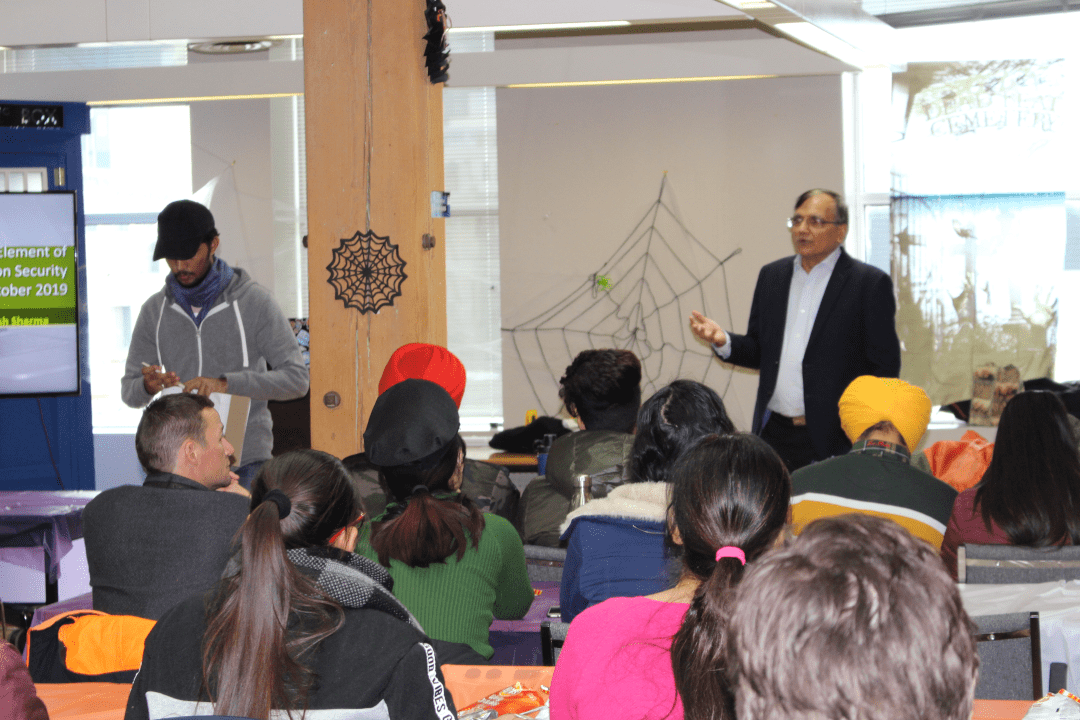
Social Engineering: Human Element of Information Security

Presented by: Ganesh Sharma, FCA(India), CISA, CISM, CISSP, CIA, SAP Certified, Principal, IT Performance Audits at Auditor General of Manitoba

Ganesh shared the financial impact of data breaches on organizations and how social engineering allows these breaches to occur. He provided details on the time required to resolve incidents and the types of social engineering attacks, their methods of delivery, as well as points of exploitation, including people, processes, and technology.

Ganesh Sharma, a principal IT performance auditor from the Auditor General of Manitoba, discusses the financial impact of data breaches

Ganesh Sharma, a principal IT performance auditor from the Auditor General of Manitoba, discusses the financial impact of data breaches

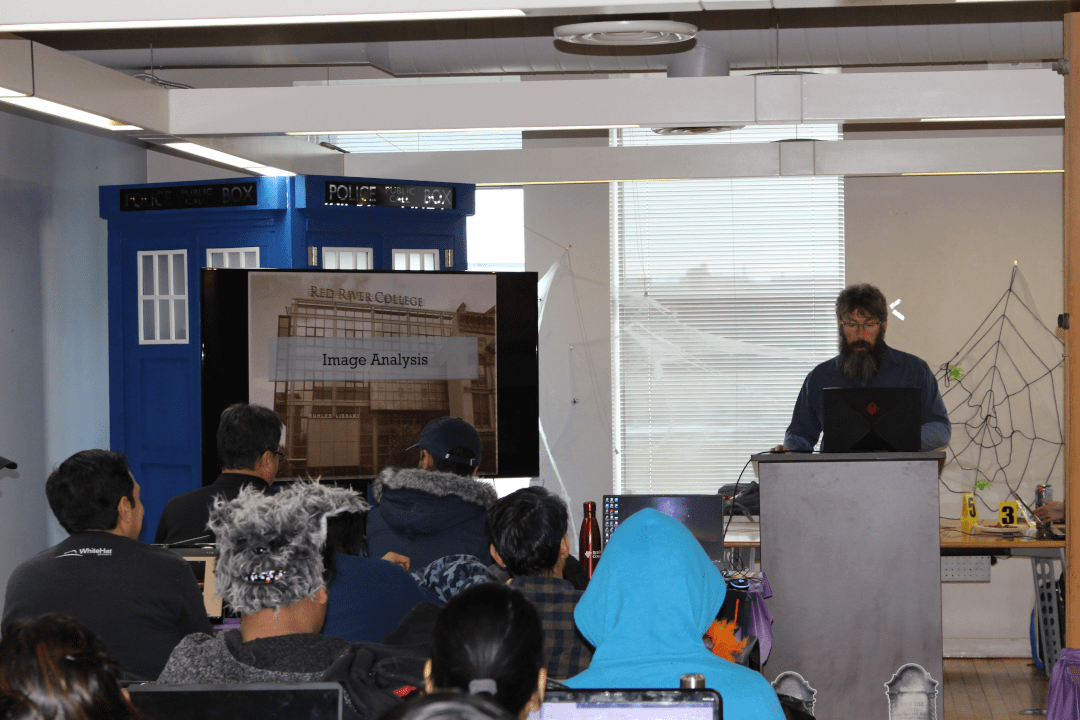
Forensic Analysis

Presented by: Stephen Jay, Information Security Instructor, Red River College

One of our instructors, Stephen Jay, walked students through various aspects of forensic analysis in information security. He used examples of image analysis and demonstrated a multitude of tools that can be used to perform forensic analysis.

Stephen Jay, a Red River College information security instructor, describes how image analysis is performed as part of forensic analysis

Stephen Jay, a Red River College information security instructor, describes how image analysis is performed as part of forensic analysis

Interested in hosting a similar event for students?

For information about hosting an event at the ACE Project Space, please contact Stephen Lawrence, ACE Project Space Coordinator at (204) 224-2712.

Is it a Full Moon?

October 31, 2019

The focus of this blog is in line with Halloween. I went around asking some of my colleagues about anything spooky they might have encountered as a nurse. As always, there were many comments about the “full moon.” Most nurses I know truly believe that a full moon can influence the behaviors of the patients they care for. Many of the nurses I spoke to stated that the full moon effect was involved in ER visits and random wanderings of their patients. Not sure if the next couple of stories are connected to the full moon.

One story an instructor told me that sent shivers down my spine involves the maternity unit at St. Boniface. The unit used to be a children’s unit and patients on the unit have reported seeing a small child wandering in and out of their rooms all night. This small child has only ever been seen by the patients on the unit.

Another story that I know of involves Riverview Health Centre where mysterious doctors orders appear in the charts at night. These orders are signed by the Head Doctor who had died many years past. And the museum in the Princess Elizabeth is often found with the lights turning on and off at night by the security staff.

Health Science Centre is also not immune to strange sightings. A nurse shared that she once saw a large man wearing full cowboy regalia washing his hands outside an isolation room. This man tipped his cowboy hat at the nurse and went into the room. The nurse looked down and the man was floating. The room was unoccupied. This nurse asked a more senior nurse she was working with about the appearance of the man. The senior nurse replied “Oh, that sounds exactly like Mr. ____. He passed away in that room several months ago.”

Other stories shared involve sightings of Sasquatches while driving on isolated highways. One person even shared that she personally saw a sasquatch when she was a small child. Stating that she “looked outside and saw a very large hairy man looking into the cottage. Then she screamed and her parents could not console her.”

Something to ponder as we approach Halloween. If you happen to have your own encounter, try to remember to check if it was a full moon.

Happy Halloween everyone!

Post written by Corrina Zacharkiw – Nursing instructor

Contributions from various Nursing faculty

Pop Up Print Sale

October 30, 2019

Save the dates!

The Pop Up Print Sale is back! This year we will be at both campuses.

Made by RRC Winter Market at the Notre Dame campus
Thursday, November 28 from 10am to1:30pm

Exchange District campus atrium
Friday, November 29 from 10 am to 2 pm

We are selling a collection of student illustrated posters created over the past few years. We’ll have posters from the Iconic Winnipeg series, Quotables series and a collection of illustrated letters.

Prices are $10/poster or 3 for $25. There will also be a limited number of framed prints available for $30. Cash only please.


Awards Luncheon 2019

October 24, 2019

Congratulations to all our 2019 winners; your hard work is always noticed even when you don’t think it is!

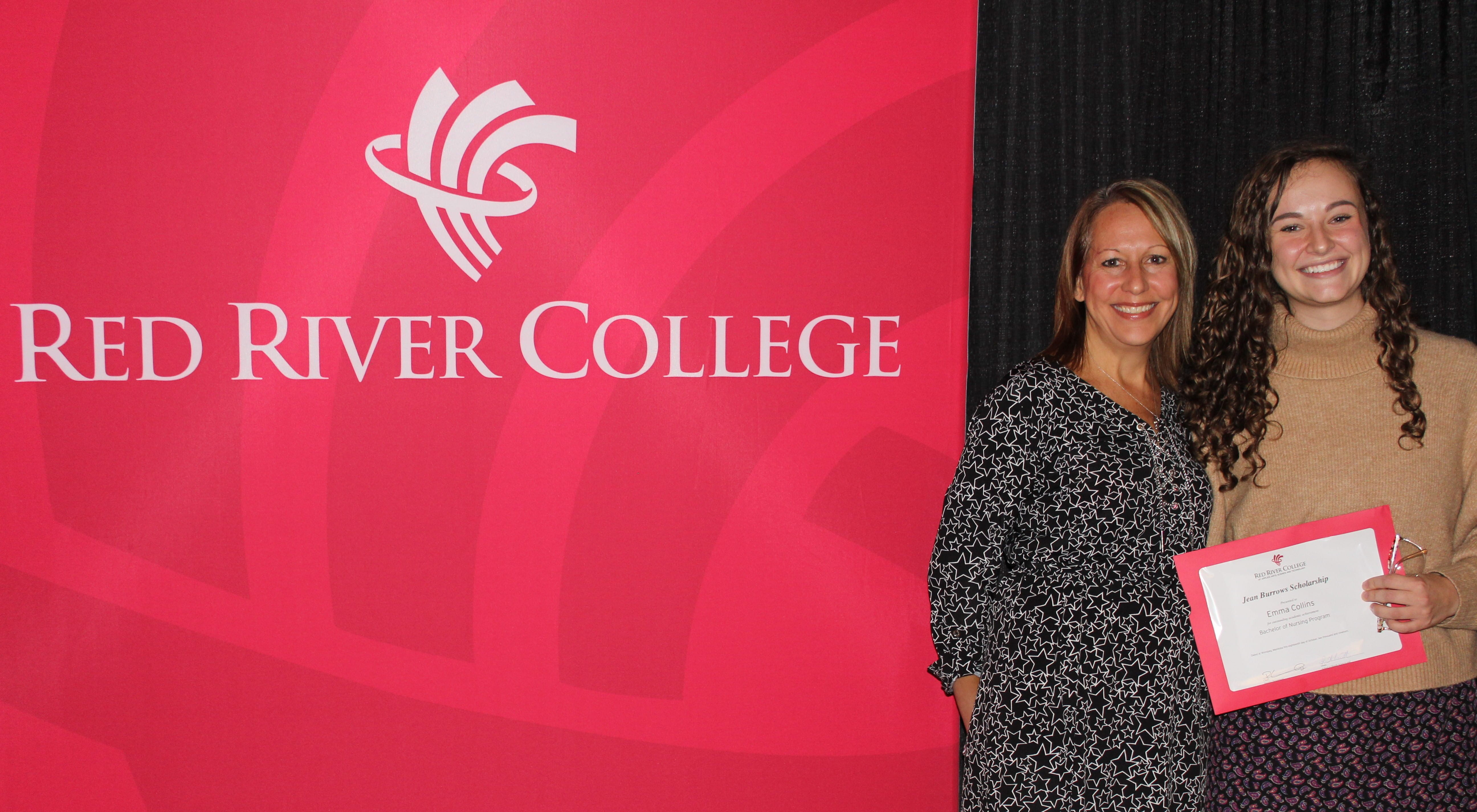
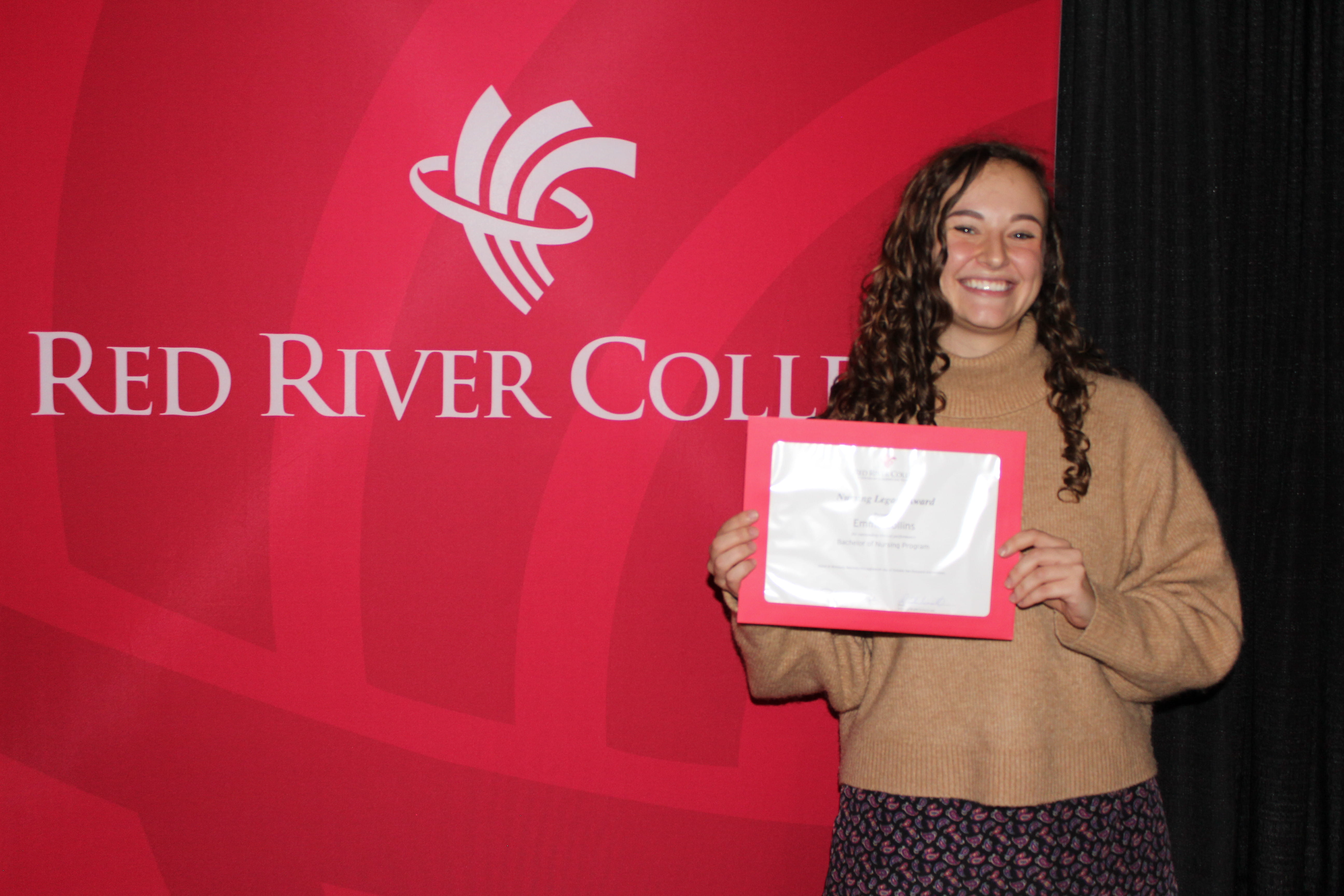
Jean Burrows Scholarship – Emma Collins : Jean Burrows was the Nursing Department Chair from 1974 to 1998, and upon her retirement, this scholarship was created for a first year student recognizing their outstanding academic achievement.

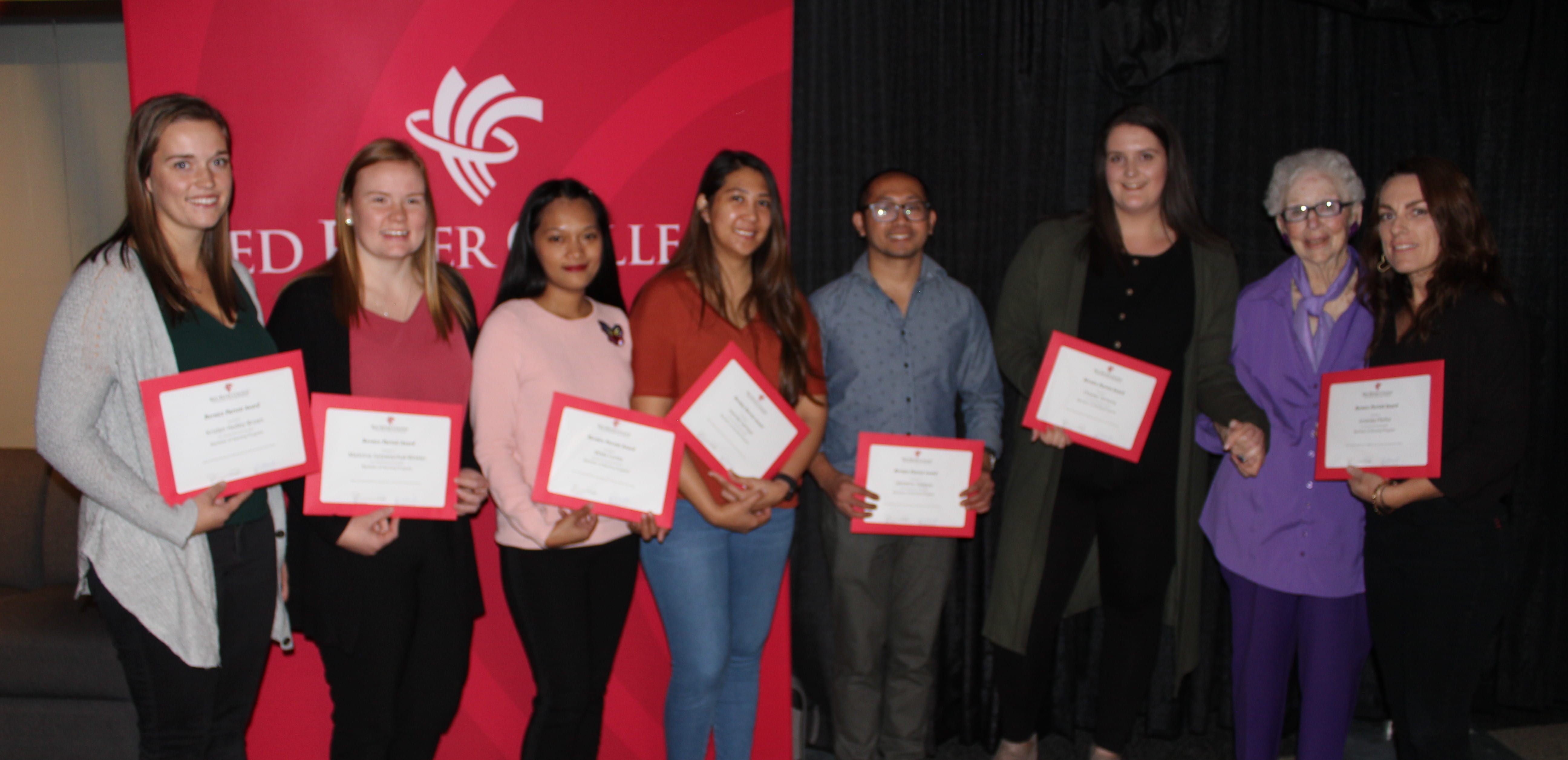
Bernice Parrott Award – Breanne Trach, Hamida Caringal, Demetrio Vasquez, Wilda Cortes, Madeline Gylywoychuk-Winkler, Chantel Verbong, Amanda Pfeffer, Kirsten Hedley-Brown : This award was established to deserving students entering their second or third year in the BN program, to recognize their hard work and efforts.

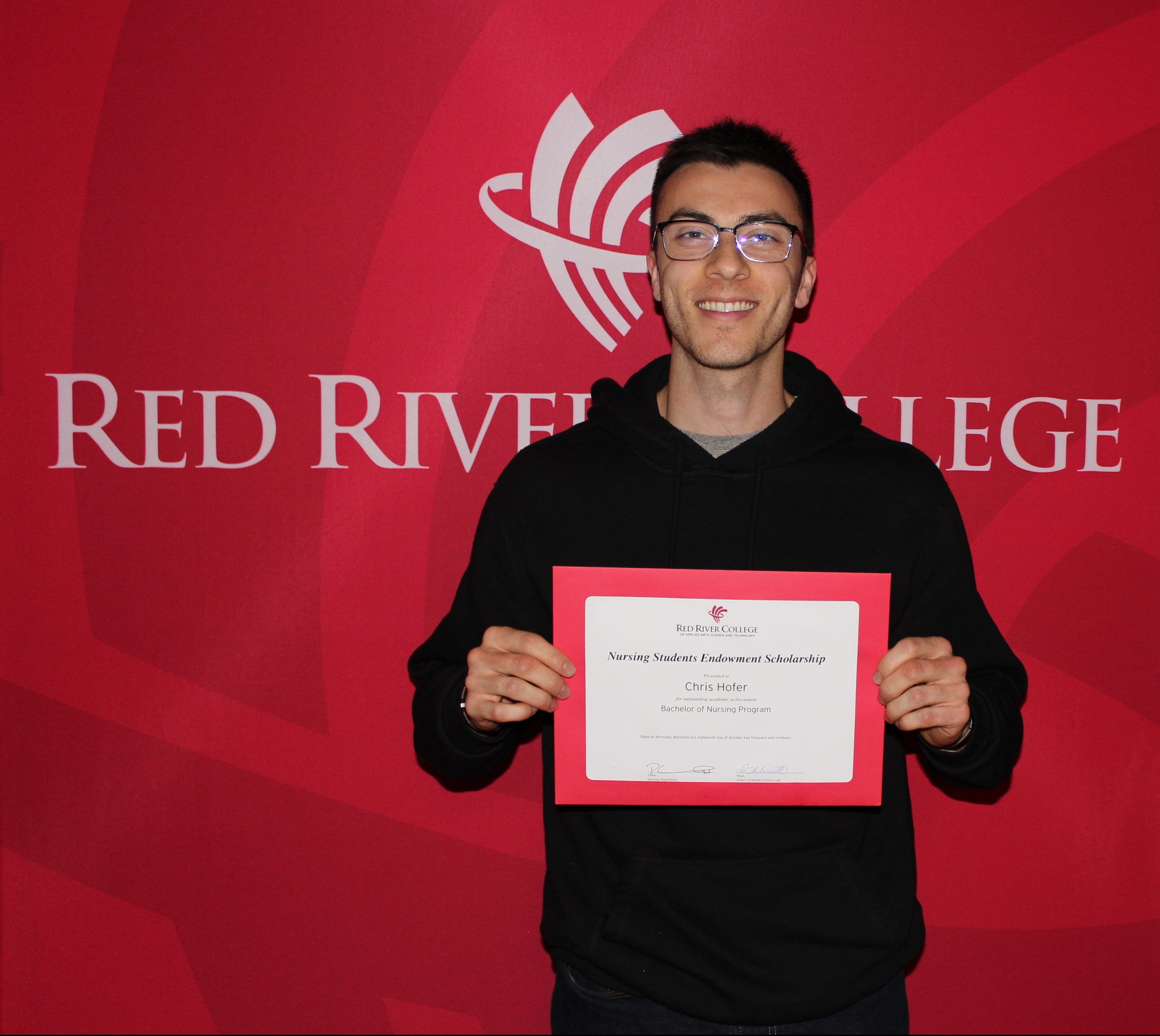
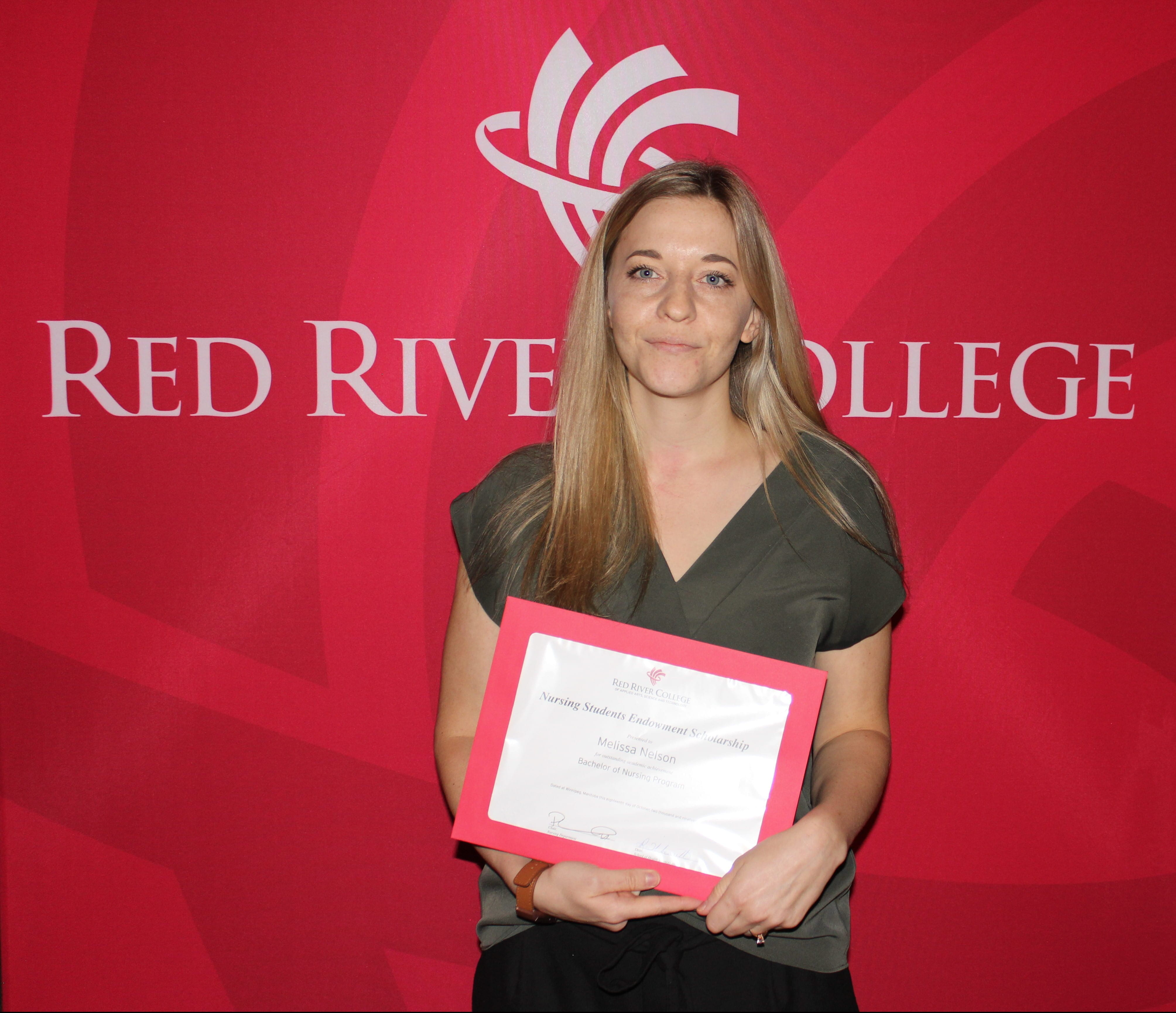
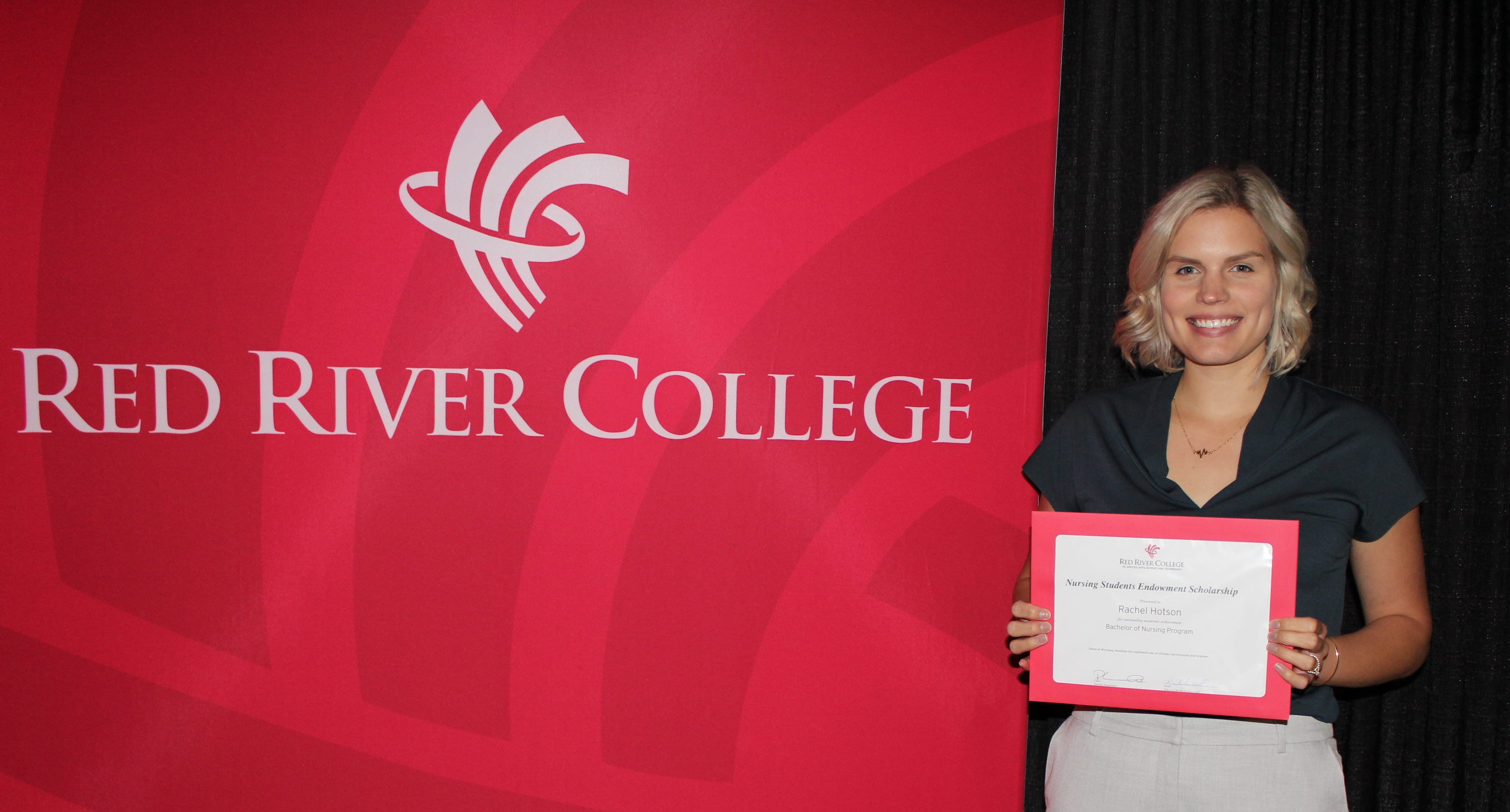
Nursing Students Endowment ScholarshipMachaela Cavanagh, Rachel Hotson, Chris Hofer, Melissa Nelson : This award was established from students who, in 1997 as part of their tuition fees, contributed to this endowment fund.  In 2001, a portion of the money was dedicated to the creation of this award.  The class of 2002 also made a sizable contribution from their own fundraising efforts.

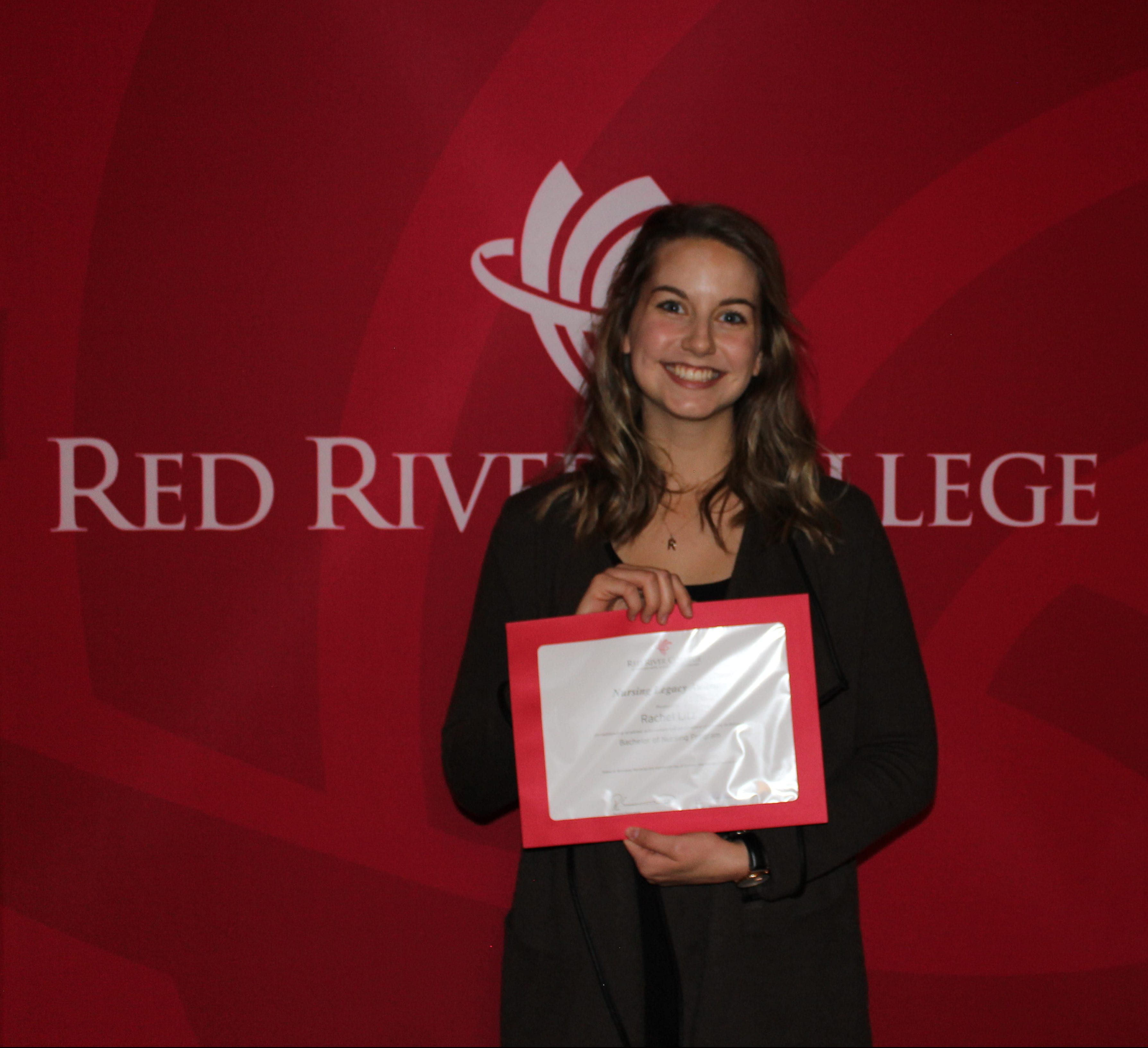
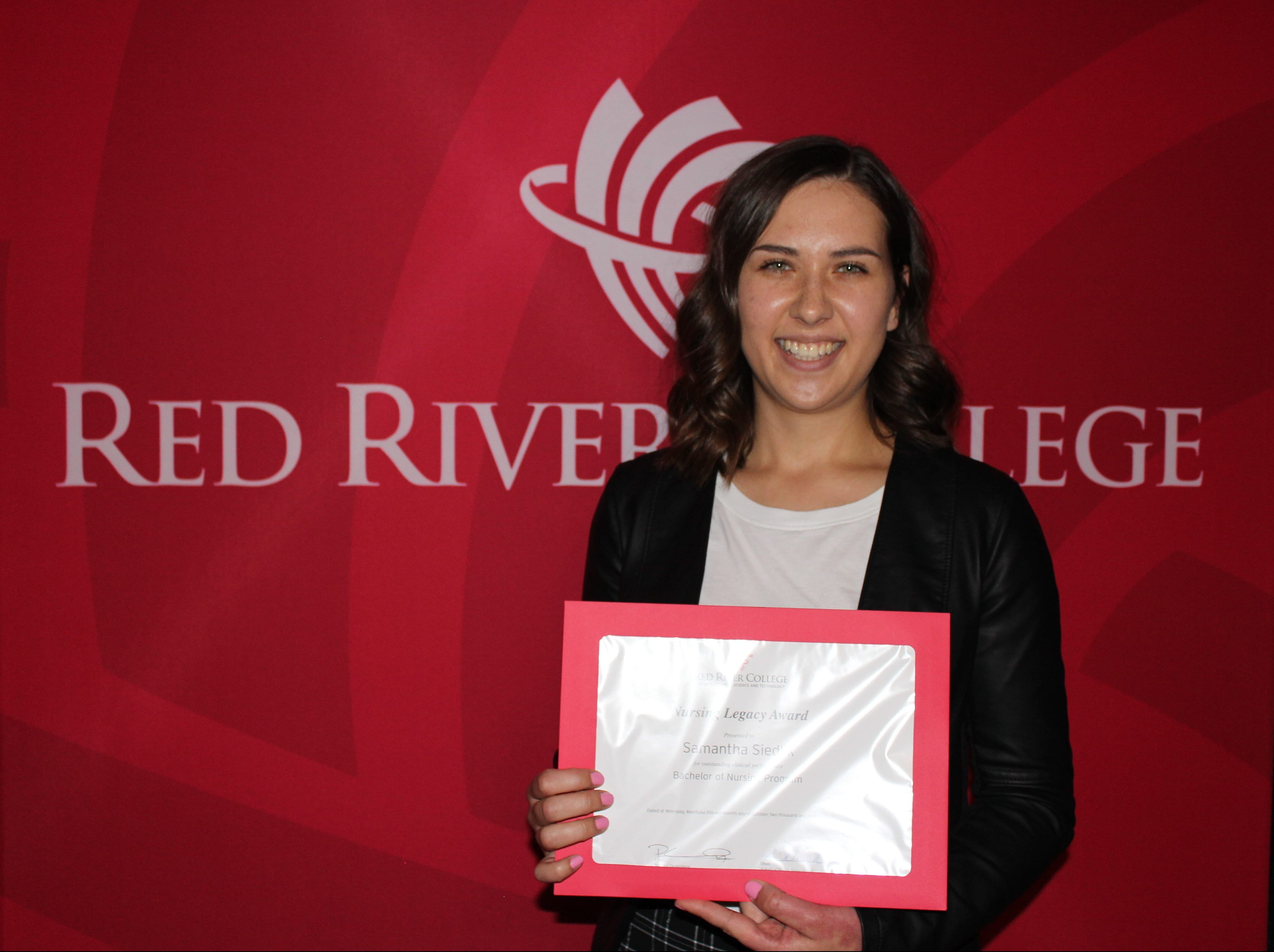
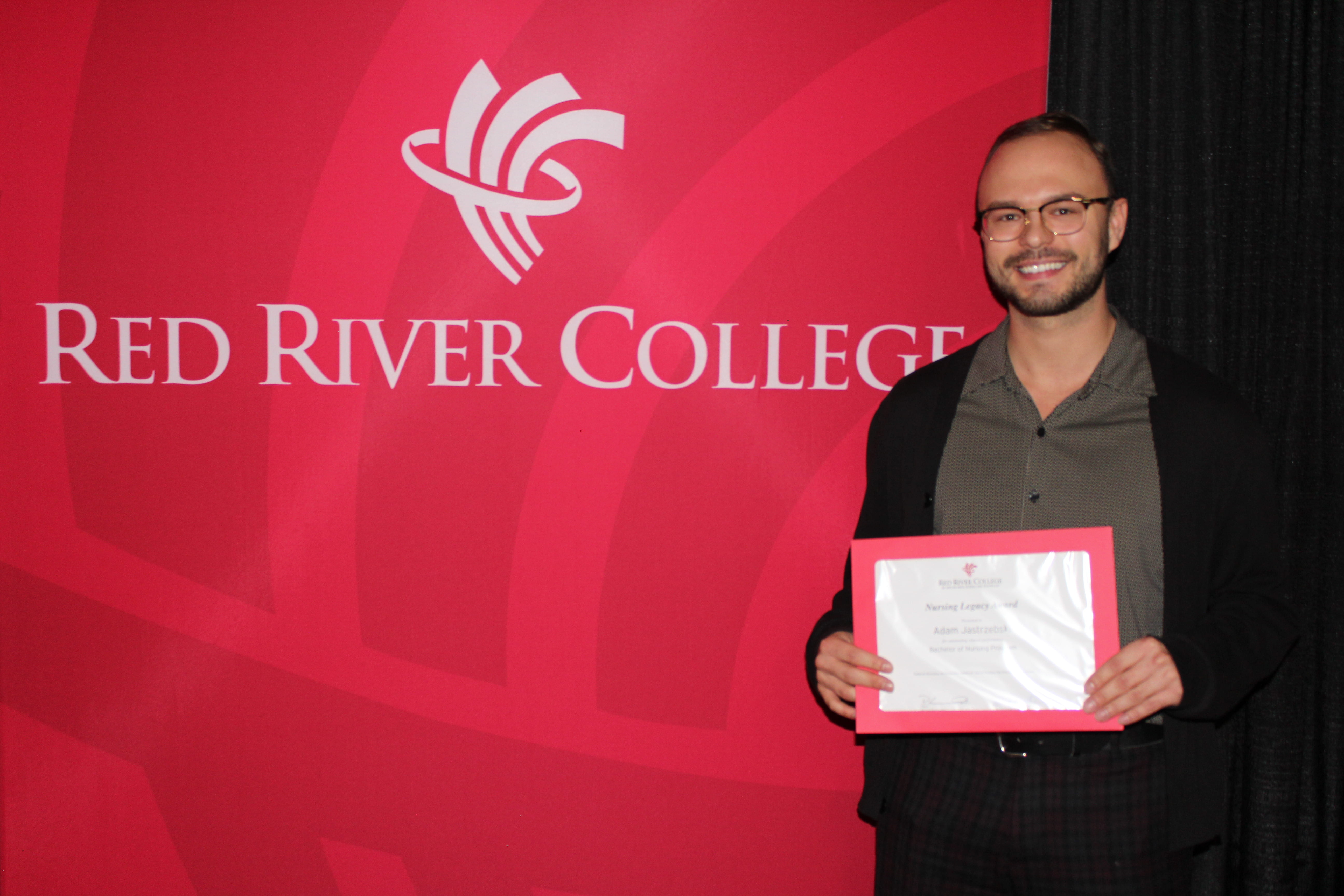
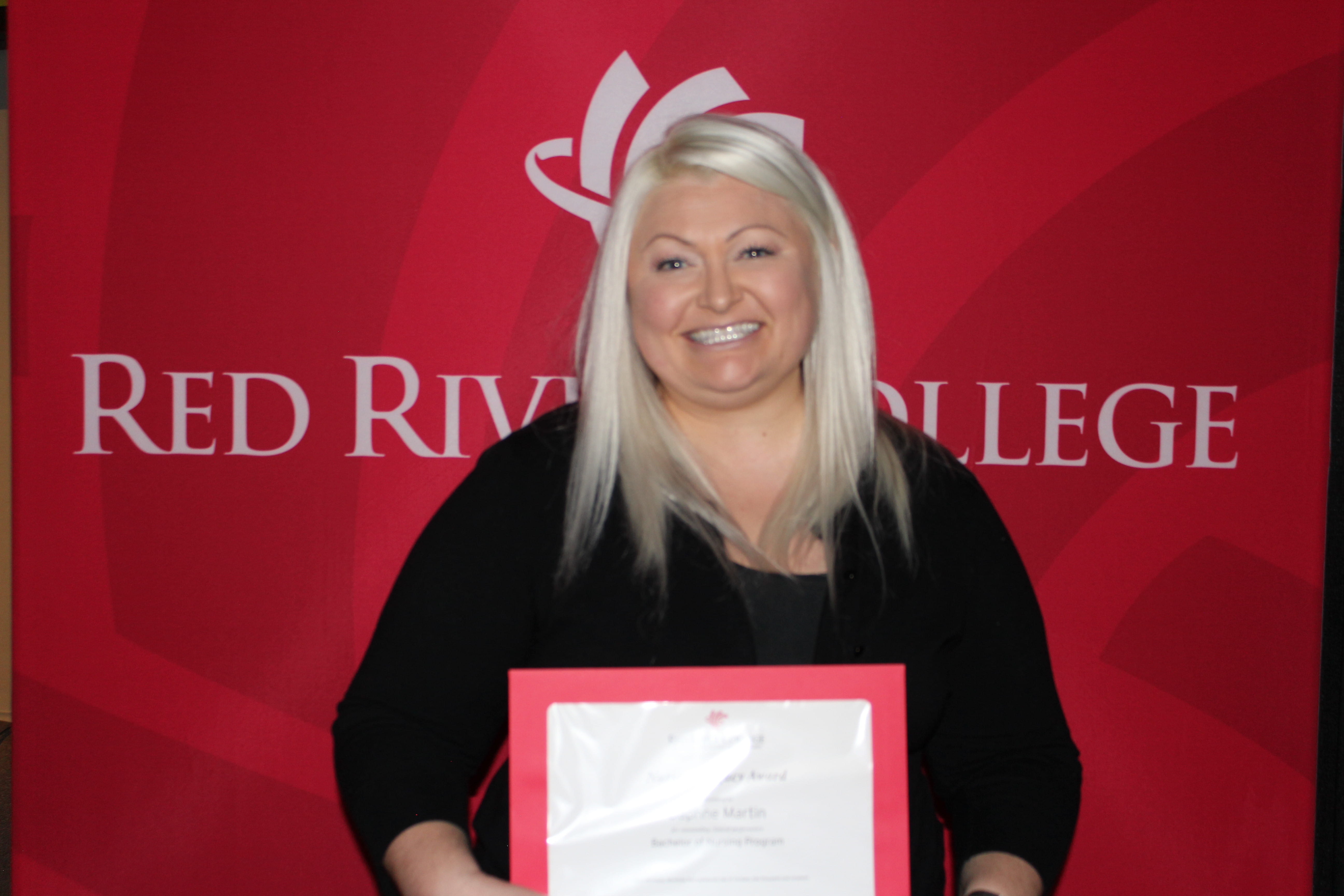
Nursing Legacy Award – Rachel Litz, Samantha Siedlik, Machaela Cavanagh, Adam Jastrzebski, Emma Collins, Melissa Nelson, Daphne Martin, Taylor Bahniuk, Alisha Rana, Rachel Hotson : This award recognizes outstanding clinical performance of students in years one to three. A student in Nursing Techniques 3 is also recognized for excelling in both their academic and skill performance, while the Health Assessment award recognizes a student who has outstanding academic achievement in both Health Assessment courses.  This award was established by combining sources from the Stanton Family, the Duncan Family, and Phyllis Aaron, along with the Nursing faculty.

Thorey Johnson Nursing Award – Karyn Tiel, Sheena Scholz, Kiersten McMullen : In honor of their mother, Mrs. Johnson’s daughters have established this scholarship for a nursing student who has expressed a special interest in rural nursing practice.

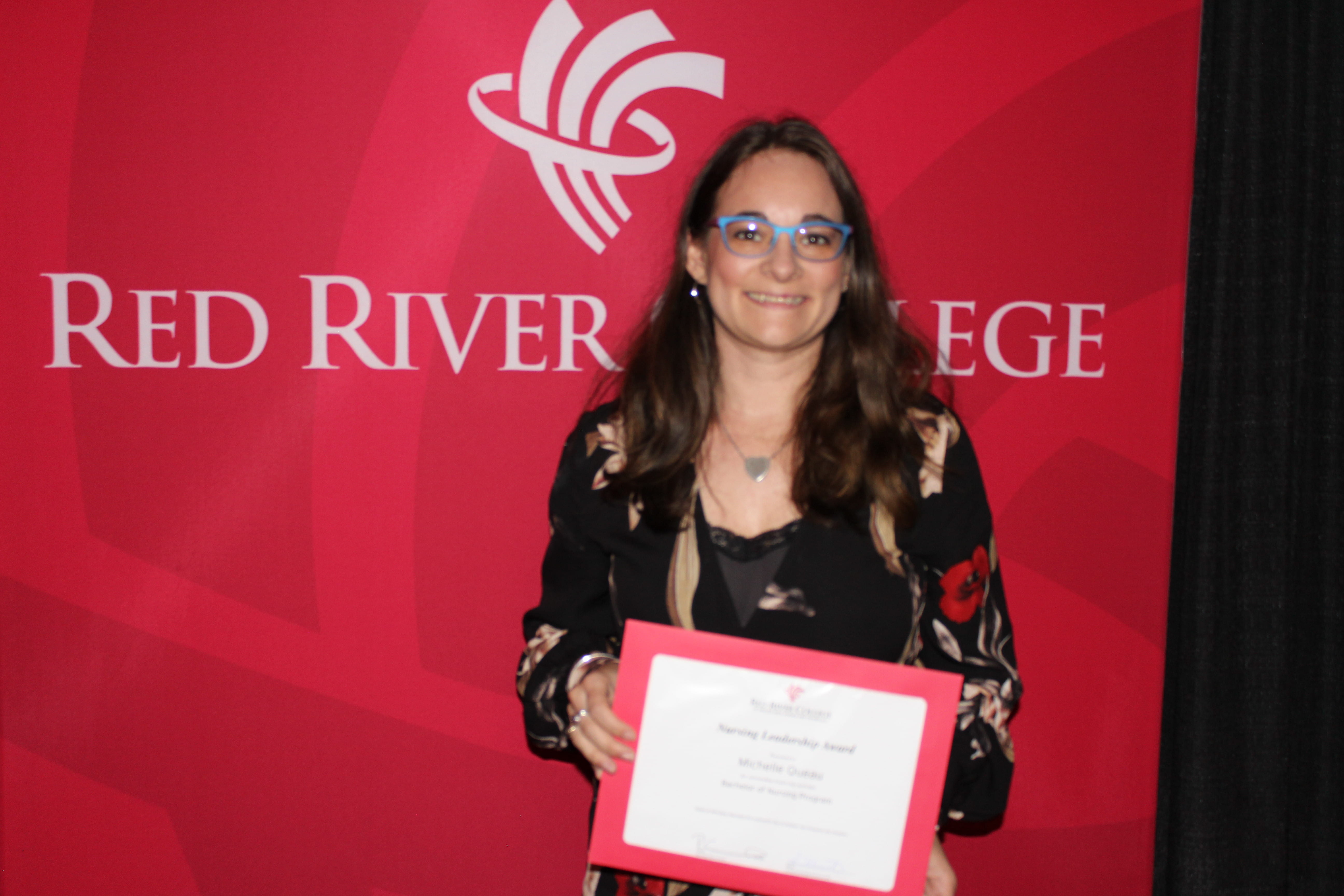
Nursing Leadership Award – Lauren Lacroix, Michelle Queau : This award is for deserving students who have gone above and beyond in support and leadership of their peers. This award was established by the awards committee, with nominations from faculty and peers.

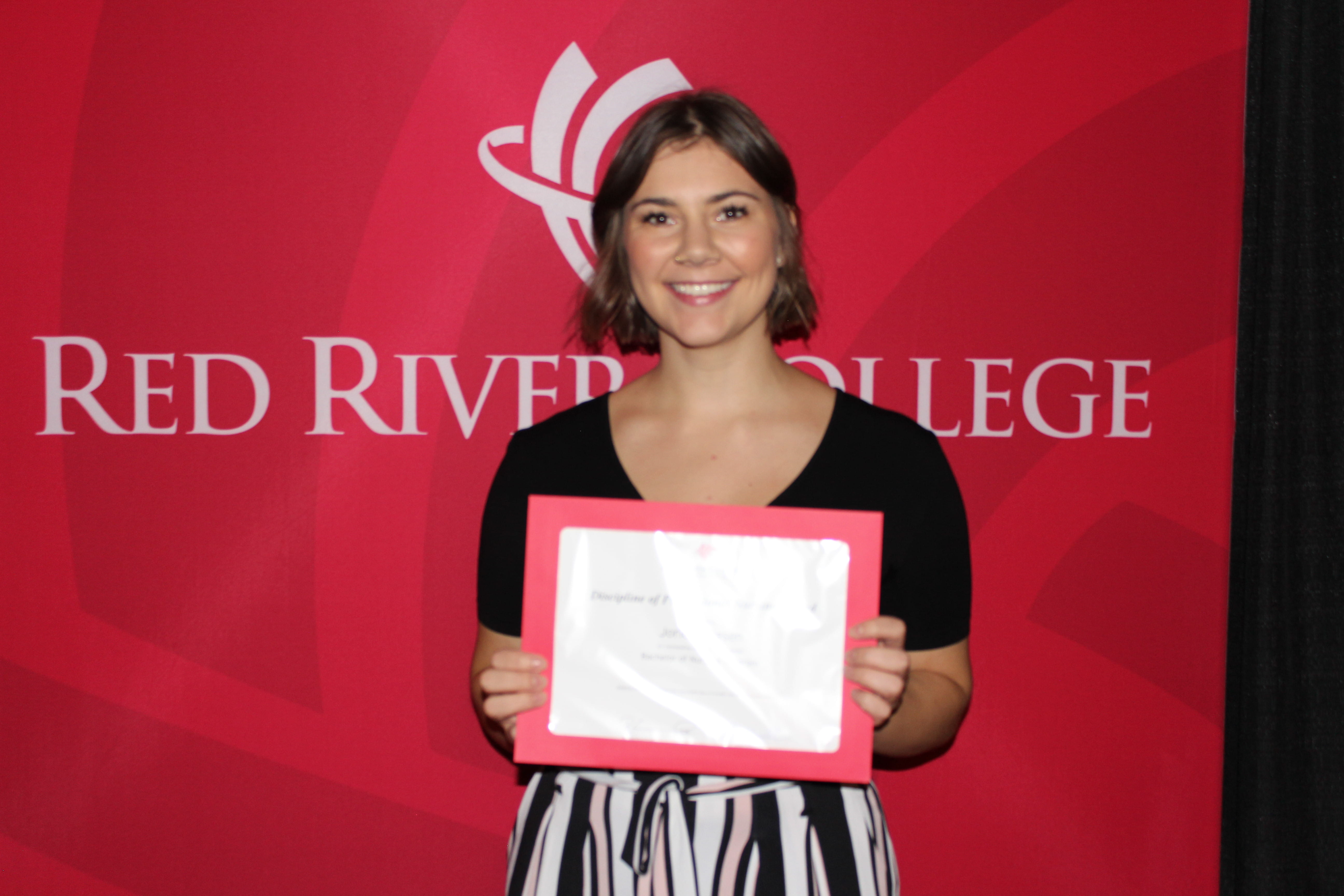
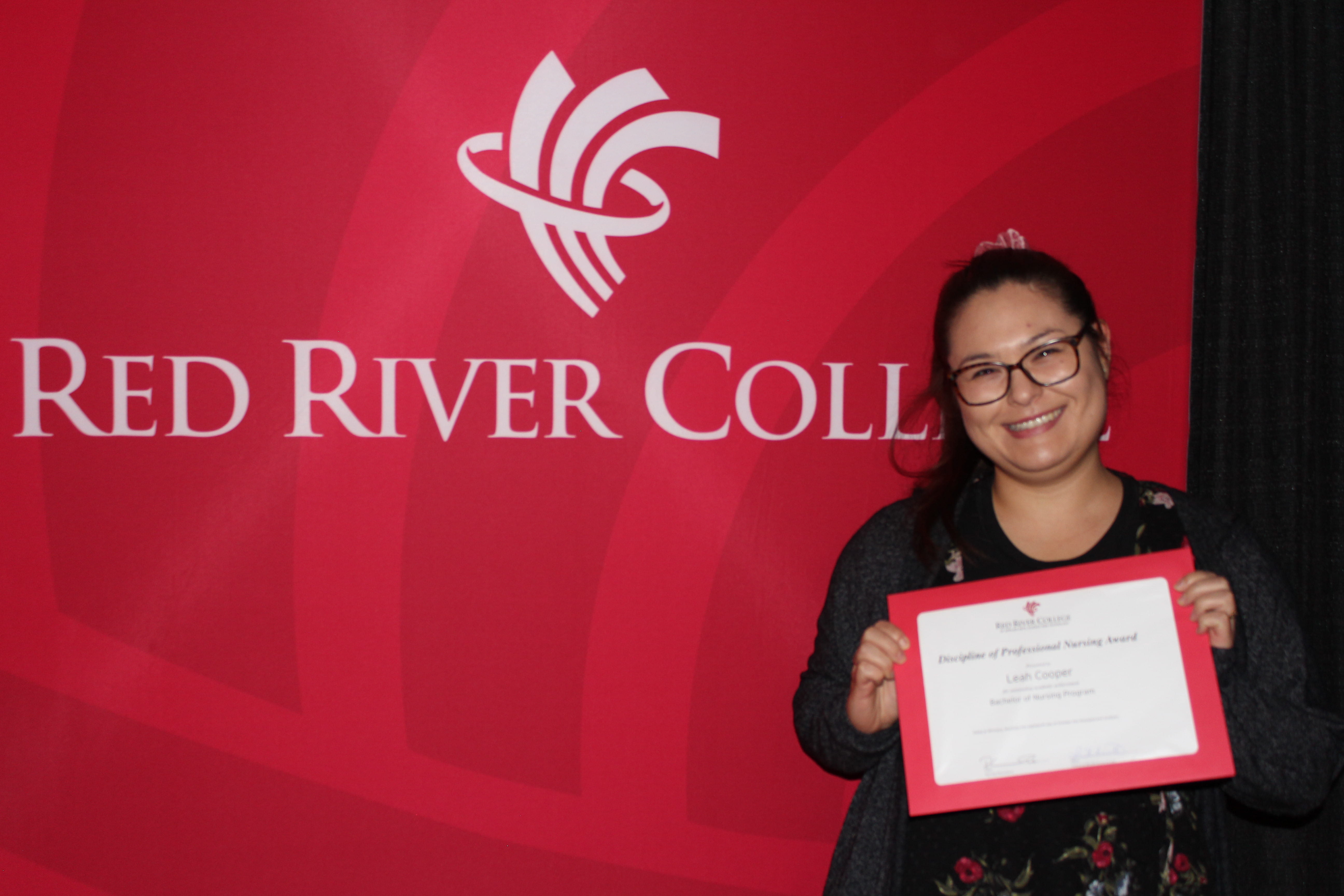
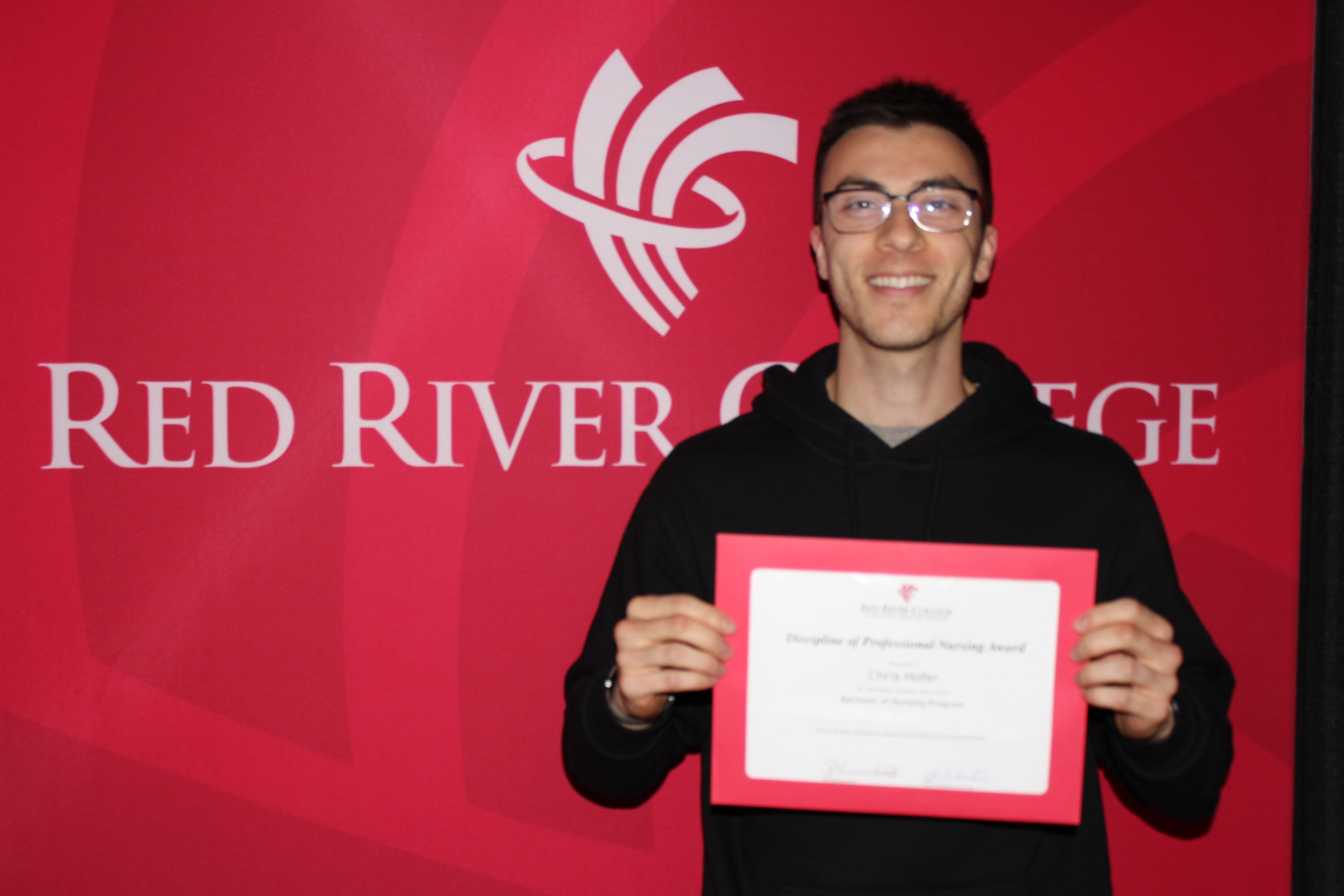
Discipline of Professional Nursing Award – Jorien Friesen, Leah Cooper, Chris Hofer : This award is presented to students for their outstanding achievement in the courses of Discipline of Professional Nursing 1-5.

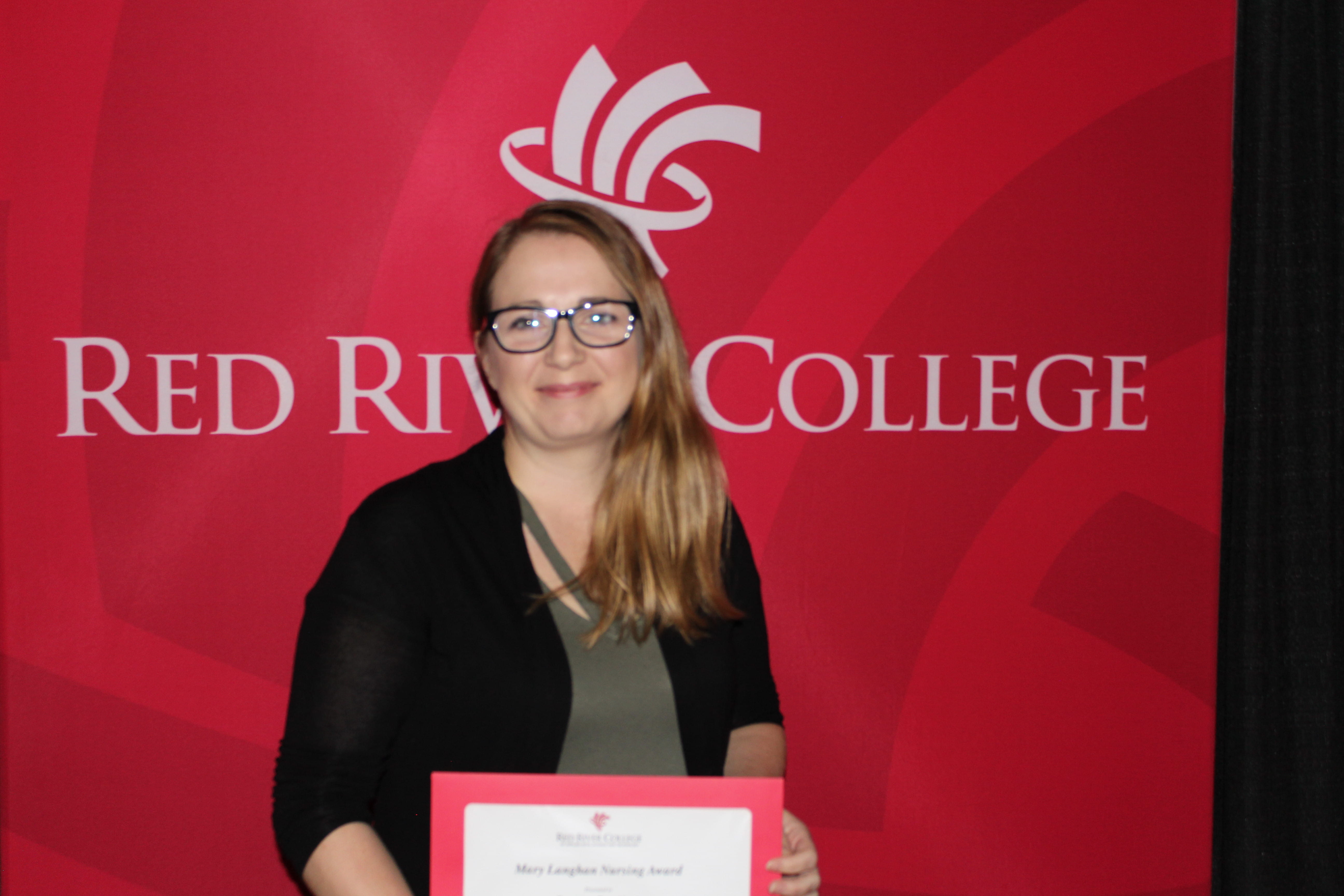
Mary Langhan Nursing Award – Denae Bastian : This award is  presented to a third year student who has demonstrated a high level of skill in the clinical setting and has expressed a special interest in obstetrics and gynecology.

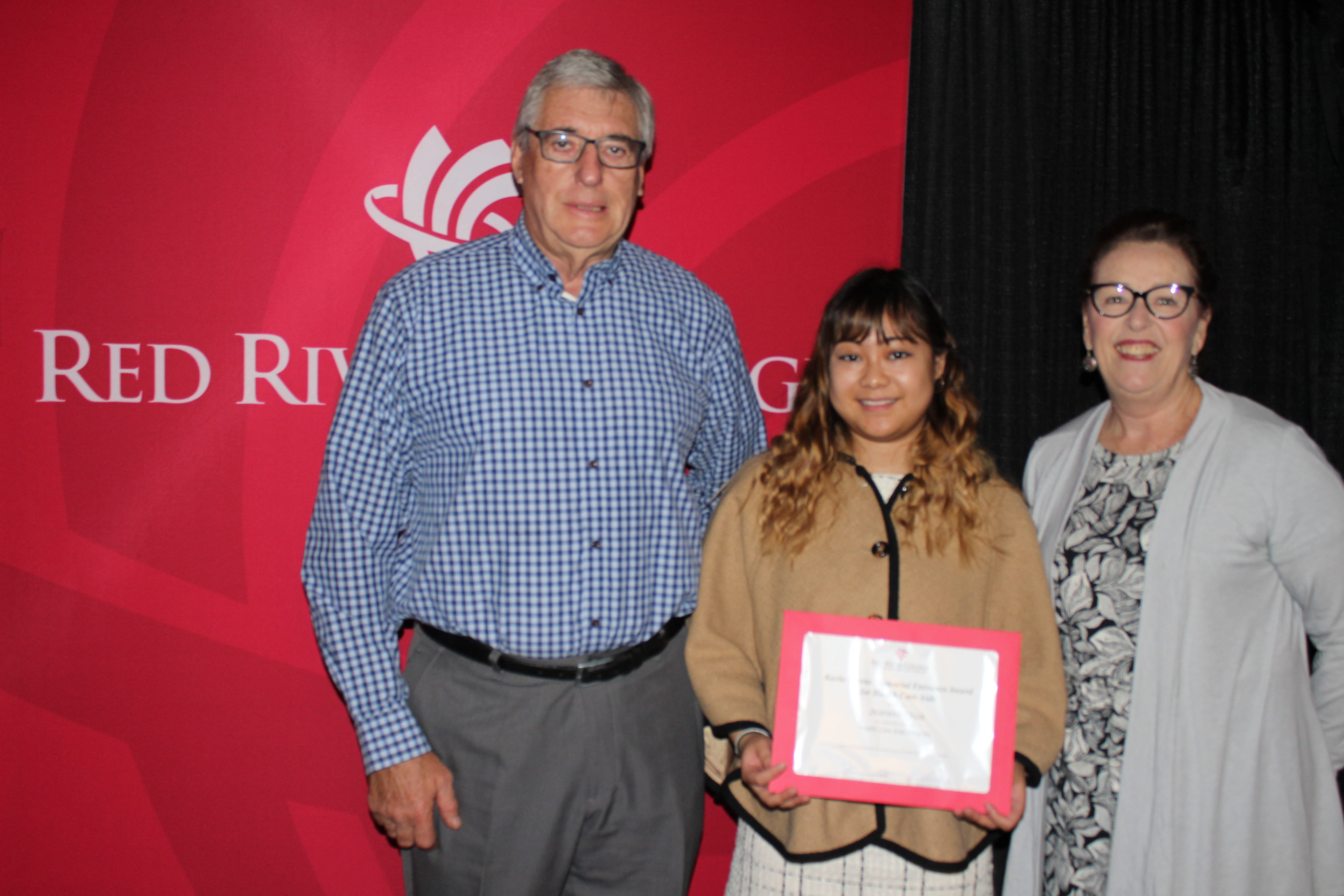
Karla Ferens Memorial Entrance Award for Health Care Aide – Jeanelle Chua, Elizabeth Codville, Samantha Galvin This award recipient has displayed the same accomplishments exhibited by Karla Ferens: involvement in sports and leadership qualities.  Karla was a 2011 RRC graduate of the HCA program.

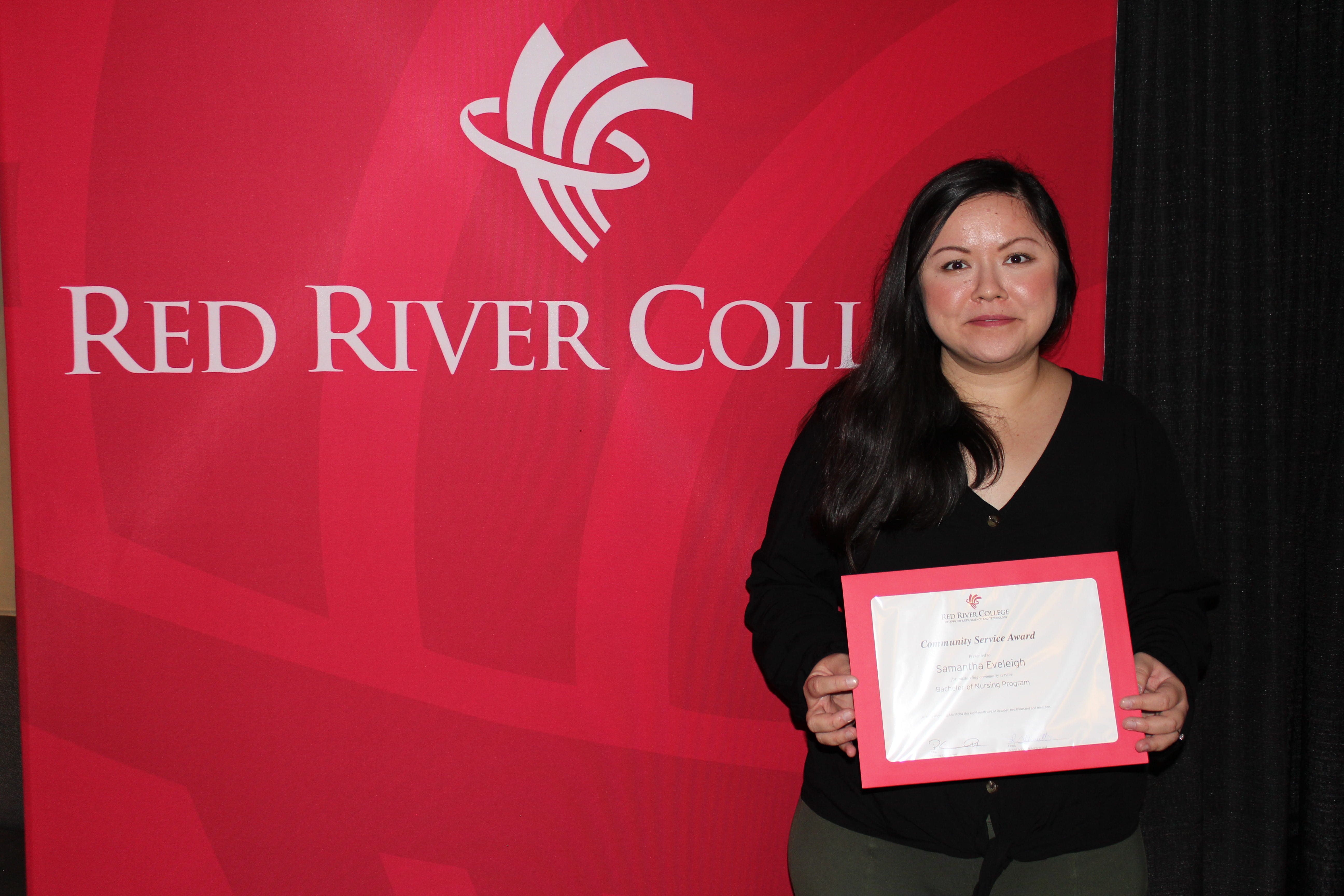
Community Service Award – Ryan Penner, Samantha Eveleigh : This award is presented to second and third year students who have volunteered for a community agency while maintaining sound academic achievement.

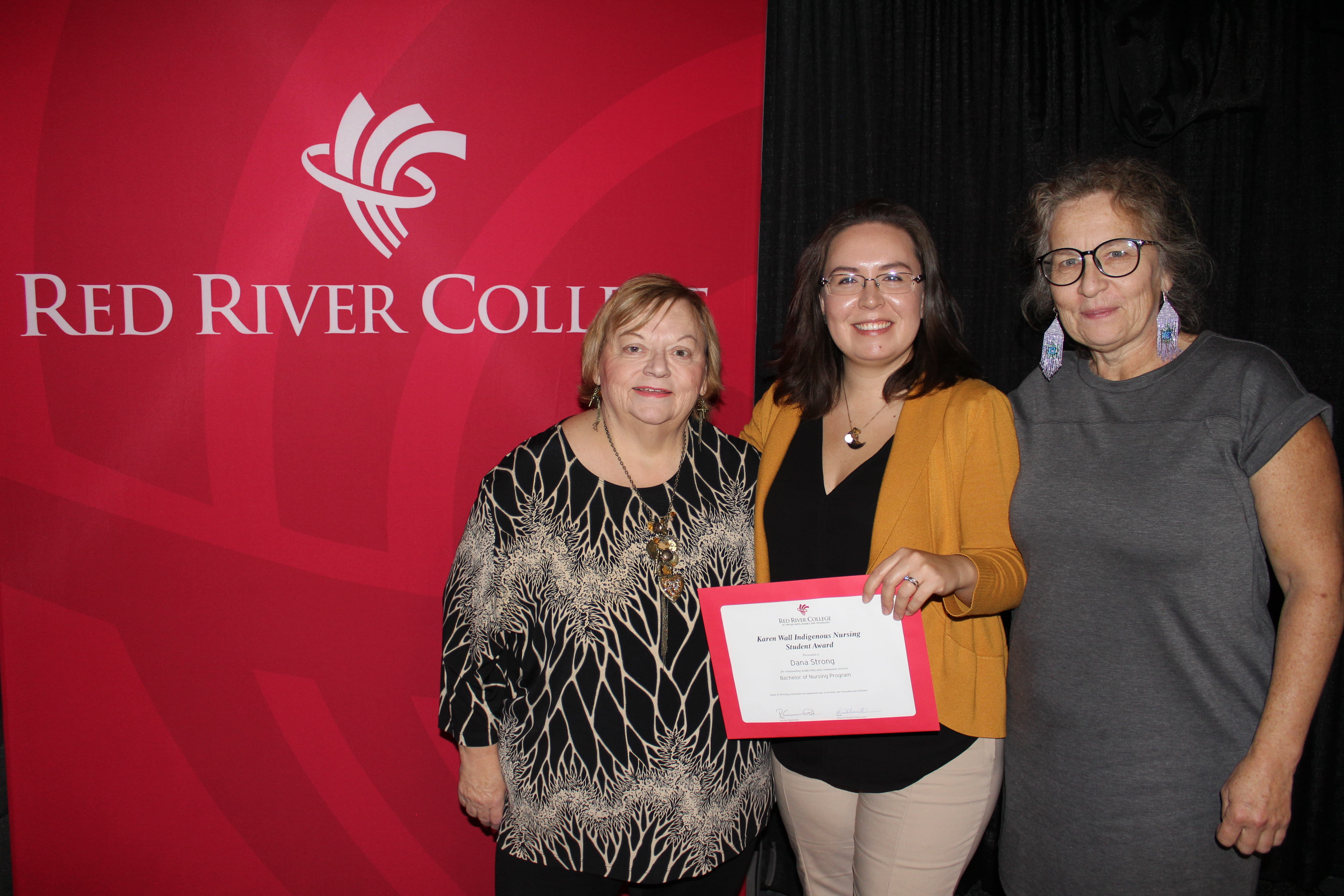
Karen Wall Indigenous Nursing Student Award – Dana Strong : This award is presented to a third year student of Canadian Indigenous heritage who has achieved academic success in the BN program and has demonstrated leadership within the Indigenous community.

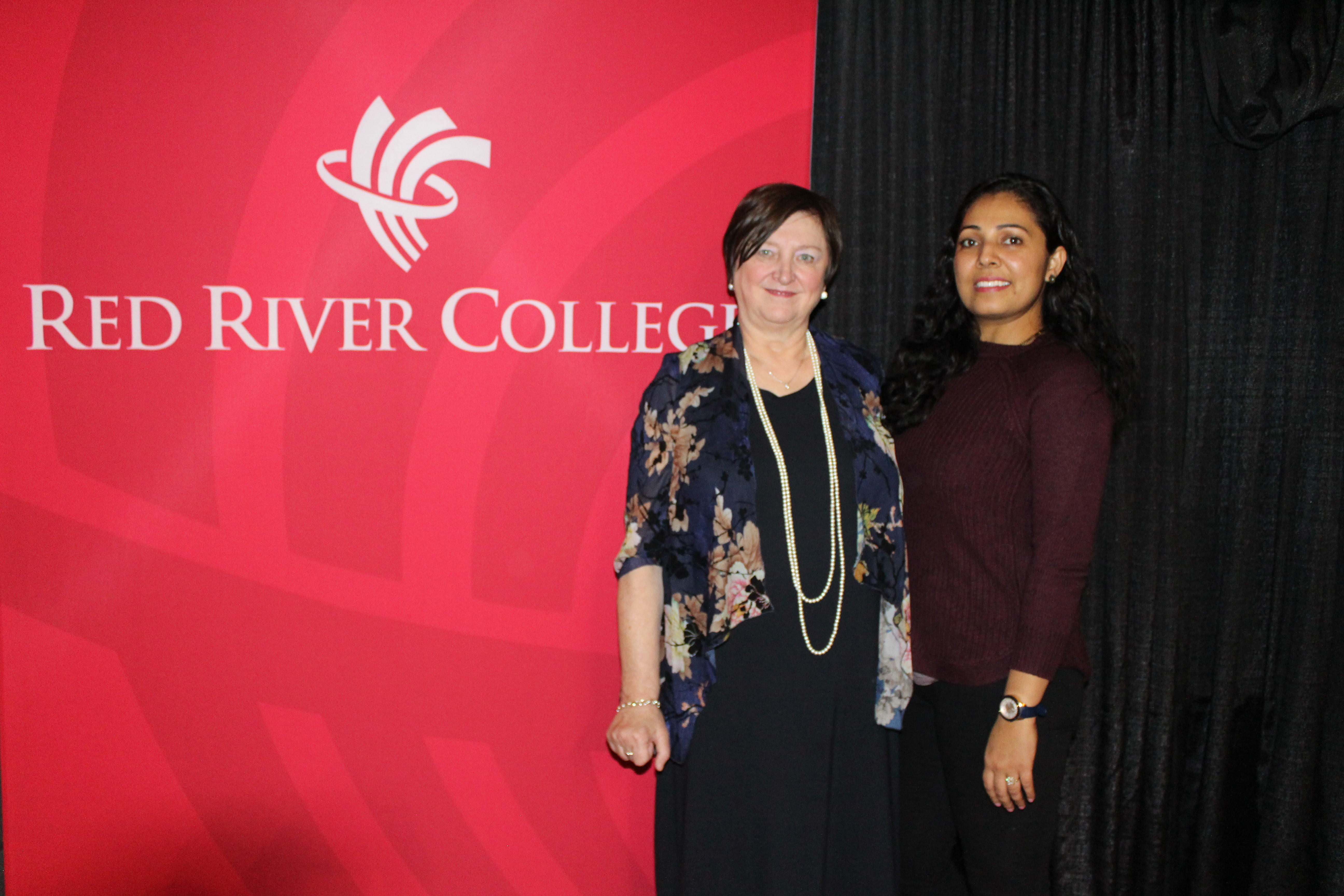
Elizabeth Scaife Memorial Award – Lovepreet Sharma : This award is presented to a BPIEN (Bridging Program for Internationally Educated Nurses) student who demonstrated outstanding academic and clinical performance.

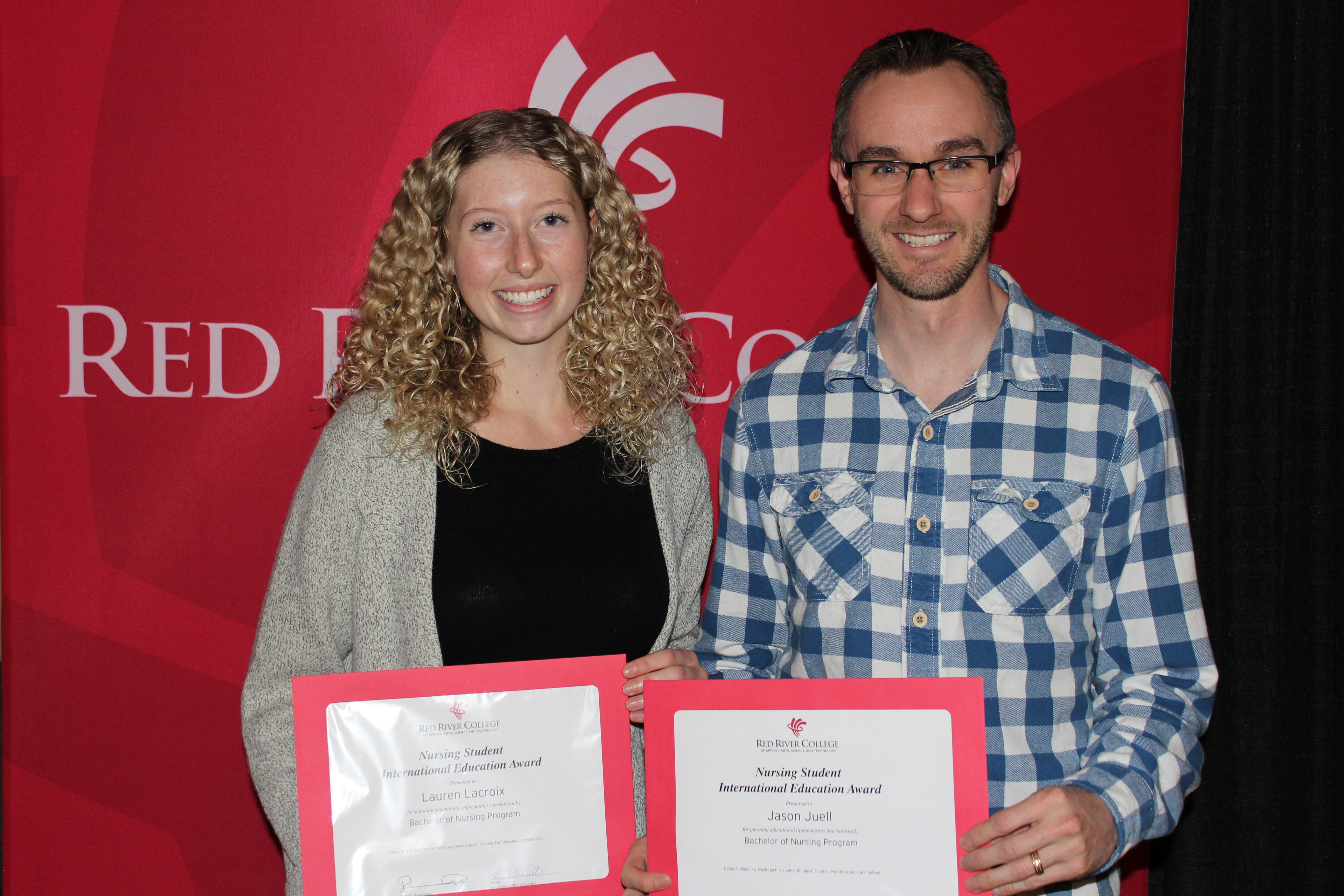
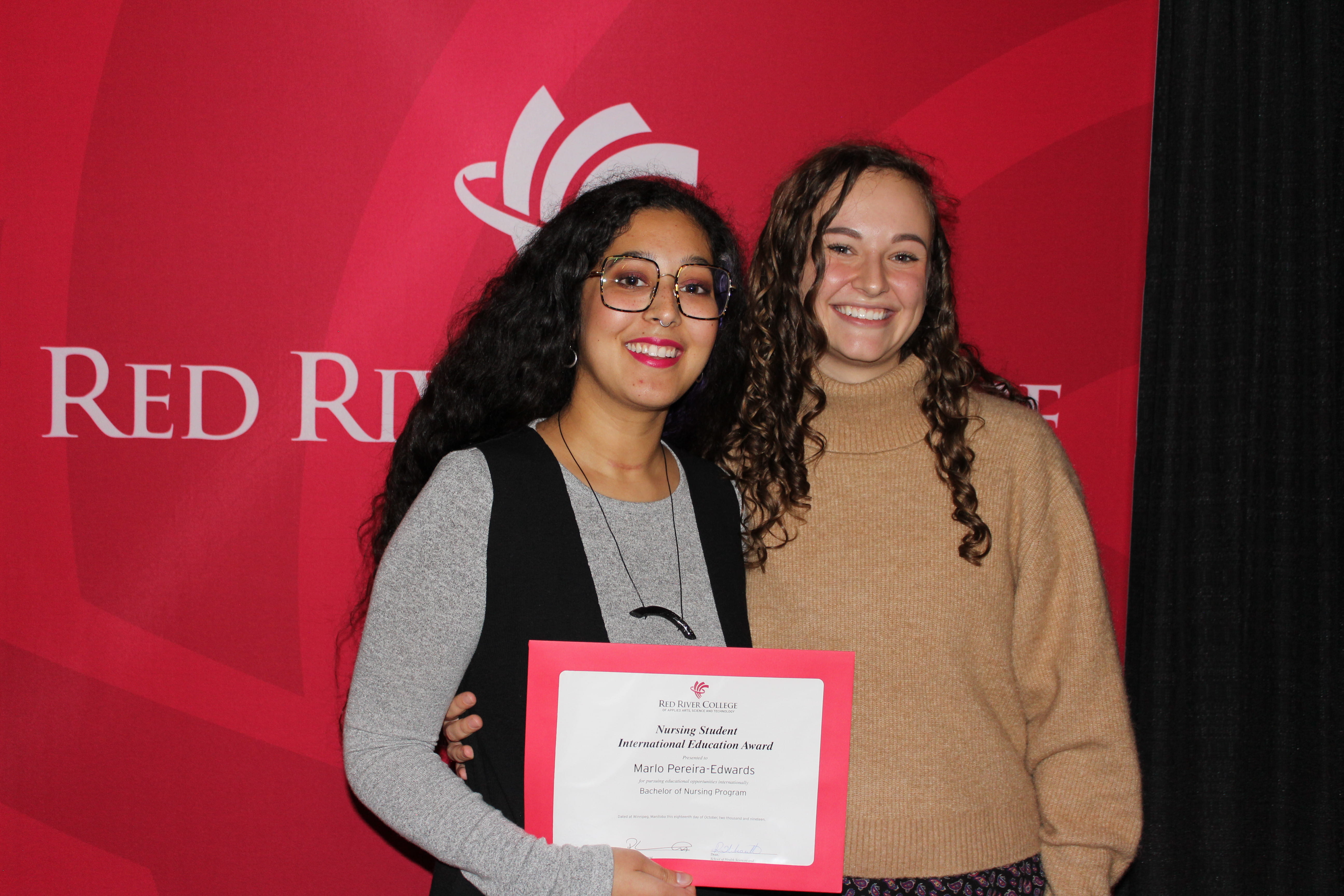
Nursing Student International Education Award – Jason Juell, Lauren Lacroix, Emma Collins, Marlo Periera-Edwards : This award recognizes those who pursue educational opportunities internationally while completing their nursing program.

Written and Photos by Jennifer Johnson – Nursing Lab Manager

With descriptions of awards courtesy of the Nursing Awards Committee and a special thank you  to them for a great luncheon.

RRC Students Shine in First Clinical Experience

October 17, 2019

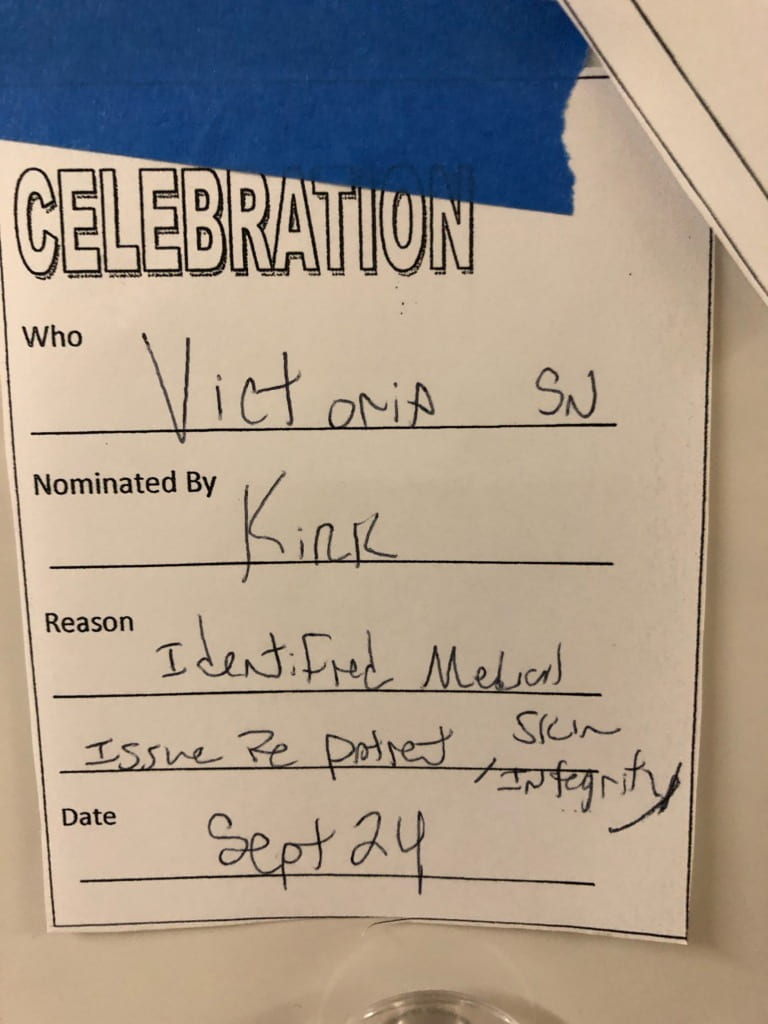
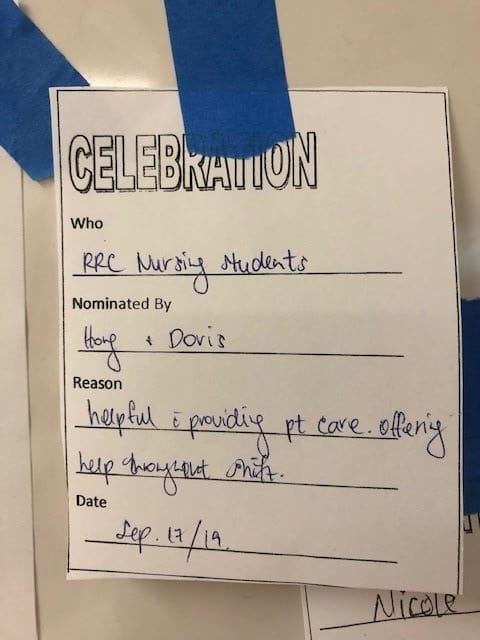
RRC students in their first clinical course are being recognized in various ways by hospital staff at more than one hospital. St Boniface unit 4B is a busy medical unit. The staff there maintain a kind of “cheers for peers” bulletin board where they can commend their co-workers for especially good performance. What is unique is the staff are recognizing the efforts of student nurses in this way. Students have been commended for such things as “recognizing a medical issue” and “being helpful throughout the shift”. The unit staff have remarked that the students “are not standing around” and they are appreciative of this. At Selkirk General Hospital, the staff have been impressed with the ability of their first term students. They told Debbie Miller, the Clinical Course Leader, that they are impressed with the students’ assessing and reporting skills. At Victoria Hospital, the staff are asking if the students can come back the next day because they are so helpful. These first year students are off to a great start and the Nursing faculty and staff at RRC are happy to see that.

Post written by Kate Tate and Deb Miller – Nursing Instructors

Where Are You Now: Kelsey Hannah

October 10, 2019

Kelsey shares her experience and insight since graduating from the BN program in 2018:

Where are you now?

I currently work at the Health Sciences Centre, the same hospital where I completed my senior practicum. At the moment I am on a trauma/complex spinal surgery unit, but I also work in acute medicine.

How easy was it to find a job after graduation?

I received two job offers before I even completed my senior practicum! I accepted a position in acute medicine where I was doing my final practicum, since I was already familiar with the unit. Even if there is not a position right away when you finish practicum, a lot of managers will hire new grads into casual positions until a position opens. This is a great way to gain experience, earn money and study for the NCLEX.

How did you manage the responsibility of going from student to nurse?

I used the same principles I learned from student nursing and applied them to my new practice as a nurse: ask questions, work hard, be on time and take accountability for your actions. I also relied heavily on my nursing co-workers to help with the transition; many experienced nurses are more than willing to help mentor new grads if you ask for their help and show interest to learn.

How did you build your confidence as a new nurse?

I tried to take every opportunity that scared me. If there was an especially complex patient that required a lot of nursing skills I was unfamiliar with, I would ask the charge nurse to place that patient in my assignment. The only way to build experience on the job is by doing the job. Volunteer for these types of experiences, ask for guidance when unsure and confidence will follow!

Thinking back, what were the most important lessons from school that you took into the workforce?

This is the most important lesson I learned in school: when you don’t know the answer to something, always ask! It is impossible to know everything there is to know about nursing when you graduate – not even close! The only way to learn is by asking for help from your team and doing the job. The help is always there if you ask!

What do you know now that you wish you knew when you were a student?

Nursing school is hard but it is all worth it when it’s over! The RRC nursing program is incredibly difficult but it prepares you well for transitioning to practice.

What piece of advice would you give to current students?

Work hard, always seek out help when you need it and you will make it through! Nursing is an incredibly diverse field with so many areas to choose from. If you are starting to feel burnt out or that you are not able to resonate with a particular area, move to a different specialty! You don’t know until you try and there is a specialty area out there for everyone.

Thank you Kelsey for sharing your experience and words of wisdom!

RRC Polytech campuses are located on the lands of the Anishinaabeg, Ininiwak, Anishininwak, Dakota Oyate, and Denésuline, and the National Homeland of the Red River Métis.

We recognize and honour Treaty 3 Territory Shoal Lake 40 First Nation, the source of Winnipeg’s clean drinking water. In addition, we acknowledge Treaty Territories which provide us with access to electricity we use in both our personal and professional lives.