
June Exercise of the Month: Planks
The plank is a simple but highly effective exercise that helps build core strength and stability. A strong core supports good posture, improves balance and helps transfer force effectively during everyday activities, sports and strength training.
If you find yourself sitting for long hours in the day, planks can help strengthen the muscles that support the spine and promote better posture. Improved core stability can also enhance performance in exercises such as squats, deadlifts, push-ups and many other movements!
How to Perform the Plank
Starting Position:
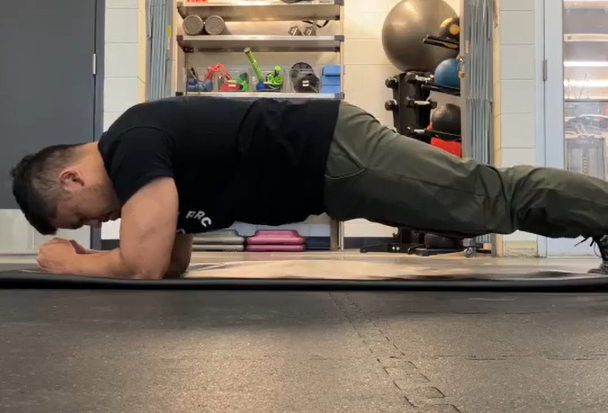
Begin on your forearms and toes, elbows directly under your shoulders. Make a straight line with your head and heels.
Maintain Position
Brace your core – like you’re about to take punch to the stomach and squeeze your glutes, while also maintaining that straight line.
Keep your head in a comfortable position, looking straight down. Breathe normally throughout the entire exercise and hold the position.
Common Cues:
- Keep your body straight from head to toe
- Pull your bellybutton toward your spine
- Squeeze your glutes
- Continue breathing – don’t hold your breath!
- Stop if you’re unable to maintain proper posture
Sets and Reps
To start, you can determine the number of sets and reps, based on your fitness level:
- Beginner: 2-3 sets of 15-30 second holds
- Intermediate: 2-4 sets of 30-60 second holds
- Advanced: 2-4 sets of 60+ second holds
These are just guidelines. Focus on the quality rather than the duration – if you feel like your posture is changing and you’re not working your core, stop there. A shorter, good quality plank is better than a longer plank with poor posture. Even if it’s just for a few seconds!
How to Include Planks in Your Workout Routine
Planks can be performed at any time before, during or after your workout!
They’re great for:
- Warm-ups
- Supersets between strength training exercises
- End of your workout as part of a core circuit
- At home as a quick core exercise, requiring no equipment
Variations
For easier options your can try planks on your knees or elevated – with your hands on a bench or wall
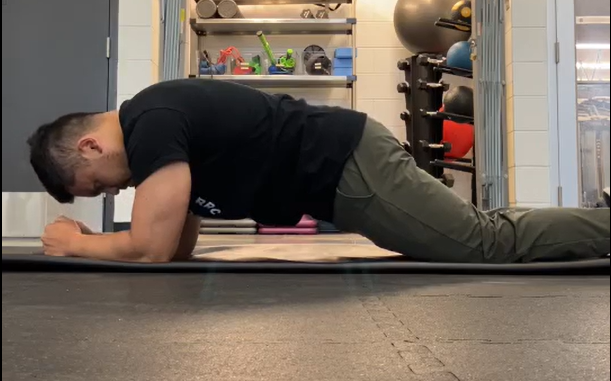
For more challenging options you can try:
- High Planks – push up position
- Side planks – working your obliques and side muscles
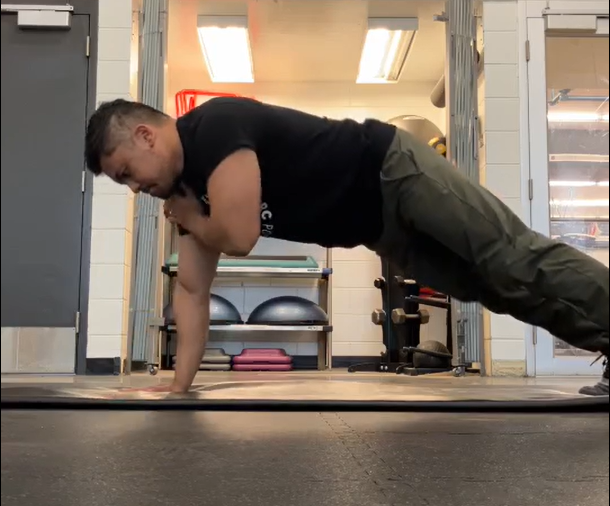
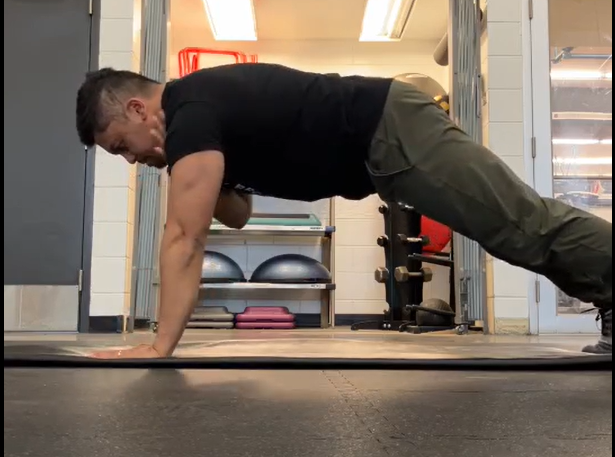
- Planks with shoulder taps (images below)
- Weighted Planks – plank position, with weight placed right on your upper back
Choose a variation that allows your to maintain proper form throughout the exercise
Try It Today!
Feel free to follow these steps to help you get started.
Still not sure how to do the exercise? Head over to our Instagram for a video tutorial!
You can also seek help through our Fitness Centre Orientation, where we can show you how to perform this exercise in person. Just contact Henry.
Sources
National Library of Medicine – Effects of Planks
Harvard Health Publishing – Planks
Isometric exercise: Using body weight to lower blood pressure