Communications and Marketing

News

RRC Polytech showcases the workforce of tomorrow at the 28th Annual Skills Manitoba Competition

April 22, 2026

RRC Polytech hosted the 28th Annual Skills Manitoba Competition on Thursday, April 9, 2026, at its Notre Dame Campus. An amazing display of hands-on expertise, talent and determination, the event showcases the diversity of skilled trades and technology across all sectors along with the many promising futures to be found in these occupations.  

Secondary, post-secondary, and apprentice level students from across the province competed against their peers in over 40 different contests designed with industry partners to measure job-specific competencies. The Olympic-style theme encourages sportsmanship, collaboration, and a competitive spirit. The event is supported by over 300 volunteers representing education, industry and labour.  

Many gold medal winners will advance to form Team Manitoba and compete against the best in the country at the Skills Canada National Competition in Toronto, Ontario on May 27 – May 30, 2026. 

“The demand for talented workers continues to grow, creating opportunities across all sectors for positions with great pay, job security and flexibility,” said Maria Pacella, Executive Director of Skills Canada Manitoba. “This competition spotlights the merits of pursuing post-secondary training in trades and technologies while providing a fun and supportive environment. It inspires students to explore their options and discover new passions that can lead to a rewarding career.” 

Over 140 competitors across a wide range of programs represented RRC Polytech this year – almost half of them reached the podium and twenty-five gold medalists are planning to attend Skills Canada Nationals. Recognized as the province’s largest institute of applied learning and research with deep connections to industry, RRC Polytech offers over 150 full- and part-time degree, diploma, and certificate programs, including apprenticeship training. 

“The annual Skills Manitoba Competition is an energizing and entertaining showcase of the talent, focus, and creativity powering Manitoba’s workforce of today and tomorrow,” said Dr. Christine Watson, Vice President, Academic at RRC Polytech. “In addition to proudly cheering on our own students, we’re thrilled to demonstrate the value of practical training and collaboration to the next generation of skilled, passionate learners – and share tangible examples of how RRC Polytech’s wide variety of trades and technologies programming helps to drive the economy and strengthen communities across the province.”  

Here is a consolidated list of all medalists from RRC Polytech with their contest and rank. 

Student Contest Rank 
Xin Xiang Aerospace Technology (PS) Gold 
Franz Magpantay Aerospace Technology (PS) Silver 
Daniel Duong Aerospace Technology (PS) Bronze 
Wade Robbins Architectural Tech & Design (PS) Gold 
Keziah Thiessen Architectural Tech & Design (PS) Silver 
James Thompson Autobody Repair (PS) Gold 
Manprit Chohan Autobody Repair (PS) Silver 
Zetong Li Autobody Repair (PS) Bronze 
Yang Yu Automobile Technology (PS) Gold 
Jose Lorenzo Alupay Automobile Technology (PS) Bronze 
Mike Lilady Bricklaying (PS) Gold 
Tristen Smith Bricklaying (PS) Silver 
Steve Xoupholphakdy Bricklaying (PS) Bronze 
Tony Lam Cabinet Making (PS) Gold 
Adrian Kurz Cabinet Making (PS) Silver 
Tyler Michaud‐Edmonds Cabinet Making (PS) Bronze 
Cassandra Foy Car Painting (PS) Gold 
Tyler Koop Car Painting (PS) Silver 
Ethan Oliver Car Painting (PS) Bronze 
Adam Burke Carpentry (PS) Gold 
Quinn VanDasselaar Carpentry (PS) Bronze 
Joshua Dalgleish CNC Machining (PS) Gold 
Ryan Ross CNC Machining (PS) Silver 
Clayton Galuschuk CNC Machining (PS) Bronze 
Dominic Ladyka Cooking (PS) Gold 
Lynzie‐Lee Taman Cooking (PS) Silver 
Marx Corpuz Electronics (PS) Gold 
Dylan Baird Heavy Vehicle Technology (PS) Gold 
Evan Moores Heavy Vehicle Technology (PS) Silver 
Jeffrey Reich Heavy Vehicle Technology (PS) Bronze 
Ezra Toews Landscape Gardening (2) (PS) Gold 
Brendan McLeod Landscape Gardening (2) (PS) Gold 
Jake Richard Landscape Gardening (2) (PS) Silver 
Maxwell Woods Landscape Gardening (2) (PS) Silver 
William Smith Landscape Gardening (2) (PS) Bronze 
Tyson Whale Landscape Gardening (2) (PS) Bronze 
Jose Rafael Dimatera Mechanical Engineering CAD (PS) Gold 
Davin Clement Mechanical Engineering CAD (PS) Silver 
Liam Lewis‐Sing Mechanical Engineering CAD (PS) Bronze 
Andrew Paquette Mechatronics (2) (PS) Gold 
Nick Bouch Mechatronics (2) (PS) Gold 
Samuel Oyewole Mechatronics (2) (PS) Silver 
Ali Najarzadeh Mechatronics (2) (PS) Silver 
Dennis Vandeban Mechatronics (2) (PS) Bronze 
Davis Gesell Mechatronics (2) (PS) Bronze 
Austin Fryza Outdoor Power & Recreation Equipment (PS) Gold 
Elliot Kiskan Outdoor Power & Recreation Equipment (PS) Silver 
Guian Timbal Outdoor Power & Recreation Equipment (PS) Bronze 
Deaghan McLeod Photography (PS) Gold 
Emalea Claeys Photography (PS) Bronze 
John Marc Calangi Precision Machining (PS) Gold 
Ajay Saggu Precision Machining (PS) Silver 
Gordie Hilderman Refrigeration and Air Conditioning (PS) Gold 
Jeremy McCorriston Refrigeration and Air Conditioning (PS) Silver 
James Giesbrecht Refrigeration and Air Conditioning (PS) Bronze 
Taylor Garton Sheet Metal Work (PS) Gold 
Tyler Kosman Sheet Metal Work (PS) Silver 
Micah Penner Sheet Metal Work (PS) Bronze 
Nathan Bartecki Sprinkler Fitter (PS) Gold 
Dylan Hetherington Sprinkler Fitter (PS) Silver 
Luka Lange Sprinkler Fitter (PS) Bronze 
Wyatt Robinson Steamfitter/Pipefitter (PS) Gold 
Tyson Loiselle Steamfitter/Pipefitter (PS) Silver 
Evan Ducharme Steamfitter/Pipefitter (PS) Bronze 

RRC Polytech gains XP: Epic partnership helps Game Development students level up

April 22, 2026

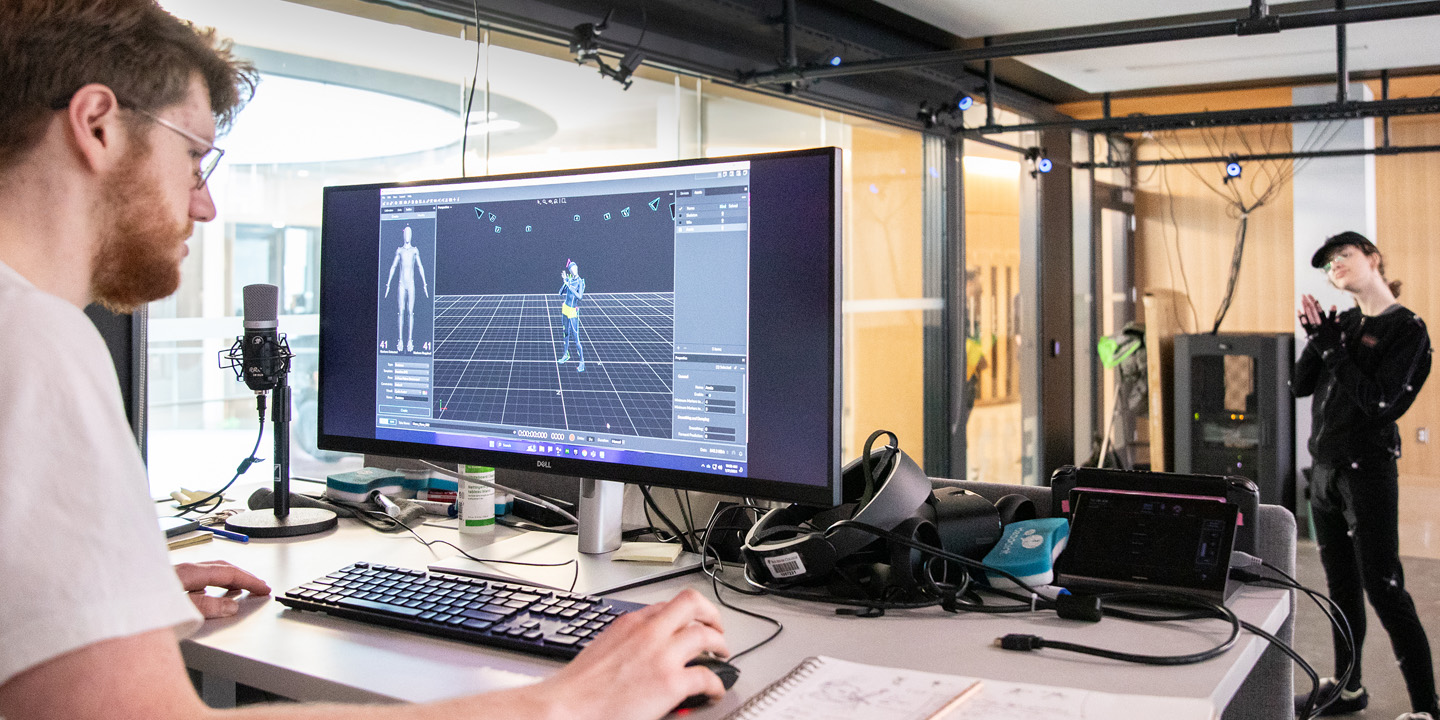
A student looks at a computer screen with an animation on it.

Things are getting unreal at RRC Polytech. 

Students in the Game Development – Programming and Game Development – Art programs can now add an epic badge of honour to their credentials, as the program has officially been recognized as an Epic Games Unreal Academic Partner. 

Epic Games is one of the largest game and technology developers on the planet – even non-gamers are likely familiar with their output, which includes the global phenomenon Fortnite and the high-octane Rocket League. Beyond their own games, Epic’s technology powers massive hits across the video games industry. 

While RRC Polytech students have a long history of mastering their craft within Unreal Engine, the program’s quality is further validated by Epic Games. Through a formal review process, Epic recognizes institutions that meet their high curricular standards by awarding them the Unreal Academic Partner badge. 

The badge confirms that the program is genuinely recognized as a valid and proven Education & Training Partner for Unreal Engine. Meaning? Achievement unlocked for students at RRC Polytech.   

Unreal Engine is not exclusive to game development – it’s used across a range of creative industries, like film and television, animation, architecture, automotive, and fashion design – so students receive training that sets the stage for a well-rounded career. 

For more information about Game Development, please click here. 

Nursing students complete Simulation Centre scenario focused on distrust and racism in the healthcare system

April 21, 2026

New scenario trial highlights the realities the impact of racism has on patients and provides nursing students the opportunity to cultivate professional, compassionate responses to racialized patients.

Experience has a huge impact on learning. That’s why students in the Bachelor of Nursing program walk through different scenarios at RRC Polytech’s Simulation Centre to cultivate both their practical medical skills and their interpersonal communication skills.

In Community Health, a course taken in the final term of Nursing education before going on to practicum and clinical rotations, students put their medical knowledge and patient communication skills to work in a high-stress scenario that challenges them to bridge a gap created by distrust in the healthcare system and institutional racism.

“We all have assumptions and biases – how our families raised us, what we see in the world, what people say to us, what we see in the media – and it’s up to us to question that. Am I thinking logically? Where’s the evidence? What does proof look like? Are these assumptions valid or something that was ingrained in me by someone else?” says Brikena Dibra, one of the RRC Polytech instructors who designs scenarios to help students train in a safe environment.

Dibra was an Indigenous nursing officer for northern Manitoba communities before she became an instructor at RRC Polytech. She brings the lived experience, knowledge and education needed to inform the content Nursing students are learning in the classroom and applying in the simulated scenarios. She says that while it’s important to understand the past and how our histories have created the kinds of structural environments that cultivate racism, it’s just as important for students to know what to do in the moment when presented with these situations.

Scenarios like this one confront students with difficult questions that will be answered during their careers.  With the theory and preparation, documented definitions, and knowledge of history and institutional designs – the question of, “Do students recognize racism?” becomes: Are they going to be advocates? Are they going to use this knowledge to build trust with the people to whom they’re providing services? Are they going to say something when they witness other healthcare professionals engaging in racist behaviour?”

Scenario actors Diane Ammeter and Wade Parke.

“You have to be brave,” says Diane Ammeter, another RRC Polytech instructor and scenario designer. “That’s the only way we create change. We want more nurses being those advocates against racism – but first, they have to recognize it and know what they’re going to do about it.”

Terri-Lynn Anderson, Chair, Continuing Education and Micro-credentials, was consulted during her time as Truth and Reconciliation Coordinator with the questions for the simulation. She helped shape the simulation to nurture the learning outcomes and ensure the students’ psychological safety while providing input to make the actors’ scripts realistic.

“The students must feel a little discomfort, but we found that the discomfort was a bit too much – discomfort can help create behavioral changes in the way that nurses conduct their work, but that discomfort cannot impede the students’ ability to learn and take away actual learning,” says Ammeter.

“The discomfort here is what they’ll experience in their careers in real life situations, but it can be helpful to be able to experience it first in a controlled environment where they can ask questions, apply different strategies, and learn what might be the best approach for a high-stress situation – these simulated environments also mean that the way the students respond don’t have high stakes like they might in life-or-death situations.”

Dibra and Ammeter acknowledge that cultural competence and safety don’t happen overnight and not everyone will always know what to do or say in all situations. With this simulation, students experience the biases seen every day in healthcare environments firsthand. A debrief following the simulation provides students with a safe space to share their thoughts and reactions with guiding questions to help students understand their responses during a high-stress situation.

Dibra and Ammeter said that when they trialed the scenario, they got fantastic feedback from participants. Students were amazed – they’d never experienced that kind of discomfort in a professional environment and said that all students should do the simulations.

In class, students work through case studies that are both real-life examples and fictional situations (to protect client information).

Dibra says understanding real case studies are exactly why dismantling racism is critical – and it starts during the education and training stage.

The pair of instructors are planning to design future simulations that take racism into account and encourage students to question what they think they know – to deconstruct their assumptions, adapt to stressful situations, and deliver the best possible outcome for their future patients.

To learn more about the Simulation Centre, visit the page on our website.

Please note: the specific details of the scenario are kept confidential so students can enter the trial without prior influence on decisions they make in the simulated environment.

RRC Polytech celebrates Sikh Culture with annual Turban Celebration Day

April 13, 2026

A person sits in a chair, while another person wraps a pink turban on their head,

This week, the halls at RRC Polytech’s Winnipeg campuses will be filled with music, laughter and colourful swaths of fabric, as a much-loved annual tradition returns to brighten the campus community. Turban Celebration Day, hosted by the Polytech and the RRC Polytech Students’ Association (RRCSA), invites staff and students to celebrate and learn about Sikh culture by donning a turban, wrapped by volunteers from RRC Polytech’s Sikh community. 

“RRC Polytech is committed to fostering an inclusive and welcoming environment for everyone in our community, and Turban Celebration Day is a fun and meaningful way to reflect the learning, connection, and appreciation that grows when people share their cultures and traditions,” said Dusty Ritchie, Executive Director, Student Services and Global Partnerships, RRC Polytech. 

The Polytech first observed Turban Celebration Day, previously known as Turban Pride Day, in 2014, when business administration student Sukhjot Singh – who is now a member of RRC Polytech staff – launched the event to create a safe and open space for those who might have questions about the turban but felt hesitant to ask. 

The turban holds deep meaning for many Sikh Canadians, symbolizing individual sovereignty, self-respect, courage, and equality. These core values align with RRC Polytech’s commitment to embedding equity, diversity, inclusion and accessibility in all aspects of operation. 

During the event, all attendees can experience being wrapped in a turban and engage in meaningful conversations with Sikh staff and students. 

“Turban Celebration Day is a meaningful opportunity to celebrate identity, educate others, and promote inclusivity within our community. For Sikhs, the turban is not just an article of faith but a symbol of equality, dignity, and commitment to serving others. It is closely connected to the values of the Khalsa- a collective established by Guru Gobind Singh Ji that represents courage, unity, and standing up for justice,” said Japsharan Kaur, Vice President Academic for the RRC Polytech Students’ Association.

“Through this event, we create space for dialogue, learning, and mutual respect and encourage everyone to participate, ask questions, and embrace the chance to better understand Sikh traditions. Events like Turban Celebration remind us that diversity strengthens our campus and brings us closer together.” 

Turban Celebration Day coincides with Sikh Heritage Month, observed every April. In 2023, Manitoba became the first province in Canada to officially recognize Turban Day, which takes place annually on April 13.


Event Details: 

Notre Dame Campus – 2055 Notre Dame Avenue
Monday, April 13 
12:30–2:30 PM  
Library Hallway 
  
Exchange District Campus – 160 Princess Street
Thursday, April 16  
12:30–2:30 PM  
Atrium 

Programs Transitioning from MITT to RRC Polytech

April 8, 2026

Results of extensive Academic Program Review shared with students, staff and stakeholders today

Winnipeg, Manitoba on Treaty No. 1 Territory – the lands of the Anishinaabeg, Ininiwak, Anishininwak, Dakota Oyate, and Denésuline, and the National Homeland of the Red River Métis  – Following a collaborative review by RRC Polytech and the Manitoba Institute of Trades and Technology (MITT), it has been confirmed that 19 MITT programs will continue to be offered by RRC Polytech beginning this fall, including unique offerings, aligned programs that sustain training capacity, and supportive pathways for current students to complete their studies.
 
“Our focus throughout this work has been on students and on ensuring the in-demand training Manitoba’s economy depends on continues without disruption,” said Fred Meier, President and CEO, RRC Polytech. “Earlier today, we provided an update to stakeholders, including staff and students of both institutions, that MITT programs with strong enrolment and labour market demand will continue under RRC Polytech beginning this fall, preserving critical training capacity and supporting workforce needs today and in the years ahead.”
 
Additionally, it was confirmed that many programs identified to move forward will continue to be offered at the South Winnipeg Campus, ensuring access remains for the community.  RRC Polytech will also continue to deliver training through the Adult Learning Centres in St. Vital, St. Norbert, and Portage la Prairie, and the MITT High School will continue program delivery in the 2026/2027 academic year.
 
The two institutions reaffirmed their commitment to working collaboratively to ensure a smooth transition. All students will continue to be supported in completing their programs.
 
“As MITT winds down operations due to federal cuts, we appreciate the work and commitment that both Red River College Polytechnic and MITT have demonstrated to support student success.” said The Honourable Renée Cable, Minister of Advanced Education and Training. “The programs are vital to our economy and our ability to meet the demands of a changing labour market. We are pleased that programs are being preserved, and we are grateful for this smooth transition. By working together with industry, they are helping to ensure Manitoba’s post secondary sector remains strong, responsive, and aligned with the skills and training our workforce needs.”
 
The academic program review began shortly after the January announcement that, beginning this year, MITT would wind down operations due to an evolving post-secondary landscape affected by federal changes to international student policy.
 
“MITT has a proud history of meeting the labour market needs of the province, and we are pleased that the programs that have made MITT unique will continue to be available to Manitobans long after we wind down operations,” said Neil Cooke, President and CEO, MITT. “We are grateful for RRC Polytech’s partnership and collaboration through this transition, which continues to focus on the success of our students as they complete their programs and ensuring that in-demand pathways remain strong, relevant, and available for future students.”

The collaborative work will continue to successfully prepare students and programs for the Fall 2026/27 academic year.
 
“While today’s results have set the groundwork for our next steps, they are just the beginning of the process. What comes next will be supporting students’ academic journey with the sharing of this information, and the assessment of staffing requirements, which will be undertaken with great consideration in a fair and transparently articulated process,” said Meier.
 
RRC Polytech and MITT will be hosting an Information Night on May 7, 2026, at the South Winnipeg Campus (Henlow) from 4:00 – 7:00 pm to provide an opportunity for prospective learners to learn more about the programming that will continue to be offered at the RRC Polytech South Winnipeg Campus.
 
Today’s announcement of the academic program review results follows updates shared earlier this year. RRC Polytech will permanently operate the Henlow Bay and Fultz Boulevard buildings, establishing an RRC Polytech South Winnipeg Campus to continue serving learners and the community. RRC Polytech and MITT will work together to maintain operations at the Pembina Highway building during the transition, including preserving the on-site daycare. RRC Polytech will also continue delivering high school vocational programming in partnership with school divisions.

Click here for a full list of programs that will be offered by RRC Polytech beginning Fall 2026.

RRC Polytech – MITT Transition Update April 8, 2026 

April 8, 2026

RRC Polytech and MITT have been working diligently to complete an academic program review of all MITT programs as we work collaboratively on the transitional process to RRC Polytech.  

Our institutions have come together to do this in-depth review over the last few weeks, to finalize the adoption of programs for the fall 2026/2027 academic year. The primary goal of the academic program review was to preserve training capacity across key industries in Manitoba, utilizing a student-centred lens.  

NINETEEN ACADEMIC PROGRAMS TO CONTINUE  

Today, we are pleased to share that the academic program review is complete and that nineteen MITT programs will be offered as RRC Polytech programs beginning this Fall for the 2026-27 academic year.  

Nearly all programs identified to move forward will continue to be offered at the South Winnipeg Campus, ensuring access remains for the community. RRC Polytech will also continue to deliver training through the Adult Learning Centres in St. Vital, St. Norbert, and Portage la Prairie, and the MITT High School will continue program delivery for the 2026/2027 academic year. 

The two institutions also reaffirmed their commitment to working collaboratively to ensure a smooth transition and the successful completion of programs for current students.  

Unique MITT programs being adopted by RRC Polytech include: 

 MITT Program MITT Credential Program Name at RRC Polytech for adoption Credential to be offered at RRC Polytech Campus location: 
Electronics 
Technician 
Certificate Electronics 
Technician  
Certificate South Winnipeg 
Hairstyling Diploma Hairstyling  Diploma South Winnipeg 
Health Care Aide / Personal Support WorkerCertificate Health Care Aide / Personal Support WorkerCertificate South Winnipeg 
Industrial Mechanic/
Millwright 
Certificate Industrial Mechanic (Millwright)  Certificate South Winnipeg 
Medical Assistant Certificate Medical Assistant  Certificate South Winnipeg 
Medical Assistant & Patient Care Diploma Medical Assistant & Patient Care Diploma South Winnipeg 
Network & 
Systems 
Administrator 
Diploma Network & 
Systems 
Administrator 
Diploma South Winnipeg and
Morden
Pharmacy Technician Diploma Pharmacy 
Technician 
Diploma South Winnipeg 
Rehabilitation Assistant Advanced Certificate Rehabilitation Assistant Diploma (proposed) South Winnipeg 

 
Aligned or Equivalent MITT programs preserved by RRC Polytech include: 

MITT Program MITT Credential Equivalent RRC Polytech Program RRC Polytech Credential Campus location 
Administrative Assistant Certificate Administrative 
Assistant  
Certificate Notre Dame Campus 
Automotive 
Service Technician 
Advanced Certificate Automotive 
Technician 
Certificate South Winnipeg 
Carpentry Certificate Carpentry  Certificate South Winnipeg 
Culinary Arts and Design Certificate Culinary Skills InternationalCertificateSouth Winnipeg 
Cybersecurity Analyst Advanced Diploma Cybersecurity Diploma South Winnipeg 
Early Childhood 
Education 
Diploma Early Childhood Education  Diploma South Winnipeg 
Electrical Applications Certificate Electrical  Certificate South Winnipeg 
Full Stack 
Developer 
Diploma Application 
Development & Delivery  
Diploma EDC 
Global Supply 
Chain Management 
Post- Graduate Diploma Business Admin – Logistics & 
Supply Chain Management 
Diploma Notre Dame, Exchange District and select Regional 
Campuses 
Industrial Welding Certificate Welding  Certificate South Winnipeg 

UPCOMING INFORMATION NIGHT  

RRC Polytech and MITT will be hosting an Information Night on May 7, 2026, at the South Winnipeg Campus (Henlow Building) from 4:00 – 7:00 pm to provide an opportunity for prospective learners to learn more about the programming that will continue to be offered at the RRC Polytech South Winnipeg Campus. This will be a place where, along with program overviews, RRC Polytech teams will be on-site to help answer any questions that students may have about their learning journey.  

 More information will be available in the coming weeks.  

INFORMATION SHARED PREVIOUSLY  

This work builds on information shared in previous updates. RRC Polytech will permanently operate the Henlow Bay and Fultz Boulevard buildings, establishing an RRC Polytech South Winnipeg Campus to continue serving learners and the community. RRC Polytech and MITT will work together to maintain operations at the Pembina Highway building during the transition, including preserving the on‑site daycare. RRC Polytech will also continue delivering high school vocational programming in partnership with school divisions. 

Further updates on the transition of MITT programs and operations to RRC Polytech will continue to be shared as this information becomes available at rrc.ca/MITT 

We acknowledge that this transition has brought uncertainty. We thank everyone in our community, and all staff and students at both MITT and RRC Polytech, for their patience as we completed the necessary academic review. 

RRC Polytech brings the Energy… Code Courses!  

April 8, 2026

New online courses support Manitoba’s transition to higher energy performance tiers

Two people in personal protective equipment stand outdoors and consult a clipboard.

RRC Polytech is set to support professionals across the building design, construction, and code compliance sectors take their practice to the next level – while fostering a greener future for all. 

The Polytech’s Corporate Solutions department has partnered with the Province of Manitoba to provide online Energy Code courses, fully funded through the Government of Canada’s Codes Acceleration Fund (CAF). There are currently seven courses available, with more to come in the future. 

The free courses provide practical, industry-focused training to help professionals interpret, apply and comply with evolving energy code requirements. 

“Energy performance requirements continue to evolve, and industry needs training that supports consistent interpretation and application of energy codes,” said Emmanuel Abba, Manager of Business Development at RRC Polytech. “These courses are designed to support the adoption of higher‑performance building and energy codes, strengthen compliance, and help build market readiness across Manitoba as requirements continue to advance.” 

This training is designed for individuals and organizations involved in building design, construction, and code compliance, including: 

  • Architects, engineers, and geoscientists 
  • Technologists and technicians 
  • Building officials and municipal governments 
  • Trades and apprentices 
  • First Nations governments 
  • Educators, trainers, and industry associations 

The courses are delivered fully online, and take three to 32 hours to complete, depending on the course. They and are geared towards both new professionals and experienced practitioners. 

The initiative aims to train more than 4,000 participants across Manitoba over two years. 

For more information or to register, please click here. 

Regional Campus Closures – April 8, 2026

April 8, 2026

Due to snow conditions across the province, RRC Polytech’s regional campuses will be operating as follows: 

  • Interlake Campus (Selkirk) will be closed, and classes will be moved online
  • Peguis classes will be cancelled.
  • Steinbach Campus is open however classes will be moved online

All other Campuses – including Regional and in Winnipeg – will be open with regular operations.

For those driving both inside and outside of Winnipeg, please drive with caution and adjust to weather conditions. 

If you are unable to make it to campus safely due to road conditions, please contact your supervisor or instructor. 

RRC Polytech will continue monitoring today’s changing weather. Any updates to campus operations will be shared on rrc.ca/marcom/news 

RRC Polytech partners with QDoc on Manitoba’s first Abdominal Aortic Aneurysm (AAA) clinic 

April 1, 2026

RRC Polytech will host Manitoba’s first Abdominal Aortic Aneurysm (AAA) Clinic at its Notre Dame Campus starting in spring 2026. Delivered in partnership with QDoc, the clinic will focus on early detection of AAAs, which often have no symptoms until they become life-threatening. 

“Everything we do with QDoc leads to something bigger and better for either RRC Polytech or the community,” says Jodi Pluchinski, Director of Safety, Health and Security Services at RRC Polytech.   “For us, saying yes was an easy decision. It’s about being a really good community partner and providing that service for people.” 

Dr. Taft Micks, Chief Medical Officer at QDoc, worked with Dr. Alexei Berdnikov, one of QDoc’s providers and a fellow family and emergency physician, to develop the clinic’s concept. He says point-of-care ultrasound has been used in emergency departments for over a decade to check for AAAs when patients come in with severe abdominal or back pain, which can be symptoms of a ruptured AAA. 

“You often don’t feel an AAA until it’s too late,” says Dr. Micks. “These things expand and expand, and eventually at some point it ruptures and that can be quite fatal. So, Dr. Berdnikov and I thought, well, why don’t we do even better than that and catch them before they even develop those symptoms?”

AAAs primarily affect men over 65, especially those with a smoking history. The risk is also higher for people with high blood pressure, heart disease, or a family history of aneurysms. The Canadian Task Force for Preventive Health Care estimates that 20,000 Canadians are diagnosed with an AAA each year and that 1,244 die from an AAA. 

As the clinic has come together, Dr. Micks says he’s been hearing from more people who have lost a family member to this condition, underscoring the need for screening. 

“RRC Polytech is a partner for innovation here because what we are implementing is very novel,” says Dr. Micks. 

RRC Polytech’s role in the partnership is supplying the space for the clinic to operate. The clinic will run by appointment only. Patients can self-refer by calling 1-888-SCN-0AAA (726-0222) or be referred to the AAA Clinic by their family doctor or nurse practitioner. They can also complete a virtual intake through QDoc to review their medical history and determine eligibility. 

Eligible patients will be able to book an in-person appointment at RRC Polytech, where a physician will discuss risk-factor modifications and perform a physical exam including point-of-care ultrasound to directly visualize their abdominal aorta. Results will be available immediately, with follow-up recommendations provided as needed. 

Since 2022, RRC Polytech’s partnership with QDoc has grown through the launch of the Penicillin Allergy Clinic and student involvement in the development of its virtual care platform through the ACE Project Space

As QDoc expanded, it hired graduates from RRC Polytech’s Information Technology and Business Administration programs, creating career paths that students might not have known existed. RRC Polytech also offers programs in Diagnostic Medical Sonography and Diagnostic Cardiac Sonography, where students can train to perform this type of imaging. 

“Each new project has strengthened the partnership and created more opportunities for our graduates.” says Pluchinski. “We didn’t expect the Penicillin Allergy Clinic to become something we do regularly, but it has, and this will be the same.”  

TECHNATION Launches New ADaPT Program to Support Indigenous and Young Adults in Manitoba

March 30, 2026

For immediate release:

Toronto, Ontario and Winnipeg, Manitoba on Treaty No. 1 Territory - the lands of the Anishinaabeg, Ininiwak, Anishininwak, Dakota Oyate, and Denésuline, and the National Homeland of the Red River Métis – Today, TECHNATION announced the launch of ADaPT for Indigenous and Young Adults in Manitoba, a new workforce development initiative designed to equip early‑career talent with the digital and professional skills that Manitoba employers need most. The initiative blends proven training with community-led approaches to ensure it reflects regional labour market needs and the lived experiences of Indigenous and young adult learners.

Delivered by RRC Polytech in partnership with the Diversity Institute and TECHNATION, this Manitoba-tailored program builds on the nationally recognized ADaPT (Advanced Digital and Professional Training) model developed by the Diversity Institute in 2014. ADaPT is supported by the Future Skills Centre and funded by the Government of Canada’s Future Skills Program.

“RRC Polytech is committed to building relationships that help to remove barriers for all Indigenous learners,” said Jamie Wilson, Vice President, Indigenous Strategy, Research and Business Development at RRC Polytech. “By equipping youth in rural and remote locations with the tools, confidence, and practical experience to pursue meaningful work, this transformative program opens a pathway to continuous growth and opportunity.”

ADaPT for Indigenous and Young Adults in Manitoba is a no-cost, accessible program, intentionally designed to remove barriers to participation. Modeled on ADaPT’s proven curriculum, this specialized program incorporates culturally relevant and trauma‑informed approaches and integrates Indigenous knowledge while providing wraparound supports such as coaching, resume reviews, and interview preparation.

Delivered entirely virtually, the program ensures learners from rural, remote, and northern communities can participate fully and equitably. Participants receive targeted training in high‑demand skills including AI and data analysis, cybersecurity, digital marketing, business strategy, project management, financial literacy, and professional readiness — skills that directly align with Manitoba’s evolving tech and innovation economy.

Starting this spring, ADaPT gives Manitoba employers a low-risk, high-value way to access emerging talent. Participating employers benefit from pre-screened, job-ready candidates; wage subsidies covering 50% of wages (up to $5,000); 8-12 week paid placements with support for candidate matching and onboarding; and access to TECHNATION’s Career Ready employer training tools.

The foundational ADaPT program has supported thousands of post-secondary graduates across Canada, with 8 out of 10 participants identifying as belonging to Indigenous or equity‑deserving groups. Hundreds of employers have also recruited ADaPT participants nationally, benefiting from reliable, low‑risk access to early‑career talent.

“This expansion of ADaPT reflects TECHNATION’s commitment to strengthening Canada’s talent pool in partnership with regional leaders,” said Kevin d’Entremont, President and CEO, TECHNATION. “Manitoba’s employers need skilled talent to compete in an increasingly digital economy, and this program delivers a proven, industry‑aligned training model that expands access to opportunity while ensuring organizations can tap into a diverse, prepared and future‑focused workforce.”

Wendy Cukier, TMU professor of entrepreneurship and innovation, founder of the Diversity Institute who developed ADaPT in 2014 agrees with d’Entremont.

“ADaPT was designed to address a persistent challenge in Canada’s economy: employers need digital talent, but too much potential is overlooked. Our research shows that programs like ADaPT achieve employment outcomes above 90% while engaging a high proportion of participants from equity-deserving groups. At the same time, labour shortages and rapid digital transformation are affecting every sector. Expanding access to inclusive talent is not only essential to filling these gaps—it is a key driver of innovation. This new Indigenous-focused program builds on tailored ADaPT initiatives for Black youth, newcomers in British Columbia, and veterans, demonstrating how customized, community-informed approaches can unlock talent and strengthen Canada’s workforce.”

“The Future Skills Centre is investing in the systems that equip workers with the skills for today while building a workforce ready for whatever comes next,” said Noel Baldwin, Executive Director, Future Skills Centre. “By scaling what works and turning research into action without delay, models like ADaPT are opening doors to high-demand technical and digital roles for young learners and expanding access to Indigenous-led training, ensuring pathways to success are accessible to everyone.”

Applications for the first cohort of ADaPT for Indigenous and Young Adults in Manitoba are now open. Learn more and apply today.

About TECHNATION
TECHNATION is Canada’s authoritative technology industry association, representing the full spectrum of Canada’s tech ecosystem, from agile innovators to domestic and global tech companies. Trusted by both industry and government, TECHNATION is the neutral connector, convener and catalyst powering a digital future and positioning Canada as a global tech leader. Together with our members, we shape tech policy and insights, deliver forums to drive public-private collaboration, foster inclusive workforce development, and support global expansion.

About RRC Polytech
Red River College Polytechnic (RRC Polytech) is Manitoba’s only Polytechnic and largest institute of applied learning and research, with over 150 full- and part-time degree, diploma and certificate options. Through hands-on learning opportunities and state-of-the-art instruction, we prepare more than 22,000 students annually to become leaders in their fields – while also ensuring they can meet changing industry demands and contribute to the province’s economic growth.

About Future Skills Centre
The Future Skills Centre (FSC) is a forward-thinking centre for research and collaboration dedicated to driving innovation in skills development so that everyone in Canada can be prepared for the future of work. We partner with policymakers, researchers, practitioners, employers and labour, and post-secondary institutions to solve pressing labour market challenges and ensure that everyone can benefit from relevant lifelong learning opportunities. We are founded by a consortium whose members are Toronto Metropolitan University, Blueprint, and Signal49 Research, and are funded by the Government of Canada’s Future Skills Program.

About Diversity Institute
The Diversity Institute (DI) leads action-oriented research and coordinates innovative programs to strengthen Canada’s competitiveness, sustainability and self-sufficiency. By tracking technological, economic, demographic and geopolitical trends, DI anticipates changes in employment and the implications for the policies, programs and processes.

DI’s evidence-based approach advances knowledge of the complex barriers faced by Indigenous Peoples and other equity-deserving groups, leading to practical solutions that effect change and advance a strong, inclusive Canadian economy.

DI is part of a consortium with Toronto Metropolitan UniversityConference Board of Canada and Blueprint, which created the Government of Canada-funded Future Skills Centre (FSC). It also leads large national projects including the Women Entrepreneurship Knowledge Hub (WEKH), the Inclusive Innovation and Entrepreneurship Network (IIE-NET)DiversityLeads and the Advanced Digital and Professional Training (ADaPT) program.

For more information:
Justine Kintanar
Executive Director, Communications and Marketing, TECHNATION
jkintanar@technationcanada.ca

RRC Polytech campuses are located on the lands of the Anishinaabeg, Ininiwak, Anishininwak, Dakota Oyate, and Denésuline, and the National Homeland of the Red River Métis.

We recognize and honour Treaty 3 Territory Shoal Lake 40 First Nation, the source of Winnipeg’s clean drinking water. In addition, we acknowledge Treaty Territories which provide us with access to electricity we use in both our personal and professional lives.