
How the Research Support Fund Strengthens Research at RRC Polytech
Canada’s innovation ecosystem is powered by collaboration and depends on strong partnerships between industry, academia and government to develop the new products and processes that drive economic growth and prosperity for all. RRC Polytech is committed to working with local businesses, entrepreneurs, and communities on applied research projects that drive innovation – and its vast array of technology, facilities and expertise would not be possible without layers of support provided through government funding.
Funding announcements for specific projects and new infrastructure often garner headlines given their exciting goals and tangible results, but additional, behind-the-scenes support, while often less publicized, is just as critical to successful collaborations.
The Research Support Fund (RSF) is a vital federal investment that sustains RRC Polytech’s ability to deliver high-quality applied research in partnership with industry and community stakeholders. By offsetting institutional costs, the RSF enables the Polytech to maintain the expertise, infrastructure, and administrative support needed to advance innovation in Manitoba and beyond.
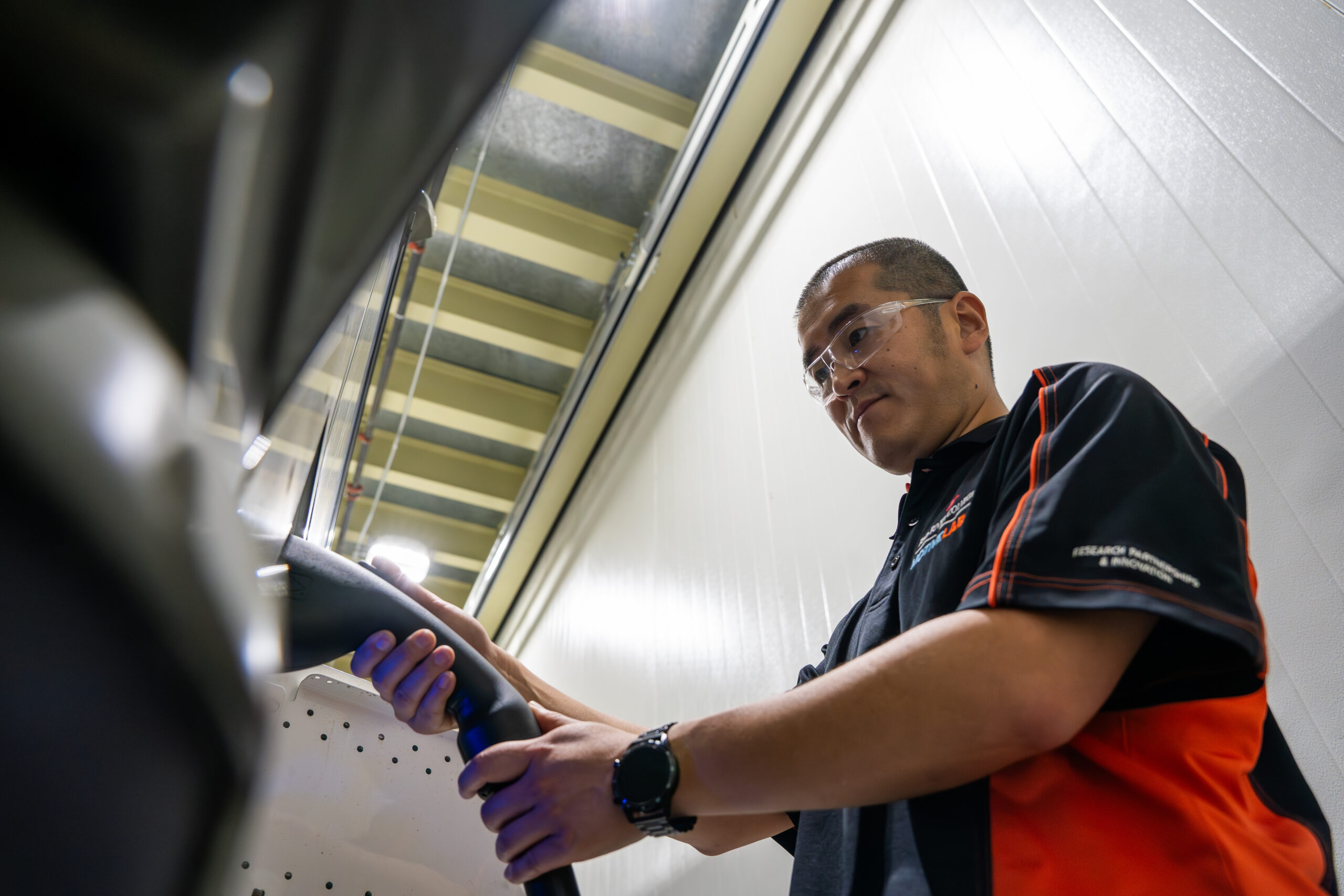
Dipo Olatunde’s position of Research Coordinator (RC) is partially supported through the program, and his work has tremendous impact on RRC Polytech’s ability to secure new projects by helping other faculty members like Bin Yang pursue research opportunities.
“Without the support of a research coordinator, my grant application last month would have never been completed, giving it zero chance of approval,” said Yang, who leads sustainable transportation research projects at RRC Polytech’s Vehicle Technology and Energy Centre. “An exciting STEM opportunity for local students would have been lost because it would have been impossible for me to navigate such a complex proposal process on a tight deadline on my own.”
Given his busy schedule and a rigid high school calendar of events to work within, Yang faced a short window to prepare a competitive application for a NSERC PromoScience grant. This national program aims to ignite the interest of Canada’s young people, particularly those from underrepresented groups, in pursuing careers in the natural sciences and engineering. Yang’s project involved exploring clean energy with a 3D-printed, remote-controlled car powered by a hydrogen fuel cell.
To ensure the proposal was both complete and compelling, Olatunde brought together a pre-award team and stepped in to guide the process from start to finish. They carefully reviewed the draft proposal, restructuring sections to match the granting agency’s required template. They worked closely with the faculty members to refine the budget justification, ensuring every cost was accurate, well-documented, and defensible.
Recognizing the importance of institutional commitment, they also secured a timely endorsement from the Executive Director of Research Partnerships & Innovation, to resonate with the selection committee.
“RRC Polytech is proud to champion a program that inspires the next generation of scientists and engineers. This initiative will strengthen applied research, meet the innovation needs of Manitoba’s manufacturing and transportation sectors, and expand STEM outreach to high schools across the province,” said Dr. Jolen Galaugher, in her official support letter. “It will also provide valuable experiential learning opportunities for post-secondary students, integrating them into research and development activities while promoting interdisciplinary collaboration.”
Balancing these tasks under a compressed timeline requires close attention to detail and frequent communication with the faculty lead. Thanks to Dipo’s coordinated effort, the complete application package was finalized and successfully submitted before the September 15 deadline.
“My role helps to ensure efficiency and accuracy in all aspects of the execution of RRC Polytech’s applied research projects – from stakeholder engagement and resource management to preparing technical reports and ensuring compliance with institutional and funding guidelines,” said Olatunde. “We are so proud to conduct ground-breaking research projects in our world-class facilities and grateful for all streams of federal funding that provide the best equipment and administrative support available to make innovation possible.”
This experience demonstrates how RSF-supported research coordination directly strengthens applied research at RRC Polytech. By helping faculty navigate complex funding requirements and ensuring proposals meet the highest standards, the RSF increases RRC Polytech’s competitiveness for national grants and creates more opportunities for students, partners, and the community.