
International Self Care Day
July 24th marks International Self Care Day as an annual opportunity to focus on self-care and the benefits self-care can bring.
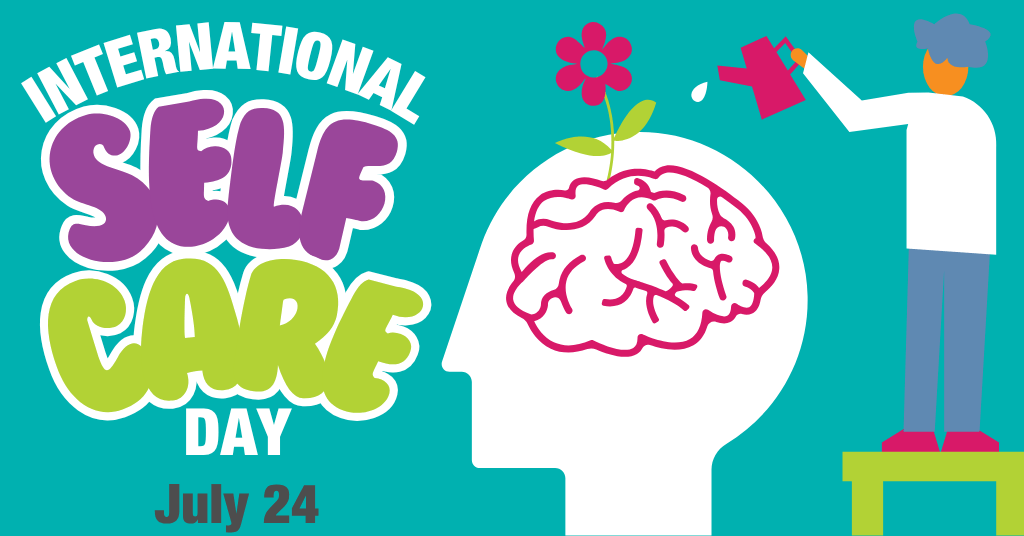
Image Credit: Canadian Mental Health Association
The term self-care has become popular in recent years, but what does it really mean? Simply put, self-care taking the time to do things that help your wellbeing and improve both your physical and mental health.
When it comes to self-care, it is not a one-size fits all approach; it’s a personal journey of discovery to find what works best for you. To discover what works best for you, it may be helpful to look at the seven pillars of self-care.
Seven Pillars of Self Care
Mental: nurturing your mind and mental well-being through activities like meditation, mindfulness, and stress management.
Emotional: understanding and managing your emotions by practicing self-compassion, seeking out support and finding activities that bring you joy.
Physical: take care of your body through exercise, eating well, getting enough sleep and good hygiene.
Environmental: focuses on creating a positive and supportive environment.
Spiritual: connecting with your inner self and personal values to find meaning and purpose in life. Meditation, mindfulness, prayer, and walking in nature are common spiritual self-care practices.
Recreational: participating in activities that you enjoy and help you relax and recharge.
Social: involves spending time with loved ones, social activities and creating supportive networks.
Tips for Incorporating Self Care
- What are your needs? Think about what brings you joy and relaxation and what situations cause you stress.
- Schedule self-care. Make specific time for self-care, just as you would with appointments or other important tasks.
- Be patient and kind with yourself. Creating new habits can be challenging. Remind yourself that self-care is a journey and it’s okay to try different things.
- Monitor your progress and adjust as needed. It’s important to take time to reflect about what is working well, what challenges are you facing, what else can you try?
- Seek help when you need it. Reaching out for professional help or support can be helpful, especially if you are struggling with mental or emotional challenges.
In Class Well-Being Workshops for Students
The Campus Well-Being department offers various workshops to help students manage their mental health and well-being. Equip your students with the Self-Care resources they need by booking a workshop with the Campus Mental Health Specialist!
Image Credit: Scottsdale Recovery Centre
Sources
- National Institute of Mental Health – Caring for your Mental Health
- Canadian Mental Health Association
- Verywell Mind
- World Health Organization