Communications and Marketing

News Release

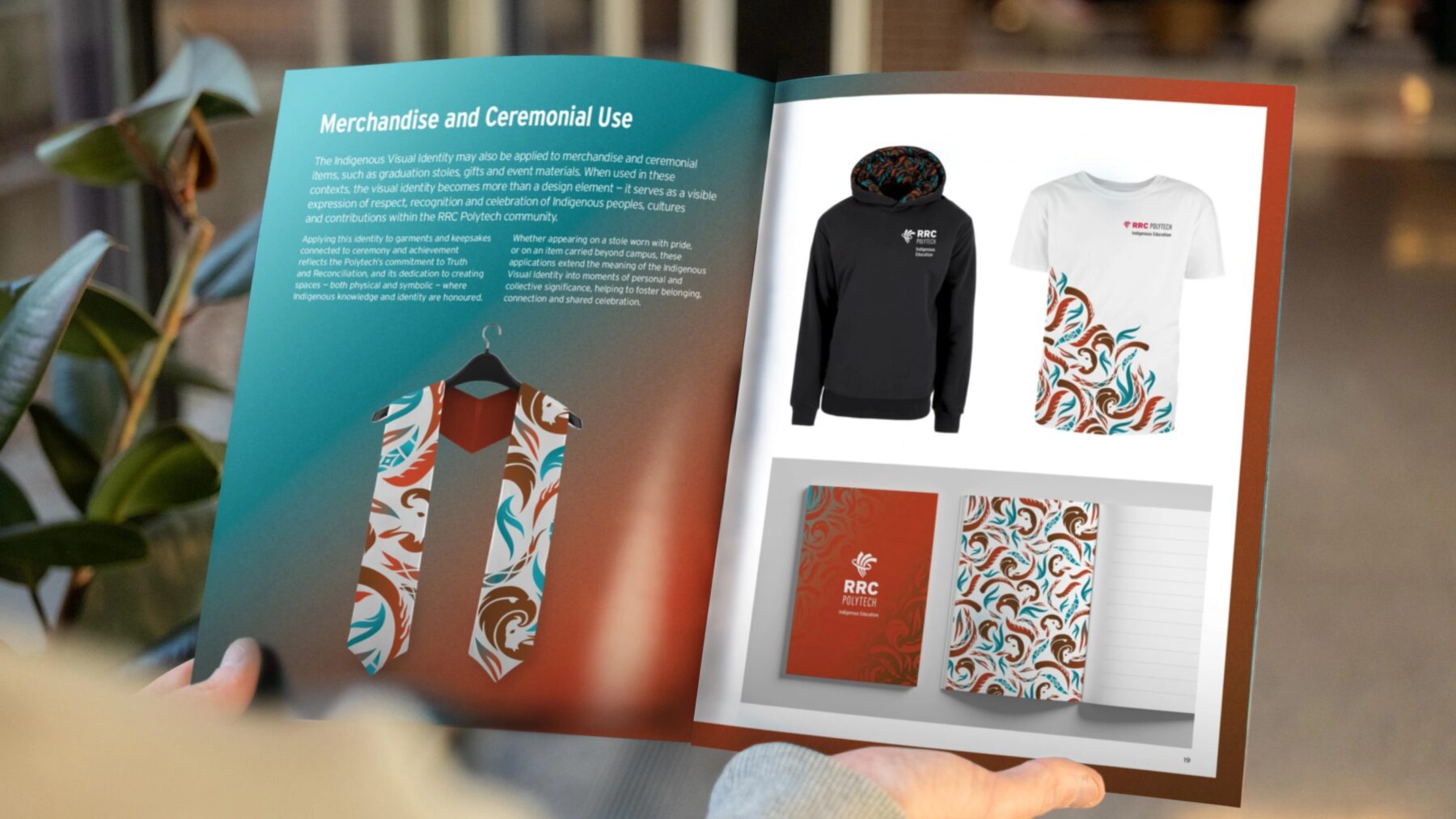
RRC Polytech showcases commitment to Truth and Reconciliation at Fall Convocation with new Indigenous stoles and visual identity 

November 18, 2025

Graduates wearing caps and gowns are seated, watching a speaker on stage in front of them.

While close to 700 graduates will cross the stage at RRC Polytech’s Fall Convocation ceremonies later today, several of them will be wearing brand-new, meaningful stoles that reflect the voices, teachings and stories of Indigenous Peoples. 

The Polytech is officially unveiling its new Indigenous visual identity today – a project grounded in the institution’s commitment to Truth and Reconciliation, Indigenous student success, and shared values of respect, inclusion and belonging. 

“Celebrating our latest cohort of graduates is always an exciting, profound occasion,” says Fred Meier, President & CEO, RRC Polytech. “Today’s ceremonies will carry extra significance, as Indigenous graduates cross the stage wearing new stoles that honour tradition while embracing progress and change.” 

The stoles and new visual identity are the result of extensive conversations with Indigenous and non-Indigenous students, staff, Knowledge Keepers, Elders, and community partners, led by a steering committee made up of RRC Polytech staff and valued partners. 

“The design on these stoles is rooted in sacredness, seasonality, and interconnectedness, honouring the distinct identities of First Nations, Métis, and Inuit Peoples while weaving together themes of land, language, and story into a living expression of who we are,” says Carla Kematch, Director, Truth and Reconciliation and Community Engagement, RRC Polytech, and steering committee member. 

“The visual identity reflects teachings learned through engagement sessions and a survey that was shared among our community, ensuring that the design is a true reflection of an identity that belongs to all of us.” 

RRC Polytech convocation ceremonies 

Kate Rudnyk, a spring 2025 graduate from the Digital Media Design program, will be awarded the Lieutenant Governor’s Medal – the highest award that may be obtained upon graduation from RRC Polytech – at the Fall Convocation ceremony this afternoon. 

The recipients of these medals are selected by a standing committee comprised of representatives from Polytech management, students and instructors. This outstanding graduate has been selected in recognition of her academic and technical achievement, involvement in Polytech and/or community activities, and overall good character. 

Read more about the 2025 Lieutenant Governor’s Medal Recipient here. 

Convocation ceremonies will take place in-person at the RBC Convention Centre, Ozhaawashko-Giizhig (formerly known as the City View Room), 375 York Avenue, and live-streamed at rrc.ca/convocation

Tuesday, November 18 at 1:30 p.m. 

  • School of Business, Information Technology and Creative Arts 
  • School of Health Sciences and Community Services 
  • School of Hospitality and Culinary Arts 

Tuesday, November 18 at 7 p.m. 

  • School of Continuing Education 
  • School of Education, Arts and Sciences 
  • School of Indigenous Education 
  • School of Skilled Trades and Technology 

Close to 1,700 students are graduating this fall, with nearly 670 of them registered to attend their ceremony. 

New Nurses from RRC Polytech to be Celebrated at Pinning Ceremony Tonight 

October 14, 2025

Winnipeg, Manitoba on Treaty No. 1 Territory and the Homeland of the Red River Métis Nation –  This evening, 161 nursing graduates from RRC Polytech will be officially welcomed into the profession during the annual pinning ceremony. To reach this point, students have completed the 32-month Bachelor of Nursing program, including a 450-hour senior practicum.  

“Nurses are the backbone of our healthcare system, and in today’s world – where resilience, empathy, and adaptability are more important than ever – the role they play is vital. This graduating class has shown remarkable dedication, not only in their studies but in their commitment to serving communities across the province, including rural and remote areas. I have no doubt they will make a lasting impact on the lives of Manitobans and help strengthen the future of healthcare in our province,” said Fred Meier, President and CEO of RRC Polytech. 

The pins will be presented by instructors, with representatives from the Manitoba Government, the College of Registered Nurses of Manitoba, and the Association of Regulated Nurses of Manitoba in attendance. 

“The pinning ceremony is more than a celebration, it’s a powerful reminder of the dedication, compassion, and resilience that nurses bring to our healthcare system every single day. The Class of 2025 represents the future of health care in Manitoba. I am so proud of each graduate who has chosen this path of service. Many of you have already made an impact in communities across our province, including rural and remote areas, and we know you’ll continue to do so. Our government is committed to supporting nurses and strengthening our healthcare system, because when we invest in you, we’re investing in the health and wellbeing of all Manitobans,” said Renée Cable, Minister of Advanced Education and Training for the Province of Manitoba. 

There is a high demand for nurses in Manitoba, and nursing graduates often obtain a job in their area of choice. 

“Behind every health-care story in Manitoba is a nurse, someone who listens, advocates, and delivers care when people need it most,” said Uzoma Asagwara, Minister of Health, Seniors and Long-Term Care. “This year’s RRC Polytech graduates are entering the profession at a pivotal time, as thousands of new health-care professionals join the workforce. Their skills and compassion are helping strengthen care teams, reduce wait times, and ensure Manitobans can get care close to home, from Winnipeg to our most rural and northern communities. I thank them for choosing this calling and know they will have rewarding careers.” 

Despite challenges posed by wildfires this past spring and summer, which led to the early return of one student from Pimicikamak Cree Nation and the cancellation of a placement in The Pas due to a provincial state of emergency, RRC Polytech students continued to show resilience and commitment through their practicum placements, expanding on the professionalism and training learned and practiced in the classroom.  

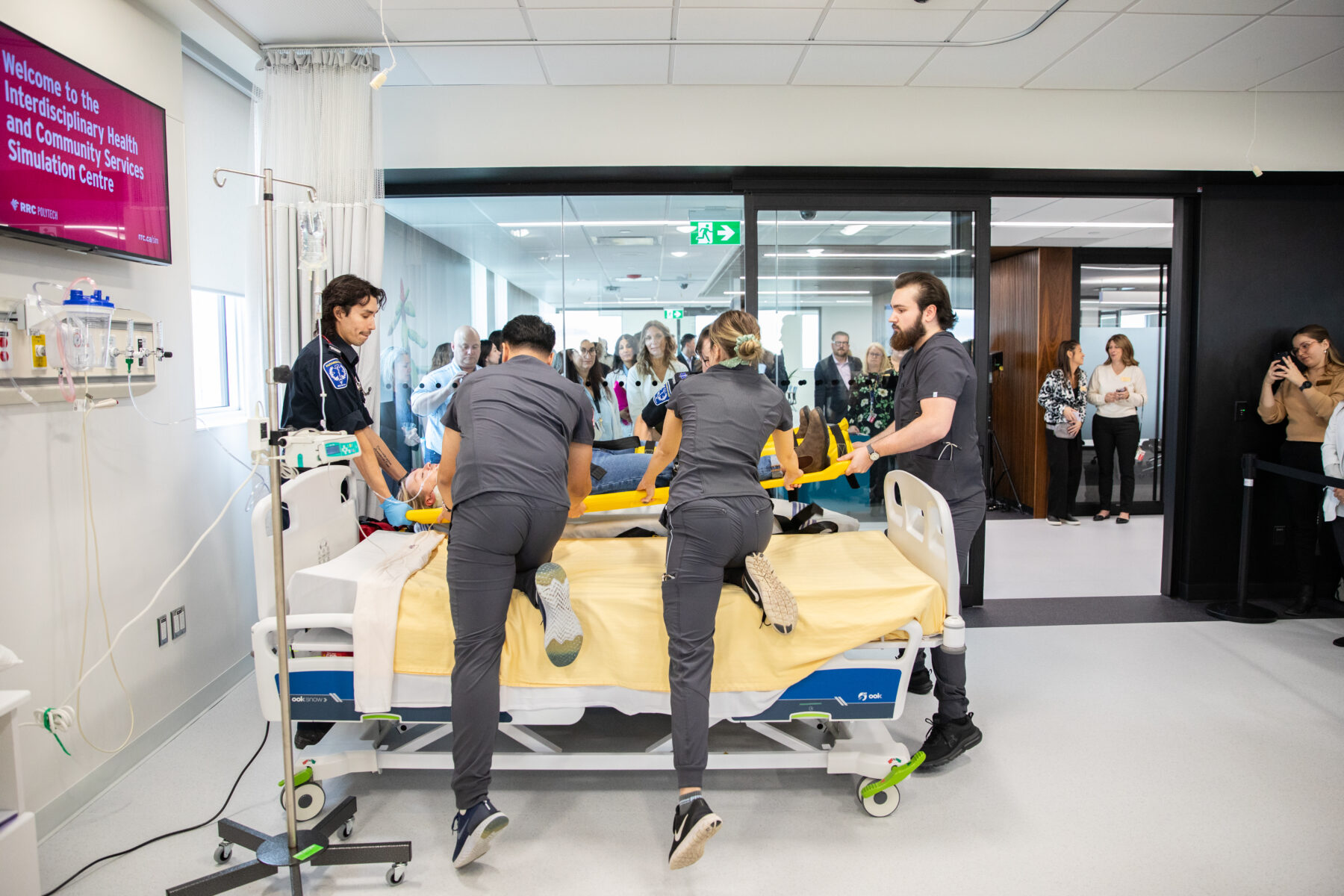
This year’s ceremony also marks the first graduating class to benefit from RRC Polytech’s new Interdisciplinary Health and Community Services Simulation Centre, launched in January 2025. The Sim Centre has enriched student learning by offering realistic, hands-on scenarios that prepare future nurses to thrive in today’s healthcare system. 

“The addition of our new Simulation Centre has elevated the quality of training at RRC Polytech even further – giving students the opportunity to practice complex scenarios in a safe, realistic environment. It’s helping them build confidence, sharpen clinical judgment, and prepare to thrive in today’s fast-paced healthcare system. We’re proud to see how this investment in simulation is already making a difference in the lives of our students and the patients they’ll care for across the province,” said Lesley McGuirk, Associate Dean of Nursing at RRC Polytech. 

A nursing pin is a badge worn by nurses to identify the nursing school from which they graduated. They are traditionally presented to newly graduated nurses by faculty at a pinning ceremony as a symbolic welcome into the profession.  

Kiara Carpenter pursued the Bachelor of Nursing Program at RRC Polytech because she was drawn to a career where she can make a meaningful difference in people’s lives, and is one of the graduates receiving her pin this evening.   

“Receiving my nursing pin feels so special — it’s a moment I’ve looked forward to since the very beginning of the program. It represents not just the hard work and long hours, but also the growth, connections, and moments that shaped me into the nurse I’ve become. My practicums have given me the confidence, skills, and compassion to step into this next chapter, and I couldn’t be more grateful for everyone who has supported me along the way,” she said.  

Another recent graduate, Brooke Allen, entered the program with the goal of working with children – and has now successfully been hired as a pediatric nurse. 

“The nursing program at Red River was very special to me because it gave me a sense of community in which I felt welcomed, supported, and encouraged to be the best version of myself. Parts of me will forever miss walking into those 8 am classes, coffee in hand, catching up with friends before diving into lectures led by some of the best instructors. Receiving the nursing pin this week truly feels special to me, and I feel honoured to be entering the workforce as a nurse. People are trusting you with the care of their loved ones, which is no small responsibility, and I do not take that lightly. I hope to exceed the expectations and beyond that, I hope to make a difference in people’s care that they receive,” said Allen. 

More information can be found on the RRC Polytech website

RRC Polytech raises Deaf Flag for the first time to mark International Week of Deaf People 

September 23, 2025

A Canada Flag and a Deaf Flag fly next to each other against a blue sky.

Today, RRC Polytech adds a meaningful new addition to the flags that fly on the front lawn at the Notre Dame Campus. In recognition of the International Week of Deaf People and the International Day of Sign Languages, the Polytech will raise the Deaf Flag this morning for the first time in its history, following a short ceremony open to the community.  

“Today is a wonderful celebration of our values in action. RRC Polytech strives to be a place where all members of our community can learn, work and thrive,” says Fred Meier, President and CEO, RRC Polytech. “Our hope is that through raising this flag, we are sending a powerful message to the Deaf and Hard of Hearing community that they are welcome and supported on our campuses.” 

Deaf staff and faculty members initially raised the idea to fly the flag to demonstrate the Polytech’s ongoing commitment to accessibility, and to show all members of the Deaf and Hard of Hearing community that they have a place at RRC Polytech. 

“The Deaf Flag is a symbol of unity and inclusiveness, making the timing of today’s event all the more significant as we welcomed the return of the ASL-English Interpretation program to RRC Polytech this fall,” says Cheryle Broszeit, instructor at RRC Polytech. 

RRC Polytech’s ASL (American Sign Language) – English Interpretation Program recently underwent an academic transformation of its content, design and delivery to better meet the emerging needs of learners and the community and was led by feedback from the Deaf and interpreting communities. This fall, there are 9 students enrolled in the renewed program. 

“The ASL-English Interpretation program underscores the value of the connection between the Deaf and Hard of Hearing and interpreting communities,” continues Broszeit. “The new and improved program now has a stronger foundation for our students, so they can begin their careers as interpreters confidently and competently once they graduate.” 

This morning’s event will feature remarks from Meier, Broszeit, and Rick Zimmer, Deaf advocate and former instructor and coordinator of Deaf studies programs at RRC Polytech. Current Deaf students and students from the ASL-English Interpretation program will raise the flag together. 

French Deafblind artist Arnaud Balard designed the flag, which was adopted by the Deaf French National Federation in 2014 and has since been flown around the world. The Deaf Flag is a powerful symbol for Deaf communities, representing unity, recognition, and the ongoing fight for equal rights. The Polytech sourced the flag directly from the World Federation of the Deaf.  The Deaf Flag now joins flags representing Treaty One, the Red River Métis, and RRC Polytech’s Inclusive Pride flag, which are flown year-round at RRC Polytech. The Polytech will fly the Deaf Flag for the remainder of the week, and every year moving forward during the International Week of the Deaf. 

Building a greener future today – RRC Polytech adapting and collaborating to accelerate Canada’s low-carbon transition

August 20, 2025

Manitoba’s polytechnic shares in $11.3 million of federal funding for national green training initiative

RRC Polytech is bringing down costs for Canadians and helping them to get ahead by continuing to grow its critical role in Canada’s low-carbon transition, along with its capacity to train the workforce of today and tomorrow.

An established research leader in clean energy, EV and battery technology and sustainable construction, RRC Polytech is unleashing the power of pan-Canadian collaboration to make housing more affordable, catalyze change in the construction sector and create new jobs in the skilled trades.

With support from a $11.3 million investment from the Government of Canada’s Sectoral Workforce Solutions Program (SWSP), RRC Polytech is joining its Canadian Colleges for a Resilient Recovery (C2R2) partners in a national green construction training initiative to upskill and reskill Canadians to build and retrofit homes and buildings that reduce energy consumption in pursuit of the ambitious targets of net-zero emissions by 2050 and a net-zero electricity system by 2035.

Home to Manitoba’s only Building Efficiency Technology Access Centre, RRC Polytech will use the funds announced last week to drive economic growth while helping Canada meet its climate and housing goals by working with its industry and academic partners to develop and deliver practical, innovative training in sustainable construction.

“This nation-wide training initiative is the latest example of how RRC Polytech’s flexible learning model and vast applied research facilities and expertise, combined with our commitment to foster collaboration with industry, communities and government uniquely positions us to not only support but to lead the low-carbon transition,” said Fred Meier, President and CEO, RRC Polytech.

Accessible, industry-aligned training that equips workers with the technical and leadership skills they need to adopt green building practices, create sustainable designs and upgrade existing aging infrastructure will be offered through the Quick Train Canada platform, exclusive to RRC Polytech in Manitoba – with the first intake in Building Science for the Retrofit Sector scheduled for November. The next phase of available courses will be launched this winter, as funding through the Advancing Access and Skills Training for Green Buildings and Retrofits initiative will be available until March 2028.

“This project-based funding allows us to expand our available suite of clean energy training and share that knowledge with our C2R2 partners while helping to reduce fees for students – making this an affordable choice for local industry leaders to upskill their workforce and for individual learners who want to expand their knowledge to maximize on the opportunities created as the province transitions to a low-carbon economy,” said Jill Latschislaw, Director, Corporate Solutions, Indigenous Strategy, Research and Business Development at RRC Polytech.

RRC Polytech already offers multiple energy transition related micro-credentials, previously developed with its industry and C2R2 partners including Energy Advisor, Introduction to Electric Vehicle Technology; Electric Vehicle Communication and Computer Systems; Diesel Exhaust Emission Reduction Systems; and the Fundamentals of Hydrogen Production. Their modular design allows delivery to be tailored to a client’s needs through online/hybrid options, regional campuses and Mobile Training Labs.

This customized training along with continuous curriculum reviews of all programs ensures workers are being prepared to use, maintain and upgrade the innovative products, processes and technology being developed using the Polytech’s extensive applied research resources.

Working closely with partners like Manitoba Environmental Industry Association (MEIA), RRC Polytech is looking to further expand training and research to support the province’s commitment to building the next generation of clean energy.

Inquire at solutions@rrc.ca

Record number of youth exploring trades, technology, creative and culinary arts at RRC Polytech summer camps

July 8, 2025

School’s out for summer, and almost 280 youth are heading to RRC Polytech for week-long summer camps that began this week. This year, RRC Polytech is offering a dozen half- and full-day summer camps over five weeks for youth aged 9 –17.

RRC Polytech’s summer camps engage youth in early career exploration, giving them the opportunity to try their hand in culinary and creative arts, skilled trades and much more. Led by instructors, educational assistants and student facilitators, youth camps are an introduction to RRC Polytech, its facilities, and the possibilities that a polytechnic education brings.

“Youth summer camps provide a hands-on glimpse into the dynamic world of polytechnic education,” said Fred Meier, President and CEO of RRC Polytech. “Our goal is to ignite a passion within campers, inspiring them to explore new interests and envision a future at RRC Polytech. We hope that this experience will be the first step in their educational journey with us.”

New Camp Programming for 2025:

This year’s summer camp programming has been expanded to include some new and notable offerings:

  • Advanced Photography Camp was developed in part from the feedback we received from camp participants who were looking to level up their photography skills. This camp will enable youth aged 12–14 dive deeper into the photographic elements of landscapes, portraits and nature while exploring storytelling, composition and lighting. 
  • Electrify Your Game Camp is a brand-new industrial arts session where campers craft a fully functional “Operation” style board game, through elements of electronics, woodworking and graphic arts.
  • The Diner Classics and Breakfast Bootcamp provides an opportunity for teens aged 15–17 how to cook like a pro from prep to plating. This half-day camp, focused on a new age group, will be the first one offered at RRC’s Exchange District Campus.

Media Availability

Camps take place throughout July and the first week of August. Media is invited to schedule a time to attend in advance to capture learning and discovery in action.

When:

Week 1, July 7–11

  • Girls Exploring Trades and Technology Camp (Week 1 of 3)
  • Girls in Motion: Shifting Gears in Automotive Trades Camp
  • Indigenous Cultural Exploration Camp
  • Out and About Photography Camp

Week 2, July 14–18

  • Advanced Photography Camp
  • Design Your Dream Room Camp
  • Girls Exploring Trades and Technology Camp (Week 2 of 3)
  • Wheels in Motion: A Transportation Technology Camp

Week 3, July 21–25

  • Electrify Your Game Camp
  • Girls Exploring Trades and Technology Camp (Week 3 of 3)
  • Wheels in Motion: A Transportation Technology Camp

Week 4, July 28–Aug 1

  • Entrepreneurship Design Sprint Camp
  • Out and About Photography Camp
  • Sweet Treats Baking Camp

Week 5, Aug 5–8

  • Diner Classics and Breakfast Bootcamp*
  • Next-Level Coding: Python and Interactive Tech Camp*

Where: RRC Polytech, Notre Dame Campus, 2055 Notre Dame Avenue

*The two camps running Aug 5–8 will take place at the Exchange District Campus.

Photo Opportunity: Youth engaging in trades and other activities

Alongside expanding camp programming this year, RRC Polytech continues to increase access to campers thanks to the support of the Carolyn Sifton Foundation, which provides 100 spots for near-to-low income families at no cost.

Additionally, all 54 spots in the Girls Exploring Trades and Technology (GETT) Camp are generously funded through the Canerector Foundation. GETT Camps introduce girls and female-identifying youth aged 12–14 to applied skills and technology careers, aiming to influence the course decisions they make in secondary and post-secondary education that will affect future career choices.

For the full listing and more information about youth summer camps at RRC Polytech, visit rrc.ca/youth/camps

Labs4 Launches: Canada’s Applied Research Commercialization Engine will Support Innovation Ecosystem

June 23, 2025

Winnipeg, MB on Treaty No. 1 Territory and the National Homeland of the Red River Métis Today, RRC Polytech and its post-secondary partners across the country are proud to launch the website www.labs4.ca to officially introduce and establish Labs4 – a national applied research commercialization engine designed to support entrepreneurs and accelerate Canada’s innovation economy.

Primary Logo

Labs4 brings together 38 polytechnics, colleges and universities across Canada in an aligned effort to collaborate with businesses, entrepreneurs, and communities to transform more research into real-world solutions.

Initially known as the College-University Lab to Market Network for Entrepreneurship and Research Commercialization, Labs4 will develop and deliver hands-on entrepreneurship training, product development support, and mentorship through eight Regional Hubs and three Indigenous Entrepreneurship Hubs that stretch from coast to coast.

Labs4 is built for impact. This is innovation with purpose, delivered across every region and rooted in community,” says Dr. Jolen Galaugher, Executive Director of Research Partnerships & Innovation at RRC Polytech and Chair of the Labs4 Executive Committee.

“We operate at the intersection of academia and industry to translate applied research into practical solutions. By teaching researchers and businesses how to work with each other, building stronger relationships with Indigenous communities, and scaling innovation with intentional speed and purpose, we’ll equip entrepreneurs to quickly move from insight to action to benefit all Canadians.”

Funded by NSERC, Mitacs, and its institutional partners, Labs4 is a $55 million initiative created to close Canada’s persistent gap between research and commercialization across all sectors, while reducing barriers faced by equity-seeking groups and strengthening Indigenous and regional innovation. Leveraging the state-of-the-art facilities and subject-matter expertise available at network institutions will expedite entrepreneurs and creators’ ability to take new products and processes to the market and therefore make both economic and social impacts sooner.

Three signature pillars differentiate Labs4:

  • Indigenous Entrepreneurship Hubs: Incubators in Saskatchewan, Manitoba and Ontario provide culturally grounded programming, mentorship, and wraparound supports tailored to First Nations, Métis and Inuit researcher-entrepreneurs. Programming is led by Indigenous institutions and rooted in self-determined goals, ceremony, and community priorities.
  • Technology Readiness Level-Up (TRL) program: A four-month placement in polytechnic/college -based applied research facilities where researcher-entrepreneurs receive $10,000 stipends to develop, test, and validate prototypes with expert mentorship.
  • Market to Lab (MtL) program: A two-month simulation in which researcher-entrepreneurs lead student teams to solve real-world commercialization barriers. With mentorship from business and innovation experts, participants gain leadership experience and build go-to-market strategies.

The TRL program is already underway: applications are now open for the upcoming Fall 2025 cohort.

“We are dedicated to creating pathways for innovation and amplifying the impact of Canadian research on the global stage,” says Nasil Nam, National Director, Labs4. “Whether it’s a prototype in a lab or a venture ready to launch, we meet researcher-entrepreneurs where they are and help them move forward with confidence. Our work is practical, fast-paced, and focused on impact.”

Labs4 is poised to drive measurable national impact and support hundreds of researcher-entrepreneurs to explore the launch of new research-based ventures. The initiative supports not only new ventures and commercial products but also economic development, job creation, and inclusive growth across all sectors and regions.

To learn more about Labs4, its programs, or upcoming events, visit www.labs4.ca.

About Labs4
Labs4 is Canada’s applied research commercialization engine. Delivered through eight Regional and three Indigenous Entrepreneurship Hubs, it provides researcher-entrepreneurs with the tools, training, mentorship, and applied facilities to move innovations from lab to market. Funded by NSERC, Mitacs and over three dozen post-secondary partners, Labs4 is designed to deliver rapid, equitable, and outcome-driven commercialization across Canada’s innovation ecosystem.


Lancement de Labs4 : l’initiative canadienne de commercialisation de la recherche appliquée pour appuyer l’écosystème de l’innovation

Winnipeg, MB sur le territoire du Traité no 1 et la patrie nationale des Métis de la Rivière-Rouge : Aujourd’hui, RRC Polytech et ses partenaires postsecondaires à travers le pays sont fiers de lancer le site web www.labs4.ca qui marque le lancement et l’établissement officiel de Labs4, une initiative nationale de commercialisation de la recherche appliquée conçue pour appuyer les entrepreneurs et accélérer l’économie d’innovation du Canada.

Labs4 rassemble 38 polytechniques, collèges et universités à travers le Canada dans le but de collaborer avec les entreprises, les entrepreneurs et les collectivités pour transformer davantage de recherche en solutions concrètes. Originalement le College-University Lab to Market Network for Entrepreneurship and Research Commercialization, Labs4 élaborera et mettra en œuvre des formations pratiques d’entrepreneuriat, un appui au développement de produits et du mentorat dans ses huit carrefours régionaux et trois carrefours d’entreprenariat autochtones, situés partout à travers le Canada.

« Labs4 a été conçue pour avoir un impact et concrétiser l’innovation à travers toutes les régions, tout en étant solidement enracinée dans les communautés », a expliqué Jolen Galaugher, Ph.D., directrice administrative des partenariats de recherche et de l’innovation de RRC Polytech et présidente du comité de direction de Labs4. « Nous évoluons à l’intersection du milieu universitaire et de l’industrie dans le but de traduire la recherche appliquée en solutions pratiques. En enseignant aux chercheurs et aux entreprises à travailler ensemble, en bâtissant des liens plus solides avec les communautés autochtones et en augmentant la rapidité et les objectifs de l’innovation, nous outillons les entrepreneurs à passer rapidement de l’abstrait  à l’action, au profit de tous les Canadiens et Canadiennes. »    

Financée par le CRSNG, Mitacs et ses partenaires institutionnels, Labs4 est une initiative de 55 millions $ créée pour réduire l’écart persistant entre la recherche et la commercialisation à travers tous les secteurs du Canada, tout en réduisant les obstacles auxquels font face les groupes en quête d’équité et en consolidant l’innovation autochtone et régionale. La mise à profit des installations à la fine pointe et de l’expertise en la matière qui existe au sein des établissements du réseau accélérera la capacité des entrepreneurs et des créateurs à commercialiser de nouveaux produits et processus et ainsi, d’avoir un impact économique et social plus rapide.

Les trois piliers qui distinguent Labs4 :

  • Carrefours d’entreprenariat autochtones : Des incubateurs d’entreprises au Saskatchewan, au Manitoba et en Ontario fournissent une programmation fondée sur la culture, du mentorat et des services de soutien adaptés aux chercheurs-entrepreneurs des Premières Nations, Métis et Inuit. La programmation est dirigée par des établissements autochtones et est ancrée dans l’auto-détermination, la cérémonie et les priorités communautaires. 
  • Programme de niveau de préparation technologique (Technology Readiness Level-Up ou TRL) : Un stage de quatre mois dans une installation polytechnique ou collégiale de recherche appliquée où des chercheurs-entrepreneurs reçoivent une allocation de 10 000 $ pour développer, tester et valider des prototypes, tout en étant accompagnés par  des experts.  
  • Programme du marché au labo (Market to Lab ou MtL) : Une simulation de deux mois au cours de laquelle des chercheurs-entrepreneurs dirigent des équipes d’étudiants dans le but de surmonter des obstacles à la commercialisation. Grâce au mentorat d’experts du monde des affaires et de l’innovation, les participants acquièrent une expérience de leadership et élaborent des stratégies de mise en marché.

Le programme TRL est déjà en cours ; les candidatures sont maintenant acceptées pour la prochaine cohorte de l’automne 2025.

« Nous nous engageons à créer des voies d’accès à l’innovation et à amplifier l’impact de la recherche canadienne à l’échelle mondiale », a déclaré Nasil Nam, directrice nationale, Labs4. « Qu’il s’agisse d’un prototype en laboratoire ou d’un projet prêt au lancement, nous allons à la rencontre des chercheurs-entrepreneurs et nous sommes là pour les aider à aller de l’avant en toute confiance. Notre travail est pratique, dynamique et axé sur les résultats. »

Labs4 est positionnée pour produire des retombées quantifiables à l’échelle nationale et appuyer des centaines de chercheurs-entrepreneurs dans l’exploration du lancement de nouvelles entreprises de recherche. L’initiative appuie non seulement les nouvelles entreprises et nouveaux produits commerciaux, mais aussi le développement économique, la création d’emplois et la croissance inclusive à travers tous les secteurs et régions.

Pour en apprendre davantage au sujet de Labs4, ses programmes, ou ses événements à venir, visitez www.labs4.ca.

À propos de 4Labs
Labs4 est l’initiative de commercialisation de la recherche appliquée du Canada. Par l’entremise de huit carrefours régionaux et de trois carrefours d’entreprenariat autochtones, Labs4 procure aux chercheurs-entrepreneurs les outils, la formation, le mentorat et les installations appliquées permettant le passage des innovations du laboratoire au marché. Financée par le CRSNG, Mitacs et plus de trois douzaine de partenaires postsecondaires, Labs4 est conçue pour permettre une commercialisation rapide, équitable et axée sur les résultats à travers l’écosystème canadien de l’innovation.

Skills that thrill: RRC Polytech awards Skills Manitoba Executive Director with Honorary Diploma

June 20, 2025

A woman wearing a blue shirt smiles at the camera.

After dedicating decades of service to Manitoba’s skilled trades industry, Maria Pacella has added another impressive title to her toolbox: recipient of RRC Polytech’s 2025 Honorary Diploma.

RRC Polytech recognized Maria Pacella with an Honorary Post-Graduate Diploma in Business Management as part of its 2025 Spring Convocation ceremonies this week. Pacella has served as Executive Director of Skills Manitoba since 2006, establishing an impressive portfolio focused on creating opportunities for students, apprentices, and underrepresented groups in the trades.

“Maria Pacella was a clear choice for receiving this honour this year. Her passion for strengthening inclusive programming, building partnerships, and centering students’ experience is in line with RRC Polytech’s strategic vision. Countless students have received door-opening opportunities thanks to her dedication and drive,” said Fred Meier, RRC Polytech President & CEO. “RRC Polytech is proud to recognize Maria and to work alongside her as we continue our joint mission of empowering students in Manitoba to build impressive careers in the skilled trades.”

Pacella works closely with educational institutions, including a long-standing partnership with RRC Polytech, which hosts the annual Skills Manitoba competition at its Notre Dame Campus. She has led two of the most successful National Skills competitions to date, each drawing more than 13,000 students while breaking national records for school tours from Manitoba schools.

Skills Manitoba’s programs span secondary institutions as well as all four Manitoba colleges, including schools in both urban and rural communities to ensure that programming reaches students throughout the province.

“I am extremely honoured to receive this recognition from RRC Polytech, an organization I’ve been proud to partner with for many years,” said Pacella. “I’m especially grateful to be recognized for something I’m so passionate about. Connecting young people with the trades is my life’s work, and this recognition serves as further inspiration to create even more impacts for students throughout Manitoba.”

President Fred Meier presents Maria Pacella with the Honorary Diploma during the Spring 2025 Convocation ceremony.

In addition to her work with the Skills competitions, Pacella has launched many important initiatives throughout the province, such as the Northern Young Women’s Conferences held in Thompson, The Pas, and Flin Flon, along with innovative programs like the Extreme Sledding Challenge, the Skilled Trades & Technology Olympics, Northern Manitoba Skills Challenge, Model Wind Turbine Competition, Youth in Manufacturing and various skilled trades awareness programs within the city of Winnipeg.

Partnering with First Nations, Inuit, and Métis organizations, she led the development of the Indigenous Skills Showcase – an initiative that celebrates Indigenous culture through skills like woodcarving, cooking, beading, and design – empowering youth to explore trades careers in a culturally safe environment. The showcase was featured at the 2023 Skills Canada National Competition.

RRC Polytech awards Honorary Degrees and Diplomas to individuals who demonstrate high standards of excellence in their personal and professional achievements locally, national, or internationally.

The award honours individuals in diverse fields who are distinguished by their significant accomplishments and contributions and whose receipt of the award will bring honour and distinction to RRC Polytech. To learn more, please click here.

It’s a perfect ten for RRC Polytech: College hosts ten convocation ceremonies for the first time ever, to accommodate record number of grads in 2025 

June 17, 2025

Graduands sit in rows with their backs to the camera, wearing their graduation caps with the tassels hanging on the right.

For the first time in its history, RRC Polytech will be hosting ten convocation ceremonies across the province to celebrate the largest graduating class in three years, having added an additional ceremony at the RBC Convention Centre to bring the total Winnipeg ceremonies up to five from the previous four.

Nearly 3,750 students will receive their degrees, certificates or diplomas this year across the Polytech’s eight campuses. Winnipeg campuses alone have seen a ten percent increase in graduates compared to Spring 2024, with a total of 1,670 graduates having registered to attend the Winnipeg ceremonies this year.

“Convocation is a wonderful celebration – not only of our students’ hard work, but for the future of Manitoba, whose workforce is now receiving this influx of thousands of talented, job-ready individuals,” says Fred Meier, President & CEO, RRC Polytech. “Our role as a polytechnic is to provide students from across the province with the education, skills and support to become industry leaders as soon as they leave our campuses.

“Graduation numbers have been increasing year to year; a clear demonstration that our commitment to meeting the emerging needs of both students and industry is working.”

RRC Polytech has seen considerable growth in domestic applications year-over-year, with Fall 2024 applications rising 14 per cent since 2023, and Winter 2025 increasing by 29 per cent from the year before. Enrollment numbers for domestic students also jumped by four per cent in Fall 2024 from the previous year.

Three Lieutenant Governor’s Medals Awarded

A community advocate from Peru, a compassionate caregiver from Nigeria, and a data scientist from the Dominican Republic are the three outstanding graduates who have been selected to receive the Lieutenant Governor’s Medals this week. The medals are awarded to students who exemplify high academic and technical achievement, community and college involvement, and overall good character.

  • Daniela Ruiz Fernandez, graduate of the Social Innovation and Community Development Program with a Major in Indigenous Social Enterprise.
  • Deborah Modupe, graduate of the Disability and Community Support Program.
  • Yanna Polonia Gutierrez, graduate of the Data Science and Machine Learning Program.


Read more about the 2025 Lieutenant Governor’s Medal Recipients here.

Maria Pacella awarded Honorary Post-Graduate Diploma in Business Management


RRC Polytech’s Honorary Diploma is awarded to an individual who demonstrates high standards of excellence in their personal and professional achievements, and whose involvement in the community is widely recognized. This year, RRC Polytech is honouring Maria Pacella, Executive Director of Skills Manitoba, with an Honorary Post-Graduate Diploma in Business Administration for her nearly two-decade-long career with Skills Manitoba, championing skilled trades education and career development across Manitoba, Canada, and beyond.


Read more about the 2025 Honorary Diploma recipient here.


“We are thrilled that three exceptional students trusted RRC Polytech with their education, and it will be an honour to present them with the Lieutenant Governor Medal Awards this year,” says Aileen Najduch, Executive Director, Student Services & Global Partnerships, RRC Polytech.

“Similarly, the significant impacts of long-time RRC Polytech partner Maria Pacella make her a highly qualified candidate for the Honorary Diploma, and I know her story of leadership within the skilled trades field – particularly her commitment to providing opportunities for students – will resonate with graduates.”


RRC Polytech’s Spring 2025 Convocation celebrations occur across the province throughout June and are live-streamed worldwide. The first of five Winnipeg convocation ceremonies takes place this evening at the RBC Convention Centre, with five more ceremonies being held for the Polytech’s Regional Campuses. Peguis-Fisher River, Selkirk and Winkler ceremonies occurred earlier this month, and Portage la Prairie and Steinbach ceremonies will follow next week.


For a full list of graduates and award winners, and to stream the ceremonies, please click on this link to our convocation webpage.


Schedule of RRC Polytech convocation ceremonies across Manitoba


Winnipeg ceremonies will take place in-person at the RBC Convention Centre, City View Hall (Hall C), 375 York Avenue, and live-streamed at rrc.ca/convocation:

  • Monday, June 16 at 7:00 p.m.
  • Tuesday, June 17 at 1:30 p.m.
  • Tuesday, June 17 at 7 p.m.
  • Wednesday, June 18 at 1:30 p.m.
  • Wednesday, June 18 at 7:00 p.m.

Regional campuses:

  • Interlake and Peguis – Fisher River Campus (Peguis First Nation and Fisher River Cree Nation), Thursday, June 5 at 2 p.m.
  • Interlake and Peguis – Fisher River Campus (Selkirk), Wednesday, June 11 at 2 p.m., Selkirk Recreation Complex, 180 Easton Drive, Selkirk, MB
  • Winkler Campus, Thursday, June 12 at 2 p.m., P.W. Enns Centennial Concert Hall, 783 Mountain Avenue, Winkler, MB
  • Portage Campus, Tuesday, June 24 at 2 p.m., William Glesby Centre, 2nd Street NE, Portage la Prairie, MB
  • Steinbach Campus, Thursday, June 26 at 2 p.m., Southeast Event Centre, 321 Elmdale Street, Steinbach, MB

Driving Towards a Greener Future – RRC Polytech Rolls Out First Converted Electric School Bus

May 27, 2025

Innovative conversion kit offers a cost-effective solution to adopt more environmentally friendly transportation for students across the province

Winnipeg, MB on Treaty No. 1 Territory and the National Homeland of the Red River MétisToday, Manitoba’s first low carbon school bus successfully converted from diesel to electric power is rolling out of RRC Polytech’s Vehicle Technology and Energy Centre (VTEC)  – demonstrating the viability of a cost-effective unique process to electrify current fleets and reduce the environmental impact of using fossil fuels. 

“Our work on the electric school bus conversion kit is the latest example of how applied research collaborations with industry partners support market-driven innovation and product development,” said Fred Meier, President and CEO, RRC Polytech. “This project is an example of the applied research expertise and facilities RRC Polytech has developed over the last 20 years that contribute to advancing technologies to support Manitoba’s energy transition.”

Funded by the Government of Manitoba’s Conservation and Climate Fund and the Canadian Shield Foundation, the diesel to EV school bus conversion kit is the result of a collaborative project that brought together the experts at RRC Polytech’s VTEC, Noble Northern and Seven Oaks School Division. The conversion kit reduces greenhouse gases (GHG) emissions, cuts costs for schools and the government, and offers an affordable alternative to factory-built electric buses.

“Manitoba is committed to advancing clean transportation solutions that protect our environment while ensuring safe and sustainable mobility for students,” said the Honourable Mike Moyes, Minister of Environment and Climate Change. “We’re thrilled that the result of this collaboration – proof of concept for the conversion of diesel school buses to electric power – not only offers an alternative to importing costly technology, but the potential to stimulate our local economy through job creation and growth.” 

The project began in August 2023, when the Seven Oaks School Division provided a suitable bus for conversion and students from RRC Polytech’s Heavy Equipment Mechanic Program removed its diesel engine before transferring the bus to principal industry collaborator, Noble Northern. VTEC’s research team joined their experts on the groundwork for converting the bus, including the preliminary design for the electric drive system, which eventually led to the procurement of electric motors, batteries, controllers, inverters, and other essential accessories in the conversion kit. After the installation and commissioning phase, the newly converted electric school bus was returned to RRC Polytech for rigorous environmental performance evaluations within MotiveLab™ VTEC’s climatic chamber. 

“RRC Polytech’s VTEC is proudly regarded as a Canadian leader in EV technology. By seeking cost-effective methods to reduce emissions and source renewable energies for fuel for fleet vehicles like school buses, we are helping to build and maintain a sustainable future while training the workforce of tomorrow,” said Jojo Delos Reyes, Program Manager, Vehicle Technology and Energy Centre. “This project also allowed us to deepen our relationship with industry experts, Noble Northern and build on the knowledge that we acquired while working together converting the Arctic Tundra Buggy which will undoubtedly benefit our next partners and projects.” 

Even with labour costs considered, retrofitting an existing diesel bus using the conversion kit saves over $100,000 on the price of purchasing a new factory-built Type C electric school bus, freeing up valuable budget for administrators to reinvest directly into the classroom while still significantly reducing their carbon footprint. The benefits of converting just one bus also include saving up to $11,000 in fuel costs and reducing 21.6 tonnes of CO2 emissions per school year (approximately 39 weeks). Other advantages of switching to this technology include lower maintenance costs and elimination of air and noise pollution.

The unveiling event featured remarks from Fred Meier, Jojo Delos Reyes, Tye Noble, President, Noble Northern, Logan Oxenham, MLA for Kirkfield Park, and the Right Honourable Edward Schreyer, the former Governor General of Canada, former Premier of Manitoba, and founder of the Canadian Shield Foundation. Guests from industry, community, government, and across our campuses even hopped aboard for a quick ride.  

“This successful collaboration has proven what is possible – now we’re ready to literally drive it forward,” said Delos Reyes. “Our next steps are to explore commercialization and scaling possibilities of the conversion process and to connect with partners who are interested and motivated to adopt this new technology.”


RRC Polytech and Qualico partner to lay the foundation for success in Skilled Trades and Technologies

May 26, 2025

Landmark $1.25 million donation to have an impact on more than 200 students per year, including Skilled Trades students and Indigenous learners through RRC Polytech’s Introduction to Trades program  

RRC Polytech is now set to help even more students build a brighter future in the skilled trades thanks to a $1.25 million gift from Qualico, announced today at the College’s Notre Dame Campus.  

The gift expands capacity in RRC Polytech’s Introduction to Trades program, a unique program for Indigenous learners to build specialized skills and gain direct entry into the RRC Polytech trades program of their choice. The gift also supports the creation of a new Navigator position – a role that helps to increase student participation and wrap-around supports. 

“RRC Polytech and Qualico share a common vision of building strong communities with a skilled and talented workforce that is diverse and representative. This donation further exemplifies Qualico’s dedication to reconciliation and their efforts in creating equitable environments for everyone to learn and work,” said Fred Meier, President & CEO, RRC Polytech. “Qualico’s support will benefit countless students and will bolster programming in our skilled trades and technologies department, which will in turn help build a stronger industry here in Manitoba.”

Qualico’s gift provides additional support to RRC Polytech’s School of Skilled Trades and Technologies and the creation of 10 annual awards for Construction Trades students – one of the largest available for skilled trades and technologies students, at $5,000 each. 

“This support for RRC Polytech is the next logical step in the strong partnership between our organizations,” said Kevin Van, President & CEO, Qualico. “Qualico feels compelled to give back to our community, and working with RRC Polytech is a clear choice because of their commitment to student success and building Manitoba’s infrastructure and economy.” 

Qualico has previously supported RRC Polytech through a $150,000 donation to establish the Skilled Trades and Technology Centre, which opened in 2018, and by providing assistance to RRC Polytech students through scholarships, awards and work-integrated learning opportunities. 

Qualico’s support will also benefit the College’s annual Skilled Trades kickoff event, which connects employers with skilled trades students – establishing important connections for future careers after graduation. This gift serves to increase work-integrated learning support for RRC Polytech’s Certificate Trades programming – carpentry, electrical, plumbing, refrigeration and air conditioning, and cabinetry and woodworking. 

“Qualico is proud to work with RRC Polytech and to hire many of their grads, because we know that students graduate from the College equipped with not only the technical skills and experience to take them far, but the cultural competency that will allow them to integrate in our workplace and make a difference in their communities,” said David Eggerman, Qualico Regional Vice-President, Manitoba & Saskatchewan.  “Qualico and RRC Polytech both recognize the vital role that tradespeople play in supporting Manitoba’s future, and we’re thrilled that this partnership will support a stronger and more inclusive workforce for the trades in our province.”

RRC Polytech campuses are located on the lands of the Anishinaabeg, Ininiwak, Anishininwak, Dakota Oyate, and Denésuline, and the National Homeland of the Red River Métis.

We recognize and honour Treaty 3 Territory Shoal Lake 40 First Nation, the source of Winnipeg’s clean drinking water. In addition, we acknowledge Treaty Territories which provide us with access to electricity we use in both our personal and professional lives.