Communications and Marketing

News and Events

RRC Polytech joins Amii’s AI Workforce Readiness Program to Equip Students with Future-Ready Skills

October 30, 2025

For immediate release: October 30, 2025

Winnipeg, Manitoba on Treaty No. 1 Territory – the lands of the Anishinaabeg, Ininiwak, Anishininwak, Dakota Oyate, and Denésuline, and the National Homeland of the Red River Métis – RRC Polytech joins the inaugural consortium for the AI Workforce Readiness (AIWR) program, a national initiative led by Amii (Alberta Machine Intelligence Institute), one of Canada’s three national AI centres and a recognized leader in AI literacy.

Supported by Google.org, the AIWR program convenes 29 Canadian polytechnics, colleges, and universities, collectively representing over 500,000 students, in a collaborative effort to close the national AI skills gap and prepare the next generation of workers. This initiative is set to impact an estimated 125,000 students per year across the country.

“AI is a transformative force shaping every industry and the future of work. By embracing AI literacy, we can equip students with the essential tools and knowledge to succeed now and in the future,” says Rebecca Molly Hiebert, Senior Strategic Advisor, AI Initiative, RRC Polytech. “Our participation in Amii’s AI Workforce Readiness consortium ensures that our students are receiving the most current, evidence-based AI education available. By working with national leaders and peers, we are proactively embedding these crucial skills into the core of RRC Polytech’s curriculum, giving our graduates a clear advantage in the evolving job market.”

As a member of the consortium, RRC Polytech will send subject matter experts (SMEs) to collaborate with Amii’s AI specialists to collaborate in dedicated working groups. This effort will result in the creation of AIWR Curriculum Resource Packages—specialized, open-source teaching materials designed to seamlessly integrate relevant AI skills and knowledge into existing programs and courses.

The resources will focus on giving students in the field of community services the AI competencies they need. Each package will include learning assets, such as:

  • Reading and discussion materials
  • Real-world use cases and case studies
  • Videos, activities, and lab assessments

 “Amii’s goal has always been to make AI education accessible, and the AI Workforce Readiness program is the culmination of that commitment. We are excited to work with our inaugural group as part of a growing national network,” says Cam Linke, Amii CEO. “By fostering a strong national collaboration, we are directly addressing the urgent AI skills gap and empowering both instructors and students—especially those in underserved communities—with the necessary AI literacy skills and resources. This foundational work ensures that post-secondary students across the country are equipped for the future of work.”

RRC Polytech will  be working with Amii to support the integration of program-specific AI resources into the Early Childhood Education (ECE) program curriculum. “At RRC Polytech we are leaders in early childhood education and collaborating with Amii on the AI-Powered Curriculum Design for Early Learning project, will further support future early childhood educators to build AI competency that enhances creativity, strengthens workforce readiness, and increases confidence as leaders in their field,” says Kelsey Shay Regnier, Chair, Early Childhood Education, RRC Polytech.

RRC Polytech is proud to be part of this strong national network that is leading the way in building Canada’s AI-ready workforce. View the complete list of consortium members.

About Amii: Guided by our mission of AI for Good and for All, Amii (Alberta Machine Intelligence Institute) is an Alberta-based non-profit that supports world-leading research in artificial intelligence (AI) and machine learning (ML), and translates scientific advancement into industry adoption. As one of Canada’s three centres of AI excellence, Amii strives to make AI & ML the primary drivers of sustainable economic growth by advancing leading-edge research, delivering exceptional educational offerings, and providing business advice—all to bring AI out of the lab and into the real world.

About RRC Polytech: As Manitoba’s largest institute of applied learning and research, RRC Polytech prepares students to become leaders in their fields — while also ensuring they can meet changing industry demands and contribute to the province’s economic growth. RRC Polytech is actively developing an institutional AI strategy, led by a Senior Strategic Advisor and guided by working groups and an AI Steering Committee, to support responsible and innovative integration of AI. The institution is also collaborating with local and national partners to advance AI education and share best practices.

More than 700 Nursing and Dental Assisting Students Gifted Bursaries from CEWIL Canada iHUB Ahead of Clinical Practicums

October 29, 2025

For Kiara Carpenter, nursing was never just an option – it was a calling. When she enrolled in the Bachelor of Nursing program at RRC Polytech she knew she wanted a career where she could make a meaningful difference in people’s lives – and now in her senior practicum, she describes her education as a transformative experience.

A woman stands outside in front of a wall, she is wearing a nursing uniform and RRC Polytech name tag.

“Through my training, I’ve learned that I am more resilient and adaptable than I thought. Nursing school challenged me academically, emotionally, and personally, but I discovered I can thrive under pressure, think critically in fast-paced environments, and grow from every experience,” she said. “The program has pushed me out of my comfort zone and prepared me to work in diverse clinical areas, from medical-surgical to pediatrics and palliative care. The instructors and preceptors have been supportive mentors, and I’ve developed lifelong friendships with classmates who share the same passion for nursing.”

A pivotal moment in Carpenter’s journey at RRC Polytech was when she received a bursary from the Co-operative Education and Work-Integrated Learning Canada (CEWIL Canada) iHUB.

“Receiving a bursary eased the financial stress that often comes with being a full-time student. It allowed me to focus more on my studies and clinical learning rather than worrying about balancing extra work hours. This support gave me the peace of mind to fully commit myself to my training and clinical experiences,” said Carpenter. “I felt incredibly grateful and relieved when I learned I was a recipient. It was encouraging to know that others believed in my potential as a future nurse and were willing to support me in achieving my goals.”

Carpenter was one of more than 700 students from the Nursing and Dental assisting programs who have received a bursary from the CEWIL Canada iHUB since the Fall 2024 term, after a pilot program provided 60 recipients in senior practicums with bursaries last year.

“These opportunities for on-the-job learning are invaluable to students, and this support from CEWIL Canada allows them to focus more fully on getting the most out of their practicums as they prepare the enter their fields after graduation,” said Fred Meier, President and CEO, RRC Polytech. “RRC Polytech is proud to be the largest trainer of health-care professionals, and these hands-on opportunities are an important part of the training that ensures graduates are well-prepared and confident from day one.”

The senior practicum marks the culmination of nursing students’ academic journey however it can be expensive with financial demands extending beyond the classroom. Nursing and Dental Assisting students have a rigorous practicum schedule that leaves little room for part-time employment, amplifying this financial strain. The bursaries from CEWIL are aimed at helping to alleviate that financial burden in the final stretch of their program.

“CEWIL Canada is pleased to support innovative WIL experiences for students at RRC Polytech where students are able to receive financial support and recognition for their WIL experience,” says Charlene Marion, Executive Director at CEWIL Canada. “Funds such as these aim to eliminate barriers to WIL and increase access for all post-secondary students.”

The $620,000 of support for nursing and dental assisting students at RRC Polytech comes from CEWIL Canada’s iHUB grant, funded in part by the Government of Canada’s Innovative Work-Integrated Learning Initiative , and funds various work-integrated learning opportunities for post-secondary students in Canada, including unpaid clinical practicums.  The bursary was tiered and the amount determined by the number of hours spent in clinical practicum.

Joshua Salisi, who was a recipient of one of the first bursaries in 2024, said the support was appreciated and would help him stay focused on his training before he entered the workforce.

“The bursary from CEWIL Canada helps alleviate the added stressors during our senior practicum experience,” said Salisi. “In addition to tuition, many of us must cover the cost of extra scrubs, parking, and other miscellaneous expenses. Parking around hospitals is often expensive, and with us being there full-time, the costs quickly add up. This bursary gives us more breathing room to better focus on ensuring we have a successful senior practicum experience and help as many patients as we can!”

RRC Polytech establishes long-standing partnerships with industry and community partners in Work-Integrated Learning (WIL) initiatives, such as practicum experiences, which rely on an engaged partnership between RRC Polytech, a host organization, and a student. These opportunities integrate academic studies with quality experiences within a workplace or practice setting and focus on the development of student learning objectives and outcomes related to employability and life-long learning.

For Carpenter, she is looking forward to continuing her journey and completing her senior practicum ready to transition into career.

“I’ve not only developed the skills and knowledge to begin my career, but I’ve also grown personally. Nursing school has taught me resilience, compassion, and the importance of lifelong learning. I’m excited to take everything I’ve gained at RRC Polytech and begin my career as a nurse, carrying forward the values and experiences that shaped me here,” she said.

RRC Polytech Instructor Competes at World Triathlon Multisport Championships

October 27, 2025

Sarah Coyle, an Instructor at RRC Polytech in the Applied Commerce and Management Education program, successfully competed at the World Triathlon Multisport Championships in Pontevedra, Spain in June 2025.

The championships attract 3,500 athletes representing 44 countries. The largest delegations hail from Great Britain, Spain and the United States, with passionate teams ready to chase world titles across a diverse range of disciplines. With a field comprising 69 per cent men and 31 per cent women, the Championships also highlight the increasing diversity of the global multisport community.

“The championships were fantastic overall,” Coyle said. “My goal was to finish strong and see what I was capable of. I achieved that by racing strategically and managing the risks I had, especially during the bike segment of my initial Duathlon—all without overcommitting.”

Coyle showed notable improvement across her age-group events. After securing a 23rd place in the Sprint Duathlon (Run-Bike-Run), she finished 16th in her preferred race, the Aquathlon (Swim-Run).

“I’m incredibly pleased with how I managed my energy throughout the competition, delivering some surprisingly strong run segments,” Coyle added. “My teaching journey at RRC Polytech helped prepare me for and contribute to my achievement on the international stage in many ways.”

Coyle draws a direct parallel between the world of sport and teaching.

“In both the classroom and in sports training, structured planning, long-term goal setting and time management help drive success,” she explained.

“The rapid problem-solving and continuous self-assessment required when teaching a diverse group of students are the exact skills I deploy when dealing with a fast-changing racing environment. Self-discipline and patience are key.”

“I’m grateful for all of the opportunities and camaraderie that working at RRC Polytech has provided to me.”

Following her performance in Spain, Coyle competed in a long-course distance race later this summer, which earned her a qualification spot for the 2026 World Triathlon Multisport Championships in Abu Dhabi, UAE.

RRC Polytech Students Earn Third Place in Geowall Competition Debut

October 21, 2025

A team of four RRC Polytech Civil Engineering Technology (CET) students made an impressive debut at the GEOWALL student competition during the 2025 GeoManitoba conference, earning third place among undergraduate and graduate teams from across Canada.

The team – made up of Wynter Peterson, Felix Brandt, Phyllis Arent, and Darrion De la Ronde – was tasked with designing and constructing a Mechanically Stabilized Earth (MSE) wall capable of supporting a load of 800 N (approximately 176 lbs). Despite being early in their academic journey and not yet formally trained in MSE wall design, the students took the initiative to study and prepare over the summer, dedicating personal time to learn the theory and practice.

“Over the summer, we went from knowing nothing about MSE walls to knowing enough to build a miniature wall,” said Phyllis Arent. “But as much theory and practice we had, the competition taught us to think on the spot and to roll with the last-minute changes we weren’t expecting. But especially it taught us that working together as a team is not only so rewarding, but a lot of fun.”

Mechanically Stabilized Earth (MSE) walls use alternating layers of soil and specialized reinforcement – usually fabric, plastic, or steel strips – to allow soil to stand at steeper angles and support heavy loads.

In the Geowall competition, RRC Polytech students built a scaled-down version using paper materials, applying real-world soil mechanics principles to test how design choices like reinforcement spacing, wall connections, and soil compaction affect performance. This hands-on experience gave them valuable insight into how these structures behave and fail – knowledge that’s essential for future engineers working with retaining walls and earthworks.

RRC Polytech instructor Steven Harms, who mentored the team, praised their dedication and said participating in competitions like this will give the students additional confidence for their careers.

“The team has been preparing since May. They started by learning the basic theory of MSE walls and spent weekends testing and refining their design. They were also working full-time in summer co-op positions, so their commitment was truly impressive,” said Harms.

The competition, part of the Canadian Geotechnical Society’s annual conference, offered students a chance to engage with industry professionals and peers from across the country.

“It’s a great opportunity to develop technical skills, gain teamwork experience, and build professional networks,” Harms added. “I’m proud of their third-place finish, but even more proud of their dedication and professionalism throughout the journey.”

Arent also credited the polytechnic education model for the team’s success.

“We don’t think we would have been so prepared for the competition without all the hands-on experience we got in the lab. The breaks in-between learning to test our knowledge were really helpful to further our knowledge. The co-op terms RRC Polytech offers are a great opportunity for us to do exactly that. To further our knowledge with hands on experiences, and that was really important to all of us when looking for a place to pursue an education,” she said. “We’re especially grateful to Steven for spending part of his summer teaching us everything we know about MSE walls.”

RRC Polytech’s CET program is a three-year diploma that prepares students for careers in the design, construction, and maintenance of infrastructure projects. Students gain a strong foundation in engineering principles, surveying, materials testing, and project management, with a focus on practical, hands-on learning.

RRC Polytech staff publish book about Academic Integrity

October 20, 2025

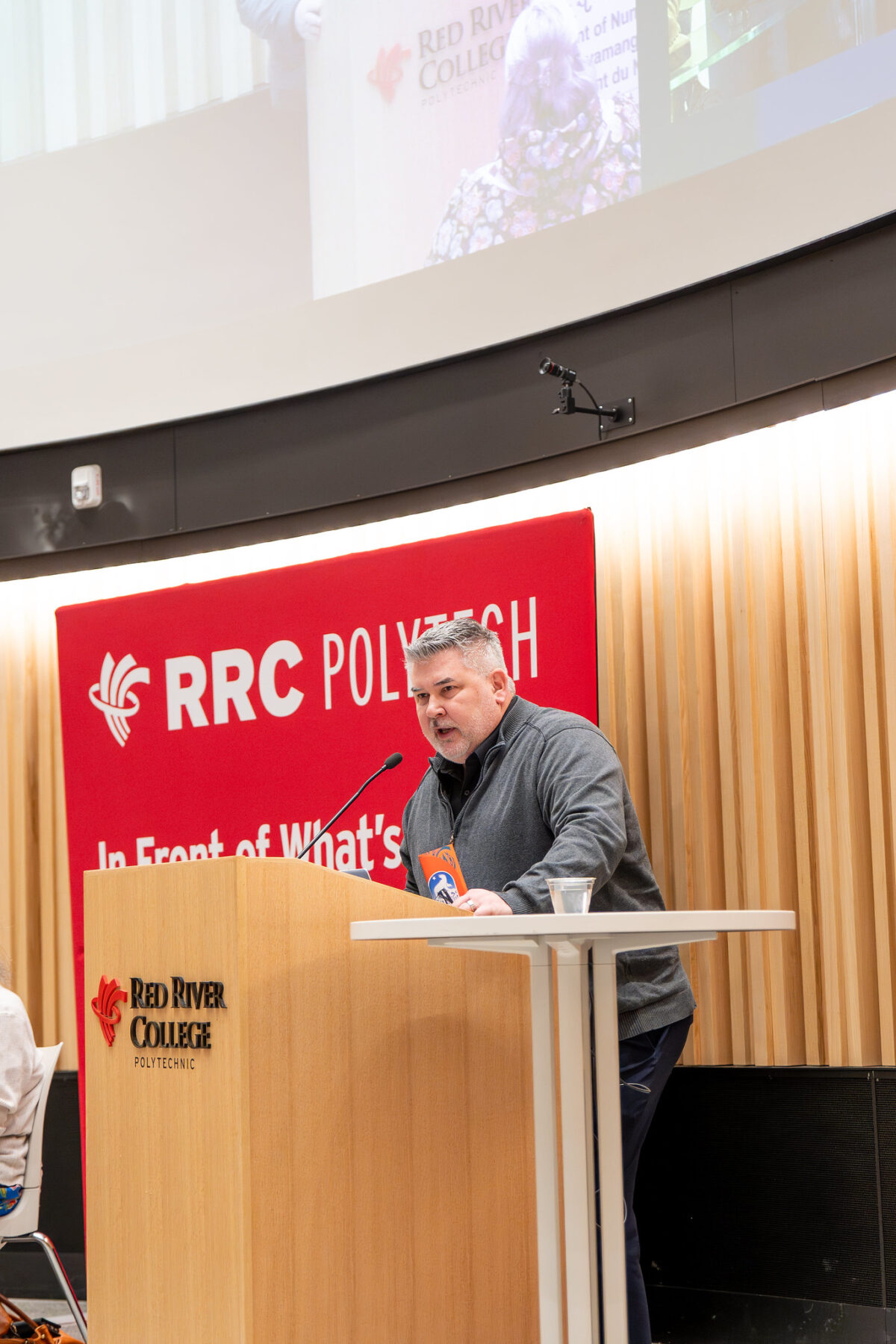
A new book, offering insights from the vocational and polytechnic sector to supporting academic integrity in a changing academic landscape, was launched on October 15 during an event at RRC Polytech’s Notre Dame Campus.

Academic Integrity in Vocational and Polytechnic Education includes 17 chapters written by 34 contributors from Canada and Australia – including four staff from RRC Polytech. Contributors represent faculty, support staff, and educational leaders working in vocational and polytechnic institutions. The book is the first edited volume focused on academic integrity in applied, technical, and trades-based post-secondary education.

The event included a panel discussion moderated by academic support specialist Jackie Jordaan, featuring co-editors Lisa Vogt (Instructor, Construction Management at RRC Polytech) and Brenda Stoesz (University of Manitoba). The panel addressed approaches to promoting academic integrity in vocational and polytechnic contexts.

RRC Polytech contributors Emilie Jackson, Chris Urbanski, and Christine Gray (represented by co-author Lisa Vogt) presented highlights from their chapters. Topics included culturally responsive learning strategies, exploratory meetings in architectural technology, and duty of care in automotive education.

Refreshments were provided by the Centre for the Advancement of Teaching and Learning at the University of Manitoba and RRC Polytech’s Civil Engineering Technology Department.

The book is available as an eBook or Hardcover, and is part of a series called Ethics and Integrity in Educational Contexts.

RRC Polytech’s New Centre for Automation and Manufacturing Technology Transfer (CAMTT) bringing advanced manufacturing and mechatronics innovation ideas to life   

October 16, 2025

The Price Institute launches gateway to applied research, innovation, tech transfer and talent for partners in the manufacturing sector – the first of its kind in Manitoba  

Winnipeg, Manitobaon Treaty No. 1 Territory –the lands of the Anishinaabeg, Ininiwak, Anishininwak, Dakota Oyate, and Denésuline, and the National Homeland of the Red River Métis– As governments, industry and academia work collectively to strengthen Canada’s economy, RRC Polytech’s Price Institute of Advanced Manufacturing and Mechatronics is proud to launch the Centre for Automation and Manufacturing Technology Transfer (CAMTT) – a vital solution designed to drive technology adoption across the sector while training the workforce of tomorrow.   

Serving as a hub to connect business and industry with applied research, innovation, technology transfer and talent, CAMTT will strengthen our workforce and economy by helping small and medium-scale enterprises (SMEs) in Manitoba address productivity through automation, Artificial Intelligence, robotics and mechatronics. By leading collaborative projects as they upskill and reskill in their careers, students at the Price Institute will gain valuable experience solving real-world challenges.  

“The Centre for Automation and Manufacturing Technology Transfer (CAMTT) is a collaborative workspace where industry and academic partners can work together to bridge gaps by accelerating the acquisition and adoption of existing and emerging technology,” said Fred Meier, President and CEO, RRC Polytech. “Our students will not only be honing their skills by leading applied research projects – their insight, energy and expertise will lead to innovative solutions that support Manitoba businesses in today’s competitive global market.” 

CAMTT is the first of its kind in Manitoba and its new working space can connect faculty, students and partners anywhere in the world. Manufacturers-in-residence will effectively guide teams dedicated to each venture as they experiment to perfect new concepts and processes, under a shared vision.  

An initial success story is already in use on the production line of a local manufacturing leader, and the namesake of the Price Institute. In CAMTT’s inaugural project, a student-led team worked with the Electronics Division of Price Industries to automate a time-consuming manual inspection process. Together, they created a Trainable Automatic Vision System (TAVS) that combines hardware including a camera to capture images of printed circuit boards (PCBs) with trainable software that uses AI to predict and validate if the PCBs pass Quality Control (QC) and Quality Assurance (QA) metrics of production. 

“The students did a great job to get a working test fixture completed, testing accurately and deployed into our production line,” said Mike Nicholson, C.E.T. General Manager, Price Electronics. “We look forward to our next project at CAMTT as we continue integrating components that optimize cost, time, quality, and efficiency.”    

Partners can expect extensive cost-effective collaborative projects that leverage all of RRC Polytech’s research facilities and resources, including funding through the Digital Technology Transformation Initiative, and are positioned for success by maximizing emerging technologies, state-of-the-art equipment and outside-the-box thinking to tackle specific challenges.  

“CAMTT takes an interdisciplinary approach to system, product, and solution development helping manufacturers harness emerging technology to reduce their labor market challenges, while training their future workforce,” said Dr. Vikram Banthia, Director of RRC Polytech’s Price Institute of Advanced Manufacturing and Mechatronics. “Partner with us to leverage our technology, innovation, expertise, assets and talent and take your project from idea to reality.”  

RRC Polytech awarded federal grant to drive innovation in green manufacturing, automation and sustainability 

October 15, 2025

Canada Foundation for Innovation (CFI) invests over $795,000 in new applied research infrastructure at the Technology Access Centre for Aerospace and Manufacturing (TACAM)  

For immediate release: October 10, 2025 

Winnipeg, Manitoba on Treaty No. 1 Territory – the lands of the Anishinaabeg, Ininiwak, Anishininwak, Dakota Oyate, and Denésuline, and the National Homeland of the Red River Métis – RRC Polytech’s leading role in Manitoba’s innovation ecosystem is growing again with new funding announced today by the Government of Canada that will boost applied research capabilities and help support local manufacturers as they transition to Industry 4.0 to build a greener and more efficient tomorrow.  

Created to give researchers the tools they need to think big and innovate, the Canada Foundation for Innovation (CFI) has awarded RRC Polytech’s Technology Access Centre for Aerospace & Manufacturing (TACAM) a $795,443 grant through its College fund, for research infrastructure to advance green manufacturing, automation, and sustainability.  

RRC Polytech has also received an additional $238,633 through the CFI Infrastructure Operating Fund (IOF) to support the ongoing operation of this advanced research infrastructure. 

The funds were awarded to RRC Polytech’s Research, Partnerships and Innovation (RPI) department – the Polytech’s gateway to industry partnerships. 

“This strategic investment helps RRC Polytech move faster in modernizing aerospace and manufacturing, making them more digital and environmentally friendly,” said Janfizza Bukhari, Director of TACAM at RRC Polytech. “It will also build stronger partnerships with industry and support local businesses, especially SMEs, save costs, improve quality, and meet the growing need for greener manufacturing solutions.” 

TACAM is using its latest CFI funding to develop a large-format hybrid manufacturing system that combines 3D printing and machining. It will enable the production of large tooling components such as patterns, molds, and trimming fixtures with minimal material waste. Additionally, expanded heat treatment capabilities for metal additive manufacturing will enhance the prototyping of stress-relieved parts, improving the durability, functionality, and sustainability of manufactured components.  

CFI’s funding model is designed to foster collaboration as institutions must secure the remaining funds through partnerships with provincial and territorial governments, industry and other public, private and not-for-profit organizations. Dimatec Inc. and the National Research Council’s Aerospace Manufacturing Technologies Centre (AMTC) in Montreal are partnering on the total project cost of $1,988,608. 

“This investment by the Government of Canada through the Canada Foundation for Innovation is driving discoveries in areas that matter most to Canada,” said Sylvain Charbonneau, CFI President and CEO, in a government news release. “By equipping universities and colleges with cutting edge research tools and labs that underpin innovation, we help ensure Canada remains secure, productive and globally competitive.” 

RRC Polytech is one of 63 post-secondary institutions across the country, sharing in CFI’s total investment of nearly $134 million to support research infrastructure projects that help propel innovation and build a resilient Canada in a time of intense international competition.   

Through this national initiative, CFI is helping to attract and retain the world’s top talent, train the next generation of researchers, support private-sector innovation and create high-quality jobs that strengthen the economy and improve the quality of life for all Canadians. 

About the Canada Foundation for Innovation 

With a bold, future-looking mandate, the Canada Foundation for Innovation equips researchers to be global leaders in their field and to respond to emerging challenges. Our investments in state-of-the-art tools, instruments and facilities at universities, colleges, research hospitals and non-profit research institutions underpin both curiosity- and mission-driven research that cuts across disciplines and bridges all sectors. The research infrastructure we fund mobilizes knowledge, spurs innovation and commercialization, and empowers the talented minds of a new generation. 

A message from the Executive Leadership team on the Day of Action for MMIWG2S

October 3, 2025

The following message was sent to All Staff and Students on behalf of the Executive Leadership team: 

This message includes content that may trigger strong emotions, especially for those with lived experience. It is recommended that we all check in with ourselves and access the resources available to us to ensure we are taking good care of our mental health. Access mental health and self-care resources here. 

Tomorrow, October 4, is the National Day of Action for Missing and Murdered Indigenous Women, Girls and Two Spirit People (MMIWG2S). The flags on RRC Polytech Campuses are lowered today and tomorrow as the community observes this important day. 

This day comes just four days after the National Day for Truth and Reconciliation. It is a reminder that real change requires more than awareness – it demands shifts in attitudes, institutions, and policies so that racism is dismantled and equity becomes the standard.  

Missing and Murdered Indigenous Women, Girls and Two Spirit People is a movement that illustrates the racist legacy of Canada’s justice system and the policies and attitudes that lead to the circumstances in which Indigenous women, girls, and Two Spirit people are at risk of being murdered or going missing. 

The Day of Action for MMIWG2S is a recognition that Indigenous women, girls, and Two Spirit People must be afforded the same safety, security, and justice that all people deserve. 

Families and communities across Turtle Island continue to grieve the loss of loved ones – including the families of Morgan Harris, Marcedes Myran, Rebecca Contois, and Ashley Shingoose. Ashley is now known as Mashkode Bizhiki’ikwe, a name she was given before her identification and the name her family wishes her to be remembered by. 

In 2019, the National Inquiry into Missing and Murdered Indigenous Women and Girls published the final report, Reclaiming Power and Place, which asserts 231 Calls to Justice that address issues that accumulate into dangerous situations. The Final Report draws on the testimonies of over 2,380 family members, survivors of violence, experts, and Knowledge Keepers collected through two years of nationwide hearings and evidence gathering. 

Call to Justice 11.1. addresses all educators and educational institutions to educate and provide awareness to the public about missing and murdered Indigenous women, girls, and 2SLGBTQQIA people, and about the issues and root causes of violence they experience. 

Because of the violence Indigenous women, girls, and Two Spirit People face and the historic lack of response from the justice system, many Indigenous families are hesitant to send their young women and Two Spirit relatives away from home to pursue higher education. This absence of safety and feeling secure creates a significant barrier to post-secondary opportunities. At RRC Polytech, we have a responsibility to acknowledge these realities and raise awareness. By doing so, we can foster a learning and working environment where community members feel safer, supported, and understood. 

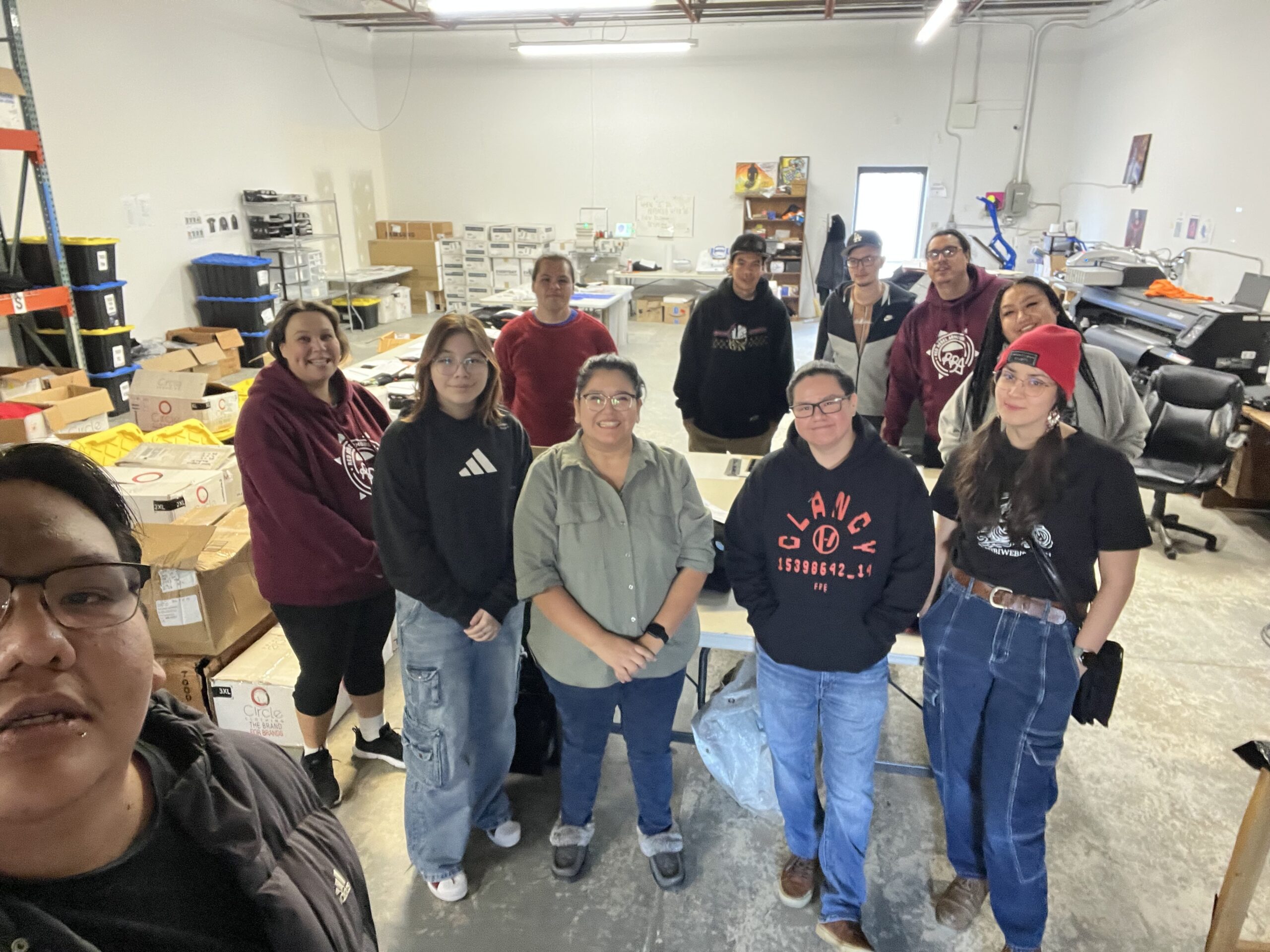
In 2023, RRC Polytech and the Campus Store partnered with Métis artist Shayre Curé to create an original design for a Red Shirt for MMIWG2S, the proceeds of which go to the Mínwastánikéwin Truth and Reconciliation Award for Indigenous students. The bursary, valued at $1,000, aims to alleviate some financial stress for Indigenous students. The shirts are produced and ordered through Red Rebel Armour, owned and operated by RRC Polytech alum Sean Rayland-Boubar. 

This October 4, we encourage you to view resources available through the Library, including the Library Guide, films like Felicia Solomon’s Story, and Tina Fontaine: A Murdered Girl’s Legacy from CBC Curio; and films through the National Film Board like Finding Dawn, The Red Dress, and this river.  

The Government of Canada’s National Inquiry into Missing and Murdered Indigenous Women and Girls always has free resources available, including direct access to the Final Report itself.  

Many Indigenous organizations have additional programs that support the National Inquiry and education on Missing and Murdered Indigenous Women, Girls, and Two Spirit People like the Southern Chiefs’ Organization Inc. MMIWG2S and Violence Prevention.  

We also acknowledge that this observance may be emotionally taxing, especially for Indigenous students and employees. Please remember that outside of formal events in which they agree to participate, Indigenous community members may decline discussing this observance because of its emotional and cultural impact.  

Thank you, 

Fred Meier, President and CEO 

Dr. Christine Watson, Vice President Academic

Jamie Wilson,  Vice President, Indigenous Strategy, Research and Business Development

Giselle Martel, Vice President, Finance and Administration

Melanie Gudmundson,  Chief Human Resource Officer

David Petis,  Executive Director, Advancement

Inaugural cohort of Indigenous entrepreneurs driving innovation at RRC Polytech’s business incubator, Mittohnee Pogo’ohtah 

October 2, 2025

New collaborative program launches to strengthen Indigenous businesses, knowledge, innovation and community in Manitoba

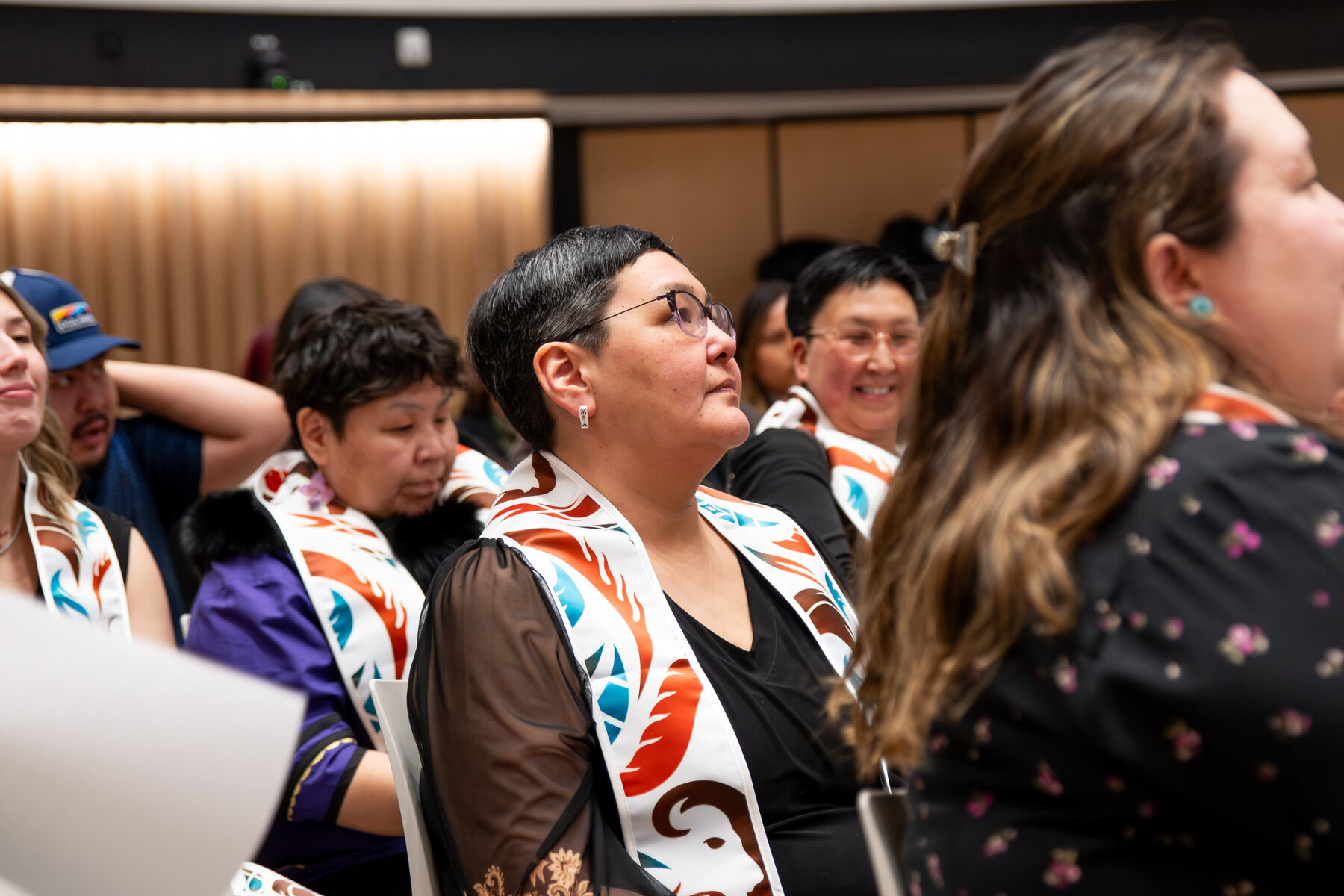
Winnipeg, Manitoba on Treaty No. 1 Territory – the lands of the Anishinaabeg, Ininiwak, Anishininwak, Dakota Oyate, and Denésuline, and the National Homeland of the Red River Métis – Mittohnee Pogo’ohtah (Mittohnee)’s mission to bring more, local, Indigenous business ideas to life has begun with the launch of its inaugural four-month entrepreneurship program and celebration of its first ever cohort of determined entrepreneurs.  

Mittohnee is RRC Polytech’s business accelerator and incubator initiative – created by and for Indigenous entrepreneurs – to help aspiring and established business leaders build the necessary networks and access the support and training required for increasing the success of any new or existing venture.  

“By creating access, breaking down barriers, and ensuring Indigenous entrepreneurs have the tools to succeed here in Manitoba, Mittohnee Pogo’ohtah is opening new economic doors,” says Jamie Wilson, VP, Indigenous Strategy, Research and Business Development at RRC Polytech. “Whether it’s progressing a student’s idea from concept to reality or supporting an established Indigenous entrepreneur and/or band-operated business to pivot, scale up, or explore new partnerships, Mittohnee will transform experiential learning, innovation, and entrepreneurship into real business opportunities for Indigenous communities.” 

The name Mittohnee Pogo’ohtah comes from a Neynowaywin (Cree) expression that means ‘If you are going to do it, do it right. If you don’t know how to do it right, learn how.’   

Made possible by the power of partnership – between RRC Polytech, federal and provincial governments, and generous corporate partners, TD Bank Group and Canada Life, Mittohnee is a true collaboration and the first of its kind in Manitoba. As one of three Indigenous incubators in the Labs4 national network, it offers additional connections to the innovation ecosystem across the country.    

Mittohnee’s inaugural four-month entrepreneurship program will feature mentorship through an entrepreneur-in-residence, training workshops, networking events, opportunities to connect with other business leaders and even student competitions. Director, Amy Jackson, a proud member of Opaskwayak Cree Nation, dedicated community connector and entrepreneur who founded a successful venture called Nativelovenotes during the pandemic, has tailored the program for maximum impact. 

“From resources and connections to dedicated space for entrepreneurs to collaborate and grow their ideas, we provide everything they need in a really supportive environment,” explains Jackson. “When we help entrepreneurs succeed, they create jobs, build stronger communities, and inspire the next generation. The ripple effect is powerful.” 

Mittohnee is a natural but significant extension of RRC Polytech’s commitment to supporting Indigenous Peoples and communities. It will also benefit the students graduating from the Social Innovation and Community Development program in the School of Indigenous Education, who may wish to continue the pursuit of their project concepts.  

“These students, who know and understand their communities and the challenges they face, now have the resources to build on their education, take their ideas and solutions and create a business that moves their vision forward,” says Jackson. 

A total of thirteen entrepreneurs of First Nations and Métis descent, each with their own dream, idea or business-in-progress make up the initial cohort. In addition to their proud heritage, what they share is an eagerness to put in the work to learn, grow and succeed.  

Among them is Darion Ducharme. The award-winning founder of Teqare, an Indigenous-owned education and technology training company empowering youth, adults, elders, and organizations with hands-on workshops in cyber safety, scam prevention, financial literacy, digital literacy, and city life skills. He is already a passionate role model making a difference and can’t wait to take his story to the next level and continue to inspire positive change.   

“Teqare’s success, while amazing, has forced us to evolve from dealing with small scale numbers and assets to much larger and complicated transactions,” says Ducharme. “I see the training and mentorship through Mittohnee really helping me to manage business finances better to ensure return on investment and improve areas like proposal writing that will allow our company to grow and thrive.”  

The launch celebration includes a culturally grounded ceremony, a motivational panel discussion and feast at Manitou a bi Bii daziigae on the Exchange District Campus. Details that Ducharme says are important to continue building trust with Indigenous communities and that like the word Mittohnee itself, remind everyone that entrepreneurship is not just about ideas, but about how you approach the work.        

“This is a safe space where everyone makes you feel welcome, cared for, and valued,” says Ducharme. “I believe Mittohnee will help us create a culture of people who come together to do what they are called to do. I can’t wait to get started!” 

For more information or to join the next cohort, please email: mittohnee@rrc.ca 

Tomorrow is the National Day for Truth and Reconciliation

September 29, 2025

The following message was sent to All Staff and Students by Carla Kematch, Director, Truth and Reconciliation and Community Engagement:

The following message includes content that may trigger strong emotions, especially for those with lived experience. It is recommended that we all check in on ourselvesandaccess the resources available to us to ensure we are taking good care of our mental health.Access mental health and self-care resources here. 

Tomorrow, September 30th, is the National Day for Truth and Reconciliation, which grew from the Indigenous-led grassroots movement, Orange Shirt Day: Every Child Matters. The flags on RRC Polytech Campuses are lowered today and tomorrow as RRC Polytech observes Orange Shirt Day and the National Day for Truth and Reconciliation. 

We were fortunate this year to welcome Phyllis Webstad for a virtual keynote to launch Truth and Reconciliation and Community Engagement week. Phyllis’s story became the catalyst for Orange Shirt Day in 2013 when she founded the Orange Shirt Society, and later for the National Day for Truth and Reconciliation when the Canadian government ratified it as a statutory holiday in 2021.  

Despite its status, the National Day for Truth and Reconciliation is not just another holiday – it’s an opportunity to take a moment from our typical routines to reflect and learn. The National Day for Truth and Reconciliation brings to light everything that was taken from Indigenous Peoples through the horrific history of the Canadian Residential School System – culture and traditions, family, language, and sovereignty.  

This year, the annual RRC Polytech Orange Shirt was designed by Nursing student Dasia Chatkana and produced by local business Dreamcatcher Promotions. The design honours the bravery of children that escaped Residential Schools – many of whom risked capture or exposure to the elements. The Orange Shirt proceeds go to the Mínwastánikéwin Truth and Reconciliation Award for Indigenous students every year to contribute to financial reconciliation – and you can support the award by purchasing your orange shirt at the Campus Store.  

Throughout the week, we saw many thought-provoking engagement sessions led by internal leaders and community partners. Miigwech to everyone who took the time to participate in events, and especially those who have led the sessions this week. We recognize the emotional labour and vulnerability of sharing your stories and lived experiences.   

On Friday, Sept. 19, Steinbach hosted a community honour walk and featured keynote presentations from Residential School Survivors, live cultural performances and educational displays. Russ Mason, a Business Administration student at RRC Polytech, was among the organizers for this trailblazing event. 

Today, students in Culinary Skills (Indigenous) are working hard to make bison stew and bannock for the Buffalo Ceremony hosted by Keewatinohk Inniniw Minoayawin and N’Dinawemak, where Survivors and their families are being honoured in the community. 

As a post-secondary educational institution, Truth and Reconciliation is more than creating equal opportunities for Indigenous learners – it is also about ensuring the communities we serve learn the full and often-overlooked histories of this land. By centering the voices of Indigenous scholars, historians, and Knowledge Keepers, we help bring forward truths that were too long excluded from western textbooks and invite reflection on what those truths mean for us today. Observing and honouring the intent of the National Day for Truth and Reconciliation, and extending these learning opportunities throughout the year, strengthens our commitment to building a campus community that is safe, inclusive, and welcoming for all. 

Please note that RRC Polytech campuses are closed tomorrow, September 30. I hope that you were able to find some opportunities this week to engage, reflect, and connect in preparation for the National Day of Truth and Reconciliation. Everyone starts somewhere – this is a lifelong journey that everyone is encouraged to join. Tomorrow is also an opportunity in itself to attend community events, participate in Ceremony, read or watch, sit and reflect.  

Take good care of yourself and those around you and remember to reach out for support. 

Carla Kematch  | Director, Truth and  Reconciliation and Community Engagement
Indigenous Strategy, Research and Business Development

RRC Polytech campuses are located on the lands of the Anishinaabeg, Ininiwak, Anishininwak, Dakota Oyate, and Denésuline, and the National Homeland of the Red River Métis.

We recognize and honour Treaty 3 Territory Shoal Lake 40 First Nation, the source of Winnipeg’s clean drinking water. In addition, we acknowledge Treaty Territories which provide us with access to electricity we use in both our personal and professional lives.