Stay the Course Speaker Series: Judy Klassen
Inspiring stories from RRC’s Indigenous Alumni
How do successful people get to where they are? What did that journey look like? What did they learn and how did they stay the course? What does it mean to be an Indigenous student in post-secondary?
The Stay the Course speaker series is a hand from one generation to the next, hosted by Carla Kematch, Manager, Truth and Reconciliation and Community & Engagement. Every month, incredible RRC Indigenous Alumni share their experiences on their journey to success. Advancing Indigenous achievement at RRC means listening to Indigenous stories. This is just one of the many ways we can embed the efforts of Truth and Reconciliation in our daily lives.
Judy Klassen
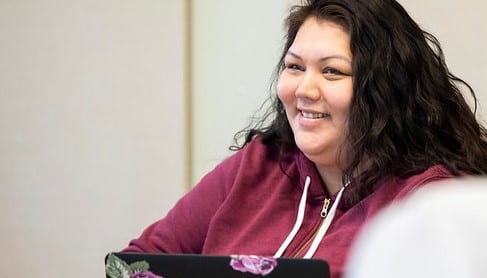
Judy Klassen was raised in St. Theresa Point First Nation and was the second eldest child to Charles and the late Lillian Wood. Both her parents attained their Bachelor of Education when she was young and became teachers in their home reserve. She grew up in her parent’s businesses throughout her young life. Her parents inspired her to get an education and their teachings taught her how to be self-reliant. Judy became an entrepreneur herself at a very young age by making and selling her native beaded crafts.
Judy went on to having six kids of her own, started many businesses throughout her life in St. Theresa Point but had to leave for higher education as she still wanted to attend post-secondary. She enrolled at Red River College in Steinbach and obtained a two-year business studies diploma, for which she made the Dean’s List. She was fueled by the knowledge that she easily handled a demanding family life, held a part-time job, plus she also took in three teenage nephews. With a total of nine kids in tow, she enrolled in the I.H. Asper School of Business at the University of Manitoba, graduating in 2013 with a Bachelor of Commerce (Hons.) Degree.
She went back to work in Steinbach and was working as a junior accountant when she was asked to run for political office. She took on a long-standing incumbent and won the seat as the Member of the Legislative Assembly for Kewatinook. It was within this role that Judy became the first ever First Nation female Interim Leader for a provincial party, the Manitoba Liberals, across Canada.
She then decided to toss her hat into the federal ring in hopes of knocking out the long-time incumbent there, but it was a successful failure. She shook up the North, but it simply wasn’t in the cards. She then was asked to run for Chief of her home reserve but decided to start off by running for Council. She became the Head Councillor but had to resign when one of her children developed a serious medical condition.
Judy loves the return to a private life, reconnecting with friends and family and is enjoying the peace that that brings. She is currently the Director for Greenville Place Inc. here in Winnipeg and is having a ball.
 Our first featured speaker is Arlene Flatfoot, an Anishinabe from the Ebb and Flow Ojibway Nation in Treaty Two Territory. After graduating from Ebb and Flow School in 1986, Arlene enrolled in the Secretary Machine Transcription course at Red River Community College. Her 2-year-old daughter was enrolled in the day care centre while she attended classes. It was extremely difficult for Arlene to leave her home reserve for a city that she did not know well. Being a young mother, Arlene was persistent to complete her course at RRC so that she could provide a good upbringing for her daughter. She always tries to live a life of pino-pimatiswin for children and her grandchildren. She will be graduating in October 2020 with a Master’s Degree in the area of Language and Literacy from The University of Manitoba.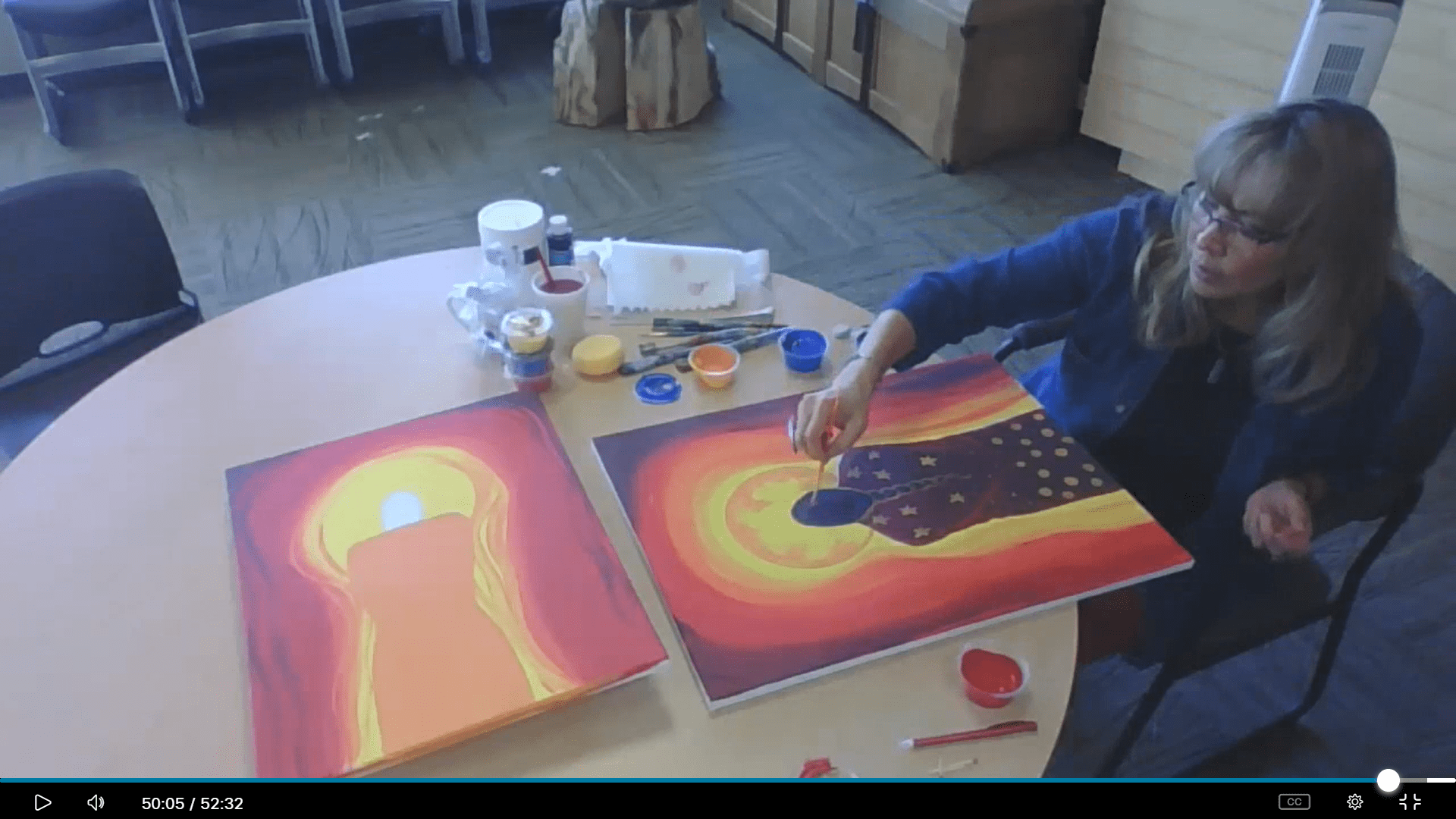


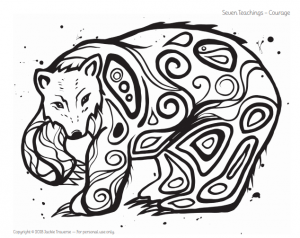 Winnipeg artist Jackie Traverse and her publisher Fernwood Publishing have released six free printable colouring sheets from her colouring books Sacred Feminine and IKWE for a relaxing stay-at-home activity for kids and adults. The beautiful images feature Ojibwe Florals, Courage from the Seven Teachings, selections “Honouring Women, Life Givers, and Water Protectors,” and more.