Indigenous Education

News and Events

Elder gifts Anishinaabemowin name to space at Portage Campus

January 7, 2026

Mushkode Pizhikeh (MUSH-koh-day BEH-zhi-keh) – Bison-Fire

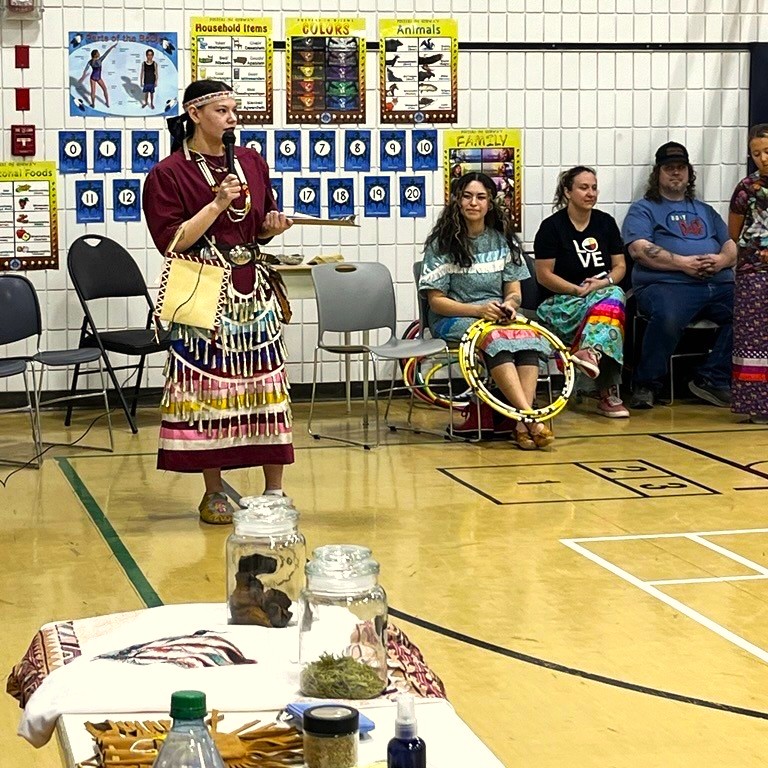
Elder Angela Roulette is a familiar face at schools in Portage la Prairie and a regular at the RRC Polytech Portage Campus. She brings traditional Teachings and stories to students of all ages – to children in grade schools and adults in post-secondary like RRC Polytech. She began her work with the Polytech over a year ago when she had offered a traditional prayer at convocation for the Portage Campus.

Room 2-16 on the second floor of the Portage Campus is home to a variety of events. Cultural gatherings, consultation sessions, and group meetings make use of the circular tables, where everyone is invited to sit at the same level. The ventilation system is a welcome function to allow for smudging in the space.

So, when Portage Campus recognized that the room could be a fitting space to carry an Indigenous name, the Polytech immediately turned to Elder Roulette.

Guy Moffat, regional manager for Portage Campus, approached Elder Roulette and offered Tobacco with the request for a name for the space.

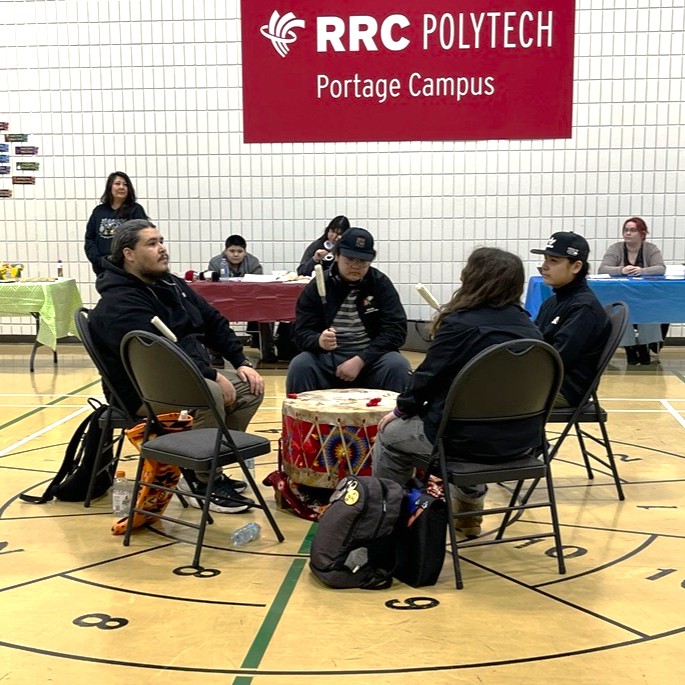
On Wednesday, December 10, Elder Roulette gathered with a group of RRC Polytech staff and members of the Portage community, including city councilors and the mayor to conduct the Ceremony to welcome the name into the space. Elder Roulette said a prayer in Anishinaabemowin before everyone was invited to smudge. Introductions went around the table and Elder Roulette shared the story of how the name Mushkode Pizhikeh came to be.

“The bison represents respect,” said Elder Roulette. “This space – what it should be about is respect. People care about this space, they keep it clean, keep it free from vandalism.”

Elder Roulette says that while in consideration for the name, she remembered something she had learned a long time ago: she needs to listen. Listen to Creator, listen to signs around her for guidance. She shared that when she was considering the name, she was inspired by a gift from her late sister: a keychain in the shape of a bison. It’s a gift from someone she loved dearly.

Elder Roulette, a fluent Anishinaabemowin speaker, decided that the room would be called Mushkode Pizhikeh – which means Bison-Fire in English.

After determining the name for the space, Elder Roulette knew she had to gather some advice on how the word should be written. She is a fluent speaker who learned the language the way that her ancestors spoke, so she wasn’t entirely sure how the word should be spelled using English letters.

She consulted with the Manitoba Indigenous Cultural Education Centre and the Chief of Sandy Bay First Nation to determine how the word should be spelled, and they came up with: Mushkode Pizhikeh.

During the Ceremony, Elder Roulette presented a jar of clear water. She explained that she had filled the jar of water four years ago when she had met Rachel Templeton, office manager for the Portage Campus, and by the time the jar made it to the Polytech for the Ceremony, about a sixth of it had evaporated from the sealed jar.

Elder Roulette shared that the jar represents the importance of water. It represents the teachings these walls will witness in the future.

“In this educational place, they might just see a jar of water. But it’s important to remember that water is life. I tell that to all the kids in this town,” said Elder Roulette.

When thinking about the bison and the respect it represents, Elder Roulette also noted that the sun, the energy of that fire within, the inspiration that drives us to learn, are all things that are present in this place of education.

Mushkode Pizhikeh.

The Ceremony concluded with a Feast and conversation in Mushkode Pizhikeh to honour the new name.

Staff are very excited and proud to welcome Mushkode Pizhikeh into a space where people connect.

“As a staff member, I believe building relationships with Elders like Elder Angela helps create familiarity and a sense of belonging. Many Indigenous students leave their home communities to attend college, so having a piece of home here, someone they can talk to who carries cultural knowledge and wisdom can make a big difference. It helps our college feel more welcoming and connected. It’s about turning spaces into communities,” said Rachel Templeton, office manager for Portage Campus.

Moffat says that they’re hoping to have an Indigenous Elder like Roulette or another Knowledge Sharer on-campus at least once a month going forward to enrich students’ experience at the Polytech.

“Portage La Prairie has a very high population of Métis people and four of our closest neighbours are First Nation Communities, which allows us at the Portage Campus to have many opportunities to build relationships with Indigenous groups. I am also a member of Suta Kachicha (Portage Urban Indigenous Peoples Coalition) and we work hard to build relationships so that Elders, Olders, and Knowledge Sharers can work time into their schedules to spend time with the students at the Portage Campus,” said Moffat.

Portage Campus is looking forward to creating a Culture Corner in the student lounge with the help of Elder Roulette and other community Knowledge Sharers, where Indigenous arts, books, and other resources will be displayed.

Ribbon Skirt Day – Jan. 4

January 4, 2026

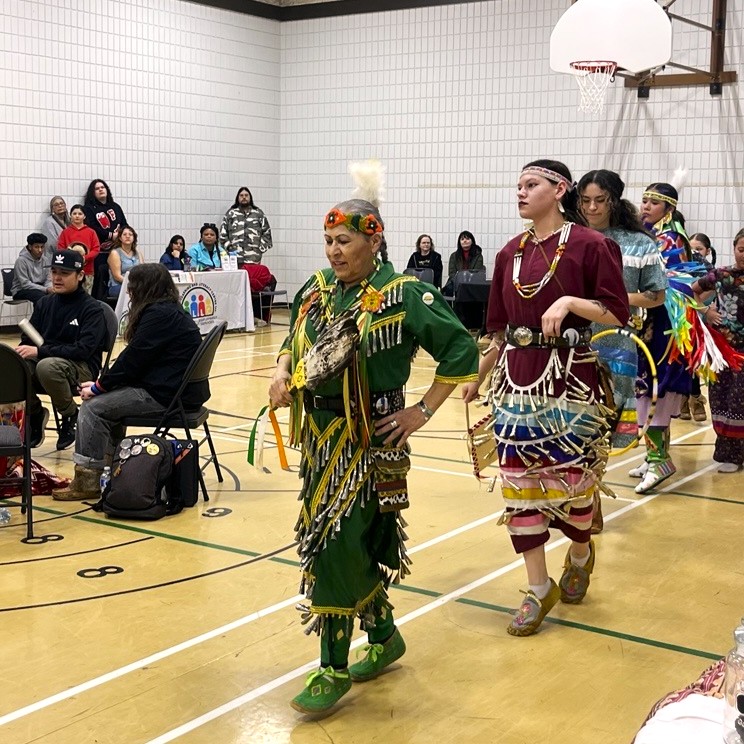
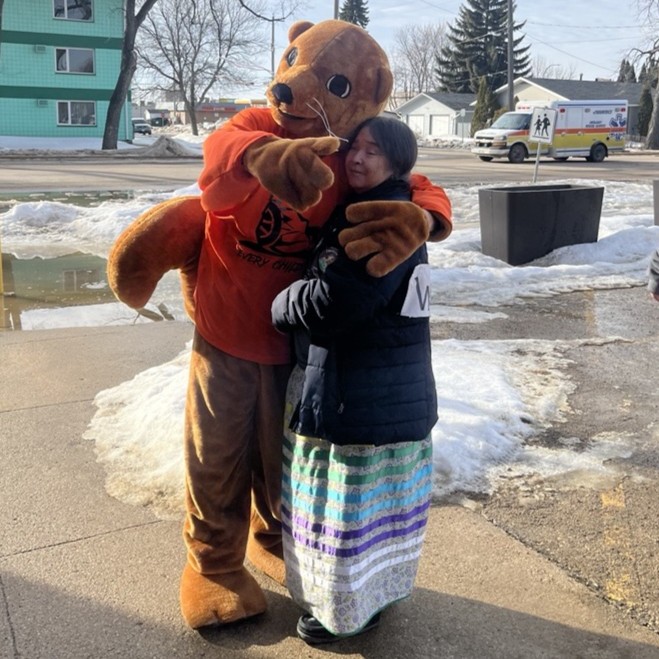
January 4 is Ribbon Skirt Day, a day to honour the beauty, strength, and resilience of Indigenous women, girls, Two-Spirit, and gender-diverse people.

Ribbon skirts are more than clothing – they are Ceremonial and cultural garments that carry teachings, identity, and pride. For Indigenous Peoples, our Ceremonial clothing is our formal wear. It reflects who we are, where we come from, and the responsibilities we carry.

Ribbon Skirt Day was established after Isabella Kulak, a young girl from Cote First Nation, was shamed in 2022 for wearing her ribbon skirt to school in Saskatchewan. What had been a moment of harm became a powerful movement of love and solidarity, affirming that Indigenous Peoples have the right to wear their cultural regalia with pride and without discrimination.

Wearing ribbon skirts and other traditional regalia is an expression of culture, sovereignty, and belonging. These garments deserve to be respected in all spaces – schools, workplaces, and public life – just as any other form of formal attire is respected.

On Ribbon Skirt Day, we celebrate cultural pride and stand against discrimination, affirming that Indigenous identities and traditions are to be honoured every day.

Reflections on Racism: Story, Spirit, and Immersion at RRC Polytech 

December 11, 2025

RRC Polytech’s Emerging Media and Production team is collaborating with Ininew artist and Artist-in-Residence Heather Endall and the Truth and Reconciliation and Community Development department to create Reflections on Racism, an immersive 360º installation that blends Indigenous storytelling, traditional art, animation, and sound. Centered on Michael Hutchinson’s How the Dog Learned to Dance, the project invites viewers to reflect on racism, empathy, and allyship while embodying Universal Design for Learning through accessible in-person, VR, and online formats. Through Endall’s powerful artwork and lived experience, the installation becomes a space for community voices, introspection, and meaningful dialogue on anti-racism at RRC Polytech.

Read the full story to learn how this groundbreaking project is bringing art, technology, and Traditional Knowledge together to inspire change on the Diversity Blog.

Launch Your IT Career with Confidence

December 4, 2025

Gain the technical expertise and industry experience to progress into advanced IT programs.

Take a confident first step toward a career in information technology with RRC Polytech’s Pathway to Information Technology Programs. This preparatory program helps you build the foundational knowledge, technical skills and learning strategies you need to succeed in IT and transition smoothly into a diploma program. You’ll explore essential concepts in IT, including software, hardware, networking, cloud services, cybersecurity, and full-stack development, while developing problem-solving, communication and professional skills that employers value. With hands-on projects, applied learning and wrap-around support, you’ll gain the confidence to progress in your studies and career.

Upon completing this pathway, you’ll be prepared to apply for reserved seats in the following progression programs:

  • Application Development and Delivery
  • Cybersecurity
  • Full Stack Web Development
  • IT Operations

These programs equip you with advanced, career-ready skills such as software development, network administration, information security, and cloud management, and include work-integrated learning experiences to build industry connections. Learn from the experiences of past students:

Take the first step toward your IT career — learn more about the Pathway to Information Technology Programs and register for Fall 2026.

Gwen Cook Memorial Award

November 28, 2025

Gwen Cook and Manitoba Moon Voices Inc.

The Gwen Cook Memorial Award was created to honour the memory of Gwen Cook (Bimosekwe) who was a founding Grandmother of the Manitoba Moon Voices Inc.’s (MMVI) Grandmother Advisory Circle.

The Gwen Cook Memorial Award will be presented to an Indigenous woman or gender diverse individual who is enrolled in post-secondary studies in Manitoba, is a member of MMVI, and exemplifies the qualities of the late Gwen Cook.

The $1,000 scholarship is intended for a person who is enrolled in post-secondary studies with a minimum 60% course load (9 credit hours per Fall and Winter term).

How to apply:

Eligible applicants must complete the application and submit it to MMVI

By email:

admin@mmvi.ca

By mail:

Swan Lake First Nation #8A Business Centre

165-200 Alpine Way, Headingly, MB

R4H 0B7

Applications must be received by 4:30pm Friday, January 2, 2026.

Completed applications must include:

  • Filled out application
  • Essay explaining what traditional leadership means to you and how you put these into practice (500 – 1000 words)
  • A copy of most recent transcript
  • Proof of Indigenous ancestry
  • A letter of recommendation
  • A resume

About Gwen Cook

Gwen was a proud Maskgeko Anishibaabe Ikwe who was born in The Pas, MB and grew up in Flin Flon and Cranberry Portage, MB. She was a loving mother, sister, grandmother and friend who had a strong and gentle spirit.

Gwen was a leader in the community who adhered to traditional practices, values and leadership. Education was important to Gwen. She attained her Bachelor and Master of Social Work and was pursuing a Doctoral degree before her passing.

Gwen worked in Winnipeg for forty years at various organizations where she loved working with people. She contributed to the community by volunteering on various boards like Ka Ni Kanichihk and the Grandmothers Working for Good Life Council. Gwen was also a committee member of the Master of Social Work Indigenous Knowledge Program (U of M). She provided expertise in social services and shared her traditional knowledge.

Gwen was an active member of the Three Fires Midewin Lodge for over twenty years and was a fourth degree Midewin woman.

Reclamation of the Anishinaabe traditional way of life was essential to Gwen and she encouraged others in their own healing.

Prioritize your well-being: access Indigenous counselling support

November 27, 2025

Connect with Indigenous counsellors for guidance, care, and success.

College life can be exciting and full of new opportunities, but it can also bring challenges that affect your mental health and well-being. Counselling Services at RRC Polytech are here to support you through personal struggles, help you develop strategies to manage stress, and guide you toward a balanced, fulfilling college experience. Taking care of your mental health is just as important as your academic success — it helps you stay focused, resilient, and confident as you navigate your studies and life beyond the classroom.

RRC Polytech offers flexible counselling options via phone or video conferencing, making it easier to access support no matter where you are. For students seeking culturally safe guidance, Indigenous counsellors are available to provide care that respects your values, experiences, and community connections. To meet with an Indigenous counsellor, simply complete the Counselling Services registration form and indicate your preference. Learn more and take the first step toward support at rrc.ca/counselling.

Indigenous Makers Market – Thursday, Dec. 4

November 24, 2025

Celebrate Indigenous Creativity at the Indigenous Makers Market

A correction has been made to this blog post. We sincerely apologize to Pitâw Mīno Muskîkî for incorrectly listing them as participating in this event. We regret any inconvenience this error may have caused.

RRC Polytech is proud to host an Indigenous Makers Market on Thursday, December 4, from 10am to 3pm in the Library Hallway at the Notre Dame Campus. This one-day market will bring together handmade works, stories, and community — guided by the vision and leadership of The Ode’imin Collective.

  • Thursday, December 4 • 10am – 3pm
  • Library Hallway, Mall Level, Notre Dame Campus

We invite students, staff, and community members to stop by the market, meet the makers, and support Indigenous artists. Every purchase directly contributes to sustaining Indigenous creativity, entrepreneurship, and youth mentorship.

For questions, contact Sara McIvor-Prouty at smcivor@rrc.ca.

About The Ode’imin Collective

The Ode’imin Collective Holiday Market is gearing up to brighten the season with a warm, community-focused celebration of Indigenous creativity. This festive market brings together a wide range of handmade goods crafted by talented Indigenous artisans, offering everything from beautiful gifts to meaningful pieces that reflect culture, skill, and story.

More than just a place to shop, the market highlights the incredible talent within the community and creates opportunities to uplift local makers. Visitors can connect with artists, learn about their work, and take home something truly unique. It’s a chance to support Indigenous creators, celebrate their contributions, and share in the spirit of the season.

Full-Circle in Circuitry

November 21, 2025

Electrical Alum Alfred Thompson returns to teach program he took in Fisher River Cree Nation

Alfred Thompson walked into the classroom this past spring for the first time in 11 years – and this time, rather than a student, he was the instructor.

In 2014, Thompson took the Electrical program at the RRC Polytech campus in Fisher River Cree Nation. His interest in the industry grew from the problem solving and independence he gained while working hands-on and the satisfaction of seeing results firsthand. Today, he’s in Peguis First Nation, teaching 14 students in the same five-month Electrical program being offered in community from April – November 2025 with extra time to incorporate student success strategies, including Elder support and Teachings.

“[Teaching is] pretty good – I’m myself around the students now. That first day, though, I was practicing before, and I was like, ‘oh man, I’m really gonna just go talk like this in front of other people.’ I was so nervous,” said Thompson.

Read the full story on the MarComm blog.

Step Into Healthcare with Confidence

November 20, 2025

Prepare for a rewarding future in healthcare.

Build the knowledge, technical skills and confidence you need to transition into RRC Polytech’s health programs and begin a career helping others.

Through Pathway to Health Programs, you’ll strengthen your academic foundation while exploring the many exciting and in-demand careers in health care and medical technology. You’ll practice hands-on skills, develop strong study habits and connect with supportive instructors who are invested in your success.

This program gives you the chance to discover your strengths, gain practical experience and prepare yourself for the rigorous learning ahead. With tailored supports and opportunities to grow your skills, you’ll set yourself up for success in RRC Polytech’s health sciences programs.

After completing this pathway, you’ll be prepared to apply for limited reserved seats in the following programs:

  • Dental Assisting
  • Nursing
  • Paramedicine – Primary Care Paramedic
  • Science Laboratory Technology
  • Veterinary Technology
  • Diagnostic Medical Sonography
  • Medical Laboratory Science
  • Medical Radiologic Technology

Read about these Success Stories in Pathway to Health Programs:

Placeholder for story here

Take the first step toward your healthcare career — learn more about the Pathway to Health Programs.

Moojigitoodaa Aki – Environmental Studies and Land Relations Diploma Program

November 17, 2025

Become a leader in the field of environmental protection 

RRC Polytech is introducing the new Environmental Studies and Land Relations diploma program – a scientific, land-based program that combines environmental science, fieldwork, and Indigenous knowledge in meaningful, practical ways. This program is designed for learners who want to work directly with the land and support communities. Classroom learning blends with land-based experiences, hands-on research, and Work-Integrated Learning opportunities across Manitoba. 

Throughout the program, students gain essential technical abilities in laboratory work, field sampling, safety practices, and wilderness preparedness across seasons. Courses connect environmental testing with Indigenous knowledge, led in partnership with community Knowledge Keepers and industry advisors. Students develop skills in data collection, environmental assessment, and monitoring of land, water, soil, and biodiversity, which will prepare them to support sustainable resource management with cultural respect. Using a Two-Eyed Seeing approach, students will learn to evaluate environmental impacts, work with community frameworks, and consider reconciliation and sovereignty in environmental planning and management. 

The program emphasizes communication and career readiness. Students build practical skills in writing, speaking, digital fluency, and job preparation, including resumes, interviews, and workplace collaboration. These skills support success in the environmental sector and help students navigate evolving roles in conservation, consulting, and community-based research.

Students participate in a Work-Integrated Learning (WIL) opportunity, where they will gain real-world experience with community or industry partners. Whether choosing a paid co-op placement or collaborating on a full-term community or industry research project, students will apply their skills in environmental monitoring, conservation, and land stewardship while developing professionalism, collaboration, and confidence in their chosen field. 

Graduates leave with the ability to build relationships with communities, analyze complex environmental issues, collaborate in research, prepare policy recommendations, and support decision-making processes that honour Indigenous rights and land connections. With a strong foundation in science, Traditional Ecological Knowledge, and applied fieldwork, the Environmental Studies and Land Relations diploma program equips students to become knowledgeable and ethical environmental practitioners committed to stewardship, sustainability, and reconciliation. 

Courses at-a-glance 

Term 1 – Fall  
Foundations of Environmental Studies and Indigenous Knowledge 
Field Skills in Wetland Ecology and Land Relations 
Sustainability, Truth and Reconciliation 
Communication for the Workplace 
Indigenous Knowledge and Environment Industry Skills 1 
Term 2 – Winter  
Indigenous Stewardship and Environmental Assessment 
Communication Strategies 
Environment Studies Policy, and the Natural World 
Fieldwork and Preparedness 1 
Indigenous Knowledge and Environment Industry Skills 2 
Term 3 – Summer (year 1 or 2) 
Workplace-Integrated Learning 
Paid co-op or Community industry research project 
Term 4 – Fall  
Forestry Stewardship 
Land Use Planning and Resource Stewardship 
Environmental Education and Public Policy 
Indigenous Knowledge and Environmental Industry Skills 3 
Environmental Business Development and Entrepreneurship 
Term 5 – Winter 
Forestry Stewardship 
Land Use Planning and Resource Stewardship 
Environmental Education and Public Policy 
Indigenous Knowledge and Environmental Industry Skills 3 
Environmental Business Development and Entrepreneurship 

Employment potential 

Graduates of the program will be prepared for careers in: 

  • Environmental and resource management for Indigenous communities 
  • Environmental education and land-based learning  
  • Advocacy and policy work in environmental justice 
  • Nonprofit organizations focused on Indigenous rights and environmental protection 
  • Government agencies involved in land management, conservation, and sustainable development 
  • Academic and research institutions 

Registration 

Applications for Fall 2026 will open in January 2026 when the Program Explorer and Catalogue has been updated. Subscribe to this blog to get automatic updates right to your inbox! Scroll the list and select “Indigenous Education.”

For more information on the application process and admission requirements, contact the Indigenous Academic Advisor at indigenous.advisor@rrc.ca.  

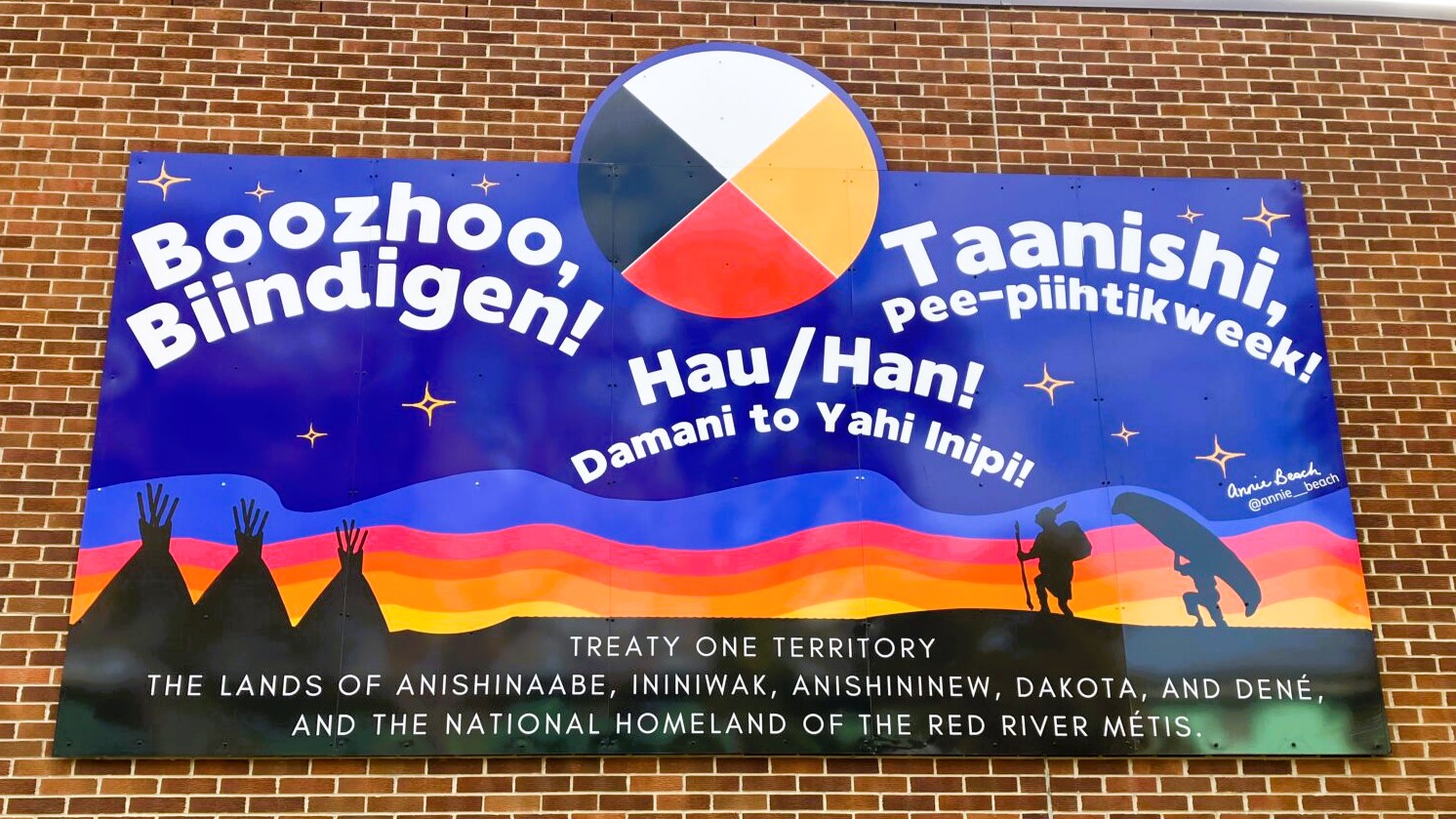
RRC Polytech campuses are located on the lands of the Anishinaabeg, Ininiwak, Anishininwak, Dakota Oyate, and Denésuline, and the National Homeland of the Red River Métis.

We recognize and honour Treaty 3 Territory Shoal Lake 40 First Nation, the source of Winnipeg’s clean drinking water. In addition, we acknowledge Treaty Territories which provide us with access to electricity we use in both our personal and professional lives.