Indigenous Education

Student Success

2023 Mínwastánikéwin Award Recipients

June 27, 2023

The Mínwastánikéwin Award, named for the Cree word that means ‘to set it right’, was created in 2019 in partnership with RRC Polytech’s Campus Store during the first Truth and Reconciliation Week. Applicants were asked to write a one-page essay on what Truth and Reconciliation means to them as residential and day school survivors and children of survivors.


When we talk about Truth and Reconciliation, we mean that we want to set it right.

To set right the damage that Indigenous Peoples have endured over the last few centuries.

To set right the broken bones, so they might heal properly, to heal stronger.

To set right the history and perception of Indigenous Peoples, so the world might know the truth, to come together stronger.

This year, two recipients earned the Mínwastánikéwin Award: Rebecca Choken and Wendy Monias.

Rebecca Choken came to RRC Polytech unexpectedly. She’d been considering the future with her three-year-old daughter, who has Autism. Rebecca knew that she didn’t want to continue living off Employment and Income Assistance—she wanted to give her daughter stability. Her love and dedication for her daughter motivated Rebecca to seek new avenues to improve herself.

Rebecca applied for Business Administration and the College notified her of an opening at the Exchange District Campus for January 2023, which she readily took. Rebecca was in a whirlwind within the first few weeks of accepting the offer—she scrambled to find a daycare that could provide specialized care for her daughter, secured funding from her band, and gathered the necessary supplies to succeed in the program. The last time she’d been in school, it was pencils and paper. Everything happened so quickly, but she was ready for that first week of classes in January.

“I never thought I would get this award, at first. Sharing my story and my past trauma—it made me stronger as a person. The healing, just to be here… I sometimes think of my brother, and those that have passed on; they’d want the best for me,” said Rebecca.
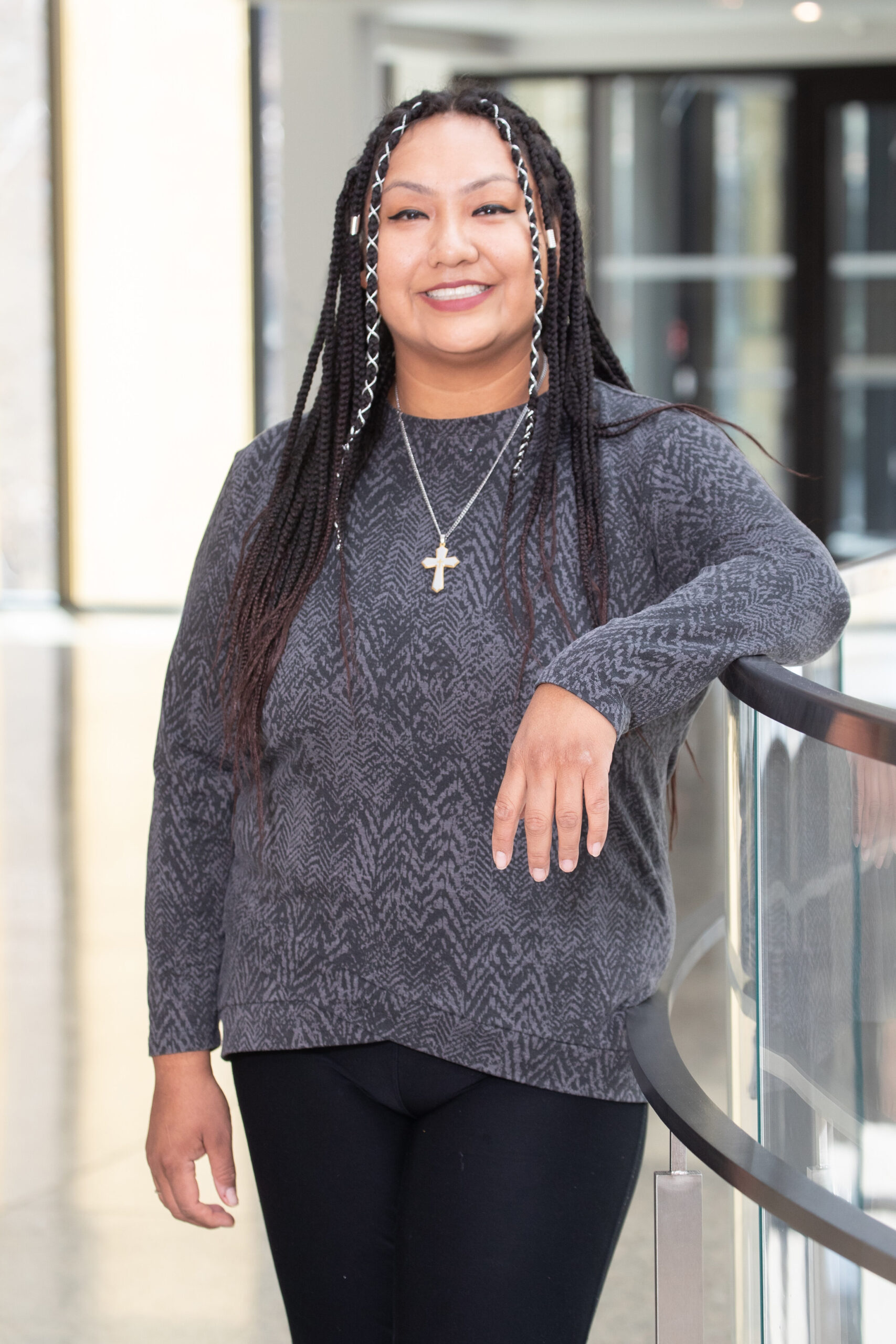
Rebecca Choken.

The feeling of being undeserving, of being unworthy, of not having it as hard as others, is one of many symptoms of the intergenerational effects the residential school and day school legacy has had on survivors and children of survivors.

To heal, and to recognize when you need help healing, is a lot of lonely work. When much of your life has been painted with strokes of trauma and blots from loss, seeing an end to the cycle can be difficult. The work trauma creates doesn’t end with the trauma itself; the responsibility to heal is also thrust upon you. The mess trauma made in your home is one you task yourself with cleaning up.
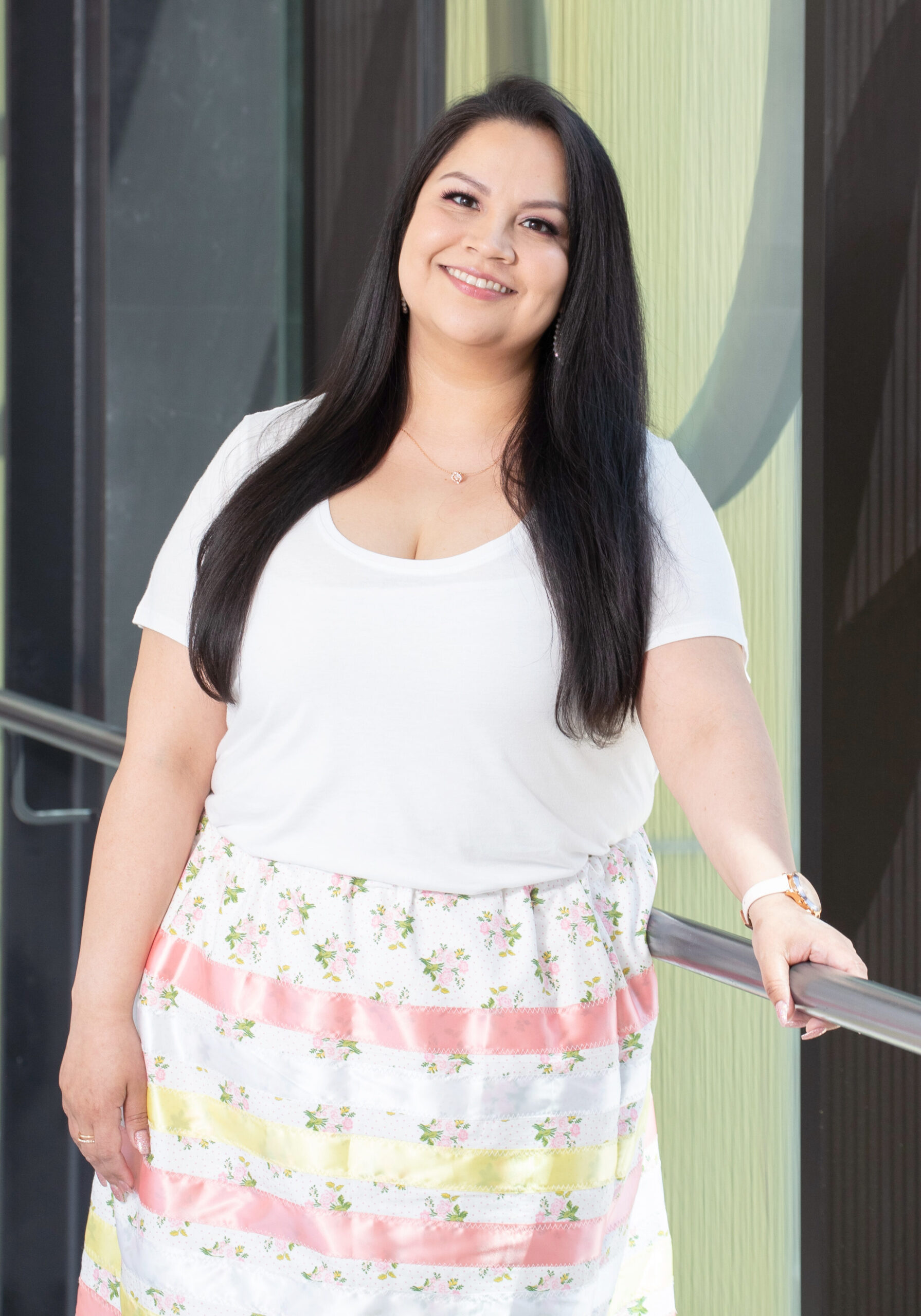
Wendy Monias.

Two years ago, on her 36th birthday, Wendy Monias joined the Red Road—a way of life dedicated to spiritual growth. She woke up that morning and decided that enough was enough and she was going to start a new chapter of her life. Wendy, who’d attended Indian day school, had moved to Winnipeg from Garden Hill First Nation in northern Manitoba when she was 12. The distance the move created was not only physical, but cultural and spiritual. Now, she’s actively reclaiming her culture and working towards her diploma in Business Administration. Last fall, Wendy went on her first hunting trip, caught her first moose, and attended her first medicine walk.

“It’s backwards. Elders are saying goodbye to so many young people, when it should be the young people sending off our Elders,” said Wendy. “I want to be a good example to my kids; to show them you can be strong at home, you can be graceful with yourself. I am accountable to my own healing.”

Wendy’s late kookum, Kelly McKay, was a residential school survivor and graduate of the same Business Administration program at RRC Polytech many years ago. Wendy credits her inspiration to her kookum, whom she recounted as kind, funny, and hard-working: everything Wendy wants to be for her kids and the people she’ll help in the future.

“Her attention to detail, organizational skills and drives inspires me every day. She knew how to keep her home tidy, study regularly and always had time for me. In times where I think I can’t balance everything, I think of her,” Wendy recalled.

The risk of applying for a bursary is not only, “What if I don’t get it?”, it is also, “What if I am taking it from someone who needs it more?” These doubts are echoed all throughout the submissions this year. Despite this, over 25 Indigenous students still applied – more than any other year. Over 25 Indigenous students still bore their teeth and their hearts, and told their stories.

Rebecca says the award was well-timed for her. She’d started her program just days after the new year and with a deadline of January 31, she was able to submit her application just under the wire. The award, she says, will ease the financial strain that’s come with the rapid-fire changes in her life, and help her spend more time with her daughter.

When she’s finished with her diploma, Rebecca says she wants to start her own business. She has friends in the Indigenous hip hop scene with whom she could potentially partner with in business. In the future, she wants to build a fashion apparel brand where she can integrate her beliefs, culture, work systems, and ancestors into the brand. She used to do beadwork as a hobby and has ideas to work accessories into the brand.

“Receiving this award means a lot to me, I’m very honoured,” said Rebecca. “It represents a lot of resilience in Indigenous People, it’s not only just me—there’s a lot of people that have been through similar things. You can overcome that. You can still pursue your dreams as long as you put your mind to it.”

For Wendy, the award helped her to make more time to spend with her kids. Between the time it takes to get to and from school, pick everyone up and head home, cooking meals and prepping for the next day, precious little time was often left in the days for Wendy to spend with her five kids. With the bursary, it freed up cumulative time that allowed her and her kids to sit down to full dinners and connect with each other after their long days.

“We’re really tight, me and my kids. The award’s helped me to catch up on things that needed catching up, and a huge weight has been lifted. I want my kids to have all the opportunities they can; you know, bible camps, winter retreats, school trips. My eldest, he’s 18; we’re fundraising for his band trip to Edmonton,” said Wendy.

Wendy hopes to have an office job when she’s finished with her diploma. She’s majoring in Marketing but might switch to Human Resources. She wants to open more doors and help other Indigenous women see where they can go.

For survivors and children of survivors, confronting your past is like screaming out into the sky, alone: baring your teeth and your heart and telling your story, tearing through your raw emotions and the weight of the things past. And it is, without fail, surprising to hear the sky speak back.

RRC Polytech recognizes the role it has as an educational institution in Truth and Reconciliation, in making it right. When Indigenous learners choose to become students at RRC Polytech, the College seeks to ease the burdens that resonate intergenerationally within survivors and the children of survivors of residential and day schools, while showing the rest of the community why this work is important through the stories of the Indigenous People this work affects.


To learn more about the Mínwastánikéwin Award, see the Awards, Bursaries and Scholarships catalogue.
Student trio enters federal mentorship program

June 16, 2023

The program is focused on increasing female representation in science fields and integrating Indigenous knowledge.

Three students from RRC Polytech’s Social Innovation and Community Development program have been accepted into Natural Resources Canada (NRCan)’s Sistering Indigenous and Western Science Program (SINEWS), one of eight national teams accepted for 2023.

SINEWS provides mentorship and supports to pairs of students or recent graduates to increase engagement with Indigenous and non-Indigenous women in scientific disciplines, and one team member must be Indigenous.

The program made an exception for the RRC Polytech team of three: Sharon-Rose Bear, a Cree woman from Muskoday First Nation in Saskatoon, Brooke Hardling-Boboski from Winnipeg, and Tayla Fernandes Agostinho, an international student from Brazil.

“It’s a major step up to be working with government scientists on a real community research project,” said Bear. “The three of us know our different passions, strengths, and weakness and we are much more confident to take this on as a full team.”

Supporting Indigenous communities

The team is responsible for proposing, developing, implementing, and reporting on research projects over four to eight months and integrating traditional Indigenous knowledge and research practices into western science for a more holistic approach to their research. The RRC Polytech team will focus their project on researching solid waste management practices.

“I’m really keen to work with Elders to learn how solid waste is affecting their community, and how their waste management practices have changed over time,” said Bear. “We also want to discover the impact that these practices are having on the environment.”

The students receive hands-on support and guidance from the SINEWS secretariat, Elder-in-Residence, NRCan scientists, and community Knowledge Keepers. SINEWS provides each student group with a $10,000 budget for research expenses and a $4,000 training allowance. All resulting research will be owned and used by the Indigenous community partner.

Jamie Wolfe, SINEWS Program Manager, noted the “reverse mentorship” that the students provide to existing employees and mentors.

“They often bring fresh perspectives on how to approach the research in culturally appropriate ways, as well as establishing respectful relationship-building practices and ethics protocols while engaging with communities,” said Wolfe.

Indigenous education and mentorship at RRC Polytech

Bear – a single mom of two – just finished her second year of Social Innovation and Community Development and plans to enter the Indigenous Social Entrepreneurship program next year.

On top of her academic studies, Bear volunteered with RRC Polytech’s Indigenous Student Support & Community Relations R-Crew over the past year, where she supported and encouraged other Indigenous students while assisting with various duties.

“With R-Crew, I’ve been able to interact with Elders and advisors on a regular basis who, along with several influential instructors, have been mentors or role models for me,” said Bear. “They’ve given me the support to be a successful student and the confidence to take on an opportunity like SINEWS and be excited for my career.”

One of those role models has been Indigenous Education instructor and official SINEWS mentor Ginger Arnold, who identified the opportunity and supported the students in applying for the program.

“This is such an exciting opportunity for students to elevate their skills and experience while getting their foot in the door with the federal government and making a real impact on an Indigenous community,” said Arnold.

Practicing Truth and Reconciliation

Bear acknowledged that it is not uncommon for non-Indigenous students to have negative pre-conceptions about Indigenous people, “but usually once they learn the historical Indigenous context, such as what is taught at RRC Polytech, it opens their eyes.”

Bear believes reconciliation is a two-way street.

“Personally, working with people who come from different cultures with different worldviews has really benefited me – it helps me open my mind to see from other perspectives, and see the bigger picture.”

RRC Polytech’s Strategic Plan 2022-2026 prioritizes Indigenous achievement with its second strategic commitment: Embedding Truth and Reconciliation and Equity, Diversity and Inclusion in everything the College does.

“Indigenous knowledge is integral to approaching research holistically and ethically, especially when it affects Indigenous communities; Indigenous RRC Polytech students are actively changing the way we do things and think about things, and it’s amazing to see that extend to industry and community,” said Jamie Wilson, VP, Indigenous Strategy, Research, and Business Development at RRC Polytech.

Identifying these opportunities and encouraging students to pursue them are just one facet of supporting Indigenous achievement. As a polytechnic, RRC Polytech provides students with the training and experiential learning opportunities they need to start making an imminent difference before they even graduate and make the impact they want to see in the world.

Indigenous Culinary Students Feast on International Experience

March 24, 2023

Indigenous Culinary Class were invited to assist chefs at the International Indigenous Tourism Conference.

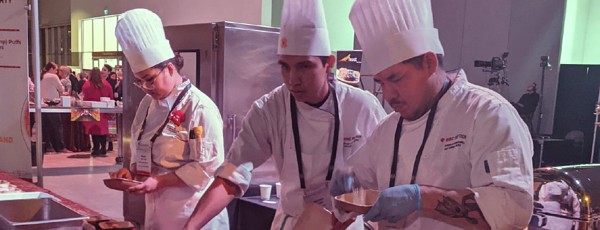
A world-class event, a thousand hungry attendees, and seven eager first year Indigenous Culinary Skills students from RRC Polytech were among the ingredients in a recipe for success, served up in downtown Winnipeg last week.       

Opportunity knocked when organizers of last week’s International Indigenous Tourism Conference (IITC) reached out to the College looking for help to feed visitors to the RBC Convention Centre attending the largest Indigenous tourism event in the world.    

Indigenous Culinary Skills instructor, Chef Patrick Anderson didn’t have to convince his current class to step up and show off their skills because all seven first year students immediately volunteered and even organized their own carpool to ensure they didn’t miss the chance of a lifetime – to get into the kitchen at a massive international event to prepare upscale traditional dishes and learn from world-renowned top chefs.

“Our students got to work shoulder-to-shoulder with 11 of the most accomplished Indigenous chefs from all over North America, helping them make 650 portions of some of the most well thought out and delicious Indigenous dishes,” said Chef Patrick. “Even I was blown away by all the amazing flavors they developed and served. This menu was proof that Indigenous cuisine is so much more than Bannock, berries and smoked meat.” 

Although cooking for a convention was a first-time experience for most of the students, they leaned on their training, their mentors, and each other to embrace the moment and perform to rave reviews. Their confidence was off the charts by the end of the night as they enjoyed samples of their work and even danced a few friendly jigs with event coordinators and guest chefs in celebration.   

“It was a really useful experience – I’d been to conferences before when I worked in healthcare, but being able to help prep and plate next to these chefs was so exciting,” said student, Belinda Johnson.

The professional chefs could not stop raving to instructors about how diligent and skilled the students were, and even offered jobs to a couple of them.

“Our team did not look like first year culinary students at this event – they acted like graduates. They worked like experienced cooks that have an incredibly bright future ahead of them. One of the coordinators came up to me and told me she believes the future of Indigenous culinary industry is very bright knowing there are programs like ours.”

Chef Patrick Anderson

On the heels of the students’ success at IITC, the Wiisinin Diner is now operating Tuesday to Friday at  RRC Polytech’s Notre Dame Campus. From March 14 to April 21, the Culinary Skills students will get hands-on experience by serving short-order meals to the College community.

The Wiisinin Diner menu will be posted daily online. Staff and students must purchase vouchers at the Campus Bookstore, place their orders for breakfast or lunch online, then take their vouchers over to Prairie Lights Dining Room to pick up their meal. Please note the Campus Bookstore will be closed March 29, 30, 31 so you are encouraged to purchase vouchers in advance for these dates.

Honouring Growth: First Bead Ceremony Celebrates Student Journey

December 7, 2022

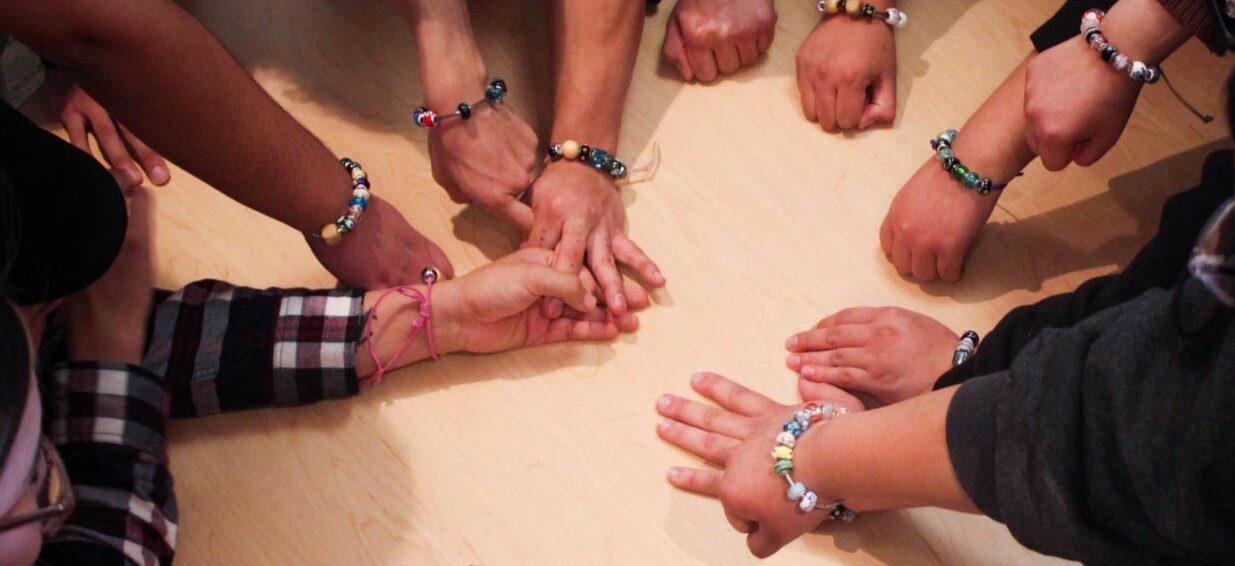
On Dec. 5, College Transition students received beads and a bracelet to recognize the sacred Cree Teachings they attained during the first four months of the eight-month program.

The teachings represented by the beads are based on the sacred Cree Teachings of self-determination, culture, and interconnectedness, which are also reflected in seven of RRC Polytech’s ten commitments outlined in the 2015 Manitoba Collaborative Indigenous Education Blueprint for Universities, College and Public School Boards.

Students learned how to incorporate the teachings and live a healthy life based in their strength and ability to live and work with a double worldview approach. Each student chose their beads for further connection to the teachings, which were adapted to apply to each students’ own nation.

Instructor and Knowledge Keeper, Marilyn Dykstra, opened the ceremony with a welcome and a brief explanation of College Transition: the program is designed to help learners prepare for post-secondary education with classes in communication, math and science, career and professional development, and Indigenous cultures and practices. The program also has a dedicated practice in reconciliation.  

Following Marilyn’s welcome, students from Treaty 1 Territory, Treaty 5 Territory, and Nunavut took turns presenting their names and home communities in land acknowledgements they developed together in relation to each of their nations.

Every student was presented their beads from staff that supported their journeys, including Jamie Wilson, VP of Indigenous Strategy, Research, and Business Development; Fred Meier, President and CEO of RRC Polytech; and the Deans of the School of Indigenous Education and the School of Skilled Trades and Technology.

“Education is about walking with learners while they grow all parts of themselves. The students’ statement that they made at the end of their land acknowledgements stand—’We are the connected spirits of our land.’ It’s our responsibility to support that connection because education is not just about reading books.  It’s how we are all interconnected in spirit and in reconciliation.  When students grow, so do our kinships, communities, nations, environment, and ancestors,” said Marilyn.

This was the first Bead Ceremony held for College Transition and the students are looking forward to their next set of traditional teachings in term two, which starts January 2023!

To learn more about College Transition, visit the Program Explorer page.

Sistering Indigenous and Western Science Information Session – Dec. 12

December 5, 2022

Sistering Indigenous and Western Science (SINEWS) is a paid mentorship program for female-identifying students.

SINEWS supports pairs of students in the development and implementation of projects that address the needs of Indigenous communities. Selected projects will focus on braiding traditional Indigenous knowledge with western scientific methods under the guidance of experienced research scientists, Elders, and community knowledge keepers. At least one member of each pair needs to be Indigenous to qualify for this program.

  • Monday, Dec.121:30pm
  • Virtual Teams Meeting – register at the link below

This information session will cover the fundamental aspects of the SINEWS program and the application details. The presentation and slideshow will be about 30 minutes and time will be allotted at the end for a Q&A.

For more information and to apply to SINEWS, visit the Government of Canada website Sistering Indigenous and Western Science program (nrcan.gc.ca).

Kita Kiskihtihtakwaw: So They Will Know – Nov. 10

November 9, 2022

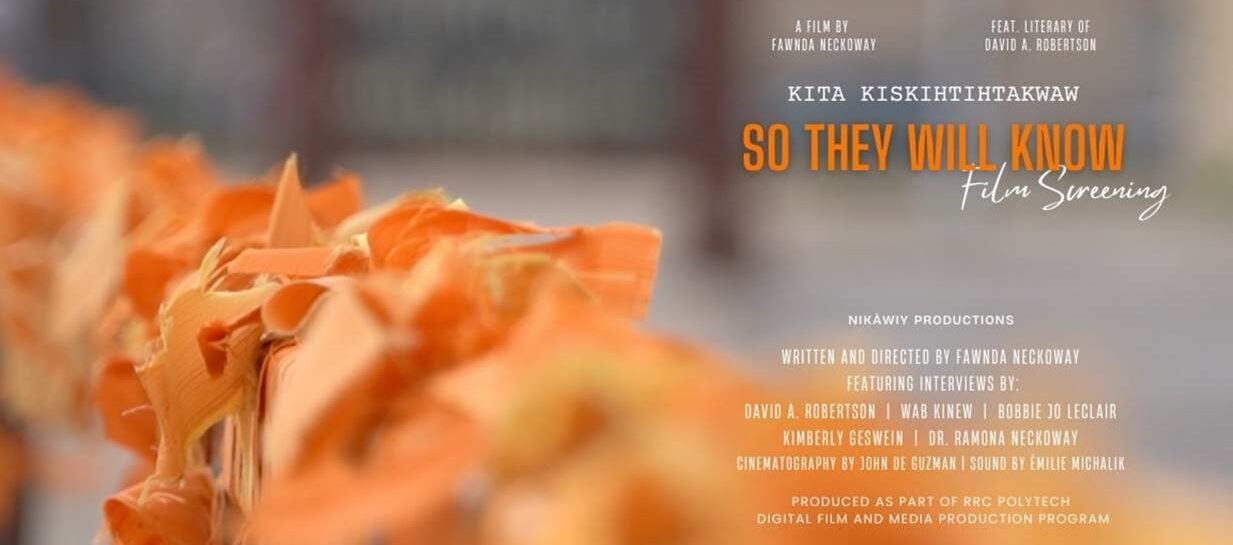
RRC Polytech’s Digital Film and Media Production Program and Nikâwiy Productions are proud to present the first public screening.

Fawnda Neckoway makes her directorial debut in this heartwarming 20-minute film in honor of a hopeful future when it comes to discussing a difficult part of history with the young ones in our lives. She is joined by community leaders who offer valuable insight and resources in support of carrying on important conversations.

Inspired by an innocent question, and the literature of author David Robertson, STWK features interviews with David Robertson, Wab Kinew, Bobbie Jo Leclair, Kimberly Giswein and Dr. Ramona Neckoway.

Moderated by Aaron Zeghers, the evening will feature an opening film A Moccasin Creation Story, and host a brief informative session with Industry Representatives such as Film Training Manitoba, Red River College Polytechnic and the Winnipeg Indigenous Filmmakers Collective. All are welcome! Light refreshments will be available. 

  • Thursday, Nov. 10, 2022 • 7:30pm
  • Roundhouse Auditorium, Manitou a bi Bii daziigae, Exchange District Campus

Limited seating available. Tickets are free.

About Kita Kiskihtihtakwaw: So They Will Know

The name of the film was gifted from her aunt who said in a conversation ‘they need to know’, which later translated to the Inthinew (Cree) language as Kita kiskithihtahkwaw: ‘So They Will Know’. We acknowledge the elders/survivors who lived through Residential Schools and remember the ones who did not make it home.

RRC Polytech campuses are located on the lands of the Anishinaabeg, Ininiwak, Anishininwak, Dakota Oyate, and Denésuline, and the National Homeland of the Red River Métis.

We recognize and honour Treaty 3 Territory Shoal Lake 40 First Nation, the source of Winnipeg’s clean drinking water. In addition, we acknowledge Treaty Territories which provide us with access to electricity we use in both our personal and professional lives.