Indigenous Education

News and Announcements

Family Strength Inspires Healing and New Career Path

April 29, 2021

MÍNWASTÁNIKÉWIN TRUTH AND RECONCILIATION BURSARY RECIPIENT INSPIRED BY GENERATIONAL HEALING

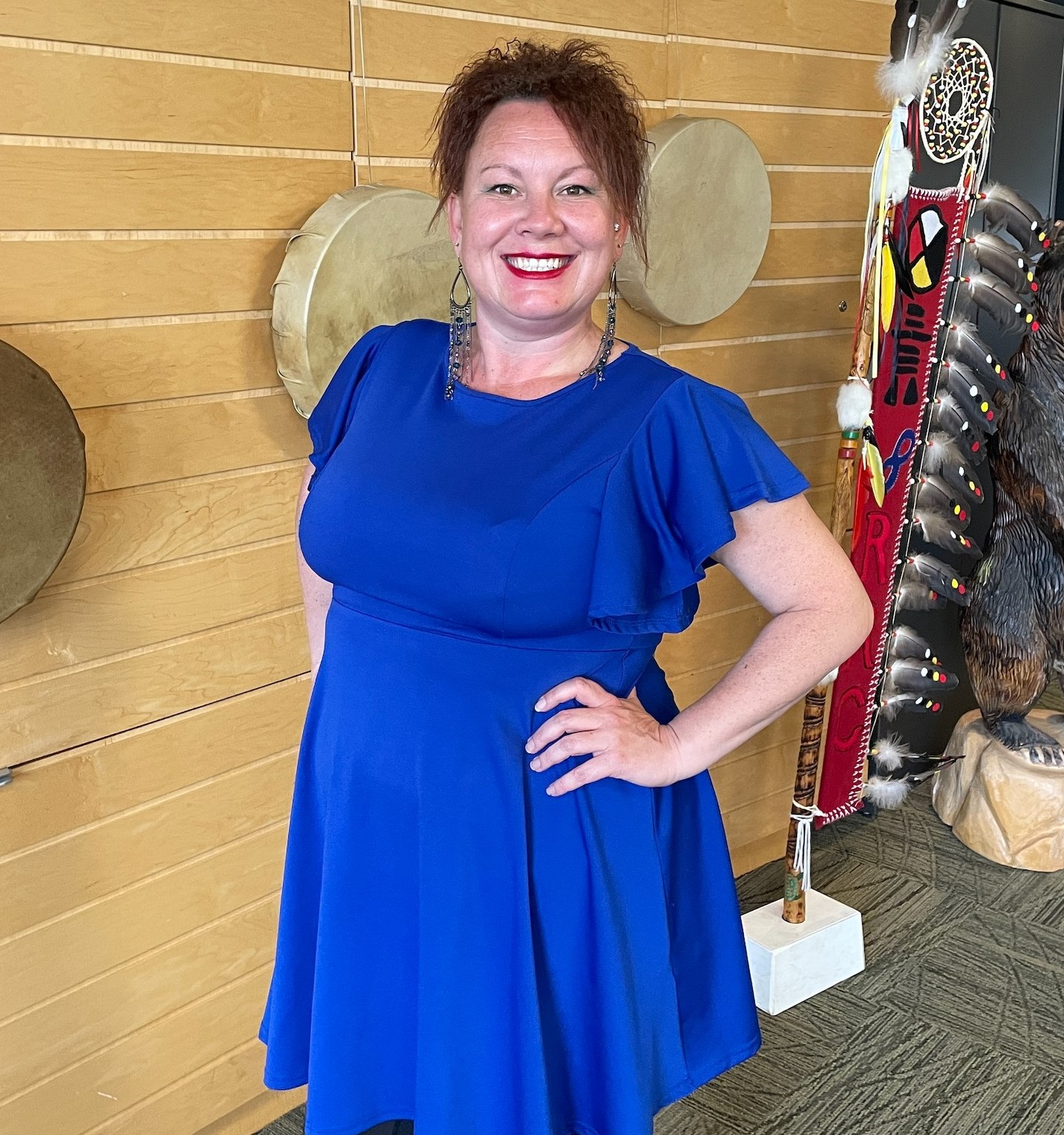
Chasline Spence, a Pathway to Business, Creative Communications and Digital Technology Programs student at Red River College, has been selected to receive the 2021 Mínwastánikéwin Truth and Reconciliation Award, presented in partnership by RRC’s School of Indigenous Education and its Campus Store. The word Mínwastánikéwin is Cree, and means ‘to set it right.’

“Honestly, I felt really emotional because the story I wrote was really personal and I was able to talk about my father. It was good-emotional,” says Spence, the second student to receive the award.

Spence’s father is a Residential School survivor and she wanted to include his story in her essay, a response to the question “What does Truth and Reconciliation mean to you?”

“It was one of the first times we really talked about it,” she says. “Throughout the years he told me about what happened in Residential Schools, but this time he really opened up to me so I could write about it.”

In her essay, Spence shared the impacts the residential school had on her father, and in turn, her life.

“It wasn’t until I became an adult and then heard my dad’s stories that I realized what I have been going through in my life was a part of the effects of Residential Schools, and what stemmed from it.”

When she turned 18, she began her own healing journey. Now, after recently becoming a mom, she is on a path towards a new career in business.

“My daughter inspires me. I’m just ready for this change,” says Spence.

“For so many years I did carpentry, landscaping, I was a stagehand, I did a lot of physical labour, and when I found out I was pregnant with my daughter it was a sign it was a good time to change career paths. For me, it was all about timing and feeling ready and confident to take on the responsibility of post-secondary schooling. I feel ready now.”

Her daughter is now two and Spence has received her Mature Grade 12 diploma from Urban Circle Training Centre Inc., is completing the Indigenous Education Pathway program at RRC, and plans to go into the Business Administration program in the fall.

“I feel really blessed. I think because I have that gap in schooling, the program I’m in now is really preparing me for Business Administration and what’s to come next year. I’m really grateful.”

Spence says her education at Urban Circle helped her get a real understanding of Truth and Reconciliation.

“We really go deep into what TRC is, and what I want people to understand is that it wasn’t yesterday, it was recently. The Residential Schools and intergenerational trauma are affecting our Indigenous people and I’m just so glad that TRC started when it did so we can teach the new generation what it is and hopefully get some healing. It has lingered into our young people today and we are still being affected by it.”

Spence is the second recipient of the award, which seeks to advance Indigenous achievement and support Indigenous students at RRC. The grassroots initiative was created through the generous support of the College community during the first Truth and Reconciliation Week in 2019. Staff and students purchased T-shirts at the Campus Store that brought awareness to Indigenous issues and key dates such as Orange Shirt Day: Every Child Matters and Missing and Murdered Indigenous Women and Girls Awareness Day.

“I’m just really happy that RRC considered me for the award,” says Spence. “I worked really hard on it and my dad is really happy about it. It’s about being recognized for it and it feels really good.”

Stay the Course Speaker Series: Derek McCorrister

April 12, 2021

Inspiring stories from RRC’s Indigenous Alumni

How do successful people get to where they are? What did that journey look like? What did they learn and how did they stay the course? What does it mean to be an Indigenous student in post-secondary?

The Stay the Course speaker series is a hand from one generation to the next, hosted by Carla Kematch, Manager, Truth and Reconciliation and Community & Engagement. Every month, incredible RRC Indigenous Alumni share their experiences on their journey to success. Advancing Indigenous achievement at RRC means listening to Indigenous stories. This is just one of the many ways we can embed the efforts of Truth and Reconciliation in our daily lives.

Derek McCorrister, Owner, Creative Director, Modern Clan

Originally from Peguis First Nation, Derek has extensive experience working with the federal government and Indigenous organizations in the private and not-for-profit sectors. He digs deep to build Modern Clan’s portfolio and uses his strategic savvy, technical knowledge and in-depth business understanding to navigate between client goals and end results.

Derek led the development of the strategic plan for Chief Peguis Investment Corporation, which has led to historic acquisitions for the Peguis First Nation. Derek continues to work in partnership with many clients through Additions to Reserves projects in Manitoba and still hones his graphic design and production artist skills daily.

RRC hosts 21st Annual Indigenous Celebration Virtually

April 8, 2021

Red River College’s annual Indigenous Celebration is moving online Friday, May 7, 2021, live at noon on the Indigenous Education Facebook page with special messages, stories and performances to honour RRC’s Indigenous students. All are invited and encourage to tune and celebrate with us!

This is the second year the event will be held virtually in lieu of the College’s Pow Wow. RRC’s Pow Wow has been a point of pride for the College for over 20 years and has been a tremendous way to honour, celebrate, and make Indigenous culture and ceremonies more accessible for the College community.

“We are excited to create a place online that makes our students feel special, honours their achievements, and holds space for Indigenous culture and teachings,” says Isabel Bright, Dean, Indigenous Education. “While we still cannot gather safely to celebrate, it’s important that we create moments for students to be recognized, provide opportunities for Indigenous knowledge to lead, and remind students and alumni they are part of this amazing community that is cheering them on.”

“It’s also an opportunity to create inspiration! Representation matters so much, and Indigenous youth need to see and hear success stories from all different industries. It can be very powerful to see someone from your community thriving, and during the event we’re going to hear from some students who have been flourishing in this online learning environment. Their achievements not only represent all the hard work and determination they’ve put in over the past year, and everything that has lead them individually to their path, they also represent the resiliency of their ancestors and the deep rooted history of the lands we are living, working and learning on.”

RRC Indigenous students are invited to register to be included in the online celebration through a student slide show, which will emulate a traditional Pow Wow grand entry by shining a spotlight on each student, and receive a mailed gift by completing the form at rrc.ca/indigenous/virtual-celebration. (Registration is optional for Indigenous students, no registration required for attendees/viewers.)

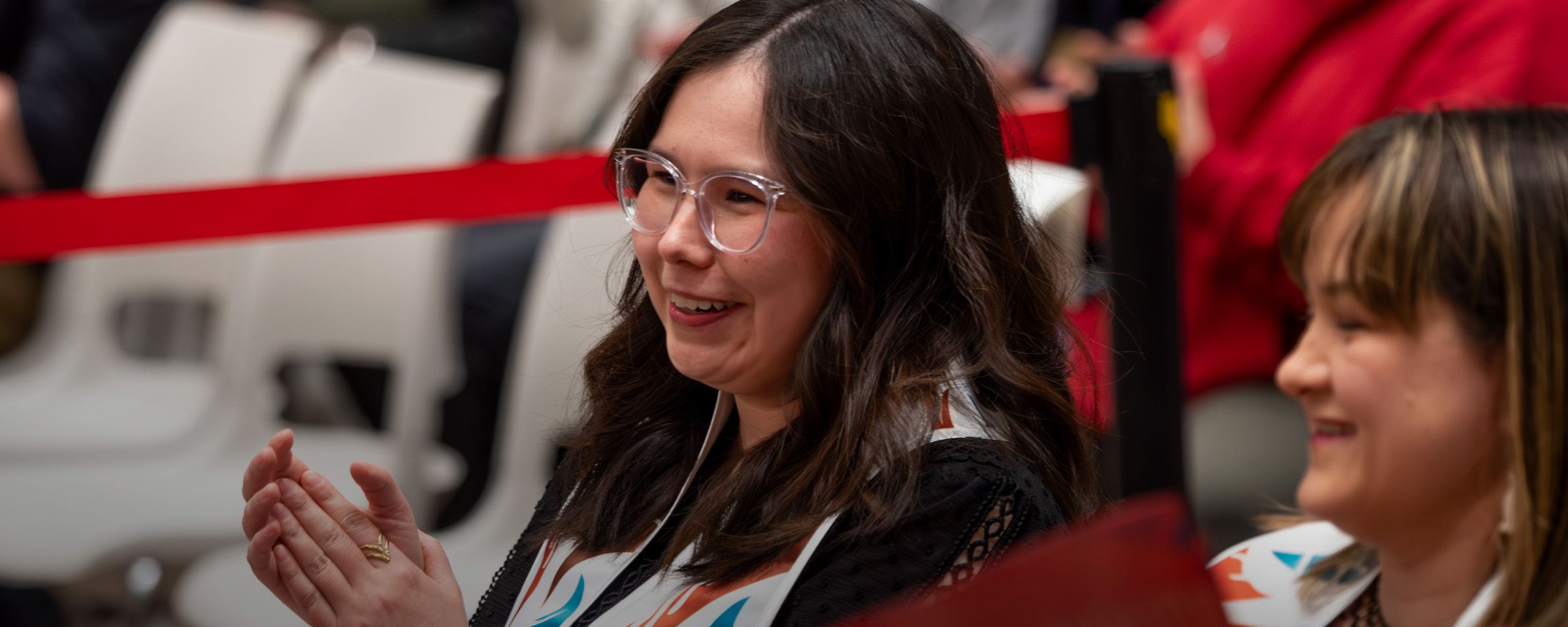
As part of the gift, First Nations, Inuit and Metis students will receive a Red River College Indigenous stole that was created to recognize the achievements of Indigenous students. This stole is an academic regalia sash that is draped over the shoulders to denote academic achievement. The stole was designed with symbols for The Seven Sacred Teachings, a set of teachings on human conduct towards others. While we recognize that not all First Nations, Métis and Inuit cultures and histories recognize these teachings, our intention is to be as inclusive as possible. The stole includes a cart to represent Métis, and a seal symbol to represent Inuit culture. The Assiniboine and Red rivers are also represented throughout the design, which lays on red silk to proudly display the College’s brand colour.

RRC 21st Annual Indigenous Celebration
Friday, May 7, 2020 | 12:00 pm
Virtual: Red River College – Indigenous Education Facebook Page

Follow and tag us on Instagram @RRCIndigenous

Ask an Elder Call for Submissions

March 18, 2021

We are inviting all Red River College staff and students to record a brief video on your ‘phone asking an Indigenous elder a question about anything you have ever wondered regarding Indigenous life and traditions in Canada. Your question can be as simple or as complicated as you like. It can be about history, politics, domestic life, education, health, reservations, residential school, pre-colonization, smudging, seven teachings, housing, food, natural medicines, sweat lodges, circles, the medicine wheel, the 60s Scoop, stages of life, traditional community life, ceremonial regalia, urban reserves, round dancing, economics – whatever you have wondered about, someone else has wondered about, too. Just ASK!

Please make your recording is horizontal (landscape), in good lighting (natural is best) without any background noise. Be sure to include the following information:

  • Your name (just first name, if you prefer)
  • Your program at RRC
  • Your question

Here are some examples:

  1. “Hi, my name is Pamela, and I am in Social Innovation and Community Development at Red River College. I came across a round dance downtown; would it have been okay for me to join in, even though I am not Indigenous? Thanks!”
  2. “Good morning. I am Jason, and I am studying in engineering tech. I appreciate getting a chance to ask a question because I am Indigenous but I don’t know the traditions. I would like to know what smudging is all about. Thank you.”
  3. “I am an international student from Pakistan. My name is Jamal. Are some of the Indigenous traditions in Canada similar to the traditions that we have in Pakistan?”
  4. “My name is Susan and I am a nursing student. What are the big mistakes I should avoid when taking care of Indigenous patients?”

Please send your recording to Heather Steppler at hsteppler@rrc.ca by Tuesday, April 6, 2021. In your email, please state that you are willing to have us use your recording in our video. We will provide a small honourarium to students whose videos we use.

Spring Equinox Celebration

March 11, 2021

Monday, March 22 at 12:00 pm
Live on the Indigenous Education Facebook Page
Featuring Elder Paul Guimond, Elder Una Swan, and a special screening of NFB’s Nonoonse Anishinabe Ishichekewin Ka Kanawentank

To welcome and celebrate the Spring Equinox, join us on Monday, March 22 at noon for a livestream featuring tales and teachings of Spring with RRC Elders-in-Residence on our Facebook page.

On Saturday, March 20, we will have equal amount of day and night. Not only is the Spring Equinox recognized by many Indigenous cultures ceremoniously as new beginnings and rebirth, but traditionally it also meant opportunities for food. Historically, many communities would travel throughout the year, settling in places where animals would migrate or food sources would become available, and Spring is no different.

Along with certain plants and medicines only available in Spring, maple tree tapping was an important (and laborious) process, providing sweet treats for families to enjoy. As part of our celebration of Spring, we will share a screening of the National Film Board’s Nonoonse Anishinabe Ishichekewin Ka Kanawentank (1980). Filmed on Lake Manitoba, near the Ebb’n’Flow Reserve, Nonoonse provides both a clear description of sugar-making and a quiet statement on the importance of the tradition to the Saulteaux or Ojibway of the region.

Not only does this film showcase a local treasure, respectfully living with the land and Indigenous traditions, it’s a beautiful to hear Nonoonse speaking her language. RRC staff and students have access to a library of NFB films year round, and we are thrilled to be able to share this film with the wider community.

We spoke to Nonoonse’s daughter Roseanna Desjarlais (Ebb and Flow First Nation) who continues to tap trees. Noonoose joined Roseanna and her husband Frankie on their first outing to Sugar Island, and now one of their daughters now makes the trip to Sugar Island. Frankie and Roseanna have planted their own trees in their yard – just to keep the tradition alive. Maple sugar tree tapping would take about two weeks, depending on how the tree sap is running. It takes 35-40 gallons of tree sap to boil down to make 2 gallons of syrup. Noonoose would tap approximately 300 maple trees on Sugar Island.

Indigenous Education Exploration Fair

February 17, 2021

Learn what RRC’s Indigenous Education has to offer!

Date: Wednesday, March 17
Time: 5:00 – 8:00 pm

REGISTER

Connect with RRC instructors, staff and students, and explore programs and career paths virtually.

Whether you know what field you want to enter or are just beginning to think about your education, there are programs for every level of experience. This event will help you learn, plan, and start your post-secondary education in a supportive environment so you can receive the skills, training, and confidence to strengthen the path forward for the next seven generations. Let us know how we can help you carve your path as you aspire towards your personal, professional and community goals.

This event is for future First Nations, Métis and Inuit students, their families, friends, and support networks, community organizations, and anyone who wants to learn more about Indigenous Education at RRC.

What to Expect:

  • Welcoming with Elder Una Swan
  • Guest speaker Comedian Conway Kootenay
  • Visit over 20 booths
  • Attend a Live Panel Discussion (Live Broadcast Booth)
  • Learn about programs, supports, and campuses
  • Hear from current Indigenous students
  • Prizes to be won!

Live Broadcasts:

These live, interactive presentations help you learn more about RRC from firsthand experiences. We’ve put together two Live Broadcasts topics that cover some of the big questions potential students are having about learning in a post-pandemic world. Each Broadcast will have multiple sessions for you to tune into.

  1. How Work Integrated Learning Can Launch your Career
  2. Discussion with Current Students – How is your Virtual Learning Experience?

Red River College Welcomes New Elder-in-Residence Una Swan

January 18, 2021

Red River College is honoured to welcome Elder Una Swan as an RRC Elder-in-Residence, joining Elder Jules Lavallee and Elder Paul Guimond in supporting students, classrooms, staff and College leadership.

Una Swan is a band member of Fisher River Cree Nation. She is 53-years-old and has three boys and one grandson. She says she is very close to her culture, both from a physical and spiritual aspect. She has worked at various grassroots organizations over the past 20 years as Aboriginal Cultural and Spiritual Liaison and as an Elder. She is a teaching and healing Elder. She has found this work to be giving, receiving and extremely rewarding. Of her various places of employment, she says one of her more memorable places was St. Amant Centre. Working there gave her a new perspective on her own life and the lives of others.

“It has not always been easy and I have had my struggles, but always felt comforted knowing that anything worth doing is not always easy, otherwise it would have been done already,” she says. “I have been able to keep my eye on how things are going to be here in ten years from now instead of right now! I know that Creator has been with me on this job as I have been able to do things I could not, know things I should not, and have this overwhelming feeling of energy to work. I have been challenged emotionally, mentally, and physically to do this work, but with Creator’s hand on me here I have been able to overcome these challenges with ease.”

Ensuring access to and including Elders and Knowledge Keepers is vital to embedding and supporting Indigenous ways of knowing being, teaching, learning and leading. Elders have always held positions of high esteem and importance; they are the living libraries that hold the wisdom, history and cultural knowledge of our Nations. Our Elders-in-Residence play an important role in leadership, student and staff health, wellness, and cultural and spiritual development.

Students and staff are invited to join a Meet and Greet with Elder Una on Wednesday, January 27 at 2 pm on Microsoft Teams. Contact Stephanie Wright, Indigenous Centre Coordinator, at sdwright@rrc.ca to join.

As her first virtual workshop with the College community, Elder Una will guide viewers in a two-part beading workshop to create a beaded watch covering. The workshop will be available at rrc.ca/indigenous/news this month and on the Indigenous Education Instagram page @RRCIndigenous

Along with cultural teachings and classroom support, the College community will also see Una participate in a number of virtual events this term.

Finding Strength in Community

December 10, 2020

RRC student launches Strength in the Circle, a grassroots movement focused on Indigenous men’s healing

Jonathan Meikle is no stranger to making headlines. Two years ago, the army veteran stepped in when he saw an altercation break out on a Winnipeg Transit bus. Meikle was stabbed in the process of protecting other passengers. Instead of harboring anger towards the attacker, it made him curious. Who was this person and what led him to this point of violence?

Meikle reached out and realized this person was part of a cycle that is all too common – one that mirrored his own cyclical experiences with sobriety and the criminal justice system. He was already on a transformative journey of discovering his culture and spirituality, but he knew there was something more he could contribute to his community. It started with helping the man on the bus, who became his friend: supporting him while he was incarcerated, through to securing housing and creating a support system. As the veil was being lifted in his own life to the systemic problems he was facing, Meikle saw a movement that was emerging and deeply needed: healing for Indigenous men.

Meikle is a student in Red River College’s Social Innovation and Community Development program in the School of Indigenous Education but is already putting his entrepreneurial vision into action by launching a grassroots organization called Strength in the Circle focused on collective healing. Along with his RRC studies, he has been spending time during the pandemic working on his organization, taking victim defender mediation training and being in a peer support program.

“Strength in the Circle is a movement built in response to the prevalence of untreated trauma that is the result of discriminative policy imposed by the Canadian government. Our mission is to provide programming primarily, however not exclusively, to Indigenous men that have had involvement in the criminal justice system,” says Meikle.

Strength in the Circle is currently comprised of four key initiatives that correlate to the Medicine Wheel teachings, an acknowledgement on how important it is to have the mind, body, spirit and heart work together in balance.

Over the summer they started an Indigenous literature reading group (mental), a fitness group (physical), and Peaceful Warriors co-ed and men’s group (emotional), with spiritually weaved throughout all initiatives. Meikle says he and his team strive towards having a truly Indigenous organization and they are constantly asking and re-evaluating what that means.

Of his own journey, he says, “I was always so focused on the psychical and the mental but not so much on the emotional and the spiritual. I was spiritually disconnected. I wasn’t in touch with my culture, I actually rejected it. I was very shame based.”

Although he is now empowering others, his path wasn’t always to clear. Being in the military for six years and deployed to Afghanistan was a culture shock and took a toll on his mental health. It was a process, but making connections in the volunteering community and building up his own support network helped him focus on his future and sobriety.

When he was deciding on a new career path, he found himself at a crossroads. He could choose a linear path in aviation, or a more passionate, yet unclear one, based in social change. He knew he wanted to develop something that would make a real difference in the lives of Indigenous people, so he enrolled in the Social Innovation and Community Development program.

The two-year program brings new perspectives to existing ways of decision-making in today’s world. Students discover the tremendous capacities of communities and individuals looking to initiate systems change. Meikle says the program has developed his facilitation and development skills, furthered his network and connections, added to his confidence, and helped him build long-lasting friendships.

“So many people don’t see [the big picture] and it builds into this self-fulfilling prophecy that we are not good enough and this idea of this inferiority and this idea of this superiority of others, and I want to confront that. Everything we are trying to build with Strength in the Circle is aimed at individuals being able to find that leader in themselves.”

Strength in the Circle is currently developing their next initiative, Truth Speakers, around communication and leadership skills through an Indigenous world view.

“Some of the greatest social innovators and some of the greatest change makers, are still out there yet to be discovered, they are just weighed down by barriers.”

Learn more about Strength in the Circle.

Find out more about the Social Innovation and Community Development program.


National Aboriginal Veterans Day Discussion

November 5, 2020

This Sunday, November 8, is National Aboriginal Veterans Day.

To help us learn more, we invited two Indigenous veterans to join us virtually to share their stories and lessons learned. William Greenwalt (USA) and Elder Wanbdi Wakita (Canada) each bring an interesting perspective on their experience of war as an Indigenous person.

In Canada, approximately over 12,000 Indigenous men and women volunteered to join the military for the First and Second World Wars, as well as Korea, and over 500,000 in the US.

In Canada, when an Indigenous person joined the military, they gained the right to vote but lost their Treaty status. Upon returning home after the war, Indigenous veterans were disenfranchised, meaning they lost the right to vote, and because they lost their Treaty status many veterans spent years trying to get their Treaty status reinstated.

WATCH: RRC Elder Paul Guimond honours our veterans with a song and special message.

Miigwetch Wanbdi Wakita, William Greenwalt, and all Aboriginal Veterans.

Put Your Best Moccasin Forward Pre-Employment Conference

November 2, 2020

In honour of Career and Workforce Development Month in Manitoba this November, Indigenous Transition to Employment Services is hosting its first Pre-Employment Conference – virtually.

Dates: November 17 and 18
Time: 6pm – 8:30pm both nights

Indigenous students and recently-graduated alumni are invited to learn about the tools and skills that will help them secure a job in their field of study. Indigenous ways of knowing and being will be a focal point with a message from our Elder, a Medicine Wheel Teaching, and we will hear from Indigenous alumni on their experiences.

Join us for some evening sessions including resume and cover letter preparation, job search strategies, interview skills, and more. Stay tuned for a more detailed schedule of sessions.

Get ready to start your career and Put Your Best Moccasin Forward!

REGISTER HERE

Or contact Rhonda Monkman at rmonkman90@rrc.ca to register.

When you register, you will be sent a WebEx link for each day. Sessions will be continuous, so you do not need to log on for separate sessions.

SCHEDULE

Tuesday, November 17
6:00 pm – 8:30 pm

6 pm – Welcoming from Isabel Bright, Dean, School Of Indigenous Education, and Frank Parkes, Student Resource & Employment Manager, and prayer and message from Elder Paul Guimond.

6:15 pm – Medicine Wheel Teaching: Using Indigenous Knowledge in Career Planning

7 pm – Q + A

7:30 pm – Resume and Cover Letter Preparation

8:15 – Q + A

Wednesday, November 17
6:00 pm – 8:30 pm

6 pm – Job Search Strategies – How to do an effective job search. Knowing your skills and abilities.

6:35 pm – Q + A

6:45 pm – Interview Skills – Virtual interviewing skills, types of interviews, and interview preparation.

7:15 pm – Q + A

7:25 – Alumni Panel – Sharing Indigenous perspectives. The journey from college to employment.

8:05 – Q + A and closing

RRC Polytech campuses are located on the lands of the Anishinaabeg, Ininiwak, Anishininwak, Dakota Oyate, and Denésuline, and the National Homeland of the Red River Métis.

We recognize and honour Treaty 3 Territory Shoal Lake 40 First Nation, the source of Winnipeg’s clean drinking water. In addition, we acknowledge Treaty Territories which provide us with access to electricity we use in both our personal and professional lives.