Smiling Indigenous graduate at convocation ceremony

Indigenous Education

Events

Summer Solstice and the Strawberry Moon
June 21, 2023

June 21 is the summer solstice, the longest day of the year.

Despite the beautiful weather for the last few weeks, this day is the official start of summer. After this day, the Earth begins its slow retreat away from the sun.

Many Indigenous nations around Turtle Island recognize the significance of the season through ceremony and celebration, Pow Wows, feasts and cultural gatherings. Many communities and organizations proudly host events showcasing vibrant Indigenous cultures from dawn until dusk.

June is the Strawberry Moon, in recognition of the strawberries that have sprung from the ground and the orange moon that transforms to red. Ode’imin, the heart berry, the strawberry in us, is reflected in the month of June. As the year ripens, June ushers in July’s Berry Moon, miinan.

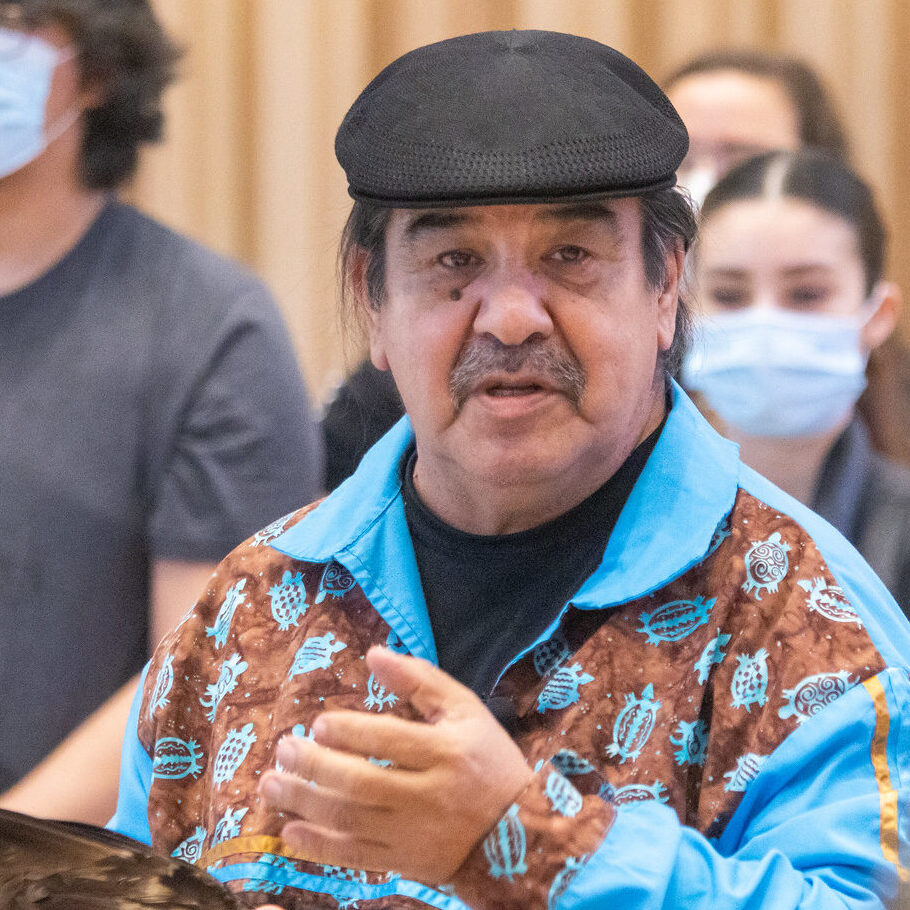
Elder-in-Residence Paul Guimond says that this time of year, we acknowledge the connection between all things through the strawberries, the plants, the trees around us. Everything is fully grown and life is in full swing.

“The tree we stand with, celebrate and appreciate — it is rooted to the ground. We acknowledge all the Earth, the plant life. Its roots reach all the world, its branches reach out towards the Sky World, to the moon and the stars, the sun and the planets. The Tree World: it’s never just one group of trees growing somewhere. Many different trees take up space together. It shows us that we can grow together, shows us how we can exist together.”

Elder Paul Guimond
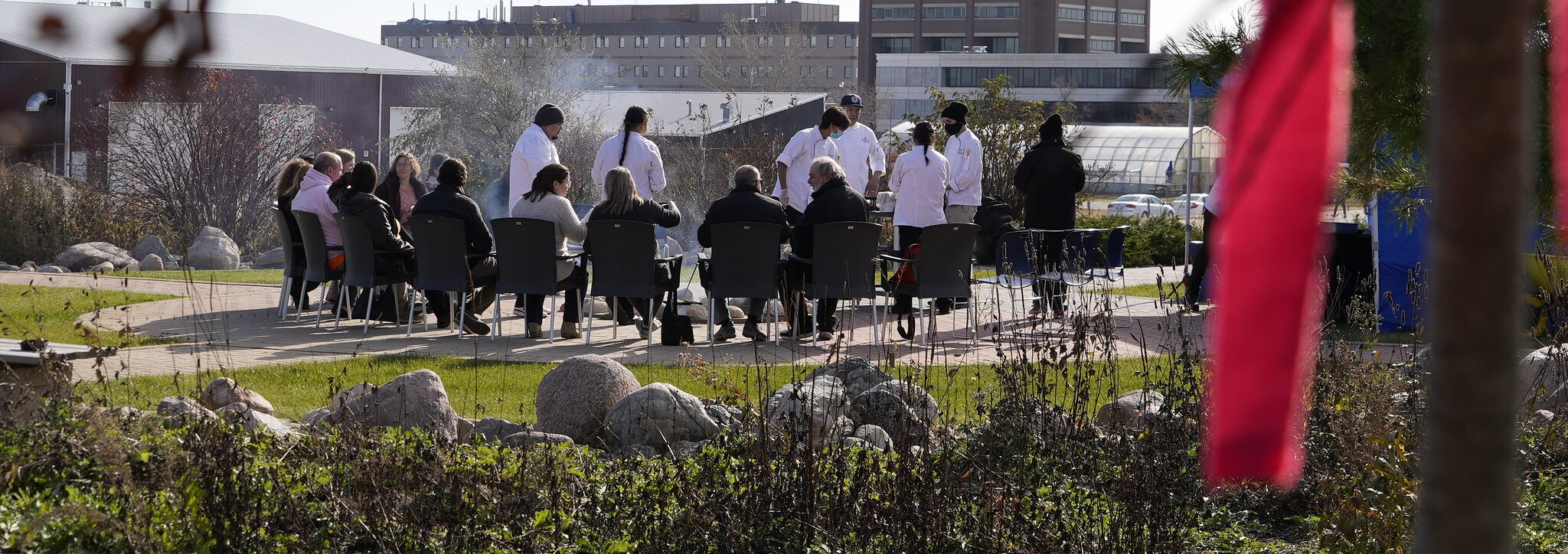
RRC Polytech in years past has hosted ceremony with the Elder-in-Residence and staff and students at Notre Dame Campus to celebrate the summer solstice and Indigenous Peoples Day. This year, the Indigenous Student Support Team tried a new approach; the team, with Elder Paul, organized a bus tour for staff and students to participate in events in Winnipeg and the surrounding region. Two buses will shuttle participants to the Manitoba Métis Federation celebration in Selkirk for the morning and the Wa-Say Healing Centre Pow Wow at The Forks for the afternoon.

Check back here later this week to read how it went!
Flag Raising Ceremony for the Treaty One, Red River Métis, and Inclusive Pride Flags

June 7, 2023

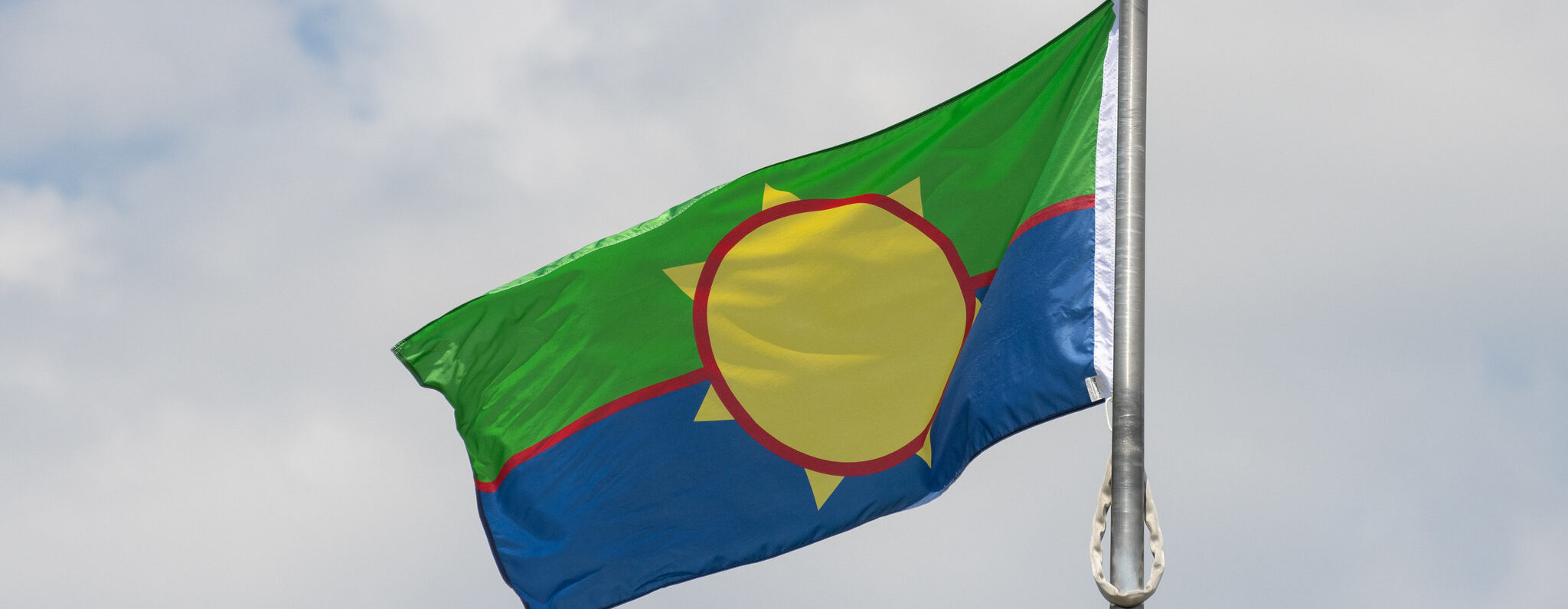
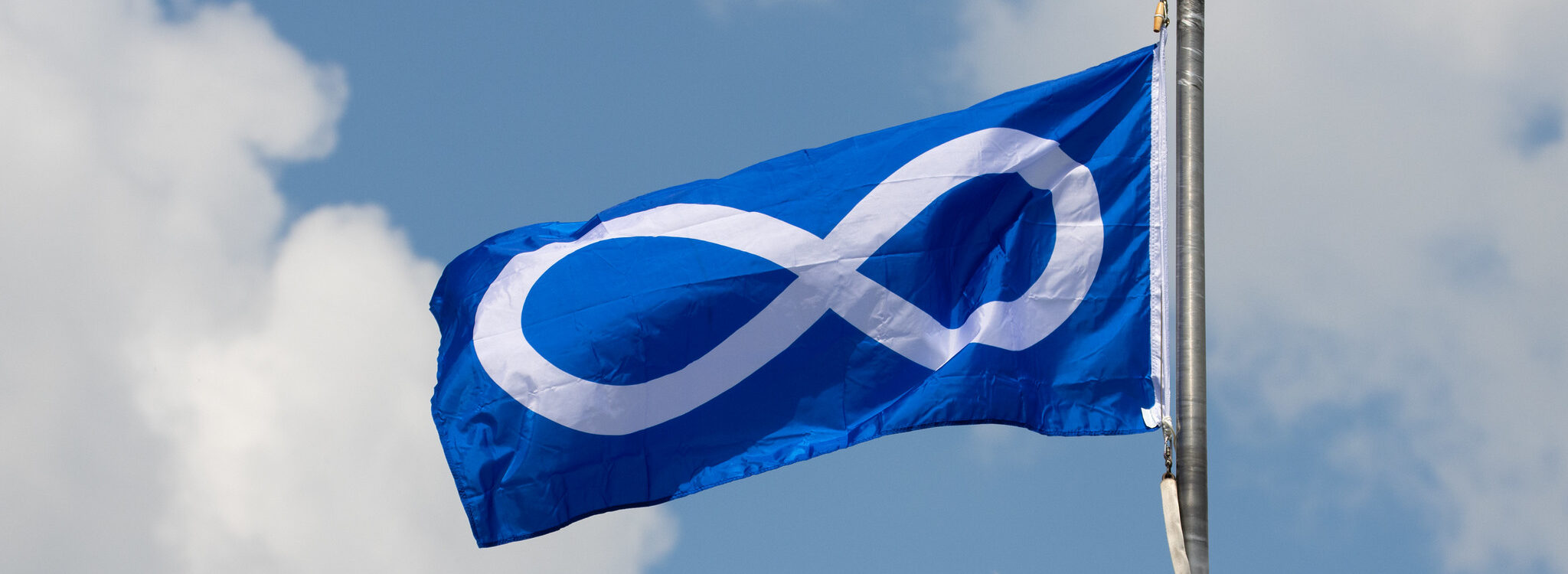
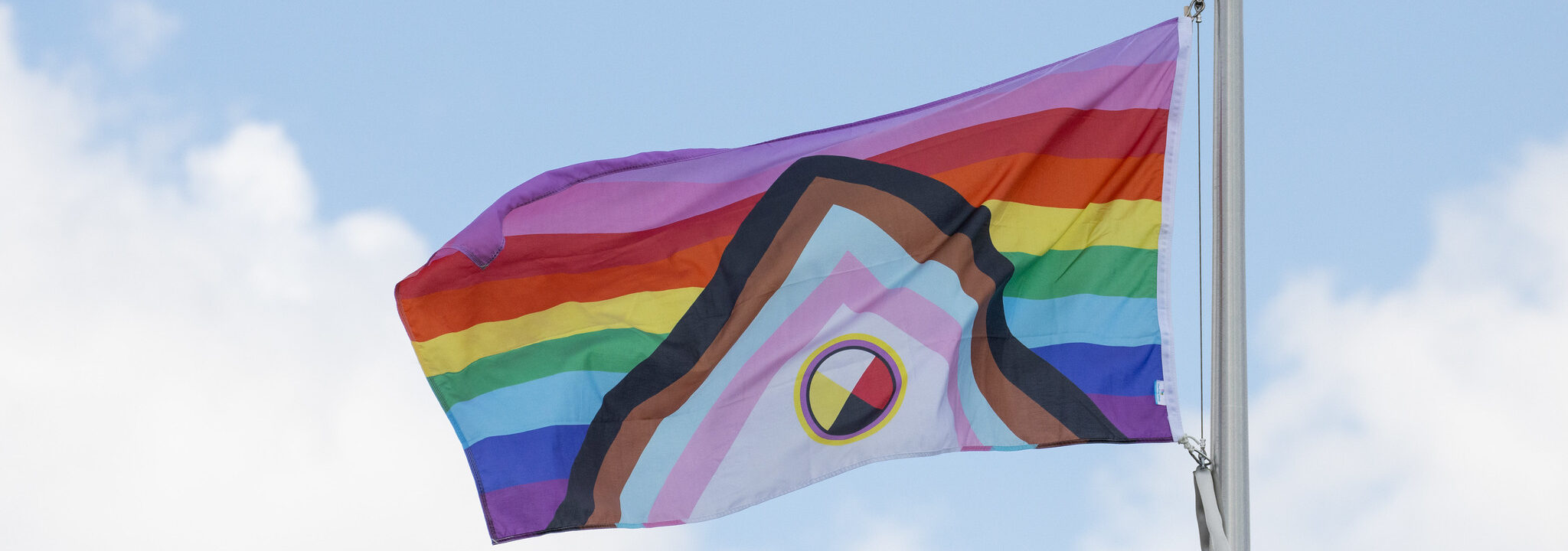
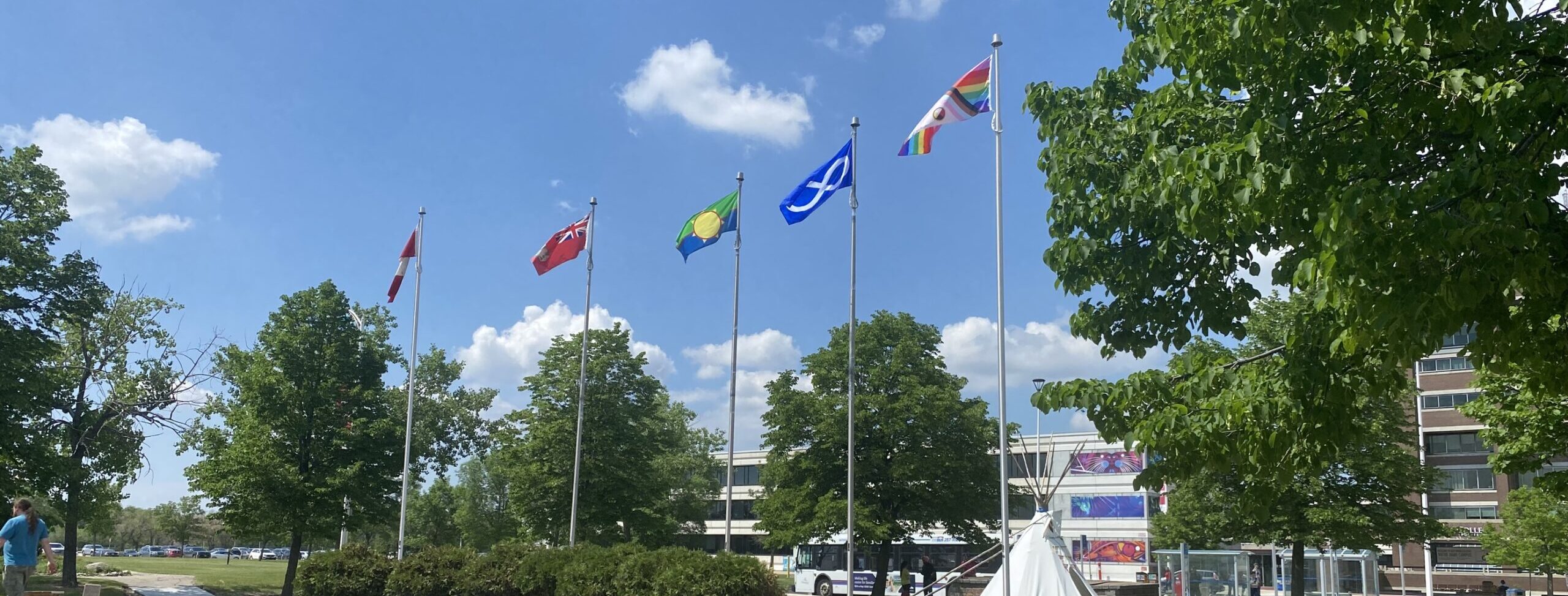
RRC Polytech raised the three flags in an act of unity, pride and inclusivity to mark the beginning of National Indigenous History Month and Pride Month.

The Treaty One flag, Red River Métis flag and RRC Polytech’s new Pride flag will now fly year-round at the Notre Dame Campus in Winnipeg to acknowledge the history of the land, respect for the treaties made on the land, and representation of the people who live here.

“RRC Polytech is committed to enacting Truth and Reconciliation and equity, diversity and inclusion in everything we do. A large part of that is creating representation and inclusive spaces on our campuses,” says Fred Meier, President and CEO of RRC Polytech. “By raising these three flags we are demonstrating to staff, students and community members that this is a place where you belong. We know that there are still institutions and situations where 2SLGBTQIA+, Indigenous and Métis people don’t feel welcome or recognized – but at RRC Polytech we are giving a firm message that everybody belongs and is welcome here.”

The three flags were raised with support from Joan Ledoux, Minister of Provincial Education at the Manitoba Métis Federation (MMF) – the National Government of the Red River Métis; David Beaudin, Associate Minister of Provincial Education at the MMF; Knowledge Keepers Barbara Bruce and Albert Mcleod, Vic Savino, Director of Communications at Treaty One and Elders and Knowledge Keepers from Treaty One Territory; and members of the RRC Polytech community.

Treaty One Flag

Treaty One represents Anishinaabe (Ojibwe) and Nehiyaw (Cree) original peoples of the territory of present-day southern Manitoba, including the Forks at the Assiniboine and Red rivers which was a vital trade and gathering site.

Treaty One Nation is composed of the seven First Nations who are signatories to the first of the numbered Treaties, originally signed on August 3, 1871, at Lower Fort Garry after several days of discussions and ceremonies.

“I am extremely proud to see RRC Polytech raise our Treaty One flag on their campus today. Despite the spirit and intent of the Treaty, which has benefitted the people of Manitoba for over 150 years, we were continuously denied of our rights, our titles, our jurisdictions, our culture, our language, and our children,” said Chief Gordon Bluesky of Brokenhead Ojibway First Nation and Treaty One Chairperson.

“Despite our darker periods of history, we are still standing strong, and each one of these flag-raising ceremonies is a concrete, tangible expression to our Treaty Partners that we are still here. Today, we can all look forward to a brighter future for the next generations, and feel the pride in sharing the history of Indigenous peoples on this land. Through these actions of reconciliation, our young Indigenous learners have a very bright future ahead.”

The Treaty One Nations flag was designed to incorporate the original spirit and intent of the Treaties: green, to represent the grass; blue, to represent the waters; and yellow to represent the sun. The red represents the circle of life and the red people who inhabit this land. Lastly, the seven points around the sun represent the seven signatory First Nations of Treaty No. 1.

RRC Polytech recognizes in its land acknowledgement that the land we use is the land of the Anishinaabe, Ininiwak, Anishininew, Dakota, and Dené and that Treaty One is the agreement that allows us the live the way we do.

Red River Métis Flag

The Red River Métis have a rich and important history, language, and culture. The Red River Settlement – now Winnipeg – is the heart of the Red River Métis Homeland and the birthplace of the Nation.  

“The Red River Métis have been fighting to have our rich culture, heritage and history recognized and respected for over 200 years. Manitoba is the only province in Canada to have been brought into confederation by an Indigenous Nation with the signing of the Manitoba Act in 1870, intertwining the history of the Red River Métis with the history of Manitoba. Today, the MMF, the National Government of the Red River Métis, has made great strides in advancing our Nation and regaining our rightful place in Canada’s confederation. This flag-raising today is one small step toward a brighter future for our Red River Métis Youth, ensuring that they know their identity is recognized and celebrated as they achieve their educational goals at this institution,” said Minister Joan Ledoux, Minister of Provincial Education and Associate Minister of Métis Employment & Training at the Manitoba Métis Federation.

RRC Polytech recognizes the impact that the Red River Métis had in the formation of this city, province, and country. The Red River Métis were instrumental in confederation and fought battles to retain their rights throughout history – in the courtroom, in houses of government, and on the battlefield. 

RRC Polytech Inclusive Pride Flag

Last year RRC Polytech revealed the design of its new Pride Flag, which was painted on pedestrian walkways at the Notre Dame Campus, Exchange District Campus, and Portage la Prairie Campus. Moving forward, the flag will also be raised at RRC Polytech’s Paterson GlobalFoods Institute throughout the month of June.

The College’s Pride design is an evolution of the Progress Pride flag that includes representation for all 2SLGBTQIA+ (Two-Spirit, Lesbian, Gay, Bisexual, Transgender, Queer and/or Questioning, Intersex and Asexual) community members, and includes specific Indigenous elements.  It was created through engagement with RRC Polytech’s Knowledge Keepers Council, with a strong lead from Two Spirit and Métis Elder Barbara Bruce, and Two Spirit and Cree/ Métis Elder Albert McLeod.

RRC Polytech’s Pride design includes the following elements:

  • The triangle represents the badge LGBT prisoners were forced to wear in Nazi concentration camps.
  • Moving the triangle to the bottom maintains this meaning, but also forms a tepee, which is a shelter shape historically used by many First Nations people in Manitoba and shows the upward momentum of the movement.
  • The Medicine Wheel incorporates traditional Indigenous knowledge and teachings.
  • The purple and yellow circles around the Medicine Wheel recognize intersex folx.

By combining these elements and colours and displaying them in prominent locations, the Pride design has been created to represent all human beings, and welcome everyone on Indigenous lands.

“The Pride design was developed collaboratively across the College, carefully considering the meaning of all elements of the design, such as the colours, location of the chevron, and centering and orienting the Medicine Wheel”,” says Vera Godavari, Equity, Diversity and Inclusion Specialist. “At RRC Polytech we are committed to our reconciliation journey as we walk the path of understanding, respect and advocacy with the 2SLGBTQIA+ community. As learning organization, we celebrate our progress and continue our dedication to this important work through these ongoing initiatives.”

In addition to consulting with RRC Polytech’s Knowledge Keepers’ Council, Students Association, and its Gender and Sexual Identities working group, RRC Polytech also worked with the Rainbow Resource Centre on the evolution of the College’s Pride design.

The flags can now be seen flying on the front lawn of Notre Dame Campus.

Moose Hide Campaign Day – May 11

May 2, 2023

A day of ceremony to end gender-based violence in Canada.

The Moose Hide Campaign began in 2011 when Paul and Raven Lacerte were hunting moose along the Highway 16 between the cities of Prince George and Prince Rupert in British Columbia, a stretch of road otherwise known as the Highway of Tears. Though the number is disputed, many women have gone missing or were murdered along this highway, many of whom were Indigenous.

The father and daughter felt deeply connected to the Carrier land around them and considered ways they could act, ways they could prevent future violence against women and girls. That morning, Raven caught a moose.

Since that hunting trip, the grassroots Moose Hide Campaign has bloomed into a national movement to raise awareness of the violence against Indigenous women and children and a solemn promise to not perpetuate that cyclic violence and grief.

“When we ask men and boys to become involved, we want them to feel like we’re calling them in rather than we’re calling them out.”

– National Youth Ambassador, Sage Lacerte

This year, people from all walks of life are invited to participate in the Moose Hide Campaign Day on May 11, in-person in Victoria, B.C. or virtually from anywhere. The Moose Hide Campaign has scheduled a sunrise ceremony livestream, a general plenary livestream, multiple live virtual workshops, a livestream of the Walk to End Violence Against Women and Children in Victoria, B.C., and a fast-breaking ceremony livestream. Participants can register here.

“Healthy, loving masculinity; that’s the antidote.”

– CEO of Moose Hide Campaign, David Stevenson

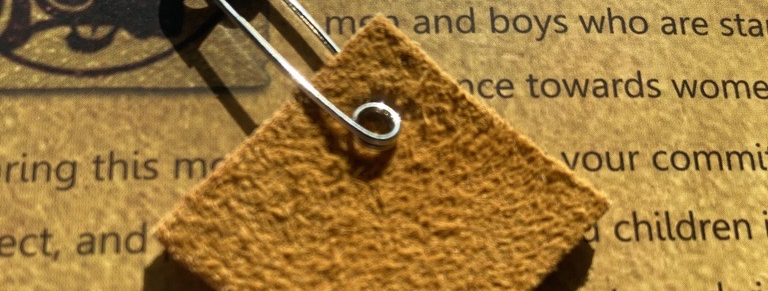
As of this year, the Moose Hide Campaign has given out its four millionth pin. Raven Lacerte says the moose hide represents a piece of medicine from the land and signifies a commitment to honour, respect, and protect the women and children in your life.

Staff and students can pick up moose hide pins from either Indigenous Support Centre (F209 at NDC and P407 at EDC) to wear to show support of the campaign and as symbol of their promise to not perpetuate violence against women and children.

R-Crew Paint Night – April 27

April 24, 2023

Join R-Crew for a Paint Night with local artist Cheryle Dreaver!

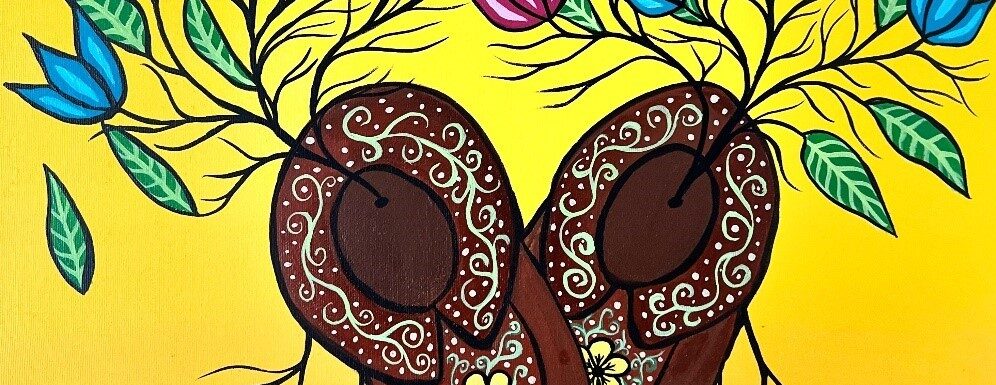
Cheryle Dreaver shared that while she hasn’t yet offered the moccasin design as a paint night, she hopes to in the future as a way to honour the children found at residential schools across Canada. She explained that the image of rooting and flowering represents grounding and life, and she believes it could offer a powerful and meaningful experience for participants.

Paint supplies and light refreshments will be provided.

  • Thursday, April 27 • 5pm – 8pm
  • F209, Notre Dame Campus

To register, please email Terri-Lynn at tlanderson@rrc.ca.

Food, Fashion and Music: Indian City

April 18, 2023

Indian City is a fusion of pop, folk, and rock with an ever-rotating roster of talent.

The Winnipeg-based band features different Indigenous superstars with each album, bringing together a masterful mix of energies to every recording and each live performance while expressing the modern conscience of Indigenous People. The band was founded in 2012 by the late Vince Fontaine.

Indian City’s fourth album and Fontaine’s final project, Code Red, is a 2023 Juno Nominee for the Contemporary Indigenous Group of the Year Award. In the spirit of the Truth and Reconciliation Commission’s Call to Action #83, Indian City invited non-Indigenous artists like Jim Cuddy, Chantal Kreviazuk, and Chris Burke-Gaffney to collaborate on Code Red.

In the spring of 2022, Warner Music Canada signed with Indian City shortly after Fontaine’s passing in January. The band pre-released “Star People”, “Wannabe”, and “The Path” each with their own music videos before Code Red was re-released on September 30, 2022, to coincide with the National Day for Truth and Reconciliation.

Indian City has been recognized on the international stage since its founding in 2012, and has been honoured with several awards, including the Western Canadian Music Award, the Indian Summer Music Award, the Native American Music Award, and the Aboriginal Peoples Choice Music Award, among many others.

On April 19, 2023, Indian City’s lineup at Manitou a bi Bii daziigae will feature Jay Bodner, Neewa Mason, Gabrielle Fontaine, Pamela Davis, Lawrence “Spatch” Mulhall, and Rich Reid. Join us for Indigenous Food, Fashion, and Music: an RBC Reaction by Collision Community Event and witness Indian City’s stellar energy onstage. For more information, check out the program post for the 2023 RBC Reaction by Collision.

Indigenous Student-Led Tours

April 17, 2023

Are you curious about RRC Polytech? An exciting opportunity is coming up soon – register for a campus tour and get first-hand knowledge from current Indigenous students as they guide you around campus and answer your questions.

Tours will take place at the times and locations below:

Registering for your tour is easy!

  1. Click on the link above for the tour you’d like to attend
  2. Scroll to the bottom of the page and click Register
  3. Click Create Account and fill in your information
  4. Finalize your registration

RRC Polytech’s 2022 Graduation Pow Wow

INDIGENOUS SERVICES AND SUPPORTS AT RRC POLYTECH

There are many services and supports that Indigenous students can access to make the most of their time at the College:

Indigenous Student Support Centres

  • Provides a welcoming home away from home where students can smudge, participate in events, cultural teachings and ceremonies, or spend time with friends. The student support centres include a computer lab, kitchen, phone, study area and lounge.

Elders and Knowledge Keepers

  • Our Elders-in-Residence are here to support education through Indigenous ways of teaching, learning and leading. They play an important role in student and staff health, wellness, and cultural and spiritual development.

Indigenous Liaison Advisor

  • The Indigenous Liaison Advisor is the first point of contact for new and returning students of First Nation, Métis and Inuit ancestry. The advisor can help with questions related to programs, support and guidance through the application process, and admission requirements.

Academic Liaison and Resource Coaches

  • The Academic Liaisons and Resource Coaches offer tutoring and coaching – both one-on-one and in groups. They can help students with learning needs, as well as study skills, goal setting, and time management, so that students can move forward in their courses with confidence.

Navigation Coaches

  • The Navigation Coaches are the first point of contact for current Indigenous students and can help with everything from finding your way around campus, problem-solving, sharing important resources and information, understanding College processes, as well as connecting to other support team members as well as accessing community services such as childcare.

Counselling Services

  • Counselling Services are available to help students work through personal struggles, develop skills to manage better, and enjoy their College experience.

Student Employment Services

  • Student Employment Services provides personalized support and direction to students and recent graduates seeking summer, part-time, full-time and temporary employment. From job search strategies, cover letter and resume writing, interview preparation, employment application forms, informational interviews and current labour market information, a variety of assistance is available. We also work to build relationships with employers to ensure Indigenous students have employment connections and have a voice at the hiring table.

R-Crew

  • The R-Crew is made up of student volunteers that take on various roles aimed at easing new students into college life. They are a great resource and super role models who want to make students feel welcome, while creating a support system to ensure your success. Students helping students!

There are many opportunities to assist you financially in your education, and as an Indigenous student, there are specific opportunities just waiting for you to apply. From student aid to awards and bursaries, reach out to the Administrative and Financial Officer for help navigating these processes and learn about what may be available.

Food, Fashion and Music: Dawn Harris

April 17, 2023

Dawn Harris’s journey into fashion started with her children.

When she envisioned her children and grandchildren (her babies, as she calls them!) lighting up the stage with their jigging, dressed to the nines in custom-fit, splendid outfits that matched their personalities and performances, she picked up her threads.

Dawn is a self-taught seamstress. She picked up the discipline from her mother Hilda, who’d sewn custom clothes for her and her twin sister growing up. Once she had her own children, Dawn decided that she wanted to contribute to her mother’s legacy—the legacy from which she drew inspiration, developed her own skill, and found artistic strength.

Designs by Dawn began in 2004 after Dawn started making square dancing outfits for her babies to wear onstage while they performed the Red River Metis Jig and square danced. The outfits in stores just didn’t have the striking personalities to match her babies’ performances, so she took the initiative to create the perfect outfits to complement their brilliant dancing.

Shortly after starting her brand, Dawn received orders to make custom traditional clothing: Ceremonial clothing like ribbon skirts and skirts and Pow Wow outfits like grass dancers, jingle dresses and fancy shawls. Designs by Dawn also started doing custom orders for weddings and square dance outfits for different communities around the world.

Designs by Dawn creates a variety of clothing and the brand’s main mission is to ensure the clothing is comfortable and custom-fitted to every body that wears them. Each order is created from Dawn’s own vision and her greatest accomplishment is knowing that her passion and gift for sewing brings happiness to people around the world.

Join Dawn at Manitou a bi Bii daziigae on April 19, 2023 for Indigenous Food, Fashion, and Music: an RBC Reaction by Collision Community Event and enjoy her brilliant jig and square dance fashion on the runway. For more information, check out the program post for the 2023 RBC Reaction by Collision.

Food, Fashion and Music: Gayle Grubin

April 16, 2023

Gayle Gruben’s work reflects her dedication to causes that are deeply ingrained in community.

In 2022, she created an amauti (a woman’s parka with a pouch in which to carry a baby) to memorialize the loved ones identified with Missing and Murdered Indigenous Women, Girls, and Two Spirit People and to honour their families. Gayle worked closely with families to properly commemorate their loved ones, and the amauti was featured in an exhibition at the Winnipeg Art Gallery in November 2022.

Gayle has been an artisan for 33 years, creating traditional Inuit garments with furs and hides. She is Inuvialuk and from Tuktoyaktuk, Northwest Territories, in the Invialuit Settlement Region of the western arctic. Gayle credits her discipline to her grandmother and her mother-in-law, who taught her the way to make traditional Inuit clothing, and to the College of the North Atlantic’s Textile and Fabrication program in St. John’s, Newfoundland, where she learned technical skills for pattern-making.

A mother to three adult children and grandmother to six grandchildren, Gayle is proud to share her Inuvialuit culture and traditions with anyone willing to learn. She had lived in many different provinces throughout her life before making Steinbach, Manitoba her home.

Join Gayle at Manitou a bi Bii daziigae on April 19, 2023 for Indigenous Food, Fashion, and Music: an RBC Reaction by Collision Community Event and encounter Inuit fashion right here in the heart of Canada. For more information, check out the program post for the 2023 RBC Reaction by Collision.

Food, Fashion and Music: Olivia Nasikapow

April 14, 2023

Olivia Nasikapow taught herself to bead growing up.

That hobby turned into a fully-fledged career when she graduated from MC College in November 2022.

Olivia is a fashion designer from Missipawstik Cree Nation in Treaty 5 Territory. From a young age, Olivia’s parents encouraged her creative endeavours through arts and crafts and by showing her how to use the furs and leathers her father collected from out on the trap line. She learned the differences between the various leathers and furs, how each of them were used, and how the materials were able to keep them warm and safe through the seasons.

Olivia comes from a long line of artisans. On her father’s side, her great-grandmother Grace (Tobacco) Sanderson designed jingle dresses and traditional clothing, and her grandmother Priscilla (Sanderson) Nasikapow handmade clothing for her children. On her mother’s side, her great-grandmother Harriette (Greenleaf) Ballantyne and her grandmother Gladys (Ballantyne) Scott made tanned leather and moccasins.

Seeing the tanning process and the work that went into making clothes inspired Olivia to pursue fashion.

“I was determined to figure out how to elaborate on their designs and crafts with the collection I have recently made.”

Olivia Nasikapow

Olivia’s vision for her brand is to express the resilience and strength of Indigenous Iskwew (women), a testament to the work that she and the women that came before her have done to revolutionize and Indigenize fashion. The Winter Collection 2023 Traditional and Contemporary Indigenous Fashion includes nine jackets, women’s snow suits, casual and formal wear, mukluks, fur hats, and beaded accessories.

Join Olivia at Manitou a bi Bii daziigae on April 19, 2023 for Indigenous Food, Fashion, and Music: an RBC Reaction by Collision Community Event and experience her latest collection on the runway. For more information, check out the program post for the 2023 RBC Reaction by Collision.

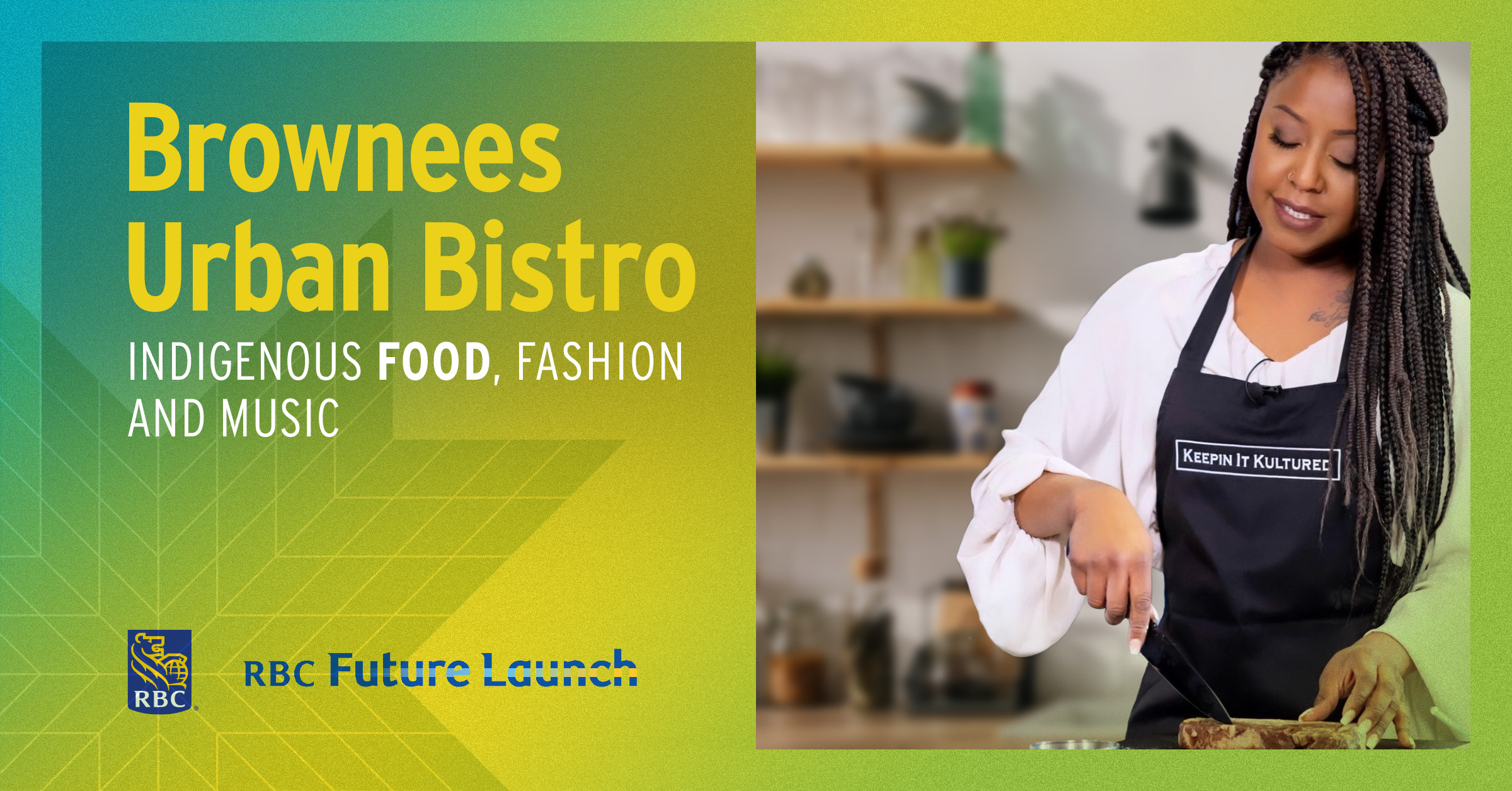
Food, Fashion and Music: Brownees Urban Bistro

April 13, 2023

Inspired by a fusion of Carribean spice and Indigenous ingredients.

Established in October 2018, Brownees Urban Bistro, a cultural catering company infusing Indigenous ingredients with Caribbean flavours and spice, was brought to Winnipeg, Treat 1 Territory by owner and head Chef, Melissa Brown; also known as Brownee!

With her passion for cooking, love for her Jamaican & Anishinaabe identity, and appreciation for the Indigenous foods sovereignty movement, Chef Brown thought it only made sense to offer Winnipeg a unique and elevated dining and tastebud experience.

Food and the opportunity to cook were surefire ways to engage the youth in Melissa’s neighbourhood growing up. Whenever places like Magnus Eliason Recreation Centre offered either, Melissa and her friends were always there; that experience launched Melissa’s journey to establish an urban Indigenous youth culinary program and Brownees Urban Bistro.

Brownees Urban Bistro fills a unique and thriving niche in the cuisine industry and has recently created an extension of her catering company to include luxury bannock donuts: Brownees Bannock Delights.

Brownees Urban Bistro & Brownees Bannock Delights can be found on Facebook & Instagram, and bookings can be made through her website.

Join Chef Brown at Manitou a bi Bii daziigae on April 19, 2023 for Indigenous Food, Fashion, and Music: an RBC Reaction by Collision Community Event and indulge in a fusion of Anishinaabe and Jamaican cuisine. For more information, check out the program post for the 2023 RBC Reaction by Collision.

RRC Polytech campuses are located on the lands of the Anishinaabeg, Ininiwak, Anishininwak, Dakota Oyate, and Denésuline, and the National Homeland of the Red River Métis.

We recognize and honour Treaty 3 Territory Shoal Lake 40 First Nation, the source of Winnipeg’s clean drinking water. In addition, we acknowledge Treaty Territories which provide us with access to electricity we use in both our personal and professional lives.