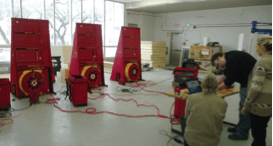
Large Building Air Tightness Testing Training
This three-day course educated participants on:
- Air tightness testing standards and code requirements
- the differences between residential and commercial air tightness tests
- building science and driving forces of air leakage
- test considerations and planning
- required materials and equipment
The workshop also focused on the setup and use of blower door equipment, and finished with a full live test of the CARSI building at Red River College, which incorporates diagnostic tools and analysis/reporting of the test data.
Background
Increasing air tightness in a building is now widely recognized as one of the most influential factors affecting the building’s performance in terms of energy use, comfort, indoor air quality, durability and even noise transmission.
Even though airtightness testing of residential houses is quite common, airtightness testing of commercial buildings is only now starting to grow.
Testing equipment is now evolving to measure a larger range of commercial building types; however, since this type of testing is still relatively new to the United States and Canada, there remains very few qualified personnel able to perform these tests to specific standards.
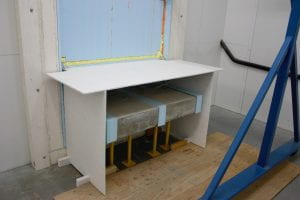 This project focuses on developing cost-effective systems for the implementation of thermally broken concrete slabs for residential mid/high-rise construction.
 The objective of this project is to investigate and assess the energy efficiency, effectiveness, and performance of vertical, sloped and horizontal DWHR systems for MURB applications. BETAC will be working with Gary Proskiw, Manitoba Hydro, and Manitoba Housing on this project.
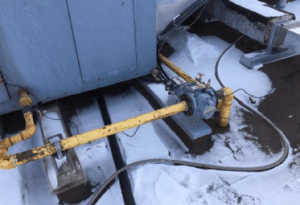 The majority of information and testing available for DWHR performance was developed for vertical installations. However, the accessible portions of the drain lines in MURBs are predominately horizontal or sloped at 45°.
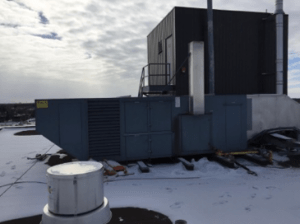
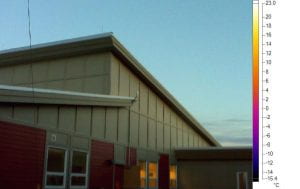 York Factory First Nation is collaborating with BETAC to perform an air leakage test on a nursing station built in 2000 that has since encountered some roof damage due to ice damming.
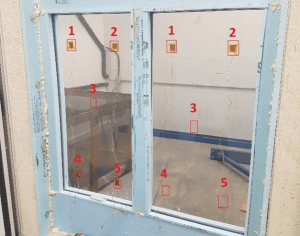 The objective of this project was to compare and evaluate the thermal performance of two samples of a polycarbonate glazing, which behave similarly to Insulated Glass Units (IGU), provided by a local window manufacturer to the Building Envelope Technology Access Centre (BETAC) at Red River College.