
Health Minds Healthy College

Campus Well-Being

Mental Health

Getting a good night’s sleep: easy as z-z-z?

April 26, 2016

Most people understand the negative effects that improper sleep quantity can have on their daily activities. We’ve all heard a fellow employee say how they just need their five or six hours per night to function well the next day. As adults are recommended by the National Sleep Foundation to get anywhere between seven and nine hours of sleep per night, it’s already evident we don’t get enough on a regular basis. What most don’t understand is that proper sleep quality is just as important as quantity and can be just as troublesome if not satisfied.

When deprived of the rejuvenating effects of sleep, the brain’s ability to process new information is compromised along with creativity, logic and judgement – not a set of skills anyone would like to go a full workday without! In addition to the impact on the brain, the rest of body takes a hit without sufficient sleep on a regular basis. The immune system is typically one of the first in the body to shut down when we feel stressed; people often lose sleep over stress as well so the connection between sleep and the immune system is a natural conclusion. Migraines and headaches are more commonly linked to people getting a lower quality of sleep, and those conditions greatly affect our productivity throughout the day as well. Poor nutritional choices are also more likely to occur when insufficient sleep is achieved which can lead to higher risk for heart disease and Diabetes.

Our bodies love to sleep, and why wouldn’t they? Throughout the stages of sleep our bodies get to relax every muscle and repair some damage done throughout the day, lower our blood pressure and restore energy to recharge our systems for another extended period of being awake. Without this time to recharge, our systems continue to deplete until there is eventually a complete and total shut-down. A couple of extra hours each night dedicated to maintaining proper physical and mental health through sleeping may allow us less free time during each day but will most certainly benefit us in the long run.

There are certain practical steps we can take to ensure our mind and body are ready for a solid night’s sleep:

  • Create a sleep routine – go to bed and wake up at close to or the same time each day (even weekends, there’s no need to “catch up” if we consistently get enough).
  • Make physical activity a consistent part of each day, but not within 3 hours of going to bed.
  • Limit intake of caffeine, alcohol and nicotine in general but especially during the evening hours as these stimulants will work against our brain’s desire to fall – and stay – asleep.
  • Make the bedroom a haven for the weary. Darkness, quiet, comfortable temperature and sleeping area are all essential to creating an environment for a great sleep.
  • Turn away from the light – all light. Luminescent clocks, plugin nightlights and personal technology like phones, tablets and computers all contribute to keeping the mind in a state of constant awareness.

Find ways to help achieve the sleep quality and quantity you need to be your most productive self. If you can’t think of anything right now that’s fine, go sleep on it.
Balancing Life

April 21, 2016

They say if you take care of the minutes, the hours will take care of themselves. That, however, is an almost 350 year old quote. In today’s hyper-connected world, we talk about nanoseconds.

How many times have you anxiously been drumming your fingers waiting for that 5MB text to send from your mobile phone, or for that card verification to say, “Approved,” so you can get out of the online store? As you “waste” 4 seconds just WAITING you think of everything you have to do and how little time you have to do it. You don’t have time for this!

Balance is an elusive concept in this out-of-control world, and we could all use a little help achieving it. Here are 9 steps to bringing balance to your life. Yes, it’s a link, so be patient.

http://tinybuddha.com/blog/9-tips-to-create-a-balanced-life/


Treat Yo Self

April 21, 2016

Take your time…and spend it well, sometimes just by yourself.

By Chef John Royal

In planning what to write for my wellness blog post, I kept coming back to how much I need to spend quality time with my family and friends.   How hard it is in this busy life to find time for everything; work demands, a happy marriage, kids, pets, household, parents and all of life’s things that need to get done.

One thing that I find always falls to the bottom of my list is me!

We all want our family and friends, work, and relationships to take priority, and in order to do that, you need to take care of yourself. Sometimes the best way to recharge your battery is to do something that you love to do, by yourself.

Biking and walking are great for me. Some people want to relax at the spa to rejuvenate or perhaps a massage, some like to sit at the coffee shop and spend two hours with the paper and crossword. Time to think by yourself while doing something that you enjoy is one of the great pleasures in life. I find that another great destressor is to fall into yard work for a few hours. Painting is also bliss for me (not all the prep or cleanup though!)

Make time for yourself to be busy or lazy or active, but make the time for you, and the people you surround yourself will be better for it!

In our family we found that the only way to be able to spend time on individual hobbies or have personal time was to plan for it. If we didn’t plan for it, it didn’t happen.

Once we all got into the habit of having a few hours of personal time each week, planning came easier, and everyone in our family is developing themselves in one way or anther. Right now, some of the individual pastime’s in my house include: reading time, running, origami, gardening, and Lego. Outside personal activities include swimming, biking, dog walking and the ongoing maintenance and renovation of a 110-year-old home (that one is mine!)

In our house we use team work to gain some personal time. Having our kids help with small things like the cleanup of toys or making sure their laundry was in the hampers, all helped the grown ups and kiddos to have more time together – and on our own!

I have found that our family spends more quality time together and we also have more time to ourselves. We are all more engaged with each other and find we are more engaged at school and work.

As RRC employees we have a wonderful resource available to us with our EFAP (Employee, Family Assistance Program) Called lifeworks. I have included below our common staff login to the website and a few search recommendations in relation to this topic. Happy reading!

Life works website log in for RRC staff members:

www.Lifeworks.com

Username: rrcefap Password: efap

Great references that I found on the lifeworks website are the: “Work Life Play: Making the most of every day” 52-page booklet (available in .pdf format)

Once logged in to lifeworks, at the top search bar, a search for: “work life balance” will come up with a multitude of great resource articles and media on this topic.

One other web reference I found helpful was an article at about.com titled “How to find time for yourself” by Elizabeth Scott, a Stress Management expert.

Here is the link to that article.

http://stress.about.com/od/lowstresslifestyle/a/find_time.htm

Enjoy time to yourself!

Leave it all on the Ice

March 24, 2016

I come from a hockey family. We lived in Rankin Inlet, Nunavut for part of my childhood, where one of the only organized activities for kids was the local hockey program. Women’s hockey hadn’t taken off yet, but that didn’t stop my parents. They signed my sister and me up to play as soon as we were old enough.

A typical street in Nunavut

A typical street in Nunavut

Our family lived on one edge of town and the hockey arena was on the other. I remember walking across the frozen lake to hockey games and practices several times a week during those years, our hockey bags piled up on the sled.

As a kid, I don’t really remember saying I wanted to play hockey or having much of a choice. It was just what kids in our family did. When I got older, and we’d moved back to Thunder Bay, I got interested in other activities and sports. I liked going to hockey, but I didn’t love it the way my sister or three brothers did.

At twelve, I was too old for our friendly neighbourhood hockey league (called the NHL for Northwood Hockey League) where I had been playing on the same team as my two younger brothers. So my parents signed me up for the house league team that many of my fellow 12-year-old NHL teammates were graduating to. Not only were we moving to changing on the fly but we were also now eligible for body contact.

Like most 12-year-old girls, I was starting to feel a little awkward and out of place in most situations, let alone being the only girl in the hockey dressing room. I finished out that year, but decided to try my luck with downhill ski racing the next winter instead of playing hockey.

I sat out of hockey for a couple of seasons and joined my first women’s hockey team a few years later. That first game back felt like going home.

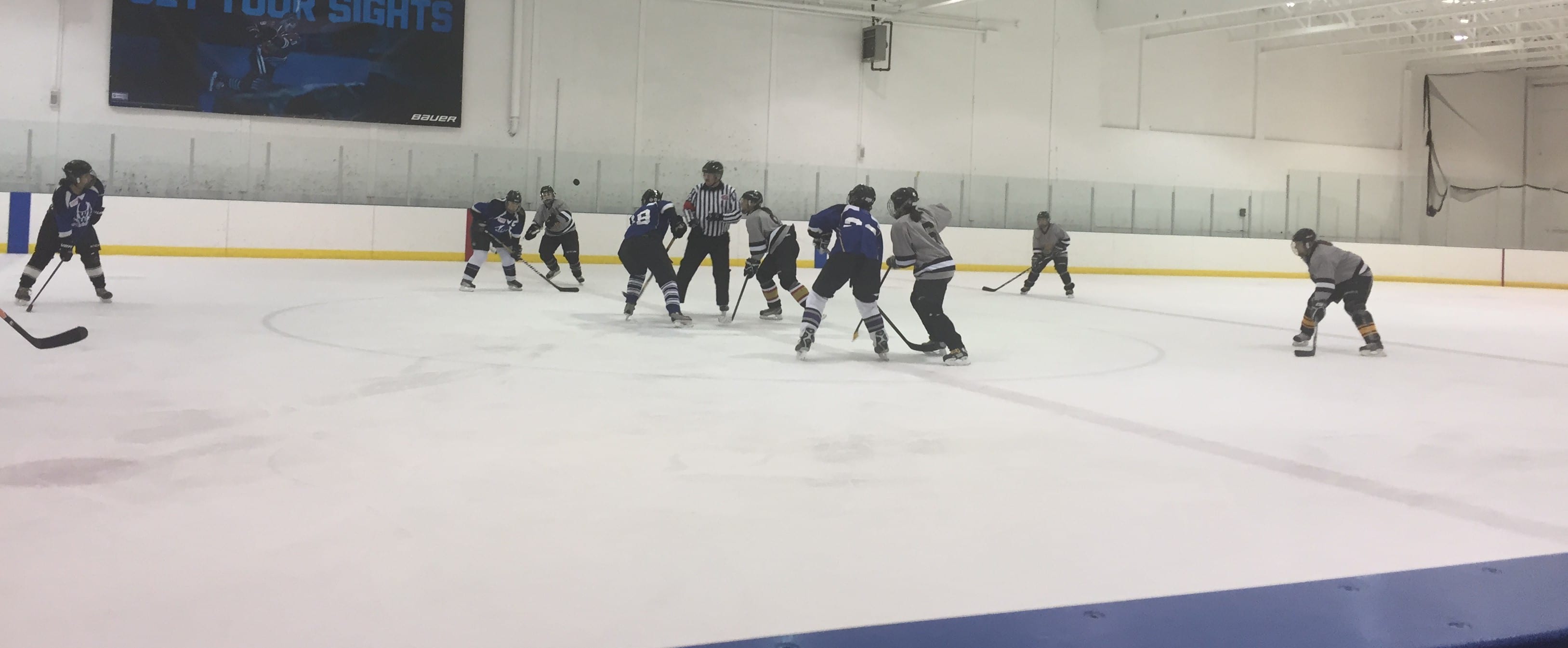
Today, hockey is an important outlet for me. After moving to Winnipeg about five years ago, I joined the women’s hockey team my sister had been playing on in the Adult Safe Hockey League. It’s been a great way to get exercise, blow off some steam, and get to know some great women.

As we head into playoff season, I’m thankful to my parents for signing me up and getting me to the rink for so many years, even if it didn’t always seem like I loved the game. Today, there is no doubt I do.

When I think about the wellness wheel, Wellness Wheelhockey swirls through quite a few of the spokes. The game and my teammates are a great way to take care of my physical, social, and mental health. For me, there’s nothing like a good sweat to put things in perspective. When I’m on the ice, other stresses melt away and my biggest problem is trying to get that puck in the net.

What sports or activities help you stay well, without feeling like work? Let us know in the comments.

When life gets ruff, there is always my dogs

March 1, 2016

I have become a dog person – which is surprising to some of my family members – but now I cannot imagine my life without a dog or two around.

My first dog came into my life in 1999; a three year old Bichon Frisé named Rufus. He was the perfect dog to start a journey of dog ownership. My husband and I had moved to a northern BC community and I began the process of finding employment. Rufus saved my sanity during my hunt for employment. Rufus needed to be walked, so this forced me to get outside instead of staying in the house all day. Fresh air and a good walk kept me mentally healthy. There was nothing like walking a cute, fluffy white dog to start a neighbourly conversation.

Rufus came on all our adventures with us: Cross country skiing, mountain biking, hiking and camping. He was known to sit in a backpack while we were biking around town. He visited numerous job sites with my husband. The contractors in town all knew him. He travelled with us each time we moved to another province adjusting to each move easier than I. Rufus provided us with so much joy and he lived to be 14. An old dog in dog years.

Our house was empty without a dog around, so I was on the hunt for another dog to enrich our lives.

We went from small dog to large dog. We decided on a Golden Retriever. We picked Sheena up in July 2011. This was our first time as puppy owners. Sheena made puppy ownership a breeze. She was so easy to train. But we didn’t realize that a big head and big paws meant a big dog!! Sheena is a 75 pound female golden retriever.   We discovered very early that she does not enjoy Winnipeg summers. She is a cold weather dog; -350C and Sheena is curled up outside in the snow. She loves chasing the deer and rabbits. She loves to exercise and also loves to chill while at home.

Puppyhood with Sheena was such a breeze that we decided to get another Golden Retriever. Sierra DID NOT make puppyhood a breeze. I kept asking the vet what was wrong and she gently told me that there was nothing wrong and that Sierra was a very healthy, normal puppy! Our two Goldens have the same mother but you would not guess it. Sierra is the exact opposite of Sheena in every way!!! I spent the first 18 months alternating between threatening to give her up and maybe keeping her. Today, Sierra is three years old and I wouldn’t trade her for the world. She is such a wonderful dog. Although she is full of energy and doesn’t stop from the minute she wakes up until she goes to bed, she is the cuddliest dog I have ever met.

Dog Park


SIERRA (on the left) Sheena (on the right)

At first, Sheena was not impressed with the new addition to the family but enjoys Sierra’s company now. Sierra absolutely LOVES her big sister. She spends hours trying to get Sheena to play with her and if that doesn’t work, she finds something to take from the garage, through the doggie door into the back yard. Sierra does not enjoy being separated from her sister. She walks around looking for Sheena and won’t settle down until Sheena is around. We couldn’t even run with them separately; once, my husband was running with Sheena and I was lagging behind with Sierra and, well, forget that – that wasn’t going to fly. Sheena sat down and no amount of pulling was going to get her moving – my husband had to run with both dogs.

The dogs absolutely love the swimming pool/lake/river. We had to put a gate around the pool to keep Sierra out. As a puppy, she decided to jump in while the summer cover was on the pool.

Dogs on Deck

SHEENA (on the left) SIERRA (on the right)

Dog ownership enriches your life in ways I am not eloquent to express but I would be remiss if I did not mention that dog ownership is not for everyone; dog ownership is work and they cost money. But if you are ready to accept the work you will find the benefits of dog ownership far out-weigh any work. Dog ownership ties very deeply and personally to my sense of wellness and mental well-being.

Ready for dog ownership? Consider adopting a dog from many of the dog rescue organizations in the city. I have provided a link to three:

http://www.winnipeghumanesociety.ca/

http://manitobamutts.org/

http://petrescueshelter.com/

We Kept Calm, We Carried On!

January 29, 2016

Thank you to all RRC students and employees who dropped by and participated at our ‘Keep Calm and Carry On’ Wellness Event last week at NDC and EDC!

The ‘Keep Calm and Carry On’ theme was evident by the interaction and participation at our various stations. Over 50 people relaxed at the Adult Colouring station and many took a coloring sheet back with them to finish their artwork! We received rave reviews over the tasty cookies and hot chocolate – what a nice treat on a cold winter day!

Our guest Marc Forrester, from Winnipeg Insight Meditation Group, enjoyed sharing his knowledge! 64 students and employees indicated an interest in finding out more about meditation.

IMG_0235IMG_0240 IMG_0250The Therapy Dogs and owners were a special treat. The smiles on everyones faces during their interactions speaks volumes as to the benefits we gain from being around these lovely animals.

There was a renewed interest in what Lifeworks – the RRC employees Employee and Family Assistance Program – has to offer. We navigated the pages within the Lifeworks.com website to find interesting articles, information and tips on a diverse number of topics including quitting smoking, child care information, Will kits, finance sections, where to call to speak with a consultant or counsellor. Click here to access the LifeWorks website.

Look for the LifeWorks posters over the campuses too!

The Wellness Committee will donate 3 books to the Library – The Path of the Yoga Sutras; The Relaxed Mind and The Kundalini Yoga Experience.

Stay tuned for more Wellness Events including the ‘Get Movin’ Challenge’ for the month of February.

Finally, Congratulations to the prize draw winners!

‘How to Meditate’ books – Paul Brady (NDC) & Judyta Szacilowski (Roblin Centre)
Adult Coloring Books – Gurpreet Kaur (NDC) & Virginia Wark (Roblin Centre)

Thanks for your participation! The Wellness Committee

Calm mind brings inner strength & self-confidence, so that’s very important for good health – Dalai Lama

Keep Calm and Carry On! January 20 and 21

January 13, 2016

 Join the Wellness Committee on January 21 at NDC and January 22 at Robin Centre where you can de-stress and rejuvenate for 2016.  23296965440_f88c033673_z

Meet us in the hallway for hot chocolate and cookies, and while taking a break from the computer screen, you can unwind and clear your thoughts with a favorite pastime, colouring…

Yes! Research has shown that colouring for adults is a great way to reduce stress and clear your thoughts.   

After colouring, wander over to meet our meditation expert who will share with you the proven scientific benefits of meditation: physical, mental, emotional and spiritual.

Next, visit Lifeworks.com, the RRC Employee and Family Assistance Program website to navigate and find resources to help in managing stressors in your work and personal life.15408360421_6bbf477d60_z

 End your break by visiting our therapy dogs who will brighten your day and lift your spirits!

 Staff and students – please drop by!

 January 20, 2016 – 11 a.m. to 2 p.m. – NDC Library Hallway

January 21, 2016 – 11 a.m. to 2 p.m. – Roblin Centre Atrium

For more information, contact wellness@rrc.ca.


Minimize your stress this holiday season!

December 1, 2015

Minimize your stress this holiday season![1]

Preparing for the holidays comes with increased demands on our time and activity. Stress results when demands exceed our ability to cope. The holidays are events out of the ordinary that we often expect to be extraordinary. Finding the perfect gift, preparing the perfect meal or hosting a family gathering with no setbacks or conflicts may not be a realistic expectation, for yourself or for others. When expectations are too high, when they are not met or things happen that are out of our control, we can end up feeling disappointed or frustrated and stress is a likely result.

Everyone has a different way of coping with stress and some can make the situation better or worse. Here are some positive ways to cope with holiday stress:

  • Picture1Review your expectations for the holidays. Make sure your expectations are yours and not someone else’s and make sure that they are realistic. What you can do and want to do might be very different.
  • Make sure that you are expecting something over which you have some control. Make sure that you plan an event that you can make happen.
  • Let others know what you expect of them and don’t forget to ask for help if you need it.
  • Only take on what you can manage. Spending more than you can afford or inviting more people to an event than you can accommodate is likely to lead to stress and frustration.
  • Review or plan your coping strategies before a special event. Time out for physical or relaxation exercise, a walk or hobbies can be great coping mechanisms for stress and are good lifestyle practices in general.
  • Focus on what really matters. Think about what is more important to you – the perfect gift, a turkey cooked perfectly and on time or enjoying time with family and friends.

Your Employee and Family Assistance Plan (EFAP) through LifeWorks also has plenty of recourses to assist you with managing holiday stress. Visit the LifeWorks website to view some helpful articles.

Individual Health, Dental and Travel

Picture2Individual Health Dental Travel (HDT) Insurance plan assistance, offered through HUB International STRATA Benefits Consulting, is a service that aims to provide additional coverage for an Employee who is already covered, or provide coverage for a dependent who is not otherwise covered for benefits.

Individual insurance is all about you. The insurance carrier, plan level and options are all chosen based on your wants, needs, and budget. If you have pre-existing medical conditions, you can apply for plans that offer non-medical applications provided you apply within a certain timeframe of terminating your Group coverage.

This program is 100% voluntary for any Employee requiring additional coverage, leaving the Group Plan, or in need of coverage for a family member; simply contact HUB STRATA for your initial Needs Assessment.

Contact HUB STRATA at 1-866-787-2826 or at emerge@stratagroup.ca to discuss your post-group health, dental and travel needs.

Supporting Your Wellness

shutterstock_173113409The LifeWorks website contains useful tools and articles to help you and your family. You even have access to seminars at www.lifeworks.com.

If you’re a family caregiver, you may be struggling to balance the demands of your many roles. This month, LifeWorks will feature their resources on caring for older dependent loved ones. Check out these resources:

  • Podcast – Facing a Terminal Illness
  • New Seminar – The Sandwich Generation

[1] Cohen, Dr. K.R. 2014. “Psychology Works” Fact Sheet: Holiday Stress. Canadian Psychological Association. http://www.cpa.ca/docs/File/Publications/FactSheets/PsychologyWorksFactSheet_HolidayStress.pdf


Paramedical Coverage & Mental Health Awareness

April 27, 2015

Paramedical Coverage

As part of Red River College’s group benefits, Benefit Eligible Employees may have coverage for the following professional services. Your coverage is based on your Flex Option choice.

  • AudiologistsPhysio
  • Athletic Therapists
  • Chiropractors
  • Dieticians
  • Massage Therapists
  • Naturopaths
  • Osteopaths
  • Physiotherapists
  • Podiatrists/Chiropodists
  • Psychologists/Social Workers
  • Speech Therapists

For detailed paramedical coverage information refer to your benefits booklet.

May is Mental Health Awareness Month[1]

Mental health is key to being truly healthy. Mental health involves how we interact with the world around us and how we feel, think and act. Mental health is not about achieving the ‘perfect life’ by avoiding problems. Mental well-being is much more than the presence or absence of a mental illness; rather it is about living well and feeling capable despite challenges.

Each person’s path to mental well-being is different and unique just as each person’s goals, challenges, talents and supports are. Maintaining your mental health requires effort every day, but the rewards are great! Everyone can achieve good mental health! Here are some tips and activities to apply on a regular basis to help you get started:Mental Workout 3

  • Build a healthy self-esteem – Self-esteem is being able to see all of your abilities and weaknesses together, accepting them, and doing your best with what you have. Take a look at your skills and interests, and then what you have difficulty with. All of us have our positive and negative sides. Build confidence by developing weaker areas and regularly reminding yourself of the things you’re comfortable and proud of.
  • Build a positive support network – Social support is a very important part of mental health and people in our networks can offer many different kinds of support. Make time to just be with important people in your life.
  • Get involved – You make a difference, and being involved in the things that matter to us provides a great feeling of satisfaction and purpose. Getting involved connects you with others, builds confidence and promotes personal growth. Read to children, serve on a committee or board of your favorite charity, or simply help a neighbor.
  • Build resiliency – Stress is a normal part of life. Resiliency means coping well with problems, stress, and other difficult situations that are a normal part of life. Build a resiliency tool kit that might include skills like problem solving, assertiveness, and balancing obligations and expectations.

For more mental health information including more tips and activities visit the Canadian Mental Health Association website.

Supporting Your Wellnessshutterstock_173113409

The LifeWorks website contains useful tools and articles to help you and your family. You even have access to seminars at www.lifeworks.com.

Whether you have questions about bedtime routines, or if you’re struggling to set limits, LifeWorks can help you find solutions to your family’s sleep issues! Check out these recommended resources:

  • Podcast – Helping Your Child Get a Good Night’s Sleep
  • New Seminar – Positive Discipline

[1] Mental Health – Why is your mental health so important? Canadian Mental Health Association. 2015.

OH-SO-SPECIAL!

January 15, 2015

Rebels Athletics and Recreation Services along with the Student Association are hosting three Intramural Special Events this year in a variety of sports. This is great way to meet new people, relieve stress and be active! All events cost $10.00 each, so this is an affordable way to get exercise and participate in some fun sports! Each event is open to all RRC staff and students. Door prizes and a player’s lounge are a part of every event.

To participate, print the 2015 Winter Intramurals Registration Form and take it to either The OX on Notre Dame Campus or The Mercantile in the Exchange Campus to register. Deadline to register for each event is the Wednesday prior to.

birdie copySaturday January 24- Rebels Badminton Classic
Location: North Gym
Time: 8am-4pm
Cost: $10 per person. Can enter as many categories as you wish
Categories: Men’s and Women’s Singles and Doubles and Mixed Doubles

Saturday February 7th-Rebels Floor Hockey
Location: North and South Gyms
Time: 8am-4pm
Cost: $10 per person
Categories: Register as a team or a Free Agent. 5 players to a team including goalie.

Saturday March 21st- March Madness 3vs3 Basketball
Location: North
Time: 8am-4pm
Cost: $10 per person
Categories: Register as a team or a Free Agent. Men’s and Women’s Divisions. Max 5 players per team, 3 on the court at one time.

For further information please contact Athletics and Recreation Coordinator Cole Skinner at 632-2397 or coskinner@rrc.ca

Follow Us, Like Us, and Watch US on Social Media

facebook

instagram google-plus twitter youtube

RRC Polytech campuses are located on the lands of the Anishinaabeg, Ininiwak, Anishininwak, Dakota Oyate, and Denésuline, and the National Homeland of the Red River Métis.

We recognize and honour Treaty 3 Territory Shoal Lake 40 First Nation, the source of Winnipeg’s clean drinking water. In addition, we acknowledge Treaty Territories which provide us with access to electricity we use in both our personal and professional lives.