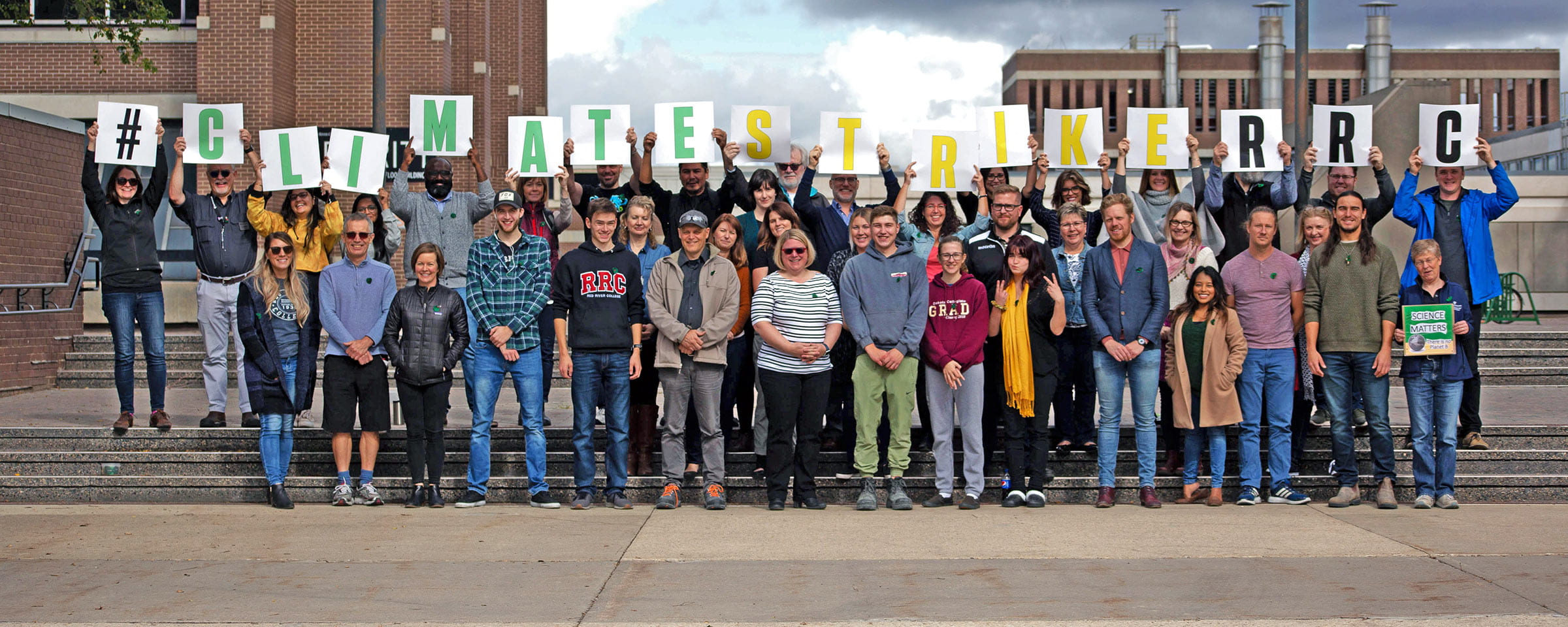
Caring for Our Campus: No Mow Spaces, Bees and Volunteers in action
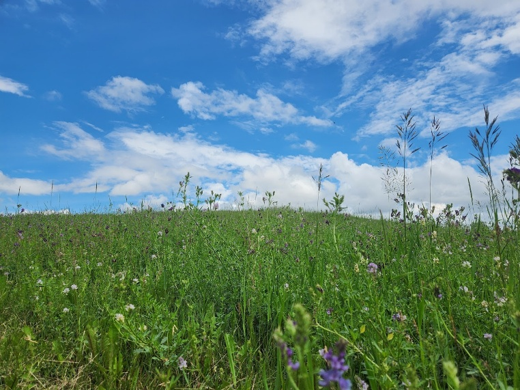
This spring, many initiatives brought together the Landscaping and Grounds team, Indigenous Student Supports and Partnerships, local beekeepers, student volunteers, and the Sustainability Office. While each project had a different focus, they all shared one thing in common: caring for our campus.
One simple change can make a big difference. This year, the Landscaping and Grounds teams took part in No Mow May, a movement that encourages delaying the first mow of the season.
So, why does this matter? Early spring is one of the most challenging times of the year for pollinators. Bees and other insects emerge from winter just as many lawns are being mowed before flowers have a chance to bloom. By allowing grasses and flowering plants to grow a little longer, we provide an important source of nectar and pollen when food is scarce.
The benefits don’t stop there. Leaving some areas unmowed a little longer can also improve soil health and reduce greenhouse gas emissions associated with mowing. Sometimes, giving nature a little more space is one of the simplest ways to make a positive difference.
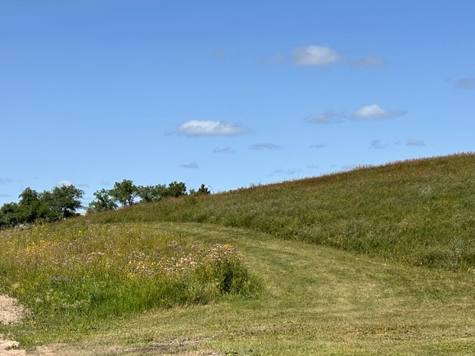
As part of this initiative, the Landscaping and Grounds team left an area behind the soccer field unmowed beyond May, allowing grasses and flowering plants to continue growing throughout the season. There is a maintained walking path through the area, making it a perfect place for a lunchtime walk or a quiet break outdoors. If you haven’t explored it yet, we encourage you to take a stroll and enjoy one of the College’s natural spaces.
Welcoming Back the Bees
Just across from the naturalized area, another exciting project has returned to campus.
This year, RRC Polytech reactivated its Bee Project in partnership with local beekeepers by installing four honey bee hives on the Notre Dame Campus.
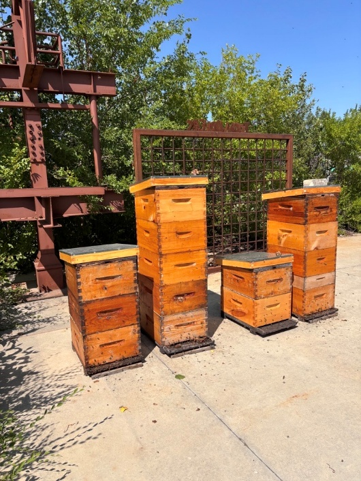
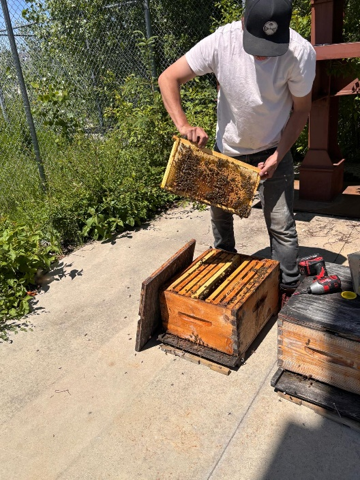
The hives support pollination while creating opportunities for students, staff, and visitors to learn more about honey bees and the role they play in our environment and food systems. Honey bees can travel up to five kilometres from their hive, pollinating trees, gardens, parks, and other green spaces throughout the surrounding area.
Over the coming weeks, we’ll be announcing opportunities to meet our beekeeper, learn about bees and the ecosystem services they provide, and take part in a Nature Walk in August.
Once the honey is harvested this fall, it will be shared with the Culinary Program, Student Association Food Bank, and through Sustainability Office activities.
Volunteers in Action: Weeding at the Medicine Wheel
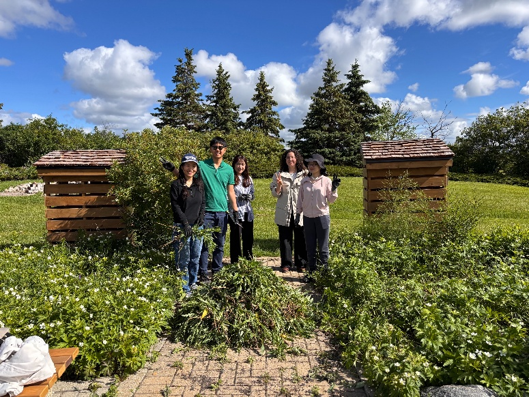
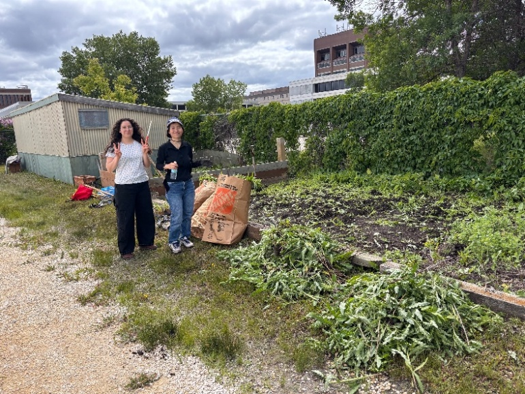
At the beginning of June, students from the Sustainability Volunteer Program spent the morning at the Medicine Wheel removing thistle, an invasive species that spreads quickly and competes with other plants. The activity also assisted Indigenous Student Supports and Partnerships in preparing the Medicine Wheel ahead of the Summer Solstice Pipe Ceremony and the July camps. Volunteers also weeded a Community Garden plot where sage and sweetgrass are being grown for future plantings at the Medicine Wheel.
Beyond the work itself, it was an opportunity for students to spend time outdoors, connect with other volunteers, learn about invasive species and native plants, and contribute to the care of these important spaces.
Whether it’s giving pollinators a place to feed, bringing bees back, or volunteering a few hours to care for our green spaces, every project plays a part in making RRC Polytech a more sustainable place.
If you’re on campus this summer, take some time to explore these spaces. Walk the trail behind the soccer field, visit the bee enclosure, and see how small changes can make a big difference.