Communications and Marketing

News

Eight RRC Polytech programs granted national accreditation

November 30, 2022

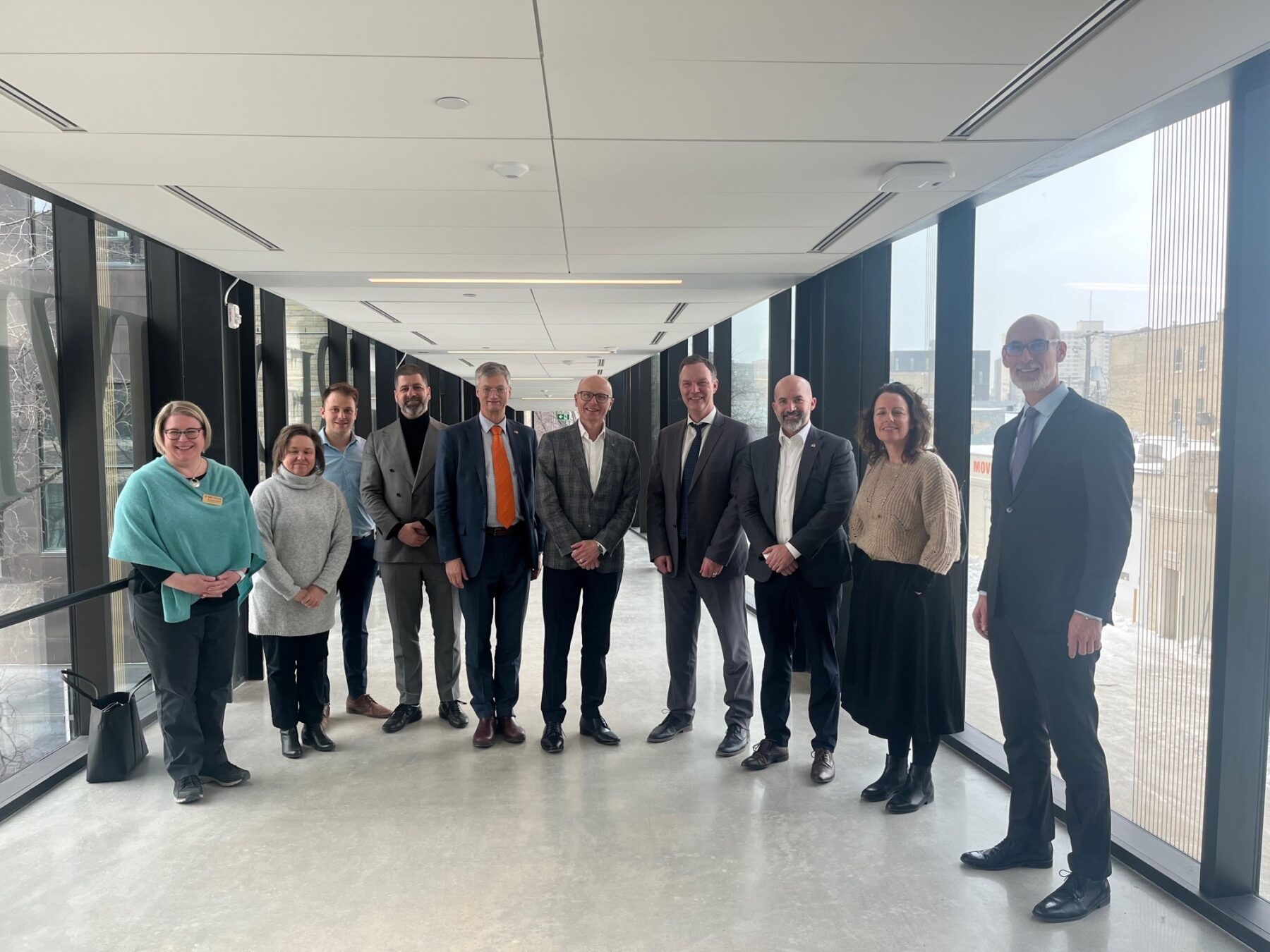
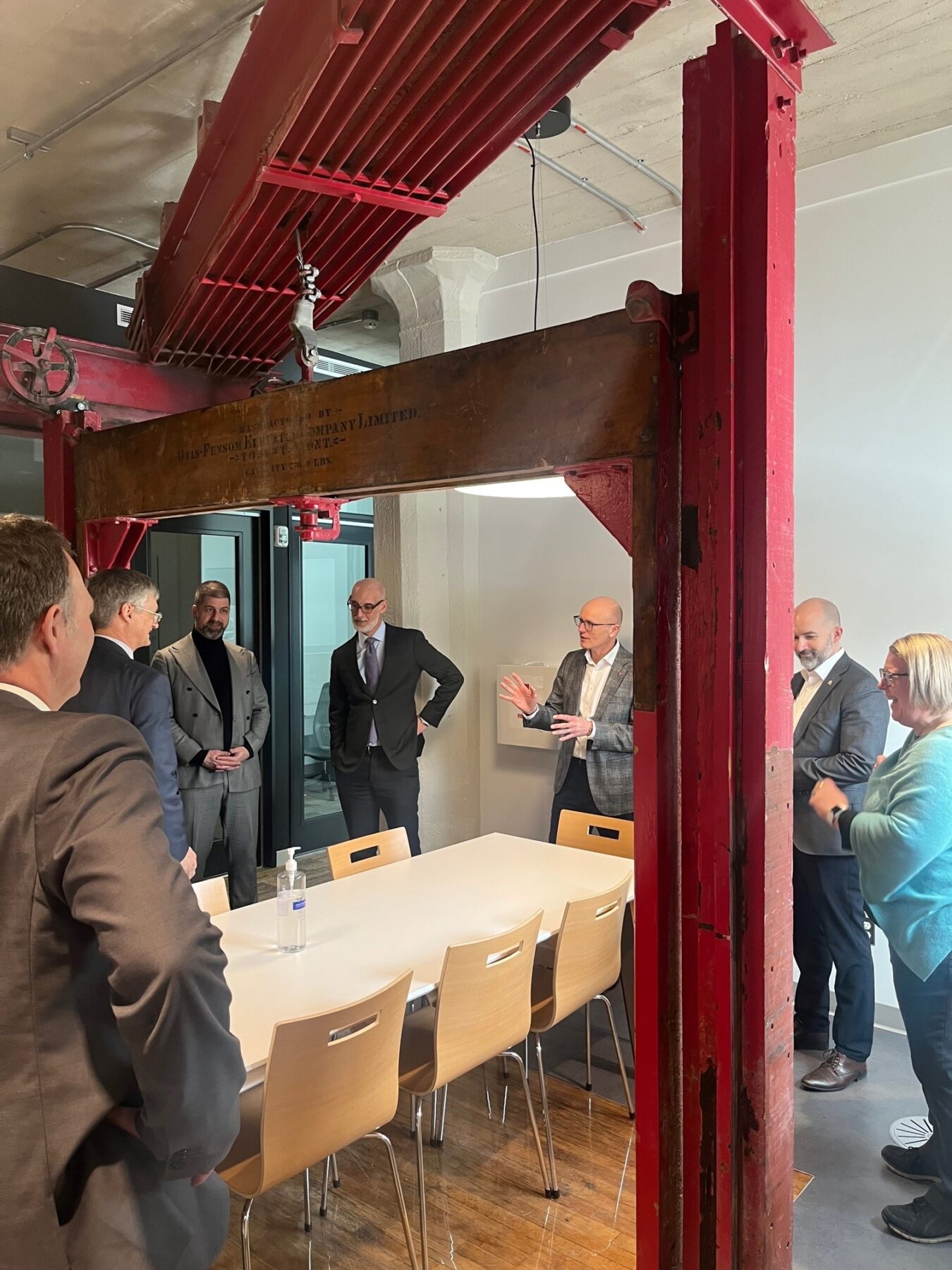
From left to right: Mark Blackner, Chair, Electrical, Mechanical, and Manufacturing, RRC Polytech; Derek Kochenash, Dean, School of Skilled Trades & Technologies, RRC Polytech; Norbert Patchet, Instructor, Electrical Engineering Technology, RRC Polytech; Dr. Jeanine Webber, Executive Director, Academic, RRC Polytech; Robert Okabe, CEO & Registrar, Certified Technicians & Technologists Association of Manitoba; Shari Bielert, Chair, Civil Technology, RRC Polytech. Photo by Jason Halstead

On November 29, Red River College Polytechnic (RRC Polytech) marked the accreditation of eight of its programs by Technology Accreditation Canada (TAC).

“Achieving accreditation for these programs is a real win-win,” says Derek Kochenash, Dean, School of Skilled Trades and Technologies at RRC Polytech. “Not only does accreditation open doors to even more career opportunities for our students, it provides our partners in industry with the essential talent to help their organizations achieve their goals. 

The accreditation is the result of a comprehensive audit that includes a tour of each program’s labs and student support services, and interviews with its students, faculty, alumni and graduates’ employers.

The eight programs that received accreditation are: 

  • Electronic Engineering Technology, 
  • Electrical Engineering Technology 
  • Instrumentation and Control Engineering Technology
  • Mechanical Engineering Technology
  • Structural Engineering Technology
  • Architectural/Engineering Technology
  • Municipal Engineering Technology
  • Environmental Engineering Technology

National program accreditation provides students, industry and RRC Polytech with confirmation their program has met defined standards. 

“RRC Polytech is grateful to Technology Accreditation Canada for this acknowledgment. The accreditation reflects the high quality of these eight programs, while enhancing graduates’ credentials as they enter the workforce,” continues Kochenash.

Accreditation also affords graduates an expedited path to certification through the Certified Technicians & Technologists Association of Manitoba (CTTAM) and provincial certifying bodies across Canada.

“We congratulate each program for its commitment to delivering to students a high quality program that meets the current standards of the engineering technology and applied science profession,” says Stephen Morley, Chair of TAC’s board of directors.

This announcement was made during an appreciation event for work-integrated learning employers – celebrating businesses and organizations who support and mentor students through hands-on work placements.

For more than 80 years, RRC Polytech has been working alongside industry and community partners to provide relevant experiential training to students through co-operative placements and apprenticeships.

Applied Accounting Graduate Awarded 2022 Lieutenant Governor’s Medal

November 9, 2022

Every year, Red River College Polytechnic awards up to four Lieutenant Governor’s Medal awards to graduating students who excel in academic and technical achievement, involvement in College and/or community activities, and good character.

This year, RRC Polytech is proud to have selected a recipient who embodies every aspect of the award:

Michael Stewart, Applied Accounting

Student holding diploma

He cannot hear you.

He can barely see you.

But he’s ready, willing and more than able to help you with anything.

In fact, nothing makes Michael Stewart happier than smashing a negative stereotype associated with the deaf-blind community – it is his mission and one of the many reasons he has been awarded the only Lieutenant Governor’s Medal at RRC Polytech’s 2022 Fall Convocation.

“I just have a heart for supporting people and being involved in the community and so I want to help other people become successful and fulfill their dreams,” says Stewart.

Michael’s unwavering positivity inspires everyone around him. A lack of hearing since birth and diminished sight since age nine have never deterred him from chasing his dream of creating an inclusive society by empowering others who face similar challenges and educating those who don’t.

“My message for fellow graduates is to continue to push themselves into uncomfortable situations,” he says. “Overcome your fear and insecurities because that is where you ultimately grow the most. Make short-term and long-term goals with a detailed breakdown. When you accomplish a small goal, reward yourself so you can be proud of yourself. Also, be curious and don’t be afraid to ask questions!”

He credits his late father for his belief in himself, his work ethic, and for instilling his passion for volunteerism and his faith for the values that guide him.     

Michael lives those values each day, effortlessly balancing his community involvement and studies while working multiple part-time jobs to support himself, including as a Professional Direct Support Worker for deaf and autistic clients at New Directions.

His decision to further his education was sparked by his experience serving as a Chairperson for the Accessible Canada Act (Bill C-81) designed to make Canada barrier-free by January 1, 2040 and his ongoing committee work at the first national summer camp for deaf-blind adults at Camp Manitou, which he helped found in 2017.

His strength in math combined with a desire to help organizations or individuals that he believes in, led him to choosing a career in accounting.  

A classroom leader achieving excellent grades and attendance, Michael has graduated with Honours from the Applied Accounting Certificate program.

He appreciates his instructors for challenging him by encouraging group activities with some of his classmates who spoke English as a second language and had little to no experience with his interpreters and supports, teaching them all patience, respect, and how to adjust their communications.  

The pandemic forced a shift to virtual and hybrid delivery systems for the majority of students in his graduating class of over 1200. But already an expert in adaptability, Michael used remote learning to his advantage in May, attending classes while volunteering at the 2022 Deaflympics in Brazil, and shared the enriching experience with his classmates.

Jill Patterson, Manager of Deaf and Hard of Hearing Services describes Stewart as a positive, dynamic and hardworking individual who is ready to take on the world of work and says his willingness to help teach others around him about his community sets him apart. 

“It’s been a privilege working with Michael for the past year,” says Patterson. “I only wish he would stay a Red River College Polytechnic student forever because he will be missed. Congratulations on this award, you deserve it.”

Michael says his award wouldn’t have been possible without all the amazing people who have helped him along the way and encourages everyone to volunteer and foster relationships to create healthy communities.

“From instructors and interpreters to classmates, I am blown away by the generosity, kindness, and top-notch service provided by RRC Polytech,” says Stewart. “My education will open so many doors for me as I work toward becoming a Chartered Professional Accountant and achieving my ultimate goal of changing the stigma associated with the ability of deaf-blind Canadians to work and contribute.”

Michael Stewart is a tireless advocate for accessibility, an outstanding role model and a worthy recipient of the College’s most distinguished award.

The only reason he would ever not lend you a hand, is because both his arms are already busy supporting someone else.

RRC Polytech gets outside, in tune with mental health during Thrive Week

November 4, 2022

Next week, RRC Polytech staff and students will cuddle with dogs, walk through the forest, and learn the art of Japanese taiko drumming, all in the name of supporting their mental health and well-being.

The College’s Thrive Week encourages students and staff to focus on balance and self-care, while developing positive mental health that supports success in learning and work.

“RRC Polytech is committed to providing an environment where equity, diversity and inclusion can thrive – and part of that is addressing the diverse realities we each face when it comes to mental health,” says Melanie Gudmundson, RRC Polytech’s Chief Human Resource Officer. “Campus well-being is a priority at RRC Polytech. We understand that personal and community health contributes both to student success and employee engagement, so it’s important to offer opportunities for our community to find some much-needed balance in their busy days, whether they’re on campus or learning or working remotely.”

The week starts off on Monday, November 7 with a visit from the St. John Ambulance therapy dog program. On Tuesday, the College hosts Jaime Manness for a keynote address. Manness is a nurse and RRC Polytech grad who’s the creator, owner, and author of Hike Manitoba, which includes five guidebooks on hiking in Manitoba. Manness will talk about how spending time in nature helps her manage a high-pressure career, while sharing expert tips on hiking in the province.

Thrive Week also features a series of virtual and in-person events – such as a group walk through Birds Hill Park and a workshop with Fubuki Daiko – where staff and students are invited to take a moment to do something for themselves that promotes relaxation, creativity, or connection.

“Addressing our mental health can often feel like a daunting task. Thrive Week focuses on accessible ways we can all be more mindful and present in our day-to-day lives,” says Breanna Sawatzky, RRC Polytech’s Campus Mental Health Specialist. “Health is not only about our bodies, but also our minds, emotions, spirit, and relationships. Our hope is that the events provided throughout the week will allow our community to focus on small but significant ways to improve our mental health.”

RRC Polytech’s Campus Well-Being unit provides year-round support and activities for physical and mental health, including recreation and fitness classes and mental wellness initiatives such as the MindWell platform, which includes online mindfulness training and live guided mindfulness practices. For more information, visit rrc.ca/well-being.

RRC Polytech celebrates Equity, Diversity and Inclusion with inaugural Inclusion Week

October 31, 2022

RRC Polytech is solidifying its commitment to embodying equity, diversity and inclusion (EDI) with the launch of Inclusion Week.

From October 31 until Friday November 4, the College is hosting a series of virtual and in-person events designed to inspire its community to live out the values of EDI at work, in class, and in their personal lives.

“The principles of EDI are embedded into everything we do at RRC Polytech, and they make up an important pillar of our Strategic Plan. Rather than just talking about how important these values are, Inclusion Week gives our community the chance to experience these teachings first-hand through a variety of events they can attend throughout their typical work or school week,” says Fred Meier, President & CEO, RRC Polytech. “One of our strengths as an institution is that we care deeply about the people who work and study here – Inclusion Week helps to foster a respectful, equitable atmosphere for our entire community.”

RRC Polytech is committed to addressing the Truth and Reconciliation Commission of Canada’s Calls to Action within its operations and in its work to advance Indigenous education in Manitoba. This commitment is a critical foundation for the College’s work in pursuing EDI within the institution and its partnerships — because those goals cannot be advanced without doing the work of reconciliation. Inclusion Week builds off the momentum of RRC Polytech’s Truth and Reconciliation week, held at the end of September, to further provide staff and students with opportunities to engage in the principles of EDI.

Inclusion Week kicked off on October 31 with a keynote luncheon at Manitou a bi Bii daziigae, focused on representation. During the event, keynote speaker Uzoma Asagwara shared their experiences as one of the first Black and openly queer MLAs to ever win a seat as an elected representative in Manitoba, as well as being Manitoba’s first gender non-conforming MLA. Events throughout the week include an Indigenous language and Bannock-making workshop, a drag queen story-time and q+a session, and a Diversity speaker event featuring Laurelle Harris, the Founder, CEO and Principal Consultant at Equitable Solutions. The week concludes with an inclusive dance party hosted by the Red River College Students’ Association.

“The events of Inclusion Week give our staff and students the opportunity to delve deeper into inclusive practices and to become better allies and co-conspirators,” says Cynthia Kulczycki, Instructor at RRC Polytech and a member of Inclusion Week’s planning committee. “EDI is important and fundamental to how we operate as an institution, but it can be accessible, too – it can be as simple, and beautiful, as learning another language, cooking a meal together, or listening to a story.”

RRC Polytech plans to make Inclusion Week an annual event to further deepen its commitment to EDI. For more information, visit rrc.ca/diversity.

RRC Polytech to House Immersive Interdisciplinary Simulation Centre

October 25, 2022

Provincial Funding to Support Centre’s Construction and Implementation of New Equipment and Technology for Nursing, Community Services and Allied Health Programs

Winnipeg, Manitoba, on Treaty No. 1 Territory and the Homeland of the Red River Métis Nation – Students in RRC Polytech’s Health Sciences and Community Services programs will soon be trained in an immersive lab, which simulates real-life scenarios including mock disasters, in-home emergencies, and care in community health spaces.

Today, the Government of Manitoba is committing $12.53 million in funding for RRC Polytech’s new Interdisciplinary Health Sciences and Community Services Simulation Centre (Simulation Centre) at its Notre Dame Campus. The Simulation Centre will provide invaluable experiential training for the province’s future healthcare and community services professionals, ensuring that they are well-prepared with specialized skillsets required for the field.

The 16,630-square-foot Simulation Centre will feature dynamic learning spaces with immersive technology and settings, to be used annually by 1,000 RRC Polytech students from 15 programs, spanning from nursing to paramedicine and child and youth care practitioners.

The Honourable Heather Stefanson, Premier of Manitoba, The Honourable Audrey Gordon, Minister of Health, The Honourable Jon Reyes, Minister of Advanced Education, Skills and Immigration, with RRC Polytech Nursing and Paramedic students.

“This new multi-purpose facility supports our government’s commitment to train more nurses and health-care professionals and build a stronger, more sustainable health care system,” says The Honourable Heather Stefanson, Premier of Manitoba. Our government is proud to work collaboratively with RRC Polytech and all of our post-secondary institutions to provide training opportunities for our youth while building a strong workforce now and well into the future.”

“The centre will help students receive the training they will need to thrive in nursing and other health care fields, leading them into fulfilling careers in vital areas of our province’s economy,” says The Honourable Jon Reyes, Minister of Advanced Education, Skills and Immigration, Government of Manitoba. “It will be a key component in realizing the next phase of our nursing seat expansion on the path to reaching our 400-seat goal.”

“This centre will provide quality training for students working toward careers in the health sciences, helping them to gain valuable skills and experience in a simulated, supportive learning environment,” says The Honourable Audrey Gordon, Minister of Health, Government of Manitoba. “This new facility will help learners succeed in their fields, strengthening the health care system for all Manitobans.”

Accrediting bodies continue to increase requirements for simulation experience, highlighting the deep importance of this type of training to complement clinical practicums and theoretical learning. The Simulation Centre was designed specifically to meet the increasing need for students to be immersed in realistic scenarios and environments that replicate those they will encounter in healthcare and community settings.

“The Government of Manitoba’s investment in the Health Sciences and Community Services Simulation Centre is critical to growing 15 Allied Health and Community Services programs at RRC Polytech, and in turn, providing career-ready graduates to meet labour market needs, says Fred Meier, President and CEO, RRC Polytech. The Centre will engage students in transformative learning; for example, the inclusion of a simulated apartment setting creates a realistic scenario where paramedics and direct support professionals interact with patients in their own homes and incorporate cultural home-based protocols and person-centred care.”

Housed at RRC Polytech’s Notre Dame Campus, the new Centre will have a strong focus on interdisciplinary and collaborative learning, with future nurses, paramedics, allied health and community services professionals engaging in experiential training in a wide range of settings. It will house a triage station, hospital ward, high-fidelity healthcare simulation room, phlebotomy laboratory, apartment, and exam room for experiential learning, plus academic classrooms and office space.

“Through small- and large-scale activities and mock scenarios, the Simulation Centre will engage students from multiple programs, mirroring actual healthcare and community settings they will experience in the workforce, says Debbie O’Donnell Weigelt, Dean, School of Health Sciences and Community Services, RRC Polytech.

This type of experience is fundamental to our polytechnic education model – deep theoretical learning blended with experiential training. It sets our graduates ahead of the curve and on a clear path to making an impact in the field of health and community care.”

Preliminary work is underway, and RRC Polytech is in the process of acquiring new equipment and technology. The Centre is anticipated to take two years to complete. Learn more about RRC Polytech’s Health Sciences and Community Services online.

Notre Dame Campus Closed due to Power Outage

October 24, 2022

Due to a Manitoba Hydro power outage, RRC Polytech’s Notre Dame Campus is closed until 12:00p.m. today, October 24 2022.

All on-campus classes and services at the Notre Dame Campus will be cancelled.

Regular operations are expected to resume at 12:00p.m. today. All other campuses remain open. 

Updates, if required, will be shared on the College’s website, through email, and on social media. 

New Campus Alerting System at RRC Polytech

October 19, 2022

Red River College Polytechnic is committed to providing a safe environment for everyone to work and learn. We are pleased to introduce a new Campus Alerting System to centralize notifications of potential impacts to personal safety. The new system will ensure all members of the college community will be informed in real time with reliable information.

The Campus Alerting System will use multiple channels to consistently share important information to you depending on the type of situation:

  • Broadcasts on hallway speakers
  • Desk phone calls with the same broadcast as the hallway speakers
  • Desk phone display
  • Emails
  • MS Teams
  • Text messages and phone calls on college-issued cellphones and stipends
  • *Coming soon: digital television display and desktop display

Campus Alerts will include a brief description of the situation, instructions to keep yourself safe, how the college is addressing the situation, and updates as the situation is resolved.

SMS Alerts will come from (+1-844-961-4619) and phone call Alerts will come from (+1-608-480-6382). *After November 9, 2022, the SMS Alerts will change to (+1-833-232-5051). Phone call alerts will remain the same. The numbers from which the Alerts are issued are not usually subject to change, so we don’t expect that the number will change again. You can add these numbers to your contacts so you know when an Alert is live.

The introduction of the new Campus Alerting System means we are moving away from the Mobile Safety App.

Staff members will automatically be enrolled in the system on all college-issued devices and emails. If staff members would like to receive alerts on their personal phones, please contact safety@rrc.ca.

Students will receive notifications through academic email, MS Teams if they self-subscribe to the MS Teams channel, and hallway speakers throughout applicable campuses.

If you have any questions, please see the FAQ or contact safety@rrc.ca.

Frequently Asked Questions

What is the RRC Polytech Alerting System?

Red River College Polytechnic is committed to providing a safe environment for all to work and learn. We work proactively to prevent situations that pose a risk or threat to our community. The Campus Alerting System will be used when unforeseen situations arise. Using this system, we will ensure all students, faculty and staff are informed in real time.

We are phasing out the Mobile Safety App to use the Campus Alerting System. The Campus Alerting System centralizes notifications for situations that may affect anyone on any of our campuses. The type of Alert will depend on the severity of the situation. Additional information will accompany the Alert including the location of the situation, instructions on what you need to do to stay safe, what steps the college is taking to address the situation, and follow-up for when the situation is resolved.

Why is the Campus Alerting System important?

The Campus Alerting System notifies the college community of situations that may threaten safety. The messaging will direct the college community on how to respond to these situations.  You will receive the same notification through multiple channels, so there will be no gaps in the information that is sent out. Using multiple channels to send out the same information will ensure that you will receive information regardless of what device you may be using at the time or where you may be located.

What kind of Campus Alerts will be sent?

A Campus Alert can range from:

  • “Sidewalks are hazardous due to the ice. Please be careful when walking on campus.”
  • “There is a medical incident in a building — please avoid this area.”
  • “Mass evacuation of campus is required.”

Campus Alerts will include a brief description of the specific situation and its location, instructions on how to keep yourself safe, how the college is addressing the situation, and updates as the situation is resolved.

How many ways will the Alerts be broadcast?

Communication and redundancy are key in emergency situations. This system notifies users in multiple ways. Depending on the type of alert, you may receive information through:

  • Broadcasts on hallway speakers and desk phones
  • Digital television displays
  • Emails
  • MS Teams
  • Text messages and phone calls on college-issued cellphones and phone stipends

What phone numbers are associated with Campus Alerts?

The Campus Alerting System will broadcast alerts to cellular devices from a unique phone number.

SMS alerts will come from (+1-844-961-4619). If you do not have a college-issued desk phone, and instead have a college-issued cellphone, you may also receive a phone call from  (+1-608-480-6382).

*After November 9, 2022, the SMS Alerts number will change to (+1-844-961-4619). Phone call alerts will remain the same. The numbers from which the Alerts are issued are not usually subject to change, so we don’t expect that the number will change again. You can add these numbers to your contacts so you know when an Alert is live.

Please save these phone numbers as a contact on your cellphone to identify campus alerts.

Is Campus Alerting for all staff, faculty and students?

Yes. All staff, faculty and students are set up to receive alerts while at RRC Polytech campuses.  You may be notified in different ways, depending on the type of Alert.

For staff members, all college-issued devices (cellphones, computers, desk phones) and emails will automatically be enrolled to receive notifications.

Students may receive notifications through one or more of the following methods:

  • Academic email
  • Hallway speakers throughout applicable campuses
  • MS Teams

NOTE: In order to receive notifications through MS Teams, students are required to self-subscribe to the MS Teams channel.

Join the Student Campus Alerting Team Chat by Mobile Device

Join the Student Campus Alerting Team Chat by Computer

If a staff member would like to receive alerts on their personal cell phone, please reach out to safety@rrc.ca.

Will the Mobile safety app still be used?

No. We are moving to centralize notifications using the Campus Alert System.  Safewalk and Saferide can be accessed by contacting Security Services:

NDC

204-632-2323

Roblin Centre

204-949-8305

Paterson Global Foods Institute

 204-631-3381

Manitou a bi Bii daziigae

204-949-8544

QDoc Launch

October 12, 2022

Red River College Polytechnic staff, faculty and students can now access medical services through QDoc. Current RRC Polytech partners, Dr. Norm Silver and Dave Berkowits are part of a new initiative called QDoc that provides virtual medical services when you need them.

No more running out to medical appointments, trying to find and pay for parking, and time wasted in waiting rooms. Save time by using QDoc with wait times less than 15 minutes.

Starting September 26, you will be able to access a doctor with the click of a button here.

See Q & A below for additional information:

How do I access it?

Go to  Home – QDoc and press SEE DOCTOR NOW.  You can access it from any mobile device.

What are the QDoc hours?

QDoc is available 24 hours a day 7 days a week.  Please note that after midnight to 6am there may be longer waiting periods.

Is there a cost?

No. This is FREE for staff, faculty, and domestic students.

However, International students’ visits will be direct billed to their insurance provider (Gallivan).

Do I need my provincial Health Card?

Yes. Domestic students will be required to show their MB or other provincial Health card.

International students will be required to show a current health insurance card to either the treating physician or to a Health Centre staff.

What if I go to the Health Centre and the nurse determines that I do need to see a doctor?

No problem, you will be asked to sign a waiver that will identify that your treatment is shifting from the nurse to the QDoc physician.

There will be a treatment space that you can use to contact the QDoc physician.

RRC Polytech Opens Truth and Reconciliation Week with the Signing of Indigenous Education Protocol

September 26, 2022

Winnipeg, Manitoba, on original lands of Anishinaabe, Ininiwak, Anishininwak, Dakota, and Dene peoples, and on the Homeland of the Red River Métis Nation — Truth and Reconciliation Week is an opportunity to reflect and honour the victims and survivors of Canada’s Residential School system, ensuring they are never forgotten.

To begin Truth and Reconciliation Week, Red River College Polytechnic announced today that it is joining the members of Colleges and Institutes Canada (CICan) as a signatory of a national Indigenous Education Protocol.

This comprehensive document underscores the importance of structures and approaches required to address Indigenous peoples’ learning needs and support self-determination and socio-economic development of Indigenous communities.

“We have dedicated ourselves to reconciling a broken trust in our education system and recognize that advancing Indigenous achievement requires organizations to listen, embrace new ways of learning and work together to prompt meaningful change,” says Fred Meier, President and CEO at RRC Polytech. “By upholding this agreement, RRC Polytech and its CICan partners will continue to create opportunities to integrate Indigenous knowledge and teaching methods into student and faculty supports, to inform our administrative processes, and to build collaborative partnerships that elevate reconciliation.”    

Indigenous Education Protocol signatory institutions agree to:

  • Commit to making Indigenous education a priority.
  • Ensure governance structures recognize and respect Indigenous peoples.
  • Implement intellectual and cultural traditions of Indigenous peoples through curriculum and learning approaches relevant to learners and communities.
  • Support students and employees to increase understanding and reciprocity among Indigenous and non-Indigenous peoples.
  • Commit to increasing the number of Indigenous employees with ongoing appointments throughout the institution, including Indigenous senior administrators.
  • Establish Indigenous-centred holistic services and learning environments for learner success.
  • Build relationships and be accountable to Indigenous communities in support of self-determination through education, training and applied research.

Colleges, institutes, and polytechnics are often the primary access point to post-secondary education for First Nations, Inuit and Métis learners. As the main providers of adult education and upskilling programs they are key to breaking down barriers to post-secondary education. This is especially important for Indigenous learners because the percentage of Indigenous men and women aged 25-64 without a high school diploma stands at 26%, more than twice that of non-Indigenous Canadians (11%).

“Education is vital to strengthening Indigenous communities and we are so proud of the work our members do to ensure that their institutions make culturally relevant education, governance, and support services a priority,” says Denise Amyot, President and CEO of Colleges and Institutes Canada. “I am pleased to welcome Red River College Polytechnic as a signatory of our Indigenous Education Protocol. Congratulations.”

The Indigenous Education Protocol aligns closely with the recommendations issued by Canada’s Truth and Reconciliation Commission in 2015 and is supported by many initiatives already underway at the College.

RRC Polytech works together with its Elders-in-Residence, Knowledge Keepers Council, and Director of Truth and Reconciliation to make informed decisions and embed Indigenous teachings and traditions into its programs and culture.

Manitoba’s former Treaty Commissioner, Jamie Wilson, was recently hired to add his visionary leadership and relationship building acumen to the portfolio of Vice-President of Indigenous Strategy, Research, and Business Development.

The location of today’s signing, Manitou a bi Bii daziigae at the College’s Exchange District Campus, includes open spaces that celebrate Mother Earth, technology to accommodate traditional ceremonies, and artwork on walls, ceilings and floors that celebrates Indigenous artists and creates an atmosphere of belonging.     

All staff are encouraged to complete the Four Seasons of Reconciliation training modules and a blanket exercise to learn about the true effects of Canada’s colonization. Throughout the year, the College hosts a variety of special ceremonies, presentations, workshops, seasonal solstice and equinox celebrations and concludes each year with an annual Pow Wow honouring Indigenous graduates.

“RRC Polytech is a learning institution, a workplace and a community; post-secondary is where many young people are exposed to life altering thought processes, ideas and new pathways. For me, post-secondary helped shape who I am,” says Carla Kematch, Director of Truth and Reconciliation at RRC Polytech. “Not only is it our responsibility to educate on Truth and Reconciliation, we hold a unique space for transformative learning to occur for the future of our province and to help heal the deep wounds that still impact Indigenous peoples.”

RRC Polytech is committed to Truth and Reconciliation and embedding equity, diversity, and inclusion into everything we do. CICan’s Indigenous Education Protocol will help guide the College on its mission of providing top level post-secondary education while transforming spaces, places and hearts; weaving together two distinct cultures; and improving relationships between Indigenous and non-Indigenous peoples to empower communities and promote a culture of respect and inclusion.

Colleges and Institutes Canada represents 142 of Canada’s publicly funded colleges and institutes. Founded in 1972, the association serves as the national and international voice of Canada’s largest post-secondary education network. Our work is guided by a simple yet ambitious vision: building better futures for peoples and communities. We achieve this by strengthening Canada’s system of publicly supported colleges, institutes, CEGEPs, and polytechnics.

RRC Polytech Hosting Fourth Annual Truth and Reconciliation Week

September 23, 2022

RRC Polytech is committed to continuing the journey of Truth and Reconciliation as individuals, and collectively as a College community. Next week from Monday, Sept 26, to Thursday, Sept 29, 2022, marks the fourth annual Truth and Reconciliation (TRC) Week, a time to learn, reflect and spark conversations that will contribute to understanding, healing and creating stronger relationships between Indigenous and non-Indigenous peoples.

Employees and students will be immersed in Indigenous teachings, storytelling and experiences to evolve their understanding of history and current issues impacting Indigenous people, reconciliation efforts and society as a whole. TRC Week is a blend of in-person, virtual and self-guided events and experiences offered by departments from across the College and the RRC Polytech Student Association.

“Truth and Reconciliation Week at RRC Polytech has grown to become a cross-departmental collaboration to offer a wide variety of events for staff and students. With this being our fourth year, we can build upon the foundational knowledge we have developed and really dive deeper into topics staff and faculty require to move forward in their work,” says Carla Kematch, Director of Truth and Reconciliation and Community Engagement at RRC Polytech.

TRC Week focuses on the vital topics of Residential Schools, Orange Shirt Day: Every Child Matters, and Missing and Murdered Indigenous Women, Girls and Two Spirit, and begins with an all-day session on Indigenous research methodologies led by Dr. Shawn Wilson.

“As a polytechnic, there’s a huge opportunity to integrate Indigenous teachings and knowledge, to create learning opportunities from influential scholars in this space. For TRC Week we are fortunate to be hosting an Indigenous research methodologies session with Dr. Wilson, author of Research is Ceremony: Indigenous Research Methods,” says Kematch.

Alongside employees and students, community members are invited to join Dr. Wilson’s session on Monday, Sept 26, from 9 a.m. to 4 p.m. at the Roundhouse Auditorium, located at Manitou a bi Bii daziigae, the Exchange District Campus. Pre-registration for this event is required.

Also embedded within the first day of TRC Week, RRC Polytech will be signing Colleges and Institutes Canada’s (CICan) national Indigenous Education Protocol. As an official signatory, RRC Polytech is furthering its commitment to reconciling a broken trust in our education system and advancing Indigenous achievement through addressing barriers, embracing new ways of learning and knowing, and working together to create meaningful change.

To support meaningful change and live the College’s renewed commitment to Truth and Reconciliation, at the beginning of this year, the re-imagined area of Indigenous Strategy, Research and Business Development was launched. This area, led by Vice President, James (Jamie) Wilson, helps guide transformation in Truth and Reconciliation, and strengthen the College’s relationship between Indigenous communities and the business sector, resulting in expanded opportunities for students, industry and Indigenous communities in Manitoba.  

“To truly embed Truth and Reconciliation and create transformational change, we need to do the work as Individuals and as a collective. TRC Week brings many opportunities to both learn and apply the learning, helping to build critical pathways between RRC Polytech, Indigenous students, and Indigenous communities and businesses,” says Jamie Wilson, Vice President, Indigenous Strategy, Research and Business Development at RRC Polytech.

RRC Polytech’s work towards learning, understanding, healing and building relationships goes beyond TRC Week. Together, the School of Indigenous Education and Library and Academic Services are launching the Truth and Reconciliation Community of Practice, a forum for participants to extend and apply their learning, and to take action to advance TRC and anti-racism throughout fall 2022 and beyond.

For the full TRC Week event listing and more information, visit rrc.ca/indigenous/news.

RRC Polytech campuses are located on the lands of the Anishinaabeg, Ininiwak, Anishininwak, Dakota Oyate, and Denésuline, and the National Homeland of the Red River Métis.

We recognize and honour Treaty 3 Territory Shoal Lake 40 First Nation, the source of Winnipeg’s clean drinking water. In addition, we acknowledge Treaty Territories which provide us with access to electricity we use in both our personal and professional lives.