Communications and Marketing

News and Events

New Street Parking Limit Extensions at Exchange District Campus

September 26, 2025

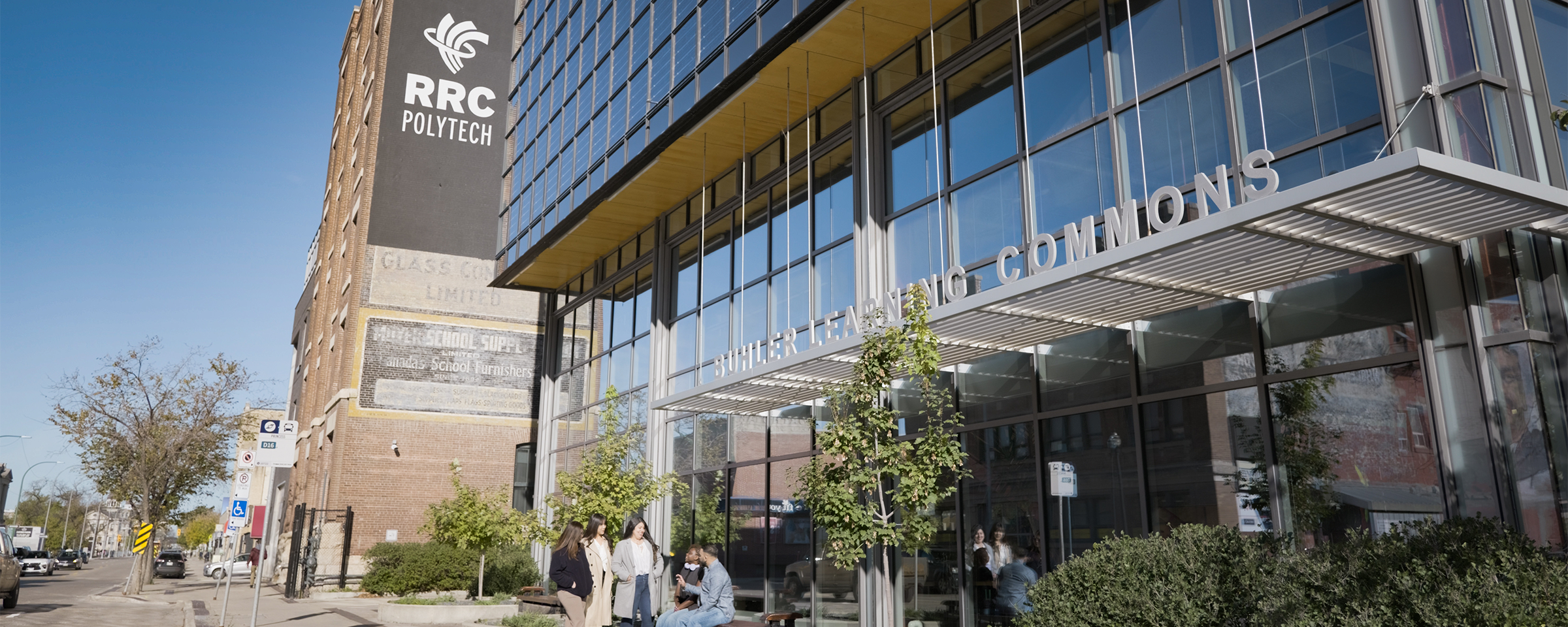
Beginning October 1, 2025 the City of Winnipeg will be extending street parking time limits on designated streets around RRC Polytech’s Exchange District Campus (EDC) as part of a pilot project.

Staff and Students who rely on personal vehicles to get to EDC will now be able to park for up to three hours, and a 30 minute extension if needed, on the following streets:

  • Adelaide Street, east side – from William Avenue to Elgin Avenue
  • Adelaide Street, west side – from Elgin Avenue to William Avenue
  • Princess Street, west side – from Elgin Avenue to William Avenue

Signage will be installed this week and the PayByPhone App will be updated prior to the October 1 start date.

The City will also trialing the new time limits near the Centennial Concert Hall, Royal Manitoba Theatre Centre and the Manitoba Museum.

The trial will run for a period of one-year.

RRC Polytech raises Deaf Flag for the first time to mark International Week of Deaf People 

September 23, 2025

A Canada Flag and a Deaf Flag fly next to each other against a blue sky.

Today, RRC Polytech adds a meaningful new addition to the flags that fly on the front lawn at the Notre Dame Campus. In recognition of the International Week of Deaf People and the International Day of Sign Languages, the Polytech will raise the Deaf Flag this morning for the first time in its history, following a short ceremony open to the community.  

“Today is a wonderful celebration of our values in action. RRC Polytech strives to be a place where all members of our community can learn, work and thrive,” says Fred Meier, President and CEO, RRC Polytech. “Our hope is that through raising this flag, we are sending a powerful message to the Deaf and Hard of Hearing community that they are welcome and supported on our campuses.” 

Deaf staff and faculty members initially raised the idea to fly the flag to demonstrate the Polytech’s ongoing commitment to accessibility, and to show all members of the Deaf and Hard of Hearing community that they have a place at RRC Polytech. 

“The Deaf Flag is a symbol of unity and inclusiveness, making the timing of today’s event all the more significant as we welcomed the return of the ASL-English Interpretation program to RRC Polytech this fall,” says Cheryle Broszeit, instructor at RRC Polytech. 

RRC Polytech’s ASL (American Sign Language) – English Interpretation Program recently underwent an academic transformation of its content, design and delivery to better meet the emerging needs of learners and the community and was led by feedback from the Deaf and interpreting communities. This fall, there are 9 students enrolled in the renewed program. 

“The ASL-English Interpretation program underscores the value of the connection between the Deaf and Hard of Hearing and interpreting communities,” continues Broszeit. “The new and improved program now has a stronger foundation for our students, so they can begin their careers as interpreters confidently and competently once they graduate.” 

This morning’s event will feature remarks from Meier, Broszeit, and Rick Zimmer, Deaf advocate and former instructor and coordinator of Deaf studies programs at RRC Polytech. Current Deaf students and students from the ASL-English Interpretation program will raise the flag together. 

French Deafblind artist Arnaud Balard designed the flag, which was adopted by the Deaf French National Federation in 2014 and has since been flown around the world. The Deaf Flag is a powerful symbol for Deaf communities, representing unity, recognition, and the ongoing fight for equal rights. The Polytech sourced the flag directly from the World Federation of the Deaf.  The Deaf Flag now joins flags representing Treaty One, the Red River Métis, and RRC Polytech’s Inclusive Pride flag, which are flown year-round at RRC Polytech. The Polytech will fly the Deaf Flag for the remainder of the week, and every year moving forward during the International Week of the Deaf. 

RRC Polytech hosts seventh annual Truth and Reconciliation Week, elevating Indigenous knowledge and Canada’s true history

September 22, 2025

For immediate release – Monday, September 22

Winnipeg, Manitoba, on the lands of Anishinaabeg, Ininiwak, Anishininwak, Dakota Oyate, and Denesuline, and national homeland of the Red River Métis – RRC Polytech is hosting its seventh annual Truth and Reconciliation Week to mark the National Day of Truth and Reconciliation, also known as Orange Shirt Day, on September 30.

This year, Truth and Reconciliation and Community Engagement Week (TRCE Week) begins today, September 22, with a virtual keynote from Phyllis Webstad, whose story of Residential School started the Orange Shirt movement in 2013. RRC Polytech has also partnered with Nursing student Dasia Chatkana, whose original design is featured on the RRC Polytech Orange Shirt in support of the Mínwastánikéwin Truth and Reconciliation Award, which is awarded to Indigenous students every year in January.

“Every year for seven years, the RRC Polytech community has come together to learn about Truth and Reconciliation and Canada’s true history from Indigenous perspectives. It’s important for us as an educational institution to not only affirm these histories centering Indigenous Peoples, but also to raise awareness to non-Indigenous Canadians that what they were taught in school doesn’t necessarily reflect all realities,” said Jamie Wilson, RRC Polytech’s Vice President, Indigenous Strategy, Business Development and Research.

TRCE Week is five days filled with sessions to educate the RRC Polytech community about the many different responsibilities of Truth and Reconciliation.

While Truth and Reconciliation is a year-round commitment for RRC Polytech, the National Day for Truth and Reconciliation is a focal point that encourages employees and students to immerse themselves in Indigenous Teachings, storytelling and experiences. Opportunities to cultivate understandings of the true history and current issues impacting Indigenous Peoples, and reconciliation efforts by society as a whole contribute to a stronger, more unified community that benefits all members.

“Truth and Reconciliation is an ongoing process of learning and integrating new information, disentangling ourselves from misinformation and unlearning what we think we know, and opening ourselves to truths that might surprise or challenge us. All the sessions we host this week are something that each participant can take back to the classroom, to the workplace, and to their personal lives – so they can continue the lifelong journey of learning today, tomorrow and every day into the future as we work towards building a better and brighter future for all,” Carla Kematch, Director, Truth and Reconciliation and Community Engagement.

Sessions include a virtual keynote from Phyllis Webstad, whose story inspired the Orange Shirt movement; a Two Spirit Sharing Circle; workshops for Talking Sticks, drumming, and painting; panel discussions with The Knowledge Keepers Council and with staff on Indigenous perspectives in inclusive hiring and belonging. Other sessions explore Inuit culture, traditional teachings like the Cedar Bath, and the historical timelines of the First Nations and Métis.

The RRC Polytech Original Orange Shirt, which is released every year alongside TRCE Week, was designed by Nursing student Dasia Chatkana. Read more about her design here and buy your shirt at the Campus Store. All proceeds support the Mínwastánikéwin Truth and Reconciliation Award, which is awarded to an Indigenous student every January to support financial reconciliation.

To learn more about TRCE Week sessions, see the full event schedule.

Minister Asagwara visits paramedicine students

September 16, 2025

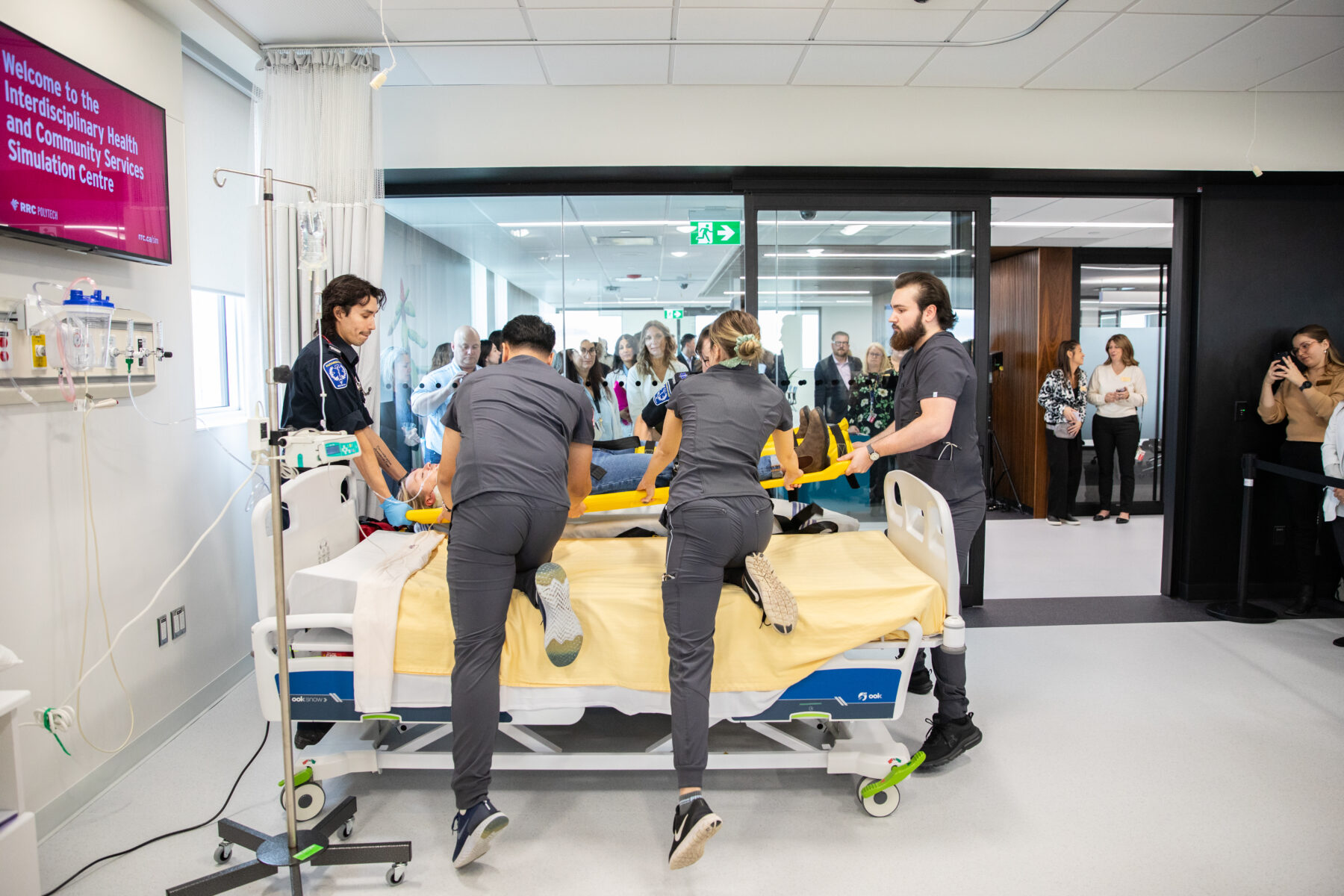
Yesterday, the Honourable Uzoma Asagwara, Minister of Health, Seniors and Long-Term Care visited the Notre Dame Campus to meet with nearly 80 students in the Advanced Care Paramedicine (ACP) and Primary Care Paramedicine (PCP) programs.

The Minister was greeted by students in the new paramedicine lab located in Interdisciplinary Health and Community Services Simulation Centre. They had the opportunity to thank students for their commitment to their training and calling to this important health profession, and hear questions from students in the audience.

This year, RRC Polytech is proud to welcome a record intake of 40 students into the PCP program – nearly half of which entered the program via direct-entry from high school. They were all in attendance to meet the Minster, along with 32 year two students who will graduate in winter 2026 and seven students in the ACP program.

Thank you to the School of Health Sciences and Community Services, the Paramedicine faculty and staff, and the students who supported this meaningful visit.

Creating Pathways for Care in Community

September 8, 2025

Roseau River Anishinabe First Nation pursues initiative with RRC Polytech that will change healthcare education delivery across the province

On August 22, a transformative initiative rolled into Roseau River Anishinabe First Nation and the first cohort of students stepped into a classroom-on-wheels. Their first day of Health Care Aide training in Roseau River marked a trailblazing opportunity for healthcare education delivery in the province – a program born from months of collaboration, vision, and dedication.

It began as a conversation in February 2024 when Roseau River met with RRC Polytech to explore ways of expanding educational opportunities within the community. The Health Care Aide training program was chosen as the first initiative to develop and deliver in Roseau River because of its direct, practical benefits for the community.

The Mobile Training Lab was the solution that fit: a 950-square foot classroom on wheels that offers experiential learning that can be assembled right in community, complete with the same cutting-edge equipment found in on-campus labs in Winnipeg.

RRC Polytech’s Mobile Training Lab will be the hub for learning over the next six months. These state-of-the-art facilities bring hands-on learning directly to students – making post-secondary education accessible for students across Manitoba. Corporate Solutions worked with Facilities to deploy the labs and ensure that they run safely and efficiently.

“Offering the program right here in our community has been a huge benefit for students, particularly for those who don’t have reliable transportation. The community, along with Chief and Council, has been really supportive every step of the way. We’re excited to see this vision come to life with RRC Polytech, and we’re looking forward to expanding our offerings for even more programs here in the future,” said Skyla Sellner, Post-Secondary Coordinator for Roseau River.

Delivering education in-community creates new, effective pathways for learners to build meaningful careers in healthcare. Students can actively participate in innovation that directly contributes to the economic and social wellbeing of their communities without having to leave their homes for urban centres.

Health Care Aide student Stacey Patrick says that she was initially nervous to enter the program but the welcoming atmosphere made her feel right at home.

“I genuinely look forward to coming to class and learning something new every – it’s definitely a great opportunity that everyone should take advantage of. This program is the first of its kind, and we get to be part of history in the making,” said Patrick.

The Health Care Aide program enables students to develop the skills and knowledge to succeed as healthcare workers, helping others live with dignity and independence. Graduates working in health settings may assist hospital patients, personal care home residents or home care clients with their daily activities and physical, emotional, and social needs.

The federal Post-Secondary Partnership Program funded the program with support from Roseau River First Nation, RRC Polytech Corporate Solutions, and the School of Continuing and Distance Education.

RRC Polytech Invites Winnipeggers to open their homes for students through SpacesShared

September 3, 2025


For immediate release: September 3, 2025

Winnipeg, Manitoba on Treaty No. 1 Territory and the National Homeland of the Red River Métis –

RRC Polytech is offering a new housing alternative for students training at its Winnipeg campuses through a partnership with SpacesShared – and is looking for community members to open their doors.

“When a student comes to study at RRC Polytech we want to ensure they are supported – not only in their studies, but also in navigating Winnipeg and learning what our city has to offer,” says Giselle Martel, Vice-President, Finance and Administration at RRC Polytech. “We’ve entered into this partnership to provide students with safe, affordable and convenient options for housing off campus. Having this program in place will reduce the stress for students navigating the housing and rental market on their own and allow them to focus on their training.”

RRC Polytech’s student residence at the Paterson GlobalFoods Institute has accommodations for 102 students, but there is a need for other options to support students coming from other parts of the province, from across Canada and internationally.

SpacesShared connects students with safe and affordable housing, through intuitive technology, scheduled check-ins, and dedicated human support. The organization is committed to building, sustaining, and supporting intergenerational home-sharing and fostering meaningful connections between students and hosts.

“RRC Polytech is the first partnership SpacesShared has in Winnipeg and we’re excited to provide students with a great housing option,” says Rylan Kinnon, CEO of SpacesShared. “We’ve seen success in cities across Canada and know that students at RRC Polytech will create lifelong friendships with their hosts. Bringing people together creates incredible opportunities for bonding and we love to hear from our hosts and students about the experiences they share together.”

Currently, there are eight people registered to host RRC Polytech students through the service, with hopes that more will register prior to upcoming academic terms.

Enrico Madrid and his wife are among the first local homeowners to sign up as a potential host through SpacesShared. He says he’s looking forward to building connection and maybe continuing his own lifelong learning.

“I enjoy seeing how young people now approach studies and how they learn, because then I learn a new way of doing things,” he says. “But hopefully I can help them learn too – math has always been my favourite.”

Another reason he signed up to be a host is to potentially learn about different cultures.
“Learning different cultures is an advantage to everyone,” Enrico says.

For Hospitality Business Management graduate student Spila Lee, sharing cultures and creating a sense of community was an important part of her experience living in residence as a student at RRC Polytech. Lee says living with a host family would be a great way to integrate into Winnipeg’s way of life.

“The first year I was a resident I was quite impressed with all the activities I could join. I met a lot of different people, and I think it could be a similar experience for someone living with a host family,” she says. “Living in a house with locals gives you the opportunity to explore the neighbourhood, go to favourite restaurants and try activities that you might not always hear about.”

She said the most important thing is that there will be a level of support from host families that can help students be successful in their training.

“Especially for newcomers, we came without any family support – so having someone be supportive really matters. Whether on campus or with a host family it makes a really huge difference,” Lee says.

Community members interested in renting a room can visit the Off-Campus Housing section of RRC Polytech’s website to learn more or to register.

Starting off the school year, sustainably.

September 3, 2025

RRC Polytech’s Sustainability team is always looking for ways to reduce our collective environmental footprint. As they prepared for Red River Ready – an orientation event for new students – they drew inspiration from their experience at RED Forum 2025.

At RED Forum – an annual professional development day for employees – this past May, the Sustainability team handed out tomato seedlings grown at the Notre Dame Campus greenhouse. The tomato seedlings were leftovers from a partnership with Campus Well-Being’s Learn to Garden workshop earlier this spring.

“The tomato plants were a really great engagement piece and well received by staff and faculty. From this initiative, we thought something similar may be good for a student giveaway,” said Stephanie Fulford, Sustainability Specialist, Environmental Stewardship and Campus Renewal.

Red River Ready takes place annually the week before the Fall Term starts. Since late summer isn’t ideal for planting tomatoes, the team brainstormed for alternative, sustainable giveaway ideas. Rather than choosing conventional promotional items, which are often costly and destined for landfills, they set their sights on something both meaningful and eco-friendly, indoor succulents.

Rows of succulents on a table in a greenhouse
Succulents in the greenhouse at the Notre Dame Campus

With a little creativity, team effort and the support of RRC Polytech’s Groundskeeping staff, their plan took shape. Every step in preparing the plants focused on sustainability – from making soil mix with compost from campus to reusing old plant pots from the greenhouse to propagating cuttings from existing plants.

On August 20 and 21, 250 succulents were handed out at the Exchange District and Notre Dame Campuses during Red River Ready.

“Students loved the plants and showed a lot of interest in how to water and care for them. They were a meaningful gift that sparked conversations about sustainability,” said Maria Hernandez Puschel, Environmental Initiative Coordinator, Environmental Stewardship and Campus Renewal.

Two students holding plants and talking with eachother
Students taking home their new succulents at Red River Ready

To receive a succulent, students signed up for the Sustainability newsletter. Now, as the Fall Term gets underway, the Sustainability team continues to engage students and staff in making greener choices and advancing the United Nations’ 17 Sustainable Development Goals.

Looking ahead, keep an eye out for upcoming sustainability initiatives. On September 9 and 10, Cycling Help Desks will pop up at EDC and NDC, offering expert advice on campus commuting routes, winter cycling tips, and answering any questions staff or students may have.

October is Circular Economy Month, a time focused on providing education on how to reduce waste by reusing, recycling or repurposing. The Sustainability team will be hosting an e-waste drive. Students and staff are invited to responsibly dispose of old technology in large bins at EDC and NDC. The NDC bin is located on the Mall Level near the Library; the EDC bin will be located outside the Roblin Centre Shipping and Receiving area (W101).

This spring, students will have the chance to participate in a contest highlighting how they have integrated the Sustainable Development Goals into their lives and studies.

For more updates on upcoming sustainability initiatives and campus events, visit rrc.ca/sustainability

RRC Polytech welcomes Caribbean delegates as part of experiential learning study tour

August 27, 2025

RRC Polytech recently had the honour of hosting high-level delegates from across the Caribbean as part of an Experiential Learning Study Tour hosted by the College and Institutes Canada (CICan) Skills to Access the Green Economy (SAGE) program, with funding support from Global Affairs Canada.

The SAGE program supports the implementation of technical and vocational education and training (TVET) systems in six Caribbean countries to improve economic opportunities – particularly for women and youth – through the development of demand-driven, inclusive, and sustainable training programs in green sectors.

RRC Polytech was the sole stop in Manitoba, with delegates visiting four other CICan member institutions in Alberta – Olds College, Red Deer Polytechnic, the Building Trades of Alberta and Northern Alberta Institute of Technology (NAIT) – to learn about Canada’s successful apprenticeship systems and opportunities to adapt best practices across the Caribbean.

Representatives from RRC Polytech had the opportunity to learn about current apprenticeship systems in the Caribbean, and in turn, welcome Apprenticeship Manitoba to speak about apprenticeship in the province, including regulation, standards and quality assurance.

Delegates participated in an immersive guided tour of RRC Polytech’s state-of-the-art apprenticeship training labs, workshops and hands-on learning spaces. This tour allowed delegates to experience how students are equipped with real-world industry skills through cutting-edge technology and expert instruction.

People on a tour in the sheet metal lab
Delegates visiting lab spaces in the School of Skilled Trades and Technologies during the immersive campus tour.

The visit also included discussions focused on strengthening apprenticeship and pre-apprenticeship systems in the Caribbean, and action planning to co-design an apprenticeship model that reflects the unique needs of the Caribbean while drawing on Canadian best practices.

Through the CICan Experiential Learning Study Tour experience, new connections were built, laying the foundation for ongoing collaboration and innovation between Canada and the Caribbean, and inspiring a future where education unlocks greener opportunities for all.

RRC Polytech Advanced Care Paramedic Grad One of First New Clinical Service Leaders in Manitoba 

August 27, 2025

Six weeks after Nick Bourgeois first heard RRC Polytech’s Advanced Care Paramedicine (ACP) program would be offered again, he was enrolled and on a path that would make him one of the first new Clinical Service Leaders (CSL) in rural Manitoba. 

“I’d been working as a Primary Care Paramedic for about five years,” says Bourgeois. “I was looking to advance my knowledge, and ACP felt like the perfect fit. I heard about the program through station chatter and applied right away.” 

Working full-time while studying in an intensive program wasn’t easy. Bourgeois and his two classmates, Jamie Borock and Breanna Koch, juggled demanding shifts with learning new knowledge and skills. Throughout the challenges of the program, Bourgeois and his classmates credit their instructors’ passion for teaching, interest in the career and constant support for their success. 

ACP graduate, Breanna Koch stands in front of ambulance
ACP grad, Breanna Koch

“The support we received from our instructors was incredible,” he says. “I didn’t really know what to expect going in, but the amount of content was a surprise—there was a lot of it, and it was all relevant. No corners were cut.” 

That rigor paid off. When it came time to write the national ACP exam through the Canadian Organization of Paramedic Regulators, Bourgeois and his classmates all scored in the “green” – the highest performance tier, which he says is a testament to how well the program and instructors prepared them. 

The Advanced Care Paramedicine program was revised and relaunched in Spring 2023, with Bourgeois, Borock and Koch as the first cohort. The 28-month program trains students in to be leaders in stressful situations and to take a clinical approach in the field. Courses include Advanced Respiratory Studies, Advanced Trauma Studies, Advanced Pharmacology and other courses that increase what decisions an ACP can make and what medicines they can use when responding to people in need. 

“We’re proud to see the first cohort of the revised Advanced Care Paramedicine program graduate and enter the next stage of their careers,” says Tammy Harper, Associate Dean, Health and Community Services at RRC Polytech. “RRC Polytech works closely with Shared Health to determine what training and skills are needed and we’re confident that these students and future cohorts are re-entering the field as confident leaders.”  

Now as a recent graduate, Bourgeois is stepping into a new role as one of the first CSLs in rural Manitoba. Fourteen CSLs have been strategically located in seven rural and northern areas of the province – Portage la Prairie, Flin Flon, Dauphin, Ashern, Neepawa, Swan River and Lac du Bonnet – and play a crucial role in improving emergency response and accessible patient care. 

 “We support crews on scene and also take care of operational duties. It’s a different way of delivering care, and it’s exciting to be part of something new,” he says. 

The opportunity is one he couldn’t have imagined when he first started in the field. 

“When I started as a paramedic, and even when I applied to the ACP program, there weren’t any ACP positions in rural areas. It felt like a bit of a risk,” he says. “But the timing worked out perfectly. I’m excited to see the ACP profession progress in rural Manitoba, and I look forward to providing a higher level of care that rural Manitobans deserve.” 

The Paramedicine – Advanced Care program continues to evolve based on industry and community needs, and will begin to incorporate more simulated scenarios with other programs through RRC Polytech’s Interdisciplinary Health and Community Services Simulation Centre

Visit RRC Polytech’s Program Explorer for more information. 

Building a greener future today – RRC Polytech adapting and collaborating to accelerate Canada’s low-carbon transition

August 20, 2025

Manitoba’s polytechnic shares in $11.3 million of federal funding for national green training initiative

RRC Polytech is bringing down costs for Canadians and helping them to get ahead by continuing to grow its critical role in Canada’s low-carbon transition, along with its capacity to train the workforce of today and tomorrow.

An established research leader in clean energy, EV and battery technology and sustainable construction, RRC Polytech is unleashing the power of pan-Canadian collaboration to make housing more affordable, catalyze change in the construction sector and create new jobs in the skilled trades.

With support from a $11.3 million investment from the Government of Canada’s Sectoral Workforce Solutions Program (SWSP), RRC Polytech is joining its Canadian Colleges for a Resilient Recovery (C2R2) partners in a national green construction training initiative to upskill and reskill Canadians to build and retrofit homes and buildings that reduce energy consumption in pursuit of the ambitious targets of net-zero emissions by 2050 and a net-zero electricity system by 2035.

Home to Manitoba’s only Building Efficiency Technology Access Centre, RRC Polytech will use the funds announced last week to drive economic growth while helping Canada meet its climate and housing goals by working with its industry and academic partners to develop and deliver practical, innovative training in sustainable construction.

“This nation-wide training initiative is the latest example of how RRC Polytech’s flexible learning model and vast applied research facilities and expertise, combined with our commitment to foster collaboration with industry, communities and government uniquely positions us to not only support but to lead the low-carbon transition,” said Fred Meier, President and CEO, RRC Polytech.

Accessible, industry-aligned training that equips workers with the technical and leadership skills they need to adopt green building practices, create sustainable designs and upgrade existing aging infrastructure will be offered through the Quick Train Canada platform, exclusive to RRC Polytech in Manitoba – with the first intake in Building Science for the Retrofit Sector scheduled for November. The next phase of available courses will be launched this winter, as funding through the Advancing Access and Skills Training for Green Buildings and Retrofits initiative will be available until March 2028.

“This project-based funding allows us to expand our available suite of clean energy training and share that knowledge with our C2R2 partners while helping to reduce fees for students – making this an affordable choice for local industry leaders to upskill their workforce and for individual learners who want to expand their knowledge to maximize on the opportunities created as the province transitions to a low-carbon economy,” said Jill Latschislaw, Director, Corporate Solutions, Indigenous Strategy, Research and Business Development at RRC Polytech.

RRC Polytech already offers multiple energy transition related micro-credentials, previously developed with its industry and C2R2 partners including Energy Advisor, Introduction to Electric Vehicle Technology; Electric Vehicle Communication and Computer Systems; Diesel Exhaust Emission Reduction Systems; and the Fundamentals of Hydrogen Production. Their modular design allows delivery to be tailored to a client’s needs through online/hybrid options, regional campuses and Mobile Training Labs.

This customized training along with continuous curriculum reviews of all programs ensures workers are being prepared to use, maintain and upgrade the innovative products, processes and technology being developed using the Polytech’s extensive applied research resources.

Working closely with partners like Manitoba Environmental Industry Association (MEIA), RRC Polytech is looking to further expand training and research to support the province’s commitment to building the next generation of clean energy.

Inquire at solutions@rrc.ca

RRC Polytech campuses are located on the lands of the Anishinaabeg, Ininiwak, Anishininwak, Dakota Oyate, and Denésuline, and the National Homeland of the Red River Métis.

We recognize and honour Treaty 3 Territory Shoal Lake 40 First Nation, the source of Winnipeg’s clean drinking water. In addition, we acknowledge Treaty Territories which provide us with access to electricity we use in both our personal and professional lives.