RRC Polytech Aircraft Maintenance Engineer Alum Takes Home Gold from Skills Canada – Air Canada Award

Xin (Saxon) Xiang says his confidence soared this spring when he took home gold in Aerospace Technology at the 2026 Skills Canada National Competition. He competed in five projects over the course of a two-day competition, and finished each project with a clean workstation and completed paperwork.
With a love for tools and hands-on problem-solving, Xiang pursued an education in the Aircraft Maintenance Engineer (AME) program at RRC Polytech after coming to Canada from China.
He graduated from the program in April before competing at Skills Canada in May. Competitors received limited information about the projects a month before the two-day event to help them prepare for the upcoming competition – with clues involving a turbine engine, sheet metal, aircraft, component, and electrical wiring interconnection projects.
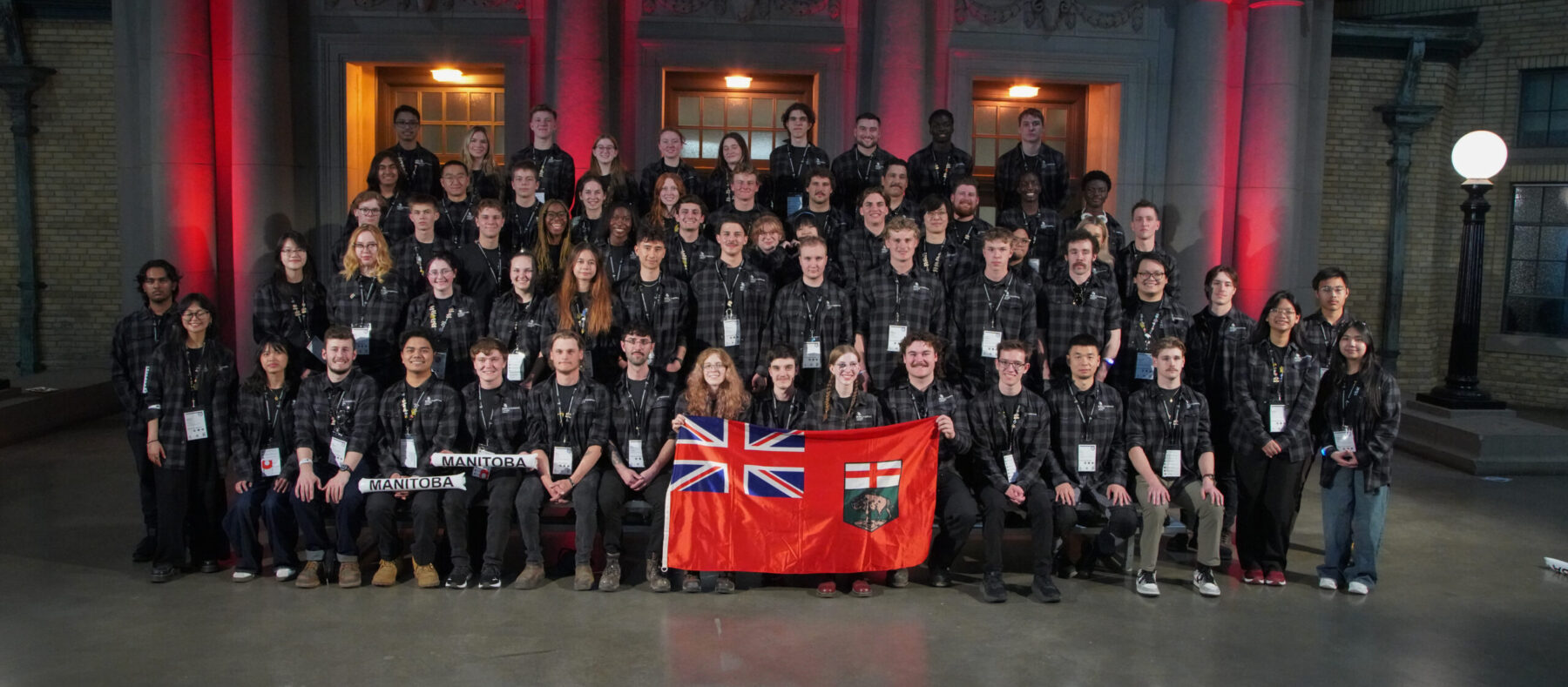
Xiang says that he highly anticipated the competition and read through all provided documentation to gather as much information as possible. He inferred what the projects could potentially be with what he could reasonably assume, including time limitations and solo completion.
One day before the competition, competitors had the chance to view the tools and equipment available for each project during orientation, which gave Xiang a fuller picture of what kind of projects he could expect. However, only a small subset of the tools displayed were actually needed to complete the tasks, with the rest serving as distractions. For the first project, competitors simulated a daily inspection for landing gear, which raised issues that needed troubleshooting – straightforward and simple.
The second project, Xiang says, was much more difficult. Part of the wing mock-up was damaged, so he consulted diagrams to calculate the requirements for the repair. He used the available tools to cut out the damaged area and construct a patch that sat flush with the surface of the wing mock-up. By the time he finished with cleanup and the paperwork for the repairs, he asked a judge how much time he had left and half an hour remained.
“I was really proud of that project,” Xiang said. “It was really not that easy.”
Following the first day’s projects, Xiang says that he felt much calmer than he did the night before. He credits a phone call with instructor Kevin Hussey with helping him analyze the situation and come up with more ideas about what the next half of the competition would bring.
“I reminded him that the objective of competition itself wasn’t necessarily about winning – I know from experience that it’s a place where people can make connections and get hired,” says Hussey. “It’s more about the experience and meeting other competitors. He took the initiative to read all the literature provided at the competition. Not a lot of other competitors might take the time to take that initiative.”
The second day featured three projects and started strong with a project that surprised Xiang – a PT6 turbine engine hot section inspection.
“I assumed each project could be achieved by one person, but during the pre-competition briefing, the judges mentioned that if we needed help, we could ask for their assistance. I had assumed the projects would be small enough for one person to handle, not expecting that asking for help would even be allowed. It was a complete surprise to find out otherwise — but since I had already read through the full inspection documentation, it was still within the scope of what I’d prepared for. I knew exactly what to do and dove right into it.”
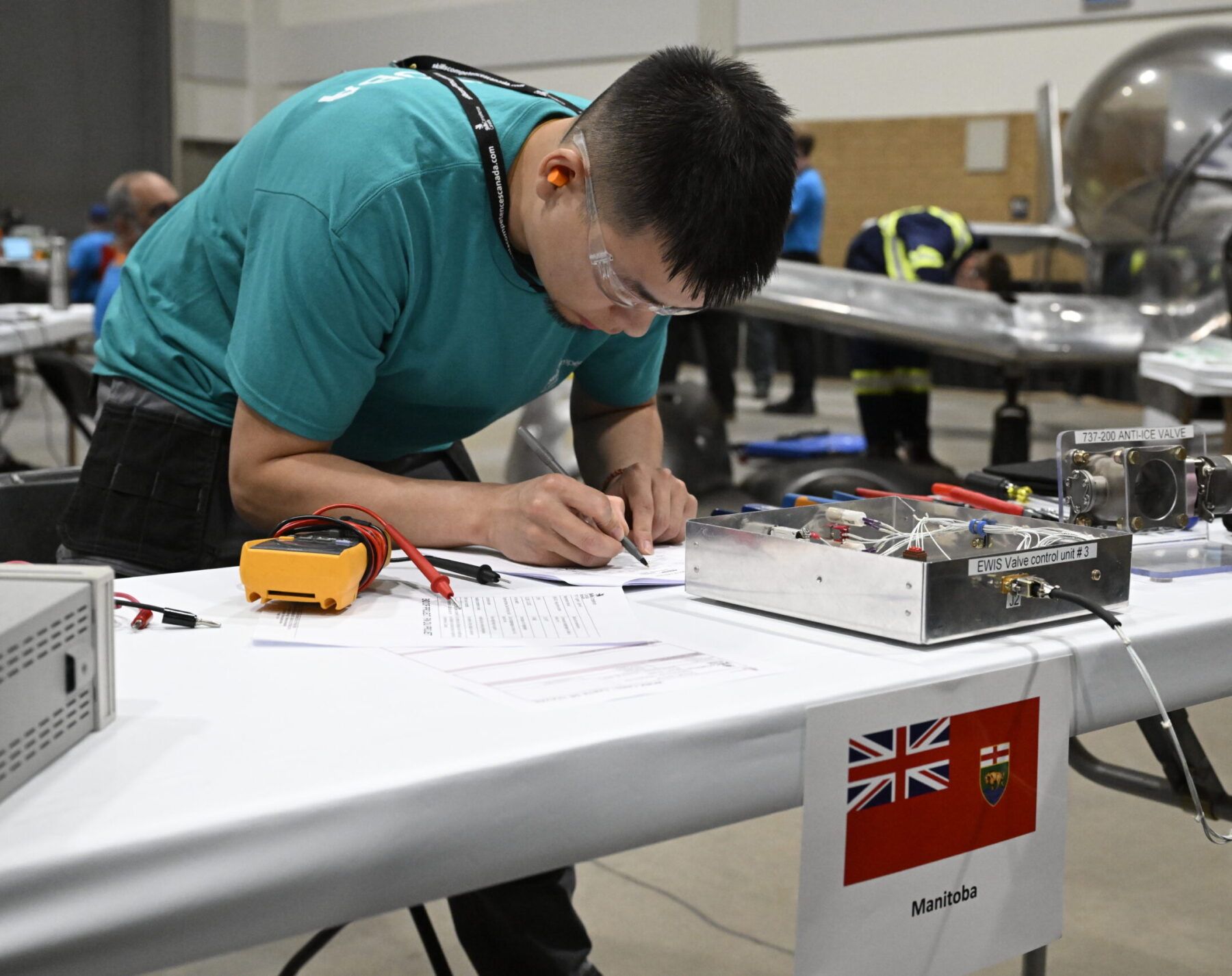
The fourth project presented a defective anti-ice valve of the type used in a Boeing 737’s anti-ice system. Xiang said that while he was still reviewing the diagrams and the manual, the competitor beside him had already begun troubleshooting. However, the time he invested in reading upfront paid off later – his actual troubleshooting process was fast and efficient, allowing him to verify his estimates and identify all the issues with fifteen minutes to spare. For the fifth and final project, Xiang was presented with rigging an aileron– which was a nice and easy project to wrap up the competition.
After he completed the competition, Xiang says that one of the judges approached him and said that it was really enjoyable to watch him work.
“The competition confirmed for me the value of working strictly by the documentation, I believe the results I achieved were a direct result of following the manuals and materials closely. This experience also helped me understand the difference between learning in school and working in industry, where manuals are constantly updated by manufacturers, and staying closely aligned with the latest documentation is essential,” says Xiang.
Christopher Lalonde, AME Instructor, says that the Aircraft Maintenance Engineer program requires adherence not only to academic standards, but the regulatory requirements outlined in the Policy Manual as a Transport Canada Approved Training Organization. Students prepare to become well-rounded practitioners in all aspects of aircraft construction, inspection and maintenance while cultivating an appreciation for the significant responsibility of the aerospace industry.
“Xiang exemplifies these principles,” says Lalonde. “His achievements reflect not only competitive success, but also his development into a respected colleague who has earned the confidence of his instructors. During his time in the program, he consistently demonstrated diligence, a strong work ethic, and a serious approach to his tasks, balanced by a calm and positive demeanor.”
Hussey says that Xiang’s win is very exciting and a great way to promote the AME program in industry, and hopes to raise more support from partners to help more students achieve excellence like Xiang.
Now with a gold medal, Xiang says he’s looking forward to building his portfolio in industry and earning his Aircraft Maintenance Engineer ‘M’ license.