Corporate Legal

Policies and Corporate Legal

Accessibility in Action

Embedding Accessibility into Event Planning 
November 9, 2026

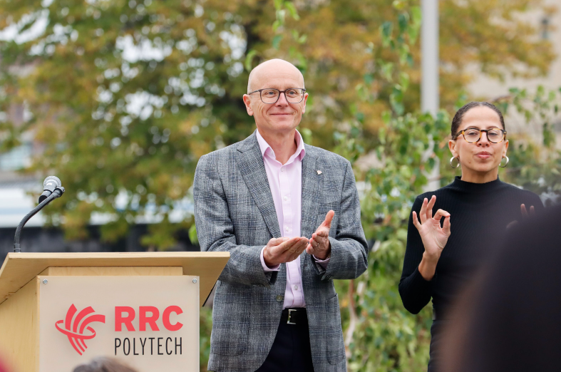
A speaker communicates in American Sign Language (ASL) beside a podium with the RRC Polytech logo while an ASL interpreter signs alongside during an outdoor event.

To help make events more accessible and inclusive, RRC Polytech incorporated accessibility considerations into its standard event planning practices. The Communications and Events teams collaborated to develop an internal event planning toolkit that provides guidance on making an active offer of accommodation, arranging ASL-English interpretation, incorporating accessible housekeeping practices for virtual events, and ensuring stages and risers are equipped with ramps so people of all abilities can participate. This work helps embed accessibility into everyday event planning and provides staff and faculty with practical tools to create more inclusive experiences. As a result, students, employees and guests benefit from more welcoming, accessible and barrier-free events in both physical and virtual spaces. 
Expanding Access to ASL Education in Indigenous Communities

November 9, 2026

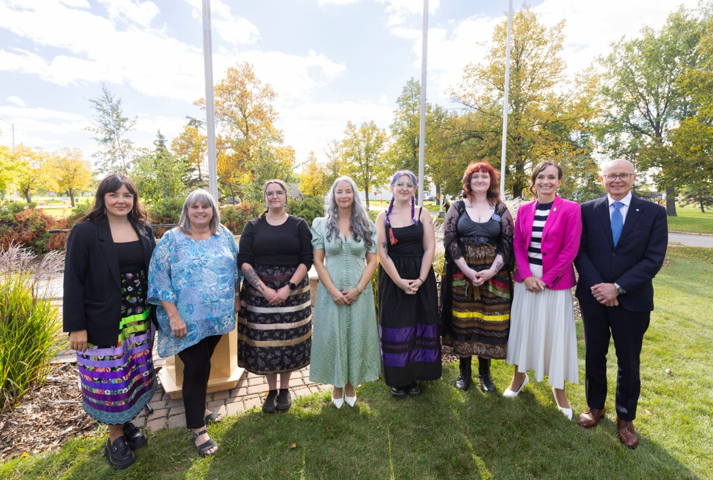
Eight individuals pose outdoors on the RRC Polytech campus lawn, with flagpoles and fall foliage in the background. The photo accompanies an announcement of a partnership to expand American Sign Language education and interpretation training opportunities for Indigenous women and Indigenous communities across Manitoba.

RRC Polytech partnered with the Manitoba government to expand access to American Sign Language (ASL) education and interpretation training for Indigenous women and Indigenous communities. Through funding provided under the “Mino’Ayaawag Ikwewag: All Women Doing Well” strategy, the initiative will support the development and delivery of new ASL micro-credentials in First Nations communities and provide dedicated seats for Indigenous women in RRC Polytech’s ASL-English Interpretation program.

Developed in response to feedback from Deaf and Hard-of-Hearing Manitobans, the initiative helps address longstanding gaps in access to ASL education and interpretation services in First Nations and rural communities. Training will be delivered directly within communities to reduce barriers to participation and will incorporate Indigenous perspectives and community-informed approaches.

By increasing access to ASL education, strengthening representation within the interpretation profession, and building local capacity to provide culturally responsive interpretation services, the initiative supports greater accessibility, inclusion and participation for Deaf and Hard-of-Hearing individuals in Indigenous communities across Manitoba.

Advancing Accessible and Inclusive Learning Through C-Skills Framework

October 30, 2026

Jocelyne Olson, an RRC Polytech graduate of the Technical Communication program, has played an important role in supporting the research, development and ongoing delivery of the C-Skills Framework. Drawing on her professional experience, commitment to student success and lived experience as a neurodivergent person, she has helped embed accessibility and inclusion throughout course design, development and delivery.

Accessibility and Universal Design for Learning (UDL) principles are intentionally integrated throughout the C-Skills Framework, including COMM-1173 and other communication courses. Students are provided with multiple ways to access content, engage in learning and demonstrate their knowledge through flexible learning activities, multiple resource formats and varied assessment options. Courses also incorporate accessibility-focused discussions, projects and learning resources that explore topics such as inclusive communication, workplace accommodations, neurodiversity, accessibility legislation and accessible meetings.

Jocelyne’s contributions include creating accessible course templates, improving accessibility for screen readers and different devices, developing flexible learning and assessment options, and introducing Side Quests that recognize student engagement in lifelong learning. Course materials incorporate image descriptions, captions, transcripts and accessible webpage design practices, while accessibility review tools are used to help identify and address barriers before courses are released. Both student-facing and instructor-facing materials are designed to be accessible and adaptable to diverse learning and teaching needs.

Through these efforts, students experience accessibility in practice while developing the knowledge and skills needed to support more inclusive workplaces, services and communities. The work also helps create learning environments that recognize diverse strengths, experiences and ways of learning.

Creating More Inclusive Workplace Policies Through Collective Bargaining

October 30, 2026

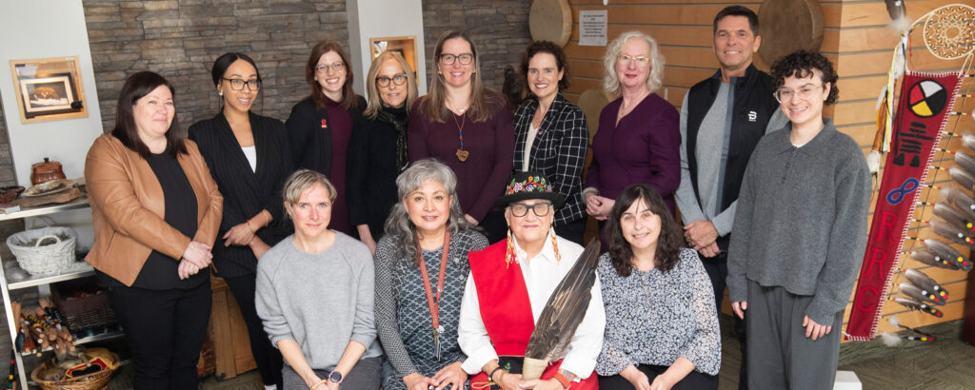
RRC Polytech Truth and Reconciliation Working Group members gathered for a group photo.

As part of the collective bargaining process, RRC Polytech and MGEU Local 73 established a joint Truth and Reconciliation Working Group to review the Collective Agreement and identify opportunities to advance Truth and Reconciliation, equity, diversity, inclusion and accessibility. Guided by Indigenous Knowledge Keepers and Indigenous engagement practices, the group developed recommendations to help create a more inclusive and supportive workplace.

Many of these recommendations were incorporated into the 2025–2028 Collective Agreement, including expanded supports for diverse family structures and caregiving responsibilities, gender-affirming medical leave, enhanced cultural and wellness leave provisions, and the removal of doctor’s note requirements for short-term absences. These changes help reduce workplace barriers, improve access to supports and accommodations, and provide greater flexibility to meet the diverse needs of employees. By recognizing a broader range of health, wellness and caregiving circumstances, the recommendations contribute to a more accessible, inclusive and supportive workplace.

This work demonstrates how collective bargaining can contribute to barrier reduction and improved accessibility by creating workplace policies that better support employee participation, well-being and belonging. It also highlights how collaboration, reconciliation and inclusion can help advance a workplace where all employees have equitable opportunities to succeed.

Advancing Accessibility for Deaf and Hard of Hearing Communities 

October 29, 2026

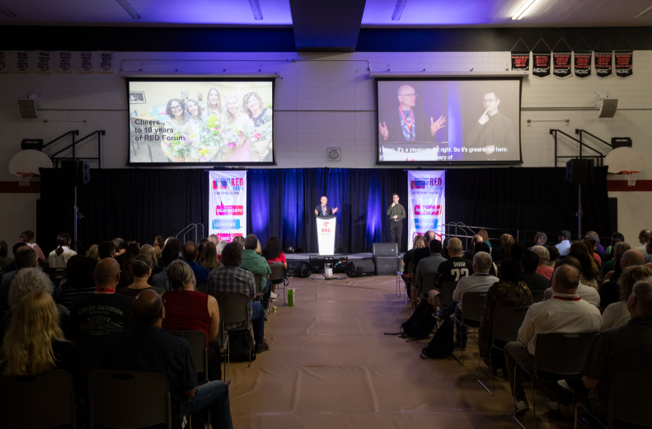
Wide view of the RRC Polytech RED Forum event in a large gymnasium-style venue. Large projection screens above the stage display a live feed of the presentation, including an ASL interpreter and event participants. One screen shows a slide celebrating 10 years of the RED Forum. Blue and purple stage lighting illuminates the stage, with RED Forum banners displayed on either side. The event space is filled with attendees gathered for a presentation on inclusion, diversity, and community engagement.

Over the past year, Deaf and Hard of Hearing Services (DHHS) has advanced key initiatives to strengthen accessibility across RRC Polytech. This includes expanding access to information by adding ASL videos to the DHHS webpage and other institutional materials, as well as advocating embedded ASL windows to ensure equitable and visible communication. DHHS has also enhanced digital accessibility by ensuring closed captions are included in all videos. Beyond digital efforts, the team has improved campus-wide practices by working to ensure interpreters are available at Polytech events, shifting responsibility for accessibility to the institution. DHHS is also streamlining the feedback process, allowing Deaf and non-Deaf individuals to share input in written form or ASL. Together, these efforts reflect a strong commitment to inclusion, equity, and creating environments where ASL users can participate meaningfully, feel a sense of belonging, and access opportunities more equitably. 

RRC Polytech campuses are located on the lands of the Anishinaabeg, Ininiwak, Anishininwak, Dakota Oyate, and Denésuline, and the National Homeland of the Red River Métis.

We recognize and honour Treaty 3 Territory Shoal Lake 40 First Nation, the source of Winnipeg’s clean drinking water. In addition, we acknowledge Treaty Territories which provide us with access to electricity we use in both our personal and professional lives.