Corporate Legal

Policies and Corporate Legal

Accessibility in Action

Community-Based Food Access and Inclusion 
November 9, 2026

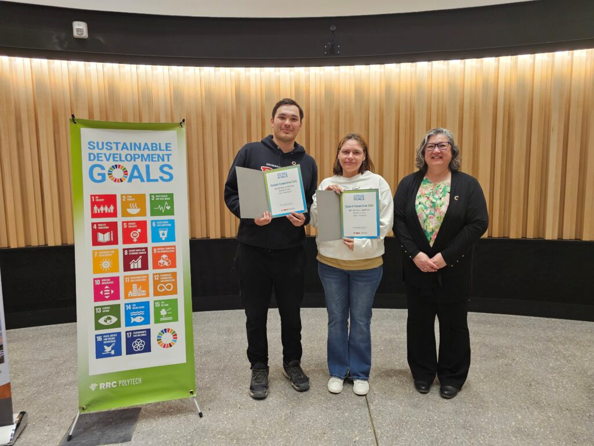
Three individuals stand beside a Sustainable Development Goals banner, with two holding award certificates recognizing a student project focused on improving access to nutritious and culturally inclusive school food programs through community partnerships.

From left: Keenan Dunbar and Gerri Chevillard, winners of the Best Overall Submission, and Kathleen Tiede from event sponsor Crosier Kilgour

As part of their award-winning project, “Provincial Universal Nutrition Program (CHU2)”, students Keenan Dunbar and Gerri Chevillard partnered with Community Helpers Unite (CHU) to explore solutions for improving access to nutritious food in Winnipeg schools. The project involved developing a proposal for the Winnipeg School Division that would use CHU’s centralized kitchen and delivery model to provide meals to schools that lack the capacity to operate their own food programs, while incorporating culturally inclusive menus and celebrations that reflect the diversity of the community. 

This project supports accessibility by helping reduce barriers to food access and ensuring students have equitable access to nutritious meals that support learning, well-being, and participation. The outcome was a well-researched and practical proposal that demonstrated how community partnerships can create more inclusive, culturally responsive, and accessible support for students and families. The work also highlighted the role that collaboration, innovation, and community engagement can play in advancing food security, inclusion, and belonging. 

The project was recognized as the Best Overall Submission in the Sustainable Development Goals (SDG) Student Competition by the RRC Polytech Sustainability Office, demonstrating the strength of its community impact and commitment to equity, inclusion, and accessibility. 

Contributors: Keenan Dunbar (Social Innovation and Community Development Certificate Program Student), Gerri Chevillard (Community Development Diploma Program Student), Brandy Bobier (Community Helpers Unite Executive Director), Brian Rochat (Social Innovation and Community Development Certificate Program Instructor), Lindsay Poggemiller (Community Development Diploma Program), and Camille Metcalf (Work Integrated Learning Coordinator, Social Innovation and Community Development). 
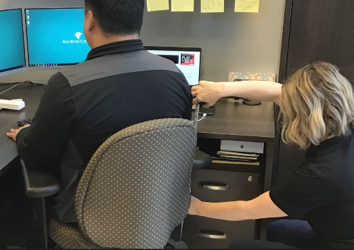
Supporting Accessibility Through Ergonomics 

November 9, 2026

As RRC Polytech’s Musculoskeletal and Ergonomics Coordinator, Susan Thorvaldson works directly with employees and students to identify and remove physical barriers that may affect their ability to work, learn and participate fully. She conducts ergonomic assessments and recommends individualized solutions such as adjusting workstation layouts, selecting appropriate chairs and equipment, modifying monitor and keyboard placement, and identifying safer ways to perform work or learning tasks. Whether supporting someone with a temporary injury, chronic condition or accessibility need, Susan focuses on creating environments that are comfortable, accessible, and tailored to the individual. These often simple but meaningful adjustments help people work and learn more effectively, reduce discomfort, and support their success and well-being. 

Advancing Accessibility Through Social Procurement 

November 9, 2026

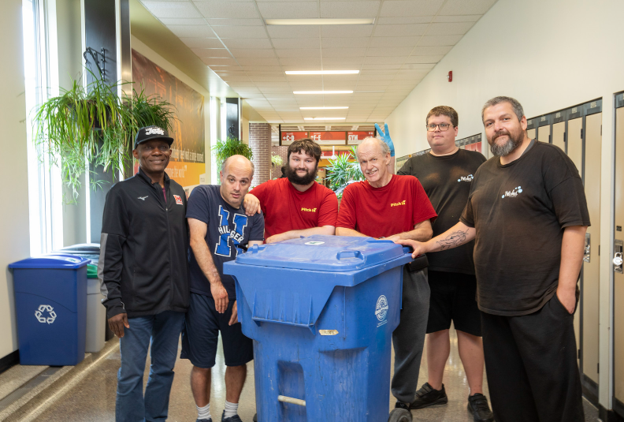
A group of recycling services team members stand beside a blue recycling cart in a campus hallway. The image highlights RRC Polytech's partnership with a social enterprise that combines recycling services with inclusive employment opportunities.

In 2023, RRC Polytech awarded its Internal Recycling Services contract to Polished Cleaning Services, a social enterprise that provides high-quality recycling services while creating employment opportunities for individuals facing barriers to employment. Through the procurement process, RRC Polytech placed significant emphasis on sustainability, social impact, and community benefit alongside operational requirements. This approach supports accessibility and inclusion by promoting workforce participation for equity-deserving and underrepresented groups. The successful partnership has delivered both operational value and meaningful social impact, demonstrating how procurement decisions can help advance RRC Polytech’s commitment to accessibility, equity and social responsibility. 

Designing for Learners – Faculty Development and Inclusive Teaching 

November 9, 2026

As a Faculty Development Consultant in Organizational Development, Claudius Soodeen supports instructors in creating more inclusive and accessible learning environments for an increasingly diverse student population. He coordinates and promotes professional development opportunities such as Designing Neurodiversity-Affirming Learning Environments, developed in collaboration with researcher-practitioners with lived experience of disability; Plain Language Writing (with and without AI), facilitated by Janine Bucklaschuk and Jake Carewick; and Foundations in Digital Accessibility, facilitated by Andrea Ardiles. Claudius also coordinates the Teaching Essentials Program (TEP), originally developed by faculty in Teacher Education to support new instructors. The program promotes learner-centric teaching approaches, differentiated instruction, and inclusive practices that help make learning more accessible for diverse student needs. Through collaboration with internal and external experts, including individuals with lived experience of disability and neurodiversity, these initiatives help instructors strengthen their communication, course design, and teaching practices to reduce barriers and better support learner success. As a result, instructors are better equipped to create accessible and inclusive learning experiences that support the participation and success of all students.

Behind the Scenes – Groundskeeping and Winter Accessibility 

November 9, 2026

Each winter, RRC Polytech’s Groundskeeping team, Chuck Harris, Kevin Kruse, Ryan Skelton, Brady Barron, Derek Berry and Bryan Haswell, plays an essential role in maintaining an accessible campus environment. Team members often begin work as early as 2:00 a.m. to clear snow from parking lots, roads, sidewalks, entrances and ramps before students, employees and visitors arrive on campus. Throughout the day, they continue to monitor conditions and respond to ice, snow accumulation and freeze-thaw cycles that can create accessibility and safety barriers. 

By proactively removing physical barriers, particularly for individuals with mobility challenges, the Groundskeeping team helps ensure safe and reliable access to learning, work, and campus services. Their dedication supports year-round participation across the RRC Polytech community and demonstrates how accessibility is advanced through everyday actions that often happen behind the scenes. 

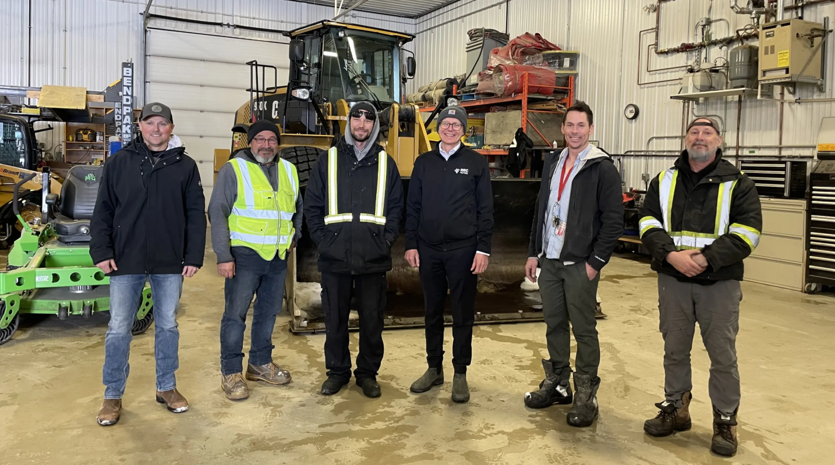
Groundskeeping staff and the President and CEO pose in a maintenance garage with snow removal equipment used to support winter accessibility across campus.

Pictured left to right: Chuck Harris, Kevin Kruse, Ryan Skelton, Fred Meier (President and CEO), Brady Barron, Derek Berry. Not pictured: Bryan Haswell

Accessibility Champions in Action – Andrea Ardiles and Erica Ament 

November 9, 2026

Andrea Ardiles, Instructional Designer, and Erica Ament, Assistive Technologist, have helped advance accessibility across RRC Polytech through education, collaboration and practical resources. Together, they co-lead the Accessibility Garden, RRC Polytech’s Accessibility Community of Practice, where they facilitate monthly sessions on topics such as digital accessibility, assistive technology, accessible virtual meetings and inclusive design. They also collaborate with the People Strategy team to create and share Accessibility Quick Tips, providing employees with simple ways to make documents, training and meetings more accessible. Andrea and Erica also supported the development of the RRC Polytech Guide to Accessible Courses course which provides practical tips and templates for creating accessible course content. In addition, Andrea delivers accessibility training for staff and instructors, while Erica shares practical guidance on accessible technologies through her Tech Tips blog. Their efforts have helped build accessibility awareness, increase employee confidence and strengthen a culture of accessibility and inclusion across the Polytech. 

Accessibility Beyond Accommodations – William Canard 

November 9, 2026

As a totally blind student, William Canard worked closely with instructors, accessibility support and assistive technology to navigate coursework, research projects, presentations, spreadsheets, and collaborative assignments. One of the biggest challenges was using Microsoft Office applications, particularly Excel, with screen reader technology, where tasks that are simple visually can become much more complex when relying on keyboard navigation and audio feedback. Through experience and problem-solving, William developed detailed methods for using Narrator and other accessibility tools more efficiently within Word, Excel, Teams and PowerPoint, and later created guides and practice materials to help other blind and low-vision users build their skills and independence. William also incorporated accessibility and inclusion into academic and community-based projects, demonstrating how accessible design can be built in from the beginning. William’s experience highlights that accessibility is not only about accommodation, but also about creating opportunities for people to fully participate, contribute, and succeed. 

Accessible Design Through Lived Experience – Joseph Ilunga 

November 9, 2026

As a student who uses a power chair and lives with cerebral palsy, Joseph Ilunga brought a valuable accessibility perspective to the development of an Emergency Management System project. Working as part of a full-stack development team, Joseph helped improve the user interface by focusing on clear navigation, accessible layouts, and reducing barriers that can affect usability. Drawing on personal experience, Joseph helped create a system that is easier to use and more inclusive for a broader range of people. This project demonstrates how lived experience and inclusive design can contribute to more accessible technology solutions. 

Student-Led Change – Valeri Kelly 

November 9, 2026

As a nursing student, Valeri Kelly noticed that while the library offered many items for students to borrow, fidget tools were not available. Valeri brought her idea to the Campus Wellbeing Facilitator and worked collaboratively with campus partners to introduce fidgets into the library borrowing system. This initiative supports neurodivergent students by providing tools that can assist with focus, self-regulation, and learning, while also helping to normalize different ways of managing attention and sensory needs. The result is a new accessibility resource that supports inclusion and helps create a more welcoming environment for all students. 

Student Accessibility Services Support – Kelvin Dyck 

November 9, 2026

When a health diagnosis began affecting his ability to participate fully in his studies, student Kelvin Dyck connected with Student Accessibility Services (SAS) for support. The team helped him navigate the accommodation process and develop an academic accommodation plan. SAS also connected him with other services offered at RRC Polytech including the Safe Ride Program, counselling support, and a reduced course load. His accommodation plan and the additional services/supports removed barriers that were affecting his ability to attend classes, manage his workload, and succeed academically. Kelvin credits this support as an important reason for his continued success as a student. 

RRC Polytech campuses are located on the lands of the Anishinaabeg, Ininiwak, Anishininwak, Dakota Oyate, and Denésuline, and the National Homeland of the Red River Métis.

We recognize and honour Treaty 3 Territory Shoal Lake 40 First Nation, the source of Winnipeg’s clean drinking water. In addition, we acknowledge Treaty Territories which provide us with access to electricity we use in both our personal and professional lives.