Indigenous Education

Stories

RBC supports Indigenous Employment at the 2024 Indigenous Career Fair

April 25, 2024

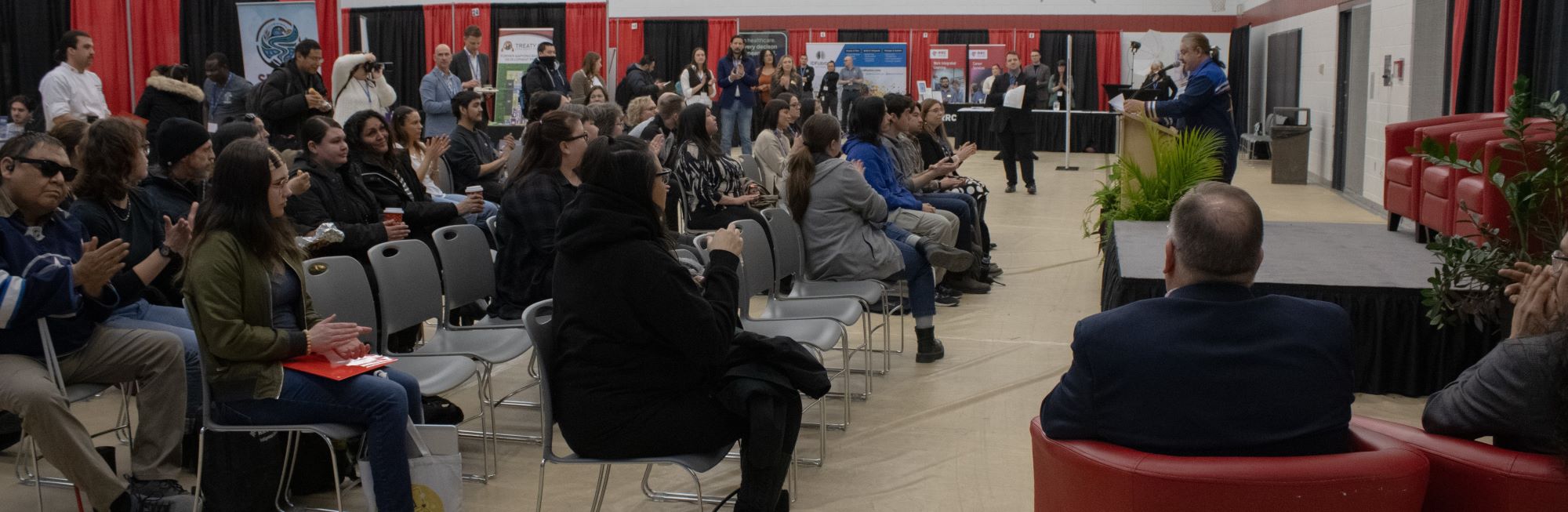
Thanks to RBC’s generous support for student-focused events, this year’s third and final RBC Reaction by Collision event of the academic year was designed to meet the needs of Indigenous students at RRC Polytech.  Each year, RBC supports three Reaction by Collision events, with one specifically dedicated to Indigenous students. The Indigenous Career Fair took place on March 21 in the North Gym at Notre Dame Campus, which welcomed hundreds of students from across the College.

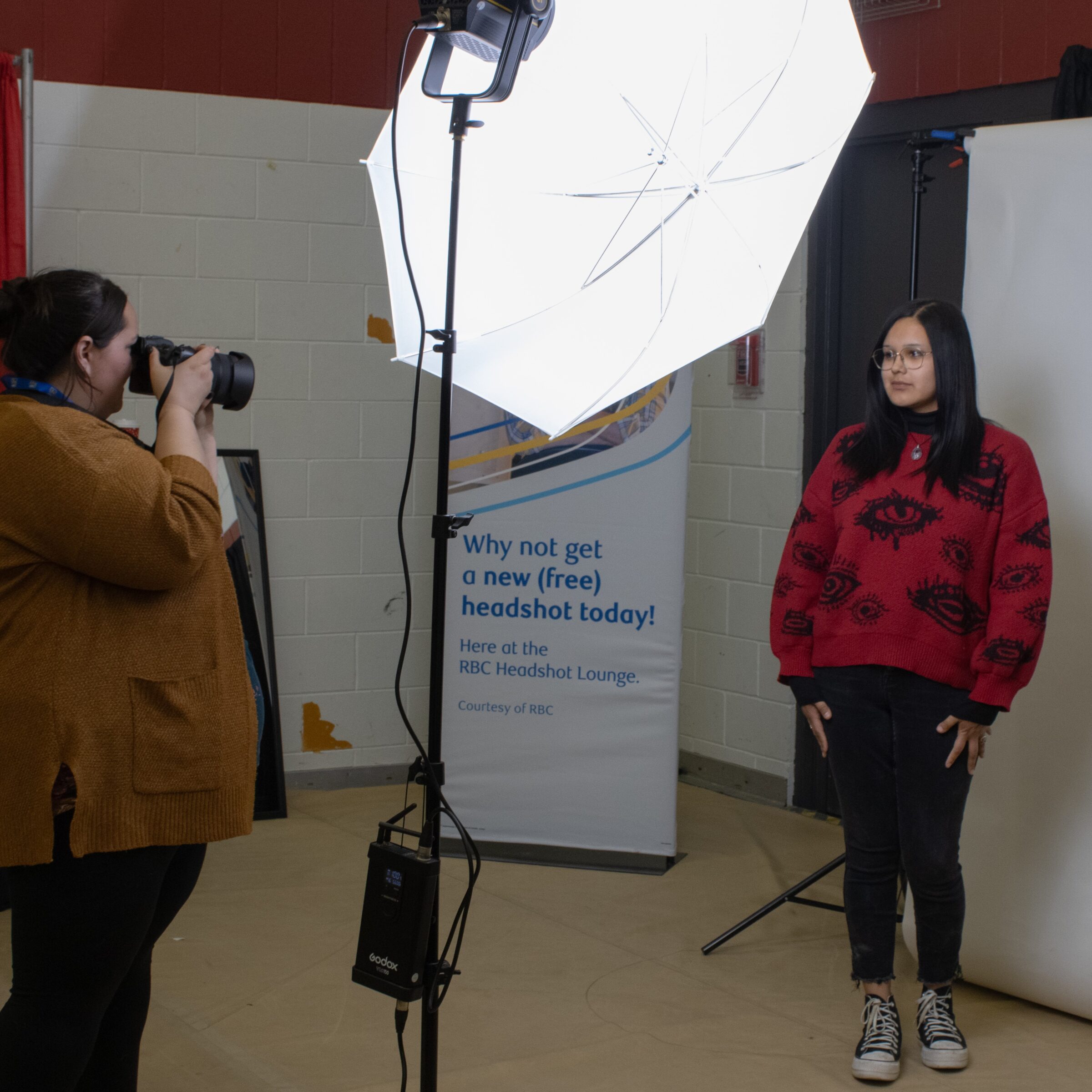
Over thirty employers were invited with specific job openings and opportunities for students to explore and consider for their future careers and to evaluate what the job market looks like in the current economic landscape. Students had access to the RBC Headshot Lounge, where they could take professional headshot portraits for their LinkedIn profiles and other professional bios.

Valeri Kelly, a Nursing student, says the Indigenous Career Fair was a great opportunity to network with employers and create connections for her future career, even though she’s a second-year student that wasn’t necessarily looking to be employed at the moment. She said she had plenty of opportunities to share her resume and LinkedIn with interested employers.

“One that really stood out to me was Naawi-Oodena; it wasn’t specifically for any healthcare-related jobs, but part of what they’re recruiting for is to fill the space at the new friendship centre. It was really cool, because there could be an opportunity to have a health clinic there, which I could be part of once I become a nurse practitioner,” said Kelly.

Having spaces that are culturally-inclusive to engage Indigenous employees is important for the success of Indigenous people not just professionally, but personally and spiritually.

Joey Laquette, a Plumbing student, is an R-Crew member that helps newer students navigate the College environment from a student-focused lens. He filtered in and out of the Indigenous Career Fair, bringing students down from the Indigenous Support Centre.

“It was good to see how well-organized it was, as that helped people navigate the booths easier. I noticed that quite a few students were a little shy to make that first connection. I encouraged students to put themselves out there, and started the conversation with some employers with them,” Laquette said.

Creating opportunities for Indigenous students is integral to enacting the College’s commitment to reconciliation. To walk the path of reconciliation is to walk alongside students and make sure they have access to the same opportunities as every other student in a way that not only accepts, but celebrates Indigenous values, cultures, and ways.

Matthew Paul, a College Transition student, says the employers he connected with made a strong effort to show him their resources and supports to engage Indigenous employees.

“A couple of them really stood out when they gave me their emails and said to contact them if I needed help – they actually went above and beyond, when they could’ve just given me a pamphlet. They even said that if I do decide to apply, to say in the application that I met them at the Career Fair so we could connect again,” said Paul.

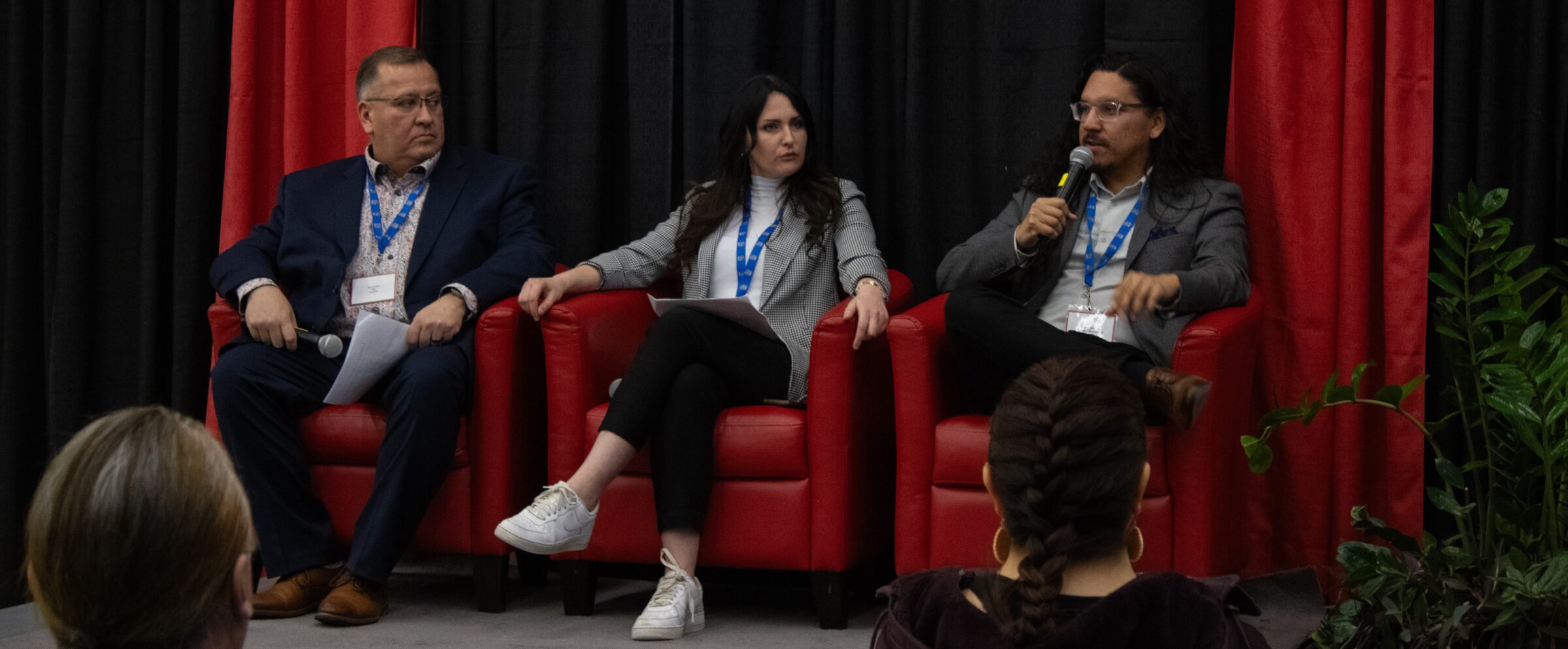
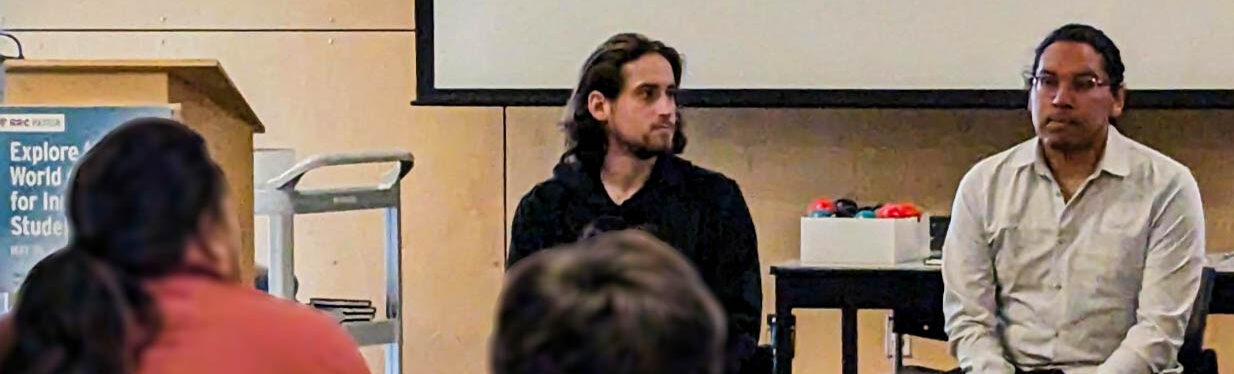
At noon, the event kicked off with a panel discussing recruitment and retention for Indigenous employees, how each organization promotes employee engagement through cultural programming and support, and how Indigenous leadership at the executive level impacts the quality of experiences for Indigenous employees.

The panel featured Herb ZoBell, VP, Commercial Financial Services, Indigenous Markets of RBC, Clarke Garrioch, Senior Software Developer of IG Wealth Management, and Charity Lepage, Director, Technical Solutions of Canada Life.

RBC Headshot Lounge.

“Whether they are new to the job market or are seasoned professionals, the success of Indigenous employees is influenced by a number of supports which leading employers should strive to provide,” said Herb ZoBell. “Access to education and training opportunities, rotational programs, a supportive cultural environment, mentorship and networking opportunities, peer supports, and awareness initiatives aimed at addressing cultural knowledge gaps and unconscious biases – these are just some of the ways RBC empowers and supports the careers of our Indigenous employees.”

The Indigenous Career Fair is an expression of the work RRC Polytech does to empower Indigenous students – and with RBC’s support, it’s an opportunity to use our platform as an educational institution to provide new, lasting, and impactful connections between Indigenous students and organizations that will benefit Indigenous students, their families and communities, and industry at large.

RBC is a proud supporter of Indigenous achievement in post-secondary education and the workforce. Every year, the RBC Reaction by Collision event series features at least one event created to offer enriched experiences for Indigenous students at RRC Polytech. In 2022, the RBC supported Indigenous Culture and Entrepreneurship and in 2023, they supported Food, Fashion and Music; both events demonstrated Indigenous talent and entrepreneurship.

Left to right: Herb ZoBell, Charity Lepage, and Clark Garrioch.

RBC’s support extends beyond experiential events to actual programs offered through the School of Indigenous Education – in 2022, RBC gifted RRC Polytech with $450,000 to finance the Pathway to Information Technology Programs for the next three years, which gives students the opportunity to launch a foundational education in IT for a tuition of just $500. Pathway students have access to wraparound supports that provide mental, emotional, physical and spiritual wellness through the School of Indigenous Education. For many Indigenous students, these support systems are extremely beneficial to their academic success.

Culture and College Transition

April 17, 2024

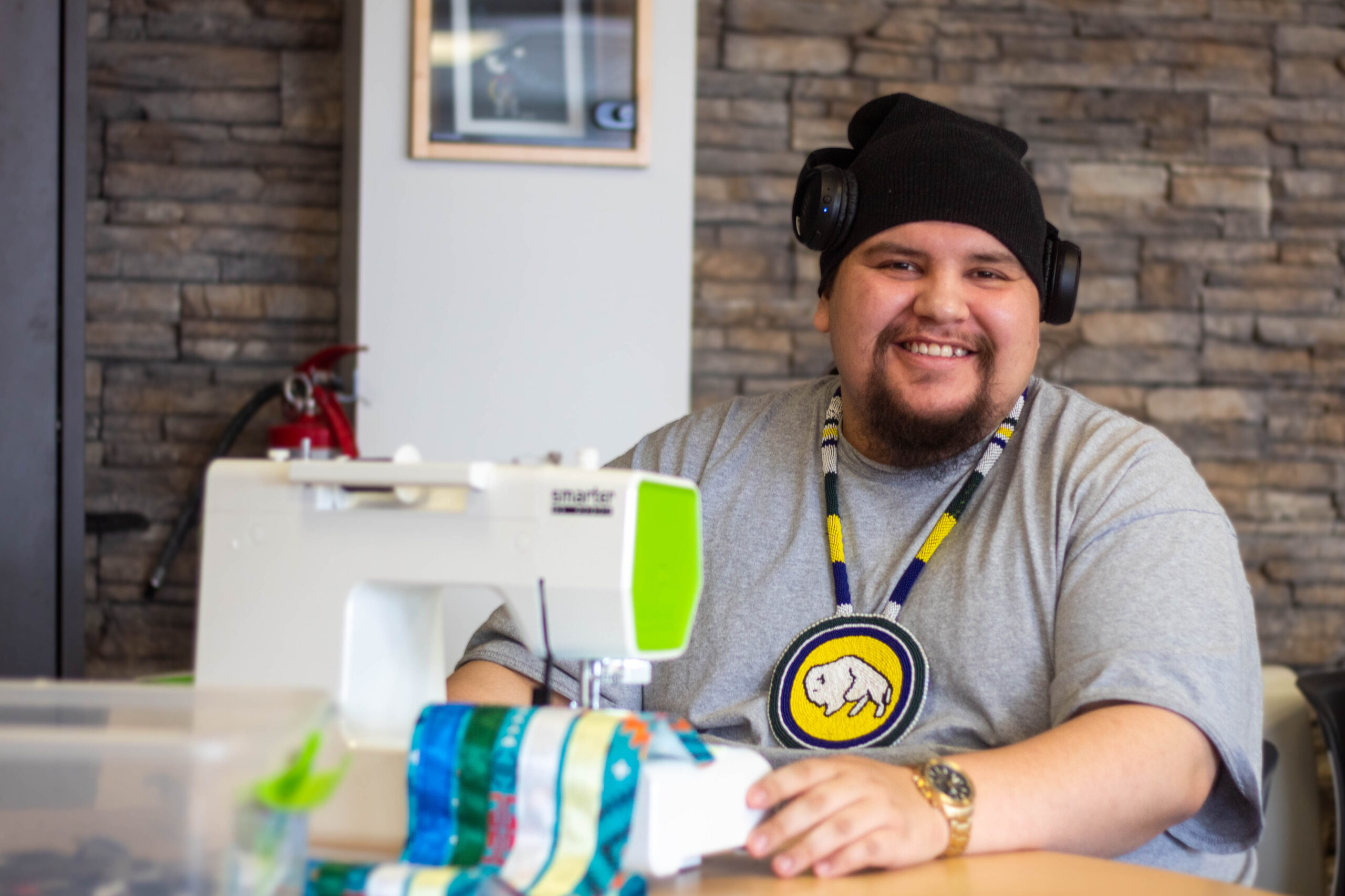
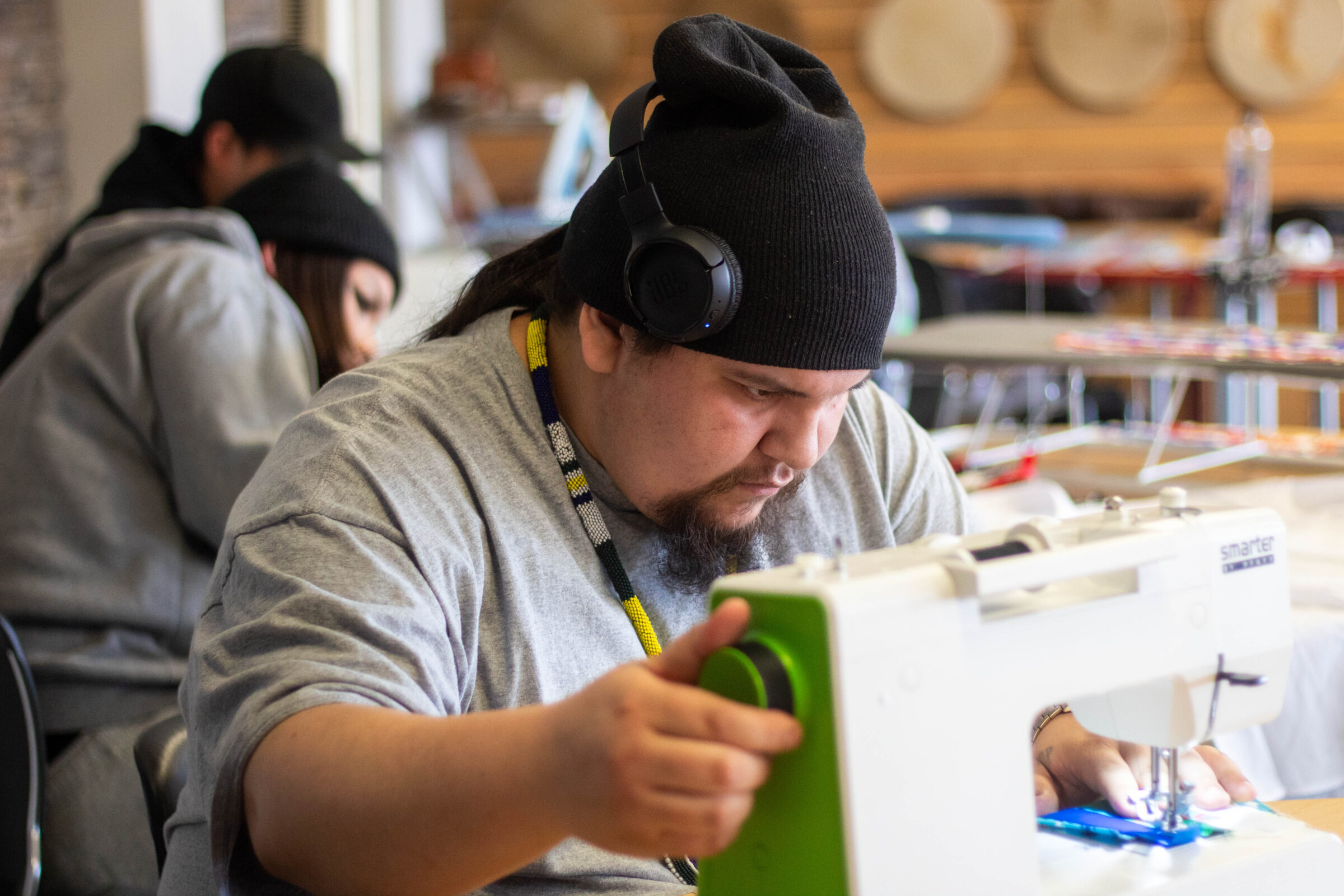
Matthew Paul sewed his third ribbon shirt with his peers in the Indigenous Support Centre as part of the course curriculum in College Transition. Being able to immerse himself in his culture has been essential in his educational journey, and he says he’s looking forward to graduating from his first post-secondary program this spring.

A few years ago, Paul was encouraging his daughter Joanna to graduate from school after he noticed that she was struggling to find motivation to complete assignments and participate in class.

Joanna responded with: “Why? You didn’t graduate. So, why should I?”

Her question had a resounding impact on Paul, and he realized that he needed to set an example for his daughter if he truly wanted to encourage her to pursue education. He enrolled at Urban Circle to obtain his grade 12 credentials, and the emphasis on Indigenous wellness and ways helped him to engage with the coursework far better than he could when he was in public school.

After he graduated, he could finally answer her question:

“Look – if I can do it, you can do it, too.”

That same year, Paul intended to continue his education through post-secondary. However, he encountered issues with his funding which delayed his launch into college for a year, and again was delayed the following year when the COVID-19 pandemic struck.

In fall 2024, Paul was finally able to enter College Transition to help him get accustomed to a post-secondary learning environment.

At first, he was scared. He was intimidated coming into a learning environment as a mature student when many of his peers were in their early twenties and still learning how to navigate the world as adults.

Matthew Paul working on his ribbon shirt.

Now, he’s in the Indigenous Support Centre at Notre Dame Campus almost every day, chatting with students and staff. He feels confident in cracking the first joke with somebody, breaking the ice with new people – Paul says a lot of younger people he meets in the centre are shy, and he feels responsible for helping them feel more comfortable and helping them learn that it’s okay to laugh, joke and talk.

Now that he’s a high school graduate and a current college student, Paul says he’s proud to see Joanna still working hard in her own high school. The encouragement he gives her now is the same encouragement he learned himself: for him, it’s not about getting the best grades.

“Sometimes, you only get 50 per cent but as long as you tried, that’s what matters. Sometimes something won’t click right then and there, but you learn to figure it out. If you try your hardest and you still fail, well – that’s just life. With failure comes greater achievements in life later,” said Paul.

Prior to his return to school, Paul was living on assistance to support himself as a single parent caring for his daughter. He says it was a hard cycle to get out of because of the caveats that come with using social assistance programs.

“If you’re in school or you make any income, you get cut off, even though you might need that little extra support,” said Paul.

Paul says that College Transition helped him find the confidence he has in himself now, and he can identify his strengths and celebrate his own accomplishments.

“Before I came here, it felt so weird being able to say something good about myself. I always got told, ‘you can do it,’ and ‘why are you stopping yourself?’. It was like there was another me stopping myself,” said Paul.

Paul says that after College Transition, he’s considering the Pathway to Business, Creative Communications and Digital Technology Programs to learn how to run a business.

For a long time, Paul wanted to help others through his work, but wasn’t sure what that might look like. He says that he can see himself pursuing solutions to food shortages and the costs of groceries in northern communities.

Now that Paul’s a student again, he is not only encouraging his daughter to pursue education, but others that might be considering returning to school as well.

“Just do it – I was so scared to come here at first, but there was no reason to be. I grew from that. No matter how old you are, you still have a lot to learn,” said Paul.

Language and Healing – CWB Financial Group Supports Second Delivery of Introduction to Anishinaabemowin (Ojibwe Language) at RRC Polytech

April 16, 2024

Language reclamation is foundational to reconciliation – for many Indigenous people, learning to speak in their languages is not only an educational endeavour on its own, but is part of a larger healing journey. Culture is integral to identity, and language is integral to culture.

Tabitha Harper, Indigenous Social Entrepreneurship student, says that that she knew minimal Anishinaabemowin prior to taking the course, but being able to practice and learn with other students helped her to feel more confident with incorporating the language in her life. In addition to her classmates, Harper says she speaks with her niece in the language and they learn from each other. While she’s proud to be able to freely engage with one of her cultures, she says that the colonization of Turtle Island needs to be acknowledged as a source of pain for many Indigenous people.

“For me, I recognize the implications of having to learn my language in a classroom, and it is a hard part of our history to confront. The language path is a healing path – it’s learning about yourself and your own path,” said Harper.

Instructor Corey Whitford says now that the second cohort is wrapping up, he has realized that the students that have come through his classroom have made profound impacts on the way he teaches Anishinaabemowin and Anishinaabe ways. He lets the students share what it is that’s most important to them when they are learning the language.

“I’m not an instructor or teacher per se — more to the point, I am a guide. If you show interest, I’ll show you how to walk through that interest. What we’re doing is identifying what students are interested in learning, what they want to know in the language. I might have developed the course, but the students are the ones who make it,” said Whitford.

Whitford says he teaches to meet the needs of students – whether they’re cultural, spiritual or social. He says that he recognizes that teaching and learning are reciprocal.

Alice McKay, who had taken the evening course, is an Ojibwe immersion teacher currently on maternity leave. She says that, as an early childhood teacher, it’s important to see Indigenous teachers teaching Indigenous students.

“Introducing ourselves in our language, one of the first questions you ask a fellow Indigenous person is: ‘who’s your mom?’ ‘Who’s your dad?’ This is how we relate to each other, how we build connections with each other – we know each other through our relationships. I believe wholeheartedly that Indigenous people should be teaching Indigenous children their languages,” said McKay.

McKay says that a lot of the young students she has taught experience systemic oppression, which often manifests through the child welfare system, and many students don’t necessarily know the familial and territorial connections to properly introduce themselves in their language.

“I would take that responsibility upon myself to help these kids find out who they are and where they come from, so they could introduce themselves – so they can have that family connection, that cultural connection,” said McKay.

Language is inherently cultural, and learning language through a cultural lens is integral to an enriched experience for students on their own journeys, especially journeys that involve a lot of healing and self-reflection.

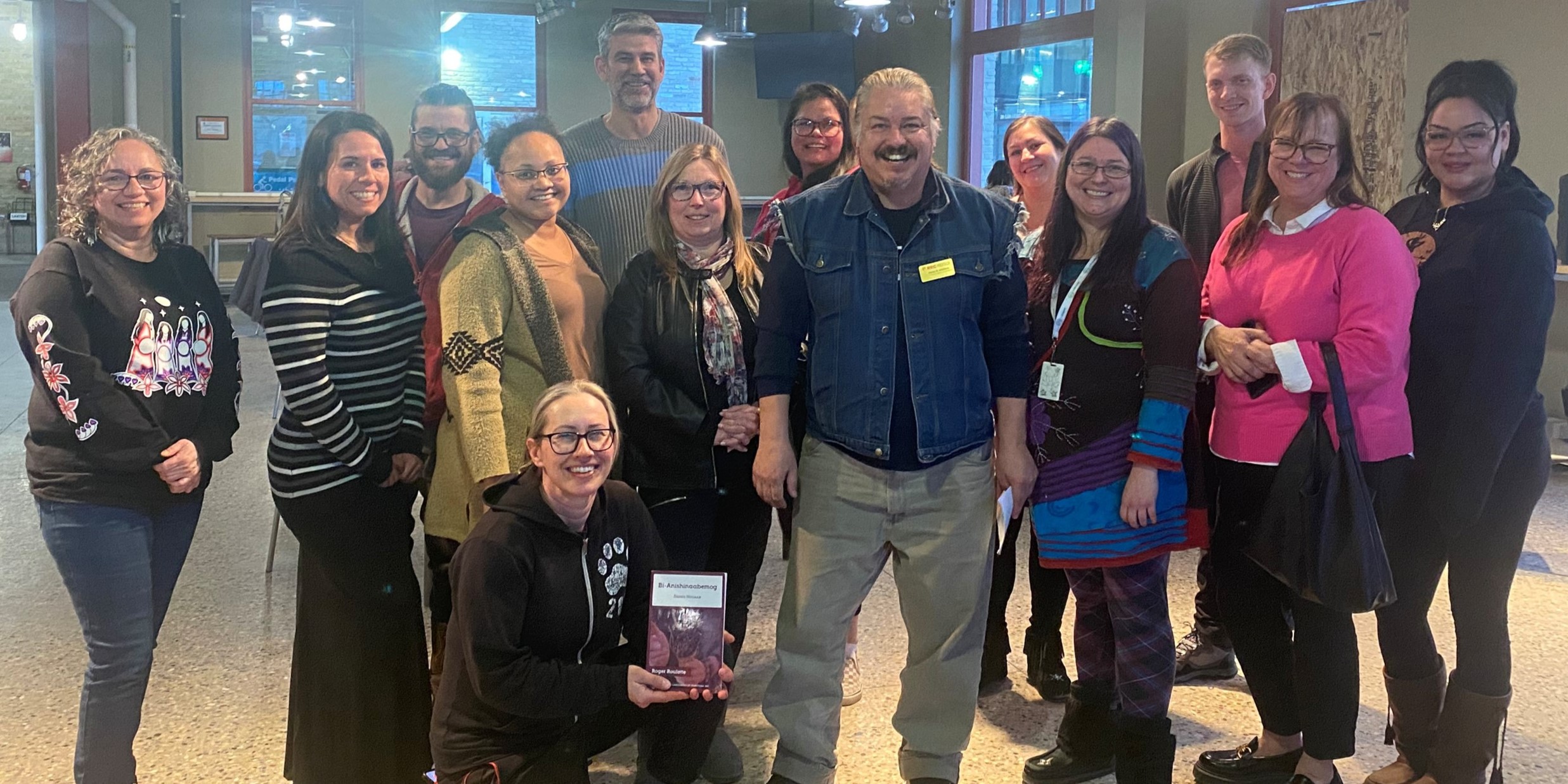
Introduction to Anishinaabemowin, as a standalone course and as an elective in second-year Social Innovation and Community Development, has helped over 100 students strengthen their cultural understanding and their language skills.

Barrier-free access to language education is foundational to cultural reclamation and reconciliation. CWB Financial Group recognized the generational impact this course has and as they strive to create inclusive spaces for success and growth, they partnered with RRC Polytech to ensure students that take Introduction to Anishinaabemowin in Winter and Spring 2024 have free tuition. They prioritize community investments focused on removing barriers for those pursuing skill development and learning and mentorship opportunities.


For more information and to register for Introduction to Anishinaabemowin, generously supported by CWB Financial Group, visit the Program Explorer page.

Language reclamation in action

December 4, 2023

CWB Financial Group Supports Introduction to Anishinaabemowin (Ojibwe Language) at RRC Polytech.

“Boozhoo! Anang Makwa Dizhninikaaz. Peguis ni doonjii.”

Hello! My Spirit Name is Star Bear. I am from Peguis First Nation.

This is the introduction that Wyatt Sutherland learned to greet people with in Anishinaabemowin. Sutherland, a second-year Business Administration student from Peguis First Nation, has family members who are fluent in Anishinaabemowin. He took the opportunity last spring to attend RRC Polytech’s pilot course for Introduction to Anishinaabemowin to better understand his mother tongue among fellow learners.

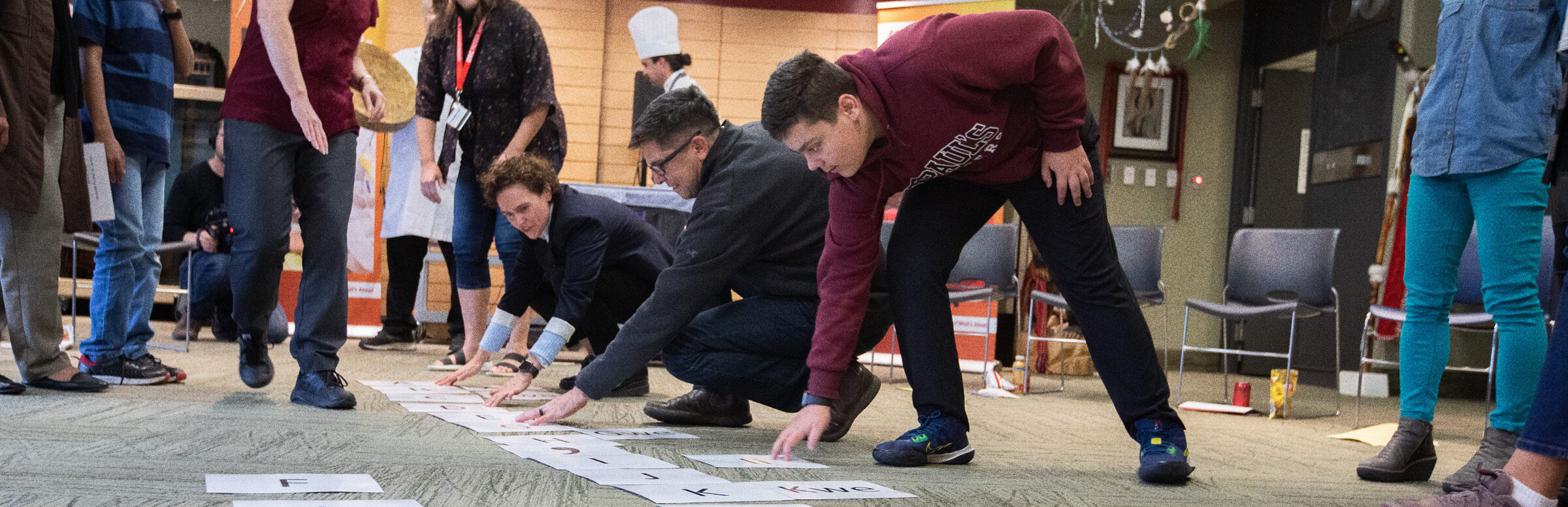
RRC Polytech launched the pilot course Introduction to Anishinaabemowin in April 2023, which took place at Manitou a bi Bii daziigae at the Exchange District Campus, the name of which means Where Creator Sits – Brings the Light in Anishinaabemowin. Students learned basic greetings, alphabet systems and cultural and linguistic protocols over eight weeks.

“Even after completing the course, I use my flashcards and practice with my brother. Now that I know where to access language resources and how to use them, I feel much more confident,” said Sutherland.

Sutherland, with his classmates, learned how to greet people with their given names and Spirit Names and where they’re from—a traditional way to connect with others in the language. They learned over 140 vocabulary words and phrases that created the base upon which further language knowledge could be built.

Barrier-free access to language education is foundational to cultural reclamation and reconciliation. CWB Financial Group recognized the generational impact this course has and as they strive to create inclusive spaces for success and growth, they partnered with RRC Polytech to ensure the next cohort of students in Introduction to Anishinaabemowin have free tuition. They prioritize community investments focused on removing barriers for those pursuing skill development and learning and mentorship opportunities.

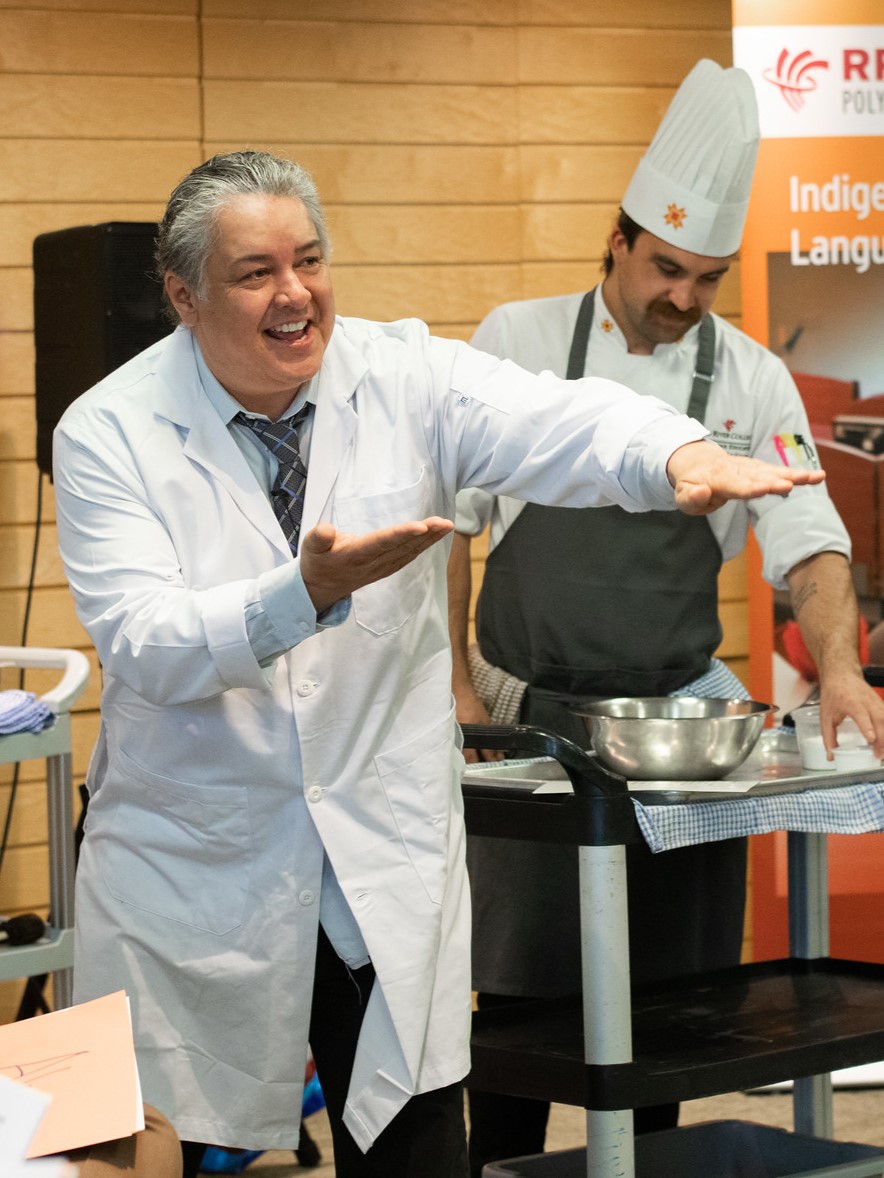
Corey Whitford, Anishinaabemowin Instructor, delivered lessons in the Sandy Bay dialect while acknowledging and honouring the various regional differences and dialects among the many Anishinaabemowin-speaking communities throughout Manitoba and surrounding areas.

“That first cohort really shaped the way that I teach my classes now,” said Whitford. “I’ve learned that you have to really engage the senses, to keep that retention. I’ve taken my classes to the Manitoba Museum, Giizhigooweyaabikwe Park or Painted Sky Woman Park, and I’m amazed every time by just how immersed they are in the content—not just the language itself, but the cultural and traditional knowledge.”

Corey Whitford.

Whitford says his lesson plan includes going on field trips, dabbling in art with painting jars, playing traditional and contemporary games, sharing and preparing recipes, and listening to and singing songs. He teaches the course as an evening course on a registration basis and as an elective in the Social Innovation and Community Development program. He credits his grandmother, Kookum Victoria, with his inspiration and motivation to share the language with as many people as possible in as many ways as possible.

“Kookum Victoria was an extraordinary orator—Elders would call on her for her prayers, she was a poet. Her words were comforting and colourful, they expressed something beautiful that couldn’t have had the same weight if they were articulated in English. It was her gift,” Whitford said. “I can’t wait to see the next generation of poets. I want to help them get there.”

Whitford says he plans to continue to evolve the course as it progresses and hopes to one day also offer Introduction to Anishinaabemowin in live hybrid classes to reach more students.

Sutherland says his favourite aspect of the introductory course was the sense of comradery that bloomed from the small class and interactive lessons. He’s looking forward to the future progression course, Conversational Anishinaabemowin.

“Humour and joy are a huge part of the culture, despite the focus that exists on Indigenous hardship—we’re still here, and we get through trauma through our relationships and humour,” said Sutherland.

As a life-long learner and as an Indigenous person, Sutherland hopes that future Introduction to Anishinaabemowin students seize the opportunity to embrace the cultural depth that comes with reclaiming language.

“Try to be in the moment. The beautiful thing about learning the language is that: respect is inherent. There are no words for ‘you’re welcome,’ because thanks is always given,” said Sutherland.

For more information and to register for Introduction to Anishinaabemowin, generously supported by CWB Financial Group, visit the Program Explorer page.

Jamie Wilson reflects on service to US and Canadian Armed Forces

November 8, 2023

November 8 is known as Indigenous Veterans, Day.

Many Canadians recognize and honour November 11 every year to mark the armistice signed between nations at the end of World War I and the sacrifices that Canadians have made in armed conflict in the last century. It’s a solemn legacy that many Canadians regard with great pride and sorrow.

In 1994, Indigenous veterans advocated to be acknowledged after being excluded from recognition in Remembrance Day activities, despite the service they provided to Canada during wartime. Since then, November 8 has been observed as National Indigenous Veterans’ Day, a lesser-known observance to specifically recognize the contributions and sacrifices of Indigenous soldiers.


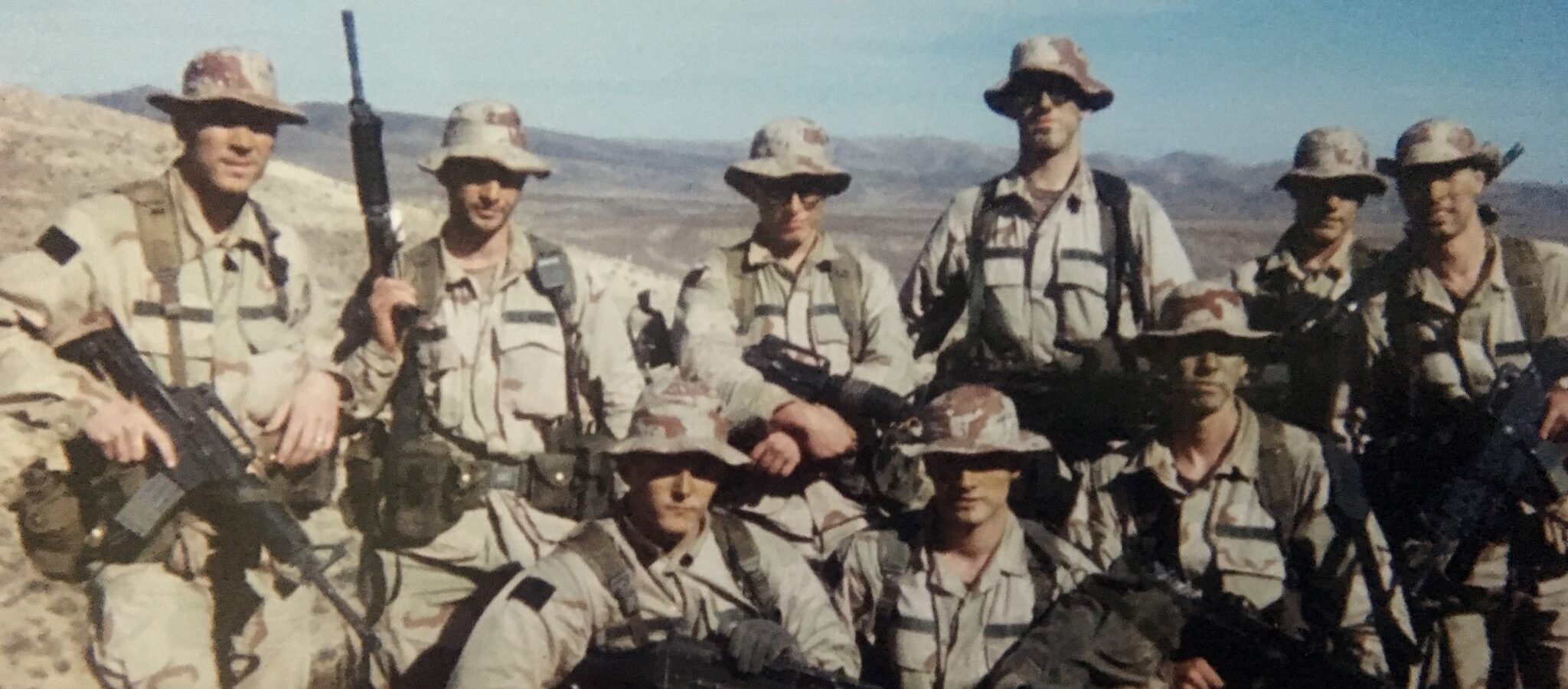
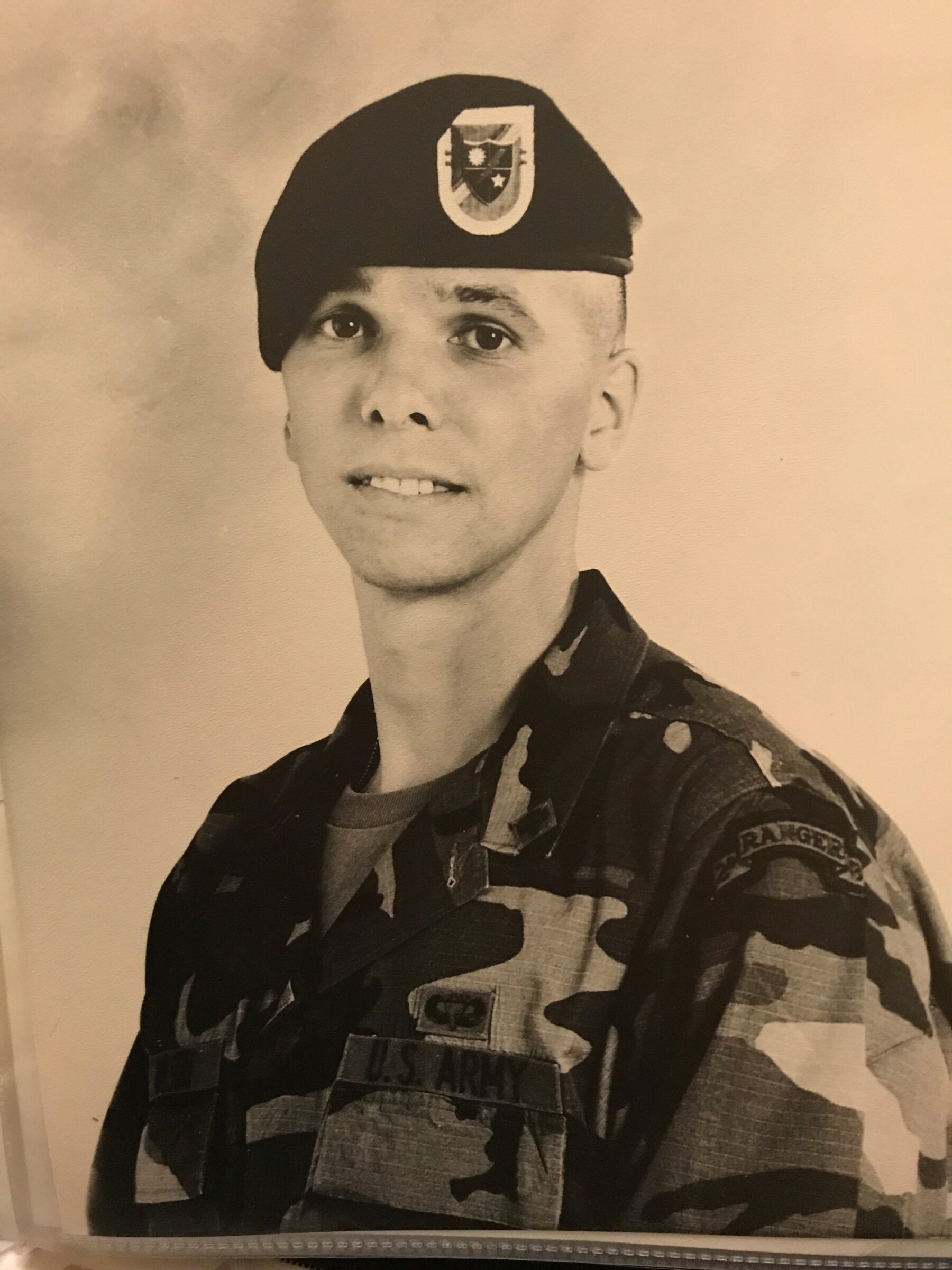
Before his career in education and post-secondary leadership, Jamie Wilson, Vice President, Indigenous Strategy, Research and Business Development at RRC Polytech spent nine years serving in both the US and Canadian Armed Forces – he says that his time in the military was the most formative time of his life and one that influenced his position as a leader today.

Wilson, who’s from Opaskwayak Cree Nation, grew up in a non-military family, but says his community has a proud history of serving during times of war.

“It’s an honourable thing to put your community ahead of yourself for the greater good. There are still young people back home that look to pursue military service—I’d support anyone that wanted to pursue it,” said Wilson.

Wilson had already earned his teaching credential in education when he began considering a career in the military.

In 1992, Wilson Sundanced in North Dakota with an Indigenous man whom he learned served in the US Special Operations—Wilson recalls being surprised that this laid-back, down-to-earth, traditional  dancer willingly served in the US military while remaining true to who he was. Hearing about his fellow Sundancer’s experience reignited Jamie’s lifelong interest in joining the military.

Jamie Wilson.

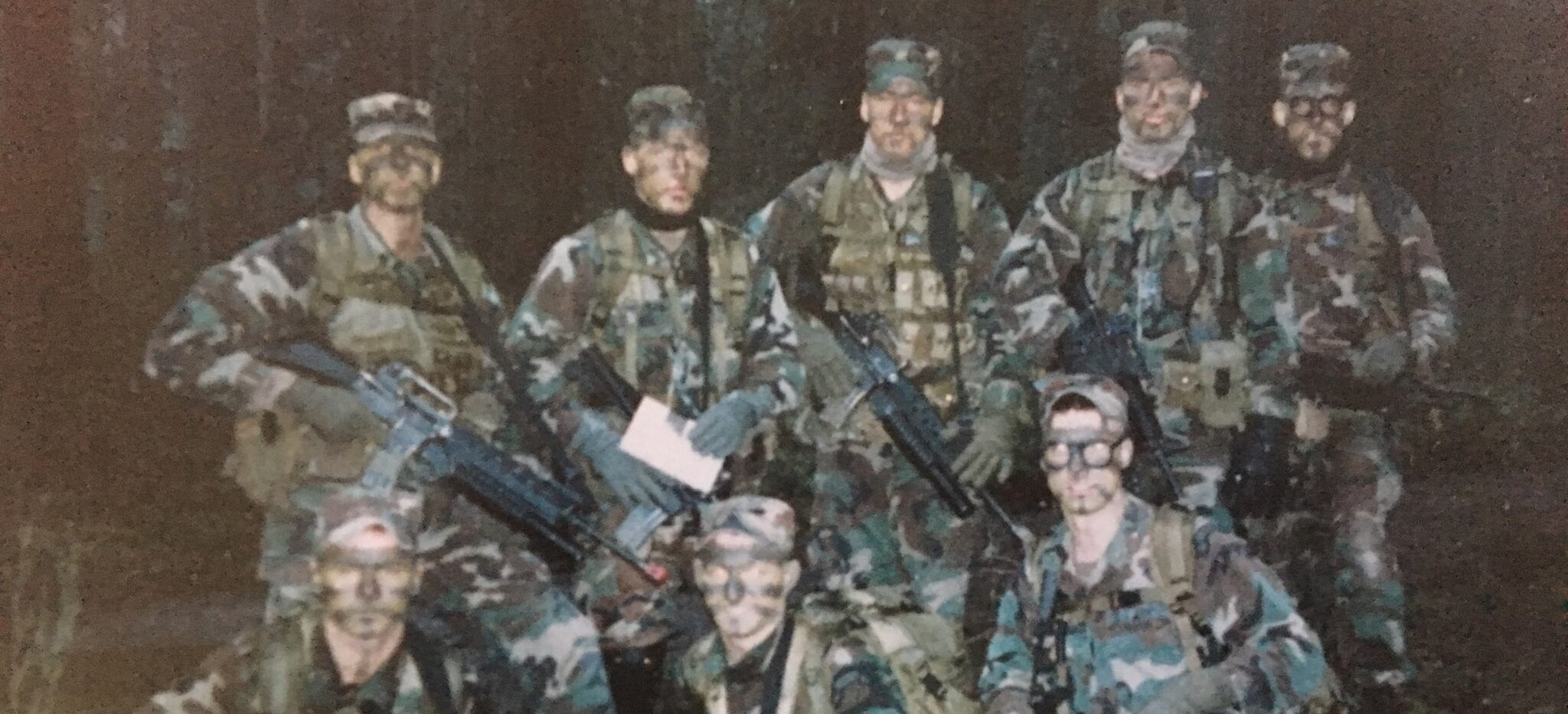
Under the Jay Treaty of 1794, Wilson, as a First Nations person, could travel and work in the United States with the same rights as a US citizen. Wilson spoke with a recruiter and joined the US army in 1994. He completed his basic training at Fort Benning, Georgia and was assigned a contract to attend selection with the 75th Ranger Regiment – a light infantry unit and special operations force within the United States Army Special Operations Command where he ended up spending two years serving. He says in that time, he experienced the toughest training conditions that forced him past his limits—limits he didn’t know could be exceeded.

“There were periods where we’d train constantly, for days straight—with a cumulative of 4-5 hours’ sleep the whole time. Going sometimes to the point of hallucination—some guys were walking and sleeping at the same time.”

Wilson noted that had he not Sundanced prior to joining the military, the experience would have been far more grueling.

“I used to do full Sundance for four full days—no eating or drinking water the whole time. I remember my military buddy, after the Sundance, was like ‘let’s run down to the [Missouri] river for the final ceremony; it’s only two miles away.’ We were dehydrated and hungry (I lost about 20 pounds in 4 days each time I danced), but I agreed—we ran there, and that made me realize the mental strength we have: you’re capable of more than you think.”

After returning to Canada, Wilson joined the Canadian Forces as a reserve infantry officer based in Edmonton for seven years. Looking back, Wilson acknowledged the hardship that soldiers go through to serve having experienced it firsthand in both the US and Canadian militaries, and the particular adversity that Indigenous soldiers and veterans have faced throughout history.

Wilson says that the leadership demonstrated in the military was more diverse than he expected—some of the best leaders he had were the ones that defied his expectations. Wilson says their abilities to serve as leaders were evidently forged from their abilities to support the people around them.

“It taught me to lean into myself more, to be more confident in who I am. It taught me to be a better parent, brother and leader. I learned to let myself make mistakes—they put you in uncomfortable situations to force you to grow and adapt. To be a good leader, you have to know how to be a good follower—you have to learn how to support those around you,” said Wilson.

For Wilson, National Indigenous Veterans Day and Remembrance Day is about recognizing the sacrifice of men and women who put their lives on the line.

“Whether it is serving overseas or local issues like flooding or fire, soldiers, sailors, airmen and women answer the call and exemplify selflessness by putting the greater good ahead of one’s self and personal needs every day to serve those around them.”

Many people express their support for National Indigenous Veterans Day by wearing beaded poppies created by Indigenous artists. Wilson encourages the community to show support by wearing a beaded poppy while also making a donation the Royal Canadian Legion, as every donation made for the yearly poppies goes toward programs that support veterans.

A History of Indigenous Veterans Serving In Canada

It wasn’t until 1994 Indigenous veterans and their families advocated for their recognition that Canadian society became conscious of the mistreatment that Indigenous soldiers faced when they returned home: Canada expropriated immense amounts of reserve lands during wartime, some of which was awarded as farmland to non-Indigenous veterans for their service; Indigenous veterans were often denied full veterans’ benefits and support programs afforded to non-Indigenous veterans; some were forced to “enfranchise” (meaning they became Canadian citizens with all the rights and privileges of citizens if they gave up their Indian Status and their identities).

Today, Indigenous people are recognized and honoured at all levels for their contributions to Canada during war. November 8th sees hundreds of ceremonies and vigils around the country to acknowledge the history that encompasses the Indigenous experience in the Canadian military.

Learn more about National Indigenous Veterans’ Day on the Library blog or check out these resources:

Finding footing in information technology

October 6, 2023

Colton Gadoury grew up immersed in the Internet.

Today, his favourite hobby is settling in and logging onto Red Dead Redemption, or connecting with friends over the occasional virtual sports game.

At 24-years-old, with post-secondary certification in Electrical Applications and after a lot of consideration, Gadoury enrolled in the first Pathway to IT cohort in January 2023. 

He says the program was a logical fit for his circumstances: with a tuition of just $500 thanks to RBC Future Launch, the program didn’t strain his budget as much as launching directly into a diploma or bachelor program might have, and was the best way to change his job title from electrician to software developer.

“The Pathway program gave me the confidence to make the jump between industries. I wasn’t sure where I would fit in the information technology industry because it’s so huge, but the Pathway helped me explore options and figure out where I wanted to go… It helped introduce me to a lot of opportunities in tech for a Métis person such as myself,” said Gadoury.

Despite his affinity for technology, Gadoury initially hadn’t considered a career in IT before attending RRC Polytech. From a young age, he thought he would be a tradesperson and pursued that path.

Colton Gadoury.

“Since I didn’t really know what I wanted to do, and there was some expectation to attend post-secondary, I rushed into a trade I thought I might like,” Gadoury said.

After experiencing that frustration as an electrician, Gadoury reflected on what it was that did make him happy. As an avid gamer that grew up with the evolution of the internet, he’d acquired technical skills from his hobbies that he hadn’t realized he could transfer to a career. He used that foundational knowledge of computer systems and coding that he’d gleaned over the years as inspiration for a new career trajectory: information technology. It’s a constantly-growing, goliath industry with plenty of opportunity to carve a new path. He just needed to know where and how he could gain the skills to take the plunge.

The biggest challenge for Gadoury’s career change was the uncertainty. Making the choice to pursue a different profession meant that his established and steady income would become temporarily unstable, and he wouldn’t know for how long. The Pathway program eased his hesitation and he says he’s glad he went for it.

Gadoury recalls his favourite experience being the Sprint to Innovate course. He and his classmates broke up into groups to generate concepts for improving the user experience, or UX, on RRC Polytech’s internal staff HUB site in three areas: filling out expense reports, obtaining keycard access, and booking rooms. The first group designed a wizard to calculate and populate spaces based on information users provided; the second group proposed a virtual assistant chat box to provide users with advice and direction; and Gadoury’s group constructed an interactive booking map to engage users.

Gadoury during a class panel.

At the beginning of the term, Gadoury says he was nervous at the prospect of their project. It felt like a lot of work loomed over them, especially during the planning stages to determine the best path forward. Each group figured out how to work with the existing site structure to integrate their solutions and by the end of the term, they presented prototypes to mock clients. Gadoury says the collaboration transformed his reservations into confidence, and he was proud to apply the skills and knowledge he had acquired through the program.

The experience with Sprint to Innovate and the support he received in the Pathway to IT program confirmed for him that taking a leap to the new career – one he finds rewarding with endless opportunity – was the right decision. Through the Pathway program, he’d made connections with other Indigenous IT professionals making technological progress for a variety of Indigenous organizations.

Gadoury is looking forward to focusing his portfolio in RRC Polytech’s Business Information Technology (BIT) program in Fall 2023. He says he can see himself applying his skills to front-end development to innovate user experience by streamlining digital interfaces, or contributing to the programmatic structural integrity of software through back-end development—both areas have wide applications out of which Gadoury says he could carve a rewarding career.

Pathways at RRC Polytech

Pathway to Information Technology Programs prepares Indigenous students to take the lead in technology and helps to jumpstart an education in technology. Pathways are exploratory and preparatory, ensuring that Indigenous students have the foundation to start strong in their post-secondary journeys. Pathways are for Indigenous students that haven’t experienced post-secondary education yet or want to build a starting point for an education in a particular industry—which includes career-changers like Gadoury.

The Pathway to Information Technology is generously supported by RBC Future Launch, which has reduced the program’s tuition to $500 for each intake until 2024. For more information about the Pathway to IT Programs and to get your application started for Fall 2023, check out the Program Explorer.

RRC Polytech partners with local Métis artist for original Red Shirt design

October 4, 2023

As a tattoo and multimedia artist, Shayre Curé’s art is often specially curated for the people that commission her — regardless of the medium.

Her art is typically for the enjoyment of private buyers, in their houses or on their skin.

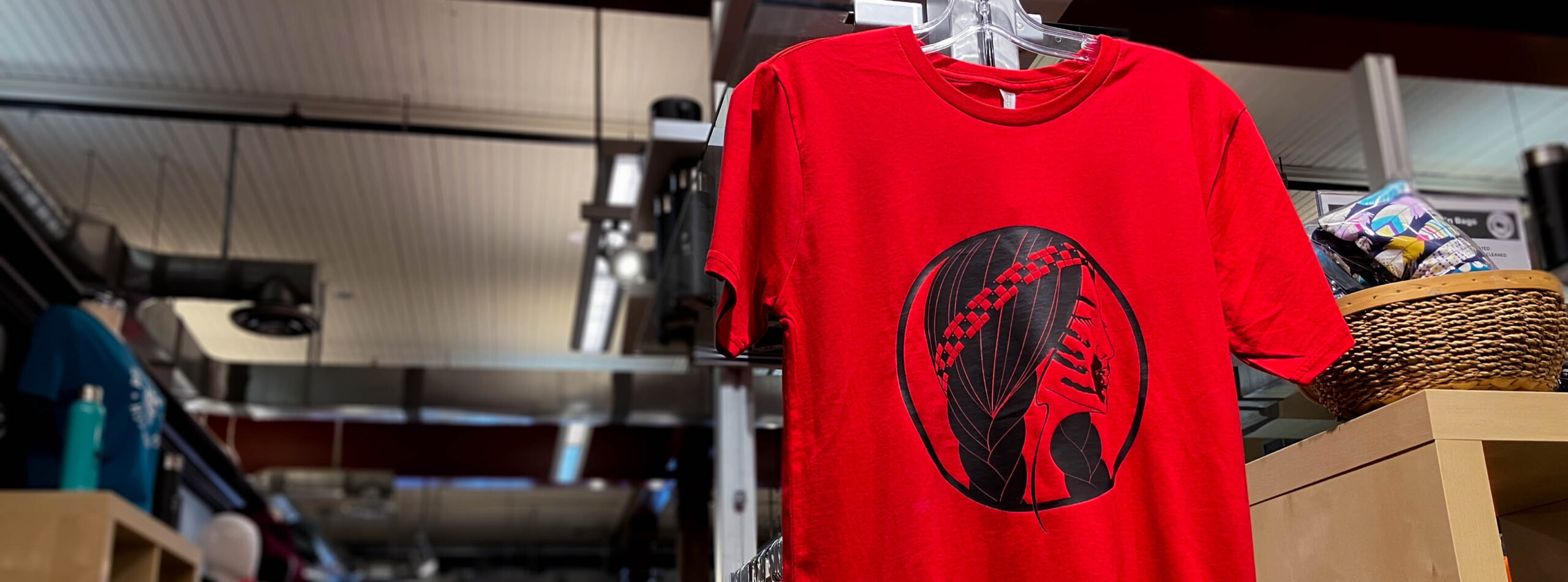
This year, Curé partnered with RRC Polytech to create an original Red Shirt design to honour Missing and Murdered Indigenous Women, Girls and Two Spirit People (MMIWG2S) and to support the Mínwastánikéwin Truth and Reconciliation Award for Indigenous students.

“As a Métis artist, my goal is to create art that brings awareness to this important issue. I want my art to not only reflect cultural heritage, but to inspire future generations to continue the fight for justice, equality, and empowerment,” said Curé.

The Red Shirt design portrays a woman with the emblematic handprint over her mouth that represents the “No More Stolen Sisters” movement, a phrase coined to express the outrage and grief over the loss of so many women, girls and Two Spirit people that, in many cases, could have been prevented. Curé worked in collaboration with a committee of Indigenous staff to come up with the concept.

No More Stolen Sisters. It’s a sentiment close to Curé’s heart, and the hearts of many Indigenous people.

RRC Polytech’s relationship with Curé first began earlier this year, when the Indigenous Student Support Centre purchased a piece from her entitled “The Silent Genocide on Turtle Island”—a piece that has taken her years to complete.

In 2018, she’d hand-drawn the concept for this piece shortly after her best friend Kayla was killed in a hit-and-run. The death of her best friend was devastating, though grief was not unfamiliar to Curé—she says that Kayla’s brother had also been murdered eight years prior in 2010. She’s known many people whose friends and family have gone missing or were killed over the years, and she says being able to honour them through her art and bring light to their stories is humbling.

Curé had returned to the concept last year in October 2022, when previously undisclosed details of Kayla’s case were revealed. To deal with the emotion that bubbled to the surface, the pain of injustice, and the reminder of loss, Curé transformed the original hand-drawn concept into a multimedia painting using acrylic paint and beads.

From a young age, Curé expressed herself through art—art and the process of creation was an anchor for her while growing up. As a child, Curé recalled seeing tattooed folks on TV but never on the people she knew or had seen in her area. Identifying that market planted the seeds that would later bloom into a strong and active career.

In high school, Curé says she fell in step with a bad crowd and diverged from her artistic inclinations for a few years. The summer before she started university classes for psychiatric nursing, Curé met a tattoo artist and her path circled back to her love of art, and she decided to pursue tattooing. She’s been tattooing at Tattoos by Rodriguez for the past five years and regularly creates art on skin and canvas alike.

Curé’s emotional and powerful expression of grief and hope through her painting that now lives in the Indigenous Support Centre moved RRC Polytech to approach Curé with another opportunity to collaborate on the Red Shirt design to bring more awareness to MMIWG2S, and to support Indigenous students through the proceeds from the sales.

“Through the design of this shirt, along with the acrylic painting I created for the Indigenous Student Support Centre, I pay tribute to my best friend Kayla Arkinson — her life was tragically taken on June 23rd, 2018, in Sagkeeng First Nation,” Curé said.

The Red Shirt can be purchased at the Campus Store and all proceeds go to the Mínwastánikéwin Truth and Reconciliation Award. Every Red Shirt is produced and supplied by Red Rebel Armour, owned and operated by Indigenous alumnus Sean Rayland-Boubar.

“Working with Indigenous artists and entrepreneurs to represent Indigenous ideas and movements is integral to the societal change we aim for,” said Carla Kematch, Director, Truth and Reconciliation and Community Engagement. “Initiatives like the Orange and Red Shirts are not only a strong way to raise awareness of truth and Indigenous history, but it’s also an opportunity for Indigenous people to participate in their own stories. Curé’s story is unique but many people know it well from their own experience, which makes it all the more powerful.”

The College community is invited to wear red on October 4 to show support for the families of missing and murdered Indigenous women, girls and Two Spirit people.

Artist’s Statement

Since settlers set foot on Turtle Island, a silent genocide has been perpetuated against Indigenous women. The United Nations recognized this and called on Canada to implement the MMIWG2S National Inquiry’s 231 Calls for Justice. Indigenous women are twelve times more likely to be murdered or to go missing than non-Indigenous women in Canada.

Through the design of this shirt, along with the acrylic painting I created for the Indigenous Student Support Centre, I pay tribute to my best friend Kayla Arkinson — her life was tragically taken on June 23rd, 2018 in Sagkeeng First Nation.

As a Métis artist, my goal is to create art that brings awareness to this important issue. I want my art to not only reflect cultural heritage, but to inspire future generations to continue the fight for justice, equality, and empowerment.

Shayre Curé

Sparks fly for College Transition student in Women of Steel™: Forging Forward Program

July 11, 2023

Usually, students look forward to a break in the summer between classes.

They look forward to time relaxing and decompressing, forgetting the pressure of deadlines and obligations, maybe stretching out on the sand at the beach or trudging mountain trails.

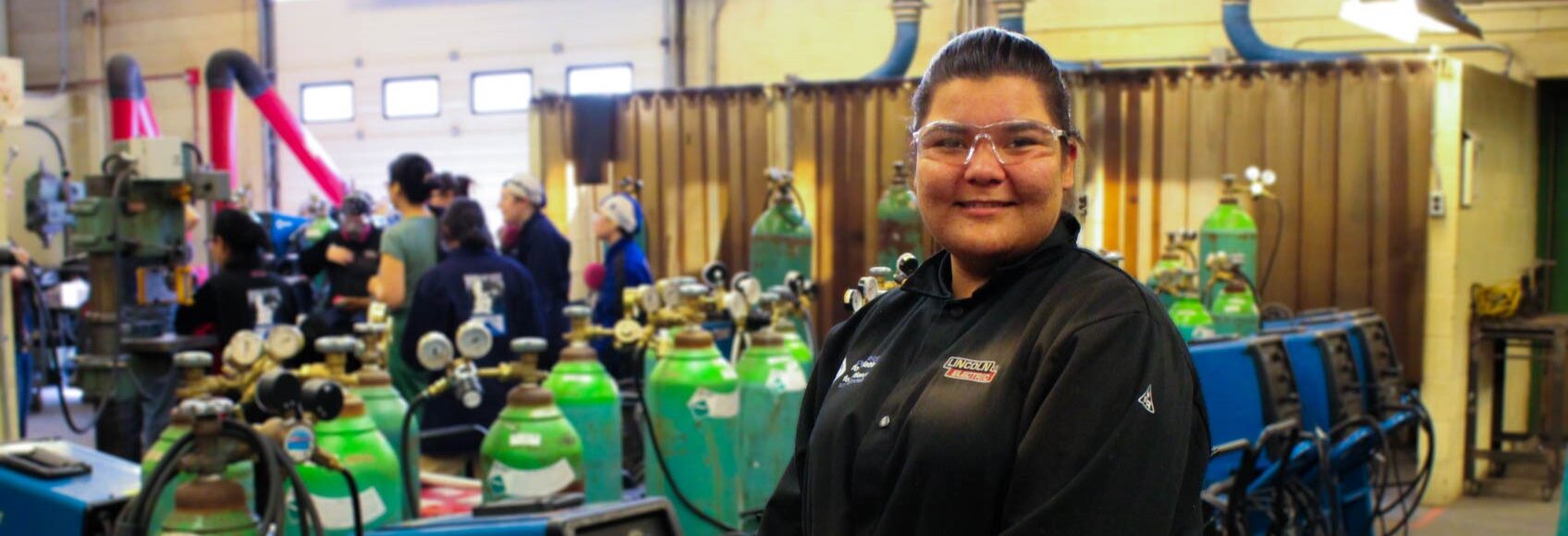
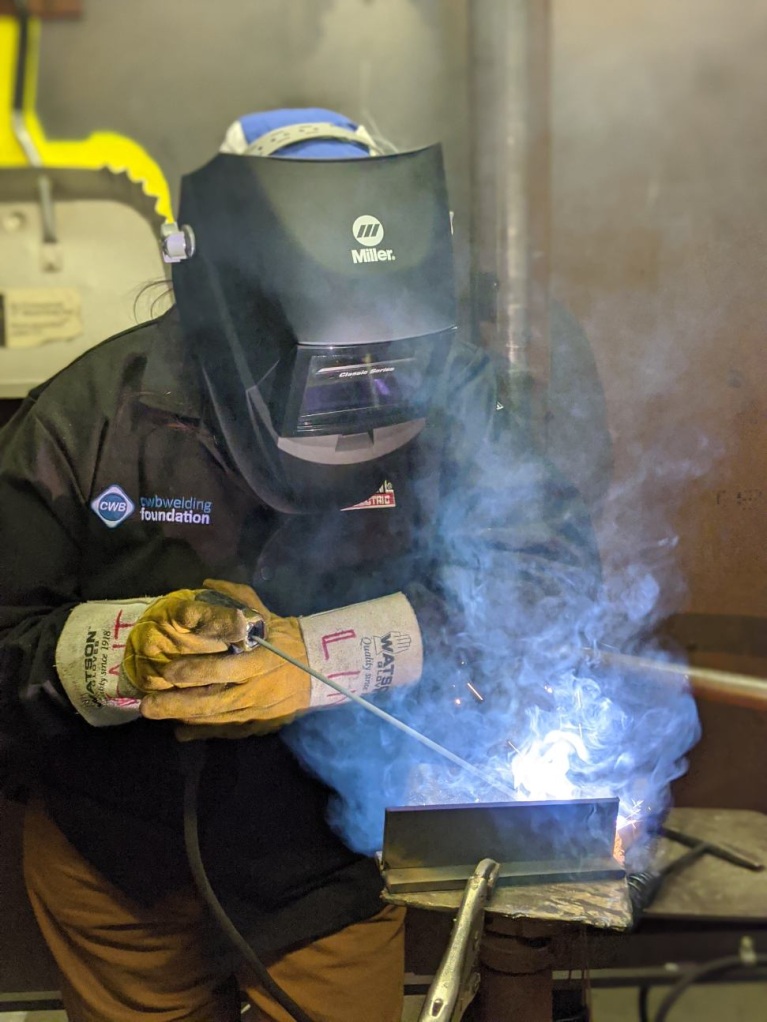
Tessa Cochrane’s respite from class lasted barely a week. She finished the 10-month College Transition program and intended to apply for Introduction to Trades to eventually secure her spot in the Welding program but when Women of Steel™ presented a tuition-free, fast-tracking option starting in May, she jumped at the opportunity – sacrificing some summer fun to effectively cut down her time in post-secondary by a whole year.

Cochrane graduated high school in 2018 and bounced around various fields from retail, to construction, to peacekeeping. At first, she didn’t see the importance of post-secondary education, but after experiencing employment competition in multiple industries, she decided upgrading would be beneficial.

After high school, she describes her academic level as fairly moderate, but College Transition helped boost her faith in her abilities and her straight ‘A’ grades in the first term reflected her drive and potential. By adding experience to her earnestness, Cochrane was confident she’d find employment but still wasn’t exactly sure what she wanted to do – for her, the best approach was taking it one day at a time to find her passion.

Growing up, Cochrane recalls, she set her sights on becoming a doctor, a veterinarian, a natural resource officer, a firefighter – and countless other things that a kid’s attention might latch onto. She came from a line of firefighters and grew up on a farm, so handiness was inherent in her family. She’d seen her father and grandfather welding on the farm but said she hadn’t considered the trades until she met some influential tradeswomen at the College and was inspired by their success.

“I’ve picked and settled on so many things over the years, my parents ask, ‘Is she going to stick with welding?” Tessa said with a laugh. “Yeah, I think I’ll stick with welding.”

In the College Transition program, one of Cochrane’s assignments was to conduct a career exploration in preparation for the January 2023 Indigenous Career Fair. While researching fields and careers that interested her, Cochrane realized that most of her previous pursuits were influenced by the things she thought people needed her to be – to fill a role that needed filling.

College Transition allowed her to really tap into her potential and discover things that would not only challenge her and put her skills to use, but that she could love doing and be good at. At the Indigenous Career Fair, Cochrane had the chance to explore different opportunities around the province and connected with several employers. She was eventually offered a job placement with an organization closer to home in the Interlake Region.

Cochrane intended to take the summer position at that point but when RRC Polytech posted the Women of Steel™: Forging Forward Program in January, she was among the first in line to apply – taking advantage of the immediate opportunity served up on a ‘stainless steel’ platter by the CWB Welding Foundation, using Federal funding to attract more women to the trades.

When she completes the intensive 15-week program and two-week job placement Cochrane is hoping to have earned four Canadian Welding Bureau qualification tickets making her readily employable for basic manufacturing and prepared for additional post-secondary training or apprenticeship.

Cochrane credits identifying her passion and establishing her career path to the growth she experienced while in College Transition. Although she grew up in a Christian family, the program provided a safe space for her to learn more about her ancestors’ traditional ways and gave her perspective on cultures and the many similarities between Indigenous people all around the world.

Her favourite part, she says, was the fact that support was everywhere for everything. As an aspiring welder she appreciates the bonds that she’s created with classmates and instructors at RRC Polytech and hopes she inspires others to invest in themselves and pursue education.  

“There’s no judgment, there’s a strong purpose here that students find, and that foundation really helps you find what it is you want to do,” said Cochrane.

2023 Mínwastánikéwin Award Recipients

June 27, 2023

The Mínwastánikéwin Award, named for the Cree word that means ‘to set it right’, was created in 2019 in partnership with RRC Polytech’s Campus Store during the first Truth and Reconciliation Week. Applicants were asked to write a one-page essay on what Truth and Reconciliation means to them as residential and day school survivors and children of survivors.


When we talk about Truth and Reconciliation, we mean that we want to set it right.

To set right the damage that Indigenous Peoples have endured over the last few centuries.

To set right the broken bones, so they might heal properly, to heal stronger.

To set right the history and perception of Indigenous Peoples, so the world might know the truth, to come together stronger.

This year, two recipients earned the Mínwastánikéwin Award: Rebecca Choken and Wendy Monias.

Rebecca Choken came to RRC Polytech unexpectedly. She’d been considering the future with her three-year-old daughter, who has Autism. Rebecca knew that she didn’t want to continue living off Employment and Income Assistance—she wanted to give her daughter stability. Her love and dedication for her daughter motivated Rebecca to seek new avenues to improve herself.

Rebecca applied for Business Administration and the College notified her of an opening at the Exchange District Campus for January 2023, which she readily took. Rebecca was in a whirlwind within the first few weeks of accepting the offer—she scrambled to find a daycare that could provide specialized care for her daughter, secured funding from her band, and gathered the necessary supplies to succeed in the program. The last time she’d been in school, it was pencils and paper. Everything happened so quickly, but she was ready for that first week of classes in January.

“I never thought I would get this award, at first. Sharing my story and my past trauma—it made me stronger as a person. The healing, just to be here… I sometimes think of my brother, and those that have passed on; they’d want the best for me,” said Rebecca.

Rebecca Choken.

The feeling of being undeserving, of being unworthy, of not having it as hard as others, is one of many symptoms of the intergenerational effects the residential school and day school legacy has had on survivors and children of survivors.

To heal, and to recognize when you need help healing, is a lot of lonely work. When much of your life has been painted with strokes of trauma and blots from loss, seeing an end to the cycle can be difficult. The work trauma creates doesn’t end with the trauma itself; the responsibility to heal is also thrust upon you. The mess trauma made in your home is one you task yourself with cleaning up.

Wendy Monias.

Two years ago, on her 36th birthday, Wendy Monias joined the Red Road—a way of life dedicated to spiritual growth. She woke up that morning and decided that enough was enough and she was going to start a new chapter of her life. Wendy, who’d attended Indian day school, had moved to Winnipeg from Garden Hill First Nation in northern Manitoba when she was 12. The distance the move created was not only physical, but cultural and spiritual. Now, she’s actively reclaiming her culture and working towards her diploma in Business Administration. Last fall, Wendy went on her first hunting trip, caught her first moose, and attended her first medicine walk.

“It’s backwards. Elders are saying goodbye to so many young people, when it should be the young people sending off our Elders,” said Wendy. “I want to be a good example to my kids; to show them you can be strong at home, you can be graceful with yourself. I am accountable to my own healing.”

Wendy’s late kookum, Kelly McKay, was a residential school survivor and graduate of the same Business Administration program at RRC Polytech many years ago. Wendy credits her inspiration to her kookum, whom she recounted as kind, funny, and hard-working: everything Wendy wants to be for her kids and the people she’ll help in the future.

“Her attention to detail, organizational skills and drives inspires me every day. She knew how to keep her home tidy, study regularly and always had time for me. In times where I think I can’t balance everything, I think of her,” Wendy recalled.

The risk of applying for a bursary is not only, “What if I don’t get it?”, it is also, “What if I am taking it from someone who needs it more?” These doubts are echoed all throughout the submissions this year. Despite this, over 25 Indigenous students still applied – more than any other year. Over 25 Indigenous students still bore their teeth and their hearts, and told their stories.

Rebecca says the award was well-timed for her. She’d started her program just days after the new year and with a deadline of January 31, she was able to submit her application just under the wire. The award, she says, will ease the financial strain that’s come with the rapid-fire changes in her life, and help her spend more time with her daughter.

When she’s finished with her diploma, Rebecca says she wants to start her own business. She has friends in the Indigenous hip hop scene with whom she could potentially partner with in business. In the future, she wants to build a fashion apparel brand where she can integrate her beliefs, culture, work systems, and ancestors into the brand. She used to do beadwork as a hobby and has ideas to work accessories into the brand.

“Receiving this award means a lot to me, I’m very honoured,” said Rebecca. “It represents a lot of resilience in Indigenous People, it’s not only just me—there’s a lot of people that have been through similar things. You can overcome that. You can still pursue your dreams as long as you put your mind to it.”

For Wendy, the award helped her to make more time to spend with her kids. Between the time it takes to get to and from school, pick everyone up and head home, cooking meals and prepping for the next day, precious little time was often left in the days for Wendy to spend with her five kids. With the bursary, it freed up cumulative time that allowed her and her kids to sit down to full dinners and connect with each other after their long days.

“We’re really tight, me and my kids. The award’s helped me to catch up on things that needed catching up, and a huge weight has been lifted. I want my kids to have all the opportunities they can; you know, bible camps, winter retreats, school trips. My eldest, he’s 18; we’re fundraising for his band trip to Edmonton,” said Wendy.

Wendy hopes to have an office job when she’s finished with her diploma. She’s majoring in Marketing but might switch to Human Resources. She wants to open more doors and help other Indigenous women see where they can go.

For survivors and children of survivors, confronting your past is like screaming out into the sky, alone: baring your teeth and your heart and telling your story, tearing through your raw emotions and the weight of the things past. And it is, without fail, surprising to hear the sky speak back.

RRC Polytech recognizes the role it has as an educational institution in Truth and Reconciliation, in making it right. When Indigenous learners choose to become students at RRC Polytech, the College seeks to ease the burdens that resonate intergenerationally within survivors and the children of survivors of residential and day schools, while showing the rest of the community why this work is important through the stories of the Indigenous People this work affects.


To learn more about the Mínwastánikéwin Award, see the Awards, Bursaries and Scholarships catalogue.

Student trio enters federal mentorship program

June 16, 2023

The program is focused on increasing female representation in science fields and integrating Indigenous knowledge.

Three students from RRC Polytech’s Social Innovation and Community Development program have been accepted into Natural Resources Canada (NRCan)’s Sistering Indigenous and Western Science Program (SINEWS), one of eight national teams accepted for 2023.

SINEWS provides mentorship and supports to pairs of students or recent graduates to increase engagement with Indigenous and non-Indigenous women in scientific disciplines, and one team member must be Indigenous.

The program made an exception for the RRC Polytech team of three: Sharon-Rose Bear, a Cree woman from Muskoday First Nation in Saskatoon, Brooke Hardling-Boboski from Winnipeg, and Tayla Fernandes Agostinho, an international student from Brazil.

“It’s a major step up to be working with government scientists on a real community research project,” said Bear. “The three of us know our different passions, strengths, and weakness and we are much more confident to take this on as a full team.”

Supporting Indigenous communities

The team is responsible for proposing, developing, implementing, and reporting on research projects over four to eight months and integrating traditional Indigenous knowledge and research practices into western science for a more holistic approach to their research. The RRC Polytech team will focus their project on researching solid waste management practices.

“I’m really keen to work with Elders to learn how solid waste is affecting their community, and how their waste management practices have changed over time,” said Bear. “We also want to discover the impact that these practices are having on the environment.”

The students receive hands-on support and guidance from the SINEWS secretariat, Elder-in-Residence, NRCan scientists, and community Knowledge Keepers. SINEWS provides each student group with a $10,000 budget for research expenses and a $4,000 training allowance. All resulting research will be owned and used by the Indigenous community partner.

Jamie Wolfe, SINEWS Program Manager, noted the “reverse mentorship” that the students provide to existing employees and mentors.

“They often bring fresh perspectives on how to approach the research in culturally appropriate ways, as well as establishing respectful relationship-building practices and ethics protocols while engaging with communities,” said Wolfe.

Indigenous education and mentorship at RRC Polytech

Bear – a single mom of two – just finished her second year of Social Innovation and Community Development and plans to enter the Indigenous Social Entrepreneurship program next year.

On top of her academic studies, Bear volunteered with RRC Polytech’s Indigenous Student Support & Community Relations R-Crew over the past year, where she supported and encouraged other Indigenous students while assisting with various duties.

“With R-Crew, I’ve been able to interact with Elders and advisors on a regular basis who, along with several influential instructors, have been mentors or role models for me,” said Bear. “They’ve given me the support to be a successful student and the confidence to take on an opportunity like SINEWS and be excited for my career.”

One of those role models has been Indigenous Education instructor and official SINEWS mentor Ginger Arnold, who identified the opportunity and supported the students in applying for the program.

“This is such an exciting opportunity for students to elevate their skills and experience while getting their foot in the door with the federal government and making a real impact on an Indigenous community,” said Arnold.

Practicing Truth and Reconciliation

Bear acknowledged that it is not uncommon for non-Indigenous students to have negative pre-conceptions about Indigenous people, “but usually once they learn the historical Indigenous context, such as what is taught at RRC Polytech, it opens their eyes.”

Bear believes reconciliation is a two-way street.

“Personally, working with people who come from different cultures with different worldviews has really benefited me – it helps me open my mind to see from other perspectives, and see the bigger picture.”

RRC Polytech’s Strategic Plan 2022-2026 prioritizes Indigenous achievement with its second strategic commitment: Embedding Truth and Reconciliation and Equity, Diversity and Inclusion in everything the College does.

“Indigenous knowledge is integral to approaching research holistically and ethically, especially when it affects Indigenous communities; Indigenous RRC Polytech students are actively changing the way we do things and think about things, and it’s amazing to see that extend to industry and community,” said Jamie Wilson, VP, Indigenous Strategy, Research, and Business Development at RRC Polytech.

Identifying these opportunities and encouraging students to pursue them are just one facet of supporting Indigenous achievement. As a polytechnic, RRC Polytech provides students with the training and experiential learning opportunities they need to start making an imminent difference before they even graduate and make the impact they want to see in the world.

RRC Polytech campuses are located on the lands of the Anishinaabeg, Ininiwak, Anishininwak, Dakota Oyate, and Denésuline, and the National Homeland of the Red River Métis.

We recognize and honour Treaty 3 Territory Shoal Lake 40 First Nation, the source of Winnipeg’s clean drinking water. In addition, we acknowledge Treaty Territories which provide us with access to electricity we use in both our personal and professional lives.