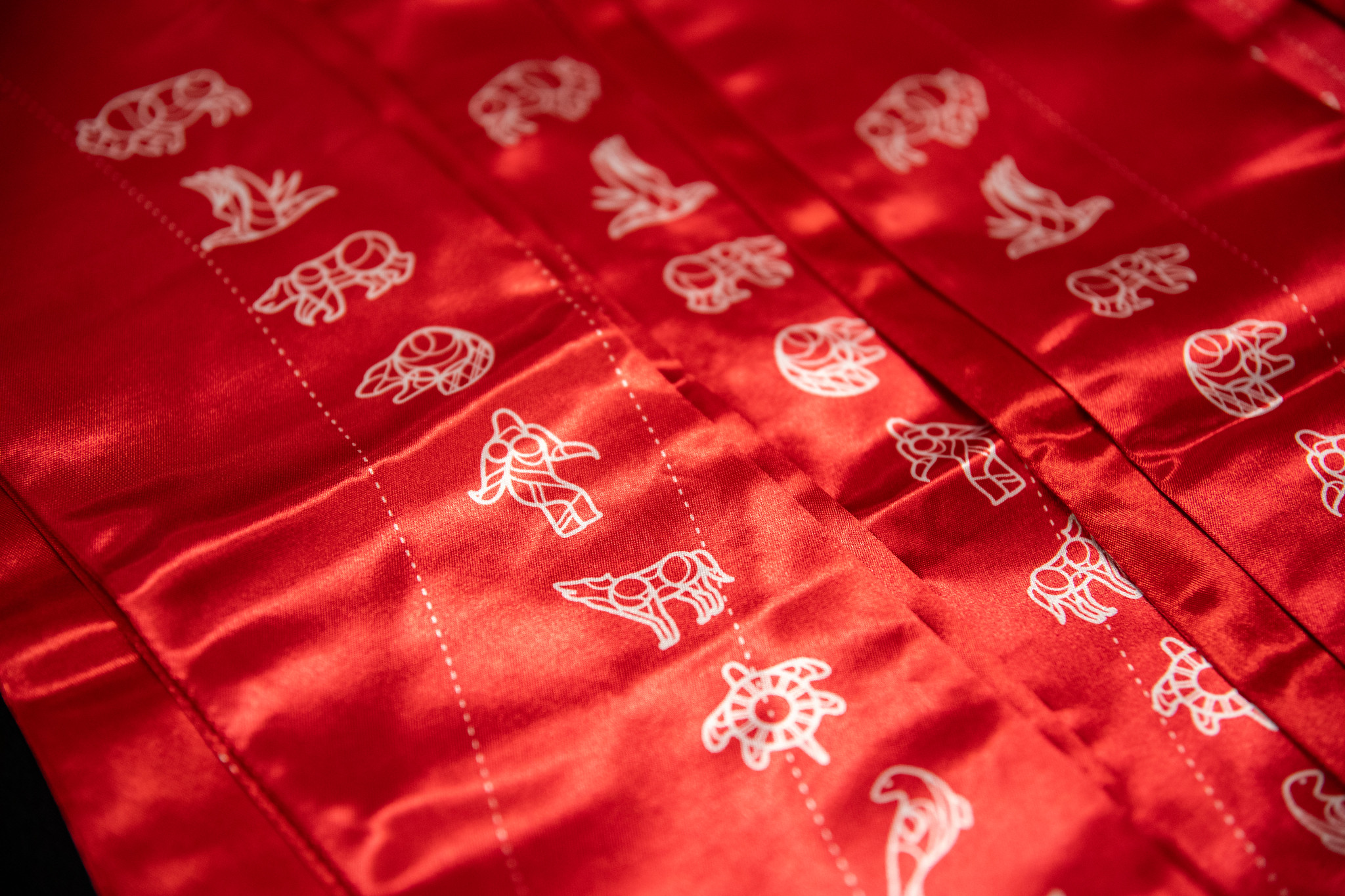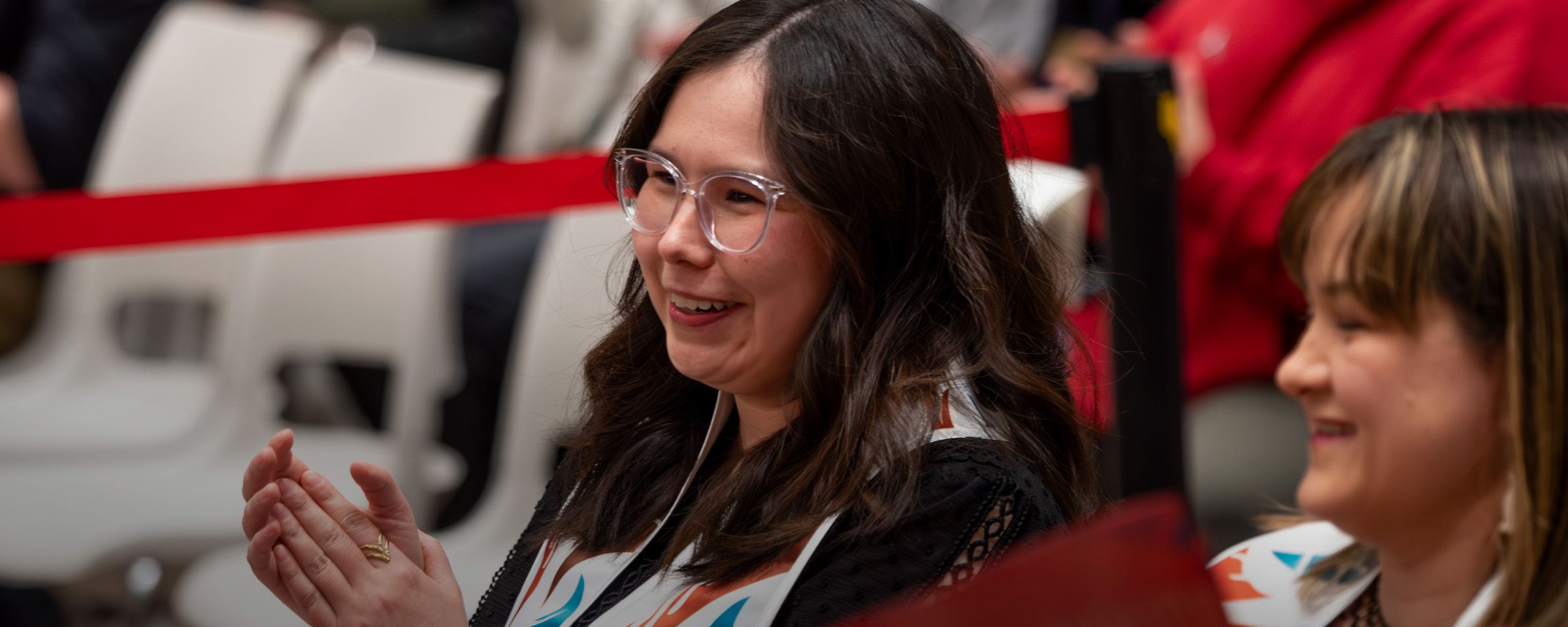
woman wearing an Indigenous Education sash

Indigenous Education

News and Announcements

Threading Connection: How Beadwork Becomes Bridge 

October 6, 2025

A reflection on “We Are All Connected” and the journey from separation to synthesis 


Connected by the river between Deshkan Ziibing and Western classrooms, 
I learned to translate myself across imposed boundaries, 
my body remembering what curriculums demanded I forget. 

Years beneath a Nordic winter light, I witnessed a partner’s spirit 
dance with her Sámi heritage, I recognized my mother’s rhythms— 
separate melodies carried on the same human breath. 

Under Oaxaca’s brilliant sun, I felt ancestral whispers 
in Zapotec ceremonies that echoed my grandmother’s teachings, 
revealing a resonation within my soul: 
Indigeneity flows beneath the categories 
colonial knowledge requires to maintain itself. 

Now, returning to Red River’s evolving halls, I witness 
how far we’ve come—Indigenous buildings open to all, 
diverse programs flourishing under one institutional sky. 
Yet still I see us gathered in familiar circles, 
celebrating culture while dwelling in separate spaces— 
progress and distance coexisting under the same roof. 

This beadwork invites us to thread what was never truly separate: 
each letter, each language, each story 
forming a constellation that has always been whole, 
even when our eyes were taught not to see it. 


I’ve been thinking about translation lately—not just between languages, but between worlds. How do we carry meaning across the boundaries that history has drawn between us? 

These questions live in my body. Growing up status First Nations from Chippewas of the Thames, I received early teachings about being related to all things. Yet as I moved through five provinces over a decade, I discovered how easy it becomes to forget what you’ve always known. The further I traveled from home, the more I translated myself into languages that had no words for the wholeness I once understood. 

The Awakening That Changes Everything 

Two winters ago in Oaxaca, privilege revealed itself through scarcity. I’d gone seeking Indigenous culture that was celebrated rather than hidden—and found it pulsing through Zapotec ceremonies and daily life. But when our water ran out and we received a refill in 24 hours while local families waited 40 days, I finally understood. Every drop I consumed came from somewhere, from someone. Every resource that seemed infinite to me was desperately finite for others. 

That awakening followed me home to Manitoba, transforming how I understood the water flowing from Shoal Lake 40 First Nation, the electricity powered by Treaty territory resources. The question became: how do we move from recognition to genuine reciprocity? This question lived in me as I developed “We Are All Connected”—how could we create opportunities for others to experience this shift from knowing about connection to feeling it in their bones, not through scarcity and crisis, but through collective creation? 

Beadwork as Knowledge System 

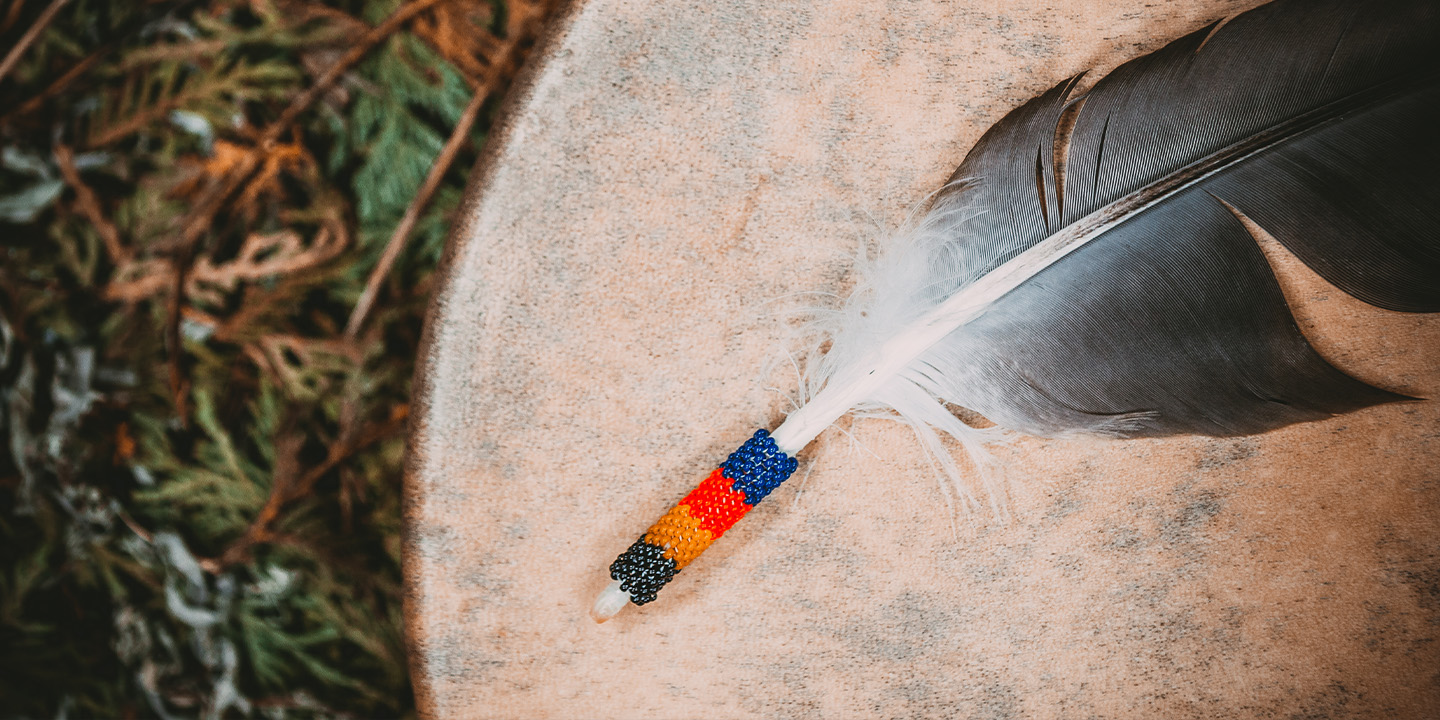
When I discovered that Indigenous scholars describe beadwork as “knowledge mobilization and translation,” something clicked. The Anishinaabemowin word for beading, manidoominens, contains manidoo (spirit) at its root. Every bead becomes prayer, every pattern becomes teaching. 

This isn’t uniquely Indigenous—from Sámi duodji to West African kente, humans have always encoded meaning through material creation. The act of creating together builds relationships that transcend verbal communication. Our hands remember what our minds might forget. 

The Initiative as Living Practice 

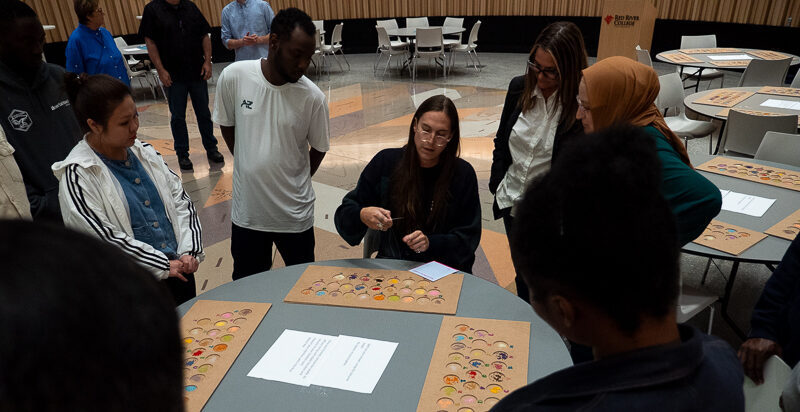
“We Are All Connected” emerges from this understanding. Throughout the academic year at RRC Polytech, anyone can pick up a card featuring one of seven reflective questions based on the Seven Grandfather Teachings. They write their response in any language—Tagalog, Punjabi, Mandarin, Ojibwe, English. Later, at beading stations across campus, they translate their words into colored beads, each letter assigned its own hue. These individual contributions join together in a growing installation that physically manifests our interconnection. 

This embodies what Mi’kmaq Elder Albert Marshall calls Two-Eyed Seeing—”learning to see from one eye with the strengths of Indigenous knowledges and from the other eye with the strengths of Western knowledges.” We’re creating space where both can coexist without hierarchy. 

When someone writes “respect” in English or “ᑭᔅᑌᔨᐦᑕᒧᐏᐣ” (kisteyihtamowin) in Cree, they’re recognizing that every language carries its own understanding of universal concepts. Transforming these words into beads, they participate in Indigenous methodology that understands knowledge as something we create through relationship, not consume in isolation. 

Nobody is teaching about reconciliation here—we’re practicing it. When diverse backgrounds contribute their truths to a shared creation, when those contributions are valued equally regardless of language, when the process honors Indigenous methodology while welcoming all participants—that’s the difference between performance and transformation. 

What Changes When We Thread Connection 

For years, I saw being “the hyphen between worlds” as burden—always translating, never fully belonging. But through this initiative, I’m discovering that those of us who live between worlds carry special gifts. We know what it feels like when connection breaks. We understand viscerally what’s lost when we forget our relations. 

When participants engage, something shifts. A student from India might write about respect through touching elders’ feet, while someone from Norway describes it through personal space. Both truths matter. The beading itself becomes meditation, ceremony, prayer—whatever the participant needs. You can’t bead someone else’s truth; you must sit with your own. You can’t rush the process; relationship takes time. 

Creating Tomorrow’s Memory 

By year’s end, our installation will contain hundreds of contributions in dozens of languages. But the physical artifact isn’t the point. Transformation happens in the moments when someone realizes their grandmother’s teaching echoes across cultures, when they see their mother tongue valued equally, when they understand that reconciliation isn’t about helping “others” but recognizing ourselves in each other. 

This installation will grow beyond this year, potentially adding new sections annually. Imagine entering RRC Polytech in five years and seeing layers of connection, generations of truth-telling woven together. 

If you’re reading this and feeling something stir, know that this is the beginning of remembering. We all carry ancestral knowledge of connection, even buried under generations of separation. “We Are All Connected” isn’t teaching this truth—it’s creating space to remember and practice it. When you pick up that card, select those beads, you’re not participating in someone else’s culture. You’re reclaiming your birthright as a human being: the right to connection, to creativity, to contribution. 

The river connecting my childhood territory to Western classrooms flows through all of us. Your grandmother’s wisdom—whatever tradition she carried—points toward the same truth: we are related to everything and everyone, and this relationship requires our conscious participation. 

So come. Bring your language, your questions, your uncertainties. Bring your grandmother’s teachings and your children’s dreams. There’s a place for all of it in this weaving. 

Because underneath the categories colonial knowledge requires, beneath the boundaries we’ve been taught to maintain, flows something that’s always been whole. We just need to thread it back into visibility, one bead, one truth, one connection at a time. 

We are all connected. We always have been. Now we’re making it visible. 


How to Join the Weaving 

  • Keep an eye on student and staff news for beading station locations and times as they move across campuses throughout the year 
  • Pick up intention cards at any beading station (take as many as you wish—there’s no limit on contributions) 
  • Write your response to any of the Seven Grandfather Teaching questions in whatever language speaks to you 
  • Return to a beading station to translate your own words into beads—you can bead your entire answer or choose certain words and phrases to emphasize—this personal act of creation is part of the practice 
  • Your completed beadwork and card will be added to our growing collective installation 

If you have any questions, contact Craig Fisher cfisher34@rrc.ca.

Truth and Reconciliation and Community Engagement Week 2025

September 16, 2025

September 22 – 26

Join us for RRC Polytech’s 7th annual Truth and Reconciliation and Community Engagement Week.

This week-long series of events invites all students, staff, and faculty to gather, learn, and reflect as we prepare for the National Day for Truth and Reconciliation (Orange Shirt Day) on September 30.

From keynote speakers and sharing circles to workshops, cultural teachings, and conversations with Knowledge Keepers, each session offers an opportunity to deepen understanding, spark dialogue, and bring Truth and Reconciliation into classrooms, workplaces, and beyond.

Everyone is welcome, no registration required (unless noted).

Learn, heal, and connect — together we can create meaningful change.

Check out and subscribe to the Truth and Reconciliation and Community Engagement blog for the full list of events!

MMF Citizenship and Harvester Card sign-up sessions

September 12, 2025

Join us at RRC Polytech for MMF Citizenship and Harvester Card sign-up sessions!

The Manitoba Métis Federation will be on campus September 23 at Notre Dame Campus (West Lot) and September 25 at Exchange District Campus (Atrium) from 10 a.m. – 3 p.m. All students can apply free of charge, while staff will need to bring $10 cash for a Citizenship card and $10 for a Harvester card.

Bring these items to your appointment:

  • Completed MMF Application Form
  • Genealogy documentation (or supporting relative documents)
  • Long-form birth or baptismal certificate
  • Government-issued ID
  • Passport-quality photo (can be taken on-site for free)
  • Payment (if applicable)

This is your chance to complete your application in person and get help from MMF representatives. Don’t miss it! Subscribe to the Truth and Reconciliation and Community Engagement blog for more opportunities like this!

Creating Pathways for Care in Community

September 9, 2025

Roseau River Anishinabe First Nation pursues initiative with RRC Polytech that will change healthcare education delivery across the province

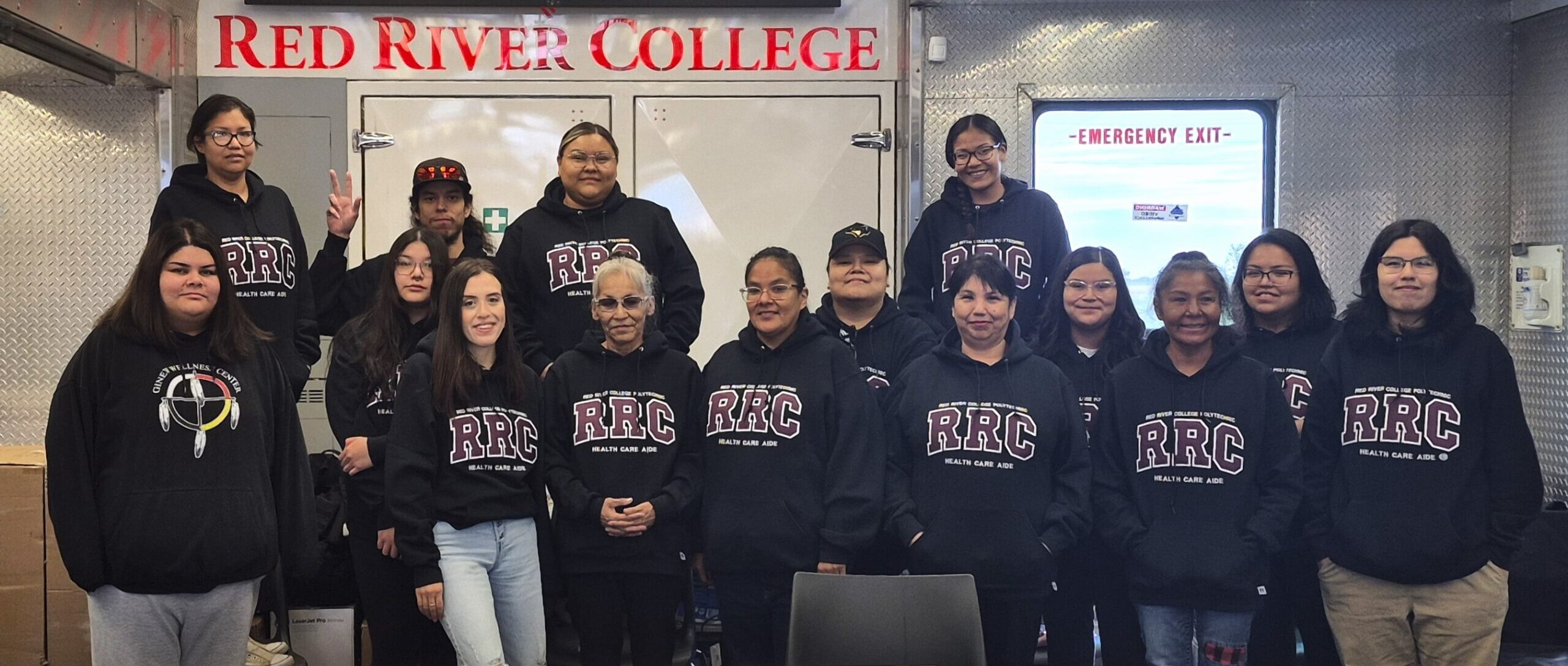
On August 22, a transformative initiative rolled into Roseau River Anishinabe First Nation and the first cohort of students stepped into a classroom-on-wheels. Their first day of Health Care Aide training in Roseau River marked a trailblazing opportunity for healthcare education delivery in the province – a program born from months of collaboration, vision, and dedication.

“I genuinely look forward to coming to class and learning something new every – it’s definitely a great opportunity that everyone should take advantage of. This program is the first of its kind, and we get to be part of history in the making,” said Stacey Patrick, Health Care Aide student.

Read the full story on the MarComm blog.

Fall Equinox 2025

September 8, 2025

Join us to celebrate!

As summer turns to fall, the days and nights balance in harmony, reminding us of the cycles of change and renewal. The Fall Equinox is a time to gather in community, reflect on the season’s gifts, and prepare for the months ahead.

RRC Polytech invites students, staff, and community members to join us in honouring this transition with a Pipe Ceremony led by the Elders-in-Residence, followed by a Feast.

Friday, September 19, 2025
10am – Pipe Ceremony
12pm – Feast

Roundhouse Auditorium, Manitou a bi Bii daziigae
Exchange District Campus

This gathering is open to all. Please remember to bring your Feast Bag as we come together in respect, gratitude, and celebration of the season. No registration is required. If you have any questions, please contact Sara McIvor-Prouty, Manager, Indigenous Student Supports and Community Relations smcivor@rrc.ca.

Status Card ID Clinic for Indigenous Students

September 3, 2025

Indigenous students at RRC Polytech are invited to attend a Status Card ID Clinic, hosted in partnership with the Southern Chiefs’ Organization. This event is an opportunity to apply for or renew your Status Card with support available to guide you through the process.

  • Date: Wednesday, September 17
  • Time: 11:00 a.m. – 2:00 p.m.
  • Location: Indigenous Support Centre (F209)

Appointments are encouraged to ensure you have the correct documentation, but drop-ins will also be accepted.

To book an appointment and confirm the type of ID required for your application, contact
Haley Pratt, Navigation Coach at hpratt2@rrc.ca

Join the R-Crew: Volunteer Opportunity for Indigenous Students

September 3, 2025

Are you a First Nations, Métis or Inuit student at RRC Polytech?

Here’s your chance to build leadership skills, connect with peers and staff, and support Indigenous student events — all while earning a $1,000 bursary.

The R-Crew is a team of student volunteers who bring energy, ideas, and heart to Indigenous-focused programming at RRC Polytech. No experience is needed — just your enthusiasm and willingness to get involved in a fun, welcoming environment.

Why Join the R-Crew?

  • Gain valuable leadership and teamwork experience
  • Build your resume with meaningful volunteer hours
  • Meet new people and strengthen connections within the college community
  • Earn a $1,000 bursary by completing 100 volunteer hours

How to Apply

  1. Submit a cover letter explaining why you’d be a great fit
  2. Include your resume (first-time resumes are welcome)
  3. Complete a short interview with our team

Deadline: Thursday, September 19 at 4:00 PM
Notre Dame Submission: Brittany Ross, Navigation Coach — bross4@rrc.ca
Exchange District Submission: Charmaine Mousseau, Navigation Coach — cmousseau2@rrc.ca

Whether you’re looking to get more involved in campus life, grow your skills, or meet new friends, the R-Crew is a great place to start. Don’t miss out — apply today.

Land-Based Professional Development Experience – August 6–8

July 16, 2025

Join Elder Paul and SIE staff for a three-day land-based learning opportunity grounded in Indigenous Teachings and Ceremony.

This experience is open to all RRC Polytech staff and offers a meaningful way to connect with community, culture, and land-based practices.

You can choose to attend one day or all three – whatever works best for your schedule. Space is limited, so early registration is encouraged.

  • Wednesday, August 6 – Trip to Sagkeeng to gather materials for the Sweat Lodge (bring your own lunch)
  • Thursday, August 7 – Sweat Lodge construction at the Medicine Wheel Garden (bring your own lunch)
  • Friday, August 8 – Sweat Lodge Ceremony at the Medicine Wheel Garden (refreshments provided afterward)

Carpooling will be arranged. If you prefer to travel on your own, a Travel and Business form must be approved. Please register before Tuesday, July 29!

Job Listing: Navigation Coach – School of Indigenous Education (Term Position)

July 3, 2025

RRC Polytech’s School of Indigenous Education is hiring a Navigation Coach to help guide and support Indigenous learners through their academic journeys.

This full-time term position runs from August 14, 2025 to April 30, 2030, and is based at the Notre Dame Campus in Winnipeg.

Navigation Coaches are first points of contact for new and returning students and they play a vital role in helping learners transition into college life, which includes:

  • Supporting students through recruitment, application, and orientation
  • Connecting learners to resources, services, and cultural supports
  • Collaborating with Elders, faculty, and Indigenous communities
  • Coordinating events and maintaining student records

To support reconciliation and equity in hiring, this position is designated for Indigenous candidates only. If you self-identify as First Nations, Métis, or Inuit, we encourage you to apply.

Indigenous applicants are welcome to reach out to our Indigenous Recruitment Consultant at Indigenoustalent@rrc.ca for assistance with the application process.

Application deadline: July 16, 2025
Requisition number: 00513

This role requires strong communication, organizational, and cultural knowledge, as well as experience supporting Indigenous students.

Internal applicants can visit the HRIS portal to apply. External applicants can visit our Recruitment Site for more information.

Navigation Coach, School of Indigenous EducationDownload

Mitakuye Oyasin Okciyape – All My Relations Helping Each Other

June 24, 2025

MITAH-koo-ya OYA-shin OAK-ah-pee

Mitakuye Oyasin Okciyape is the name for the large open space you walk into in Manitou a bi Bii daziigae. In Dakota, the name means All My Relations Helping Each Other.

On Friday, June 20, RRC Polytech marked an important moment in its journey of reconciliation and relationship-building. We gathered to honour the first anniversary of Mitakuye Oyasin Okciyape being gifted to the large open space at 319 Elgin Ave. in Manitou a bi Bii daziigae.

This ceremony was more than a celebration – it was a transfer of sacred responsibility. Kunshi Ivy, who had been holding and caring for the name, entrusted it to RRC Polytech by passing it into the care of four selected leaders. Each of them now carries the responsibility to honour the spirit of the name, uphold Dakota Ceremonial Protocols, and ensure the space continues to reflect the values of connection, respect, and shared responsibility.

This is the first time RRC Polytech has received a Dakota name, and it represents an act of trust from the Dakota Nation. Mitakuye Oyasin Okciyape is more than just a name on a door; it’s a prayer. It’s a reminder that we are all connected – to each other, to the land, to the past, and to the future. And now, it’s also a living commitment we carry forward together.

To read more about Mitakuye Oyasin Okciyape, check out the MarComm blog.

RRC Polytech campuses are located on the lands of the Anishinaabeg, Ininiwak, Anishininwak, Dakota Oyate, and Denésuline, and the National Homeland of the Red River Métis.

We recognize and honour Treaty 3 Territory Shoal Lake 40 First Nation, the source of Winnipeg’s clean drinking water. In addition, we acknowledge Treaty Territories which provide us with access to electricity we use in both our personal and professional lives.