Three flags flying on flag poles

Truth and Reconciliation and Community Engagement

News

Our Roadmap Forward on CJOB – Overcoming Barriers

July 10, 2026

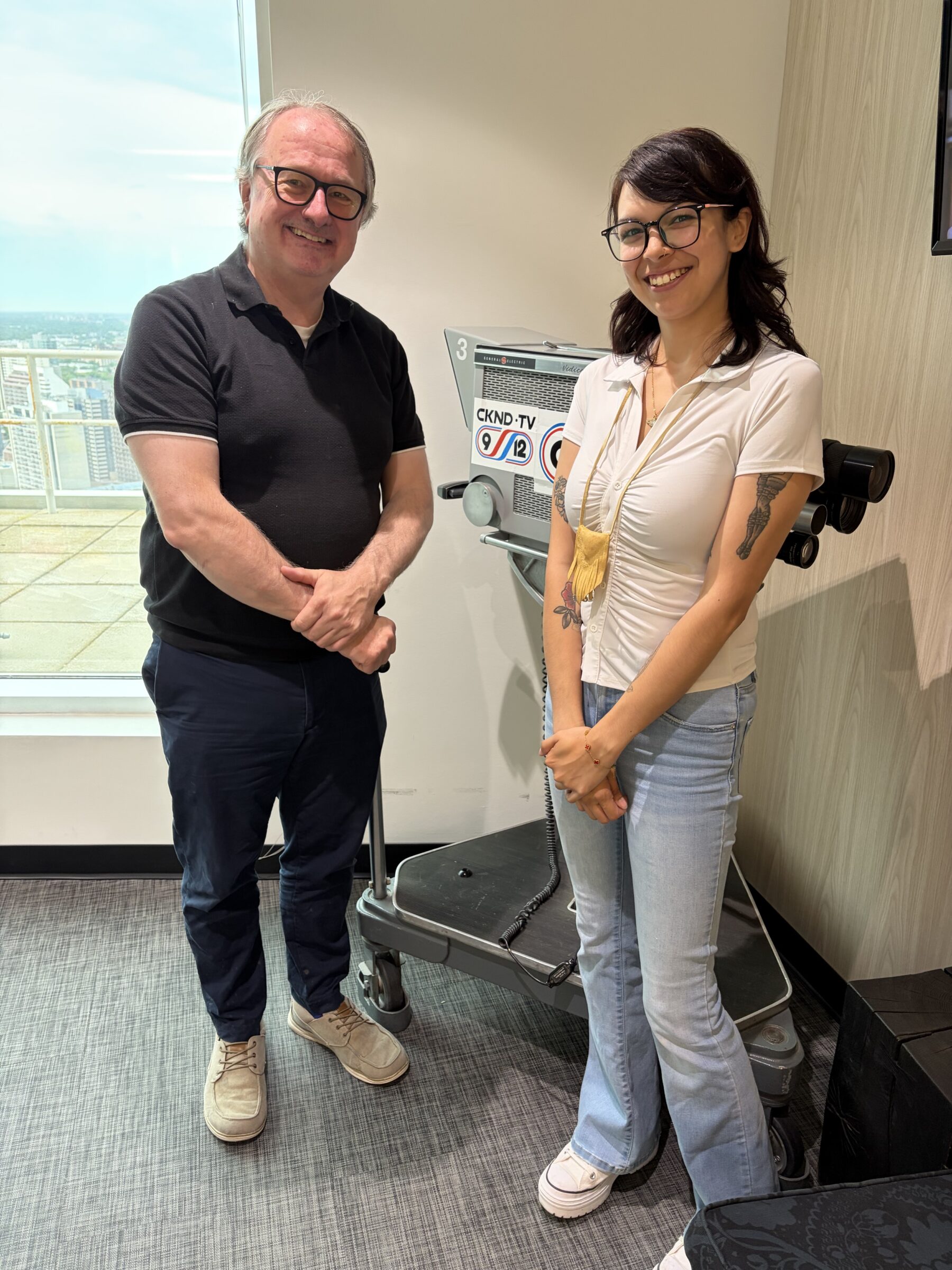
Jamie Wilson, VP, Indigenous Strategy, Research and Business Development, went on CJOB to talk about the release of Our Roadmap Forward Report as part of Overcoming Barriers for Indigenous Students Project along with alumni Joey Laquette, Plumbing, and Hevyn-Lee Martens, Social Innovation and Community Development. Joey and Hevyn-Lee shared their college experiences on-air and discussed the community they found at RRC Polytech.

Launching Our Roadmap Forward – Ensuring the Success of Indigenous Students to Address Systemic Barriers

June 24, 2026

Our Roadmap Forward – Ensuring the Success of Indigenous Students focuses on addressing systemic barriers and improving outcomes for Indigenous learners at RRC Polytech. The report builds on the Overcoming Barriers for Indigenous Students project, launched in 2022, and reflects extensive community-guided research, conversations, and data analysis. This work identified 73 root factors influencing the success of First Nations, Inuit, and Métis students, highlighting the need for coordinated, system-wide change.

The report is organized around five priority areas – essential life needs, funding and enrolment, academic readiness, student experience, and institutional culture – and outlines both current and future actions.

Indigenous Staff Spotlights – Brikena Dibra

June 17, 2026

The Indigenous Staff Spotlights celebrate the voices, experiences, and career journeys of Indigenous faculty and staff at RRC Polytech.

Each story is an opportunity to recognize the success and contributions of our Indigenous colleagues while sharing their reflections and advice. By showcasing these diverse career pathways, the Spotlights highlight Indigenous excellence within our community and inspire colleagues, students, and future members of RRC Polytech to envision their own possibilities.

Brikena (Bri) Dibra

Job Title: Indigenous health and wellness instructor
Department/Team: Nursing
Preferred Pronouns: she/her
Nation: First Nations status

1. What inspired you to join RRC Polytech?

One of the biggest inspirations for joining RRC Polytech comes from my grandparents and the sacrifices they made for our family. Both of my grandparents attended residential school and experienced significant hardship and trauma. Despite everything they endured, they worked tirelessly to ensure that our family was cared for and had opportunities they never had. They carried the weight of their own pain while continuing to love, support, and provide for future generations.

Growing up, my family was impacted by intergenerational trauma, and life was not always easy. My grandparents adopted me and raised me with love, strength, and traditional teachings. They taught me the importance of perseverance, kindness, and caring for others. In our family, looking after one another is a responsibility and a gift. From a young age, I helped care for my younger brother and cousins, and those experiences taught me how to nurture, support, and advocate for others. Those lessons ultimately inspired me to pursue nursing.

I joined RRC Polytech because I wanted to make a difference for Indigenous peoples and communities. I wanted to show other Indigenous students that we belong in these spaces, that we are capable of achieving our goals, and that our voices, cultures, and knowledge are valuable. Through education, I hope to honour my grandparents’ resilience and continue the work of supporting Indigenous health, wellness, and future generations. Their strength and teachings remind me everyday that no matter what challenges we face, we can keep moving forward and create positive change for our communities.

2. What has been most rewarding about your work?

One of the most rewarding parts of my work has been teaching students to challenge stereotypes and avoid making judgments about Indigenous peoples. I encourage students to look inward and critically examine their own values, assumptions, and biases rather than simply accepting what they have heard or witnessed. Through reflection, dialogue, and evidence-informed learning, students begin to understand that many assumptions about Indigenous peoples are rooted in misinformation, colonialism, and systemic racism.

I am particularly passionate about teaching anti-racism frameworks, such as the CPR RACISM framework (Holly Graham, 2024), which provide students with practical tools to recognize and respond to racism in healthcare settings. I want future nurses to have the courage to speak up when they witness discrimination and to advocate for patients who may be vulnerable. Cases such as Brian Sinclair remind us of the devastating consequences that can occur when racism and assumptions go unchallenged within healthcare systems.

What I find most meaningful is seeing students develop the humility to question their own perspectives and recognize that there are often multiple truths and experiences within the same story. Watching students grow in their understanding of cultural safety, empathy, and advocacy gives me hope for the future of healthcare. Knowing that these future nurses may help prevent harm, improve patient experiences, and provide more equitable care is one of the greatest rewards of my work.

3. What supports, resources, or relationships have been most meaningful in helping you succeed in your role?

The supports and relationships that have been most meaningful in helping me succeed in my role have been the people around me, particularly my chairs and my Indigenous colleagues. Their guidance, encouragement, and belief in the importance of Indigenous education have helped me navigate challenges and continue growing as an educator.

My Indigenous colleagues within both the nursing department and Indigenous Student Support Services have been especially important. They understand the unique responsibilities that come with Indigenous education and advocacy, and they have provided mentorship, collaboration, and a sense of community. Their support has reminded me that I am not doing this work alone and that we are all working toward the shared goal of creating a more culturally safe and inclusive learning environment for students.

These relationships have also been a source of motivation. Seeing the dedication of my colleagues to supporting Indigenous students and advancing reconciliation inspires me to continue this work, even when it is difficult. Their knowledge, lived experiences, and commitment to Indigenous success have helped shape my own teaching and leadership practices. Together, we continue to create spaces where Indigenous students feel seen, supported, and empowered to succeed.

4. What advice would you share with new Indigenous staff starting their careers here?

My advice to new Indigenous staff is to be proud of who you are and the knowledge, experiences, and strengths you bring with you. Build relationships with colleagues and mentors who support you, and do not be afraid to ask for help when you need it. Remember that your voice matters, your perspective is valuable, and your presence helps create positive change for future Indigenous students and communities. Most importantly, take care of yourself and celebrate the impact you are making, even when the work feels challenging.

5. What Indigenous book, podcast, artist, business, or initiative would you recommend to others?

I would recommend exploring the scholarly work of Indigenous scholars who are advancing Indigenous health, cultural safety, and anti-racism in meaningful ways. One resource I often recommend is the work of Holly Graham and colleagues on the CPR RACISM framework, which provides practical guidance for recognizing and responding to racism in healthcare and educational settings. Indigenous-led scholarship helps us better understand the impacts of colonialism while offering pathways toward reconciliation and culturally safe practice.

For something more lighthearted and entertaining, I recommend watching the TV show Acting Good. Filmed in and around Brokenhead Ojibway Nation, the series showcases Indigenous humour, community, and contemporary Indigenous life in a way that is both funny and relatable. It is a great example of Indigenous storytelling and representation in Canadian media.


If you are interested in sharing your story, please complete the online form here: Indigenous Staff Spotlights Submission Form

For questions or support, contact Indigenoustalent@rrc.ca.

We look forward to celebrating your journeys!

Leading People and Investing to Build Sustainable Communities with Thomasena Downes-Mitchell

May 25, 2026

Thomasena Downes-Mitchell, Manager, Indigenous Student Recruitment, shares her experience at Harvard University.

I had the honour to attend Harvard University from May 4th, 2026, to May 8th, 2026, to attend their Executive Education program called “Leading People and Investing to Build Sustainable Communities.” Harvard University has a partnership with AFOA which allows Indigenous people from around the world to attend Harvard’s campus to learn from one of the best universities on Turtle Island.  

It was a transformative experience where I was able to collaborate and connect with 88 Indigenous thought leaders from Canada, the United States of America, Australia and New Zealand. Classrooms can be equalizers, what I mean by that is that it didn’t matter what job titles we had, whether we worked in recruitment or if we were running our Nations at home or abroad, everyone was humble, kind, engaged, and ready to learn.  

What kinds of things did you learn that surprised you? 

How down to earth everyone was including Harvard professors and personnel. The professors had a fantastic sense of humor, and one of them was born and raised in Winnipeg, Manitoba, and grew up in Fort Richmond. I asked him how he ended up going from Winnipeg to Harvard, I asked him if he took a wrong turn, and we had a good chuckle.  

There could have been egos the size of Mount Everest, but it was the complete opposite. I can honestly say that it felt more like a warm embrace. In a time when lateral violence and intergenerational trauma dominate the news, politics and sometimes our workspaces, attending Harvard University was the antithesis of that; it was intergenerational excellence. An Indigenous gentleman wore a shirt that said, “I am my Ancestors wildest dream” and I second that, as we all are – regardless of color.  

I learned that it costs 6 billion dollars to run Harvard University each year. 2.5 billion comes from their endowment, which is a little bit less than what tuition contributes. I learned that the person who manages Harvard’s endowment earns 10x’s more than Harvard’s President on a bad day. Staggering amounts of money. Also, graduating with a university degree from Harvard increases your chances by 50% to be hired by the top 1% employers in the USA.  

I witnessed Maori people greeting our Professor David Ager by pressing their noses and foreheads together. It’s called the hongi. It symbolizes the sharing of the ha (breath of life) and unity between two people, effectively connecting the manuhiri (visitor) with the tangata whenua (people of the land). 

What is your key takeaway? 

Believe in yourself. Despite any self-doubt, or nay-sayers, or even sometimes when life gets us down. Even with that in front of us, we need to progress and move forward. Be the champion of your own success. We only get one chance in life, so it’s important to make the best of it. Never in a million years did I think I would attend Harvard University but through the work of our Indigenous relatives, these opportunities are available to us. Seize the opportunity and walk with your head high even in prestigious Ivy League rooms as we all have a voice and something to share.  

Anything. Is. Possible.  

Our. Voices. Matter.  

You. Matter.

Indigenous Staff Spotlights – Thomasena Downes-Mitchell

April 15, 2026

The Indigenous Staff Spotlights celebrate the voices, experiences, and career journeys of Indigenous faculty and staff at RRC Polytech.

Each story is an opportunity to recognize the success and contributions of our Indigenous colleagues while sharing their reflections and advice. By showcasing these diverse career pathways, the Spotlights highlight Indigenous excellence within our community and inspire colleagues, students, and future members of RRC Polytech to envision their own possibilities.

Thomasena Downes-Mitchell

Job Title: Manager Indigenous Student Recruitment
Department/Team: Student Supports
Preferred Pronouns: Any
Nation: First Nation from Ditibineya-Ziibiing (Rolling River First Nation)

1. What inspired you to join RRC Polytech?

I am a RRC Polytech alum. In 2014, I graduated from the Business Administration diploma program. I really enjoyed the robustness of the program and interacting with the diversity of my classmates and the wider student body. It was an enriching experience that gave me the confidence to pursue advanced
studies.

2. What has been most rewarding about your work?

Assisting Indigenous learners to realize their dreams on their own terms. Expanding horizons, nurturing potential, engaging with rightsholders, stakeholders, Nations and community members to answer questions and connect them with internal supports. Be a conduit to success.

3. What supports, resources, or relationships have been most meaningful in helping you succeed in your role?

My Director Laureen Janzen of Student Support Services and the management team have been instrumental in succeeding in my role. I feel at times people disregard the significance of allyship and the only way we are going to grow and learn is if we do it together. For me this is not optional but a requirement and RRC Polytech is an example of an academic institution that supports its words with action.

4. What advice would you share with new Indigenous staff starting their careers here?

You can bring your whole self to work. Be respectful, remember the teachings of our Ancestors, work hard and RRC Polytech will be here to support your learning and growth along the way. Also, do not be afraid to try, pursue your dreams unapologetically. Bet on yourself because you ARE your Ancestors wildest dreams. Walk in that knowledge, comfort and care.

5. What Indigenous book, podcast, artist, business, or initiative would you recommend to others?

Be Unapologetically You – Adeline Bird.

6. Do you have a favorite quote?

“While it may be true that morality cannot be legislated, behavior can be regulated. It may be true that law cannot change the heart but it can restrain the heartless.” – Dr. Martin Luther King Jr.

“After the famine there’s a feast.” – Victor Palmer.

“Challenge what the future holds.” – Des’ree.

“Be individuals.” – Tupac Shakur.


If you are interested in sharing your story, please complete the online form here: Indigenous Staff Spotlights Submission Form

For questions or support, contact Indigenoustalent@rrc.ca.

We look forward to celebrating your journeys!

Indigenous Staff Spotlights – Terri-Lynn Anderson

March 13, 2026

The Indigenous Staff Spotlights celebrate the voices, experiences, and career journeys of Indigenous faculty and staff at RRC Polytech.

Each story is an opportunity to recognize the success and contributions of our Indigenous colleagues while sharing their reflections and advice. By showcasing these diverse career pathways, the Spotlights highlight Indigenous excellence within our community and inspire colleagues, students, and future members of RRC Polytech to envision their own possibilities.

Terri-Lynn Anderson

Job Title: Chair, Professional Studies and Micro-Credentials
Department/Team: School of Continuing Education
Preferred Pronouns: She/her/hers
Nation: First Nation (Mother’s side – Fisher River Cree Nation) and Red River Métis (Father’s side)

1. What inspired you to join RRC Polytech?

When I worked at the Louis Riel Institute Adult Learning Centre, I would often bring my students to the Open House at RRC Polytech and loved the atmosphere. I knew that this was somewhere I wanted to work, to help support students be successful.

2. What has been most rewarding about your work?

Meeting students where they are at, walking alongside them on their journey to pursue post-secondary credentials, and supporting and advocating for them while empowering them to advocate for themselves.

3. What supports, resources, or relationships have been most meaningful in helping you succeed in your role?

Connecting with Elder Paul, Knowledge Keeper Richard, Grandmother Janice, and Marilyn Dykstra has been instrumental in my healing journey as an Indigenous woman with lived experience. This healing has enabled me to show up fully for students, who are the reason we are all here. It is important that we do everything we can to support them on their journeys. Over the last four years that I have been at the Polytech, many colleagues have helped shape me into the person I am today. I am deeply grateful for every experience, both good and challenging, as each has taught me valuable lessons and contributed to the knowledge I carry today.

4. What advice would you share with new Indigenous staff starting their careers here?

Find your community. Build connections and seize the many opportunities we are given to participate in land-based learning and ceremony. Sit with the Elders-in-Residence. They share so much wisdom and knowledge that can help you, and the students you support.

5. What Indigenous book, podcast, artist, business, or initiative would you recommend to others?

Night Spirits – The Story of the Relocation of the Sayisi Dene By Ila Bussidor and Ustun Bilgen-Reinart

6. Do you have a favorite quote?

“Peace and love”


If you are interested in sharing your story, please complete the online form here: Indigenous Staff Spotlights Submission Form

For questions or support, contact Indigenoustalent@rrc.ca.

We look forward to celebrating your journeys!

Job Listing: Program Manager, Indigenous Strategic Research and Community Partnerships

January 13, 2026

RRC Polytech is hiring a Program Manager, Indigenous Strategic Research and Community Partnerships, a full-time, permanent leadership role for Indigenous professionals who want to advance community-led research and innovation.

This position offers a competitive salary and the opportunity to lead Indigenous research strategy across the College with a base at the Notre Dame Campus. The role focuses on building ethical, trust-based partnerships with Indigenous communities and supporting Indigenous-led and co-led applied research guided by OCAP® principles, UNDRIP, and Indigenous data sovereignty.

The Program Manager leads the development of research projects and funding proposals in areas such as food innovation and sovereignty, energy and cleantech, housing and infrastructure, digital inclusion, education, manufacturing, and Indigenous entrepreneurship and economic development. The role also connects communities to institutional resources, supports decolonizing research practices, and helps ensure research delivers meaningful educational and economic benefits to communities.

This opportunity is open to Indigenous applicants (First Nations, Métis, or Inuit) through a designated hiring practice. A graduate degree is not required; lived experience, strong community relationships, and experience building research partnerships are highly valued. Career support is available for Indigenous applicants throughout the hiring process.

Application deadline: January 29, 2026
Requisition number: 00654

Internal applicants can visit the HRIS portal to apply. External applicants can visit our Recruitment Site for more information.

Job Listing: Instructor, A Context for Practice with Indigenous Peoples

January 13, 2026

RRC Polytech is hiring an Instructor, A Context for Practice with Indigenous Peoples, a part-time, term teaching opportunity for Indigenous professionals passionate about education, community knowledge, and student learning.

This role is based at the Portage la Prairie Campus, approximately 90 km from Winnipeg, and runs from January 26 to April 24, 2026. The position offers a salary pro-rated to hours worked, with an additional educational supplement available for candidates with a Master’s or PhD.

The successful candidate will deliver classroom instruction, support and evaluate students, and contribute to program activities such as student orientation, graduation, and committee work. Teaching may take place both on campus and remotely, and the role plays an important part in creating a respectful, inclusive learning environment grounded in Indigenous perspectives and lived experience.

This opportunity is open to Indigenous applicants (First Nations, Métis, or Inuit) through a designated hiring practice. A degree in Indigenous Studies is preferred, though a combination of education and relevant lived experience will be considered. Ideal candidates bring experience working with Indigenous communities, strong communication and presentation skills, and the ability to engage learners in both in-person and online settings. Experience in post-secondary instruction, curriculum development, or online learning is considered an asset.

Application deadline: January 16, 2026
Requisition number: 00656

Career support is available for Indigenous applicants throughout the hiring process.

Internal applicants can visit the HRIS portal to apply. External applicants can visit our Recruitment Site for more information.

Indigenous Staff Spotlights – Jeff Herkimer

November 14, 2025

The Indigenous Staff Spotlights celebrate the voices, experiences, and career journeys of Indigenous faculty and staff at RRC Polytech.

Each story is an opportunity to recognize the success and contributions of our Indigenous colleagues while sharing their reflections and advice. By showcasing these diverse career pathways, the Spotlights highlight Indigenous excellence within our community and inspire colleagues, students, and future members of RRC Polytech to envision their own possibilities.

Jeff Herkimer

Job Title: Instructor
Department/Team: Teacher Education
Preferred Pronouns: He/Him/His

1. What inspired you to join RRC Polytech?

As a graduate of the Industrial Arts Teacher Education Program at RRC Polytech, I’ve always felt a strong connection to the place that helped launch my teaching career. The program gave me the tools, confidence, and inspiration to do what I love, and I’ve always hoped to come back and be part of it again. It’s exciting to have the chance to contribute to a program that played such a big role in shaping my journey as an educator.

2. What has been most rewarding about your work?

I really enjoy being part of a dedicated team of educators who work hard to support and prepare future teachers for the classroom. It’s rewarding to collaborate with colleagues who share a passion for helping students grow into confident, capable educators. One of the aspects I value most is having the opportunity to introduce our students to the concept of decolonizing education. It opens important conversations about inclusivity, representation, and rethinking traditional approaches to teaching. Being able to guide students through these ideas and watch their perspectives evolve is one of the most meaningful parts of the work we do.

3. What supports, resources, or relationships have been most meaningful in helping you succeed in your role?

One of the most meaningful resources I’ve come to rely on at RRC Polytech is the incredible team within the Indigenous Education department. As a reconnecting Indigenous educator, their support has played a vital role in helping me deepen my understanding of my culture and identity. Through their services, conversations, and programming, I’ve been able to grow both personally and professionally. Their presence has not only enriched my own journey, but also helped me bring more cultural awareness and authenticity into my teaching practice.

4. What advice would you share with new Indigenous staff starting their careers here?

One piece of advice I’d offer to Indigenous educators who are new to RRC Polytech is to get involved, stay curious, and take full advantage of the incredible knowledge and support available here. Reach out to others, whether it’s fellow educators, staff, or the Indigenous Education department and don’t hesitate to ask questions or share your experiences. There’s a strong sense of community here and engaging with it can be both empowering and enriching. The journey of reconnecting with culture and identity is deeply personal, but you don’t have to walk it alone. There are so many opportunities to learn, grow, and feel supported along the way.

5. What Indigenous book, podcast, artist, business, or initiative would you recommend to others?

I make a conscious effort to support Indigenous entrepreneurs whenever I can, whether it’s through purchasing art, clothing, or other creative work. It’s important to me to uplift Indigenous voices and talent in everyday choices. One Indigenous author I always recommend is my good friend Waubgeshig Rice. His writing is powerful, thoughtful, and deeply rooted in culture and storytelling. Following his work is a great way to engage with contemporary Indigenous perspectives and narratives.

6. Do you have a favorite quote?

“Education is what got us here, and education is what will get us out.” The Honourable Murray Sinclair.


If you are interested in sharing your story, please complete the online form here: Indigenous Staff Spotlights Submission Form

For questions or support, contact Indigenoustalent@rrc.ca.

We look forward to celebrating your journeys!

Recapping the seventh annual Truth and Reconciliation and Community Engagement Week

October 15, 2025

The seventh annual Truth and Reconciliation and Community Engagement Week featured daily opportunities to learn and engage in Truth and Reconciliation education and over 200 members of the RRC Polytech community participated across all campuses. 

We would like to extend our sincerest gratitude to Phyllis Webstad for sharing her story as part of our keynote to launch Truth and Reconciliation and Community Engagement Week. Her personal story became the foundation to Orange Shirt Day (now the National Day for Truth and Reconciliation). She also founded the Orange Shirt Society, which since 2013 has brought national awareness to the lasting impacts of Residential Schools and the ongoing healing work of Survivors and their families. 

Special thanks to our presenters Allen Sutherland, Heather Endall, Zeann Manernaluk, Joanna White, Ray Coco Stevenson, Ivana Yellowback, and the Knowledge Keepers Council for offering various sessions that helped create deeper connections and understanding for the Polytech as a community. 

A huge thank you to all the members of the RRC Polytech community that organized and carried out sessions – together, we continue to walk the path of Truth and Reconciliation. 

And of course, thank you to all who volunteered and participated – your continued support in Truth and Reconciliation is an incredible reflection of our institutional values and an important reminder that we are all on this journey together. 

Students at Portage Campus participated in a session featuring Annie Beach, where together they beaded, painted Portage Rocks, and created a mural focused on active transportation that incorporated Indigenous themes. Portage Community Revitalization Corporation mascot Ajidimoo Aki – Dakota for ground squirrel – also joined in the activity. 

On Sept. 29, Culinary Skills (Indigenous) students joined N’Dinawemak and made bison stew and bannock for 450 community members as part of the Buffalo Ceremony, which honoured Residential School Survivors and their families. 

While the intent of the sessions and workshops is to provide learning opportunities and chances to engage with different perspectives, we understand that people have different responses to and interpretations of the content. Some sessions may have elicited strong emotions and we encourage everyone to continue to take good care of yourselves, check in with each other, and reach out for support if needed. 

Resources are always available, and we encourage accessing them whenever the need may arise. Students may access Counselling Services through the online intake, and employees may access Homewood Health counselling as part of the employee benefit package and free of charge. 

As we know, Truth and Reconciliation is a year-round commitment, so we invite members of the RRC Polytech community to keep an eye on Staff News for upcoming opportunities and Student News for workshop sessions to bring into the classroom. 

RRC Polytech campuses are located on the lands of the Anishinaabeg, Ininiwak, Anishininwak, Dakota Oyate, and Denésuline, and the National Homeland of the Red River Métis.

We recognize and honour Treaty 3 Territory Shoal Lake 40 First Nation, the source of Winnipeg’s clean drinking water. In addition, we acknowledge Treaty Territories which provide us with access to electricity we use in both our personal and professional lives.