Research Partnerships and Innovation

Research Partnerships & Innovation

Partnerships

RRC Polytech gearing up to co-host 2025 Heavy Vehicle and Equipment Technology Conference

August 26, 2025

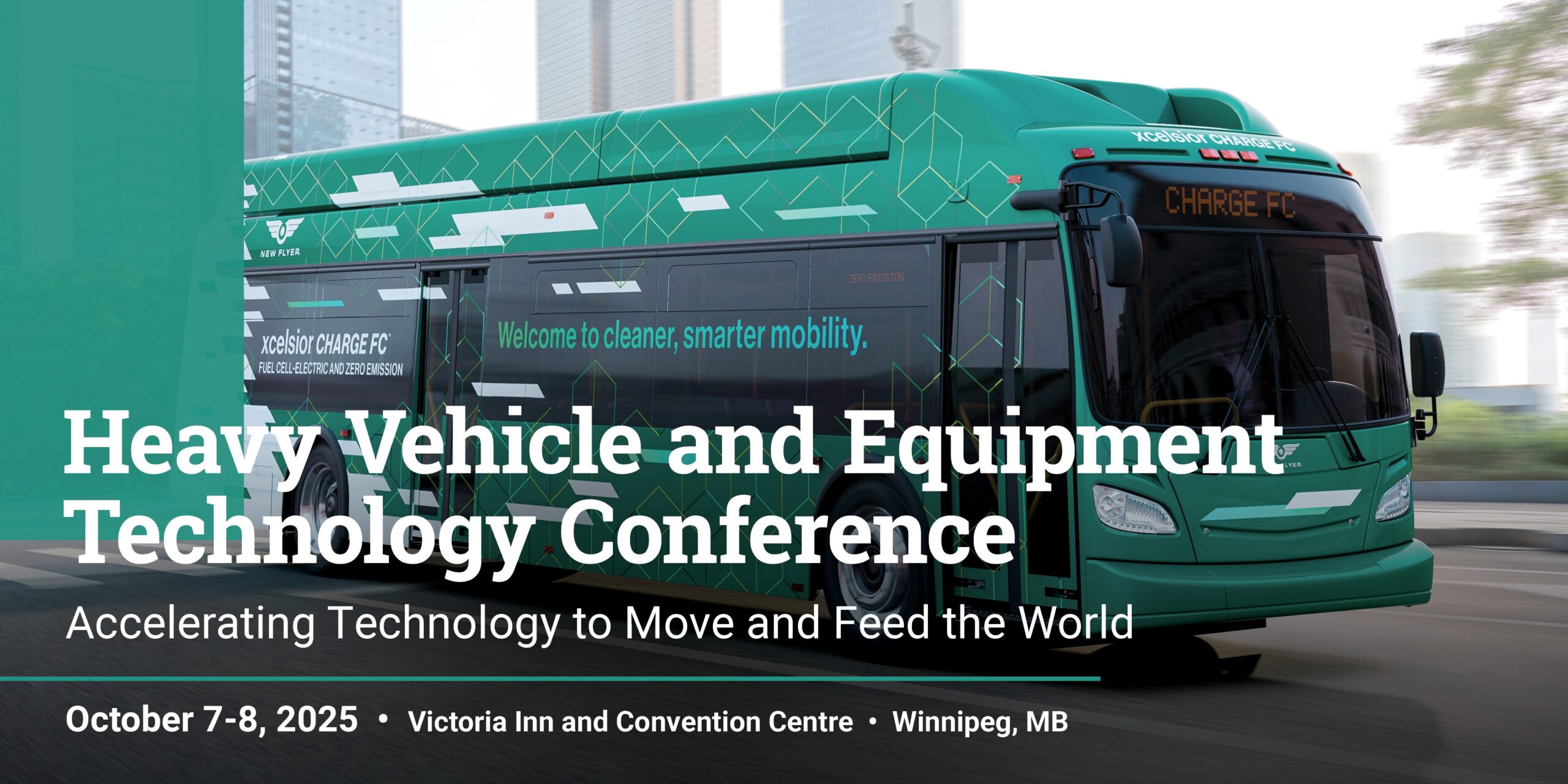
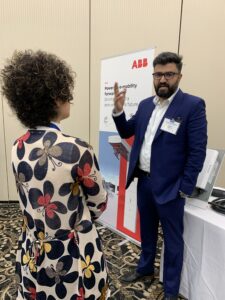
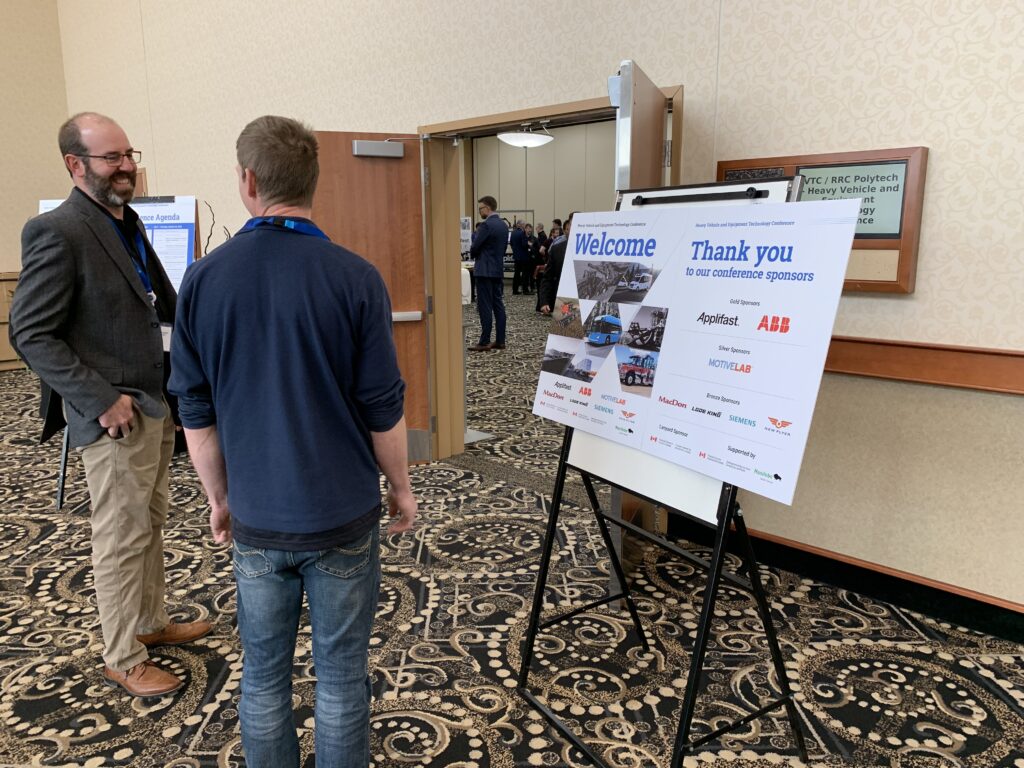
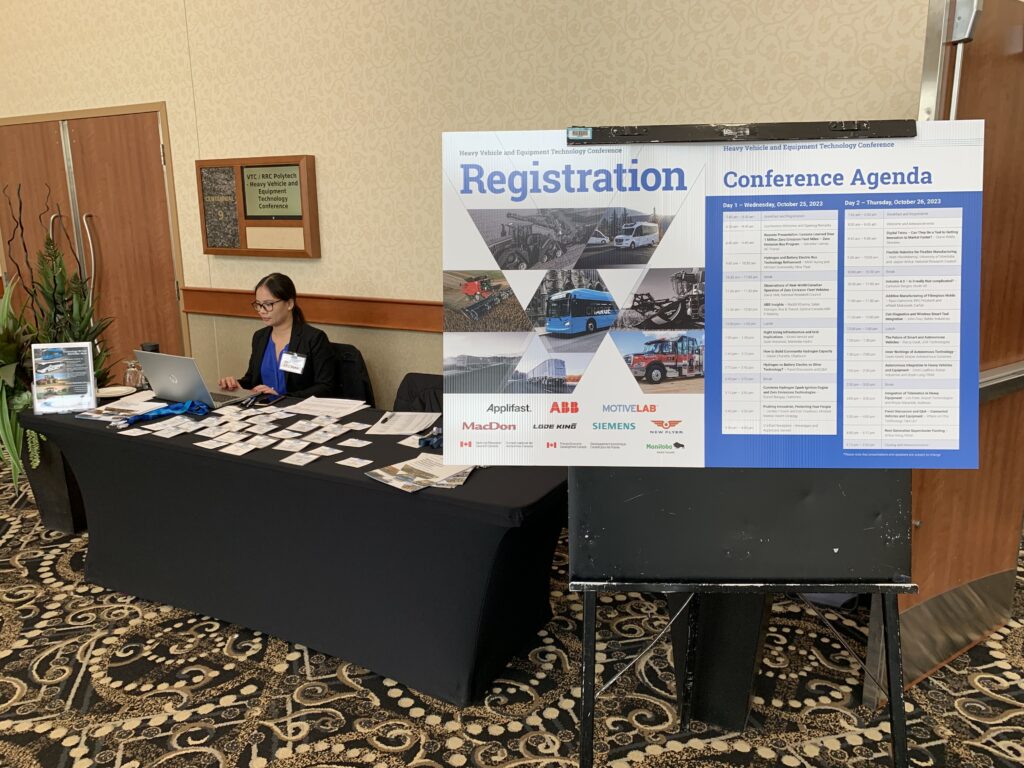
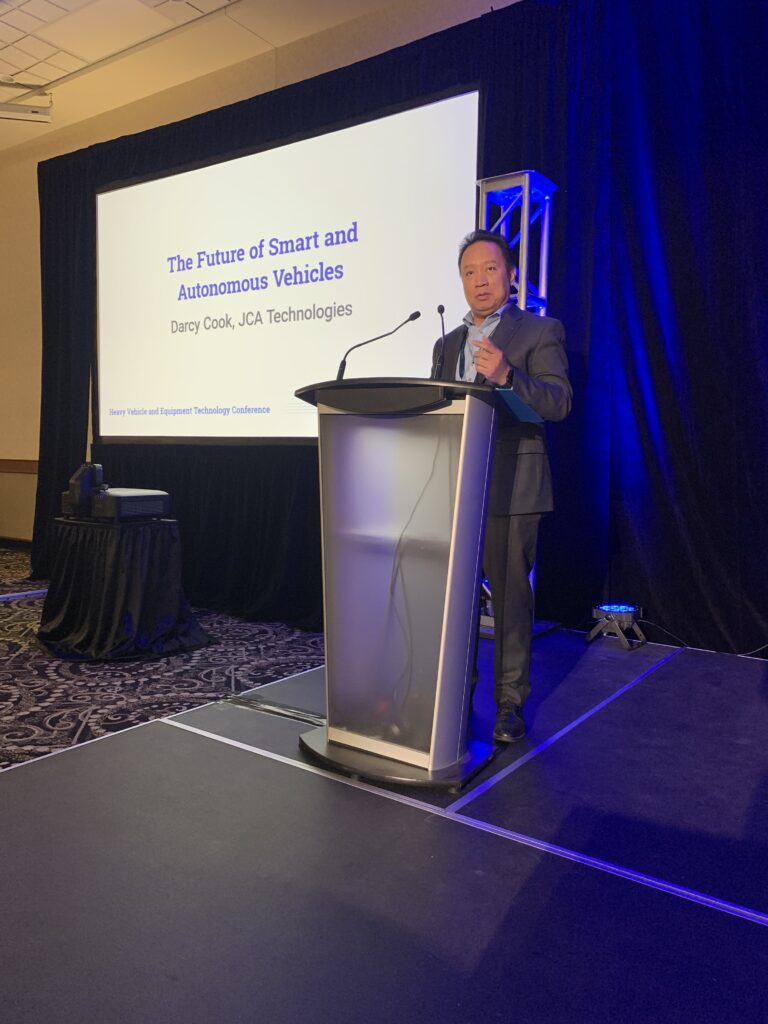
RRC Polytech and the Vehicle Technology Centre Inc. are hosting the fourth biennial Heavy Vehicle and Equipment Technology Conference in Winnipeg, Manitoba on October 7-8, 2025 at the Victoria Inn.

This 2-day event brings together the heavy equipment and vehicle manufacturing industry in Manitoba and beyond to highlight R&D work along the path to zero emissions, network with potential partners and foster collaboration. Join us to discuss how smart, connected and autonomous technologies are changing the products we build and how digital technologies are transforming low volume custom manufacturing.


The conference is oriented to engineers, practitioners, researchers, entrepreneurs and operations professionals at all stages involved with advances in vehicle technologies and practical applications. Presentations, information booths and panel discussions will feature technical information and informed conversations about:

  • alternative propulsion technologies
  • heavy-duty and specialized vehicle applications
  • simulation and testing
  • smart vehicle technologies
  • advances in heavy vehicle and manufacturing technology
  • addressing barriers for new technologies


Listen to and engage with local and international speakers presenting on a wide variety of topics including their challenges and success stories developing and adopting innovative technology. Learn about RRC’s Polytech’s vast network of applied research and practical learning facilities and expertise.
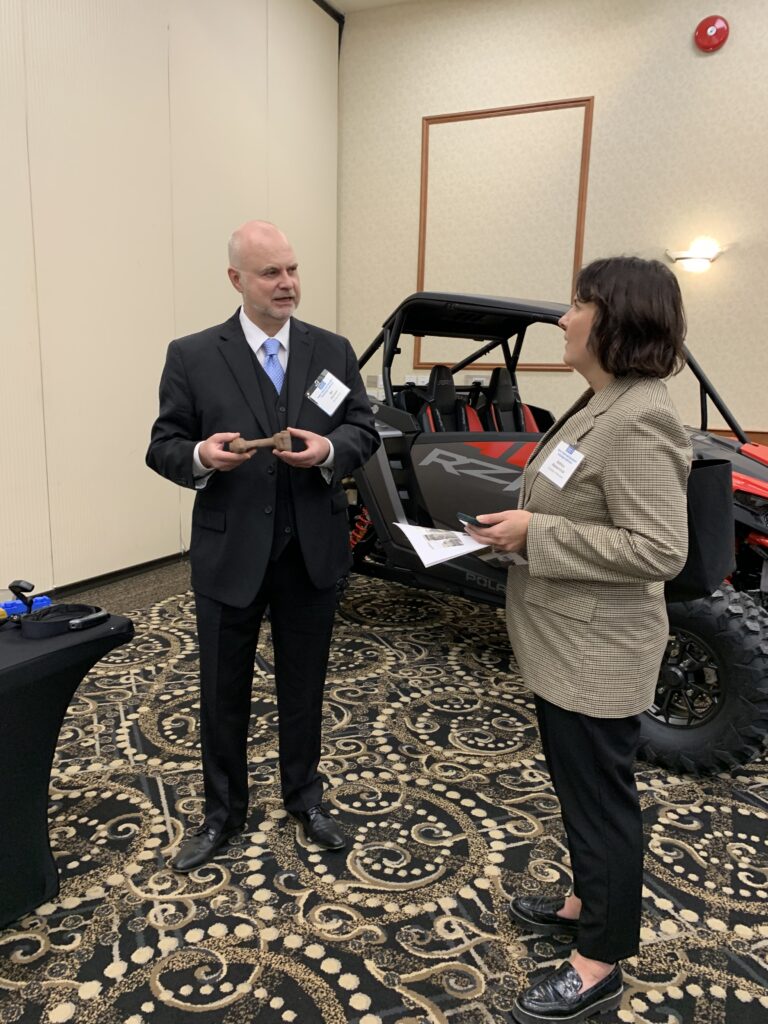
Connect with peers, partners and problem solvers to drive our industry into a greener and more prosperous tomorrow!

Early Bird Tickets Sales have been extended until Noon on September 23rd!

Click to Register TODAY

Topics and Presenting Companies for 2025:

Reducing Emissions

  • Cummins – The Future of Propulsion Technology on a Turbulent Horizon
  • ABB – The Near Future of Charging Infrastructure
  • NRC – Energy Modeling and Simulation for Off Road Truck Electrification
  • Cando Rail – Design and Prototyping of a Battery Electric Railway Locomotive
  • University of Manitoba – The Future of Wireless Vehicle Charging
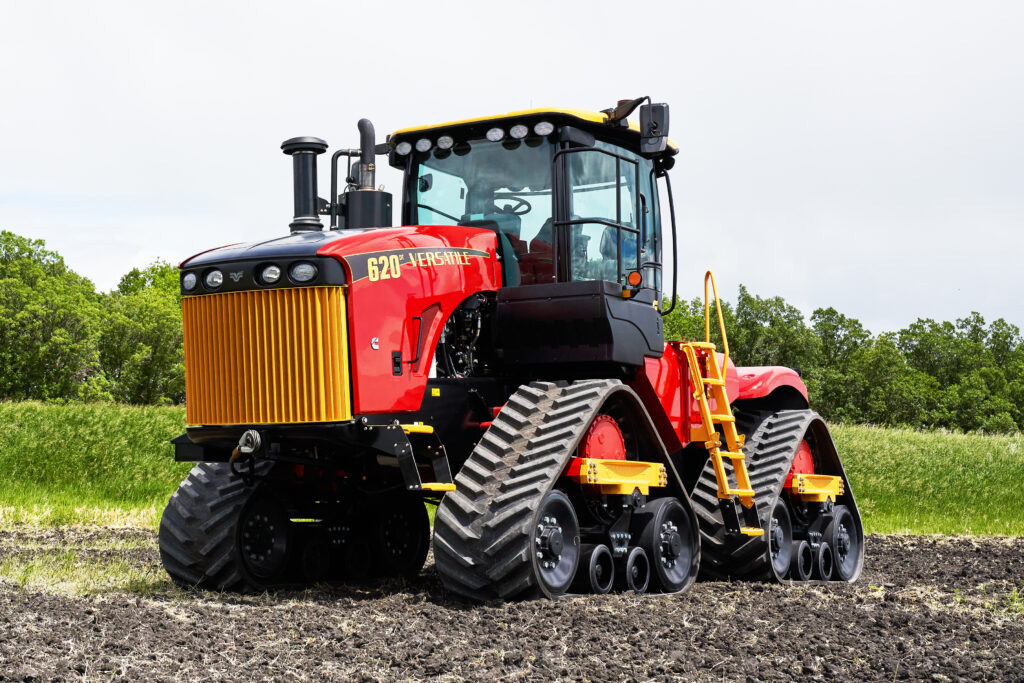
  • Versatile – Diesel Electric Parallel Drive Technology for More Power in Agriculture
  • MacDon – Path to Electrifying Agricultural Equipment
  • New Flyer – Dealing with Dissimilar Vehicle Battery Strings
  • Fort Garry Fire Trucks – Battery APU for Standby Power to Reduce Fire Truck Idling

Embracing Advanced Manufacturing

  • Mode 40 – Artificial Intelligence – Where is the Big Pay Off in Heavy Vehicle Manufacturing?
  • MacDon – The Power of Digital Twins When Undertaking Complex Assembly Automation
  • Innovair – Weld Location and Sequence Program Generation, right from your CAD Drawing
  • Sika – Full Bonded Complex Assembly Technology

Other Topics

  • Mojow Technologies – Integrating Autonomy on Existing Product
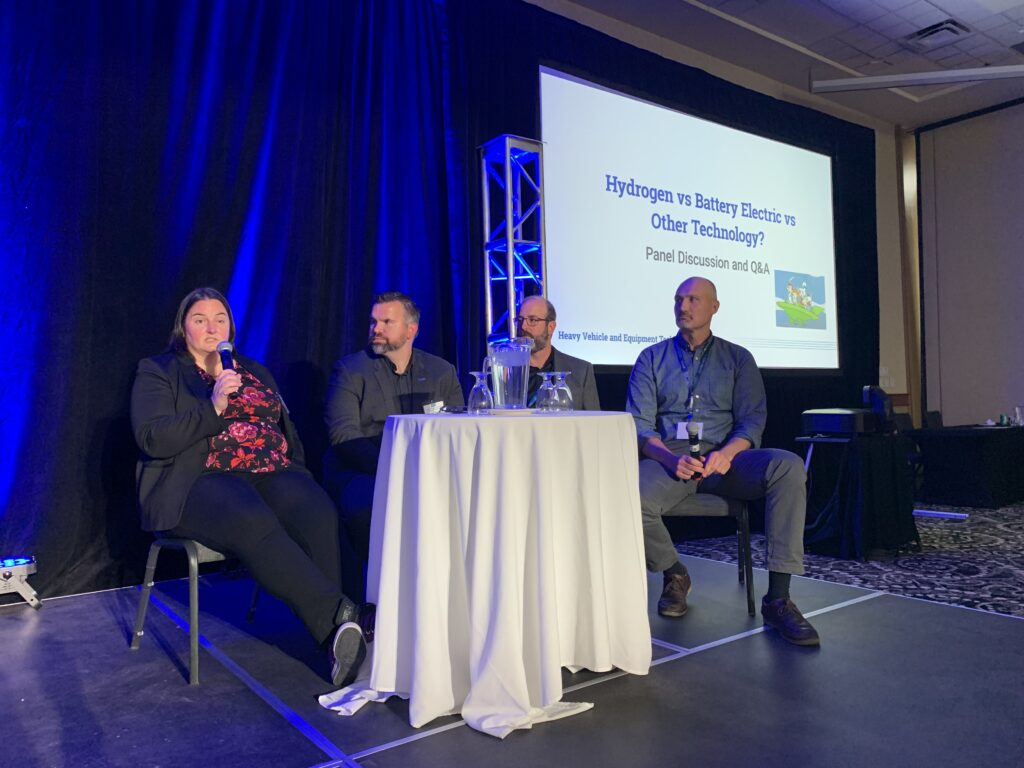
  • Panel Discussion – Understanding Our Hesitancy – Roadblocks to Adopting Industry 4.0
  • Interested in Defense Manufacturing? – Understanding the Process to Qualify

Click to access our full 2025 agenda

For more information about conference sponsorship opportunities, exhibit booths, advertising or any other questions, please email Ron Vanderwees at the VTC

RRC Polytech digs into first initiative with P2INACLE partners in Saskatoon

March 28, 2025

A new polytechnic network created last month to provide industry partners with better access to applied research expertise and facilities is already digging into how it can support the mining and minerals sector across the prairies.
Designed to drive economic growth and diversification through collaboration, the Prairie Polytechnic Innovation Network Accelerating Commercialization for Local Ecosystems or P2INACLE launched its first pilot initiative in Saskatoon in mid-March.

A team from RRC Polytech joined peers from across Western Canada at P2INACLE’S lead institution, Saskatchewan Polytechnic to meet with the International Minerals Innovation Institute (IMII) for some great discussion about the challenges that mining firms are facing and idea generation for ways to address them.

In May, P2INACLE researchers will join a larger group of mining and minerals industry professionals at IMII’s IDEATE 2025 event to connect and explore specific applied research projects that can solve problems for partners in the mining industry.

“This initiative will address key industry challenges and harness the collective expertise of polytechnics and industry partners across the Prairies, driving both economic growth and technological advancements,” said Al Shpyth, Executive Director of IMII, in last month’s PrairiesCan funding announcement. “We look forward to the impactful solutions that will arise from this collaborative effort.”

Although mining is the focus of its first initiative, P2INACLE aims to be a catalyst for wide-spread regional prosperity by providing streamlined access to resources for all industries, including small and medium-sized enterprises as well as larger businesses. By leveraging the expertise and facilities of each polytechnic, P2INACLE offers tailored solutions for commercialization and diversification, fostering innovation and knowledge exchange. Areas of expertise also include clean technologies, digital technologies, value-added agriculture and natural resources.

Manitoba-based partners and businesses are invited to reach out to RRC Polytech’s Research, Partnerships & Innovation (RPI) department to learn more about P2INACLE and how they can connect with the College’s expertise.

rpi@rrc.ca

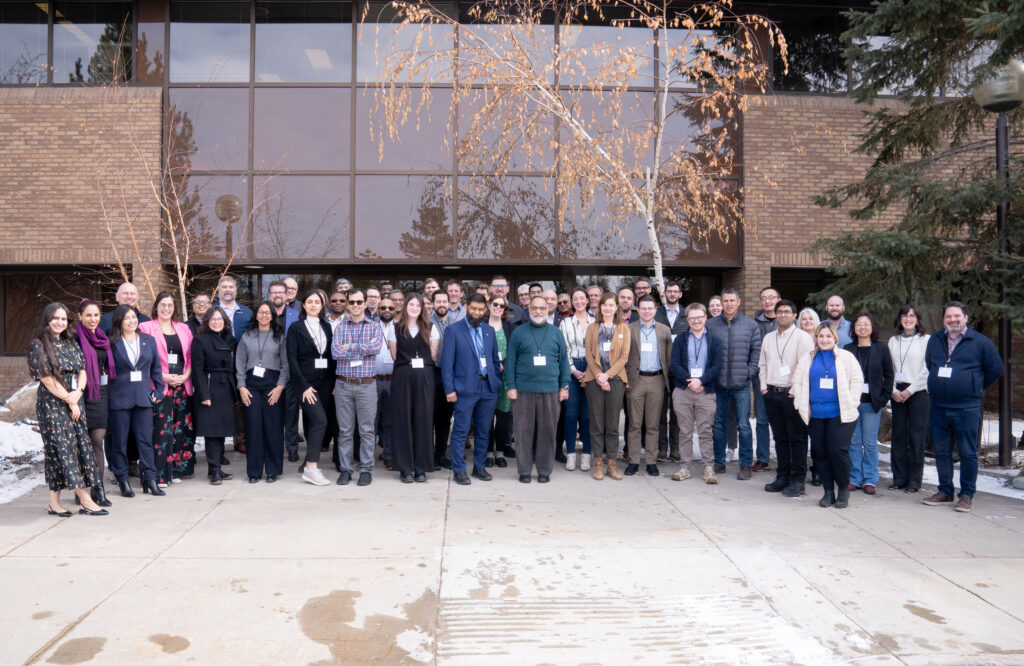
a large group of researchers standing in front of a College building

RRC Polytech’s partnership with Les Verts Living continues to produce success

January 11, 2024

Innovative hydroponic growing system now in use at the Paterson Globalfoods Institute (PGI) promotes sustainability and offers solutions to offset rising grocery costs

Les Verts Living originally partnered with RRC Polytech to help develop a prototype of its innovative soil-free and pesticide-free hydroponic growing system called the Terrace Pro – taking advantage of the resources and expertise available at the College’s Technology Access Centre for Aerospace and Manufacturing (TACAM), Prairie Research Kitchen (PRK), and Building Efficiency Technology Access Centre (BETAC).  

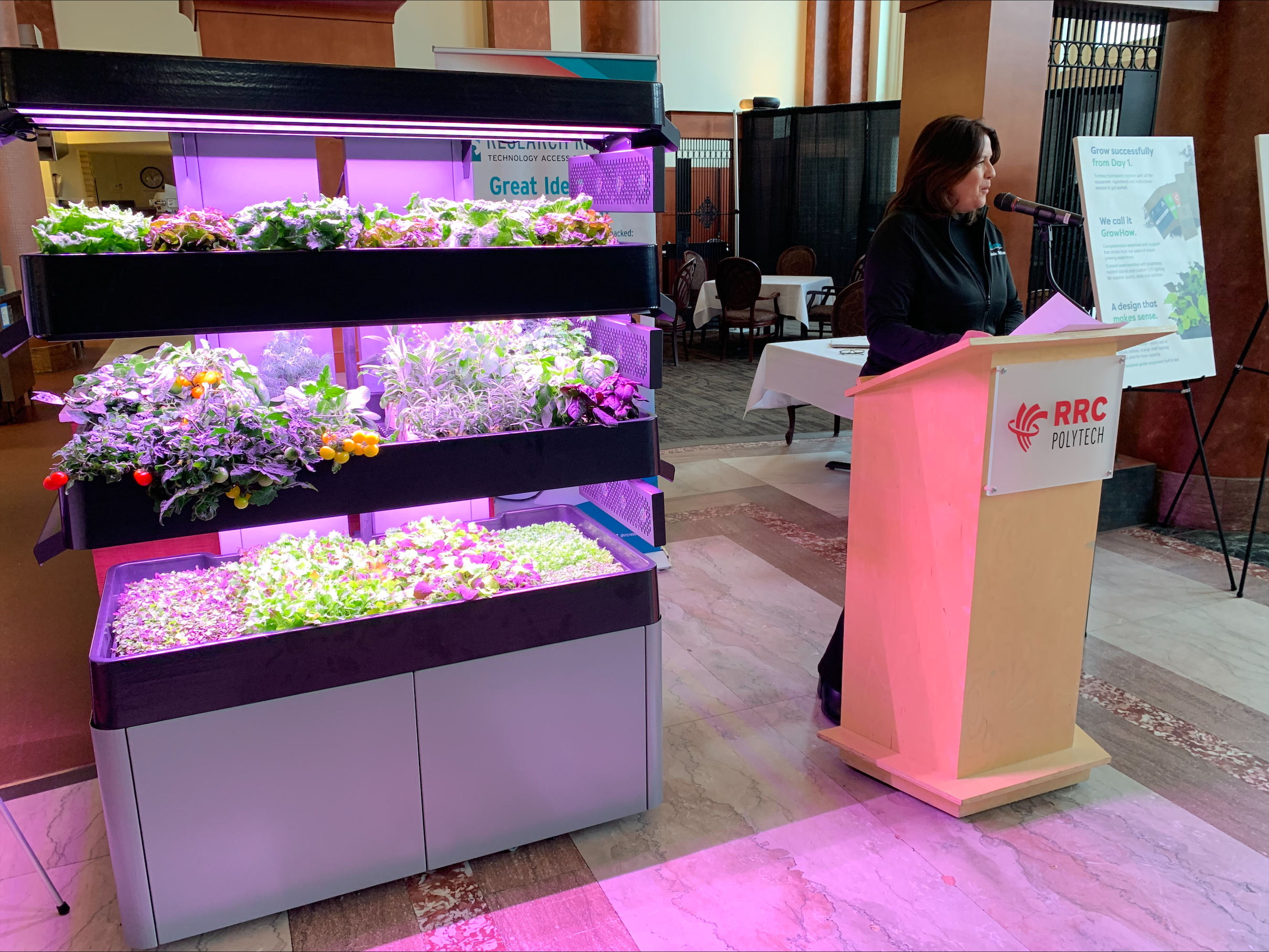
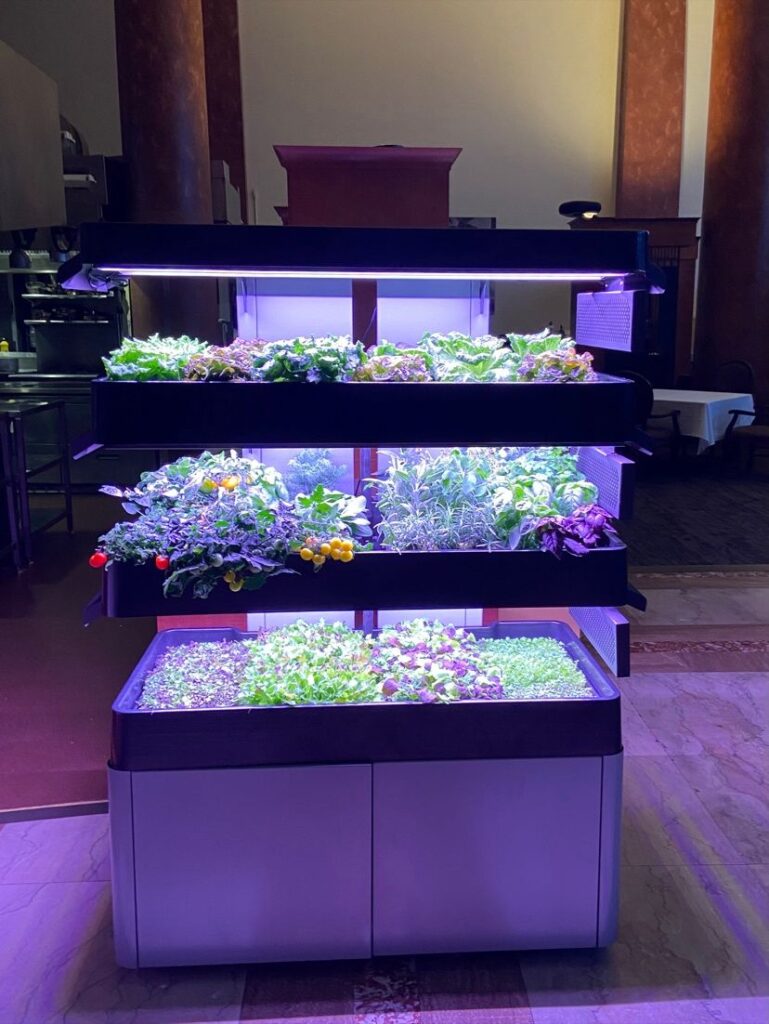
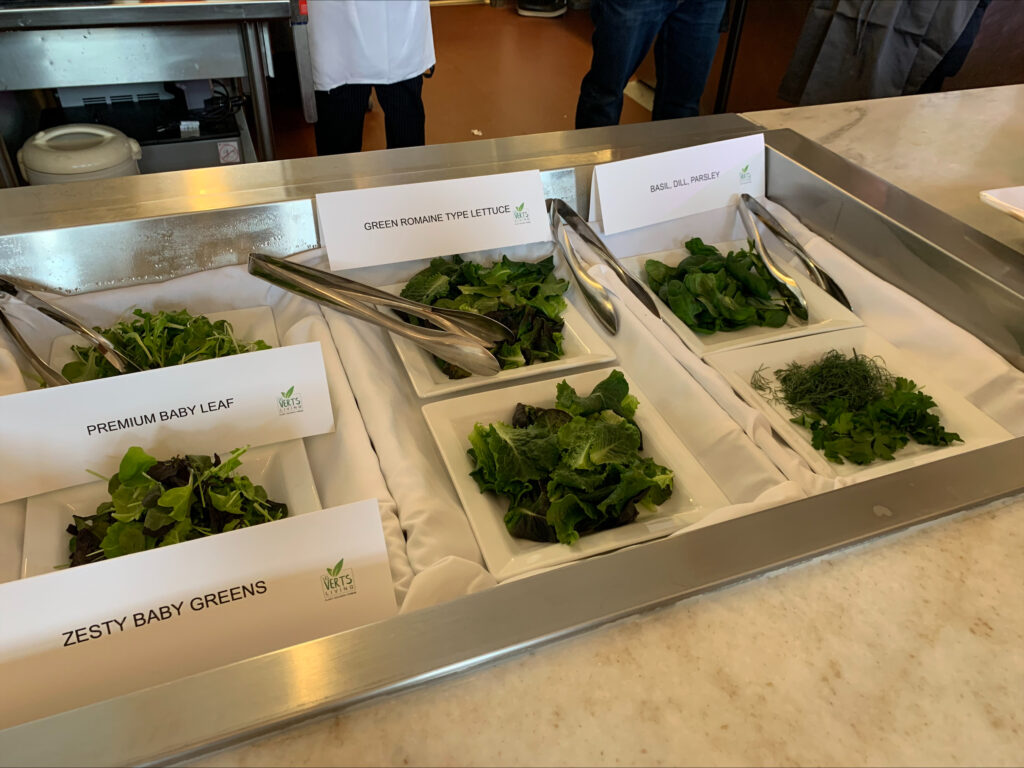
Now with its final product on the market, Les Verts Living is extending the partnership by sharing one of its Terrace Pro units with RRC Polytech to support Culinary Arts students with access to fresh, gourmet produce while they pursue their education. Housing the unit at the Paterson Globalfoods Institute (PGI) will also allow the PRK team to continue researching how to optimize its performance in a commercial setting while developing recipes that highlight the delicious living lettuce, fragrant herbs and hyper-nutritious microgreens and baby greens produced in the Terrace Pro.

“Through our technology, facilities and expertise, the College is uniquely positioned to bring these types of project ideas to life for our industry partners while training the workforce of tomorrow,” said Fred Meier, President and CEO of RRC Polytech. “This project demonstrates the power of partnership and the value of applied research in propelling our province’s economy forward.”

Learn more about the project

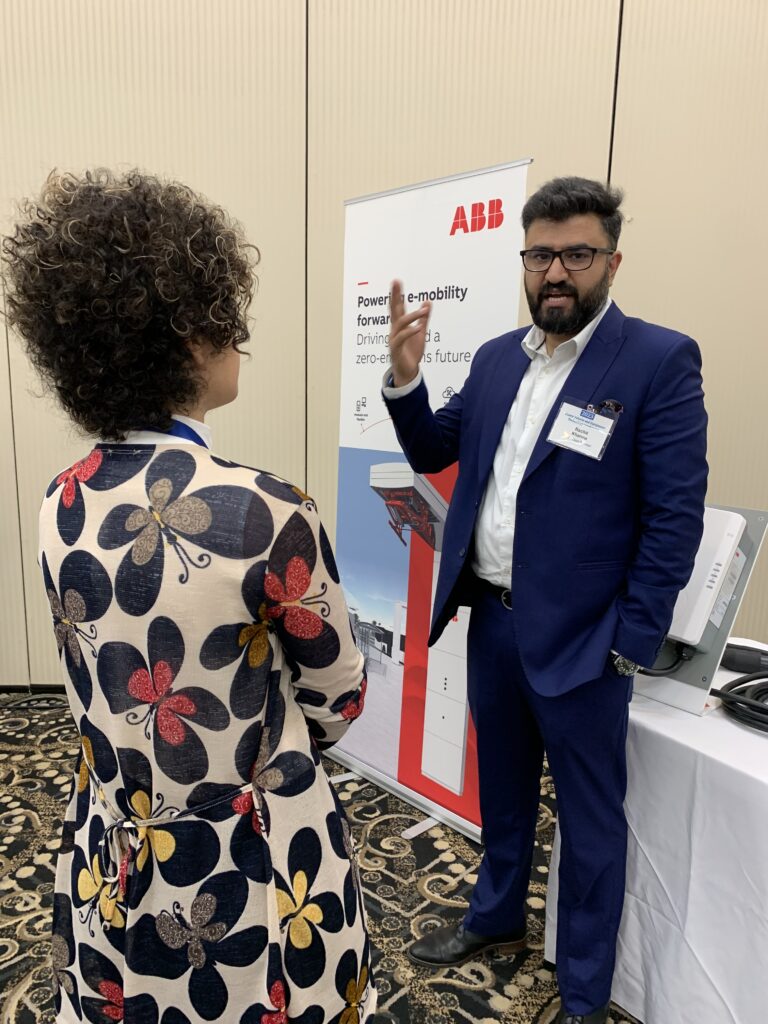
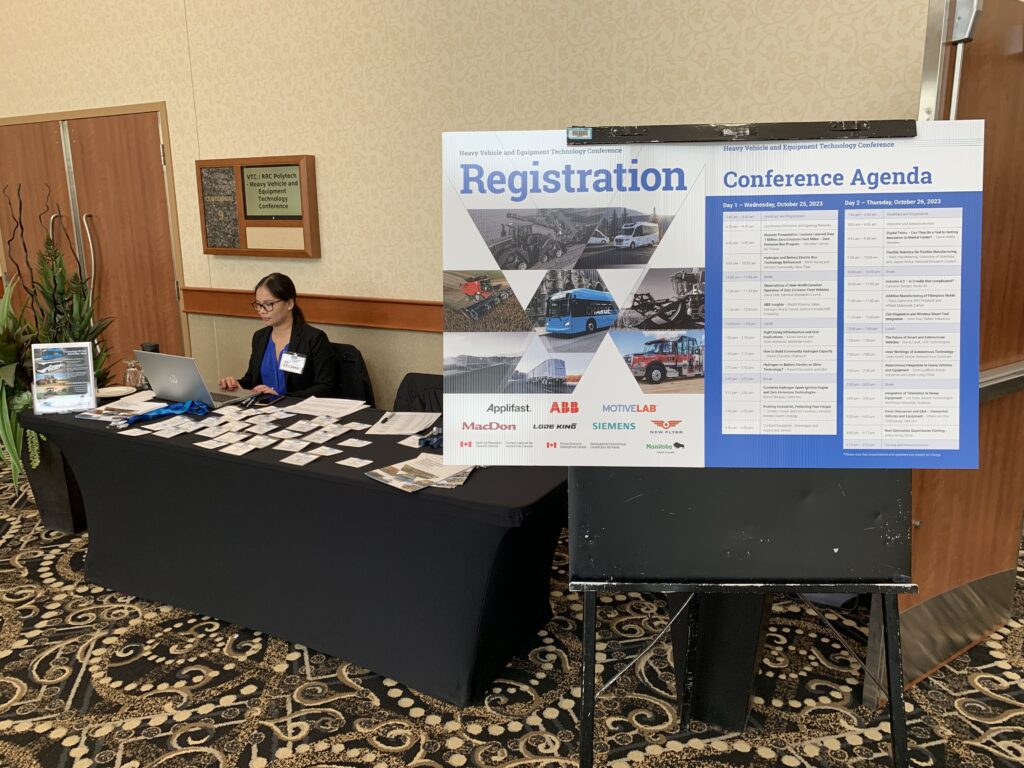
RRC Polytech helps drive innovation at the Heavy Vehicle and Equipment Technology Conference

November 1, 2023

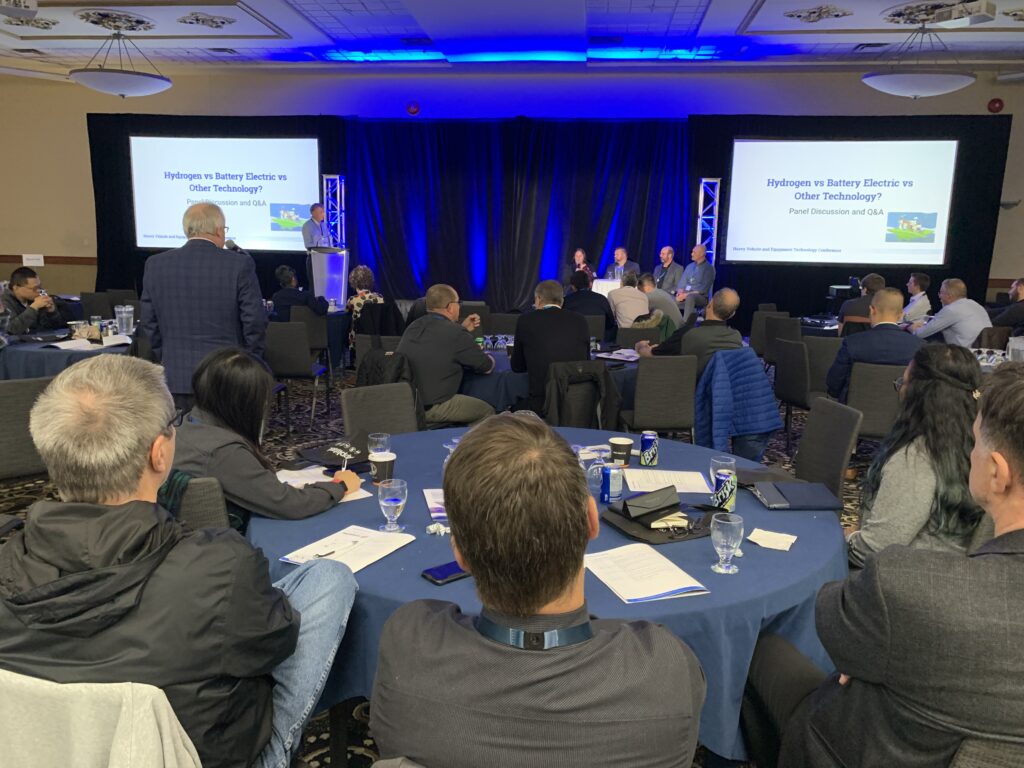
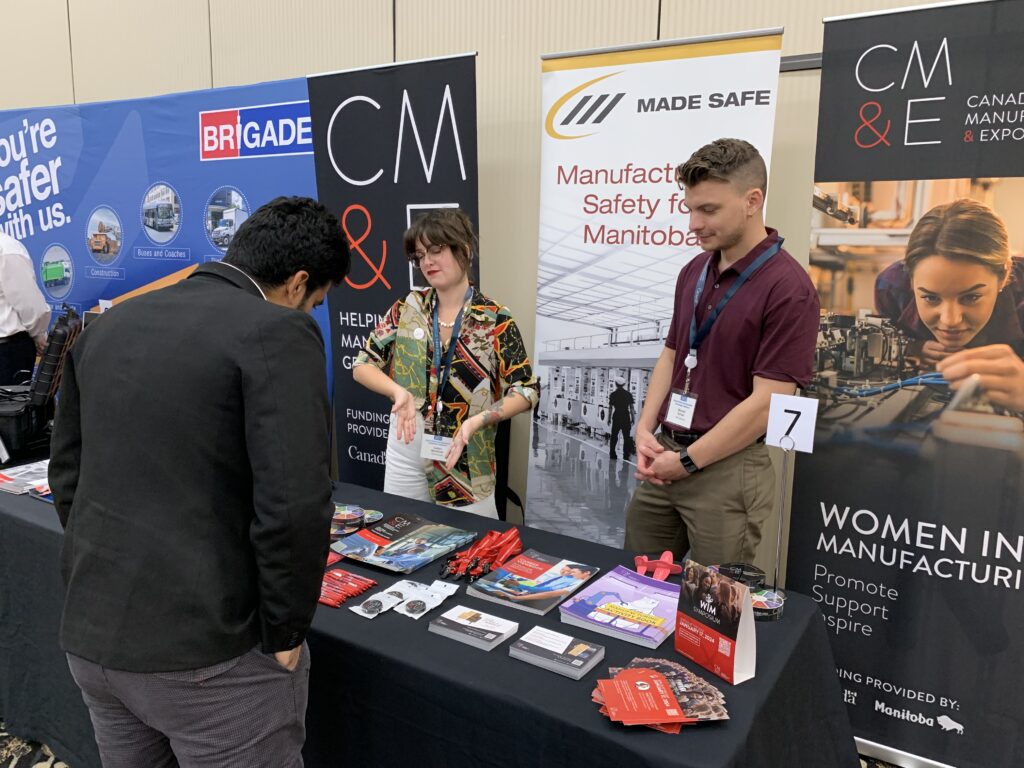
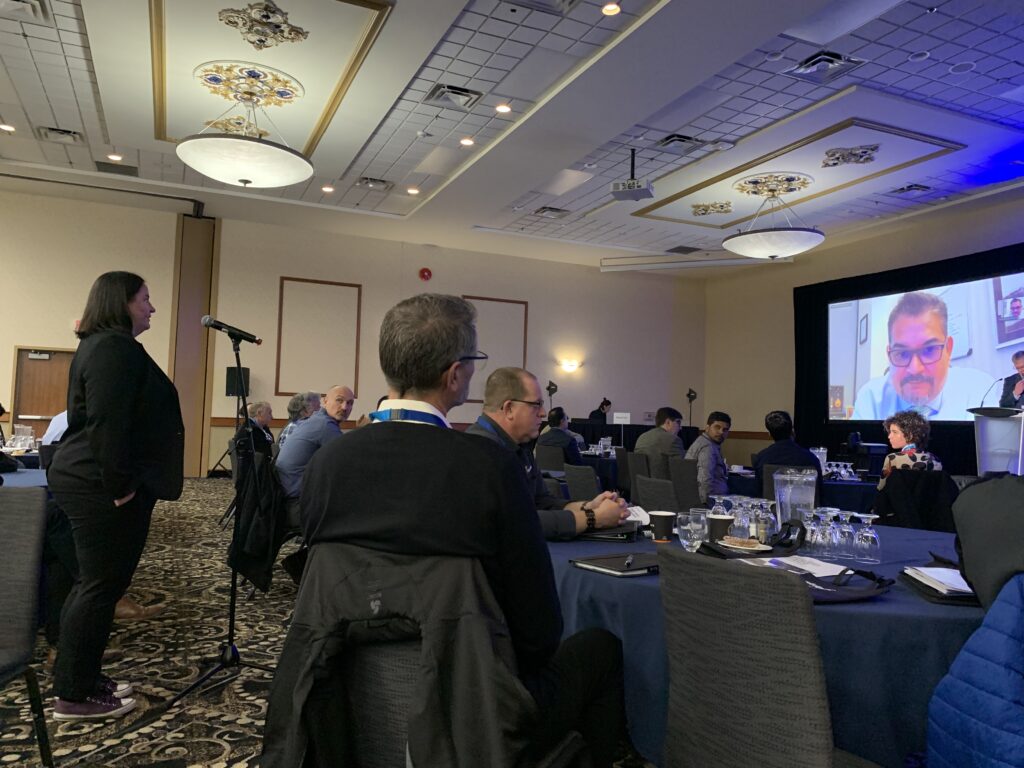
The 2023 Heavy Vehicle and Equipment Technology Conference, co-hosted by RRC Polytech and the Vehicle Technology Centre, brought together key players from industry and academia to demonstrate, display and discuss the latest advancements across the more than billion-dollar sector of Manitoba’s economy. While the concept of the event designed to drive innovation is relatively simple, the collective work done by the assembled group of business leaders, engineers, technicians, researchers, and trainers to propel us into the future is anything but.

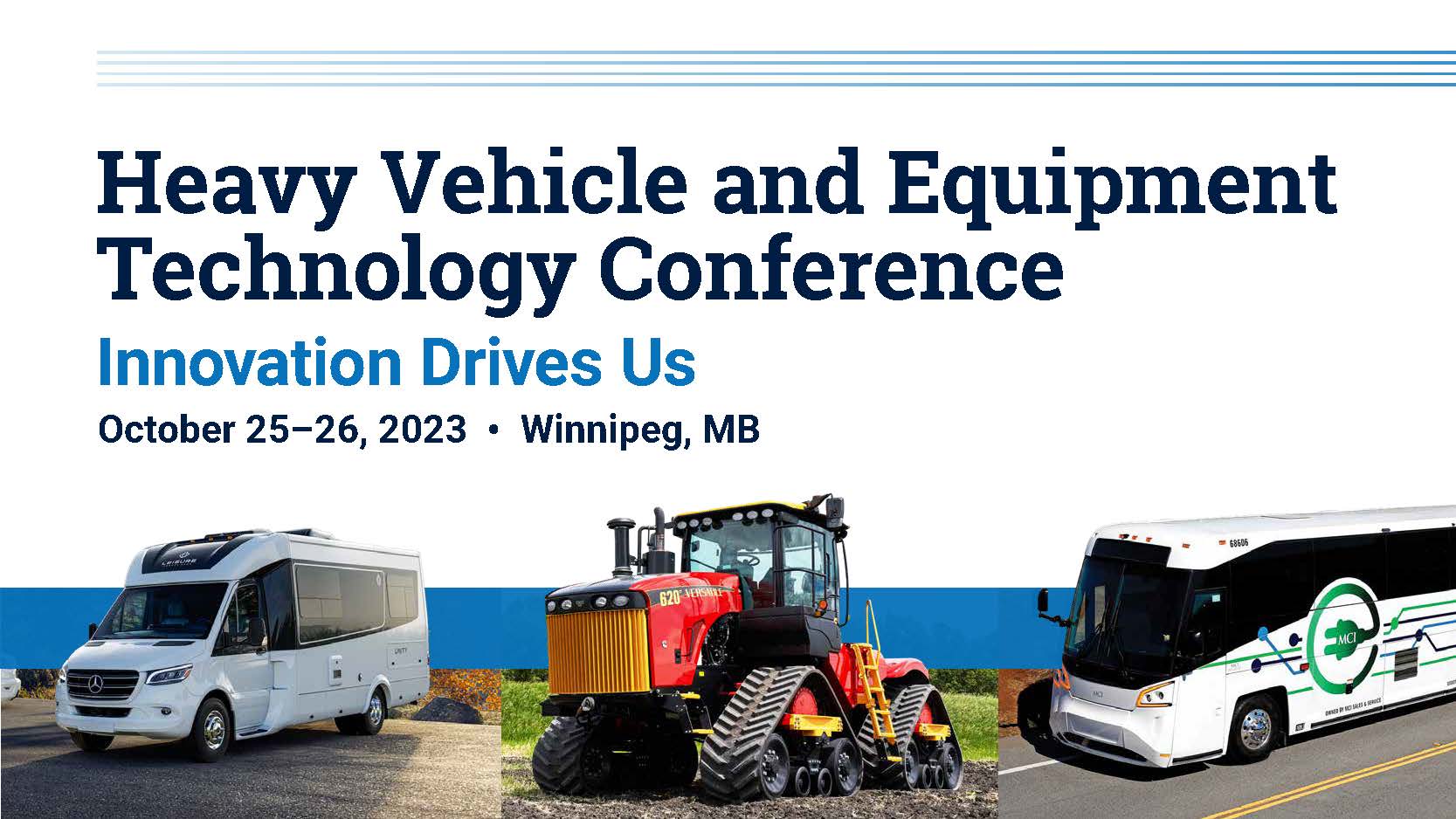
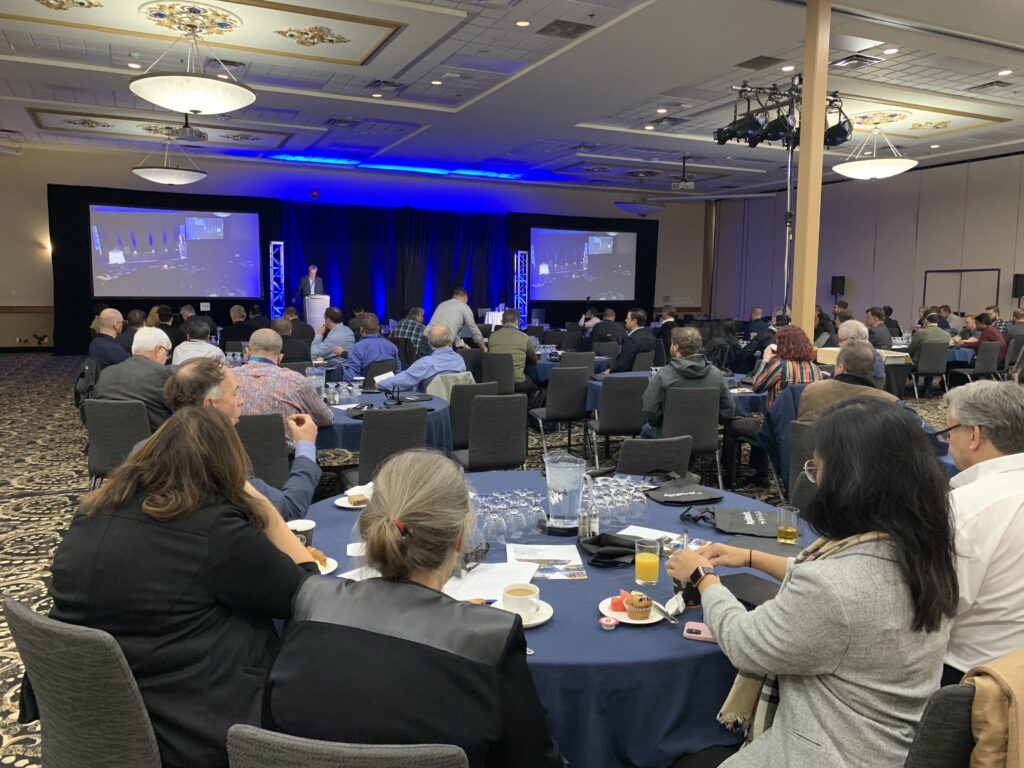
From tractors and agricultural equipment to buses, motorhomes and firetrucks, Manitoba proudly produces many of the largest and most powerful vehicles on the continent. But as competition around the world increases, the nearly 200 invested attendees agreed that the key to growing our success is embracing new technology and energy transition – prompting the theme of the third biennial conference, Innovation Drives Us.

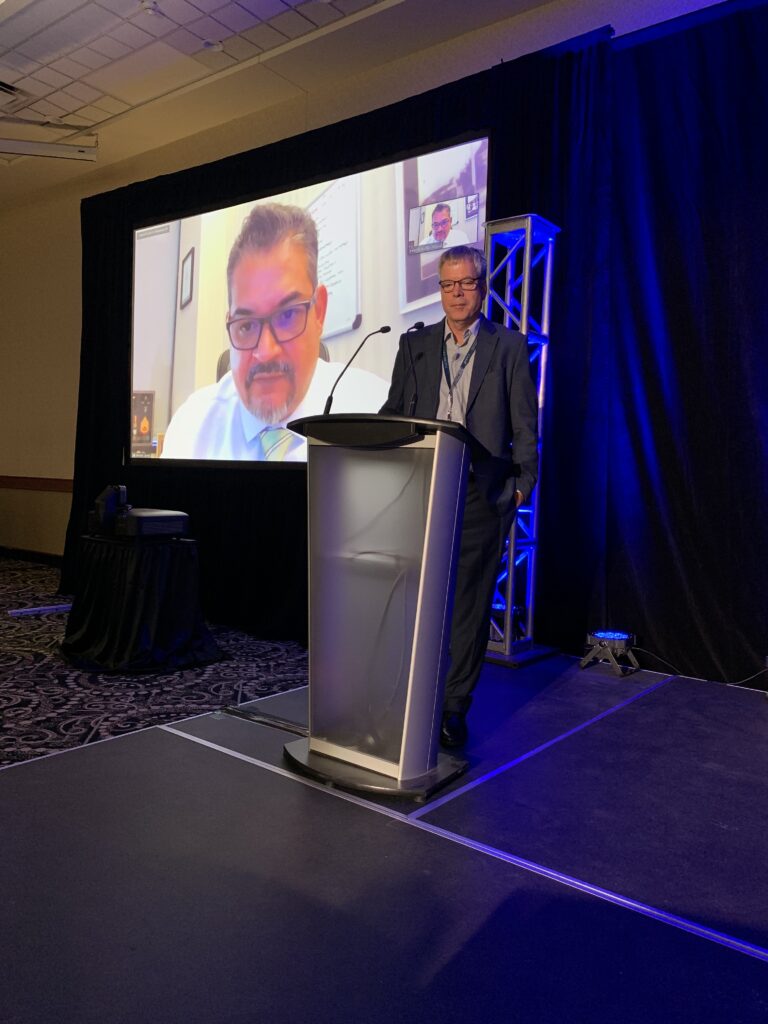
“Decades ago, science fiction writers boldly predicted that flying cars and massive spacecraft would become the norm and while that day may still come, almost a quarter of the way into the 21st century, the giant rubber wheels of our heaviest vehicles and equipment are still planted firmly on the ground,” said Ron Vanderwees, President and CEO of the Vehicle Technology Centre. “They are, however, evolving at an incredibly rapid rate thanks to the development of cleaner and more efficient propulsion systems, robotics, artificial intelligence and other related emerging technologies.”

How to make our heavy vehicles, machines and equipment more efficient and sustainable, without limiting performance or profitability while respecting current infrastructure is what much of the discussion revolved around during the two-day conference at the Victoria Inn.  

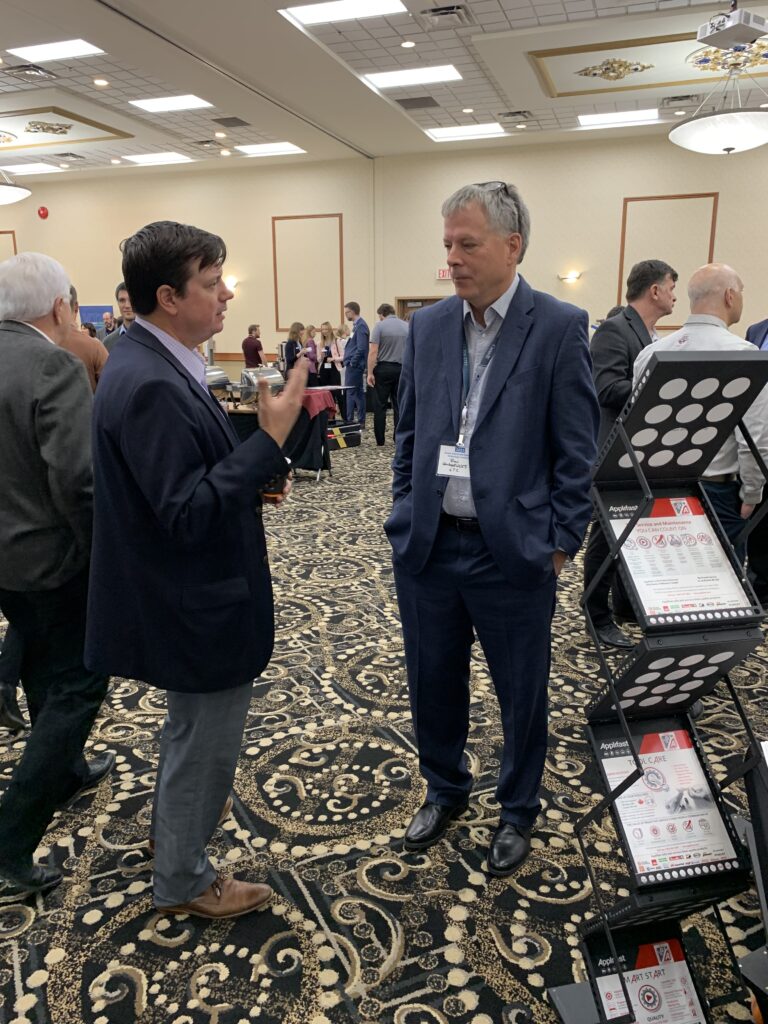
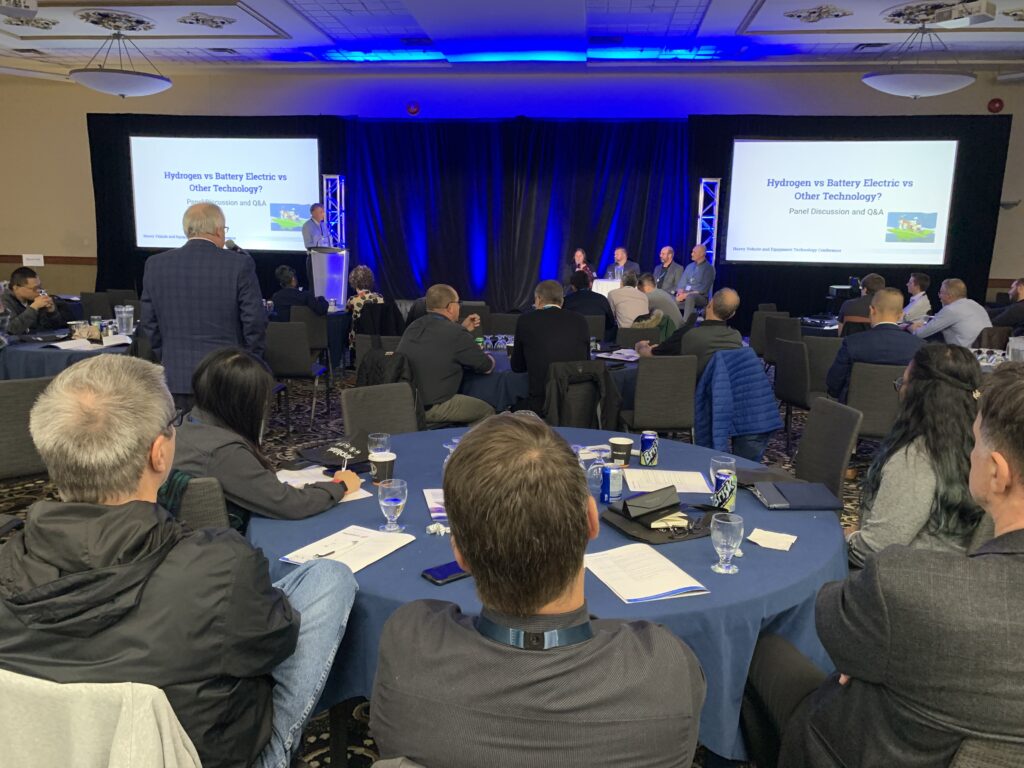
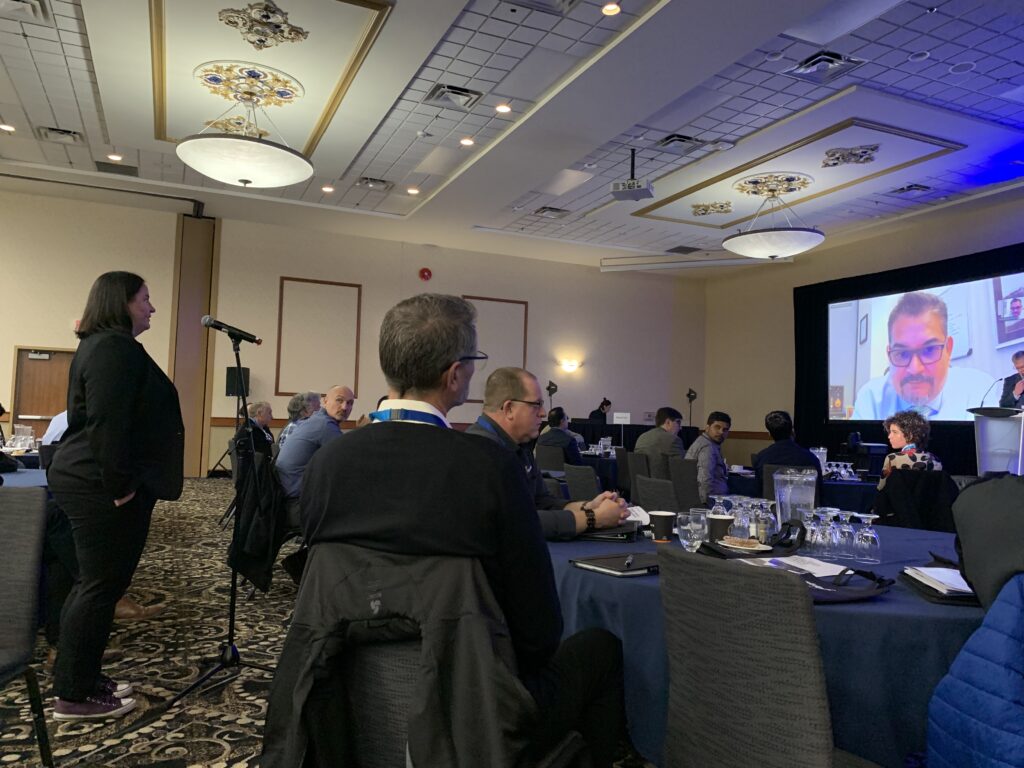
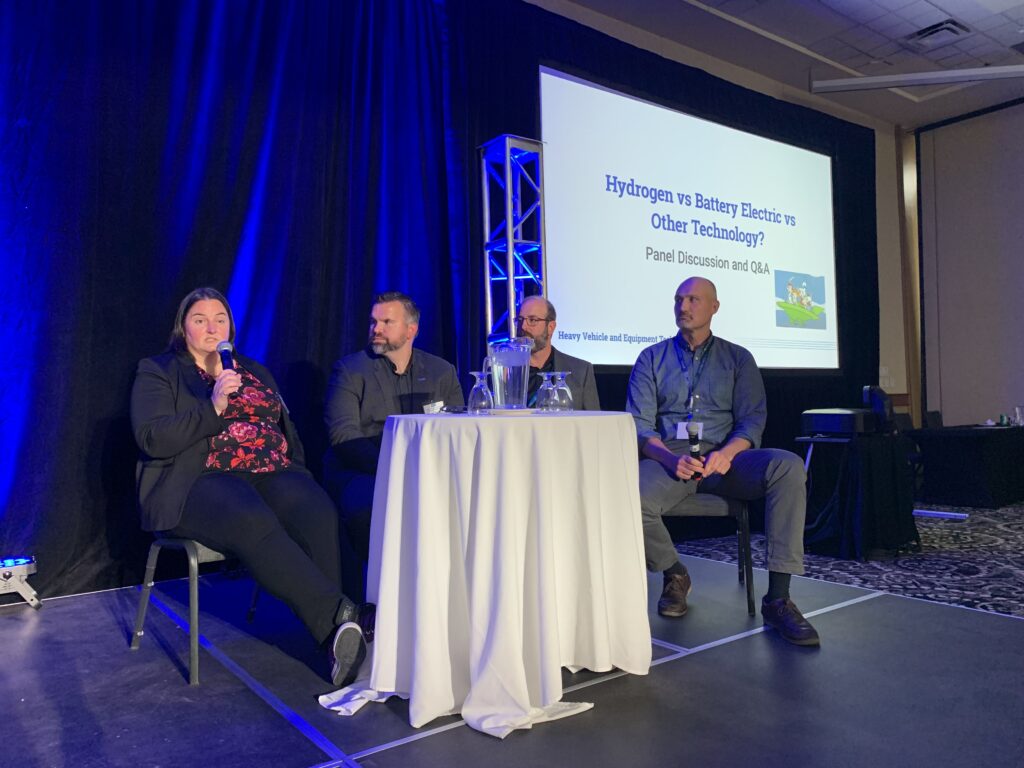
The agenda was designed to bring perspective and spark conversation. Presenters from both industry and academia shared information and experiences and then engaged the audience on a wide variety of related topics from the methods and challenges of fleet electrification and the adoption of hydrogen fuel cells; to the convergence of digitalization, automation, and intelligent systems; to funding; and even the importance of nurturing mental health. Scheduled mingling sessions then allowed attendees to interact directly, encouraging company to company and company to academia discussions to help create partnership opportunities.   

“Collaboration not competition is what will drive Manitoba’s heavy vehicle and equipment sector into a more efficient and sustainable future,” said Vanderwees. “The opportunity for everyone to connect and forge new relationships by asking a lot of questions is just as important as the forward-thinking sessions we hosted on such topics as the path to zero emissions; smart, connected and autonomous vehicle technology; and advanced manufacturing technology.”

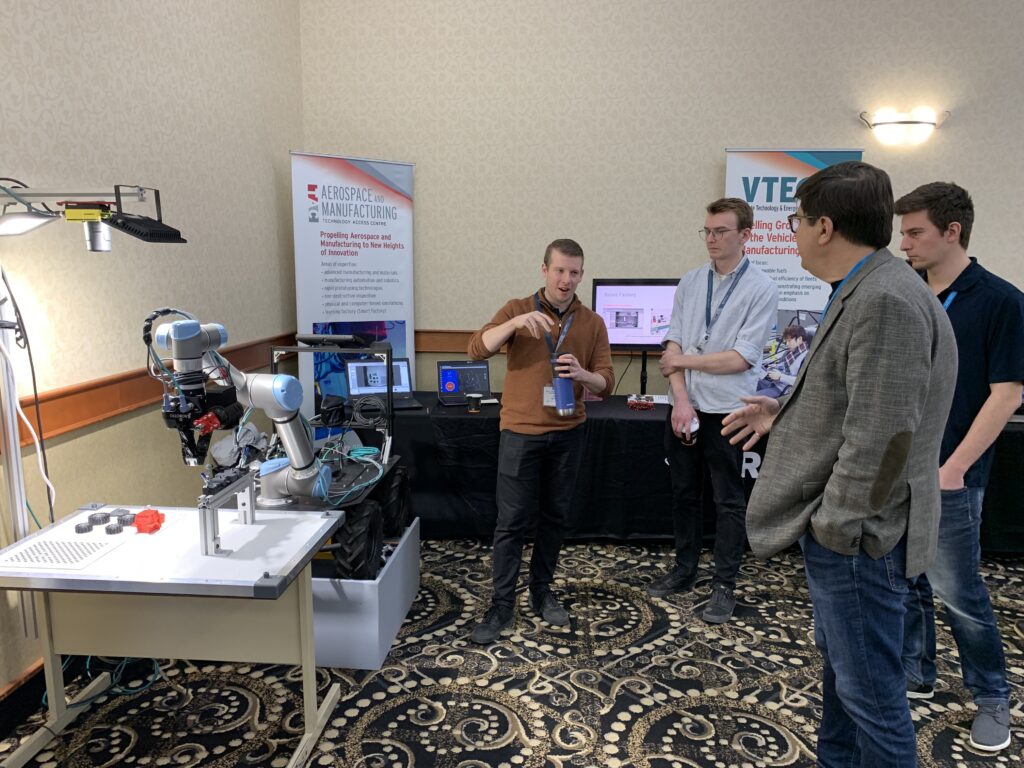
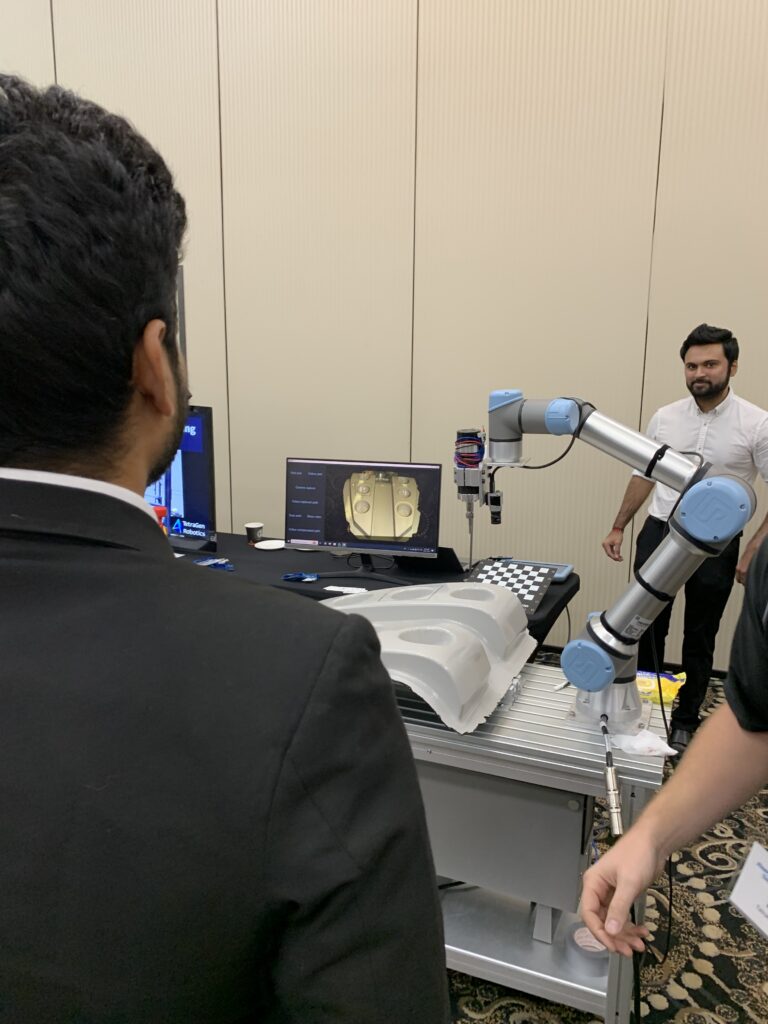
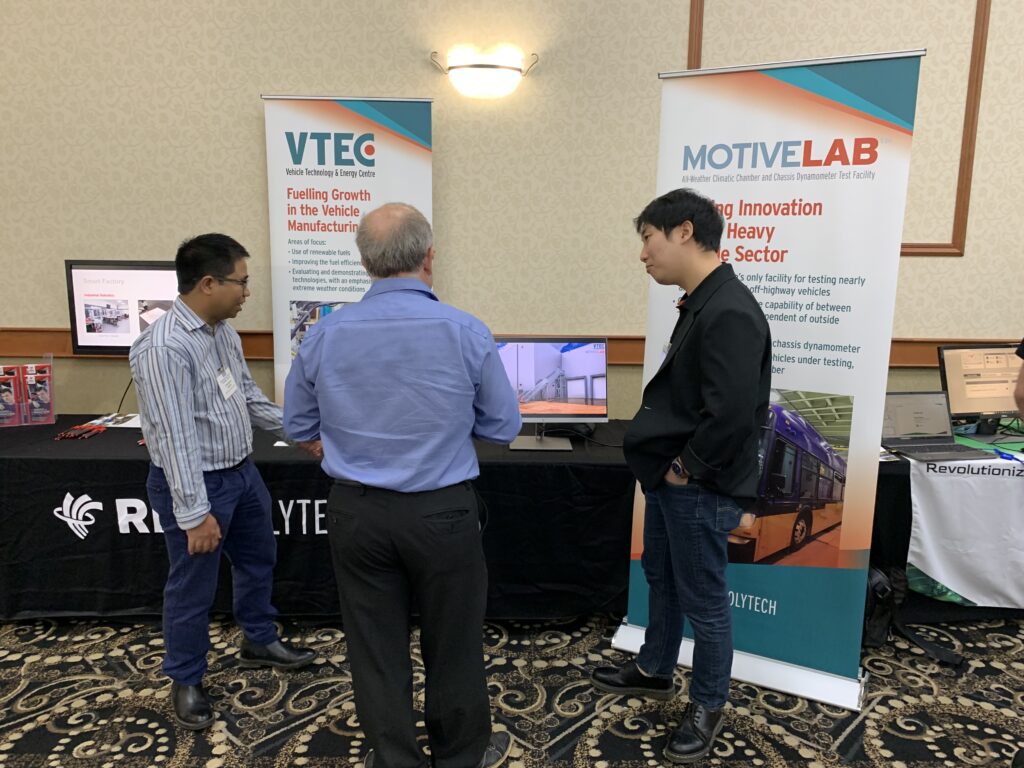
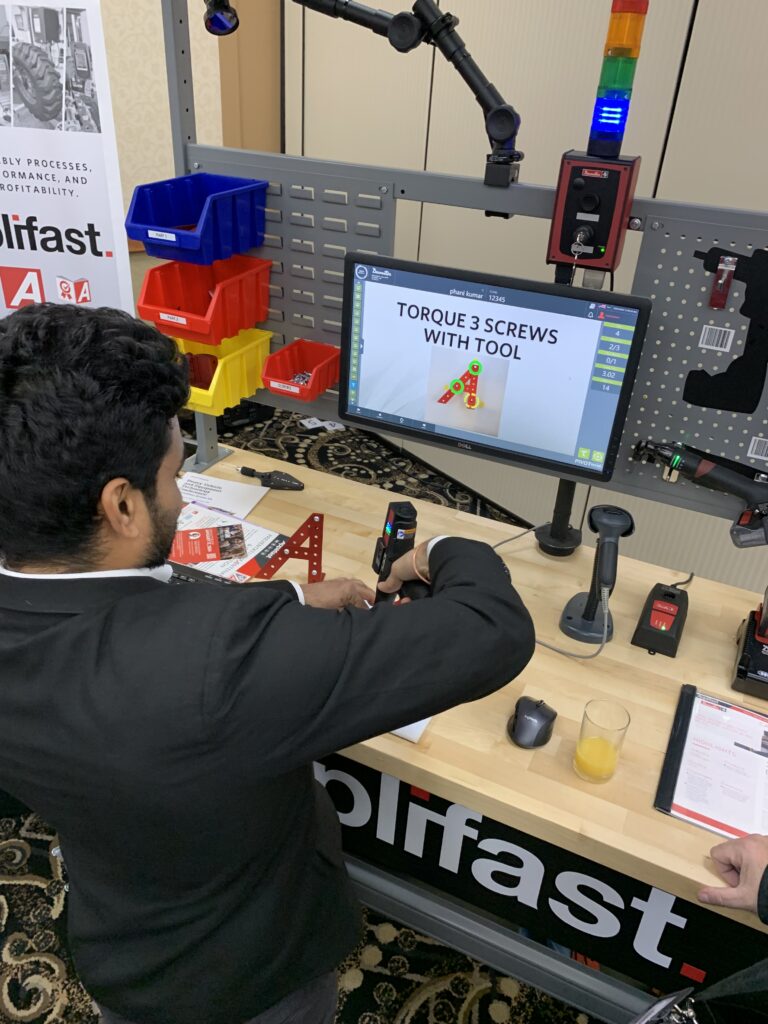
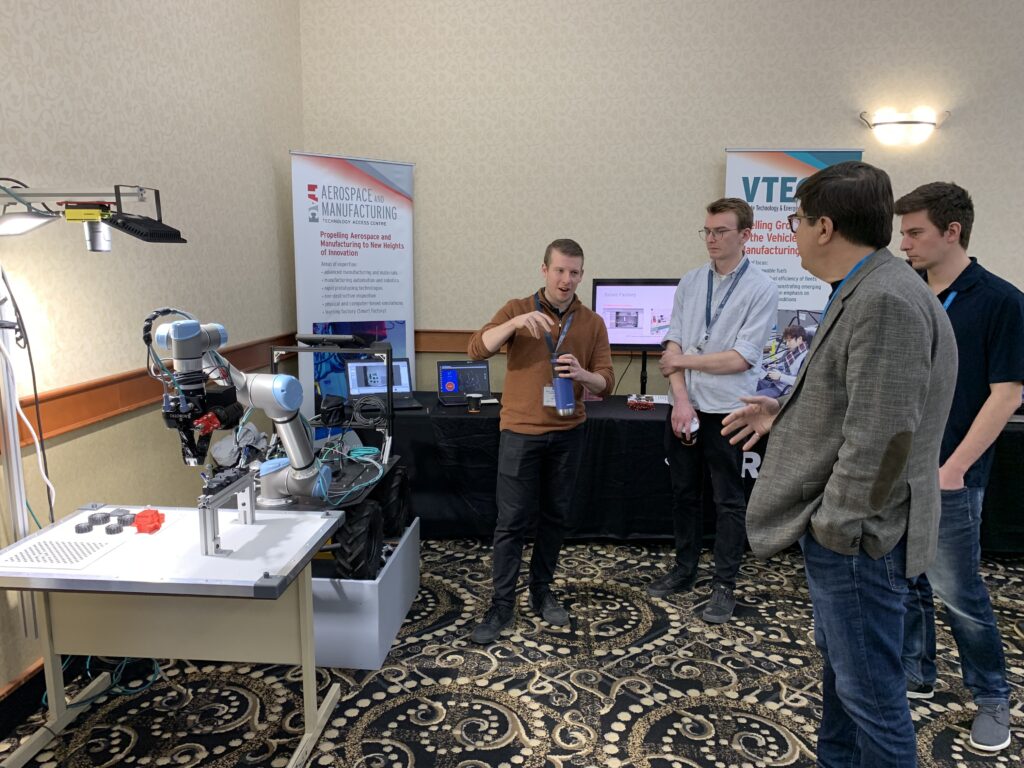
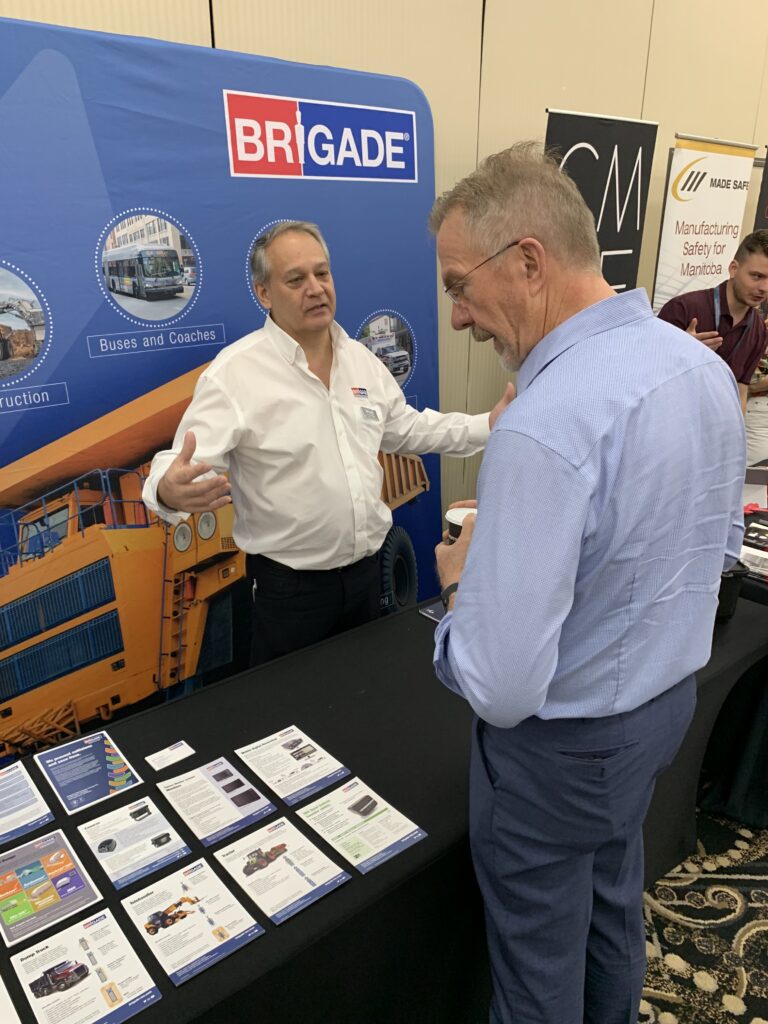
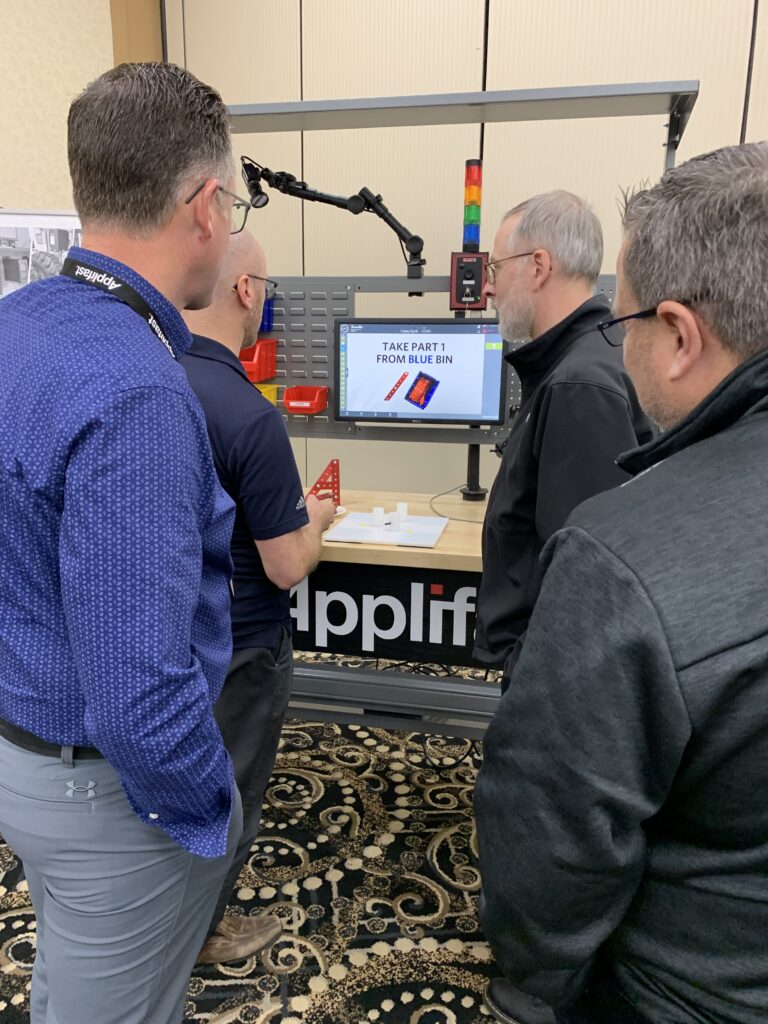
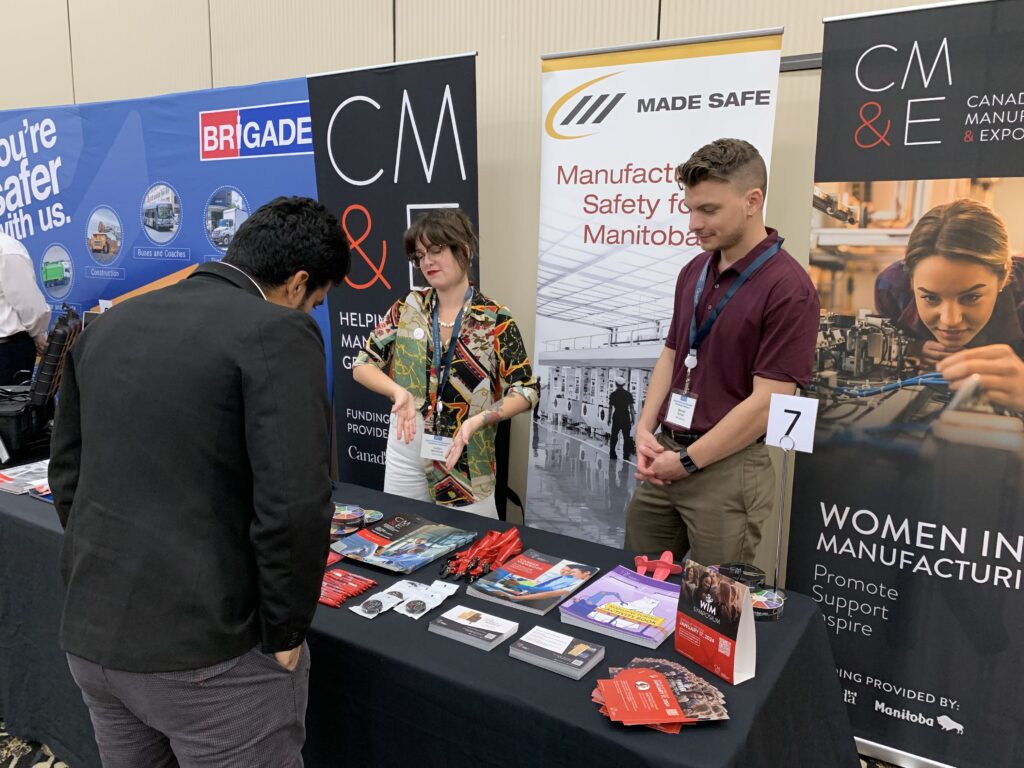
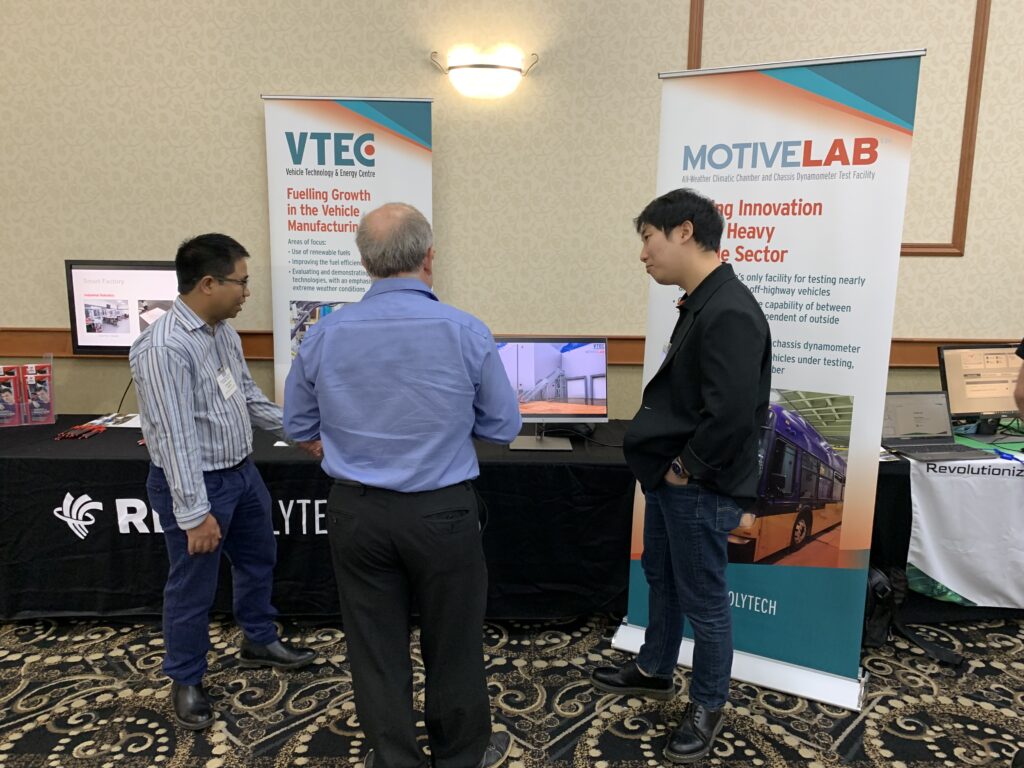
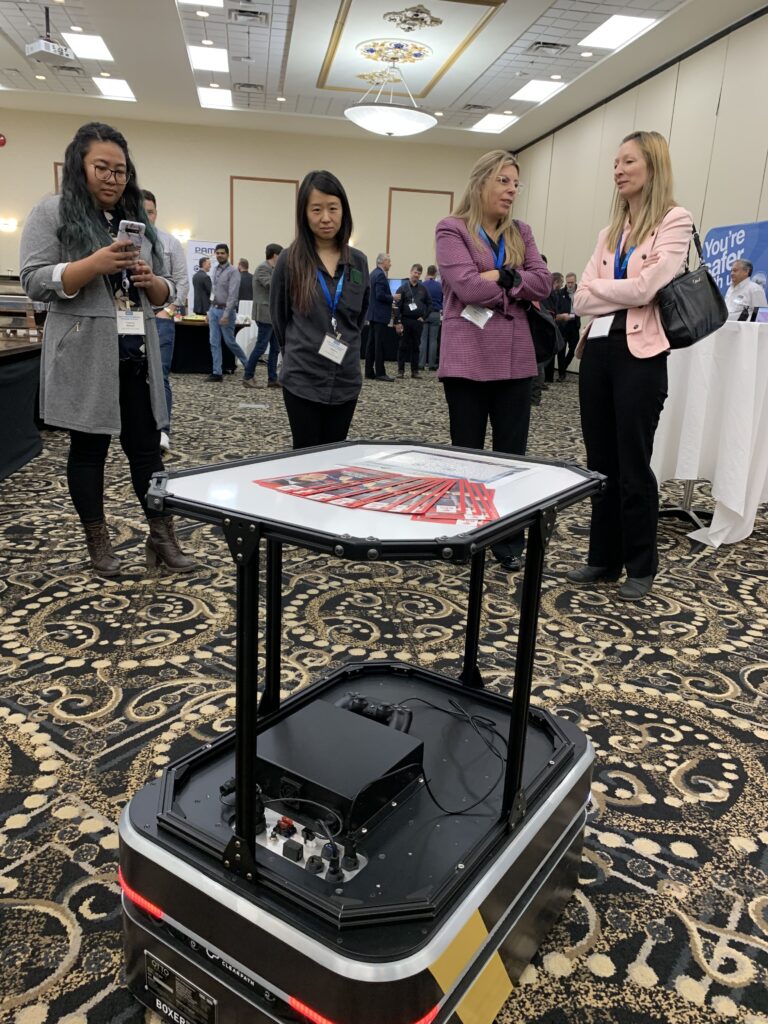
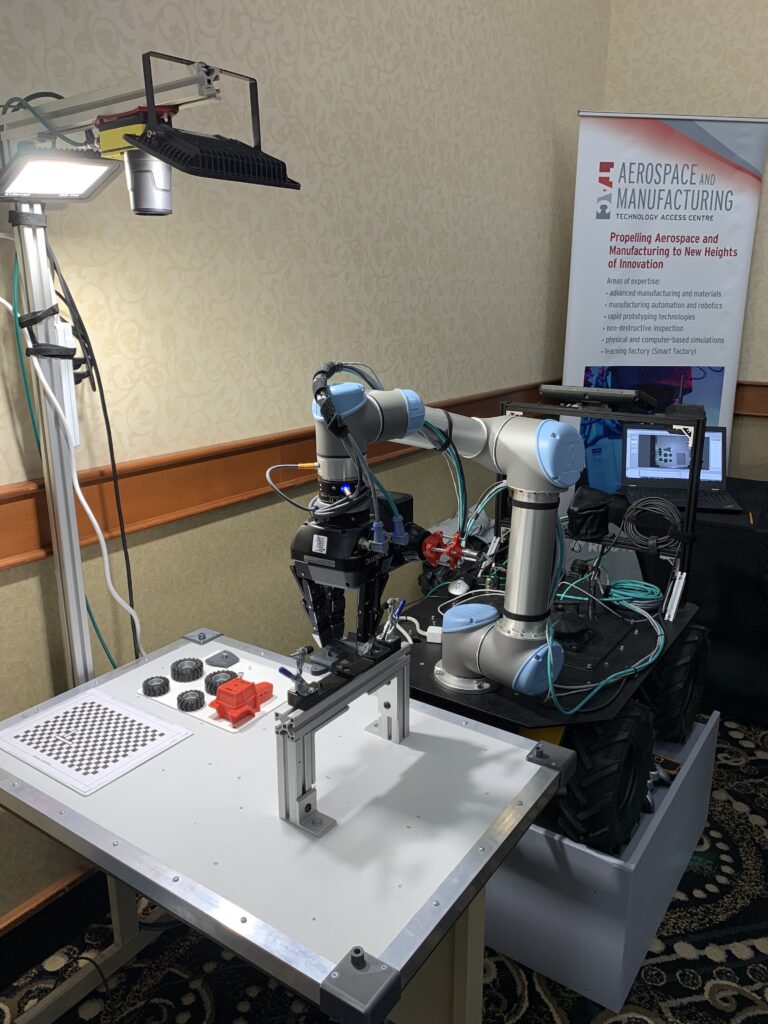
A dozen exhibitors including teams from RRC Polytech’s Vehicle Technology and Energy Centre (VTEC), MotiveLab™ and Technology Access Centre for Aerospace and Manufacturing (TACAM) also offered interactive demonstrations featuring augmented reality, robotics, connected tools, automated mobile robots, sensors, and other technologies as examples of the innovative solutions available to businesses.  

“RRC Polytech is uniquely positioned to catalyze innovation, by developing new products, techniques, and systems through applied research, while preparing students and industry professionals to master these emerging technologies and drive progress forward,” said Jojo Delos Reyes, Research Program Manager and the event’s co-emcee. “The creation of the Price Institute of Advanced Manufacturing and Mechatronics will allow the College to continue its work in this sector and expand our abilities to help drive Manitoba into the future.”

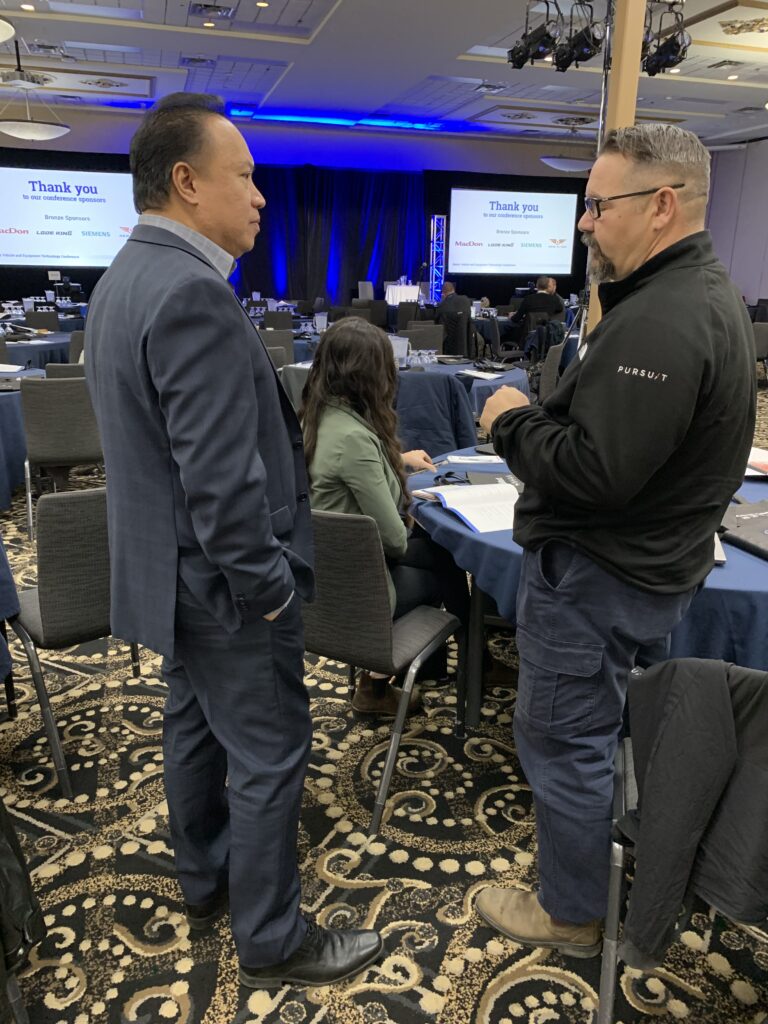
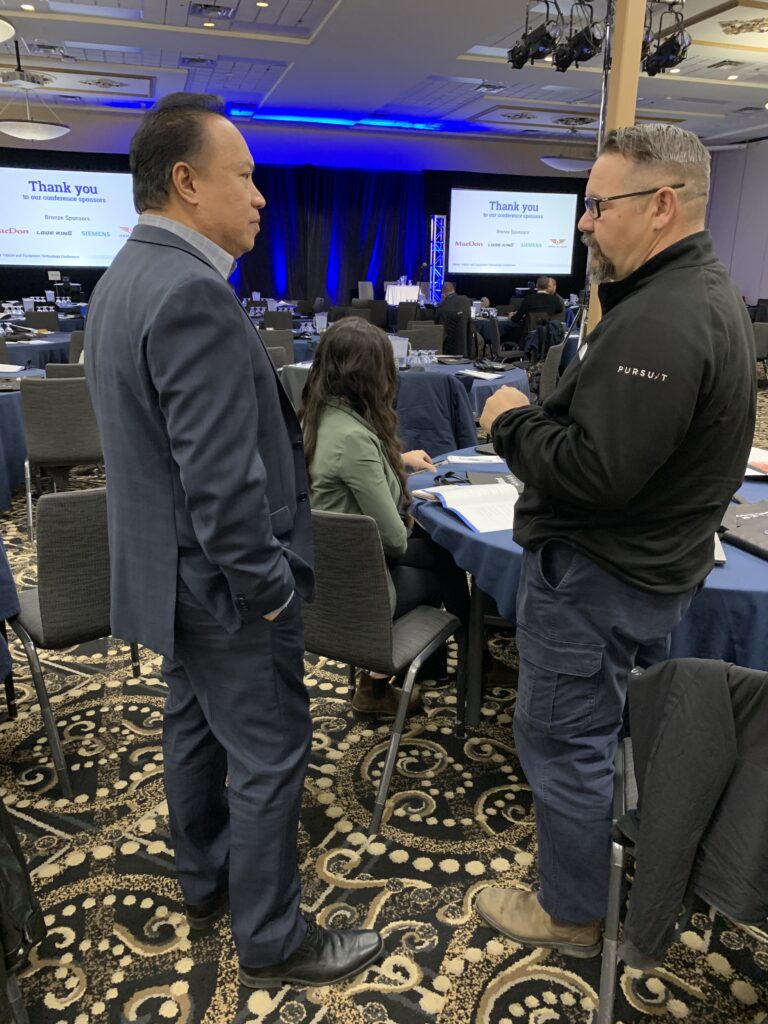
After participating virtually in 2021 and learning about VTEC’s successful EV Tundra Buggy project with Frontiers North, Brent Malley made it a priority to travel from Alberta to take part in person, this time. His company, Pursuit Collection operates tours of exotic locations including the Columbia Icefields, so he was thrilled with the opportunity to discuss battery electrification with experts from RRC Polytech and New Flyer Industries, face to face.

“It’s been a truly inspiring event. My team has been blown away by the willingness of everyone to share so many fresh ideas,” said Malley. “We’ve made some amazing connections that I’m confident will lead to partnerships in the future.”

Thanks to strong sponsorship and the support of government partners through Prairies Economic Development Canada and Manitoba Sector Council, RRC Polytech and the Vehicle Technology Centre are already making plans to host the next Heavy Vehicle and Equipment Technology Conference in 2025.

PRK Food Donation to Main Street Project tops 500 kg

October 16, 2023

This summer, RRC Polytech’s Prairie Research Kitchen (PRK) challenged a group of Culinary Research co-op students to create delicious meals for some of our community’s most vulnerable, using only very limited ingredients – most of which may have been waste if solutions for repurposing weren’t discovered.

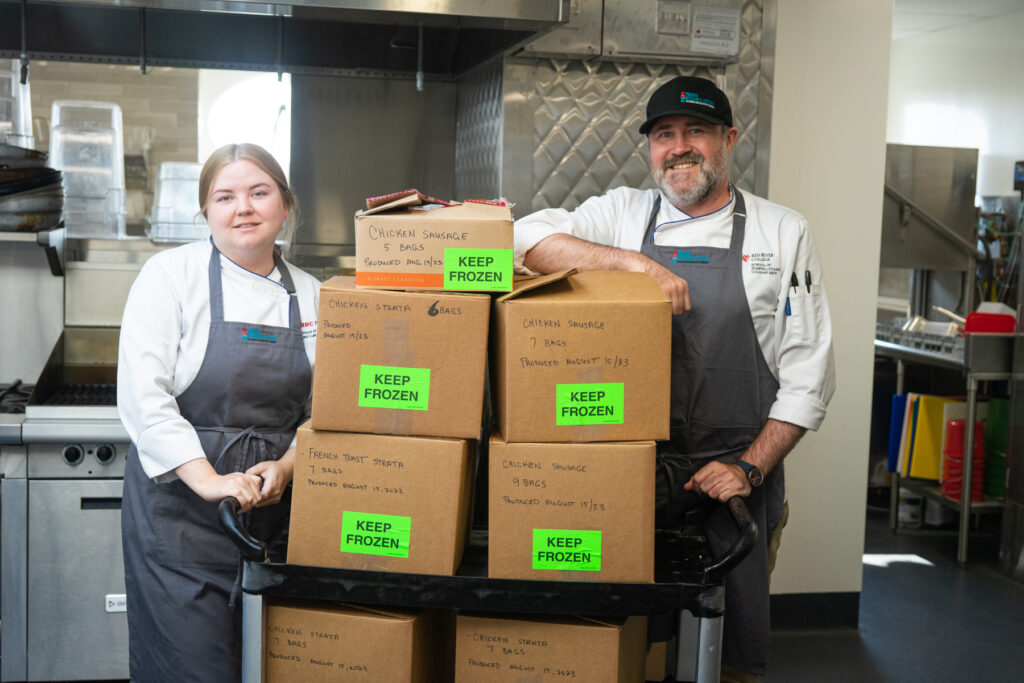
Their ability to repurpose perfectly good food generated through research projects and transform it into easy to serve dishes helped PRK eclipse a major milestone of 500 kg of food redirected to Main Street Project in an ongoing collaborative effort that helps feed the community while providing students with a valuable introduction to research. 

“In a world that still wastes 40 per cent of the food produced, it’s imperative that Prairie Research Kitchen leads by example to demonstrate strategies that everyone in the food value chain can use to impact that number,” says Mavis McRae, Director, PRK. “As researchers, we understand that several trials and scale-ups are part of the research process. However, by working together with our clients to repurpose food that is left over from our work but still good to eat and redirect it to people in need, we are proving that multiple objectives can be reached simultaneously.”

Taste, texture and visual appeal are constant considerations in food development projects, so an extensive trial and error process is often required by the researchers at PRK to develop new products, techniques and recipes. With the consent from industry partners, Pulse Canada, engaging PRK to undertake product development, the research team has committed to recovering edible, high quality ingredients from their projects and testing their creativity by converting them into pre-packaged menu items that Main Street Project can distribute to those in need.

Pushing PRK past the 500 kg mark in donations was a product integration-based project with Pulse Canada designed to maximize the use of pea fibre generated from the pea protein process and deliver functional benefits to new formulations such as water holding and texture.

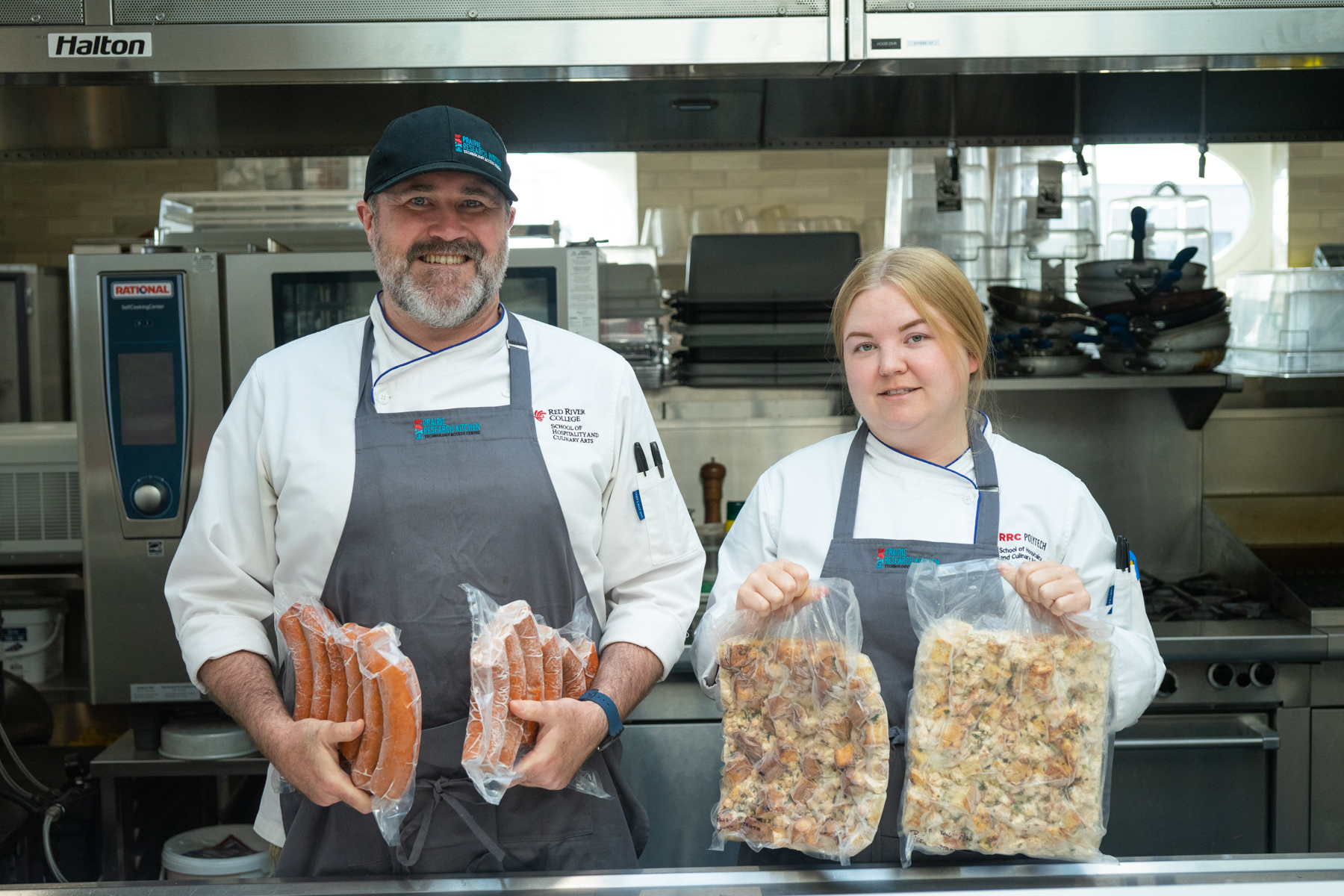
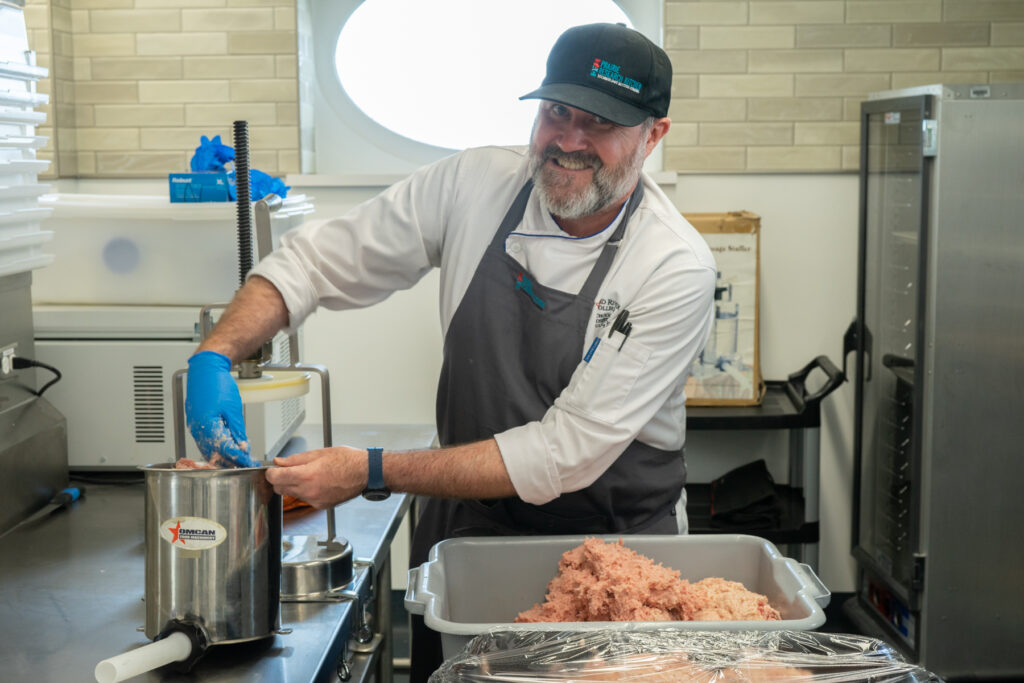
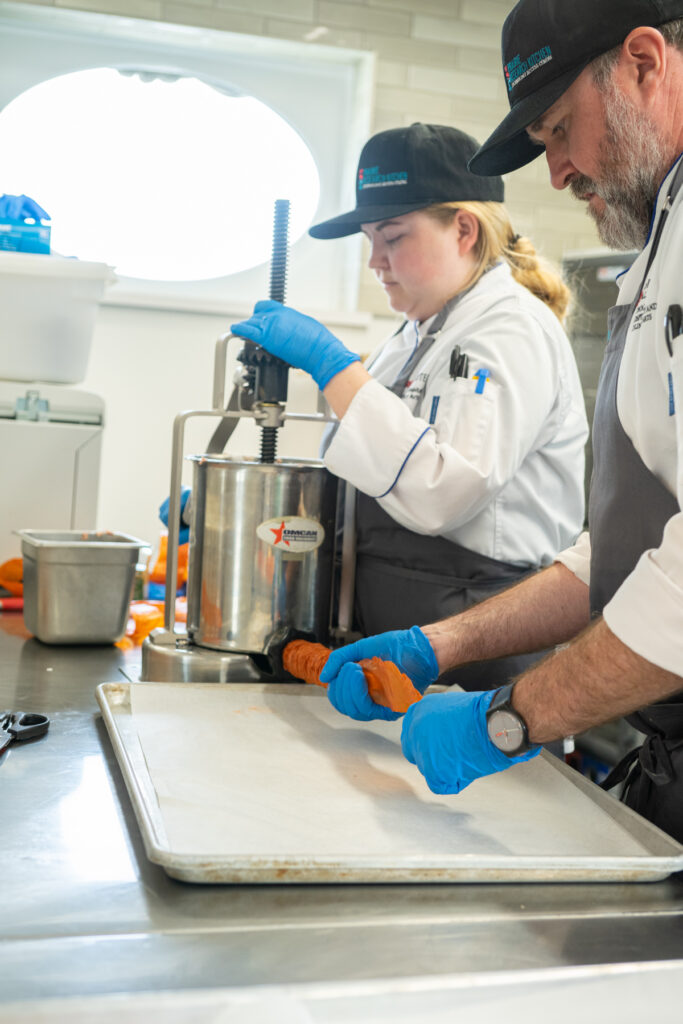
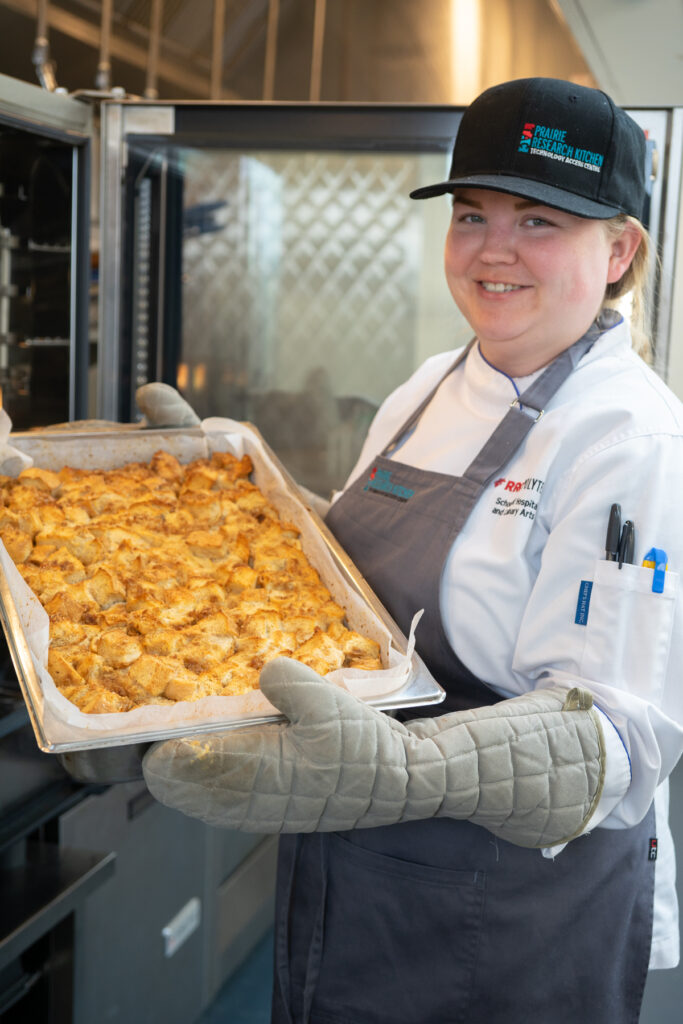
The latest delivery to Main Street Project featured remaining pea fiber bread and pea fiber chicken deli meat being converted into tasty breakfast themed items including a sweet, French toast-style strata (a type of layered breakfast casserole), a savory strata, and a chicken sausage.

Chicken Strata Recipe

Yield: 1, 9” x 13” Deep Baking Dish

Allergens: Wheat/Gluten – Milk – Eggs – Sulphates

Ingredients                                                                                                              Quantity (g)        

Oil, canola
Onion, medium dice
Celery, medium dice
Bread, medium dice
Deli chicken loaf, medium dice
Mayonnaise
Eggs
Milk
Pepper
Water
Butter, unsalted
Parsley, chopped
Chives, thinly sliced    

Optional: Cheese, grated
10
150
150
1400
700
240
360
340
3
350
14
3.5
3.5

75

Method
1.     Add oil in a medium saute pan. Add in celery and onion and cook on medium high heat for five minutes.
2.     Add sauteed vegetables to bread, chicken, and mayonnaise. Mix well.
3.     Whisk together eggs, milk, pepper, and water and pour over bread, chicken, mayonnaise, and vegetables.
4.     Mix gently until everything is combined.
5.     Rub butter on base and sides of a casserole dish.
6.     Pour bread and chicken mixture into casserole dish.
7.     Cover and refrigerate for 4-10 hours.
8.     Remove from fridge, top with parsley and chives and bake at 350°F for 45-55 minutes.
9.     Rest for 5 minutes and serve hot. 
Other Instructions
If desired, grated cheese can be added to the strata at the 45-minute mark of baking. Bake for 10 minutes longer or until cheese is melted.

All donated food is not only safe and healthy but often transformed into elevated new items by student chefs through PRK’s Culinary Research co-op program. The project creates a fertile learning environment for the second year Culinary Arts students who are hired to take part, as it exposes them to a food science career path that many future chefs may not have known about or considered. Roxanne Kent jumped at the opportunity a few years back and is now working full time as a Research Assistant at PRK.

“This initiative challenges staff and students’ creativity and ability to create amazing menu items using limited resources – and it’s that innovative spirit that drives us as both chefs and scientists,” she says. “You learn the importance of documentation to ensure reproducibility; experience the rush of perfecting a formula, technique or recipe; and it’s personally rewarding when your hard work satisfies the client’s needs while helping the community at the same time.”

As the national association representing growers, traders and processors of dry peas, beans, lentils and chickpeas, Pulse Canada prioritizes sustainability in its vision to develop the future of food and partners with PRK to create marketable menu items that taste great and promote the nutritional and environmental benefits of pulses. Given their strong relationship and aligned values, Pulse Canada and PRK have worked together to redirect unused or left over food to Main Street Project for the last year and half, while still protecting all proprietary data. Previous donations included:

  • Mini meatloaves: ground beef mixture with black beans
  • Lentil breaded chicken: lentil flour, fully cooked breaded deep fried chicken thighs
  • Red lentil flour pumpkin muffins
  • Red lentil flour focaccia pizza
  • Pork soup with pork/okara meatballs
  • Red lentil pastry cups
  • Lemon blueberry ice cream
  • Plant-based coffee ice cream

“Our mission is to provide essential services to those experiencing homelessness and mental health issues in our community, so we are always searching for new partnerships, donors and volunteers,” says Jamil Mahmood, Executive Director at Main Street Project. “While elevating items for donation isn’t necessary, even small expressions of caring go a long way to positively impact the community we support, so we’re grateful for the continued support from Prairie Research Kitchen and its partners who are helping not only to feed but to change the perception of those who struggle.”   

Partnerships are the core of College success as they enable RRC Polytech to extend resources, leverage strengths, accelerate progress in innovation and research, and reach the community. Located on the 11th floor of the Paterson Globalfoods Institute in the heart of the downtown, the Prairie Research Kitchen is proud to continue its unique work as a Technology Access Centre while building relationships that help the College play a revitalizing role in the evolution of the city.

RRC Polytech’s Prairie Research Kitchen named Associate of the Year by Food & Beverage Manitoba

October 12, 2023

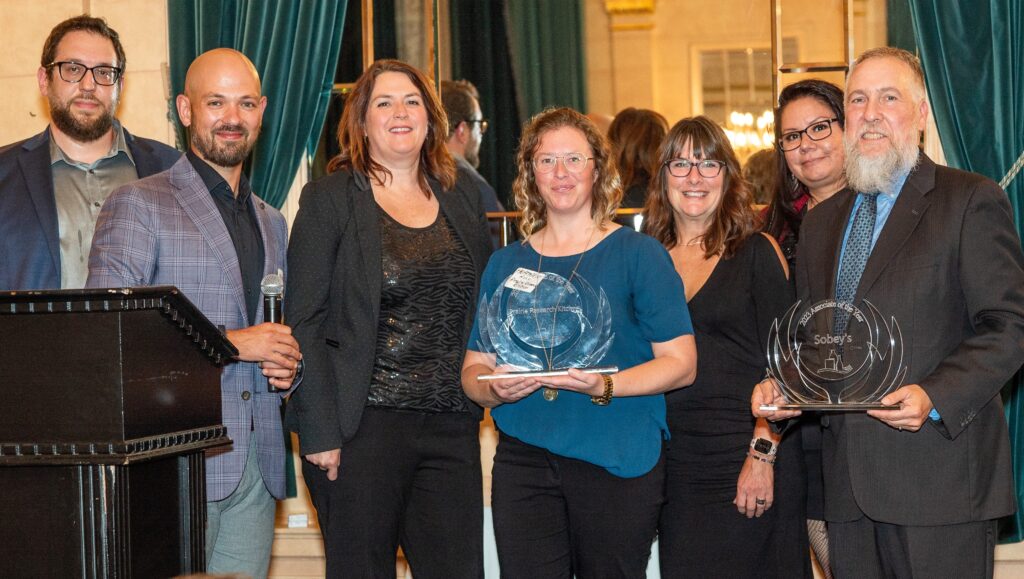
The commitment that RRC Polytech’s Prairie Research Kitchen (PRK) makes to support Manitoba’s vibrant food production industry, provide unique learning experiences to students and give back to the community was recognized last week with a prestigious award. On Thursday evening, Food & Beverage Manitoba hosted its first Harvest Dinner and Awards Ceremony since the pandemic and named PRK its Associate of the Year, proudly sharing the honour with Sobey’s.


The winner of the Associate of the Year award consistently provides exceptional value to Food & Beverage Manitoba members. Using a unique blend of food science and culinary arts, PRK’s team of chefs, researchers and students work together tirelessly to develop creative solutions that support food processors and food service providers. As a Technology Access Centre (TAC) PRK supports businesses through:

  • Applied research, including food prototyping, ingredient applications, food process modifications and consumer research trials.
  • Technical services such as student recipe development, food photography, trade show support and clinical trial prototypes and products.
  • Training on new ingredients as well as cooking or preservation methods emerging in the food and food service industries.

Since its inception in 2014, PRK has worked on over 120 projects with Manitoba and Western Canadian companies developing or refining their products for market and ensuring companies stretch their research dollars by accessing the eligible funding available for product development. PRK encourages companies to consider sustainability in all outputs of their operation – and by working with their clients to upcycle leftover ingredients, PRK has redirected over 500 kg of food to Winnipeg’s most vulnerable through Main Street Project over the past two years.


In addition to training the province’s future food product developers, operators, scientists, chefs, and bakers; developing an Introduction to Research program for students studying Culinary Skills through the School of Indigenous Education; and participating in numerous events, tours and outreach events; PRK team members also made time to sit on various student and industry panels, committees and advisory boards to help shape the future of the sector. 

Congratulations to the multi-disciplinary team at Prairie Research Kitchen for building strong relationships with industry, helping great food products and ideas reach the tables of consumers, and playing a role in creating jobs and economic benefit for all Manitobans.

About Food & Beverage Manitoba

Food & Beverage Manitoba (formerly the Manitoba Food Processors Association) is an industry-led, not-for-profit association launched in 1993 to help the province’s food and beverage industry achieve its full creative and competitive potential. Its mission is to provide members with services and resources that help them navigate opportunities and challenges so they can elevate and strengthen their businesses.

New Funding to provide an eco-boost to Efficient Trucking Program delivered by RRC Polytech’s Vehicle Technology and Energy Centre

May 26, 2023

RRC Polytech’s Vehicle Technology and Energy Centre (VTEC) continues to drive sustainability forward in Manitoba and is gearing up to help the transportation sector further reduce carbon pollution following a massive boost in funding from Federal and Provincial Governments to support the Efficient Trucking Program (ETP).

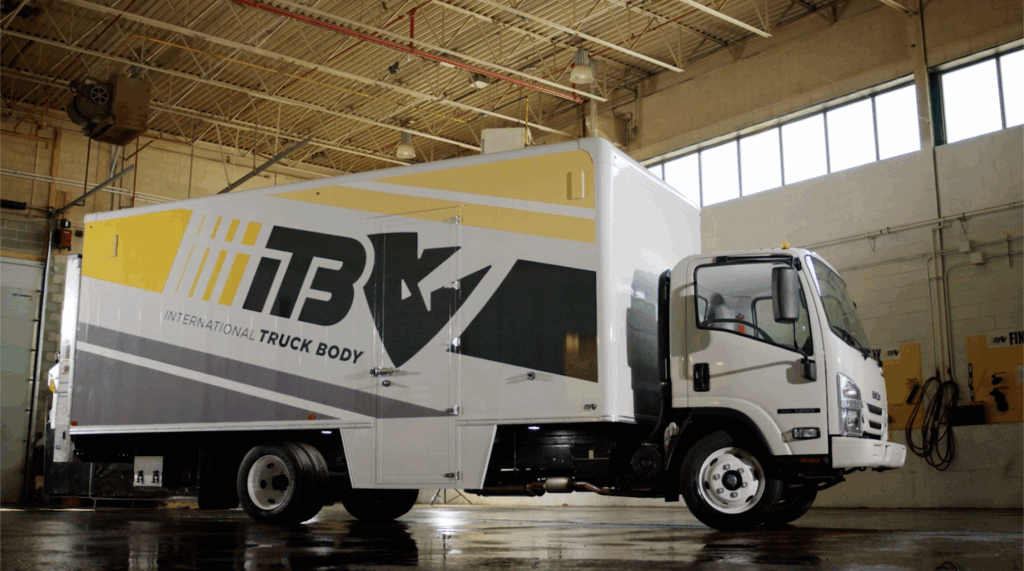
Administered by VTEC, the ETP provides rebates for eligible applicants who install fuel saving devices or technologies related to tire and rolling resistance, aerodynamic technology and anti-idling technology on their heavy-duty vehicles or trailers.

Canada and Manitoba’s joint announcement to invest $38.2 million to accelerate the move to renewable energy includes the re-opening of the ETP launched in 2019. To support a new intake for applications, ETP is receiving an additional $3.6 million from the Government of Canada while the Manitoba government will contribute up to $3.3 million. Manitoba’s trucking sector will provide an additional $6.6 million to the program.

By rebating up to 50 per cent of the cost of installed fuel-saving devices or technologies on heavy-duty vehicles and trailers, the ETP is expected to reduce greenhouse gas emissions by up to 120,000 tonnes by the year 2030, which is equivalent to saving about 51 million litres of gasoline consumed in a year.

“Reducing the carbon footprint of the trucking sector is crucial to successfully attaining Manitoba’s carbon reduction goals. By partnering with the federal government, we are able to transition more vehicles and industries from fossil fuels to renewable energy,” said Manitoba Environment and Climate Minister Kevin Klein in the May 25th News Release. “Manitoba will continue to lead the way in the development of a cleaner, greener economy.”

The impact of the program has tangible and measurable results. Data as of March 31, 2022:

  • 366 successful applications submitted to the Efficient Trucking Program, consisting of:
  • 3,627 units (1,934 trucks and 1,693 trailers) receiving fuel savings device installations.
  • 13,583 tons of reduced emissions already achieved, projected 120Kt’s by 2030
  • 5.3 Million Litres of fuel saved, projected 25.9 Million litres saved by 2030
  • $21.1 Million in economic growth has been achieved in our Province via investment from the Truckers, Canada and Manitoba Governments, respectively.
  • Additionally, 115 Fulltime Equivalent jobs have been created or maintained, based on statistics Canada calculations.

“Reducing greenhouse gases and fuel consumption is part of a commonsense approach in the battle against climate change and the Efficient Trucking Program provides a great incentive for everyone from individual operators to large companies with fleets of heavy machinery to do their part,” says Jojo Delos Reyes, Research Programs Manager at RRC Polytech.

“The ETP is just one example of the College’s applied research in action – our entire Research Partnerships and Innovation team is committed to working with all industry partners to find solutions to their unique problems and building a better tomorrow for everyone.”  

Interested applicants can apply to the new intake by visiting efficienttrucking.ca. A second intake for applications will start on Oct. 1.

Ready for take-off: RRC Polytech and StandardAero propelling to new heights of aircraft repair

February 7, 2023

A project testing new aircraft repair technology is about to take flight. RRC Polytech’s Technology Access Centre for Aerospace and Manufacturing (TACAM) and StandardAero are collaborating to validate whether this new technology could be effectively implemented for repairing aircraft components.

Maintenance, repair and overhaul (MRO) is a critical but costly measure for aircrafts, required after only a few years, with the body of an aircraft far outliving individual parts. With the shift to aerospace components increasingly being made from light alloys and the exceptionally high safety standards all aircraft manufacturers and MRO companies must adhere to, come additional challenges.

While light alloys allow for light-weight aircraft parts, they are highly susceptible to degradation and oxidization, which increases the need for costly maintenance and repair. Additionally, because the alloys are highly reactive, traditional methods of repair, like welding, are not viable options.

RRC Polytech and StandardAero, one of the aerospace industry’s largest independent MRO providers, are embarking on a year-long project to test and validate cold spray technology for repairing aircraft components. Along with validating the technology, includes the challenge of meeting Original Equipment Manufacturing (OEM) repair standards.

About cold spray technology

Cold spray equipment
Cold spray technology in action

Cold spray is an additive manufacturing process where metal particles half the thickness of a strand of hair move at twenty-three times the speed of sound, impacting to a surface to form a bond. This process occurs at a very low heat, unlike traditional welding repair.

TACAM brings experience in cold spray technology from ongoing projects, including a contract with the Government of Canada’s Innovation for Defence Excellence and Security (IDEaS) program to develop a light-weight coatings.

Leveraging TACAM’s experience and the long-standing relationship with StandardAero, the two organizations are aiming to reach innovative new heights of aircraft repair, continuing to propel Manitoba as a hub for aerospace and advanced manufacturing.


The cold spray project will take place at the Centre for Aerospace Technology & Training (CATT), co-located at StandardAero’s Plant 5 facility, engaging RRC Polytech researchers, faculty and students. It will be an opportunity for both the College and StandardAero to build in-house capabilities, provide training, and help foster technology transfer to support this method of MRO.

The project also represents a rich work-integrated learning experience for students to put their robotics skills into action, as the project will be taking place in a fully automated robotic cell. Students will learn about characterization of materials and OEM standards, test the cold spray process, and enhance their technical writing and project management skills.

RRC Polytech is known for getting its graduates hired by industry. And this collaborative project highlights the unique advantage of students working directly with researchers and industry partners to gain experience with new and emerging technologies, helping them develop in-demand, future-focused skillsets.

Along with providing highly skilled graduates, this project has potential for a broader impact across our province. RRC Polytech’s Research Partnerships & Innovation (RPI) enterprise, which includes TACAM, is strategically positioned to support small- and medium-size enterprises (SMEs) – that typically do not have the personnel or funding for in-house R&D – with technology adoption and innovation efforts. The new experience and capabilities developed with cold spray technology can be transferred to support SME partners in varying sectors across Manitoba.

For updates on this project and the latest RPI news at RRC Polytech, stay tuned to the Research blog, or subscribe to blog updates, here.

RRC Polytech one of Canada’s top research colleges

February 1, 2023

Partnerships propel polytechnic to 11th best in the country

RRC Polytech is once again one of Canada’s top research institutions, as announced last week in Re$earch Infosource’s annual ranking of the country’s top 50 research colleges. The College jumped three spots from last year’s 14th place position.

RRC Polytech comes in first place in the prairies in the Spotlight on College Research Activity – Medium Tier category, and third place for research partnerships nationwide. The College completed 93 applied research projects in the 2021 fiscal year.

“Partnerships are at the heart of everything we do at RRC Polytech. We work with industry everyday to come up with innovative, sustainable solutions to business problems. Thanks to the support from our partners in the community, industry, and government, we can continue to make positive change here in Manitoba and throughout the country,” says Jamie Wilson, Vice President, Indigenous Strategy, Research and Business Development at RRC Polytech.

“This national recognition reinforces that ground-breaking work doesn’t happen in a silo. It takes a community of creative staff, students, and industry partners to achieve the results that place us so high on this list.”

An ongoing partnership between RRC Polytech’s Prairie Research Kitchen and Prairie Fava, a Glenboro, MB-based food start-up, and Big Mountain Foods, a Vancouver-based innovator of plant-based consumer packaged goods that resulted in an award-winning product is just one example of the innovative collaborations completed in the last year. A recent building airtightness test at Gordon Bell High School completed by RRC Polytech’s Building Efficiency Technology Access Centre (BETAC) that will help the high school reduce energy costs by 50 per cent is another.

“It’s a particular point of pride that many of our applied research successes focus on sustainable initiatives,” continues Wilson. “It’s important we utilize our technology and expertise to not only create impacts in industry, but to work towards a greener economy. I look forward to continuing working with our partners to make a difference in Canada’s applied research scene.”

RRC Polytech’s Research Partnerships & Innovation enterprise has operated out of the College since 2004, providing industry partners with applied research, technical services and training in areas that align with RRC Polytech’s expertise, resources and facilities, and with regional socio-economic demand.

RRC Polytech is making plant-based impacts across the country, from the Prairies to Big Mountains

April 22, 2022

Pictured from left to right: Bill Greuel, CEO of Protein Industries Canada, Hailey Jefferies, President and Co-Founder of Prairie Fava, Parm Bains, MP for Steveston Richmond East, Jasmine Byrne and Kimberly Chamberland, President and CEO of Big Mountain Foods, and Mavis McRae, Director of RRC Polytech’s Prairie Research Kitchen

A new high-protein, plant-based food product will soon be available to Canadians, thanks in large part to RRC Polytech’s Prairie Research Kitchen and Protein Industries Canada (PIC).

On April 21, PIC announced a major investment that will enable Big Mountain Foods, a Vancouver-based innovator of plant-based consumer packaged goods, and Prairie Fava, the leading Canadian grower and ingredient supplier of fava beans, based in Glenboro, Manitoba, to bring more fava-based consumer products, including fava tofu, to market. The Prairie Research Kitchen has worked with both companies as a product development partner.

“We are thrilled to have played a part in the development of this exciting new project. This is a perfect example of how the Prairie Research Kitchen team can lend our expertise in food sciences and culinary arts, as well as our experience in pulse products, to work with companies to develop new products for consumers,” says Mavis McRae, Director, Prairie Research Kitchen.

The Prairie Research Kitchen has partnered with Prairie Fava since 2016, starting with research on fava flour, a protein rich gluten-free flour that can be used in baking and conventional recipes. In 2019, the Prairie Research Kitchen began collaboration with several research and industry partners to develop value-added platform technologies using Manitoba-grown plant proteins. This led to the base knowledge of how various protein sources function in a tofu platform, as well as showcased value-added applications for the co-products of tofu production. Prairie Fava was an industrial partner in this project, as well as an ingredient supplier.

“The Prairie Research Kitchen has been instrumental in our product development since day one,” says Hailey Jefferies, President and Co-Founder of Prairie Fava. “The Prairie Research Kitchen team brings a unique blend of skills and creativity to applied research. Their input has expedited our product development in the early days when we were investigating the use of fava flour and provided us with valuable information as we grew the company. We appreciate the team’s support, responsiveness and advice over the years.”

The Prairie Research Kitchen started working with Big Mountain Foods in 2020, initially conducting product and process validation work on a new process the company was trying to replicate. This grew into an ongoing partnership, and the Prairie Research Kitchen team became Big Mountain Foods’s product development partner. This work established the groundwork for a new product development project for Big Mountain to coincide with the investment the company was making into tofu manufacturing capabilities.

“The technical knowledge provided by the Prairie Research Kitchen team was crucial to our product development,” says Jasmine Byrne, President of Big Mountain Foods. “From many refinement trials to on-site troubleshooting, their expertise helped guide us to achieve the results we’d been looking for.”

Tofu production

Big Mountain Foods will produce the fava bean tofu at the world’s first allergen-free tofu factory. The company aims to produce 15 million units a year.

The product is anticipated to hit grocery shelves in Manitoba next month.

RRC Polytech campuses are located on the lands of the Anishinaabeg, Ininiwak, Anishininwak, Dakota Oyate, and Denésuline, and the National Homeland of the Red River Métis.

We recognize and honour Treaty 3 Territory Shoal Lake 40 First Nation, the source of Winnipeg’s clean drinking water. In addition, we acknowledge Treaty Territories which provide us with access to electricity we use in both our personal and professional lives.