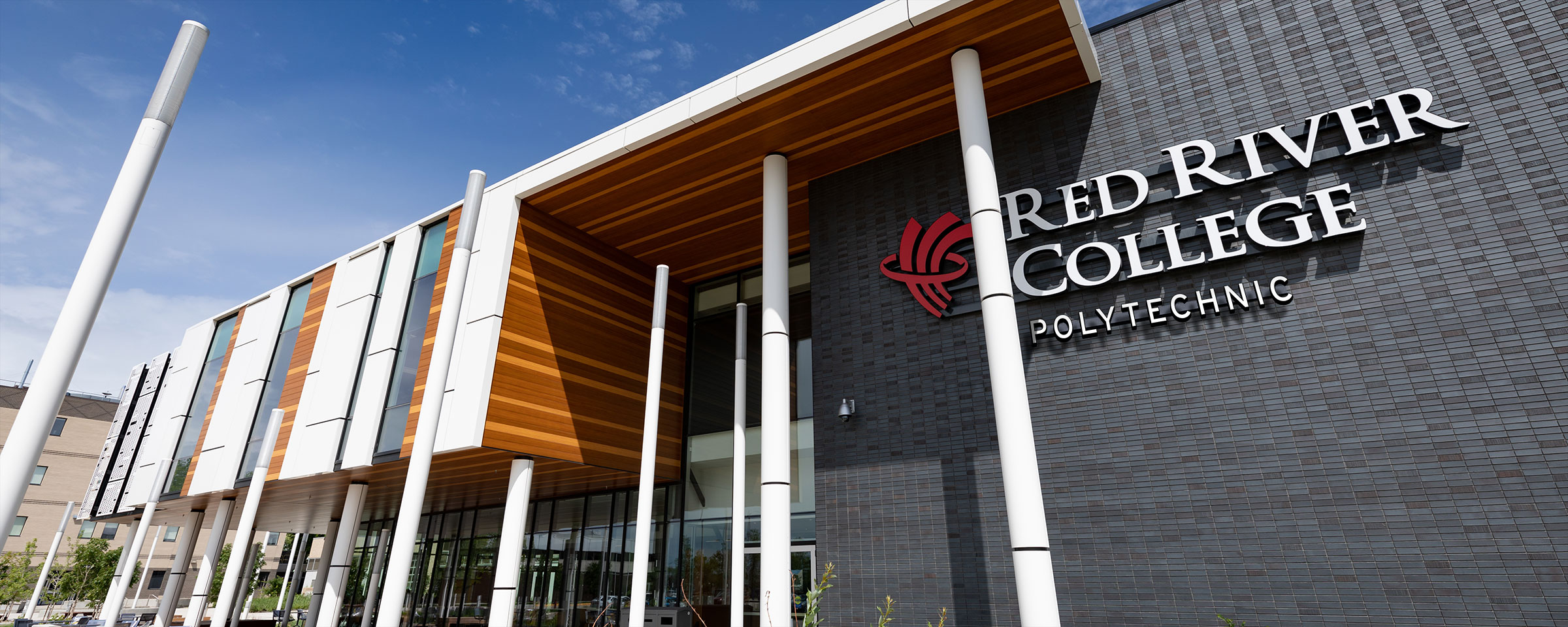
Nursing students complete Simulation Centre scenario focused on distrust and racism in the healthcare system
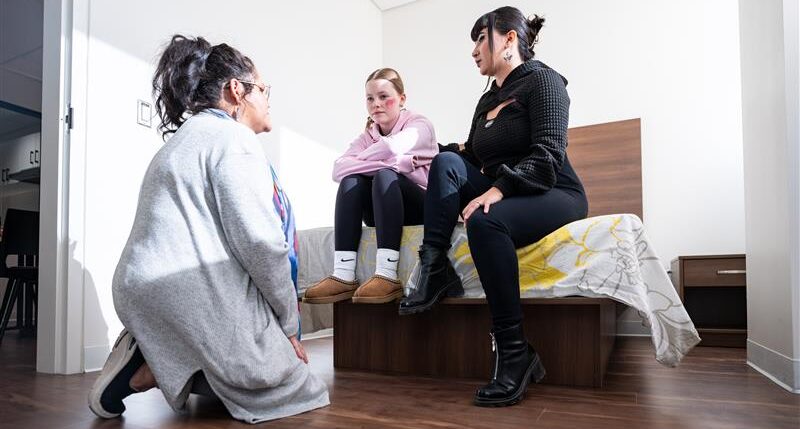
New scenario trial highlights the realities the impact of racism has on patients and provides nursing students the opportunity to cultivate professional, compassionate responses to racialized patients.
Experience has a huge impact on learning. That’s why students in the Bachelor of Nursing program walk through different scenarios at RRC Polytech’s Simulation Centre to cultivate both their practical medical skills and their interpersonal communication skills.
In Community Health, a course taken in the final term of Nursing education before going on to practicum and clinical rotations, students put their medical knowledge and patient communication skills to work in a high-stress scenario that challenges them to bridge a gap created by distrust in the healthcare system and institutional racism.
“We all have assumptions and biases – how our families raised us, what we see in the world, what people say to us, what we see in the media – and it’s up to us to question that. Am I thinking logically? Where’s the evidence? What does proof look like? Are these assumptions valid or something that was ingrained in me by someone else?” says Brikena Dibra, one of the RRC Polytech instructors who designs scenarios to help students train in a safe environment.
Dibra was an Indigenous nursing officer for northern Manitoba communities before she became an instructor at RRC Polytech. She brings the lived experience, knowledge and education needed to inform the content Nursing students are learning in the classroom and applying in the simulated scenarios. She says that while it’s important to understand the past and how our histories have created the kinds of structural environments that cultivate racism, it’s just as important for students to know what to do in the moment when presented with these situations.
Scenarios like this one confront students with difficult questions that will be answered during their careers. With the theory and preparation, documented definitions, and knowledge of history and institutional designs – the question of, “Do students recognize racism?” becomes: Are they going to be advocates? Are they going to use this knowledge to build trust with the people to whom they’re providing services? Are they going to say something when they witness other healthcare professionals engaging in racist behaviour?”
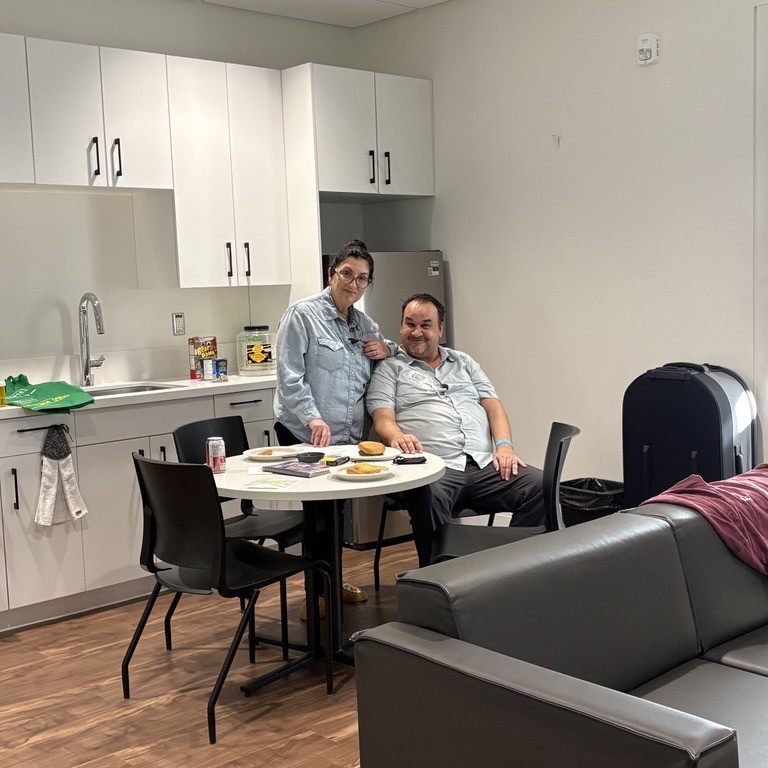
“You have to be brave,” says Diane Ammeter, another RRC Polytech instructor and scenario designer. “That’s the only way we create change. We want more nurses being those advocates against racism – but first, they have to recognize it and know what they’re going to do about it.”
Terri-Lynn Anderson, Chair, Continuing Education and Micro-credentials, was consulted during her time as Truth and Reconciliation Coordinator with the questions for the simulation. She helped shape the simulation to nurture the learning outcomes and ensure the students’ psychological safety while providing input to make the actors’ scripts realistic.
“The students must feel a little discomfort, but we found that the discomfort was a bit too much – discomfort can help create behavioral changes in the way that nurses conduct their work, but that discomfort cannot impede the students’ ability to learn and take away actual learning,” says Ammeter.
“The discomfort here is what they’ll experience in their careers in real life situations, but it can be helpful to be able to experience it first in a controlled environment where they can ask questions, apply different strategies, and learn what might be the best approach for a high-stress situation – these simulated environments also mean that the way the students respond don’t have high stakes like they might in life-or-death situations.”
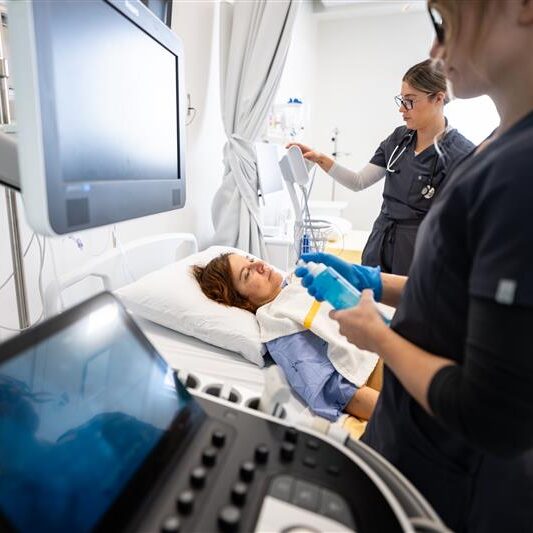
Dibra and Ammeter acknowledge that cultural competence and safety don’t happen overnight and not everyone will always know what to do or say in all situations. With this simulation, students experience the biases seen every day in healthcare environments firsthand. A debrief following the simulation provides students with a safe space to share their thoughts and reactions with guiding questions to help students understand their responses during a high-stress situation.
Dibra and Ammeter said that when they trialed the scenario, they got fantastic feedback from participants. Students were amazed – they’d never experienced that kind of discomfort in a professional environment and said that all students should do the simulations.
In class, students work through case studies that are both real-life examples and fictional situations (to protect client information).
Dibra says understanding real case studies are exactly why dismantling racism is critical – and it starts during the education and training stage.
The pair of instructors are planning to design future simulations that take racism into account and encourage students to question what they think they know – to deconstruct their assumptions, adapt to stressful situations, and deliver the best possible outcome for their future patients.
To learn more about the Simulation Centre, visit the page on our website.
Please note: the specific details of the scenario are kept confidential so students can enter the trial without prior influence on decisions they make in the simulated environment.