From Manitoba to Milano Cortina: how four RRC Polytech alumni are flexing their skills at the Olympics
At RRC Polytech, we know that a polytechnic education can take you far. Right now, a handful of alumni have taken their skills all the way to Italy for the Winter Olympics, Milano Cortina 2026.
Taking a break from their busy schedules, four Creative Communications (CreComm) alumni shared some pictures and perspectives from the Games – read more about how their time at the Polytech has prepared them for a career beyond borders.
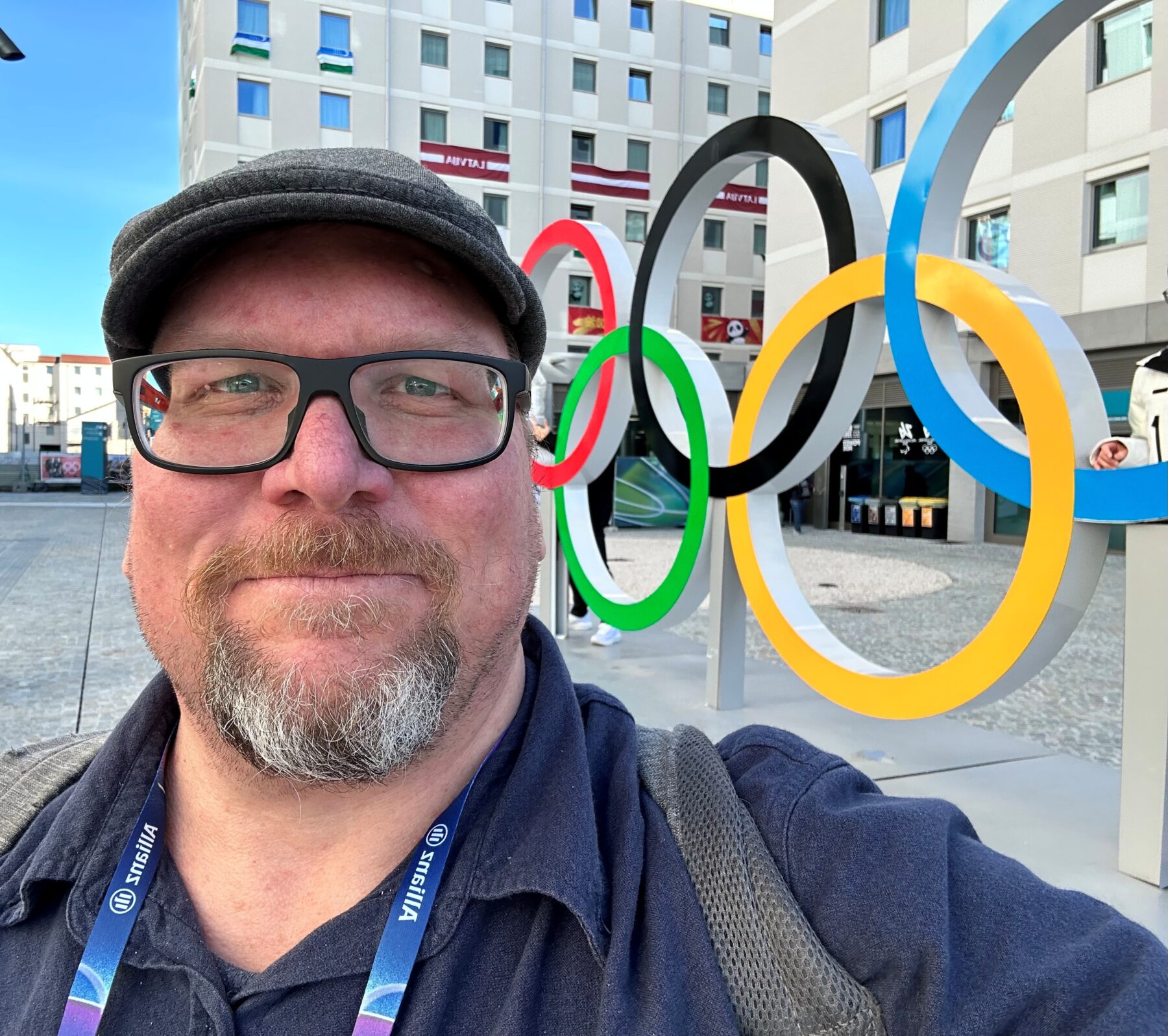
Mike McIntyre
Sports Reporter/Winnipeg Jets Beat Writer, Winnipeg Free Press
Creative Communications, class of 1995
How does it feel to have the experience of working at the Olympics?
It’s truly a dream assignment, one I have been hoping and wishing I’d get to do for a very long time. I actually came very close four years ago, with plans in place to head to Beijing. But we ultimately decided to pull the plug just a few weeks before I was set to leave due to very harsh pandemic-related conditions that were in place which could have meant being detained well beyond the conclusion of the Games should a positive test occur.
Despite the fact Manitoba has a very small team at these Olympics with just five athletes, all in hockey, I’m extremely grateful the Free Press saw value in sending me. And, as I’ve discovered here, there are countless stories to be told that have local connection – far more than I could have imagined. As I write this, with four full days remaining in the Games, I’m up to 41 unique stories/features for the newspaper, and I should exceed 50 by the time we wrap up here. I can honestly say this is the hardest I’ve worked in what is now my 31st year in journalism, but also the most fun I’ve had – by far. Rewarding. Fulfilling. Inspiring. And truly memorable.
How did what you learned in CreComm, or the connections you made in the program, help you to be where you are today?
In a nutshell: Everything. How to think on the fly. How to work both independently and as part of a team. How to be resourceful. How to communicate with people in all walks of life and all situations, from the most difficult circumstances when I was on the crime beat to, at times, the most triumphant and joyful on the sports beat. How to write with clarity and focus and to draw readers in. How to identify story angles and ideas, perhaps in places you weren’t even looking or thinking the existed. How to be able to pivot and improvise.
What is one thing you learned in CreComm that you still use in your work today?
There are two: I was not the greatest typer coming out of high school when I joined CreComm, but it’s something I worked on a ton while in the program and it truly serves me well today. The ability to type quickly and accurately – I can do about 100 words per minute – is extremely valuable when you are often rushing to meet deadlines, which is a huge part of working on the beats that I’ve had (crime, then sports).
But truly, the most important one is time management. The day-to-day can become almost overwhelming at times if you aren’t able to juggle multiple tasks at once and maintain a clear line of thinking (and your sanity, of course). The workload in CreComm certainly helped prepare for the real-life challenges this job presents, and for that I am very thankful.
What advice do you have for someone who is considering going into CreComm?
Obviously, the world has changed significantly from the one that existed when I entered the program, at the age of 18, back in 1993. Upon graduation in 1995, there were ample, lucrative journalism jobs for those who were looking. That said, there’s no question in my mind the need for what we do is greater than ever.
Although the way journalism is being delivered has obviously evolved, it’s still an extremely valuable and rewarding career that I would encourage anyone to consider pursuing – especially if you are curious, creative and want to make a difference in your community.
Anything else you’d like to add about your career or working at the Olympics?
I’ve been extremely fortunate to essentially have two careers – one as a crime and justice reporter for two decades, which includes authoring six books, hosting a nationally-syndicated radio show for more than a decade and being involved in various documentary and television projects. And now, I’m in my 10th year on the sports beat, getting to attend incredible events like the Olympics, Stanley Cup Finals, Grey Cups, an NBA Final, professional golf tournaments around the world and be on the beat of the Winnipeg Jets, for all home and road games, for so long.
The best part of it all is doing it in my hometown, and for the same employer, the Free Press – which continues to invest in independent local journalism in a way few media outlets in this country due. I take none of it for granted and still go to work pretty much every day, now at the age of 51, feeling like I’m the luckiest person on the planet. I do what I love, and I love what I do.
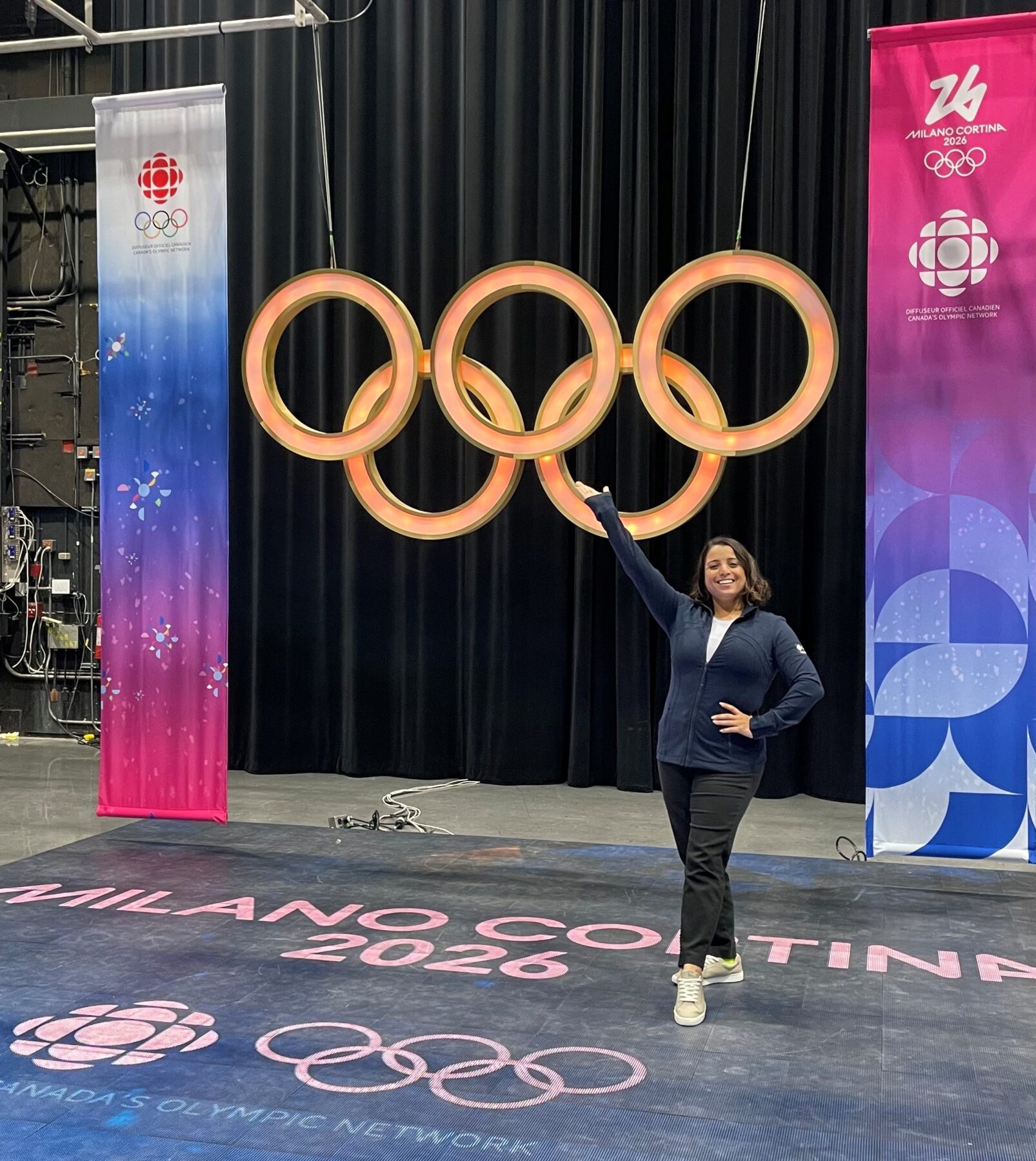
Daniella Ponticelli
Creative Communications, class of 2012
How does it feel to have the experience of working at the Olympics?
This is Daniella’s second Olympics as a play-by-play commentator (also called 3X3 Basketball for Paris 2024 from Toronto). For Milano Cortina, she called women’s hockey and men’s and women’s ski cross.
Calling Olympic hockey has been an incredible experience for so many reasons. First, to go from starting in university hockey to calling at the Winter Olympics in four years is something I couldn’t have imagined. Secondly, making history with three other women as the first two all-female Olympic hockey commentators is something special. And third, it’s the culmination of work calling the last three IIHF Women’s World Championships that allowed me to be ready for this moment. I knew these athletes and their stories; I’ve met and spoken to many as well.
My work in the PWHL also lends itself to the international game as these Olympic athletes are stars in North America. Calling remotely is the reality for many Olympic commentators in Canada and certainly keeps us focused on what the audience can see — as that is our only view. We had some incredible angles of goals, shots and hits that were so clear it helped with analysis at times. Ultimately, nothing beats being there, but technology is changing sports broadcasting in this country.
How did what you learned in CreComm, or the connections you made in the program, help you to be where you are today?
Everything I learned in CreComm got me to where I am. Camera work and editing is how I first got into covering sports in a meaningful way as a host, producer and videographer for a professional lacrosse team to working for the Saskatchewan Roughriders at Mosaic Stadium. From there, I began networking and trying new roles based on my television and radio background (built on what I learned at RRC Polytech and the jobs that can be traced back to internships). All the experiences I gained in that program made my personal journey from news journalist to professional play-by-play announcer possible.
What is one thing you learned in CreComm that you still use in your work today?
I have to give so much credit to Joanne Kelly, who thankfully joined CreComm faculty in my final year. Her approach to live television and how to interact with your environment, talk about what you see, expand on the picture and inform the audience in an authentic way is how I still aim to carry myself on any broadcast. Whether it’s covering a blizzard, hosting a telethon or calling a gold-medal game.
I remember setting up a standup for a news story at a specific location that required permission from the business owner. I got back to class only to hear Joanne say the standup lacked substance. And it did — what I said didn’t suit where I was and honestly didn’t add much to the story. So off we went to do it again, but better. That has stayed with me: do your work with intention from the start and pay attention to what you’re saying and how you’re saying it because that impacts how a story or a game or the news is received. I could go on and on about what I still use from CreComm, but attention to detail, being versatile and managing deadlines are the big three for me.
What advice do you have for someone who is considering going into CreComm?
My advice is simple: go in with an open mind and the humility to fail (repeatedly) and grow. I wish I hadn’t been so intense about getting everything right or not messing up. I was young and going through so much personally, so I’ve forgiven myself that, but I’d lighten up more if I could do it again.
CreComm is where you get to learn, explore your interests (and what you didn’t think were interests) and make mistakes. Mistakes are part of the professional journey so getting comfortable with moving on and improving is invaluable. Also, this is one of the few places where you’ll be able to pick the brains of incredible teachers and mentors, along with fellow students, about creative things. Lean into that and try new things!
Anything else you’d like to add about your career or working at the Olympics?
I’m just grateful that CreComm showed me how interconnected the media industry is and that you can change jobs, careers, passions and carve your own path as you go along. I never thought I’d be a full-time freelance play-by-play announcer after a decade in news, but here we are. I’m excited for more women to find their voice in sport, if that’s their passion, and trusting themselves to go for it.
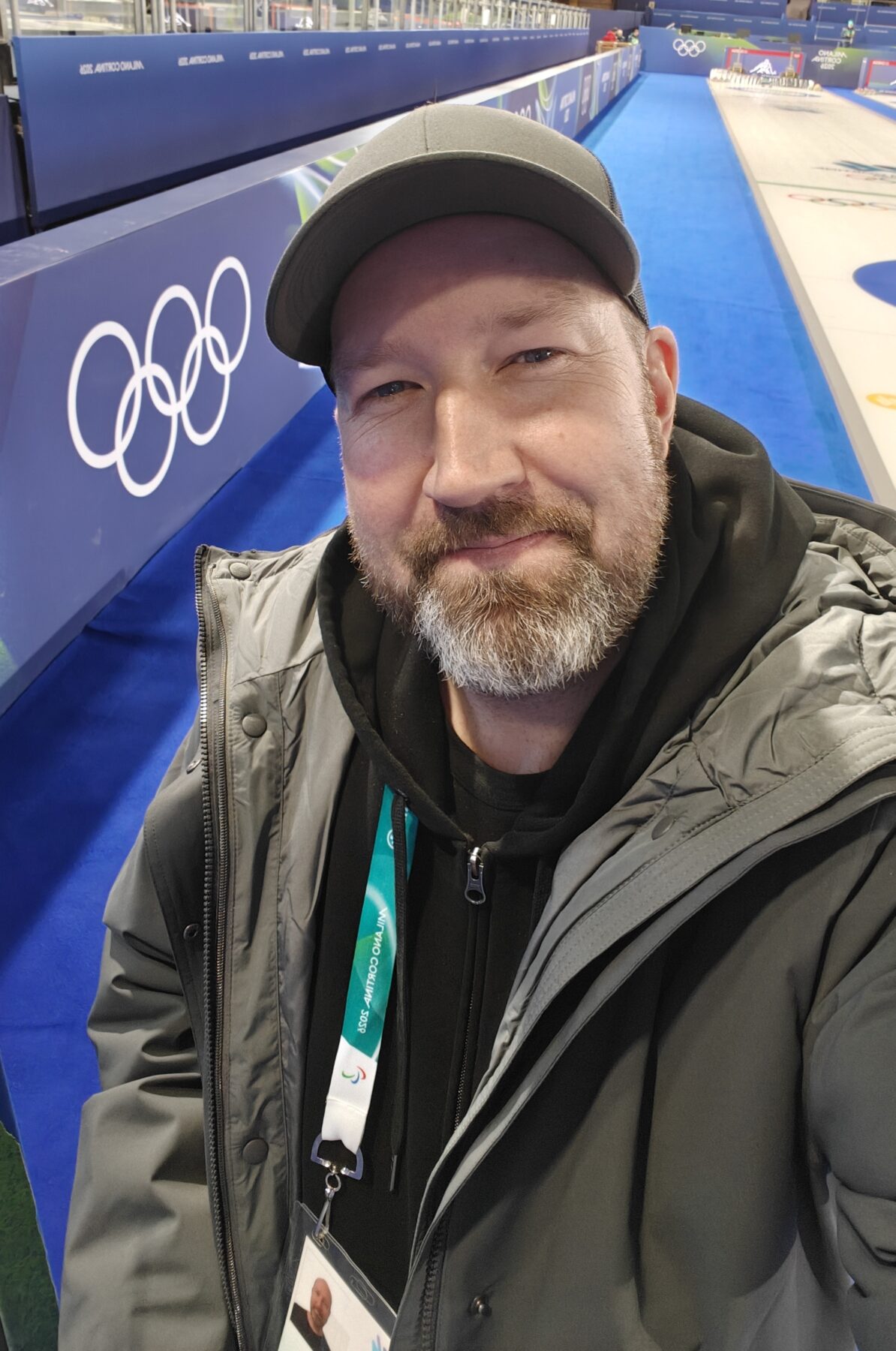
Tanner Grywinski
Creative Communications, class of 2004
How does it feel to have the experience of working at the Olympics?
My experience at the Olympics this year has been nothing short of amazing. It’s been long hours and heavy workloads, snowstorms, incredible pizza and pasta, and hours spent on a bus up and down a mountain to and from our hotel. My assignment has been a challenging new gimbal camera position for the curling events.
When I’m not walking backwards following the athletes on the ice and keeping them in focus, I’ve gotten to explore Cortina D’Ampezzo and the surrounding mountains, shooting scenic beauty shots that start off each broadcast. I’ve met amazing fans, athletes and volunteers, and added a different element to the broadcast from my cinematic camera position that hasn’t been included in previous Olympic broadcasts. It’s been physically demanding, but I’ve gotten to work with new friends and old colleagues, and I’ve experienced a part of the Winter Olympics that I’ll never forget.
How did what you learned in CreComm, or the connections you made in the program, help you to be where you are today?
My CreComm experience really helped me be able to navigate many changing environments and adapt to new assignments. The whole reason I’m here can be traced back to the connections and contacts I’ve made in almost 25 years of working in television and broadcasting since my time at RRC Polytech. It was essential for me to know how to properly network and keep in touch with colleagues across Canada, following their careers and achievements (not just on Instagram but truly taking the time to connect with them). The communication skills I started refining throughout CreComm really helped set me up for the amazing career I have.
What is one thing you learned in CreComm that you still use in your work today?
One thing I learned in CreComm that I still use is the advice one of my journalism instructors gave me. If you’re ever upset or discouraged or displeased about something and feel you need to voice your opinion, go ahead and write the email that you want to write while your emotions are up, step away from it for a few hours, and then go back and read it again. Do you still want to send that email, or will you create more problems for yourself? This is a career that is based on proper and respectful communication, and your reputation follows you wherever you go.
What advice do you have for someone who is considering going into CreComm?
CreComm is an amazing place to learn how to multitask and manage multiple different projects at once. I remember thinking about how crazy it was to have so much on the go, with different deadlines and projects and whatever. It doesn’t get easier once you’ve finished the program. Being able to decide how to manage your time, your clients, your office, and your co-workers is essential. A job in broadcasting or media can be absolute chaos, and also the most incredible career in the world.
Anything else you’d like to add about your career or working at the Olympics?
I’ve constantly pushed myself, always priding myself on being adaptable, accessible and approachable. I’ve traveled all over the world, from the Arctic Circle, to Sumatra, to here in Cortina at the Olympics. I’ve never stopped learning new skills and applying them to my day to day life. I owe so much to the people I met and experiences I had during and after CreComm. As long as you keep saying “yes” and you aren’t a jerk to the people you meet and work with, your creativity will open doors in the future you don’t even know exist now. Stretch and take care of your body. Embrace the chaos, and never stop adapting.
Kyle Jahns
Media Attaché, Canadian Olympic Committee; Lead, Communication & Media Relations, Curling Canada
Creative Communications, class of 2013
How does it feel to have the experience of working at the Olympics?
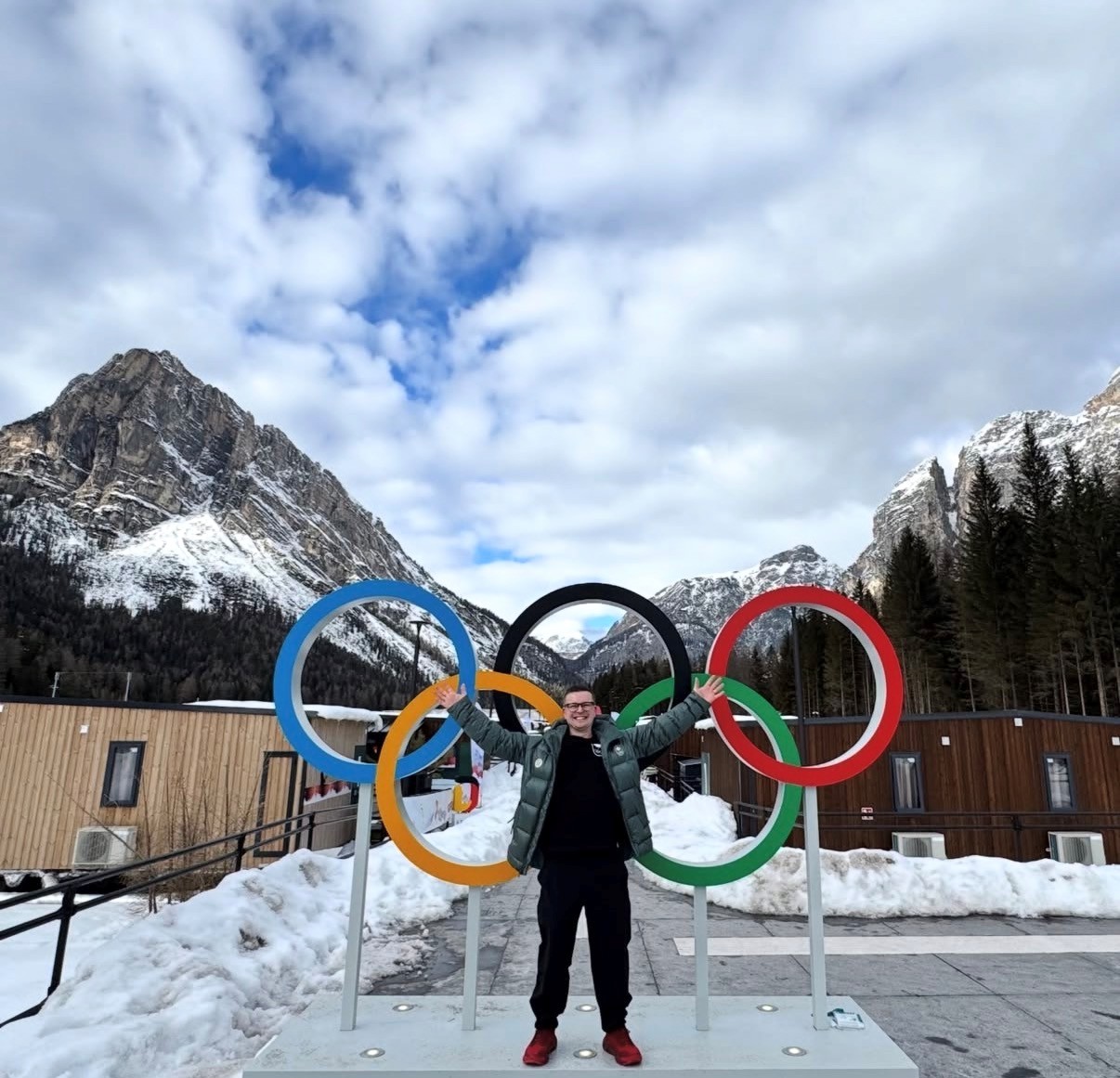
Working at the Olympics, especially in a support role with Team Canada is hard to put into words. It’s a deeply meaningful and, while challenging at times, rewarding experience. All three of my Olympic experiences have been different and I’m proud to have grown in the impact provided to our teams and the responsibilities I have acquired in supporting our team on this stage.
How did what you learned in CreComm, or the connections you made in the program, help you to be where you are today?
CreComm helped me gain the tools needed for not only how to do the job, but how to think. Learning how to ask the right questions, write clearly and understanding your audience are key to success. That helped me gain confidence when meeting industry professionals out of school. Those connections are ultimately what helped me find the career path I am on today.
What is one thing you learned in CreComm that you still use in your work today?
Clarity matters. Finding ways to express complex thoughts and ideas clearly are essential to the job. That was a skill I learned at RRC Polytech and is still something I practise in my day-to-day life and strive to improve.
What advice do you have for someone who is considering going into CreComm?
Say yes to opportunities, especially if they make you uncomfortable. It’s okay to make mistakes because they learning opportunities. Take advantage of any networking, volunteer positions and internships available to you because it can open so many doors in your career. With the wide skill set you learn in CreComm you don’t have to worry if your career path is mapped out. This program can open many doors for you.
Anything else you’d like to add about your career or working at the Olympics?
My path to working at the Olympics wasn’t linear. It took years of working smaller jobs, long hours and continuous learning. But if you have a passion or niche you are passionate about, be consistent in achieving your goals because it can lead to big opportunities.