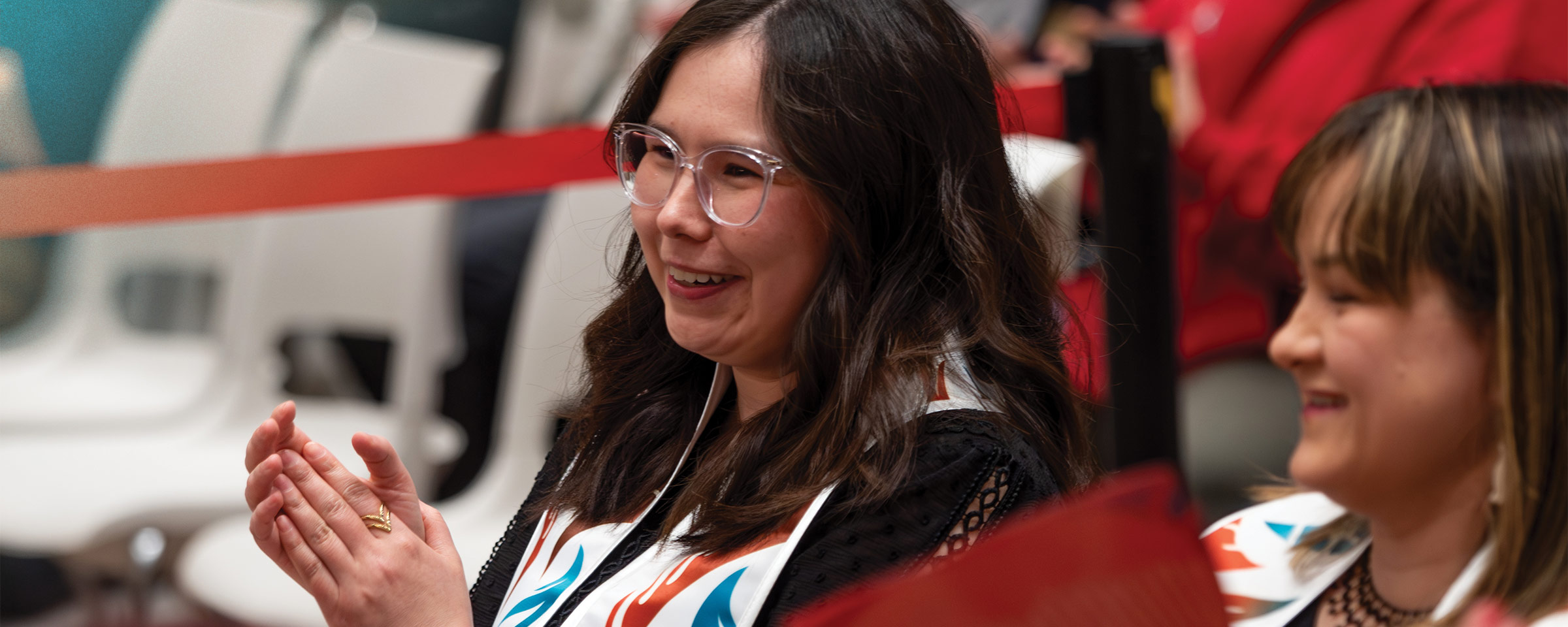
woman wearing an Indigenous Education sash

Indigenous Education

Events

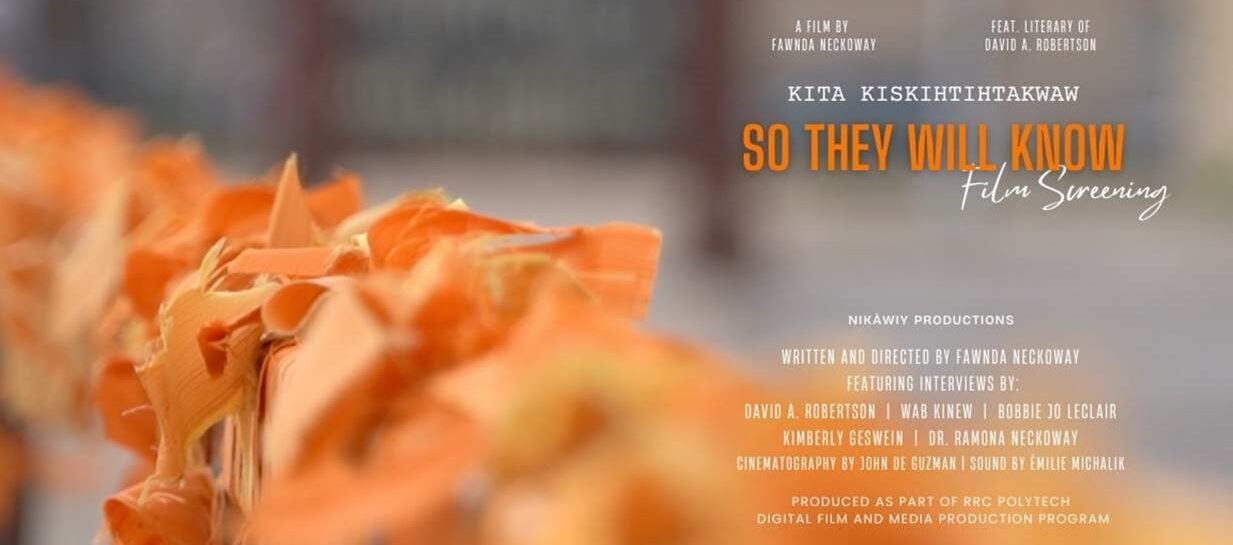
Kita Kiskihtihtakwaw: So They Will Know – Nov. 10

November 9, 2022

RRC Polytech’s Digital Film and Media Production Program and Nikâwiy Productions are proud to present the first public screening.

Fawnda Neckoway makes her directorial debut in this heartwarming 20-minute film in honor of a hopeful future when it comes to discussing a difficult part of history with the young ones in our lives. She is joined by community leaders who offer valuable insight and resources in support of carrying on important conversations.

Inspired by an innocent question, and the literature of author David Robertson, STWK features interviews with David Robertson, Wab Kinew, Bobbie Jo Leclair, Kimberly Giswein and Dr. Ramona Neckoway.

Moderated by Aaron Zeghers, the evening will feature an opening film A Moccasin Creation Story, and host a brief informative session with Industry Representatives such as Film Training Manitoba, Red River College Polytechnic and the Winnipeg Indigenous Filmmakers Collective. All are welcome! Light refreshments will be available. 

  • Thursday, Nov. 10, 2022 • 7:30pm
  • Roundhouse Auditorium, Manitou a bi Bii daziigae, Exchange District Campus

Limited seating available. Tickets are free.

About Kita Kiskihtihtakwaw: So They Will Know

The name of the film was gifted from her aunt who said in a conversation ‘they need to know’, which later translated to the Inthinew (Cree) language as Kita kiskithihtahkwaw: ‘So They Will Know’. We acknowledge the elders/survivors who lived through Residential Schools and remember the ones who did not make it home.

Movement & Wellness with Dawn Chartrand – POSTPONED

November 9, 2022

Are you looking for new ways to engage your body?

Join Indigenous Yoga instructor Dawn Chartrand for a family-fun night of Yoga with an Indigenous infusion! Her practice focuses on introducing Indigenous people to healing and wellness through art and Yoga.

  • Wednesday, Nov. 30, 2022 6pm – 8pm
  • Roundhouse Auditorium, Manitou a bi Bii daziigae, Exchange District Campus

All attendees can register by emailing Terri-Lynn Anderson at tlanderson@rrc.ca. Register now – space is limited!

About Dawn Chartrand

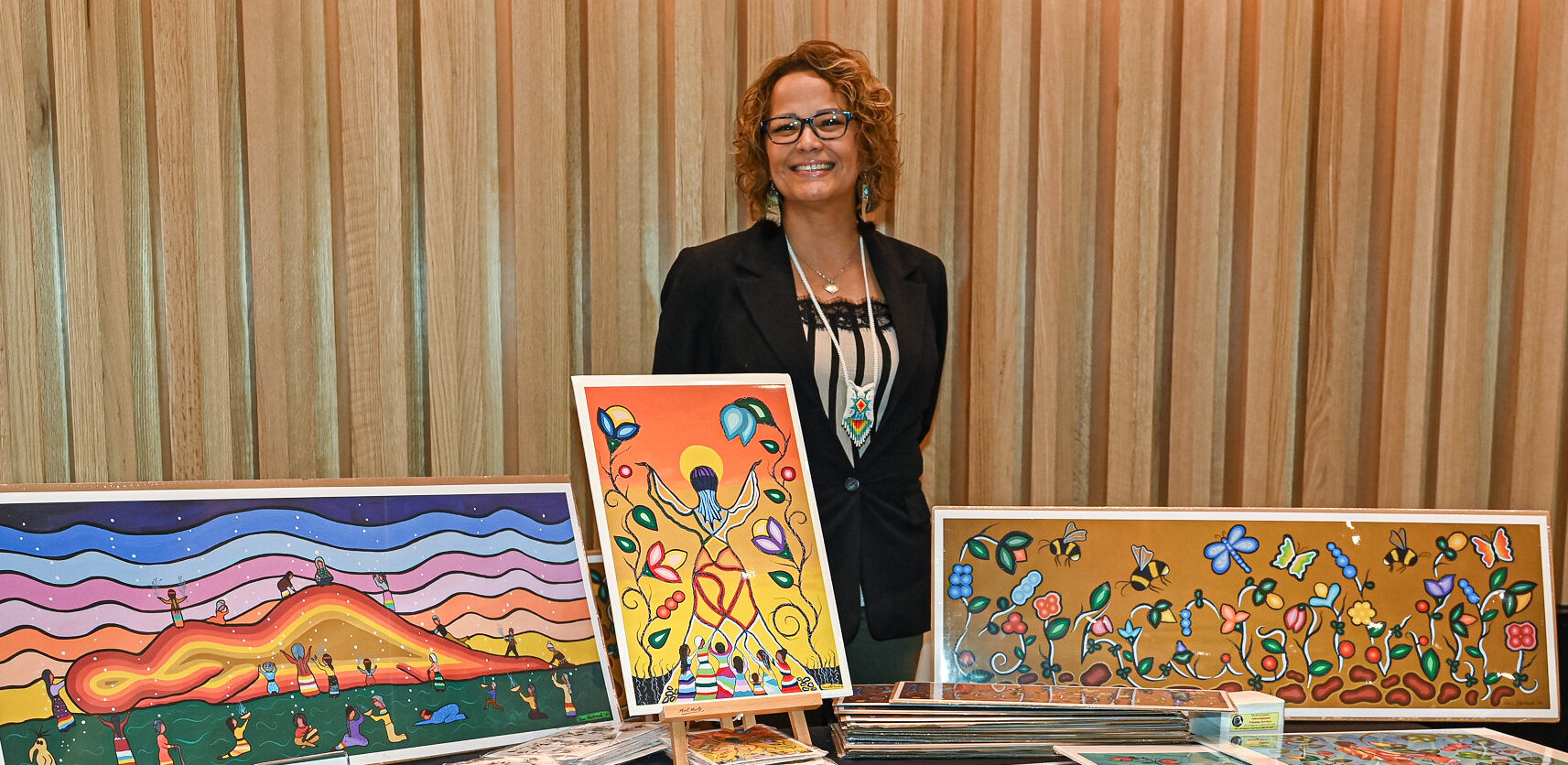
Dawn Marie Chartrand is a visual artist, musical entertainer, and yoga instructor.  She is a proud wife, mom of 4 and grandmother of 9, and is a member of Rolling River First Nation in Manitoba.

Dawn started painting in 2017 and was immediately drawn to creating Indigenous themed art. Dawn considers painting to be a very special form of wellness and self-care, and she has sold many of her paintings throughout Canada. Dawn offers painting and wellness workshops as a means of introducing others to the healing properties of creating art.

After 10 years of practicing yoga and driven by the low representation of Indigenous people in mainstream yoga classes, Dawn studied to become a yoga instructor and completed her training in May 2022. She has now launched her own yoga business, “OM-Digenous Yoga & Wellness”, and teaches several yoga classes per week with special focus on drawing Indigenous participants. Dawn’s intention is to create a safe and accessible environment where Indigenous people can feel welcome to participate, learn, and benefit from regular yoga practice.

From the North to Now

November 7, 2022

Today, RRC Polytech celebrated International Inuit Day with students, staff, faculty, and members of the Manitoba Inuit Association.

The event was livestreamed from Notre Dame Campus’s Indigenous Support Centre to the Exchange District Campus’s Indigenous Support Centre, where folks from both campuses enjoyed a pizza lunch, group activities, presentations, and a performance.

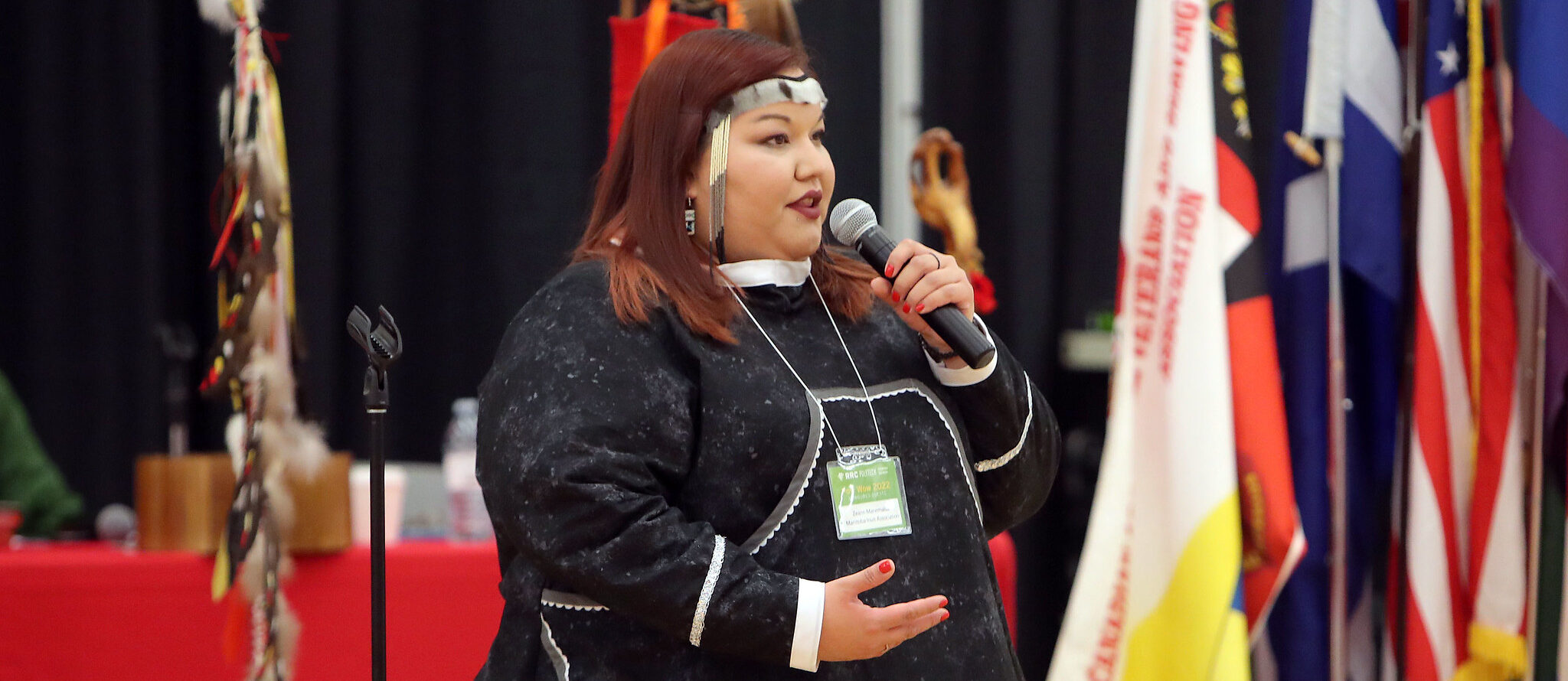
The celebration started with a three-song performance by Inuit throat singer Zeann Manernaluk. She explained that throat singing was invented by Inuit women while men were out hunting, and traditionally two women would throat sing together until they laughed or got tired.

Victoria, an Inuit Student Support Worker with the Manitoba Inuit Association, kicked off the group activities with a rundown of their role as an organization in Manitoba: a resource that supports any Inuit people in Manitoba and connects them with services to meet diverse and ever-evolving needs. Victoria presented traditional Inuit clothing and tools and the stories behind them. She demonstrated and invited everyone to compete in Inuit games to win prize packs from the Manitoba Inuit Association.

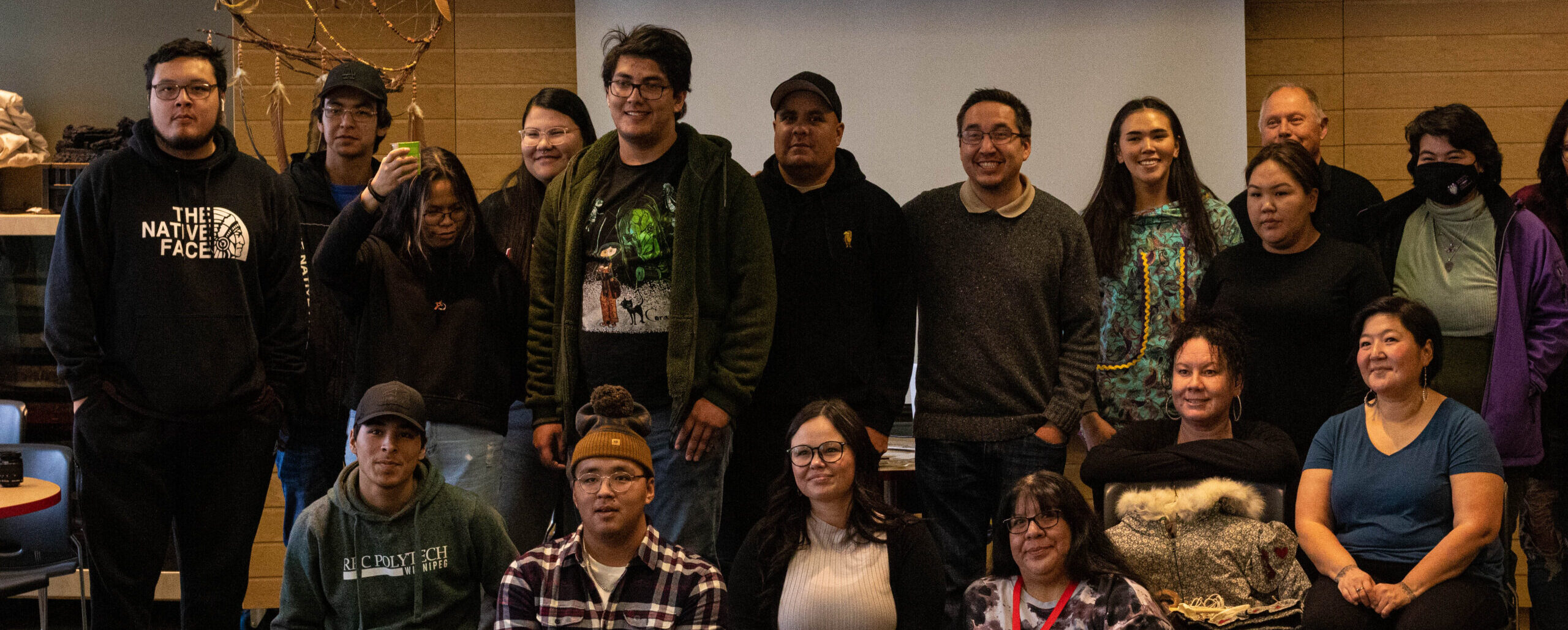
College Transition students Luke Kusugak and Andrew Owlijoot said a few words about being young Inuit men coming from Rankin Inlet, Nunavut: they’re learning to be more open about their emotions, coming from a place that doesn’t have the infrastructure to focus supports around mental wellbeing.

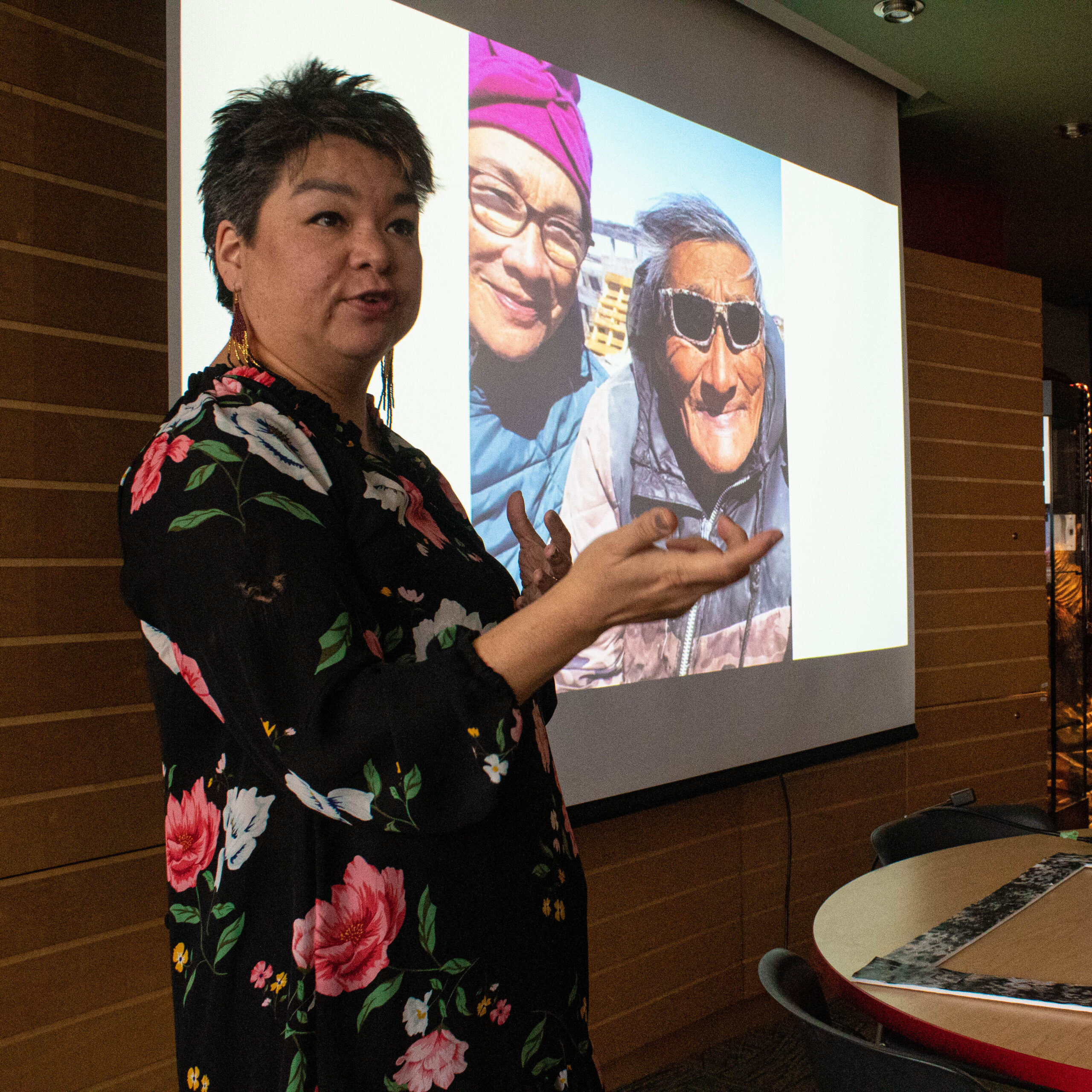
Chase Powell, another Inuit student in the College Transition program, prepared a PowerPoint presentation to share a brief history of his home Rankin Inlet, Nunavut and his life growing up on the west coast of the Hudson Bay. His mother Esther, who happened to be in Winnipeg for a medical appointment, joined him and shared a short family history and the nature of Inuit life before colonization. PowerPoint pictures depicted the landscape of the north, Chase’s cabin on the coast, caribou on their mating grounds, roads enveloped in blowing snow, and old black-and-white pictures of Chase’s and Esther’s ancestors.

Esther Chase, an Inuit woman from Rankin Inlet, points to a PowerPoint slide of a photo of her family members.
Esther sharing her family history.

Chase explained that the education in Rankin Inlet didn’t meet his expectations. Teaching was not based on students’ needs, but rather was based on the resources that were available. And resources were basic – there were no supports for students with special needs. The schools had some Inuktitut language classes but didn’t have any Inuit culture classes.

After high school, Chase decided to pursue education. Originally he had planned to attend the University of Winnipeg for a Bachelor’s Degree in Education, but his high school grades weren’t satisfactory. A guidance counsellor at his high school suggested that he try the College Transition program at RRC Polytech, because it would help him get his grades up and prepare him for college life in the south. He applied and has since started on his path to his future goals.

Chase hopes to get his master’s degree in education so he can become a principal. He explained that southerners come up to the north and fill up high-ranking positions in organizations and in government because they had easier access to quality, focused education. Chase wants to change that—having local representation in these positions is important because people who have grown up in the north have a lived experience that can more effectively contextualize the unique needs of learners in Nunavut. He wants to influence change in Nunavut’s education system as a future administrator, to help the learners of future generations obtain the education they need to get into these high-ranking, decision-making, community-impacting positions.

For now, Chase, Luke, Andrew, and their colleagues will continue with the College Transition program and work toward their professional and personal goals. We can’t wait to see where they’ll go!

Indigenous Language and Bannock Making – Nov. 2

October 27, 2022

Have you ever heard the term “Miigwech” being used by our Anishinaabe friends and wondered what it meant?

Or maybe you would like to learn how to say a simple greeting in Anishinaabemowin?

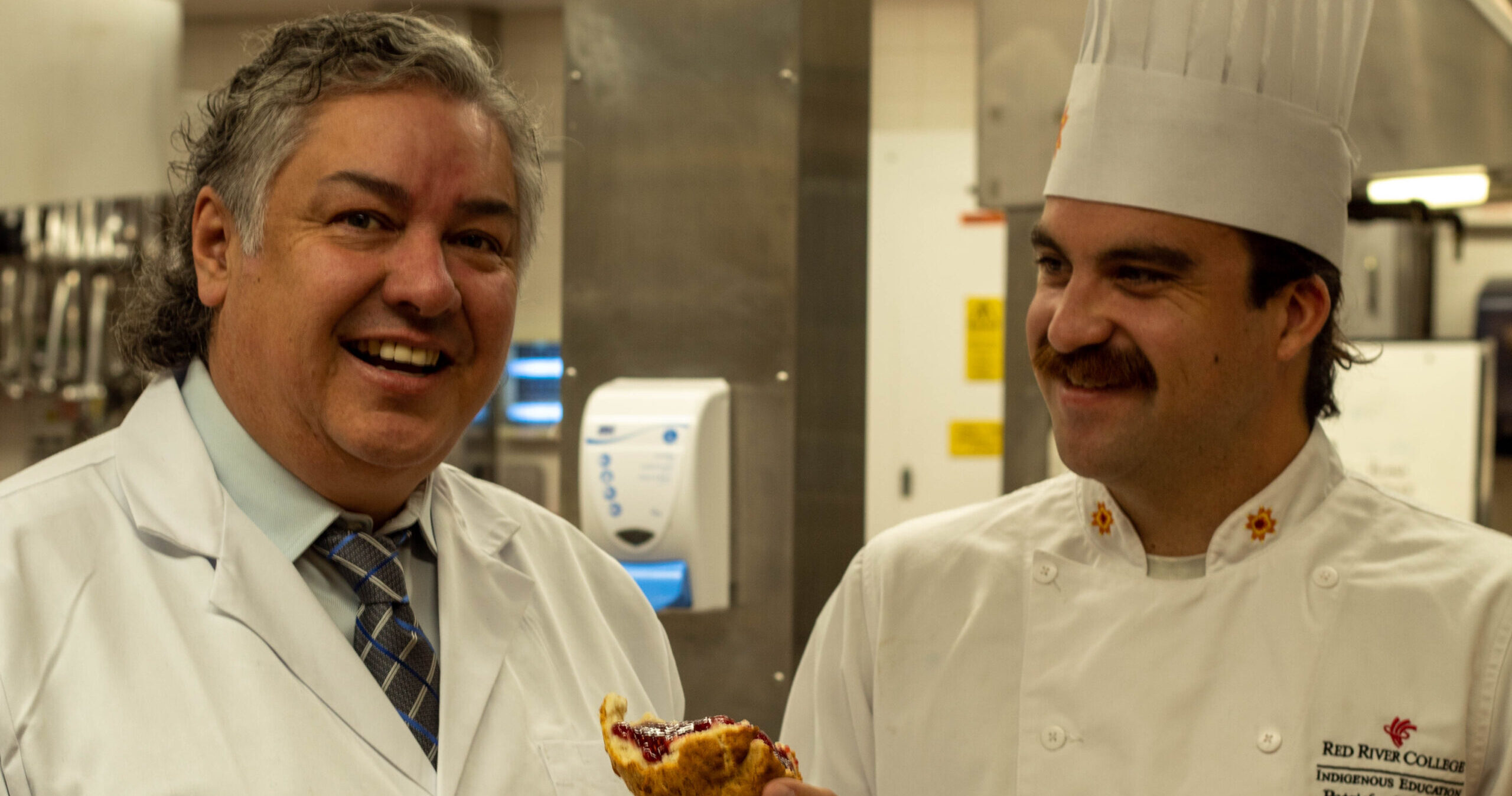
Join us next Wednesday to learn how to make bannock, a type of bread that is a staple and sometimes a treat with jams, butter or honey for Indigenous people, with Instructors Corey Whitford and Chef Patrick Anderson as part of Inclusion Week!

  • Wednesday, Nov. 2, 2022 3:30pm – 5pm
  • F209 Notre Dame Campus

Register for this fun, interactive workshop in which Indigenous Languages Instructor Cory Whitford shares his very own bannock recipe while simultaneously immersing participants in the basics of Anishinaabemowin.

Take-home bannock making supplies will be provided for participants. Space is limited, so register early!

International Inuit Day – Nov. 7

October 25, 2022

All staff and students are invited to join us to celebrate International Inuit Day!

Four College Transition students from Rankin Inlet, Nunavut — Chase Powell, Andrew Owlijoot, Luke Kusugak, and Logan Siksik — will be sharing stories about Inuit culture, teaching a few words in Inuktitut, and leading us in some traditional Inuit games.

We’re excited to welcome guests from the Manitoba Inuit Association, who will be joining in the celebration.

The event will be livestreamed from NDC (F209) to EDC (P407), so students at both campuses can take part.

  • Monday, Nov. 7, 202211am – 1pm
  • F209 Notre Dame CampusP407 Exchange District Campus

Pizza will be provided for lunch!

If you have any questions, please contact Terri-Lynn Anderson at tlanderson@rrc.ca.

Halloween Costume Contest – Oct. 31

October 25, 2022

Are you ready for Halloween?

Drop by one of the Indigenous Student Support Centres on either campus and see Terri-Lynn Anderson or any support staff to enter the Costume Contest!

  • Monday Oct. 31, 20228:30am – 4pm
  • F209 Notre Dame Campus • P407 Exchange District Campus

Choose your category:

  • Single costume
  • Duo costumes
  • Group costumes

Juices boxes, coffee, and candy will be available throughout the day.

Names of winners for the costume contest will be posted in the centre and they will be contacted.

Welcome Celebration 2022

September 29, 2022

Come and join us for a fun-filled day of activities, entertainment, and food, while having the opportunity to meet the Indigenous Student Supports Team, fellow students, and to win prizes!

Our Indigenous Support Centres at the Notre Dame Campus and Exchange District Campus will be open for the celebration with baked goods, coffee, pizza, and pop all throughout the day. Special entertainment includes the Walking Wolf Singers from 12:00 to 1:00 p.m. at the Notre Dame Campus.

The event is free of charge and open to all RRC Polytech students.

For any questions, please contact Event Coordinator, Terri-Lynn Anderson at tlanderson@rrc.ca.

MMIWG2S Red Dress Pin Workshop

September 26, 2022

Join us for an evening workshop at the Indigenous Student Support Centre, to create a red dress pin with Gerri-Lee Pangman. The event is intended as a way to connect while opening up a dialogue around Missing and Murdered Indigenous Women, Girls and Two Spirit (MMIWG2S) folx.

Participants will complete a red dress pin to wear on October 4, to recognize and bring awareness to MMIWG2S.

The event is free of charge and open to RRC Polytech employees and students.

  • Date: October 3, 6pm-9pm
  • Location: Indigenous Student Support Centre, F209, Notre Dame Campus. Click here for a map.

Food and refreshments will be provided for participants. Advance registration is required as capacity is limited to 20 participants.

For any questions about the workshop, please contact Terri-Lynn Anderson at tlanderson@rrc.ca.

About the facilitator:

Gerri-Lee Pangman (McPherson) is a member of the Pegius First Nation. She was born and raised in the heart of Winnipeg, Manitoba. She is a wife and mother of four beautiful children, two sons, and two daughters and just recently became a Kohkum last July to a healthy beautiful grandson.

In 2013 Gerri-Lee and her family tragically lost her sister Jennifer Dawn McPherson who lived on Hanson Island, BC., and also, her Aunt Jennifer Johnston in 1980 in Winnipeg. After the great losses in her family to murder, she is now fully aware of the tragedies and injustices faced by our Indigenous Women, Girls and Two Spirit. She works hard to heal and bring light to the issue of Missing and Murdered Indigenous Women, Girls and Two Spirit (MMIWG2S).

During her grieving and trauma after losing her sister, Gerri-Lee found the strength to cope with her sister’s loss by healing through art-making, earrings, ornaments, dreamcatchers, and stained glass to honor her beloved sister’s memory. She honors her sister’s spirit through J.D.M. Indigenous Designs with her older sister Kim. She also participated in community activities and programs such as Medicine Bear Counseling by facilitating weekly beading circles with other MMIWG2S families for five years as well as in schools and community centers, and also traveled across Canada with the National Inquiry into Missing and Murdered Indigenous Women and Girls to do healing through beading sessions with MMIWG family members and the staff of the Inquiry.

She has turned to and introduced her family to traditional ceremonies such as Sundance, and has completed five years. She also shares her sister Jennifer’s story while teaching how to make red dress pins from coast to coast to coast on Zoom sessions to help in breaking the cycle of violence towards MMIWG2S and colonization.

We recognize that this workshop may trigger strong emotions, especially for those with lived experiences. It is recommended that we all check in on ourselves and access the resources available to us to ensure we are taking good care of our mental health.

Mental health and self-care resources:

If you need help, please don’t hesitate to reach out or access any of the following resources:

Self-care is a powerful tool to help us work through emotions and take better care of our minds, bodies and spirits and can come in many forms and is not one-size-fits-all.

  • Here are some recommendations:
  • Spend time with a loved one
  • Phone a friend
  • Ask a loved one for a hug
  • Read a book, watch a favourite movie, or listen to music
  • Go for a walk, do yoga, or exercise
  • Take a warm bath or shower
  • Cook yourself a nice meal
  • Meditation or prayer
  • Download a meditation app
  • Write in a journal
  • Get proper sleep

Can’t attend the workshop?
Leave a message of hope and remembrance on a red dress cutout by visiting the Indigenous Student Support Centre, F209, during Truth and Reconciliation Week, or stop by the Community Kitchen Party from 12:00 to 1:00 p.m. outside of the Notre Dame Library on Wednesday, Sept 28.

Orange Shirt Day: Every Child Matters

September 26, 2022

Orange Shirt Day: Every Child Matters, takes place annually on September 30 to recognize Residential School survivors as well as those who never made it home. It’s a day to acknowledge this horrific history and move forward on a healing journey as we continue to commit to Truth and Reconciliation.

The “orange shirt” in Orange Shirt Day refers to the new shirt that Phyllis Webstad, Residential School survivor and creator of Orange Shirt Day, was given to her by her grandmother for her first day of school at St. Joseph’s Missions Residential School in British Columbia. When Phyllis got to school, they took away her clothes, including her new shirt.

RRC Polytech staff and students are pictured wearing their orange shirts to honour the Indigenous children, like Phyllis, who were forcibly taken from their homes and the intergenerational impacts of Residential Schools.

This year, orange t-shirts, featuring a design by local artist, Peatr Thomas, were created in partnership by RRC Polytech’s School of Indigenous Education and the Campus Store. The t-shirts are now available at the Exchange District and Notre Dame Campus Stores, with all proceeds going directly to the Mínwastánikéwin Truth and Reconciliation Award, which provides bursaries for Indigenous students studying at the College. Orange shirts sell out every year, so get yours now and wear it on Sept 30.

Fall Equinox Celebration

September 16, 2022

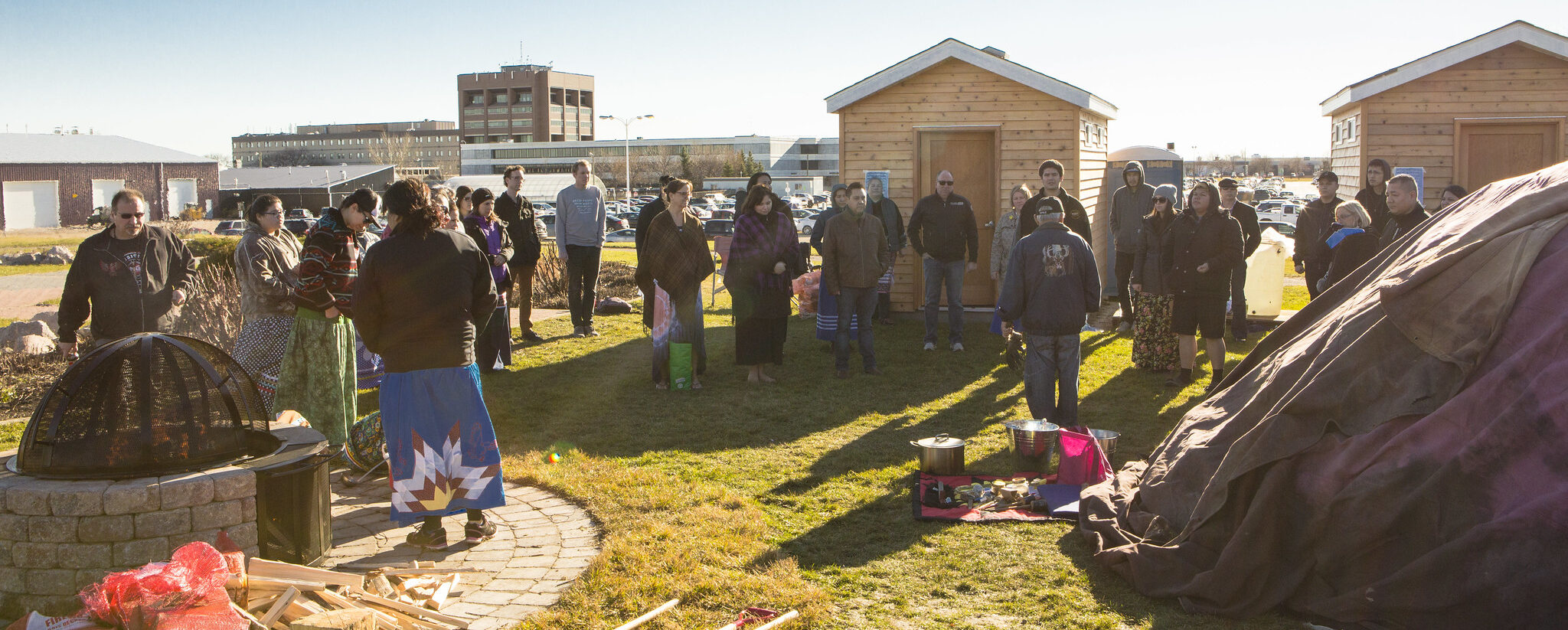
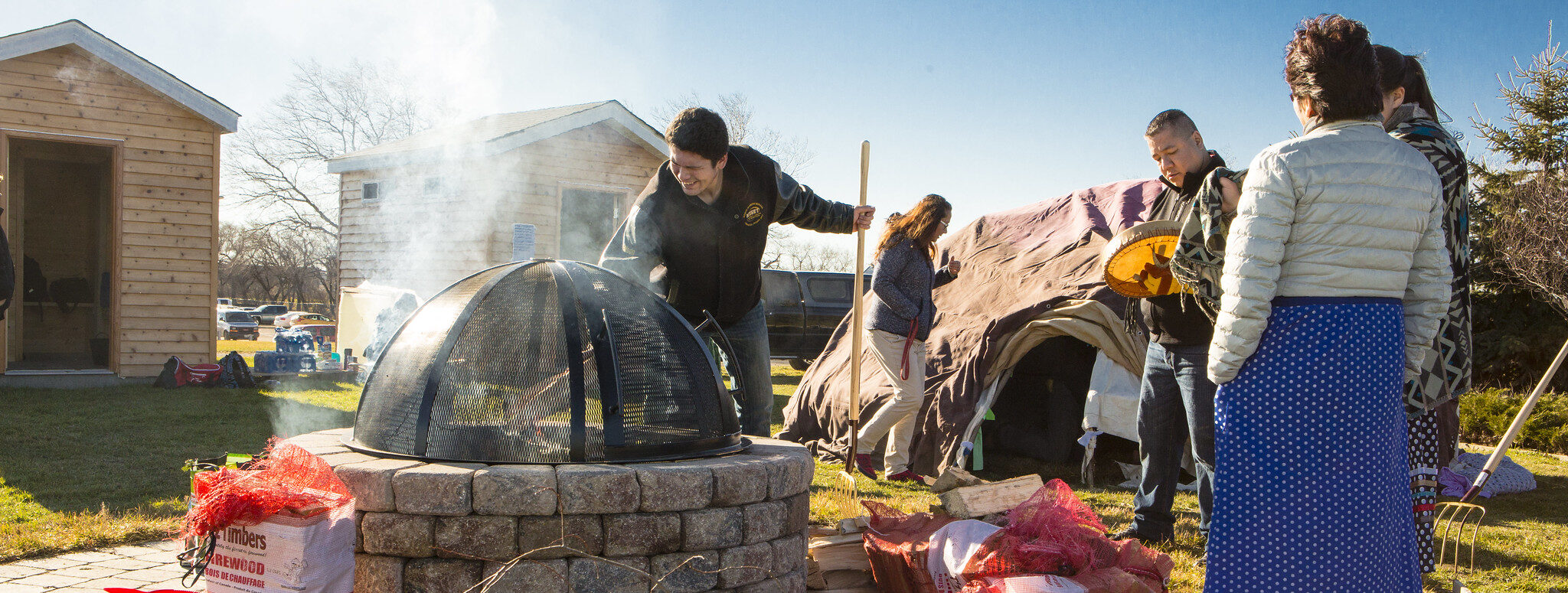
All students and staff are welcome to join us for a traditional Pipe Ceremony and Feast to celebrate and give thanks for the Harvest season. We invite all Pipe Carriers to take part in the Pipe Ceremony. Following the Pipe Ceremony, join us for a Feast to honour the name of our newest building Manitou a bi Bii daziigae – Where Creator Sits • Brings Light.

Thursday, September 22, 2022
Manitou a bi Bii daziigae, Exchange District Campus
Pipe Ceremony – 10:00 a.m.
Feast – 12:00 p.m.


Advance registration is not required.

RRC Polytech campuses are located on the lands of the Anishinaabeg, Ininiwak, Anishininwak, Dakota Oyate, and Denésuline, and the National Homeland of the Red River Métis.

We recognize and honour Treaty 3 Territory Shoal Lake 40 First Nation, the source of Winnipeg’s clean drinking water. In addition, we acknowledge Treaty Territories which provide us with access to electricity we use in both our personal and professional lives.