Where experience meets engineering

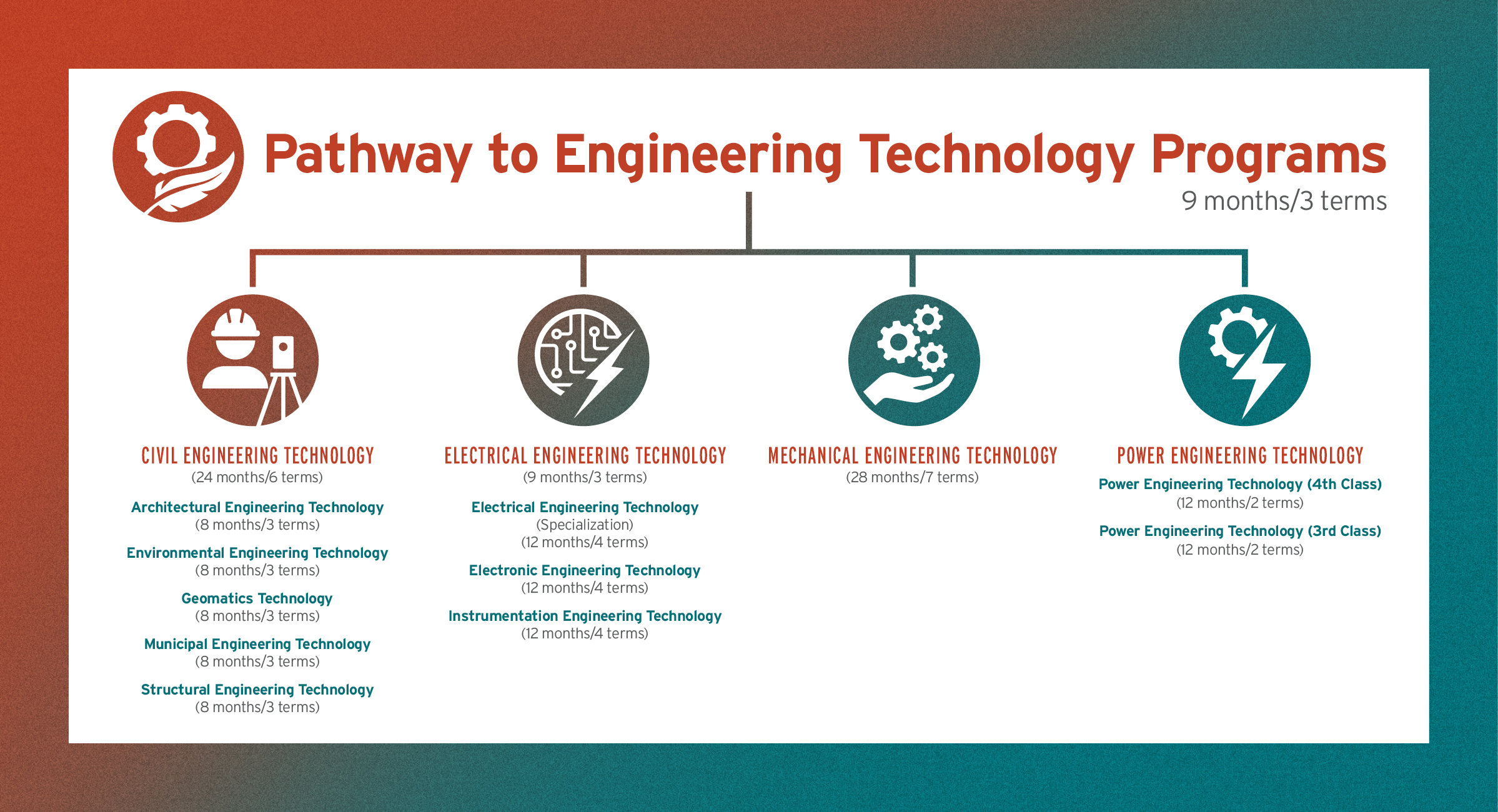
Kayleen Balfour is entering her second year of Civil Engineering Technology this fall with almost a decade of work experience and two certificates – one in Pathway to Engineering Technology Programs and another in Construction Labour. Upgrading her skills through education really helped put what she learned on the job into perspective for her future career from an engineer’s vantage point.
Balfour says engineering elevated her understanding of everything around her. Learning about physics, forces, and structural design helped her understand everyday objects and systems in new ways, from gravity pulling down an aircraft during takeoff to the loads weighing on buildings and infrastructure.
“The physics we learned in Pathways really changed the way I see the world,” said Balfour. “Once you start learning about the forces acting on moving objects, you look at things differently. You see a plane taking off and think about the force needed to overcome gravity, or you look at things and the forces that act on them. When you move into Civil Engineering Technology, your focus shifts to the forces acting on stationary objects and how engineers work with that. It’s interesting to see all of these concepts as you go through the program.”
The Pathways program provided a strong academic foundation that prepared her for the demands of Civil Engineering Technology. She describes her first year as intense with long hours dedicated to classes, studying, and assignments. The pace was fast, but the knowledge she gained through the Pathway helped her succeed when she entered the progression program full-time.
“The courses that we took in Pathways to Engineering are basically the first courses that we take in the first-year Civil Engineering, except it’s more fast-paced and more in-depth. You have to learn time management,” said Balfour.
Before she entered an engineering classroom, Balfour was already building the skills that would ultimately support her academic success.
After high school, Balfour chose to gain work experience while figuring out her future career path. She worked her way up to a supervisory role at Tim Hortons at 19 and cultivated skills in leadership, multitasking, responsibility, and performing under pressure – each skill became an asset later when balancing demanding coursework and deadlines. She also spent a year in Texas working for USPS before returning to Canada to continue on her career path.
Her career eventually took her into construction, where she discovered a genuine interest in building and infrastructure. Working on road construction projects, operating equipment, and participating in large-scale developments gave her firsthand experience with the types of projects engineers help design and oversee.
She later worked on hospital construction projects and gained experiences in carpentry, site operations, project coordination, blueprint interpretation, and construction management. She gradually took on greater responsibilities and developed a deeper understanding of how projects move from concept to completion.
Balfour says that looking back, these experiences helped her understand the practical side of engineering and gave context to what she would later learn in the classroom. Rather than starting from scratch, she was able to connect academic concepts to real projects she had already worked on.
With her completion of the Civil Engineering Technology program on the horizon in two years, Balfour is already thinking about what comes next.
One possibility is continuing her education and pursuing a full Civil Engineering degree through university. Balfour views her interest in structural engineering and further education as an opportunity to expand her knowledge and career opportunities.
Balfour is also considering an ambitious plan with several former Pathways classmates. Together, they have discussed the possibility of one day starting an Indigenous-led engineering firm that would bring together professionals from a variety of engineering disciplines, including civil, environmental, geotechnical, electrical, and structural engineering.
For Balfour, the idea is about more than launching a business – it’s about helping get more Indigenous engineers into meaningful jobs and creating opportunities for Indigenous communities to guide and lead infrastructure development on their own terms.
Kayleen wants other Indigenous students to know that engineering is achievable, even if it feels intimidating at first.
“Don’t be afraid of the math,” said Balfour. “It takes time.”
Balfour credits a lot of her success to the support systems available through the Pathways to Engineering program and the Indigenous Support Centre. She highlighted the value of free tutoring and instructors who genuinely want students to succeed. Whether students need help understanding a math concept, writing an assignment, or navigating personal challenges, she believes support is available if they reach out for it.
“If you don’t ask for help, they don’t know that you need it,” said Balfour.
The Indigenous Student Support Centre has also been an important part of her experience. She describes it as a safe, welcoming space where students can study, connect with culture, seek guidance, or simply take a moment to recharge between classes. For her, it represents community and a reminder that students do not have to face challenges alone.
Through determination, hard work, and a willingness to try new perspectives, Balfour has transformed years of hands-on experience into a promising future in engineering. Her journey shows that the path to success is experiential and that with the right support, Indigenous students can thrive in engineering and help shape the future of their communities.
Learn more about the Pathway to Engineering Technology Programs and apply for the next cohort.