Equity, Diversity, Inclusion and Accessibility on Campus

News and Events

Disability Employment Awareness Month 2025

September 26, 2025

Light It Up! For NDEAM (National Disability Employment Awareness Month) logo/text

Since 2010, we have celebrated Disability Employment Awareness Month (DEAM) every October. This month highlights the skills and contributions of people with disabilities in the workplace.

At RRC Polytech, we proudly celebrate this every day. Our commitment to Equity, Diversity, Inclusion, and Accessibility (EDIA) means we create environments that are welcoming, supportive, and respectful to everyone.

Light It Up! For NDEAM

RRC Polytech will once again take part in Light It Up! For NDEAM™, Ontario Disability Employment Network (ODEN)’s annual National Disability Employment Awareness Month (NDEAM) campaign. On Thursday, October 16, 2025, organizations across Canada will light up their offices in purple and blue for one special night.

Through the month of October RRC Polytech will:

  • Illuminate the Roblin Centre and the Paterson Global Foods Institute at EDC with purple and blue lights starting on October 16 and for the rest of the month.
  • Project the “Light It Up! for NDEAM” graphic on the Elgin Plaza from October 14 to 18, 2025.
  • Feature the “Light It Up! for NDEAM” graphic on the NDC outdoor digital screen at Notre Dame Ave. and King Edward St. from October 14 to 18, 2025.

We invite all students and employees to wear purple and blue on October 16. Take a photo or selfie with your colleagues and share it on social media using the hashtags #LightItUpForNDEAM and #rrcpolytech.

Accessibility at RRC Polytech

As we light up our campuses, we want everyone in our community to know about and have access to the many accessibility resources, including:

Feedback about Accessibility at RRC Polytech

We value your suggestions on how to improve accessibility services across our campuses. You can share your feedback by filling out the feedback form on our website or by emailing us at diversity@rrc.ca.

You can also help us understand the diversity of our community by completing the voluntary Employment Equity Self-Identification Questionnaire.

Jewish High Holidays 2025

September 22, 2025

A bowl of honey is surrounded by slices of green apples.

Rosh Hashanah, beginning before sundown on Monday, September 22, and ending after nightfall on Wednesday, September 24, is the first of a series of significant high holidays coming up in the Jewish calendar. Rosh Hashanah, which marks the start of the Jewish New Year, culminates with Yom Kippur, beginning before sundown on Wednesday, October 1, and ending after nightfall on October 2. The period between Rosh Hashanah and Yom Kippur is considered very important as a time of reflection, repentance and renewal.

Rosh Hashanah and Yom Kippur are followed by Sukkot (Fall Solstice), Shemini Atzeret (marks the transition back to routine life), and Simchat Torah (celebrating the torah).

Whether the Jewish community observes the High Holidays from a religious or cultural perspective, there are specific ways in which Rosh Hashanah and Yom Kippur are typically celebrated.

Rosh Hashanah

On “erev,” the evening of Rosh Hashanah, it’s typical to host large dinners with family and friends and eat sweet things like apples and honey and honey cake to symbolize a “sweet new year.” Challah (egg bread) which is the shape representing the cycle of life is also enjoyed. These dinner celebrations happen for two nights, and people who are observant typically go to synagogue over the two days for Rosh Hashanah services and to listen to the shofar, a ram’s horn that is blown like a trumpet.

Yom Kippur

On Yom Kippur, the Day of Atonement, those who are observant fast with no food or drink during that time and go to synagogue both the “erev” (evening of) Yom Kippur and the next day until the fast ends. At sundown after the fast ends, family and friends get together to break the fast.

The 10 days between Rosh Hashanah and Yom Kippur are considered very significant. Listening to the shofar and having community gatherings is typical during this time.

Visit the Jewish Federation of Winnipeg’s Community Calendar for more events happening during the High Holidays.

Shana tova umetuka! (Have a happy and sweet new year!) 

International Week of the Deaf: September 22–28, 2025

September 16, 2025

A student in ASL studies sitting in a classroom, communicating with another student using sign language.

This year’s theme is “No Human Rights Without Sign Language Rights”. It highlights how important sign language is in bringing people together and supporting full participation in society. Sign language is not just a way to communicate; it is a human right and a part of cultural identity.

Monday, September 22, 2025: Deaf communities leading

In November 2025, the Deaflympics will take place in Tokyo. This event celebrates the talents and achievements of Deaf athletes around the world.

In Manitoba and across Canada, many organizations support Deaf culture and rights, such as:

  • DeafDots provides news in American Sign Language (ASL) and La langue des signes québécoise (LSQ) for Deaf and hard of hearing Canadians.
  • Manitoba Cultural Society of the Deaf supports Deaf and hard of hearing individuals in Manitoba. Their vision is to fully integrate Deaf and non-deaf communities, empowering Deaf culture, arts, and language.
  • The Manitoba Deaf Sports Association promotes and supports Deaf and hard of hearing individuals through sports, aiming to strengthen and celebrate Deaf culture.
  • The Manitoba Deaf Association supports and creates accessible educational and recreational activities to benefit the Deaf community.

Tuesday, September 23, 2025: No Human Rights Without Sign Language Rights

Canadian flag and Deaf flag raised together. Title reads: 'Deaf Flag Raising, Tuesday, Sept 23, 11am.

RRC Polytech will recognize the International Day of Sign Languages by raising the Deaf Flag in front of the Notre Dame Campus bus loop on Tuesday, September 23, 2025, at 11:00 a.m.

This day highlights the importance of sign languages in protecting and promoting the human

rights of Deaf communities worldwide.

Wednesday, September 24. 2025: Multilingual education for Deaf learners

The World Federation of the Deaf advocates for schools where Deaf students learn in an inclusive, multilingual setting that respects their language and culture.

At RRC Polytech, our ASL to English Interpretation Program has officially returned this Fall! Learn more here: ASL to English Interpretation Program Returning in Fall 2025.

Thursday, September 25, 2025: Deaf rights in Crises

Deaf communities must be included in emergency planning. The World Federation of the Deaf provides guidelines for making emergency broadcasts accessible.

At RRC Polytech, Deaf and hard of hearing students and employees can request an individual emergency response plan. Visit:

Friday, September 26, 205: Recognition of National Sign Language

Many countries still do not officially recognize their national sign language. The WFD offers resources to help advocate for change. Learn more on the World Federation of the Deaf website.

Saturday, September 27, 2025: Sign Language Access Services

Deaf people have the right to choose how they communicate, whether through national sign language or International Sign.

RRC Polytech is committed to equal access for Deaf and Hard of Hearing students and staff. Explore our resources:

Sunday, September 28, 2025: Set the basis for the future: together we can innovate, inspire, and impact

Deaf communities are creative and innovative. They continue to shape the future with new ideas and technology. Here are two Deaf Canadians who are making a difference:

  • Jolanta Lapiak is a Deaf Canadian. She founded Handspeak, an online dictionary for American Sign Language (ASL). Check out Jolanta’s work here.
  • Dr. Jessica Dunkley, Canada’s first Deaf physician, has been a strong advocate for change since her early days in medical school. Learn more here.

Celebrate Diversity with a New MS Teams Background!

August 18, 2025

Pride Progress Flag background with RRC Polytech logo in the top left corner, for virtual meetings.

The Gender and Sexual Diversity (GSD) Group has created a new background for virtual meetings to celebrate diversity, inclusion, and belonging for all in our community.

It’s designed for everyone who wants to help create a welcoming space in every virtual meeting.

How to use it:

  1. Download the background by right-clicking the link and saving it to your computer
  2. To change your MS Teams background before or during a meeting, follow these steps from Microsoft.

Note: When using images as backgrounds in MS Teams, they may look reversed on your own screen. However, they display correctly for others in the meeting. If you’re unsure, you can ask a colleague to confirm how it looks on their computer.

If you have any questions, please email us at diversity@rrc.ca.

Anti-Racism: From Words to Worldviews – Honouring Language

July 28, 2025

On June 20, 2025, a sacred Ceremony took place at RRC Polytech to mark the final step in a year-long naming journey. Kunshi – Grandmother in Dakota – Ivy Chaske formally gifted the wide-open community space inside Manitou a bi Bii daziigae a Dakota name: Mitakuye Oyasin Okciyape, which means All My Relations Helping Each Other. This powerful act of naming is the most recent expression of RRC Polytech’s commitment to Truth and Reconciliation – and it reflects anti-racism in action.

Language is more than communication. It’s a lens through which we understand the world. Language is culture, spirituality, and identity. Yet, Indigenous languages have been suppressed, misunderstood, and assimilated through colonization, often to the point where their origins and meanings are no longer recognized.

This matters because when Indigenous words or phrases are used without context or understanding, their inherent spiritual and cultural meanings are forgotten. Familiarity may bring inclusion, but without integrity, we risk repeating the harm of assimilation. As an educational institution, our goal must be to foster curiosity, create opportunities for deeper learning, and encouraging all people to ask not just what a word means but why it exists and where it comes from.

For example, “miigwech” is often translated as thank you. During a campus event in 2024, Elder Paul Guimond shared that, in essence, it means you light my fire – it’s an acknowledgement that someone has done something for you that you could not do alone, and for that, you are grateful. That deeper spiritual meaning is at risk of being flattened if we fail to engage with the language respectfully and with care. This balance between integrity and familiarity is where real work in decolonization begins.

In response to the University of Manitoba’s 2011 apology for its role in the Residential School system, the late Mi’kmaq poet and Laureate, Rita Joe, offered a powerful reflection on the loss of language and identity through her poem, I Lost My Talk.

In the poem, she articulates the damage caused by Residential Schools – not just the loss of language, but the forced adoption of another worldview. The ability to “talk,” in this context, is not merely about speech, but about cultural understanding, spiritual knowledge, and identity. Joe’s response to the apology is a proposal: that healing comes when Indigenous Peoples and Western institutions walk together, and when Indigenous voices are no longer silenced, but centered – so they may teach the world who they are.

The preservation and revitalization of Indigenous languages is not solely the responsibility of Indigenous Peoples working to relearn and pass them on to future generations. English speakers – particularly within educational institutions – also have a responsibility to learn about these languages and honour the words we use. Language revitalization isn’t just about rediscovering what’s been lost – it’s also about opening new ways of seeing the world, challenging assumptions, and engaging in meaningful, critical thinking.

Place names across Turtle Island carry the deep connection between language and land. These names are more than geographic markers – they embody worldviews, spiritual understanding, and ancestral relationships with place.

Manitoba comes from Manitou Ahbii in Anishinaabemowin: Manitou meaning Great Spirit or Creator, and Ahbii meaning the place where it is. Together, they mean the place where Creator is.

Winnipeg comes from wînayih nipiyik in Ininimowin: wînayih meaning dirty, nipiy meaning water, and -ik making it plural – dirty waters, referring to the dark waters of the Red River.

In recognizing the power of language and the processes involved with naming, in 2019, RRC Polytech began a different kind of naming journey with the opening of a new facility at 319 Elgin Avenue – one rooted in reciprocity, Ceremony, and Indigenous ways of knowing.

The journey began when two Elders-in-Residence – Elder Paul Guimond of Sagkeeng First Nation and Miss Una Swan of Fisher River Cree Nation – were offered Tobacco and asked to name the building. Together, they gifted the name Manitou a bi Bii daziigae, which means Where Creator sits, Brings the light. Since its opening in 2021, this name has become widely known and respected across RRC Polytech – not only for what it means, but for how it was received.

In 2024, Kunshi Ivy Chaske offered a new name for the gathering space inside Manitou a bi Bii daziigae: Mitakuye Oyasin Okciyape (pronounced MITAH-kooya OYA-shin OAK-ah-pee), meaning All My Relations Helping Each Other in Dakota.

Unlike the naming of the building itself, for which a name was sought through Ceremony, Kunshi Ivy already held and carried sacred responsibility for the name, which has previously been transferred to her through Ceremony. Kunshi Ivy observed the space over the course of a year before offering the name to RRC Polytech in accordance with Dakota Ceremonial Protocols.

The name reflects the spiritual and communal function of the space: a place of gathering, belonging, and collaboration. All My Relations Helping Each Other is not just a phrase – it’s a prayer, a reminder that we are deeply interconnected with all life: people, animals, water, land, and sky.

On June 20, 2025, this name was formally transferred in Ceremony. Four RRC Polytech leaders accepted the responsibility to honour and uphold it. Every year, the name will be Feasted, and its responsibility will be passed on in perpetuity.

Traditional naming processes are not about branding or recognition – they are responsibilities earned through Ceremony, sacrifice, and deep connection to spirit. By accepting traditional Indigenous names, RRC Polytech also accepts the responsibility to live in relationship with those names, their meanings, and the Peoples who gifted them.

This is what anti-racism looks like in practice: honouring spiritual significance, making space for Indigenous knowledge systems, and walking alongside one another in mutual respect.

Decolonizing our institution means more than revising curriculum or updating policy. It means living these values. It means embracing names like Manitou a bi Bii daziigae and Mitakuye Oyasin Okciyape not just as labels, but as Teachings that guide our actions.

We walk in two worlds: one rooted in the history of Western education and another shaped by Indigenous knowledge and ways of being. Honouring Indigenous language is a commitment to balance – not assimilation – and in many ways, it mirrors the spirit of Treaty: walking together on parallel paths, respecting difference, and building something stronger in relationship. On a broader scale, this is just one way we can practice anti-racism, and demonstrate how we can live in relationship together, beyond assimilation.

July is Disability Pride Month

July 3, 2025

July is Disability Pride Month, a time to celebrate persons who experience disability, their identities and culture, and their positive contributions to society. Disability Pride Month aims to change the way people think about disability, while promoting all types of disability as a natural part of human diversity. 

Disability Pride Month has been celebrated in the United States since July 1990 when the Americans with Disabilities Act came into law. Today, it is celebrated around the world, including in Canada, where 22 per cent or 6.2 million Canadians live with a disability.

The month of July – and beyond – is a time to build awareness of barriers that people with disabilities still face and continue advocating for change and equity.

Disability Pride Flag

In 2019, the Disability Flag designed by Ann Magill began to circulate during Disability Pride Month. The flag was revised in 2021 to this current design: 

A flag with a black backdrop and diagonal bands of colour, featuring green, blue, white, yellow, and red.

Learn more about the meaning behind each design element: 

  • All six flag colours: Disability spans borders between nations 
  • Black background: Mourning for victims of ableist violence and abuse 
  • Diagonal Band: Cutting across the walls and barriers that separate disabled people from society 
  • Red Stripe: Physical disabilities 
  • Gold Stripe: Neurodivergence 
  • White Stripe: Invisible and undiagnosed disabilities 
  • Blue Stripe: Psychiatric disabilities 
  • Green Stripe: Sensory disabilities

For more information and resources, please click here.

Accessibility at RRC Polytech

While the ADA is an American Act, it is an important piece of Human Rights legislation that has influenced other accessibility acts worldwide. In Manitoba, we have the Accessibility for Manitobans Act (AMA), which became law in December 2013. The goal of the act is to identify, remove, and prevent barriers to accessibility for all.

RRC Polytech is committed to developing a culture of equity, diversity, inclusion and accessibility (EDIA) for our community. We believe in equal access to education and employment, and as one of the province’s leading post-secondary institutions, we are committed to fostering an environment that is welcoming, supportive and respectful of the dignity and independence of persons with disabilities. Please learn more by accessing RRC Polytech’s Equity, Diversity, Inclusion, and Accessibility (EDIA) Institutional Plan here.

Student Accessibility Services plays a key role in this commitment by arranging accommodations and supports for students with disabilities. Learn more about Student Accessibility Services at rrc.ca/accessibility.

The Supportive Employment Program provides workplace accommodations to ensure employees with disabilities receive appropriate support to continue working or return to productive employment as soon as medically feasible. Read RRC Polytech’s Accessibility Plan, which addresses the Province of Manitoba’s Accessibility for Manitoban’s Act.

Pride 2025

June 16, 2025

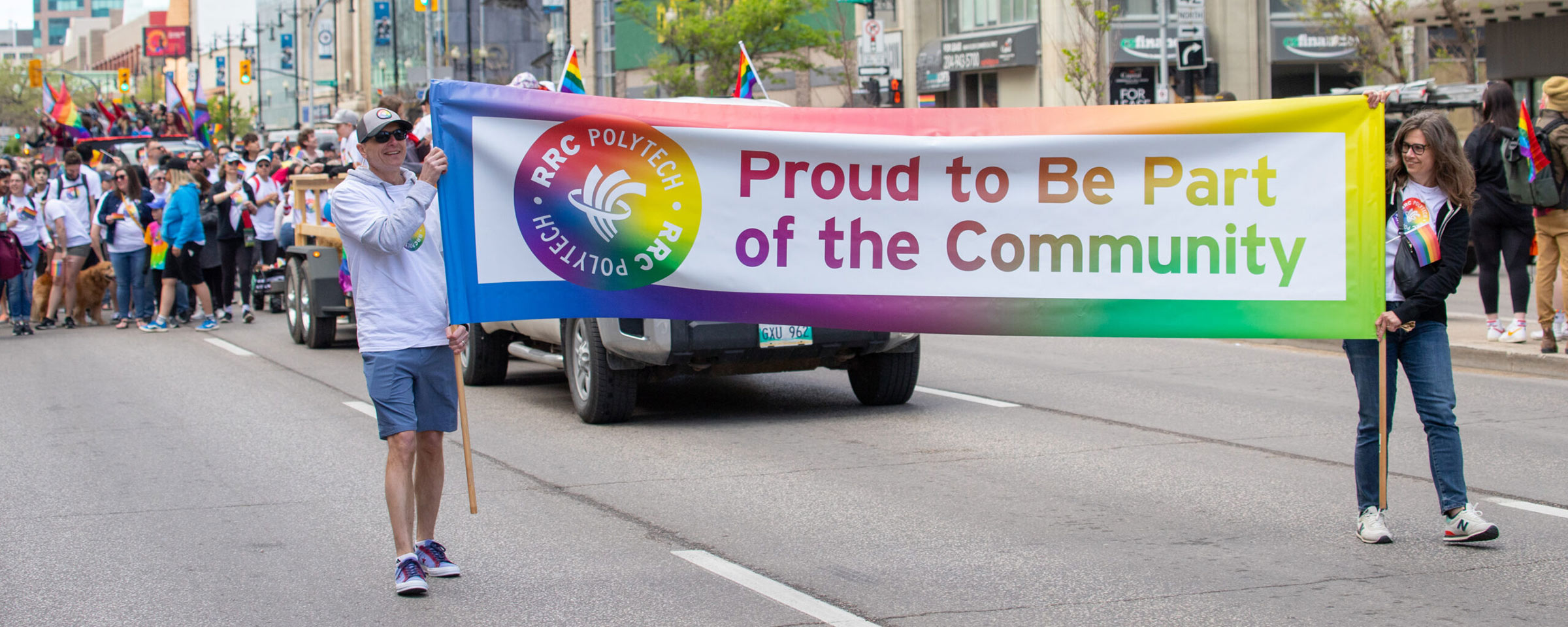
RRC Polytech staff and students at the 2025 Winnipeg Pride Parade. In front, a colorful float decorated with Pride colors carries students and staff. Behind the float is a sign that reads "Proud to be Part of a community" featuring the RRC Polytech logo in Pride colors. More staff and students walk behind the float, celebrating together.

June is Pride Month, a time to celebrate the voices, contributions, and resilience of the 2SLGBTQIA+ community. Pride has its roots in the 1969 Stonewall Riots, a key moment in the fight for gay rights. Today, it continues to be both a joyful celebration and a powerful reminder of the ongoing work needed to advance equity, inclusion, and human rights for all.

At RRC Polytech, we’re proud of our commitment to fostering equity, diversity, inclusion and accessibility in everything we do. In 2022, we unveiled a personalized Pride design, an evolution of the Progress Pride Flag, featured as walkways at our Notre Dame, Exchange District, and Portage la Prairie campuses. This design symbolizes belonging, representation, and our shared dedication to inclusion.

We’re also proud to have The Spectrum, a welcoming space created by the RRC Polytech Students’ Association (RRCSA) for 2SLGBTQIA+ students and their allies. The Spectrum offers a safe and inclusive place to connect, hold events, and access resources that support community and inclusion. The name symbolizes the rainbow, a recognized emblem of the 2SLGBTQIA+ community, and reflects the broad spectrum of gender and sexual identities.

In June 2024, we proudly raised our personalized Pride flag alongside the Treaty One Nation and Red River Métis flags at the Notre Dame Campus. These flags fly year-round as a daily reminder of our commitment to equity, diversity, inclusion and accessibility.

During RED Forum 2025, the Gender and Sexual Diversity (GSD) Employee Working Group organized an experiential booth. They offered button-making, pronoun pins, and shared resources about pronouns with the college community.

RRC Polytech at the Winnipeg Pride Parade

On June 1, 2025, RRC Polytech students and staff proudly marched in the Winnipeg Pride Parade. With 335 registrations, the most we’ve ever had, we showed our strong support and allyship. The day began with the Pride Rally at the Manitoba Legislative Building, a tradition that began in 1987 with 250 community members. Check out the Pride Parade Photos on RRC Polytech Flickr page.

Beyond Pride Month: Ongoing Support and Learning

Our commitment to the 2SLGBTQIA+ community doesn’t end in June. Visit our Equity, Diversity and Inclusion on Campus Resources page for self-directed learning tools, including the Library’s Gender and Sexual Diversity Guide. These resources help foster understanding, allyship, and advocacy year-round.

Employees are also encouraged to join the Gender and Sexual Diversity (GSD) Employee Working Group. This group supports inclusive events, champions equity-focused initiatives, and acts as a voice for gender and sexual diversity at RRC Polytech.

Strengths of Neurodivergent Individuals

June 6, 2025

This blog post was written by Sarah Coyle, an Instructor at RRC Polytech and a member of the Neurodiversity Group.

Students and staff interact at an information booth during an event at RRC Polytech's Notre Dame Campus. A woman at the booth speaks with a smiling student who holds a phone and brochure. Other students are gathered in the hallway, creating a lively and engaging atmosphere.

Here are four key strengths often observed in neurodivergent individuals, supported by research.

  1. Enhanced Pattern Recognition and Logical Thinking. Many neurodivergent individuals show exceptional pattern recognition, logical thinking, and the ability to perceive details and relationships often missed by neurotypical individuals.
  2. Exceptional Focus and Attention to Detail (Hyperfocus). Despite attention challenges in neurodivergence, many individuals show intense focus (“hyperfocus”) on areas of interest, boosting engagement, productivity, and expertise.
  3. Strong Memory for Specific Details and Systems. Some neurodivergent individuals have remarkable long-term memory for specific facts and systems, benefiting academic areas requiring memorization and complex understanding.
  4. Unique Perspectives and Specialized Knowledge. Neurodivergent individuals’ unique processing and intense interests often lead to specialized knowledge and perspectives, enriching discussions and fostering innovative learning.

Remember:

These strengths vary; each neurodivergent individual has a unique profile. Recognizing strengths and providing support are key for inclusive, effective education!

Join us in building a more inclusive future! The Neurodivergent Working Group is an evolving and welcoming space for anyone interested in learning more about and supporting neurodiversity at RRC Polytech. Email us at diversity@rrc.ca.

June is Deafblind Awareness Month

June 3, 2025

This post was written by Jill Patterson, Manager, Deaf and Hard of Hearing Services.

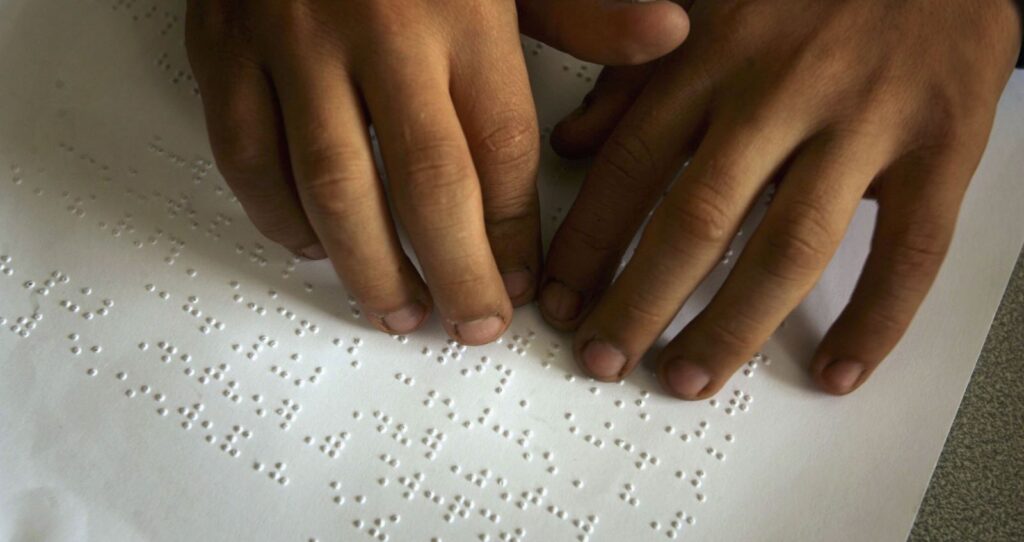
June is National Deafblind Awareness Month in Canada. It’s a time to recognize and honour the diverse experiences of people who are Deafblind. At RRC Polytech, we’re learning how to create a campus that welcomes everyone.

According to CNIB, an estimated 466,000 Canadians over the age of 15 are living with some degree of dual sensory loss. Deafblindness is a relatively low-incidence disability in Canada, affecting about 1% of the population, but is not recognized as distinct by the Federal Government. Many Canadians who are deafblind lack access to supports and services to help them fully engage in their communities.

What is Deafblindness?

People are considered Deafblind when they have both vision and hearing differences that make it harder to access information through sight or sound alone. Because of this, many people who are Deafblind use other ways to connect, like touch, technology, or support from others.

There are many types of Deafblindness. Everyone’s experience is unique. For example:

  • Congenital Deafblindness means the person was born Deafblind or became Deafblind early in life, usually before learning language.
  • Acquired Deafblindness happens later in life. It can happen for many reasons, including changes that come with aging.

Deafblindness is not just about senses, it’s about how we make sure people can fully take part in school, work, and community life.

Resources and Learning

Want to learn more? Here are a few great places to start:

Celebrating National AccessAbility Week and Manitoba Access Awareness Week – May 25 to 31

May 23, 2025

National AccessAbility Week 2025. Breaking barriers together: Paving the way for an inclusive future. May 25 to 31, 2025.

Text is followed by a photo of 2 smiling women, standing side by side.

From May 25 to 31, Canada will celebrate National AccessAbility Week. In Manitoba, we will also recognize Manitoba Access Awareness Week (MAAW). These weeks are about promoting accessibility and inclusion. It’s a time to learn about barriers in our communities. It’s also a time to thank those who help make things more accessible for everyone.

Ways to Learn, Celebrate, and Take Action

RRC Polytech campuses are located on the lands of the Anishinaabeg, Ininiwak, Anishininwak, Dakota Oyate, and Denésuline, and the National Homeland of the Red River Métis.

We recognize and honour Treaty 3 Territory Shoal Lake 40 First Nation, the source of Winnipeg’s clean drinking water. In addition, we acknowledge Treaty Territories which provide us with access to electricity we use in both our personal and professional lives.