We Are All Connected: Learning to Live as Relatives Through Water, Land, and Kinship
A personal reflection by Craig Fisher, Indigenous Education, RRC Polytech
The knowledge I carry came not from studying connection
but from living as the hyphen between worlds—
from understanding that relation survives every attempt at division.
Here, together, we make these relations visible again.
As Welcome Week begins, I want to share a story about what it means to live as relatives—not just with each other, but with the land and water that sustain us all.
Learning to Forget, Learning to Remember
I am status First Nations from Chippewas of the Thames First Nation—Deshkan Ziibing, the Antler River. Growing up, my Elders taught me that we are all relatives, that every action ripples through relationship.
At 18, I left home and moved west. Over the decade, I lived across five provinces, always moving, seeking. The more I moved, the more disconnected I became. I lived without reflecting on what I consumed, without considering where resources came from.
Despite moving through different territories, I wasn’t truly connecting with the land anywhere. Then, land acknowledgements became more common, and I’ll be honest—I found them performative. I was living the very disconnect they were trying to address.
An Awakening in Oaxacaa
Under Oaxaca’s brilliant sun, I felt ancestral whispers
Zapotec ceremonies that echoed my grandmother’s teachings,
revealing a resonation within my soul:
Indigeneity flows beneath the categories
colonial knowledge requires to maintain itself.
Two winters ago, I became a snowbird spending six months in Oaxaca de Juárez, Mexico—high in the dry mountains where Indigenous culture pulses through everything.
Something profound was happening. I began recognizing familiar teachings. Indigenous wisdom flowing beneath borders. This awakening made me more aware of everything—including dynamics I was only beginning to understand.
As my stay deepened, I noticed looks changing from locals. Curiosity to resentment.
Then I learned why.
There, water is mostly private, precious, transported by trucks. Households have water tanks they pay to refill. I was ignorant of this, showering daily, running taps freely.
Until one day, I turned on the tap and nothing came out. The tank was empty.
As a tourist, I got a refill truck within 24 hours, but what about the locals I’d been feeling judgment from?
They had to wait up to 40 days for water. Forty days.
While I showered daily, families rationed every drop. I finally understood those hard looks. I understood the real weight of consumption, of privilege, of what it means when resources that seem infinite to some are desperately scarce for others.
My Return, Making Relations Visible Again
Now, returning to Red River’s evolving halls,
I witness how far we’ve come—buildings open to all,
diverse programs flourishing under one institutional sky.
Yet still I see us gathered in familiar circles,
celebrating culture while dwelling in separate spaces—
progress and distance coexisting under the same roof.
When I returned to Manitoba, every time I turned on a tap—water flowing from Shoal Lake 40 First Nation—I remembered those 40-day waits. Every time I flipped a switch, I remembered real scarcity.
This is when land acknowledgements stopped being performative for me. They became reminders of relationships, of ongoing responsibility, of the web that sustains us all.
This new awareness made me see our community differently. Yes, there’s remarkable progress—buildings welcoming everyone, diverse programs flourishing. Yet we still tend to gather in familiar circles, dwelling in separate spaces.
What connects us, though, is universal: no matter where you come from, Peoples made sacrifices so we could be here. When we see through this lens of kinship, we understand that our stories, though different, are intertwined.
Connection isn’t something we study. It’s something we live, daily, through every choice we make about how we relate to each other and the world that sustains us.
We are all Connected
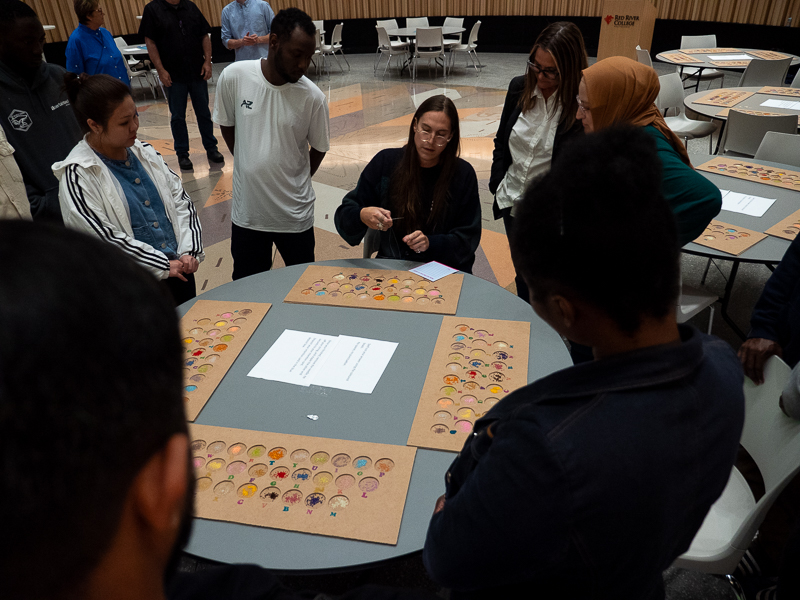
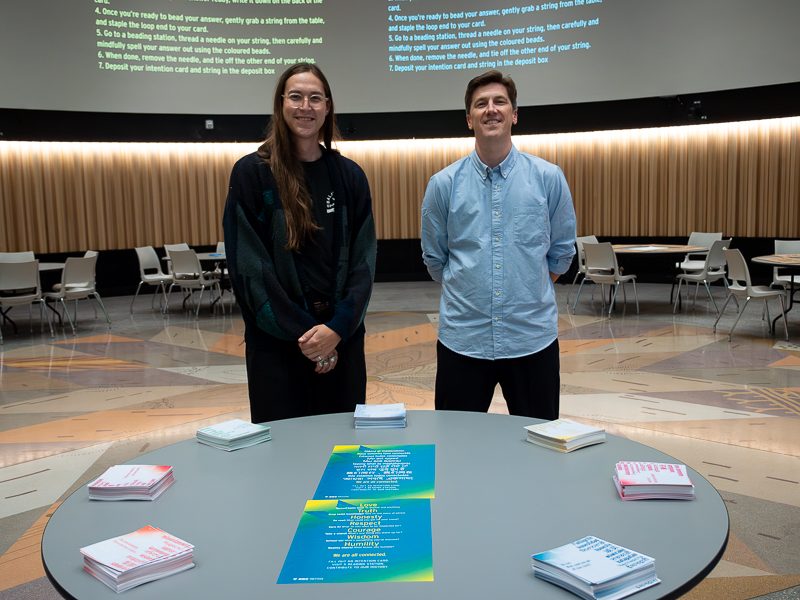
I invite you to a presentation, We Are All Connected, happening September 11 and 12. RRC Polytech’s Indigenous Education department is welcoming newcomers from CNI to help create a collaborative beadwork installation inspired by the Seven Grandfather Teachings.
As you begin your studies, I invite you to reflect on your own connections:
Who sacrificed so you could be here?
What resources sustain your daily life?
How can we honour them with gratitude and respect?
When we see the world this way, we begin to understand:
beneath all our differences, a shared truth flows—We are all connected.