Research Partnerships and Innovation

Research Partnerships & Innovation

Vehicle Tech

A Q+A with Dr. Robert Parsons for the Vehicle Technology International Conference

September 9, 2019

From September 30 to October 2, Red River College is hosting the inaugural Vehicle Technology International Conference at the Victoria Inn Hotel & Convention Centre in Winnipeg, MB. In anticipation of the conference, we’re highlighting some of our guest speakers. For a full list of speakers from the conference, and to register, please click here.

Below is a Q+A with Dr. Robert Parsons, who teaches Sustainability Economics for the MBA program in the I.H. Asper School of Business.

About me, and what sparked my interest in this vehicle technology:

I have an eclectic background, both in terms of education and experience. I have four university degrees from three different institutions, with the most important ones being a PhD in engineering from the University of Manitoba, and a MBA from the Schulich School of Business at York University in Toronto.

I have worked in many diverse areas, including with a municipal level government, an international technology company, a consulting engineering firm, utility, and as officer and director of a non-profit. Most importantly, I acted as a specialized energy consultant for the Government of Manitoba over a number of years, through which I began working on advanced and alternative vehicle technologies, including fuel cell and battery electric vehicles. Because of this, I have also had long associations with Red River College that now stretches back roughly 15 years.

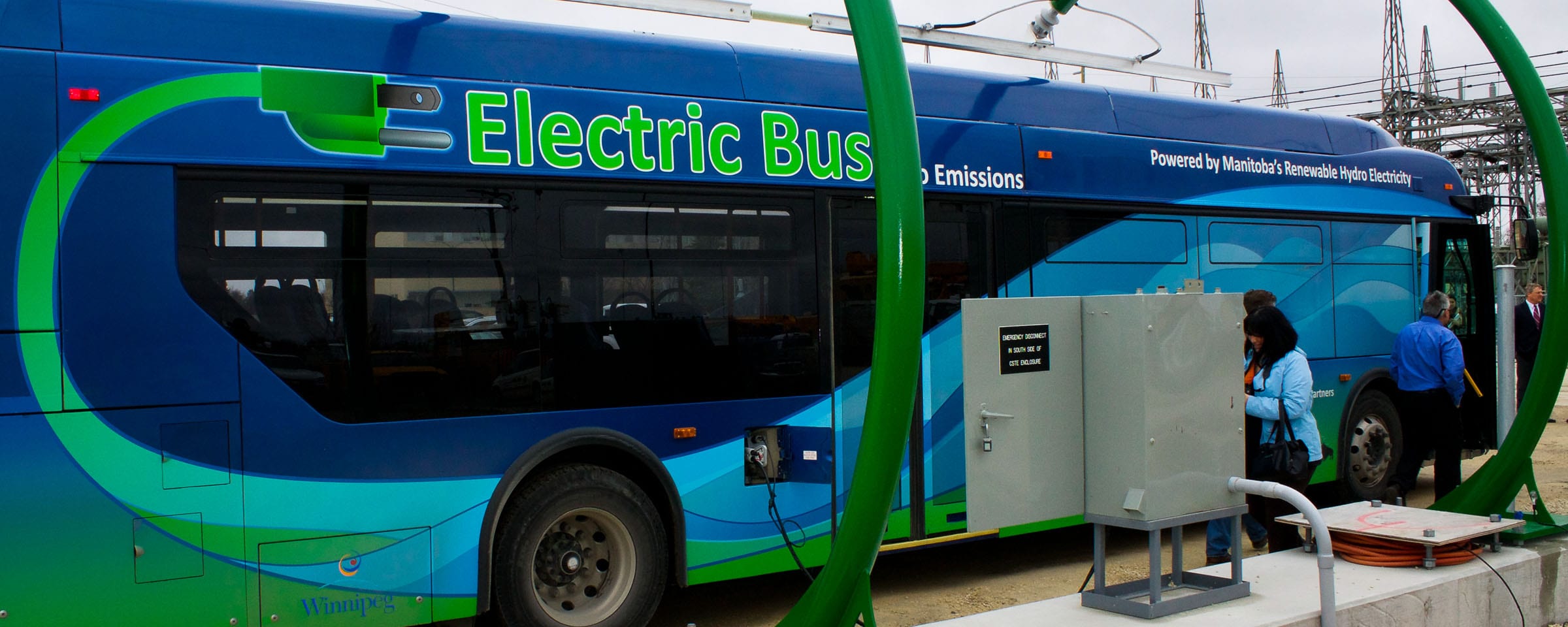
I hold the distinction of being the person in Manitoba who has driven the most different models of electric cars, currently around 10. I also have been involved with both hydrogen and battery-electric buses, and have been able to watch as such technologies moved from being quirks on drawing-boards to functional commercial units.

Since 2015, I have been teaching Sustainability Economics as a sessional instructor for the MBA program in the Asper School of Business at the University of Manitoba. Teaching is both rewarding and stimulating, and I have focussed on trying to provide participants with opportunities for real world applications. This helps to move away from being dryly academic to highly relevant.

Also, since 2017 I have provided some specialized assistance directly to Red River College’s Research Partnerships & Innovation group to support the Vehicle Technology and Energy Centre (VTEC) initiative, which the College is conducting in conjunction with Natural Sciences and Engineering Research Council (NSERC). This has primarily involved helping to develop and find funding for some new projects in this area.

What I will talk about as part of the conference:

I will be acting as the chair for one session of talks in the conference dealing with sustainability, and will also be presenting as part of that session myself. This session overall includes a number of informative talks covering diverse aspects of sustainability from different angles.

My presentation discusses a variety of insights for improving transportation that have come from sustainability economics, primarily from work done by students in my classes. These relate to electric buses, electric cars, as well as increased renewable content levels in fuels, both gasoline and diesel. As an interesting example, diesel has been well known as the second most common fossil fuel used in vehicles, after gasoline. Most with involvement in vehicle technology also know that diesel dominates for heavy duty and specialized applications, including buses, freight transport and agricultural equipment, which are all key areas for the conference. What is less known is that over the past twenty years, diesel has been progressively changing from having predictable low-costs, to becoming more expensive most of the time, compared to gasoline. Indeed diesel has been transitioning to become the “premium” and most important fossil fuel in the world. This significant change in relative pricing is an important new motivation to improve efficiency and to look for alternative motive technologies in both heavy duty and specialized areas.

Some additional material being presented and additional thoughts:

There is also a poster presentation being presented by myself and students from one of my classes. This group undertook an exhaustive cost-benefit analysis examining “externalities” associated with changing from conventional diesel transit buses to more-advanced battery electric buses.  The results involve primarily benefits, but not entirely. There are still some cautions we all need to be aware. Importantly, this more-fundamental work, which was undertaken through advanced university studies in business, was made possible given the more practically-oriented results of applied research by Red River College documenting the history and performance of the prototype electric transit bus, with which the College was an important consortium partner. This serves to highlight collaboration, and important synergies that can result.

***

Visit rrc.ca/vtec2019 to register for VTIC 2019 today!

Recycled Batteries to Give Electric Vehicles a Boost at Red River College

August 12, 2019

This week, Canada’s Minister of Natural Resources, the Honourable Amarjeet Sohi, announced a $60,000 investment towards a new electric vehicle (EV) charging station at Red River College’s (RRC) Notre Dame Campus.

“This investment in clean energy technologies will help ensure that Canada remains a global leader in clean energy. The Government of Canada continues to work to reduce pollution, foster change in our transportation choices and leave a cleaner planet for future generations,” said Minister Sohi.

This new Level 3 charging station, which is set to be operational by summer 2020, will use recycled lithium batteries sourced from New Flyer Industries’ fleet of electric buses. Using the recycled batteries will help improve the performance and reduce the cost of operating the station.

Currently, RRC operates five EV chargers at its Notre Dame Campus – one Level 3 charger, and four Level 2 chargers. The chargers are available for public use and are integral to research projects through the College’s Vehicle Technology & Energy Centre (VTEC).

“This investment will help the College to increase our current clean technology research activity on electric vehicles, along with renewable and alternative energy sources. We’re proud to continue our work in helping to develop sustainable infrastructure and technology that will benefit the environment and economy in Manitoba and across Canada,” said Ray Hoemsen, Executive Director, Research, Partnerships & Innovation at RRC.

RRC was the first organization in Winnipeg to install and operate a Level 3 charger in March, 2015. Level 3 stations can charge an EV up to 80 per cent charge in less than 30 minutes; this is compared to a 220/240V Level 2 charger, which can take four to six hours to get to full charge, or an 110/120V Level 1 charger, which can take up to 12 hours.


Funding from Western Economic Diversification Canada will support heavy vehicle manufacturing and research at RRC

August 2, 2019

This morning, the Honourable Jim Carr, Minister of International Trade Diversification and Member of Parliament for Winnipeg South Centre, on behalf of the Honourable Navdeep Bains, Minister of Innovation, Science and Economic Development and Minister responsible for Western Diversification Canada, announced new funding to support Manitoba’s growth and global competitiveness.

Among the projects announced was up to $3 million in funding to Red River College to increase technology adoption and testing capabilities for heavy vehicle manufacturers in collaboration with industry partners and the Vehicle Technology Centre.

MotiveLab™ rendering

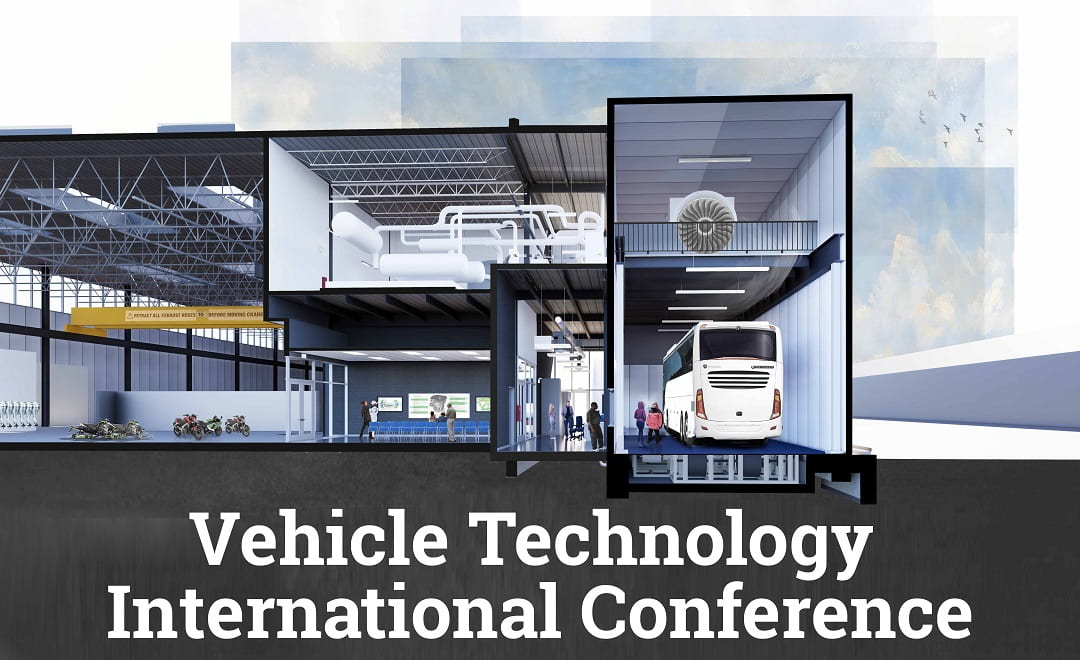
The College is currently preparing for the opening of the new extreme climate test facility MotiveLab™, which will be used to carry on-and-off-highway vehicle performance testing, and will be the first of its kind in Western Canada. The funding project will support industry-driven collaborations to advance technology and knowledge development in the area of zero emission vehicles and their production using advanced manufacturing processes. Activities include testing the performance of new technologies and products in a simulated laboratory or field-based setting, and promoting the adoption of these new technologies at domestic and international events and missions. By increasing awareness within the heavy vehicle manufacturing sector, industry will attract new customers, investment and talent to Manitoba.

Minister Carr announced a total of over $12 million in funding for four projects to support Manitoba’s economic growth and global competitiveness. Learn more about the projects and investments here.

Save the date: 2019 Vehicle Technology International Conference

May 7, 2019

Red River College is proud to introduce the inaugural 2019 Vehicle Technology International Conference, September 30th through October 2nd in Winnipeg, Manitoba.

The Conference is oriented to researchers and practitioners involved with advances in and practical applications of vehicle technologies. The conference focus includes alternative propulsion technologies, heavy-duty and specialized vehicle applications, vehicle simulation, vehicle testing, data analysis and modeling, “smart” vehicle technologies, improving vehicle sustainability performance, and addressing barriers for new technologies. A particular tour-feature is Red River College’s newly completed MotiveLab, an advanced heavy-duty vehicle capable, extreme temperature climatic-chamber and chassis dynamometer test facility.

For more information and to register, please click here.

RRC students win national award for innovative concepts to advance the e-vehicle industry

May 8, 2018

Imagine a world where your vehicle drives itself, connects to the Internet, and charges just like your phone.

That’s how Joel Turner, a student in Red River College’s Electronic Engineering Technology program, describes the concept that won his group first place in the 2018 Electric Mobility Canada Kia Student Competition.

This is the first time an RRC team has won the competition, and the second time the College has entered.

“The benefits to our team’s solution are countless. The best of them are reduced air pollution, reduced vehicle maintenance cost, and better learning by having available data,” says Turner, who worked on the project with teammates from RRC’s Electronics Engineering Technology, Electrical Engineering Technology, Mechanical Engineering Technology and Business Administration programs. Read More →

RRC Polytech campuses are located on the lands of the Anishinaabeg, Ininiwak, Anishininwak, Dakota Oyate, and Denésuline, and the National Homeland of the Red River Métis.

We recognize and honour Treaty 3 Territory Shoal Lake 40 First Nation, the source of Winnipeg’s clean drinking water. In addition, we acknowledge Treaty Territories which provide us with access to electricity we use in both our personal and professional lives.