Research Partnerships and Innovation

Research Partnerships & Innovation

News

RRC Polytech set to lead Manitoba through digital transformation thanks to $3.25M federal funding

December 15, 2023

Last week, the Natural Sciences and Engineering Council of Canada (NSERC) announced a $3,250,000 Mobilize grant to fund Red River College Polytechnic’s new Digital Technology Transformation Initiative (DTTI). The funding comes as part of a larger investment from NSERC to support applied research projects at colleges across Canada that are designed to address local challenges.

The DTTI will build applied research capacity to support Manitoba as it moves towards digital transformation, while achieving net-zero goals in the leading sectors of advanced manufacturing and climate/clean tech.

“This funding empowers RRC Polytech, through the DTTI, to strengthen our position as a vital resource in Manitoba’s innovation ecosystem, regional socioeconomic system, and provincial economy now and into the future,” says Jamie Wilson, Vice President, Indigenous Strategy, Research and Business Development at RRC Polytech. “The establishment of the DTTI is not only a great benefit to the College and our partners, but it goes a long way in supporting RRC Polytech as we strive to meet our strategic commitments – particularly deepening partnerships to maximize prosperity across industry and community.”

The DTTI aims to rapidly accelerate digitally-focused applied research expertise at RRC Polytech, so the College can continue to address industry’s most critical needs in the areas of advanced digital manufacturing (ADM) and climate/clean tech, while laying the groundwork for deepening collaborations with current and prospective partners in these areas. The DTTI will also provide invaluable experiential learning opportunities for students while facilitating a talent pipeline of diverse innovators to power the workforce of tomorrow.

“The DTTI is designed to alleviate some of the common challenges faced by the advanced manufacturing and climate and clean tech sectors, such as the increased pressure on businesses to engage in digital innovation, adoption, and net-zero strategies,” says Wilson.

“While RRC Polytech has existing and substantial infrastructure and expertise, this funding provides the additional human resource capacity and project funds necessary to establish a broad range of interdisciplinary applied research partnerships in the digital technology transformation space.”

RRC Polytech’s research enterprise, Research Partnerships & Innovation, has been a crucial player in the Canadian applied research scene for 20 years. The Mobilize funding comes on the heels of RRC Polytech’s recent 14th place ranking in Re$earch Infosource’s annual list of Canada’s top 50 research colleges.

For more information, visit rrc.ca/ar.

RRC Polytech named a top research College in Canada

December 7, 2023

Completed applied research projects at the College have increased by one third over the previous year 

Red River College Polytechnic (RRC Polytech) has earned the 14th place position in Re$earch Infosource’s annual ranking of the country’s top 50 research colleges.

“RRC Polytech makes innovation possible for our partners in industry and community – and every successful project builds trust in our technology, facilities and expertise,” said Jamie Wilson, Vice President, Indigenous Strategy, Research and Business Development at RRC Polytech.

“Today’s rankings reflect the College’s growing reputation for consistency and productivity that is driven by the work of our Research, Partnerships and Innovation enterprise and at our three Technology Access Centres. They also reinforce that our approach of strengthening relationships with partners and funders across all sectors, driving alignment between stakeholders, and valuing sustainability is accelerating applied research innovation here in Manitoba.”

RRC Polytech completed 170 applied research projects in the 2022 fiscal year – almost 60 more than the previous year – ranking it third in the Medium Tier category and fourth nationwide while posting a total of 117 research partnerships. By maintaining its average of 7.4 million dollars for a second consecutive year, Manitoba’s polytechnic also remains on par with the per-college provincial average of sponsored research income in Alberta and only slightly behind Ontario.

As an added feature to its annual publication, Canada’s Innovation Leaders 2023, Re$earch Infosource also shines a spotlight on college-industry research income as measured by grants, contracts or contributions received from industry sources over the past five years, where RRC Polytech again showed a remarkably consistent annual average of just over 7-million dollars from 2018-2022.

Applied research examples at RRC Polytech include a current partnership between the Technology Access Centre for Aerospace and Manufacturing (TACAM) and StandardAero, who are collaborating to test and validate that cold spray technology could be effectively implemented for repairing aircraft components.

The College’s Vehicle Technology & Energy Centre (VTEC) continues to facilitate the shift to electrification and zero-emission fuel sources with projects aimed at expanding workplace charging capabilities; partnering with Seven Oaks School DivisionNoble Northern and the Canadian Shield Foundation to develop a diesel-to-electric conversion kit for school buses; and even building on the success of completed projects by repurposing batteries from Winnipeg Transit electric bus trials in storage systems on fast chargers also created on campus.

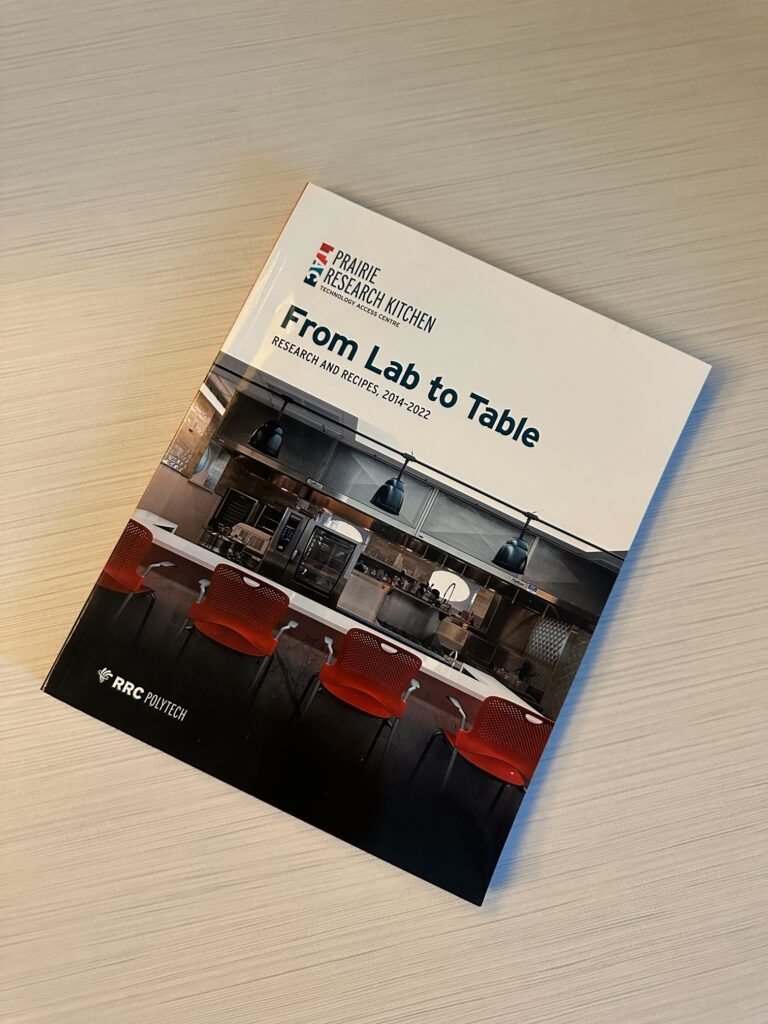
The most comprehensive example is From Lab to Table, a Culinary Research Review in the form of a cookbook that shares the delicious outcomes of the applied research conducted at the Prairie Research Kitchen (PRK) since 2014, while documenting the history of Manitoba’s only Technology Access Centre that blends food science and culinary arts.  From discovering and developing novel uses for pulse and soybean products to upcycling food industry by-products and even embracing insects for protein, this unique cookbook is available at researchrecipes.ca.

“Celebrating the variety of products, techniques and technology that our researchers, staff and students have worked together with our partners to develop is as important as the volume of projects completed,” said Wilson. “Because regardless of the size or scope of the project, from entrepreneurs in search of support to launch and grow their business idea to established enterprises seeking advancements to propel them into the future, we want everyone to know that in addition to training the workforce of tomorrow, RRC Polytech is also here to provide innovative solutions that elevate all Manitobans.”

RRC Polytech’s Prairie Research Kitchen serves up success with ‘From Lab to Table’ research recipe book

November 9, 2023

This is not your average cookbook – in fact, RRC Polytech’s Prairie Research Kitchen’s (PRK) From Lab to Table is one of the first of its kind in Manitoba and features over 60 different applied research recipes developed in collaboration with various industry partners over the last eight years.

“This Culinary Research Review, in the form of a cookbook takes an engaging approach to sharing the outcomes of applied research conducted since PRK began collaborating with partners in 2014,” said Mavis McRae, Director of PRK.

“Recipe development is one of the best ways we can test out research results from food – eating and tasting it, and over the last eight years we have amassed a lot of recipes using innovative new foods. By compiling and sharing what we have accomplished, we celebrate the achievements of PRK and the partnerships with clients who have supported us to share these recipes. We hope this work inspire readers with ideas for new advances in food product development and culinary research.”

What makes this tasty and innovative work that takes place on the 11th floor of RRC Polytech’s Paterson GlobalFoods Institute unique is the interplay between PRK’s two mandates: to help industry produce new food products, and to train students to become tomorrow’s culinary industry and research professionals.

The research and recipe cookbook begins with a detailed retrospective history of Culinary Research and funding partnerships at RRC Polytech written by PRK Director, Mavis McRae. It showcases investments made by Natural Sciences and Engineering Research Council of Canada (NSERC), National Research Council of Canada Industrial Research Assistance Program (NRC IRAP), Canada Foundation for Innovation (CFI) and Research Manitoba in providing valuable infrastructure and research grants to companies that have helped PRK become what it is today. 

The next pages are broken down into four recipe sections: Capacity Building Projects, Client Projects, Indigenous Engagement and Staff Picks. Each page that follows explains the history of various industry partnerships and features a comprehensive overview of the projects, objectives and the mouthwatering results in the form of recipes readers can try themselves!

“Each section of this book focuses on the specific ways our culinary research team and students have helped industry partners, and highlights the results our collaborations have achieved, while underscoring the opportunities these collaborations have created for students to gain hands-on skills in culinary arts and research.” said McRae.

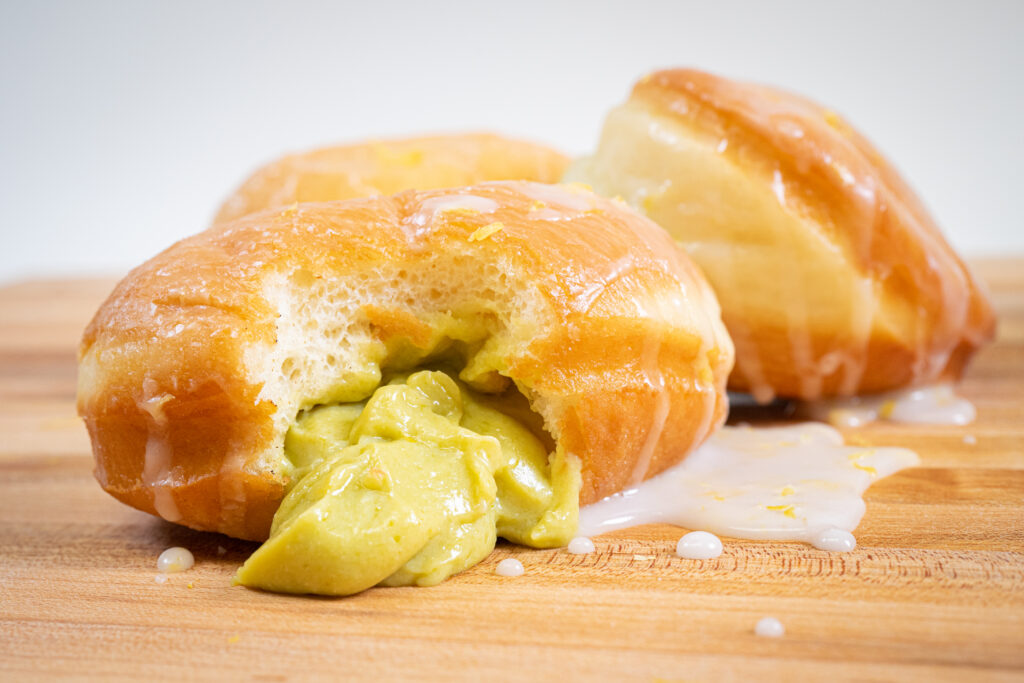
Capacity Building Projects focuses on projects and recipes that served as the building blocks of the culinary research program. The capacity building projects helped generate awareness with internal and external partners of the PRK capabilities as research and culinary chefs. Partnerships include Manitoba Pulse and Soybean Growers, Pea Tempeh – a student project to teach research methodology, Pulse Canada and Manitoba Agriculture and recipes range from a chicken pot pie with pinto bean crust, to tempeh nachos with a roasted corn salsa and lime crema, or for something sweet, a candy cane miso caramel popcorn or pistachio coconut crème pâtissière.

tempeh nachos with a roasted corn salsa and lime crema
pistachio coconut crème pâtissière

In the next section, Client Projects, explores the way PRK engages students and instructors on industry-initiated applied research projects that enhance their knowledge and expertise within an ever-changing industry landscape. It outlines the variety of ways PRK’s Culinary Research engaged with small- and medium-sized enterprises (SMEs) using technology and knowledge to meet a client’s vision – from developing new projects and commercialization, to seeking new applications for ingredients to enhance consumer experience and meet new market demands.

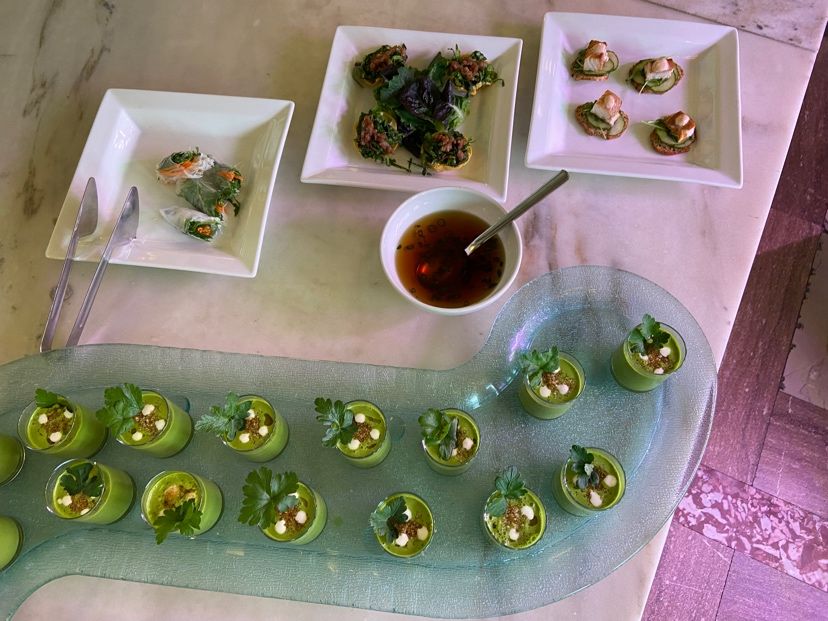
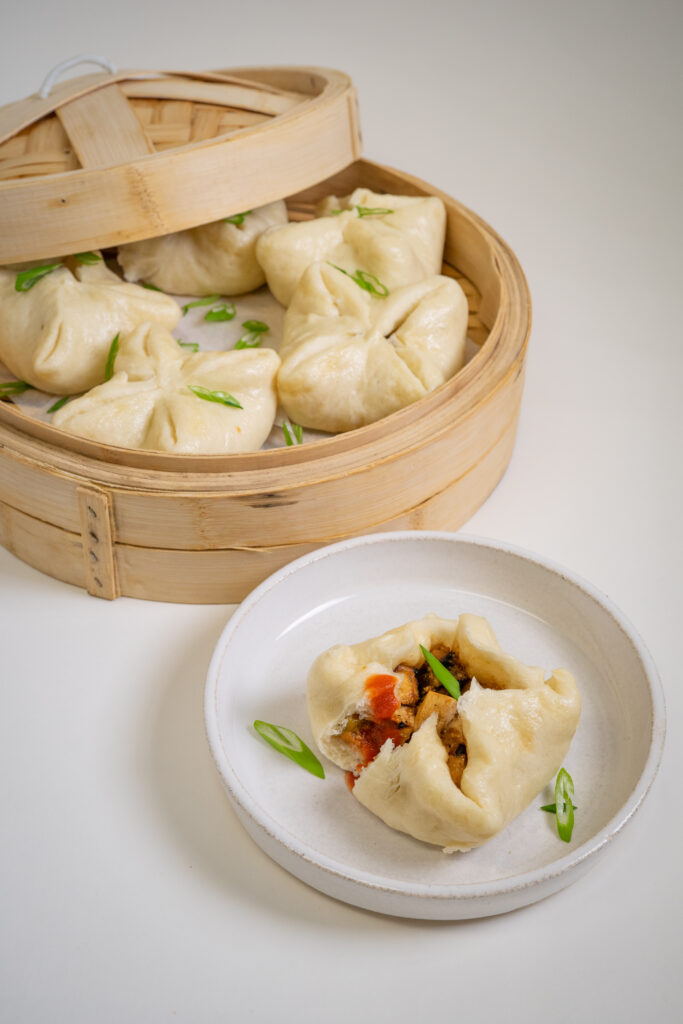
Partnerships include Prairie Fava, Juno Food Labs, Big Mountain Foods and Richardson International and in this section there are recipes for any meal of the day – cinnamon toast pancakes with cereal milk whipping cream for breakfast, summer rolls with tamarind sauce or lentil perogies for lunch, and finally a dan dan noodle bowl or fried chicken for the finale.

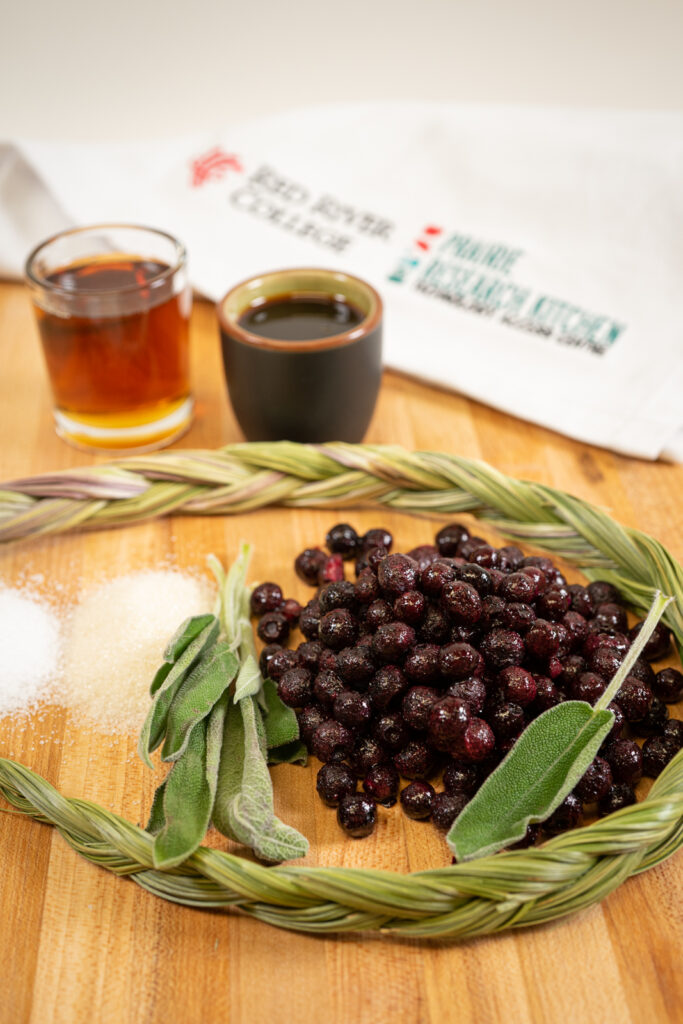
In the third recipe section, Prairie Research Kitchen focuses on incorporating Indigenous knowledge and engagement in food development opportunities and training – a key strategic priority for the College. This chapter brings together projects PRK has worked on featuring Indigenous foods, businesses and projects involving the chef instructors and student chefs from the School of Indigenous, Education’s Culinary Skills program. It includes recipes for a wild blueberry sauce, three sisters soup with smoked duck and wild rice buttermilk pancakes and wild rice Bannock.

The final section of the book features the people and recipes that make up culinary research and RRC Polytech’s Prairie Research Kitchen multidisciplinary team, complete with fun facts and quotes about the work and partnerships they care so deeply for that helped inspire the completion of this book.

“This innovative and tasty research recipe cookbook, From Lab to Table, is an important outcome of the Technology Access Centre Prairie Research Kitchen’s dissemination of knowledge gained through research to ensure economic prosperity for Canada and the future generations,” said McRae.

“The world of research is ever-changing – and for that reason, Prairie Research Kitchen will continue to adapt and grow in the years ahead. A lot of great ideas have started here, and we look forward to seeing the products of our creativity and collaboration hit grocery store shelves and reach dinner tables in the years ahead.”

The physical printed book isn’t for sale, however interested aspiring chefs can view the online version of From Lab to Table here. Copies of the book will also be used for special gifts, door prizes, and provided to partners who continue to support RRC Polytech.

RRC Polytech’s new TACAM Director seeks to reach new heights of innovation in aerospace and manufacturing sectors

October 18, 2023

RRC Polytech’s Research, Partnerships and Innovation team is pleased to announce Dr. Janfizza Bukhari as the new Director of the Technology Access Center for Aerospace and Manufacturing (TACAM).

Dr. Bukhari will lead RRC Polytech towards technological advancements and the application of applied research in aerospace and manufacturing. She holds a Ph.D. in Electronic Engineering from Dong-A University, South Korea and has experience of leading applied research projects in aerospace and energy systems.

Dr. Bukhari firmly believes in the power of collaboration and is eager to engage with industry leaders, academia, government agencies, and the community to create a thriving ecosystem for aerospace and manufacturing innovation at RRC Polytech.  She believes in fostering a diverse and inclusive environment and aims to contribute to positive social change in the aerospace and manufacturing industry, and we are confident that her visionary leadership will enhance TACAM’s innovation and competitiveness here in Manitoba, and on a national scale.


Prior to joining TACAM, Dr. Bukhari has worked as a Postdoctoral Fellow at Mérida Labs at the University of British Columbia, where she has been actively engaged with leading industrial partnerships including Vancouver International Airport, Rogers Communications, IndroRobotics Inc., Canada Post and Honeywell, to advance research on cellular enabled unmanned aerial vehicles. 

She has also recently contributed to a book on global sustainability, focusing on the research challenges and opportunities of zero-emission delivery for logistics and transportation.

Dr. Bukhari has prior experience of managing teams for developing solutions for remote monitoring of pipeline corrosion in real-time. Her work on an improved design of a prototype hand glove to translate sign language hand movements into speech, is a true demonstration of her dedication towards providing innovative solutions to the community.

 We are pleased to welcome Dr. Bukhari to RRC Polytech’s RPI team and look forward to the leadership and exciting new opportunities she will bring to these important sectors in Manitoba.

PRK Food Donation to Main Street Project tops 500 kg

October 16, 2023

This summer, RRC Polytech’s Prairie Research Kitchen (PRK) challenged a group of Culinary Research co-op students to create delicious meals for some of our community’s most vulnerable, using only very limited ingredients – most of which may have been waste if solutions for repurposing weren’t discovered.

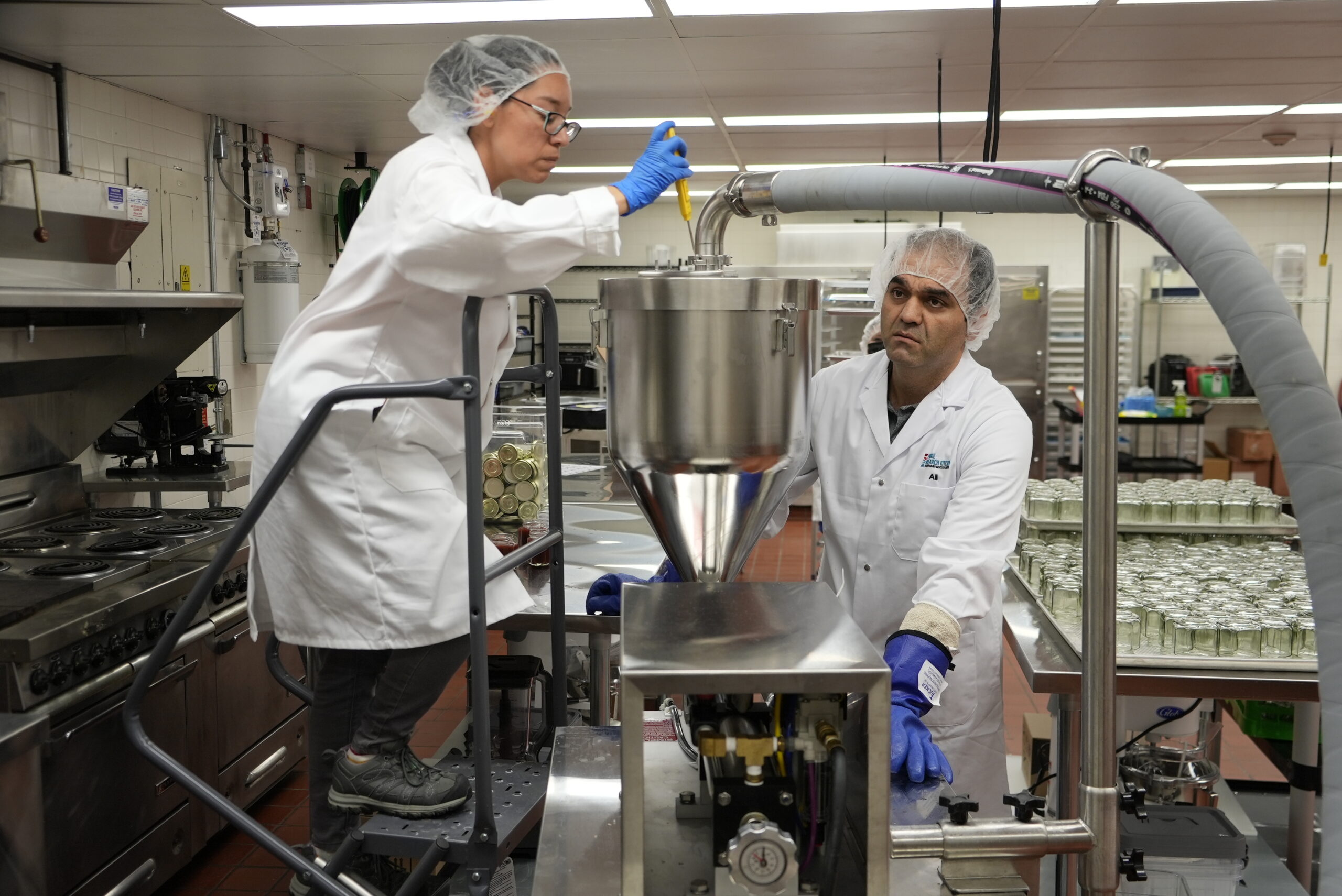
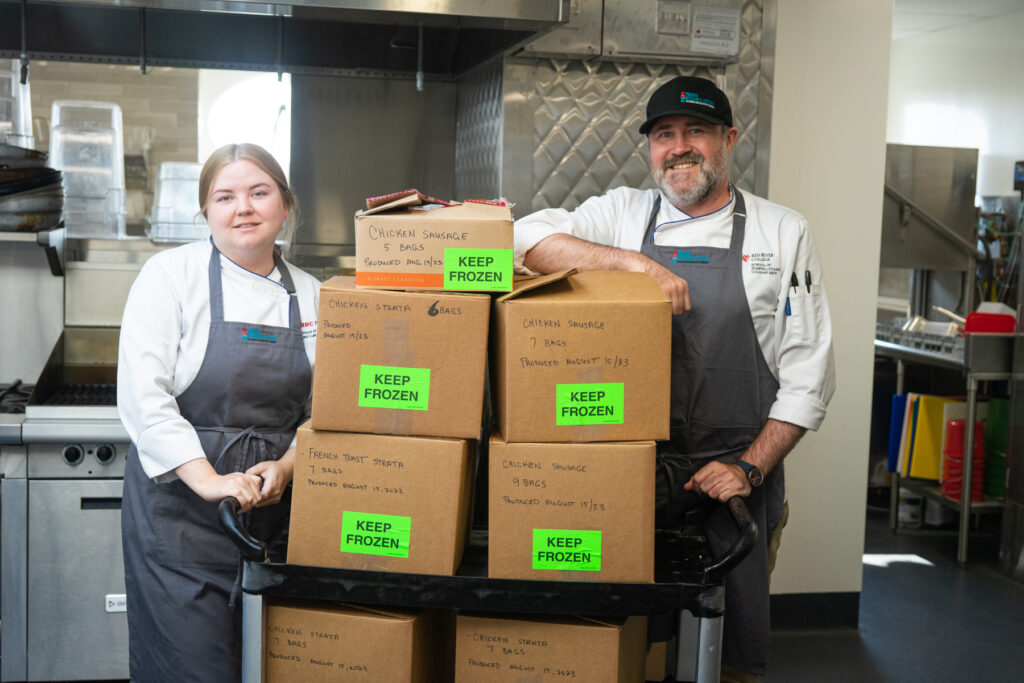
Their ability to repurpose perfectly good food generated through research projects and transform it into easy to serve dishes helped PRK eclipse a major milestone of 500 kg of food redirected to Main Street Project in an ongoing collaborative effort that helps feed the community while providing students with a valuable introduction to research. 

“In a world that still wastes 40 per cent of the food produced, it’s imperative that Prairie Research Kitchen leads by example to demonstrate strategies that everyone in the food value chain can use to impact that number,” says Mavis McRae, Director, PRK. “As researchers, we understand that several trials and scale-ups are part of the research process. However, by working together with our clients to repurpose food that is left over from our work but still good to eat and redirect it to people in need, we are proving that multiple objectives can be reached simultaneously.”

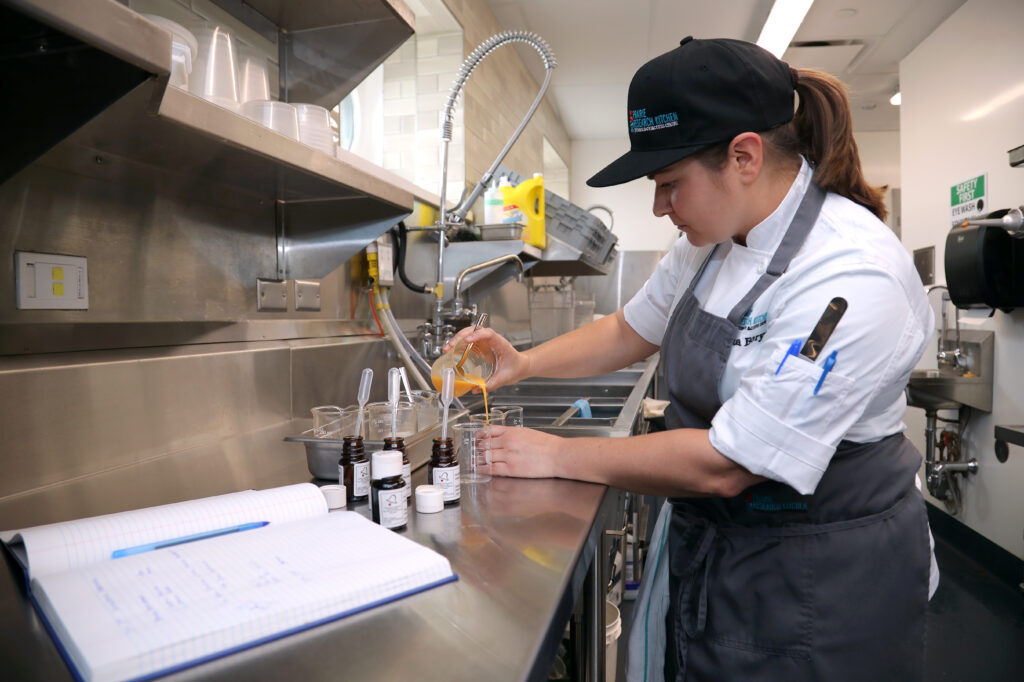
Taste, texture and visual appeal are constant considerations in food development projects, so an extensive trial and error process is often required by the researchers at PRK to develop new products, techniques and recipes. With the consent from industry partners, Pulse Canada, engaging PRK to undertake product development, the research team has committed to recovering edible, high quality ingredients from their projects and testing their creativity by converting them into pre-packaged menu items that Main Street Project can distribute to those in need.

Pushing PRK past the 500 kg mark in donations was a product integration-based project with Pulse Canada designed to maximize the use of pea fibre generated from the pea protein process and deliver functional benefits to new formulations such as water holding and texture.

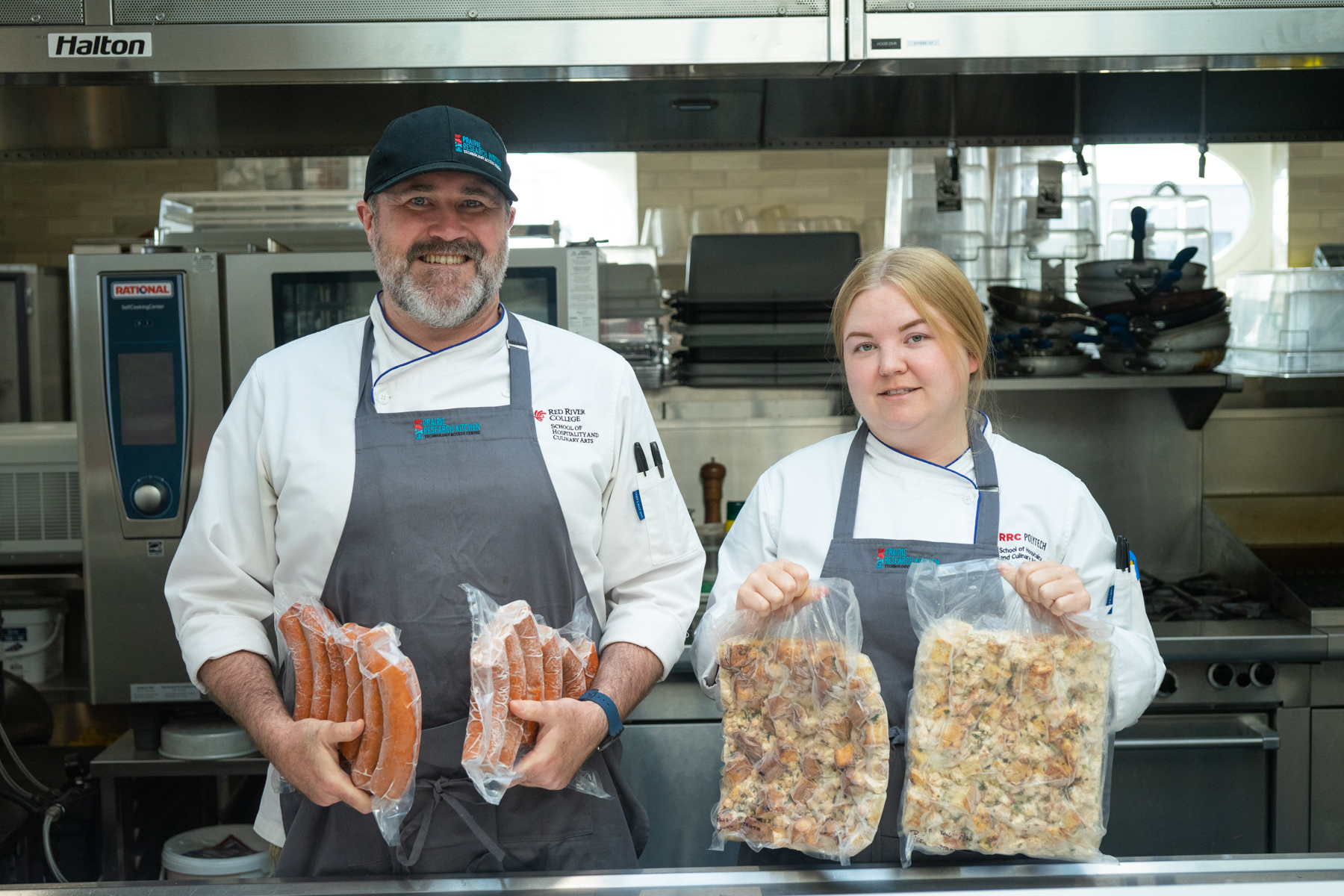
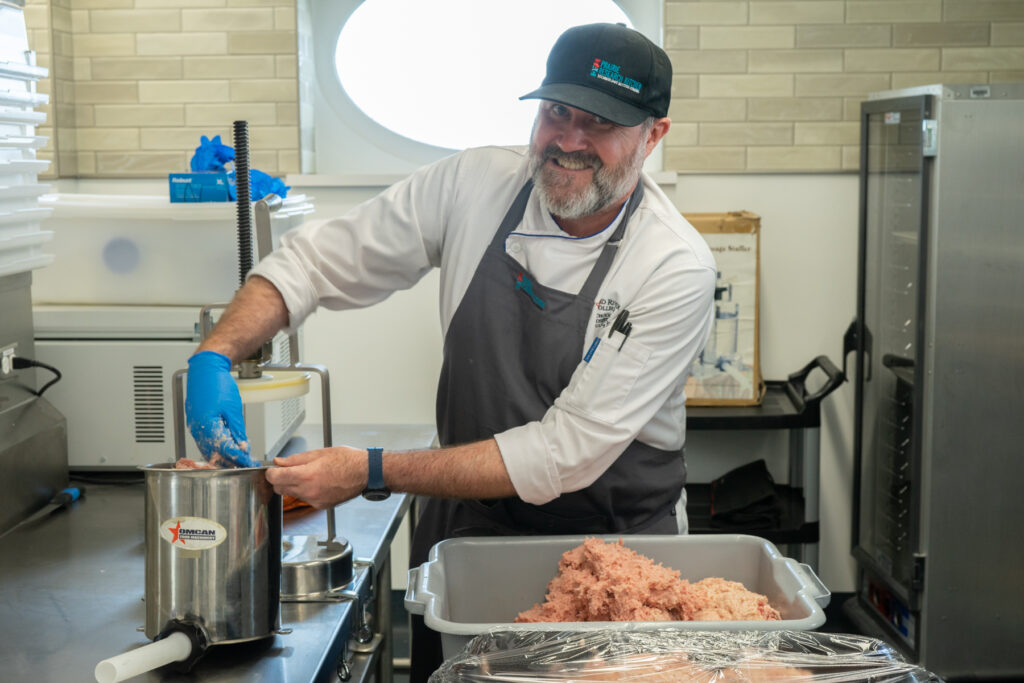
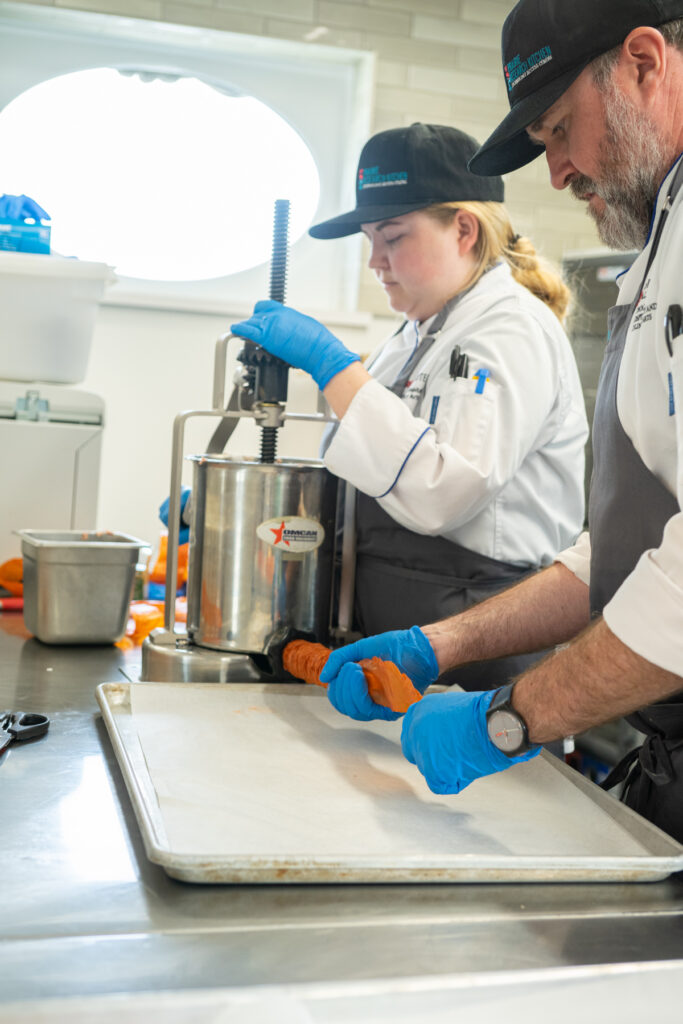
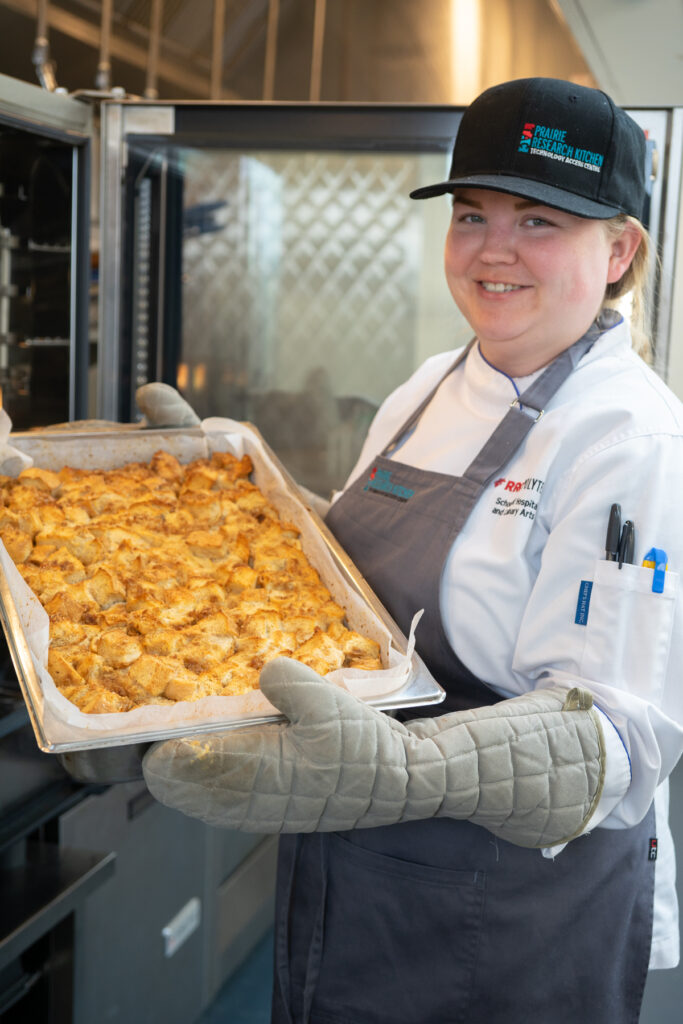
The latest delivery to Main Street Project featured remaining pea fiber bread and pea fiber chicken deli meat being converted into tasty breakfast themed items including a sweet, French toast-style strata (a type of layered breakfast casserole), a savory strata, and a chicken sausage.

Chicken Strata Recipe

Yield: 1, 9” x 13” Deep Baking Dish

Allergens: Wheat/Gluten – Milk – Eggs – Sulphates

Ingredients                                                                                                              Quantity (g)        

Oil, canola
Onion, medium dice
Celery, medium dice
Bread, medium dice
Deli chicken loaf, medium dice
Mayonnaise
Eggs
Milk
Pepper
Water
Butter, unsalted
Parsley, chopped
Chives, thinly sliced    

Optional: Cheese, grated
10
150
150
1400
700
240
360
340
3
350
14
3.5
3.5

75

Method
1.     Add oil in a medium saute pan. Add in celery and onion and cook on medium high heat for five minutes.
2.     Add sauteed vegetables to bread, chicken, and mayonnaise. Mix well.
3.     Whisk together eggs, milk, pepper, and water and pour over bread, chicken, mayonnaise, and vegetables.
4.     Mix gently until everything is combined.
5.     Rub butter on base and sides of a casserole dish.
6.     Pour bread and chicken mixture into casserole dish.
7.     Cover and refrigerate for 4-10 hours.
8.     Remove from fridge, top with parsley and chives and bake at 350°F for 45-55 minutes.
9.     Rest for 5 minutes and serve hot. 
Other Instructions
If desired, grated cheese can be added to the strata at the 45-minute mark of baking. Bake for 10 minutes longer or until cheese is melted.

All donated food is not only safe and healthy but often transformed into elevated new items by student chefs through PRK’s Culinary Research co-op program. The project creates a fertile learning environment for the second year Culinary Arts students who are hired to take part, as it exposes them to a food science career path that many future chefs may not have known about or considered. Roxanne Kent jumped at the opportunity a few years back and is now working full time as a Research Assistant at PRK.

“This initiative challenges staff and students’ creativity and ability to create amazing menu items using limited resources – and it’s that innovative spirit that drives us as both chefs and scientists,” she says. “You learn the importance of documentation to ensure reproducibility; experience the rush of perfecting a formula, technique or recipe; and it’s personally rewarding when your hard work satisfies the client’s needs while helping the community at the same time.”

As the national association representing growers, traders and processors of dry peas, beans, lentils and chickpeas, Pulse Canada prioritizes sustainability in its vision to develop the future of food and partners with PRK to create marketable menu items that taste great and promote the nutritional and environmental benefits of pulses. Given their strong relationship and aligned values, Pulse Canada and PRK have worked together to redirect unused or left over food to Main Street Project for the last year and half, while still protecting all proprietary data. Previous donations included:

  • Mini meatloaves: ground beef mixture with black beans
  • Lentil breaded chicken: lentil flour, fully cooked breaded deep fried chicken thighs
  • Red lentil flour pumpkin muffins
  • Red lentil flour focaccia pizza
  • Pork soup with pork/okara meatballs
  • Red lentil pastry cups
  • Lemon blueberry ice cream
  • Plant-based coffee ice cream

“Our mission is to provide essential services to those experiencing homelessness and mental health issues in our community, so we are always searching for new partnerships, donors and volunteers,” says Jamil Mahmood, Executive Director at Main Street Project. “While elevating items for donation isn’t necessary, even small expressions of caring go a long way to positively impact the community we support, so we’re grateful for the continued support from Prairie Research Kitchen and its partners who are helping not only to feed but to change the perception of those who struggle.”   

Partnerships are the core of College success as they enable RRC Polytech to extend resources, leverage strengths, accelerate progress in innovation and research, and reach the community. Located on the 11th floor of the Paterson Globalfoods Institute in the heart of the downtown, the Prairie Research Kitchen is proud to continue its unique work as a Technology Access Centre while building relationships that help the College play a revitalizing role in the evolution of the city.

RRC Polytech’s Prairie Research Kitchen named Associate of the Year by Food & Beverage Manitoba

October 12, 2023

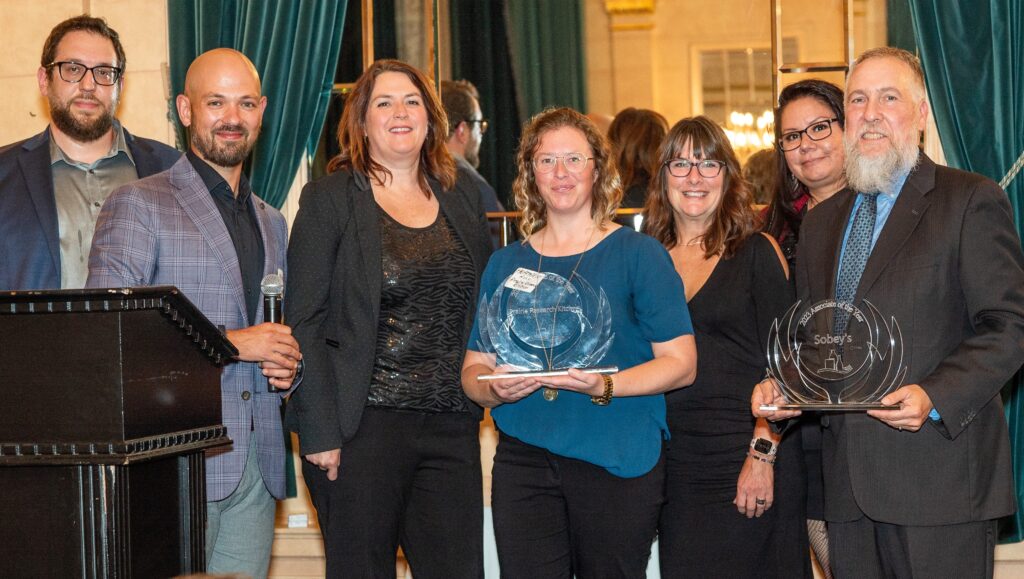
The commitment that RRC Polytech’s Prairie Research Kitchen (PRK) makes to support Manitoba’s vibrant food production industry, provide unique learning experiences to students and give back to the community was recognized last week with a prestigious award. On Thursday evening, Food & Beverage Manitoba hosted its first Harvest Dinner and Awards Ceremony since the pandemic and named PRK its Associate of the Year, proudly sharing the honour with Sobey’s.


The winner of the Associate of the Year award consistently provides exceptional value to Food & Beverage Manitoba members. Using a unique blend of food science and culinary arts, PRK’s team of chefs, researchers and students work together tirelessly to develop creative solutions that support food processors and food service providers. As a Technology Access Centre (TAC) PRK supports businesses through:

  • Applied research, including food prototyping, ingredient applications, food process modifications and consumer research trials.
  • Technical services such as student recipe development, food photography, trade show support and clinical trial prototypes and products.
  • Training on new ingredients as well as cooking or preservation methods emerging in the food and food service industries.

Since its inception in 2014, PRK has worked on over 120 projects with Manitoba and Western Canadian companies developing or refining their products for market and ensuring companies stretch their research dollars by accessing the eligible funding available for product development. PRK encourages companies to consider sustainability in all outputs of their operation – and by working with their clients to upcycle leftover ingredients, PRK has redirected over 500 kg of food to Winnipeg’s most vulnerable through Main Street Project over the past two years.


In addition to training the province’s future food product developers, operators, scientists, chefs, and bakers; developing an Introduction to Research program for students studying Culinary Skills through the School of Indigenous Education; and participating in numerous events, tours and outreach events; PRK team members also made time to sit on various student and industry panels, committees and advisory boards to help shape the future of the sector. 

Congratulations to the multi-disciplinary team at Prairie Research Kitchen for building strong relationships with industry, helping great food products and ideas reach the tables of consumers, and playing a role in creating jobs and economic benefit for all Manitobans.

About Food & Beverage Manitoba

Food & Beverage Manitoba (formerly the Manitoba Food Processors Association) is an industry-led, not-for-profit association launched in 1993 to help the province’s food and beverage industry achieve its full creative and competitive potential. Its mission is to provide members with services and resources that help them navigate opportunities and challenges so they can elevate and strengthen their businesses.

RRC Polytech leading conversion of diesel school buses to EV technology

August 29, 2023

RRC Polytech’s Vehicle Technology and Energy Centre (VTEC) are creating a new way to fuel school buses in Winnipeg.

Partnering with Seven Oaks School DivisionNoble Northern and the Canadian Shield Foundation, RRC Polytech is leading the Electric School Bus Conversion project, which aims to convert diesel school buses into electric vehicles.

The benefits of converting just one bus in Seven Oaks fleet includes saving up to $11,000 in fuel costs, and reducing 20.5 tonnes of CO2 emissions per school year (approximately 39 weeks).

This initiative will also demonstrate the advantages of switching to this technology, such as lower maintenance costs, and elimination of air and noise pollution. Additionally, the project will offer experiential learning opportunities for the students and staff who will work on the conversion process.

“RRC Polytech has been leading the way in EV technology for a number of years and we’re proud to work with our partners to expand the technology to different types of vehicles,” says Jojo Delos Reyes, Research Program Manager at RRC Polytech. “Reducing emissions and sourcing renewable energies for fuel is one of the ways we are hoping to make a positive impact on our environment and create a sustainable future.”

K-12 students who attend school in the Seven Oaks School Division will have the opportunity to learn about climate solutions when they take the bus to and from school, or on field trips.

“Seven Oaks is thrilled to partner with RRC Polytech, and thankful that the Honourable Ed Schreyer (founder of the Canadian Shield Foundation) initiated this project. We teach our students about the need for climate action. We need to walk the walk,” says Brian O’Leary, Superintendent for Seven Oaks School Division.

VTEC and RRC Polytech’s Transportation program department will work together to include student participation on the project and will provide the technical expertise and support for the conversion process. The College will also test and evaluate the performance of the electric buses in its MotiveLab™ facility.

Funding for the project was announced last month through the Manitoba Government’s Conservation and Climate Fund. The Province awarded RRC Polytech $150,000 for this project, and a total of $1.5 million for other projects aimed at reducing carbon emissions and creating green jobs.

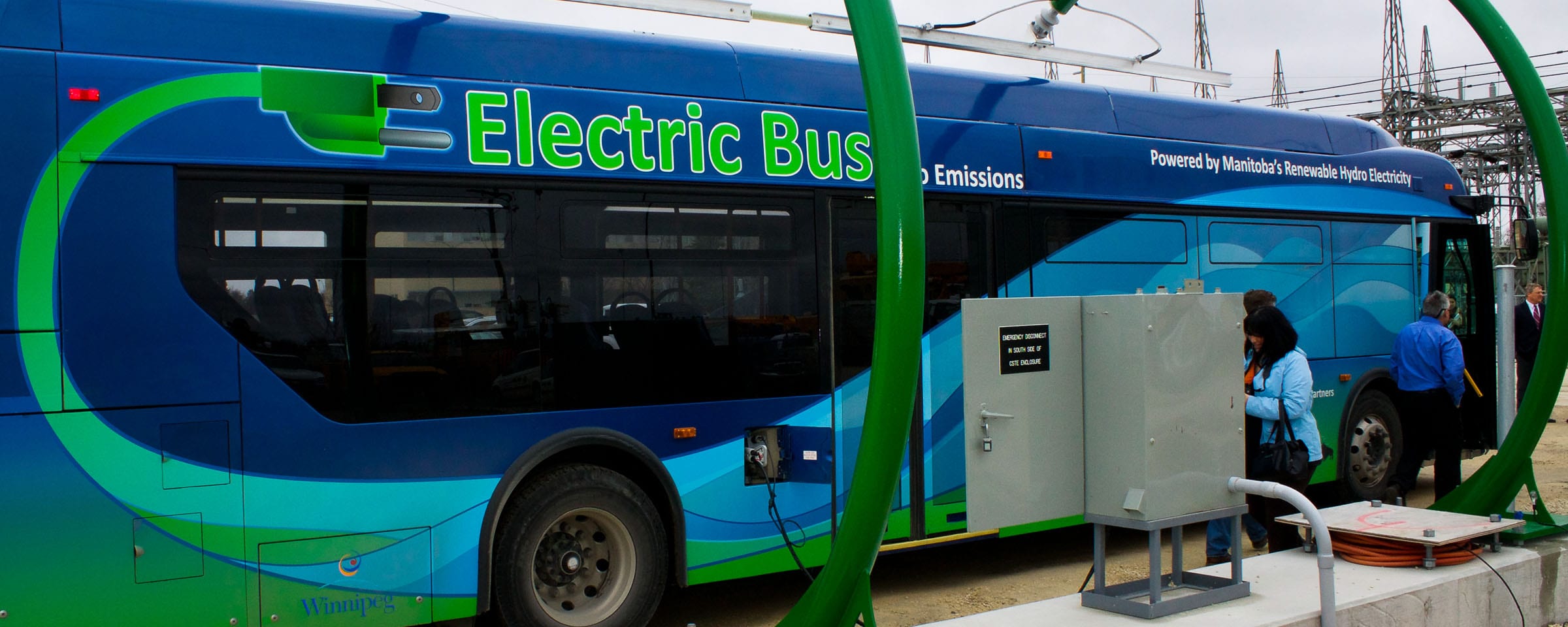
RRC Polytech is no stranger to converting electric vehicles. In 2016, VTEC Partnered with Winnipeg Transit, New Flyer Industries and Manitoba Hydro to create an all-electric, zero emission public transit bus and in 2020 launched an Electric Bus Technology course, which focus on battery safety, electrical fundamentals. RRC Polytech also partnered with Frontiers North Adventures in 2021 to create the first EV Tundra Buggy to be used in Churchill, Manitoba.

More information about the project will become available as work begins

Welcoming RRC Polytech’s Growth & Development Advisor, Indigenous Strategy, Research and Business Development

March 3, 2023

RRC Polytech would like to share we have completed the competitive selection process for the position of Growth & Development Advisor.

Please join us in welcoming Carley Misanchuk as the new Growth & Development Advisor, Indigenous Strategy, Research and Business Development.

Carley joins us from the School of Continuing Education, where she held the position of Strategy Coordinator. Before joining RRC Polytech, Carley worked at Red Deer Polytechnic in Alberta, focusing on operational delivery and marketing.

Carley has always prioritized bringing teams together to harmonize efforts and build relationships. She values making meaningful connections and finding joy in the little things.

Carley fills her life with golfing, concerts, Blue Bombers football games, family time, and puppy snuggles, and in the winter, you’ll rarely find her without a good book and a warm cup of coffee.

Ready for take-off: RRC Polytech and StandardAero propelling to new heights of aircraft repair

February 7, 2023

A project testing new aircraft repair technology is about to take flight. RRC Polytech’s Technology Access Centre for Aerospace and Manufacturing (TACAM) and StandardAero are collaborating to validate whether this new technology could be effectively implemented for repairing aircraft components.

Maintenance, repair and overhaul (MRO) is a critical but costly measure for aircrafts, required after only a few years, with the body of an aircraft far outliving individual parts. With the shift to aerospace components increasingly being made from light alloys and the exceptionally high safety standards all aircraft manufacturers and MRO companies must adhere to, come additional challenges.

While light alloys allow for light-weight aircraft parts, they are highly susceptible to degradation and oxidization, which increases the need for costly maintenance and repair. Additionally, because the alloys are highly reactive, traditional methods of repair, like welding, are not viable options.

RRC Polytech and StandardAero, one of the aerospace industry’s largest independent MRO providers, are embarking on a year-long project to test and validate cold spray technology for repairing aircraft components. Along with validating the technology, includes the challenge of meeting Original Equipment Manufacturing (OEM) repair standards.

About cold spray technology

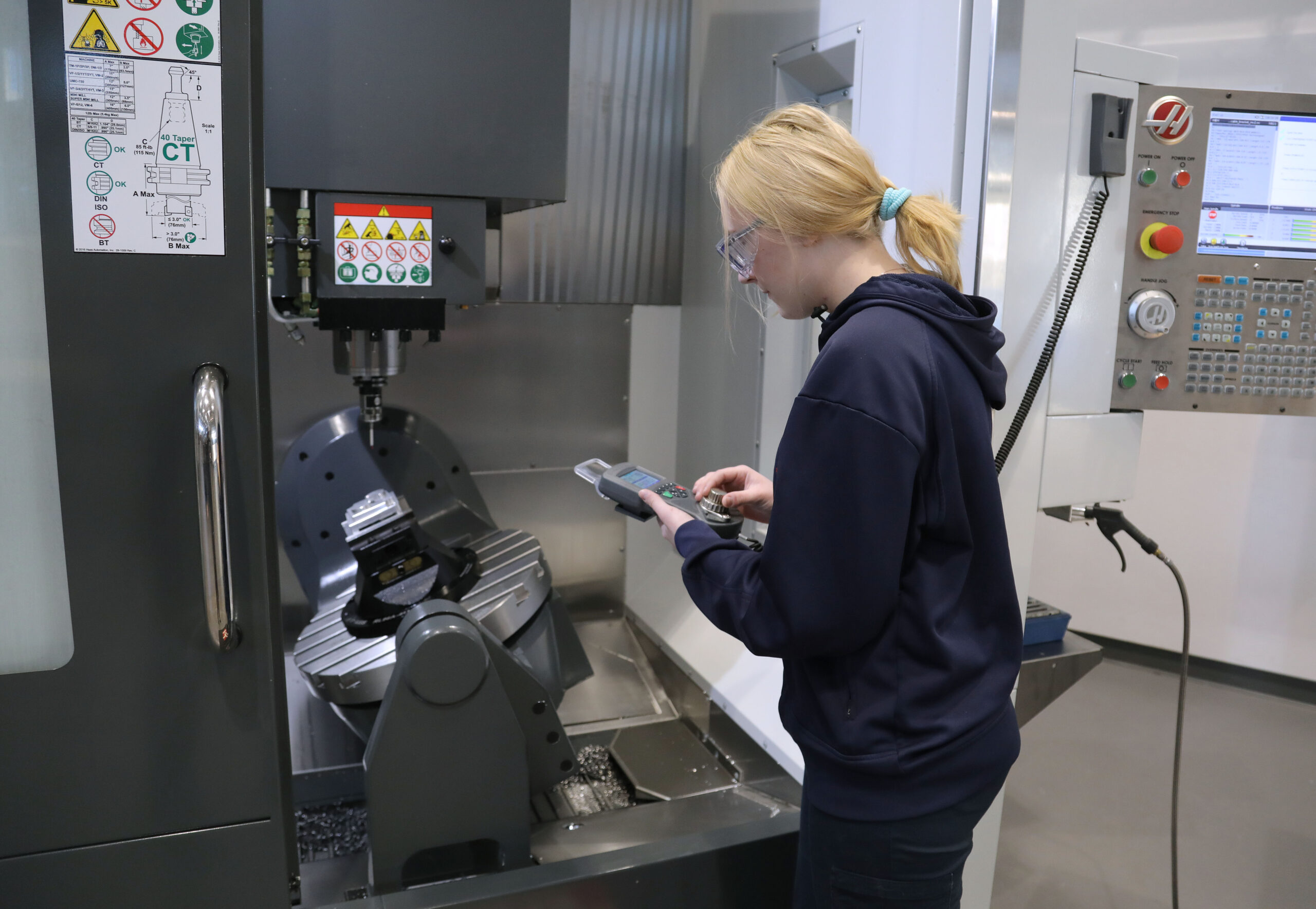
Cold spray equipment
Cold spray technology in action

Cold spray is an additive manufacturing process where metal particles half the thickness of a strand of hair move at twenty-three times the speed of sound, impacting to a surface to form a bond. This process occurs at a very low heat, unlike traditional welding repair.

TACAM brings experience in cold spray technology from ongoing projects, including a contract with the Government of Canada’s Innovation for Defence Excellence and Security (IDEaS) program to develop a light-weight coatings.

Leveraging TACAM’s experience and the long-standing relationship with StandardAero, the two organizations are aiming to reach innovative new heights of aircraft repair, continuing to propel Manitoba as a hub for aerospace and advanced manufacturing.


The cold spray project will take place at the Centre for Aerospace Technology & Training (CATT), co-located at StandardAero’s Plant 5 facility, engaging RRC Polytech researchers, faculty and students. It will be an opportunity for both the College and StandardAero to build in-house capabilities, provide training, and help foster technology transfer to support this method of MRO.

The project also represents a rich work-integrated learning experience for students to put their robotics skills into action, as the project will be taking place in a fully automated robotic cell. Students will learn about characterization of materials and OEM standards, test the cold spray process, and enhance their technical writing and project management skills.

RRC Polytech is known for getting its graduates hired by industry. And this collaborative project highlights the unique advantage of students working directly with researchers and industry partners to gain experience with new and emerging technologies, helping them develop in-demand, future-focused skillsets.

Along with providing highly skilled graduates, this project has potential for a broader impact across our province. RRC Polytech’s Research Partnerships & Innovation (RPI) enterprise, which includes TACAM, is strategically positioned to support small- and medium-size enterprises (SMEs) – that typically do not have the personnel or funding for in-house R&D – with technology adoption and innovation efforts. The new experience and capabilities developed with cold spray technology can be transferred to support SME partners in varying sectors across Manitoba.

For updates on this project and the latest RPI news at RRC Polytech, stay tuned to the Research blog, or subscribe to blog updates, here.

RRC Polytech one of Canada’s top research colleges

February 1, 2023

Partnerships propel polytechnic to 11th best in the country

RRC Polytech is once again one of Canada’s top research institutions, as announced last week in Re$earch Infosource’s annual ranking of the country’s top 50 research colleges. The College jumped three spots from last year’s 14th place position.

RRC Polytech comes in first place in the prairies in the Spotlight on College Research Activity – Medium Tier category, and third place for research partnerships nationwide. The College completed 93 applied research projects in the 2021 fiscal year.

“Partnerships are at the heart of everything we do at RRC Polytech. We work with industry everyday to come up with innovative, sustainable solutions to business problems. Thanks to the support from our partners in the community, industry, and government, we can continue to make positive change here in Manitoba and throughout the country,” says Jamie Wilson, Vice President, Indigenous Strategy, Research and Business Development at RRC Polytech.

“This national recognition reinforces that ground-breaking work doesn’t happen in a silo. It takes a community of creative staff, students, and industry partners to achieve the results that place us so high on this list.”

An ongoing partnership between RRC Polytech’s Prairie Research Kitchen and Prairie Fava, a Glenboro, MB-based food start-up, and Big Mountain Foods, a Vancouver-based innovator of plant-based consumer packaged goods that resulted in an award-winning product is just one example of the innovative collaborations completed in the last year. A recent building airtightness test at Gordon Bell High School completed by RRC Polytech’s Building Efficiency Technology Access Centre (BETAC) that will help the high school reduce energy costs by 50 per cent is another.

“It’s a particular point of pride that many of our applied research successes focus on sustainable initiatives,” continues Wilson. “It’s important we utilize our technology and expertise to not only create impacts in industry, but to work towards a greener economy. I look forward to continuing working with our partners to make a difference in Canada’s applied research scene.”

RRC Polytech’s Research Partnerships & Innovation enterprise has operated out of the College since 2004, providing industry partners with applied research, technical services and training in areas that align with RRC Polytech’s expertise, resources and facilities, and with regional socio-economic demand.

RRC Polytech campuses are located on the lands of the Anishinaabeg, Ininiwak, Anishininwak, Dakota Oyate, and Denésuline, and the National Homeland of the Red River Métis.

We recognize and honour Treaty 3 Territory Shoal Lake 40 First Nation, the source of Winnipeg’s clean drinking water. In addition, we acknowledge Treaty Territories which provide us with access to electricity we use in both our personal and professional lives.