RRC Polytech nursing grad brings culturally grounded care to Indigenous communities
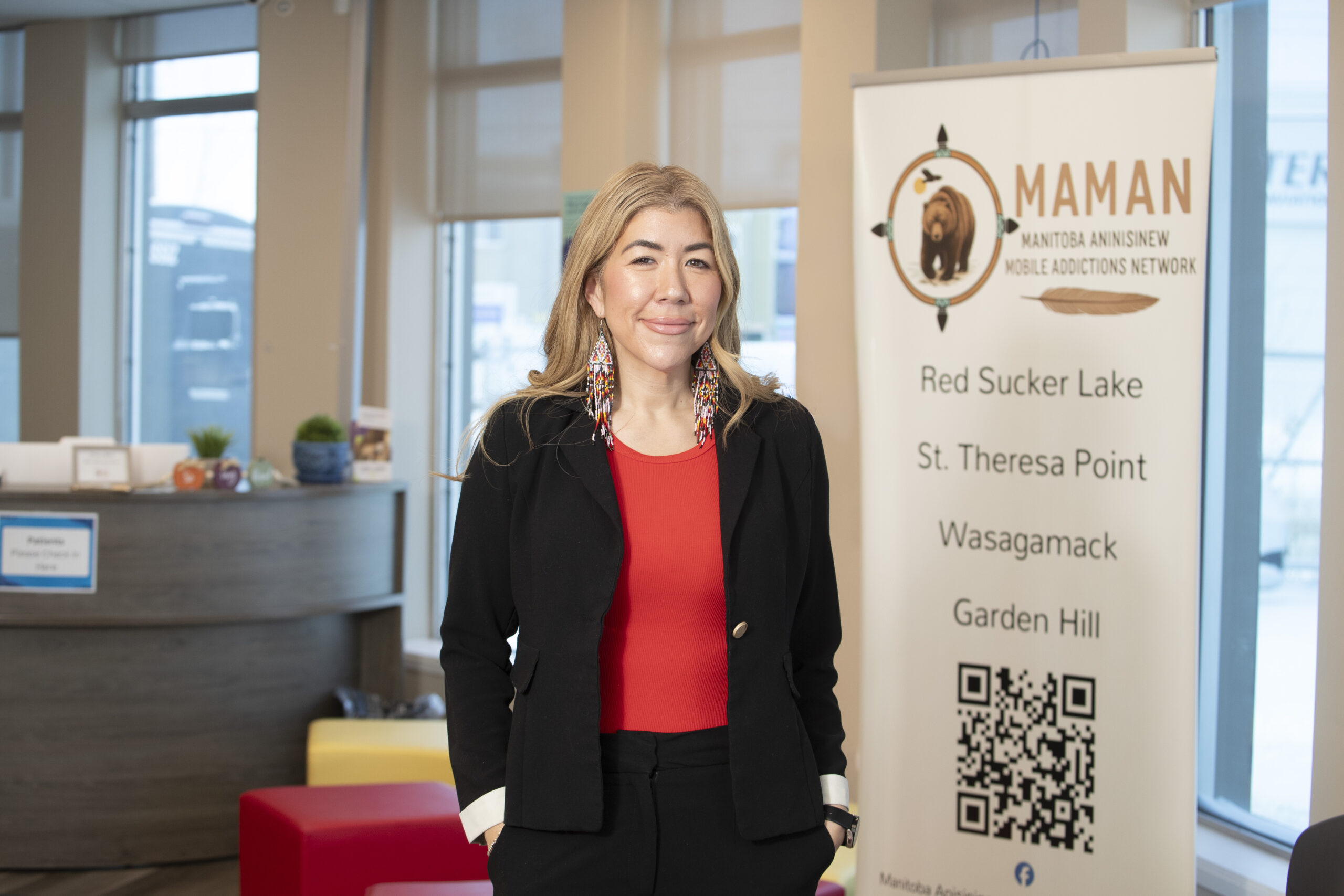
Kirsty Muller didn’t want to do her mental health and psychiatry clinical rotation as a nursing student. With lived experience of mental illness and addiction in her family, she initially believed a career in that space would be too close to home.
But within days of stepping onto the unit, that concern became clarity.
“I knew that’s where I was meant to be,” said Muller. “So I did my senior practicum there at Health Sciences Centre, and that’s where I started my career after graduation.”
Muller graduated in 2014 from the Joint Baccalaureate Nursing Program, a collaboration between RRC Polytech and the University of Manitoba that has since been phased out as RRC Polytech transitioned to its current Bachelor of Nursing degree. That moment shaped the rest of her career, and it happened because of her self-advocacy and the support she found at RRC Polytech.
Muller was in her 30s when she decided to leave her career in insurance and follow in her mother’s footsteps to become a registered nurse through RRC Polytech. She said she was nervous to return to school after being out of the classroom for so long, and knew she needed a refresher in subjects like math and science. As a mature student, she was looking for a program that would help her succeed and provide additional support.
At the same time, Muller said she didn’t know much about her cultural history, and she wanted an opportunity to explore that part of her identity.
That led her to RRC Polytech’s ACCESS program for nursing (now called Pathway to Health Programs), a year-long pathway designed to help Indigenous Manitobans build the academic skills and supports needed to transition into post-secondary programs at RRC Polytech.
“It had an Indigenous focus, and we had access to our elders in residence. So that was a big draw for me,” said Muller. “Elder Mae Louise Campbell would do teachings with us…it gave me an opportunity to learn about our cultural traditions and practices.”
Once she started RRC Polytech’s Bachelor of Nursing (BN) degree program, Muller said she “really relied on” the staff and resources available in the Indigenous Student Centre.
“Once you were in the ACCESS program, you were kind of attached to it for the remainder of your time at RRC Polytech,” said Muller. “We could go [to the Indigenous Student Centre] for lunch, tutoring, or help with financial issues…It was like an extra place you could go that other nursing students didn’t have access to.”
That support became especially critical during her first year of nursing school. Muller was balancing anxiety, a major personal transition, and parenting twin toddlers. Rather than carrying it alone, she voiced her struggles and sought support.
“I found a lot of strength, solace, and encouragement through the Indigenous Student Centre…I would go and see Elder Mae Louise Campbell before I had exams to do a prayer and a smudge,” said Muller. “They were really an outlet for me.”
Muller said her instructors encouraged her to take the time she needed. She also accessed accommodations through Student Accessibility Services.
“I don’t think I would have made it through nursing school or got my degree if it wasn’t for all of those people who had my back,” said Muller.
That support didn’t replace the demands of the program, but it did help Muller meet them. By the time she entered the workforce, Muller said she felt “very prepared.”
“We did our clinicals in our first year…and once we got into the hospitals, nurses were always happy to hear that we were RRC Polytech nursing students because they knew it meant we had a lot of practical experience.”
Muller now works as the Addiction Services Program Manager for Four Arrows Regional Health Authority, delivering trauma-informed, culturally-grounded care to urban members and Northern Indigenous communities.
She said the most rewarding part of her work is seeing the difference that can be made not just in one person, but in a community as a whole.
“The job is tough…but ultimately, it is absolutely rewarding. And when you find an area and an expertise or a special area that you want to work in, it makes it all worth it.”
Muller is also a powerful advocate, and in 2025, she represented Canada as the Indigenous Delegate to the United Nations Commission on Narcotic Drugs, where she brought Indigenous voices into global conversations on health and drug policy.
“Our elders and our relatives talk about how it takes seven generations to make a change. But we’ve already been able to do that in helping communities like this. So I would love to see nurses like myself and nurses that I work with providing care like this in every community, not just in Manitoba, but in Canada,” said Muller.
That commitment to community also extends to the next generation of nurses. Muller said that giving back to students and future nurses is extremely important to her. In her current role, she routinely gives talks to students, sharing her experiences and knowledge specifically as an Indigenous nurse serving Manitoba’s Indigenous population, communities, and relatives.
She spoke to RRC Polytech’s newest class of nursing graduates at a convocation ceremony last June, leaving them with the following words of inspiration: ”Show up as yourself. Your authenticity is your power. Be an advocate – for your patients, your communities, and also for yourself. Advocate for the roles you want and the seat you deserve. Take up space because you’ve earned it. And when you get there, open the door for someone else to follow.”
Profile by Raegan Hedley (Creative Communications, 2016).