Three flags flying on flag poles

Truth and Reconciliation and Community Engagement

News

Indigenous Staff Spotlights – Jeff Herkimer

November 14, 2025

The Indigenous Staff Spotlights celebrate the voices, experiences, and career journeys of Indigenous faculty and staff at RRC Polytech.

Each story is an opportunity to recognize the success and contributions of our Indigenous colleagues while sharing their reflections and advice. By showcasing these diverse career pathways, the Spotlights highlight Indigenous excellence within our community and inspire colleagues, students, and future members of RRC Polytech to envision their own possibilities.

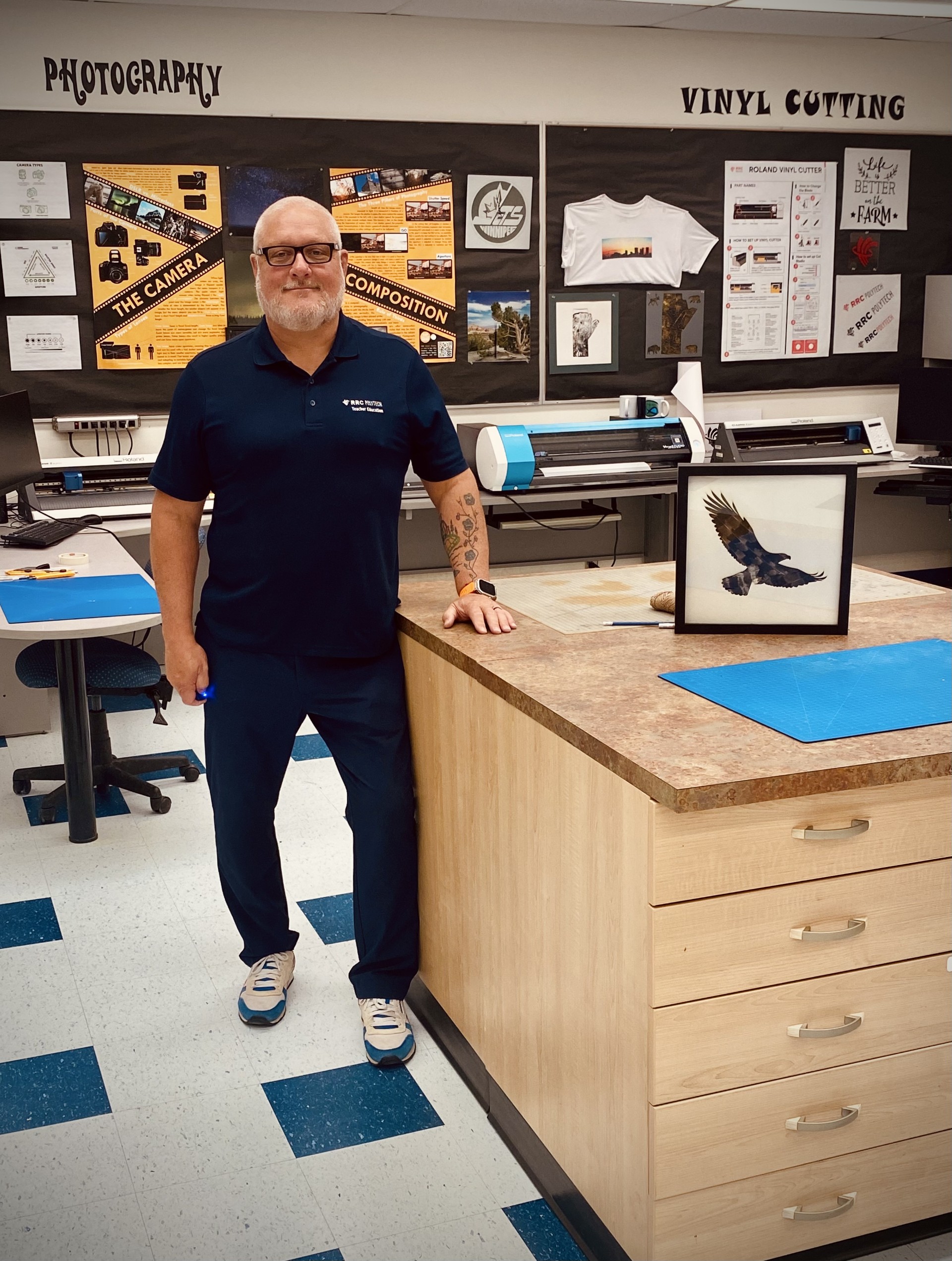
Jeff Herkimer

Job Title: Instructor
Department/Team: Teacher Education
Preferred Pronouns: He/Him/His

1. What inspired you to join RRC Polytech?

As a graduate of the Industrial Arts Teacher Education Program at RRC Polytech, I’ve always felt a strong connection to the place that helped launch my teaching career. The program gave me the tools, confidence, and inspiration to do what I love, and I’ve always hoped to come back and be part of it again. It’s exciting to have the chance to contribute to a program that played such a big role in shaping my journey as an educator.

2. What has been most rewarding about your work?

I really enjoy being part of a dedicated team of educators who work hard to support and prepare future teachers for the classroom. It’s rewarding to collaborate with colleagues who share a passion for helping students grow into confident, capable educators. One of the aspects I value most is having the opportunity to introduce our students to the concept of decolonizing education. It opens important conversations about inclusivity, representation, and rethinking traditional approaches to teaching. Being able to guide students through these ideas and watch their perspectives evolve is one of the most meaningful parts of the work we do.

3. What supports, resources, or relationships have been most meaningful in helping you succeed in your role?

One of the most meaningful resources I’ve come to rely on at RRC Polytech is the incredible team within the Indigenous Education department. As a reconnecting Indigenous educator, their support has played a vital role in helping me deepen my understanding of my culture and identity. Through their services, conversations, and programming, I’ve been able to grow both personally and professionally. Their presence has not only enriched my own journey, but also helped me bring more cultural awareness and authenticity into my teaching practice.

4. What advice would you share with new Indigenous staff starting their careers here?

One piece of advice I’d offer to Indigenous educators who are new to RRC Polytech is to get involved, stay curious, and take full advantage of the incredible knowledge and support available here. Reach out to others, whether it’s fellow educators, staff, or the Indigenous Education department and don’t hesitate to ask questions or share your experiences. There’s a strong sense of community here and engaging with it can be both empowering and enriching. The journey of reconnecting with culture and identity is deeply personal, but you don’t have to walk it alone. There are so many opportunities to learn, grow, and feel supported along the way.

5. What Indigenous book, podcast, artist, business, or initiative would you recommend to others?

I make a conscious effort to support Indigenous entrepreneurs whenever I can, whether it’s through purchasing art, clothing, or other creative work. It’s important to me to uplift Indigenous voices and talent in everyday choices. One Indigenous author I always recommend is my good friend Waubgeshig Rice. His writing is powerful, thoughtful, and deeply rooted in culture and storytelling. Following his work is a great way to engage with contemporary Indigenous perspectives and narratives.

6. Do you have a favorite quote?

“Education is what got us here, and education is what will get us out.” The Honourable Murray Sinclair.


If you are interested in sharing your story, please complete the online form here: Indigenous Staff Spotlights Submission Form

For questions or support, contact Indigenoustalent@rrc.ca.

We look forward to celebrating your journeys!
Recapping the seventh annual Truth and Reconciliation and Community Engagement Week

October 15, 2025

The seventh annual Truth and Reconciliation and Community Engagement Week featured daily opportunities to learn and engage in Truth and Reconciliation education and over 200 members of the RRC Polytech community participated across all campuses. 

We would like to extend our sincerest gratitude to Phyllis Webstad for sharing her story as part of our keynote to launch Truth and Reconciliation and Community Engagement Week. Her personal story became the foundation to Orange Shirt Day (now the National Day for Truth and Reconciliation). She also founded the Orange Shirt Society, which since 2013 has brought national awareness to the lasting impacts of Residential Schools and the ongoing healing work of Survivors and their families. 

Special thanks to our presenters Allen Sutherland, Heather Endall, Zeann Manernaluk, Joanna White, Ray Coco Stevenson, Ivana Yellowback, and the Knowledge Keepers Council for offering various sessions that helped create deeper connections and understanding for the Polytech as a community. 

A huge thank you to all the members of the RRC Polytech community that organized and carried out sessions – together, we continue to walk the path of Truth and Reconciliation. 

And of course, thank you to all who volunteered and participated – your continued support in Truth and Reconciliation is an incredible reflection of our institutional values and an important reminder that we are all on this journey together. 

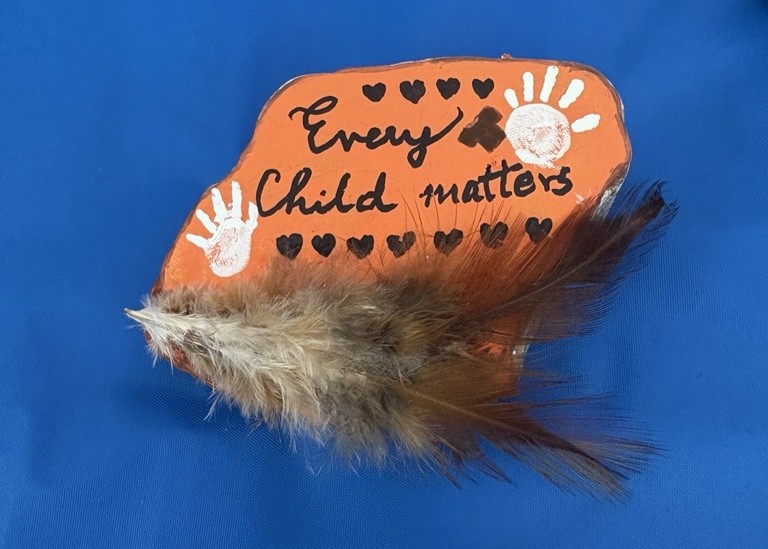
Students at Portage Campus participated in a session featuring Annie Beach, where together they beaded, painted Portage Rocks, and created a mural focused on active transportation that incorporated Indigenous themes. Portage Community Revitalization Corporation mascot Ajidimoo Aki – Dakota for ground squirrel – also joined in the activity. 

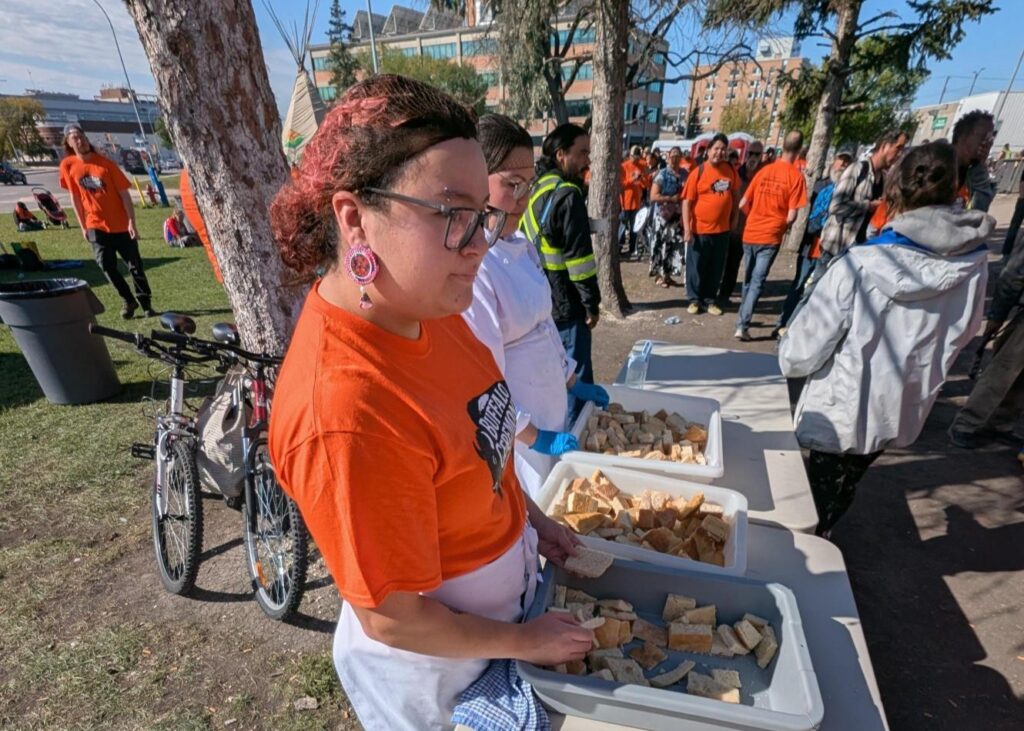
On Sept. 29, Culinary Skills (Indigenous) students joined N’Dinawemak and made bison stew and bannock for 450 community members as part of the Buffalo Ceremony, which honoured Residential School Survivors and their families. 

While the intent of the sessions and workshops is to provide learning opportunities and chances to engage with different perspectives, we understand that people have different responses to and interpretations of the content. Some sessions may have elicited strong emotions and we encourage everyone to continue to take good care of yourselves, check in with each other, and reach out for support if needed. 

Resources are always available, and we encourage accessing them whenever the need may arise. Students may access Counselling Services through the online intake, and employees may access Homewood Health counselling as part of the employee benefit package and free of charge. 

As we know, Truth and Reconciliation is a year-round commitment, so we invite members of the RRC Polytech community to keep an eye on Staff News for upcoming opportunities and Student News for workshop sessions to bring into the classroom. 

Indigenous Staff Spotlights – Adam Nepon

October 6, 2025

The Indigenous Staff Spotlights celebrate the voices, experiences, and career journeys of Indigenous faculty and staff at RRC Polytech.

Each story is an opportunity to recognize the success and contributions of our Indigenous colleagues while sharing their reflections and advice. By showcasing these diverse career pathways, the Spotlights highlight Indigenous excellence within our community and inspire colleagues, students, and future members of RRC Polytech to envision their own possibilities.

Adam Nepon

Job Title: Manager, Business Development- Health Transformation
Department/Team: – Corporate Solutions
Preferred Pronouns: He/Him/His

1. What inspired you to join RRC Polytech?

I was drawn to RRC Polytech because of the leaders here who had inspired me long before I became an employee. Their commitment to Truth and Reconciliation motivated me to deepen my own understanding and continue on a path of learning and unlearning. Joining RRC Polytech felt like an opportunity to contribute to that ongoing journey in a meaningful way.

2. What has been most rewarding about your work?

For me, it’s the ability to combine my professional skills in business and human resources with my personal commitment to Indigenous economic development. Supporting both colleagues and students to see their own potential and to know that their voices matter is incredibly rewarding.

3. What supports, resources, or relationships have been most meaningful in helping you succeed in your role?

My path has not been linear. I started university with big dreams, but I struggled with academics, eventually leaving with a 0.87 GPA. At the time, I thought that failure defined me. I stepped away, worked, and slowly rebuilt my confidence. Eventually, I returned to post-secondary at RRC Polytech, where I discovered a new direction in business administration that led to a graduate degree focused on Indigenous economic development. That experience was a turning point that reshaped my entire life and career. It helped me see that my setbacks weren’t the end of my story, but the beginning of a different one.

Along the way, I also became more aware of the complexity of my own identity. As someone with fair skin and male privilege, my cultural ties are often “invisible.” This has meant that I can step in and out of my Indigenous identity, depending on whether I feel safe or threatened. That privilege comes with responsibility: to acknowledge it, to use it to open doors for others, and to keep pushing myself to unlearn and relearn what it means to be Indigenous in this country.

4. What advice would you share with new Indigenous staff starting their careers here?

Your path doesn’t have to be perfect to be powerful. Sometimes setbacks are the very experiences that prepare you for success. Stay curious, ask for support, and know that your journey (whatever path it takes) can inspire others.

5. What Indigenous book, podcast, artist, business, or initiative would you recommend to others?

One that was a perfect read for me was Bob Joseph’s 21 Things You May Not Know About the Indian Act. 

I encourage people to seek out local Indigenous voices, media creators, social media influencers, authors, businesses, artists, Elders, and community organizations. Each one contributes a piece of knowledge and perspective that helps us collectively reimagine what it means to be Indigenous. 

Today, I see this role at RRC Polytech as more than a job. It’s an opportunity to celebrate Indigenous excellence, inspire colleagues and students, and create space for authentic voices and experiences.  If there’s one thing I hope others take from my story, it’s that your path doesn’t have to be perfect to be powerful,” Adam says. “Keep going, keep learning, and remember—you belong here.”

6. Do you have a favorite quote?

This is paraphrasing Dawnis Kennedy, a previous Instructor for a course I did during graduate degree- Aboriginal Spirituality and Healing Ways, with regards to “being Indigenous”- …

There is no being a little bit Indigenous, you either are, or you aren’t.

For me during a time when I was questioning my cultural place it was very powerful when I was going through an internal battle of cultural identity.


If you are interested in sharing your story, please complete the online form here: Indigenous Staff Spotlights Submission Form

For questions or support, contact Indigenoustalent@rrc.ca.

We look forward to celebrating your journeys!

Walking Towards Truth – student creates annual Orange Shirt Design to honour Residential School Survivors

September 18, 2025

Among the many stories that Survivors share about their experiences in Residential Schools, one sentiment sails above the rest:

I want to go home.

Thousands of Indigenous children that attended Residential School endured deep loneliness after being cut off from their families and their communities. In many cases, they could not even connect with their peers using their own languages and knowledges.

The hardship that came with the foreign system and rampant abuses drove many students to run away from school. More often than not, students were tracked down by school or governmental authorities and returned to school; some made it home only to be sent back when parents were threatened with imprisonment; and others died in the pursuit of freedom.

Nursing student Dasia Chatkana designed the 2025 RRC Polytech Orange Shirt design in homage to the children who took the risk to see their families again – who braved treacherous terrains, freezing rain and snow, and Royal Canadian Mounted Police officers tracking them.

The design began with small footprints trailing between coniferous trees, with the moon hanging above to illuminate the path through the forest. From the focal point, the back of a turtle cradles the journey home, symbolizing one of the seven Grandfather Teachings: truth.

Chatkana says that growing up, hearing stories of escape from Residential Schools resonated deeply with her. She recalls her elementary school Dakota teacher, Kunsi Eastman of Canupawakpa Dakota Nation, retelling her own escape in Dakota class and finding out she was tracked down by authorities and returned to the school the very next day. She would also learn that her late grand-aunt, Kunsi Gracie of Canupawakpa Dakota First Nation, also managed to escape from Birtle Residential School.

Another story that Chatkana says inspired the design was that of Chanie Wenjack, whose escape was chronicled in the 2016 film The Secret Path by Gord Downie of The Tragically Hip. Wenjack was a 12-year-old boy who ran away from the Cecilia Jefferson Residential School in 1966 in an attempt to walk home to Ogoki Post, over 600 kilometres away from the school. His body was found frozen on a railway track on Oct. 22, 1966. He died of starvation and exposure to sub-zero temperatures in nothing more than a windbreaker and a jar of matches.

Chatkana says the piece needed to be about more than recognizing tragedy – it is about honouring bravery and highlighting truth. The stark image of a child’s footprints treading towards the moon through the woods is carried on the back of the slow turtle, a journey within a journey – an expression of the journey that is reconciliation and contained in the truth that the turtle represents.

Chatkana says that, as someone who draws in her free time, writing an artist statement to explain the essence of her piece was not easy. Putting into words the feelings, the stories, and the Teachings that were incorporated into the piece was never something that she had done with any other art piece. While considering how she should articulate the meanings woven through the piece, she realized that the symbolism could be interpreted differently when she asked her sister to look at the piece and provide her impression of it.

“When my sister saw the piece, she thought they were the footprints of Bigfoot… Which I thought was smart, because Bigfoot represents honesty in the Seven Grandfather Teachings,” said Chatkana.

Bigfoot is a spirit that is acknowledged and respected in many Dakota Oyate, Anishinaabeg, Ininiwak, and other cultural stories and Teachings. Bigfoot is a witness to truth, always watching to observe the reality of the world – for the children who ran away, Bigfoot saw.

The footprints in the earth evoke a sense of urgency. The children that fled often ran in moments of opportunity – when the priests looked away, when the door was left unlocked, when the lights went out. When the children escaped, they often ran away only with the clothes on their backs – and for children like Chanie Wenjack, it wasn’t possibly enough to help them on the journey home.

“I want people to remember that this is a tribute to the Survivors of Residential Schools, their descendants, and the children who never made it home. The turtle represents the long journey of Truth and Reconciliation that we all must take, like the journey that so many children tried to make home,” said Chatkana.

Chatkana says that, growing up, her family was poor and experienced the tumult that came with the uncertainty of financial insecurity. She didn’t have many toys with which to occupy herself, so she made use of what she had: markers and paper towels.

This is where her pastime for creating art became a passion. She spent a lot of time drawing and at home on reserve, she would enter art contests. She remembers entering little art contests on her reserve – sometimes winning, always just enjoying the act of creating.

She says that she creates art in different media now, and the design for the Orange Shirt was something that she wanted to create that was meaningful not only to her but for the people that will wear the design. She still doesn’t consider herself an artist – but her creative spark has never dulled. Now, she’s entered RRC Polytech’s Nursing program for the fall after completing the Pathway to Health Programs.

Chatkana also expressed gratitude to her grand-uncle, Grandpa Greg, and Kunsi Eastman, who are Knowledge Keepers and Elders in her community. She said their Teachings have been central to her understanding of Dakota culture and language, shaping her identity and sense of belonging. She carries deep respect for them and for the way they keep Dakota culture alive.

Art might not be her profession, but it’s forever a part of her voice. She hopes her piece will resonate with others the way these stories resonated with her.

“Truth and Reconciliation is a long path. But it’s real. We have to have hope and remember. We owe that to those who made the journey before us.”

Artist’s Statement

Creating this piece was challenging for me. I do not consider myself an artist or creative, so I struggled with knowing what to create, but one thing was clear: I wanted to incorporate something related to Residential Schools within a turtle. In many Indigenous cultures in North America, the turtle symbolizes many things. In the Seven Sacred Teachings, the turtle represents truth and wisdom. Sometimes the turtle represents the land, Turtle Island, in stories of the creation of the world. Considering that my design must represent Truth and Reconciliation, I chose the wise turtle as my medium.

After reflecting on how to incorporate Residential Schools into my work, I remembered the many escape stories I have heard, seen, or read about from Residential Schools. Most of these escapes were unsuccessful. Many children were caught and sent back, while some escapes ended in tragedy.

One story that deeply impacted me was Chanie Wenjack’s, which I first learned about in high school through Gord Downie’s documentary Finding the Secret Path. At just 12 years old, Chanie died while trying to return home from a Residential School. With these stories in mind, I had placed small footprints on the turtle’s shell, moving toward the moon, symbolizing how many children escaped under the cover of night, guided only by the moon and stars.

This artwork is a tribute to the Survivors of Residential Schools, their descendants, and the children who never made it home. The turtle and its shell represent the long journey toward Truth and Reconciliation that we must all take. The turtle carries the heaviest truth, much like it carries the weight of the world (Turtle Island). Like a turtle, the path to Truth and Reconciliation is slow, and it will take many years for healing and understanding to truly unfold.

Today, I can see the change slowly unfold before my eyes. I hope one day I can see Truth and Reconciliation and the Calls to Action be fulfilled.


The RRC Polytech Original Orange Shirt, designed by Chatkana, is at the Campus Store for purchase. All proceeds for the Orange Shirt go towards the Mínwastánikéwin Truth and Reconciliation Award for Indigenous students.

Orange Shirt Day 2025

September 17, 2025

Help raise awareness of the National Day of Truth and Reconciliation and support an Indigenous bursary

Phyllis Webstad, whose orange shirt was taken away when she attended Residential School in the 1970s, started the Orange Shirt movement by sharing her story. Since 2013, the Orange Shirt Society has raised awareness of the impacts of Residential Schools and the work Survivors and their families do to heal Indigenous communities. September 30 has been declared the National Day for Truth and Reconciliation and recognized as Orange Shirt Day to honour Residential School Survivors, their communities, and the children who never came home.

In honour of Orange Shirt Day, RRC Polytech has partnered with Dakota artist and RRC Polytech student Dasia Chatkana to create an original Orange Shirt design and with Dreamcatcher Promotions to produce the Orange Shirts. The Orange Shirts will be available through the Campus Store and all proceeds go to the Mínwastánikéwin Truth and Reconciliation Award when applications open in January 2026.

The design features moonlit footprints through a forest on the back of a turtle, representing the children that ran away from Residential Schools. Chatkana says their bravery through the wild and the hope to see their families again are the foundational inspiration for the peace, and the turtle, which symbolizes Truth among the Seven Grandfather Teachings, represents the slow journey of Truth and Reconciliation on Turtle Island.

This artwork is a tribute to the Survivors of Residential Schools, their descendants, and the children who never made it home. The turtle and its shell represent the long journey toward Truth and Reconciliation that we must all take. The turtle carries the heaviest truth, much like it carries the weight of the world (Turtle Island). Like a turtle, the path to Truth and Reconciliation is slow, and it will take many years for healing and understanding to truly unfold.

Dasia Chatkana

Show your support for Truth and Reconciliation by wearing the RRC Polytech Orange Shirt on Friday, September 26 on campus.

Purchase your 2025 Orange Shirt at the Campus Store at Notre Dame Campus or the Exchange District Campus.

Learn more about Phyllis Webstad and the Orange Shirt Society on their website.

Indigenous Staff Spotlights – Michael Lachance

September 16, 2025

The Indigenous Staff Spotlights celebrate the voices, experiences, and career journeys of Indigenous faculty and staff at RRC Polytech.

Each story is an opportunity to recognize the success and contributions of our Indigenous colleagues while sharing their reflections and advice. By showcasing these diverse career pathways, the Spotlights highlight Indigenous excellence within our community and inspire colleagues, students, and future members of RRC Polytech to envision their own possibilities.

Michael Lachance

Job Title: Research Manufacturing Technologist
Department/Team: Technology Access Centre for Aerospace and Manufacturing (TACAM), Research Partnerships and Innovation
Preferred Pronouns: He/him

Self-Declaration and/or Community (optional): Serpent River First Nation

1. What inspired you to join RRC Polytech?

I saw the opportunity to be involved in Applied Research at RRCP and be in a position to assist industry partners and companies in advancing manufacturing.

2. What has been most rewarding about your work?

The most rewarding part of my work is being able to talk to groups of young learners, especially Indigenous learners, to inspire them into careers in manufacturing and engineering.

3. What supports, resources, or relationships have been most meaningful in helping you succeed in your role?

The supports I find most meaningful are the Indigenous supports that are here for students and staff. Attending Ceremony and Sweats at work really is very special. The support I gained while travelling the Red Road has benefited me more than anything else. RRCP also has many wonderful supports for staff to help us and advance our careers, but these have had the most meaning for me.

4. What advice would you share with new Indigenous staff starting their careers here?

I would say engage with the Indigenous Support Centre. This is a great space for making allies and building connections. Lean on the cultural supports, such as Elders and Knowledge Keepers. Be open to exploring Applied Research opportunities at RRC.

5. What Indigenous book, podcast, artist, business, or initiative would you recommend to others?

21 Things You May Not Know About the Indian Act by Bob Joseph. Accessible guide to understanding the Indian Act and its impacts.

6. Do you have a favorite quote?

I got this one from one of the students: “The answer is always No, if you don’t ask.” Don’t be afraid to speak up and ask about opportunities.


If you are interested in sharing your story, please complete the online form here: Indigenous Staff Spotlights Submission Form

For questions or support, contact Indigenoustalent@rrc.ca.

We look forward to celebrating your journeys!
MMF Citizenship and Harvester Card sign-up sessions

September 11, 2025

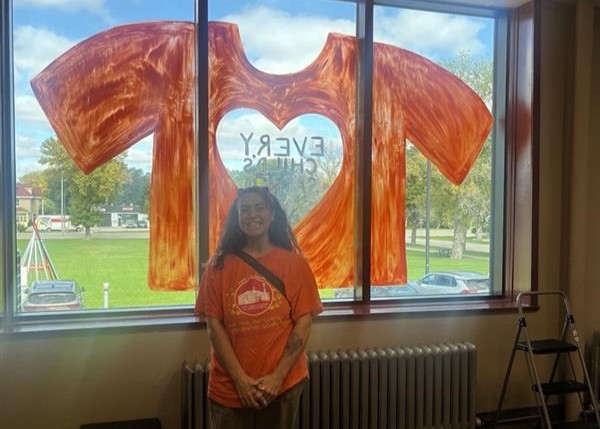
Join us at RRC Polytech for MMF Citizenship and Harvester Card sign-up sessions!

The Manitoba Métis Federation will be on campus September 23 at Notre Dame Campus (West Lot) and September 25 at Exchange District Campus (Atrium) from 10 a.m. – 3 p.m. All students can apply free of charge, while staff will need to bring $10 cash for a Citizenship card and $10 for a Harvester card.

Bring these items to your appointment:

  • Completed MMF Application Form
  • Genealogy documentation (or supporting relative documents)
  • Long-form birth or baptismal certificate
  • Government-issued ID
  • Passport-quality photo (can be taken on-site for free)
  • Payment (if applicable)

This is your chance to complete your application in person and get help from MMF representatives. Don’t miss it!

Job Listing: Educational Developer – Truth and Reconciliation and Community Engagement (Permanent Position)

August 12, 2025

RRC Polytech is seeking a passionate and knowledgeable Educational Developer to join our Truth and Reconciliation and Community Engagement team.

This full-time, permanent position is dedicated to advancing our Indigenization efforts, guided by the Truth and Reconciliation Commission’s 94 Calls to Action.

Location: Notre Dame Campus (Winnipeg, MB)
Salary: $68,556 – $96,644/year
Apply by: August 21, 2025
Designated Position: Open to candidates who self-identify as Indigenous (First Nations, Métis, or Inuit).

If you have expertise in Indigenous knowledge systems, land-based learning, and educational development — and want to make a lasting impact at RRC Polytech — we want to hear from you!

Internal applicants can visit the HRIS portal to apply. External applicants can visit our Recruitment Site for more information.

Let’s work together to preserve and protect Indigenous perspectives for a safe and sustainable future.

Truth and Reconciliation and Community Engagement Week 2025

August 11, 2025

September 22 to September 26

All students, staff and faculty are invited to participate in RRC Polytech’s seventh annual Truth and Reconciliation and Community Engagement Week. Every year, RRC Polytech hosts Truth and Reconciliation-focused programming for all members of the College community to gather, learn, and prepare to reflect on the National Day for Truth and Reconciliation, otherwise known as Orange Shirt Day, on September 30, 2025.

Through in-person events and self-guided learning offered by departments across the College, you’ll deepen your knowledge and understanding of Canada’s true history, Indigenous cultures, and spark conversations and take action in the spirit of Truth and Reconciliation. Each session will bring the opportunity to bring discussion back to the classroom for further discussion and analysis.

We look forward to fostering learning, healing and building stronger relationships. Everyone is welcome and encouraged to participate!

No registration is required to attend events unless otherwise stated.

Please stay tuned to this page for session updates. Reminders for new events will be added to Staff/Student News.

If you have any accessibility needs or questions, please email Terri-Lynn, Truth and Reconciliation Coordinator at tlanderson@rrc.ca.

Want to support the sessions? Supporters will help with a variety of tasks, including welcoming guests, assisting with event setup and cleanup, tracking attendance, and helping ensure each gathering runs smoothly. Your involvement will help create a respectful, inclusive, and welcoming environment for all participants.

Monday, September 22

Keynote Speaker
Phyllis Webstad
12:00 – 1:00 | Virtual – The Roundhouse Auditorium (EDC), White Lecture Theatre (NDC)

Join us virtually for a powerful keynote with Phyllis Webstad of Stswecem’c Xgat’tem First Nation (Canoe Creek Indian Band), the woman whose personal story sparked the Orange Shirt movement.

At just six years old, Phyllis arrived at Residential School wearing a brand-new orange shirt her grandmother had bought her only to have it taken away, along with her sense of worth. That experience became the foundation for the Orange Shirt Society, which since 2013 has brought national awareness to the lasting impacts of Residential Schools and the ongoing healing work of Survivors and their families.

Don’t miss this opportunity to hear directly from Phyllis, reflect on Canada’s true history, and be inspired to take part in reconciliation.

There will be group viewing sessions in the Roundhouse Auditorium (EDC) and the White Lecture Theatre (NDC), and a Teams link will be available closer to the date to stream right from your computer.

Exchange District Campus

Two Spirit Sharing Circle
Robin Ringland

1:30 – 2:30 | P107

Join Robin Ringland, Two-Spirit Anishininew with family ties to Treaty 5 territory Kistiganwacheeng, or Garden Hill First Nation, for a welcoming and safe space to connect. This sharing circle invites Two-Spirit and LGBTQQIA+ staff and students to come together, share stories, and support one another in a brave, respectful environment.

All are welcome to participate in this meaningful gathering of community, identity, and healing.

Tuesday, September 23

Virtual

Indigenous Perspectives
Scott Brownlee

12:00 – 1:00 | Virtual

This session explores how to align coursework with the Truth and Reconciliation Commission’s Calls to Action, using the Universal Design for Learning (UDL) framework to weave Indigenous worldviews, knowledge, and languages into teaching. Participants will gain practical strategies, examples, and reflection prompts to create inclusive, culturally responsive learning spaces.

Born and raised on Treaty 1 Territory, Scott Brownlee is a fourth-generation Canadian Settler who has a passion for integrating digital accessibility, holistic narratives, Indigenous perspectives and intercultural competencies into curriculum and programming. He is an Instructional Designer with the Centre for Newcomer Integration at RRC Polytech.

Exchange District Campus

First Nations and Métis Historical Timeline
Allen Sutherland

1:00 – 3:00 | The Roundhouse Auditorium

Join us for an engaging and eye-opening presentation with Allen Sutherland (Waabishki Mazinazoot Mishtaatim, White Spotted Horse), Anishinaabe of the Bizhiw Doodem from Skownan First Nation. As the Life Long Learning Lodge Keeper for the Government of First Nations Treaty 2 Territory, Allen brings both scholarly insight and deep Traditional Knowledge to his work.

Allen will guide participants through the First Nations and Métis in Canada Historical Timeline, revealing Canada’s true history as told through Indigenous perspectives. This session offers an opportunity to enrich your understanding, challenge assumptions, and connect with the living histories that continue to shape our nation.

Paint Night
Heather Endall

4:00 – 7:30 | P107

Relax, connect, and create! Join Heather Endall, Cree artist, for an evening where painting meets storytelling. Heather will guide you through creating your own unique artwork, sharing techniques and casual conversation along the way.

Each piece draws inspiration from Indigenous culture, offering a chance to explore the symbols, colours, and stories that shape the art. No experience needed—just bring your curiosity and enjoy a warm, welcoming space to chat, laugh, and leave with something beautiful and uniquely yours.

Please register as seats are limited to 25.

Notre Dame Campus

MMF Citizenship and Harvest Cards
Manitoba Métis Federation

10:00 – 3:00 | West Lot 4

The Manitoba Métis Federation will be on campus September 23 at Notre Dame Campus (West Lot) and September 25 at Exchange District Campus (Atrium) from 10 a.m. – 3 p.m. All students can apply free of charge, while staff will need to bring $10 cash for a Citizenship card and $10 for a Harvester card.

Bring these items to your appointment:

  • Completed MMF Application Form
  • Genealogy documentation (or supporting relative documents)
  • Long-form birth or baptismal certificate
  • Government-issued ID
  • Passport-quality photo (can be taken on-site for free)
  • Payment (if applicable)

This is your chance to complete your application in person and get help from MMF representatives. Don’t miss it!

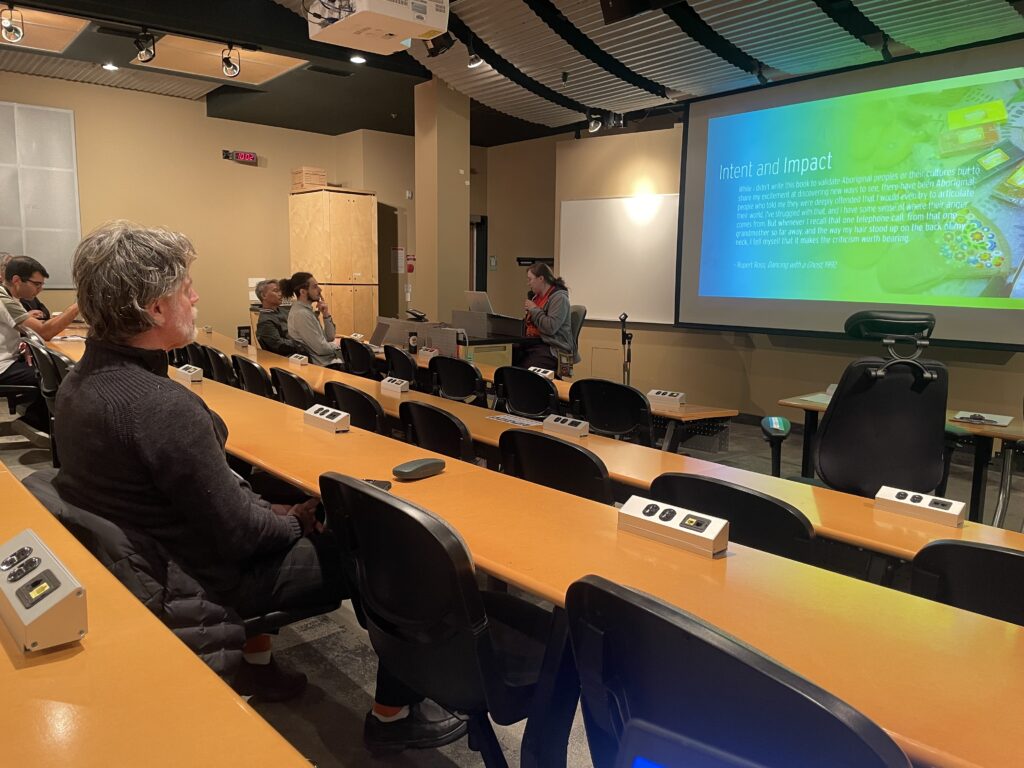
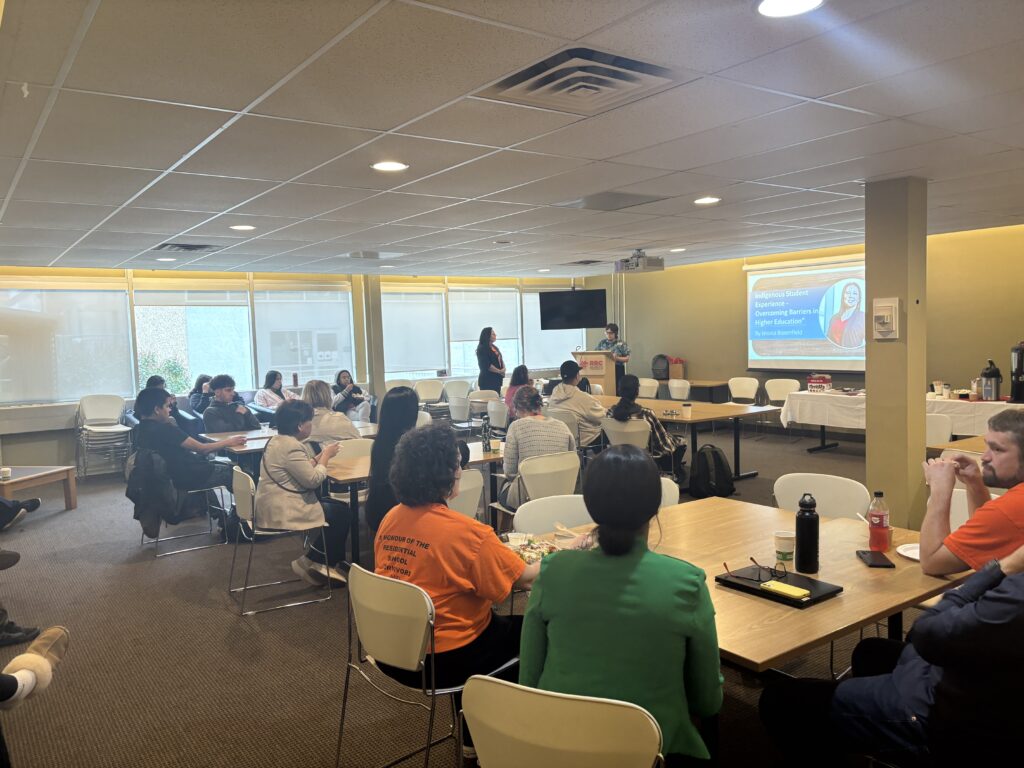
Indigenous Student Experience – Overcoming Barriers in Higher Education
Jessica Bloomfield

1:00 – 2:00 | Selkirk Lounge

Jessica Bloomfield is a proud northern Ininew (Cree) from War Lake First Nation which is one of several communities who reside along the “Bayline” or railway located in Treaty 5 Territory.

Her Sprit name is, “Gahh-Geeh-Gayy Ikew” which translates in Anishinaabe as “Forever Women” that was gifted to her by Little Eagle Bone, which some of you may know as Elder Paul Guimond.

She is the Senior Strategic Advisor to Jamie Wilson, our Vice President of Indigenous Strategy, Research and Business Development. Jessica started with the Polytech in May 2024 after having spent 12 years working for the Manitoba Government in the departments of Education and Early Childhood Learning; Economic Development, Investment and Trade; and Advanced Education and Training. Jessica was most instrumental in changing legislation and advocating on behalf of Yellowquill University College to attain “degree granting status” as the first Independent, Indigenous post-secondary institution ever to do so in Manitoba. This new regulation, was a 3-year long endeavor, which under the Degree Granting Act permits Yellowquill to grant provincially recognized degrees to students who successfully complete the “First Nations Bachelor of Education” program, certifying graduates to teach in every school across Manitoba.

Advancing Indigenous education at any compacity is Jessica’s passion and is what brought her to Red River College Polytech. Jessica is here to share her story and journey through the education system from K-12 to post-secondary and into the workforce, identifying barriers but most importantly her vision to improve the student experience for Indigenous students at RRC Polytech.

Wednesday, September 24

Notre Dame Campus

Inuit Culture and History
Zeann Manernaluk

12:00 – 1:00 | F205

Join Zeann Manernaluk for an engaging session exploring the rich history, culture, and traditions of the Inuit in the Arctic. From the resilience and ingenuity of Inuit ways of life throughout history to the vibrancy of contemporary Inuit communities, Zeann will share stories, knowledge, and lived experiences that bring this unique culture to life.

This is an opportunity to deepen your understanding of the Arctic, learn about Inuit perspectives on community, language, and survival, and connect with the enduring spirit of a people who have thrived in one of the world’s most challenging environments.

Truth and Reconciliation Commission’s Call to Action #10
Joanna White

12:00 – 1:30 | F310

Join us for a heartfelt and immersive session where we will gently ground ourselves in First Nations ways of being, doing, and knowing. Together, we’ll explore how the Truth and Reconciliation Commission’s Call to Action #10 invites us to reimagine education—to uplift Indigenous voices, honor cultural knowledge, and create learning spaces where all students can thrive. This is an opportunity to reflect, learn, and grow as we explore meaningful ways to embed these truths into our curriculum and teaching practices. Whether you’re just beginning this journey or continuing it, your presence and perspective are valued. Let’s walk this path of unlearning and re-learning together — with care, curiosity, and commitment.

Joanna White is a respected leader and practitioner who approaches her work through a holistic and relational lens, deeply rooted in Indigenous cultural, spiritual, and ceremonial practices. With over 30 years of diverse experience in the human and social services field, Joanna has provided both direct services and strategic leadership to Indigenous and non-Indigenous communities and organizations across Canada and the United States.

Currently, Joanna works with a broad range of communities and organizations to support meaningful Truth and Reconciliation and advance decolonization initiatives. Drawing on her lived experience and commitment to collaboration, she leads transformative efforts that foster accountability, drive systemic change, and help create more inclusive and equitable spaces across sectors.

Exchange District Campus

Walking Together: Indigenous Voices on Inclusive Hiring and Belonging
Eucharia Ogoms

11:30 – 1:00 | The Roundhouse Auditorium & Hybrid

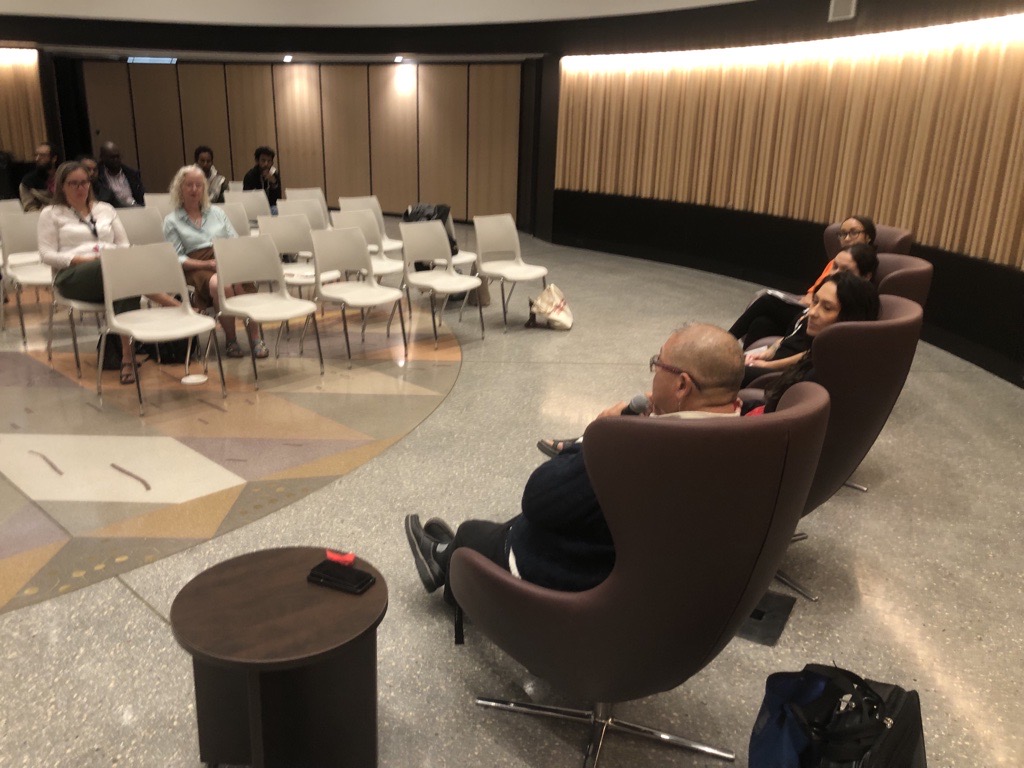
RRC Polytech is bringing together Indigenous faculty and staff for an important panel discussion on creating a more inclusive campus community. The conversation will explore how inclusive hiring practices can support reconciliation, why representation matters in education and the workplace, and what supports help foster a strong sense of belonging.

This is an opportunity to hear personal reflections, gain new perspectives, and engage in dialogue that strengthens our shared commitment to equity and inclusion. Everyone is welcome to attend and take part in this meaningful conversation.

Thursday, September 25

Notre Dame Campus

Talking Stick Workshop
Marilyn Dykstra

11:00 – 1:30 | F205

The Talking Stick Workshop with Ininew Knowledge Keeper Marilyn Dykstra invites participants to explore the cultural and spiritual significance of the Talking Stick, a traditional tool used in many Indigenous communities to guide respectful dialogue and listening. Marilyn will share Teachings about the role of the Talking Stick in fostering patience, understanding, and the value of every voice within a circle. Participants will gain insight into how this practice connects to Ininew ways of knowing and being, while also learning how the Talking Stick can support relationship-building and respectful communication in contemporary contexts.

Alongside these Teachings, participants will have the opportunity to bring their own sticks and create their Talking Stick using provided materials, guided by Marilyn’s knowledge and encouragement. This hands-on activity will allow each person to infuse their stick with personal meaning, reflection, and intention, deepening their connection to the teachings shared. By the end of the workshop, participants will leave not only with a completed Talking Stick, but also with a stronger appreciation for the cultural wisdom behind it and practical ways to carry these lessons into their daily lives, communities, and workplaces.

Please ensure your selected stick was taken from the earth in the bush – please do not break branches off of living trees. Alternatively, dowels are also suitable to make Talking Sticks – hardware stores like Home Depot have selections appropriate for the Teachings.

Please register as seats are limited to 30.

Drumming Workshop
Ray Coco Stevenson

4:30 – 6:30 | The Cave

Join us for a special drumming workshop with Ray Coco Stevenson, a renowned Indigenous singer and drummer from Manitoba. With more than 30 years of experience in drumming and Ceremonies, Coco brings deep knowledge and passion for sharing Indigenous music, Teachings, and traditions.

The workshop is in partnership with the Students’ Association. Everyone is welcome — drums will be provided, or you can bring your own. Come learn about drumming and Pow Wow Teachings, enjoy refreshments, and take part in an evening of community and connection. No registration is required — just bring your spirit, your friends, and, if you have one, a drum!

Exchange District Campus

MMF Citizenship and Harvest Cards
Manitoba Métis Federation

10:00 – 3:00 | Atrium

The Manitoba Métis Federation will be on campus September 23 at Notre Dame Campus (West Lot) and September 25 at Exchange District Campus (Atrium) from 10 a.m. – 3 p.m. All students can apply free of charge, while staff will need to bring $10 cash for a Citizenship card and $10 for a Harvester card.

Bring these items to your appointment:

  • Completed MMF Application Form
  • Genealogy documentation (or supporting relative documents)
  • Long-form birth or baptismal certificate
  • Government-issued ID
  • Passport-quality photo (can be taken on-site for free)
  • Payment (if applicable)

This is your chance to complete your application in person and get help from MMF representatives. Don’t miss it!

Your Questions, Their Insights – Panel Discussion
The Knowledge Keepers Council

12:00 – 2:00 | The Roundhouse Auditorium

Hear directly from members of RRC Polytech’s Knowledge Keepers Council — a group of respected Indigenous Elders and Grandparents who guide the College in embedding reconciliation and Indigenous perspectives into its decision-making.

Established in 2022, the Council works with the Senior Leadership Team and across the College to ensure that traditional knowledge and cultural teachings shape strategic initiatives, policies, and programs. This panel will offer a behind-the-scenes look at how the Council’s guidance influences the institution, strengthens relationships with Indigenous communities, and fosters an inclusive learning environment.

Join the conversation to learn how Indigenous knowledge, languages, and traditions are helping shape the future of RRC Polytech — and how this work connects to reconciliation in action.

Friday, September 26

Notre Dame Campus

Cedar Bath Teachings
Ivana Yellowback

12:00 – 1:00 | Wiingwashk (A411) and Ahsehsap (A412), Simulation Centre

Experience an inspiring session with Ivana Yellowback, a respected Knowledge Keeper and cultural educator. Ivana shares traditional Ininew Teachings grounded in language, Ceremony, and ancestral wisdom, drawing from her deep connection to community and culture.

With years of experience guiding learners in both Indigenous and non-Indigenous spaces, Ivana creates a warm, welcoming environment where participants can explore Ininew worldviews, reflect on their own journeys, and strengthen connections to culture and tradition.

Whether you’re beginning to learn or continuing your path, this is an opportunity to listen, share, and grow together.

Debrief Circle
Terri-Lynn Anderson

10:00 – 12:00 | F209

Truth and Reconciliation and Community Engagement Week can bring forward many emotions, reflections, and personal connections to the stories and experiences shared. We recognize that these feelings can sometimes be difficult to process on your own, which is why we invite you to join us in Debrief Circles. This is a safe, supportive space where you can share openly, listen deeply, and know that your voice will be heard with care and respect. Guided by our Elders-in-Residence, the circles offer an opportunity to find comfort in community, process your thoughts in a healthy way, and leave the week feeling grounded and connected. Whether you choose to speak or simply sit in the presence of others, you are welcome.

  • 10:00 – 11:00 Debrief with Grandmother Janice
  • 11:00 – 12:00 Fan Down with Richard

If you aren’t able to attend the Debrief Circles in person – whether you’re studying or working at a regional campus, learning online, or have other commitments – supports are still available to you. Students can connect with counselling services at the College, and employees can access confidential support through the Employee and Family Assistance Program. In addition, our Elders-in-Residence are available for one-on-one or group appointments, which can be arranged virtually so that everyone has the chance to find guidance, healing, and support in a way that works best for them.

Exhange District Campus

Elements of Indigenous Style
Robin Ringland

10:00 – 11:00 | A104

Elements of Indigenous Style by Gregory Younging, published in 2018, is the world’s first attempt to standardize writing about Indigenous topics within the context of English-written publications – it is an attempt to articulate Indigenous values and concepts in the English-speaking and -written world when Indigenous languages and ways of knowing the world have, historically, evolved outside the Western scope of understanding. Developing and integrating Indigenous style into contemporary publishing practices is one way we decolonize the way we talk about Indigenous Peoples and re-evaluate the ways in which we express meaning. In the spirit of journalism, we ask: how do we truthfully express truths when many truths are true at once?

Robin Ringland is a Two-Spirit Status Anishininew (Oji-Cree person) with familial roots in Garden Hill First Nation, Treaty 5 territory. She is a Communications Officer with College and Public Relations at RRC Polytech and has been in her role for three years since graduating Creative Communications. Robin is currently working on an internal style guide for RRC Polytech to ensure that written work the College produces can authentically involve Indigenous perspectives, storytelling, and Oral Tradition.

Debrief Circle
Terri-Lynn Anderson

2:00 – 4:00 | The Roundhouse Auditorium

Truth and Reconciliation and Community Engagement Week can bring forward many emotions, reflections, and personal connections to the stories and experiences shared. We recognize that these feelings can sometimes be difficult to process on your own, which is why we invite you to join us in Debrief Circles. This is a safe, supportive space where you can share openly, listen deeply, and know that your voice will be heard with care and respect. Guided by our Elders-in-Residence, the circles offer an opportunity to find comfort in community, process your thoughts in a healthy way, and leave the week feeling grounded and connected. Whether you choose to speak or simply sit in the presence of others, you are welcome.

  • 2:00 – 3:00 Debrief with Grandmother Janice
  • 3:00 – 4:00 Fan Down with Richard

If you aren’t able to attend the Debrief Circles in person – whether you’re studying or working at a regional campus, learning online, or have other commitments – supports are still available to you. Students can connect with counselling services at the College, and employees can access confidential support through the Employee and Family Assistance Program. In addition, our Elders-in-Residence are available for one-on-one or group appointments, which can be arranged virtually so that everyone has the chance to find guidance, healing, and support in a way that works best for them.

Teachings with Ivana Yellowback – August 19 & 20

August 11, 2025

Learn from Cree Knowledge Keeper Ivana Yellowback.

Join us for an afternoon of teachings with Ivana Yellowback, a member of Manto Sipi Cree Nation and a respected voice in the arts, education, and Indigenous leadership. Open to staff, students, and faculty, this gathering is a chance to connect, learn, and reflect with community.

August 19, 2025 • Exchange District Campus, Roundhouse Auditorium • 12–1 p.m.
August 20, 2025 • Notre Dame Campus, F205 • 12–1 p.m.

Light snacks and refreshments will be provided. No registration required—just drop in and join the conversation!

For questions, contact Terri-Lynn Anderson, Truth and Reconciliation and Community Engagement, at tlanderson@rrc.ca.

About Ivana Yellowback

Ivana is a member of Manto Sipi Cree Nation (Treaty 5) and a relative to Mathias Colomb Cree Nation (Treaty 6). Born and raised in Winnipeg’s inner city, she is an Associate Producer, Writer, and Host of Eagle Vision’s 7th GEN, as well as a co-creator and host of the Indigenous supernatural podcast Creepee Tepee. Her work spans film, podcasting, education, and community leadership. Ivana holds a Bachelor of Arts (Honours) in Sociology, a Bachelor of Social Work, and is currently pursuing her Master of Social Work. She is also a traditional singer with Kind Hart Women Singers and an advocate for Indigenous ways of knowing through her venture miteh atôskê (heart work in Ininimowin), which offers training, workshops, and healing programming.

RRC Polytech campuses are located on the lands of the Anishinaabeg, Ininiwak, Anishininwak, Dakota Oyate, and Denésuline, and the National Homeland of the Red River Métis.

We recognize and honour Treaty 3 Territory Shoal Lake 40 First Nation, the source of Winnipeg’s clean drinking water. In addition, we acknowledge Treaty Territories which provide us with access to electricity we use in both our personal and professional lives.