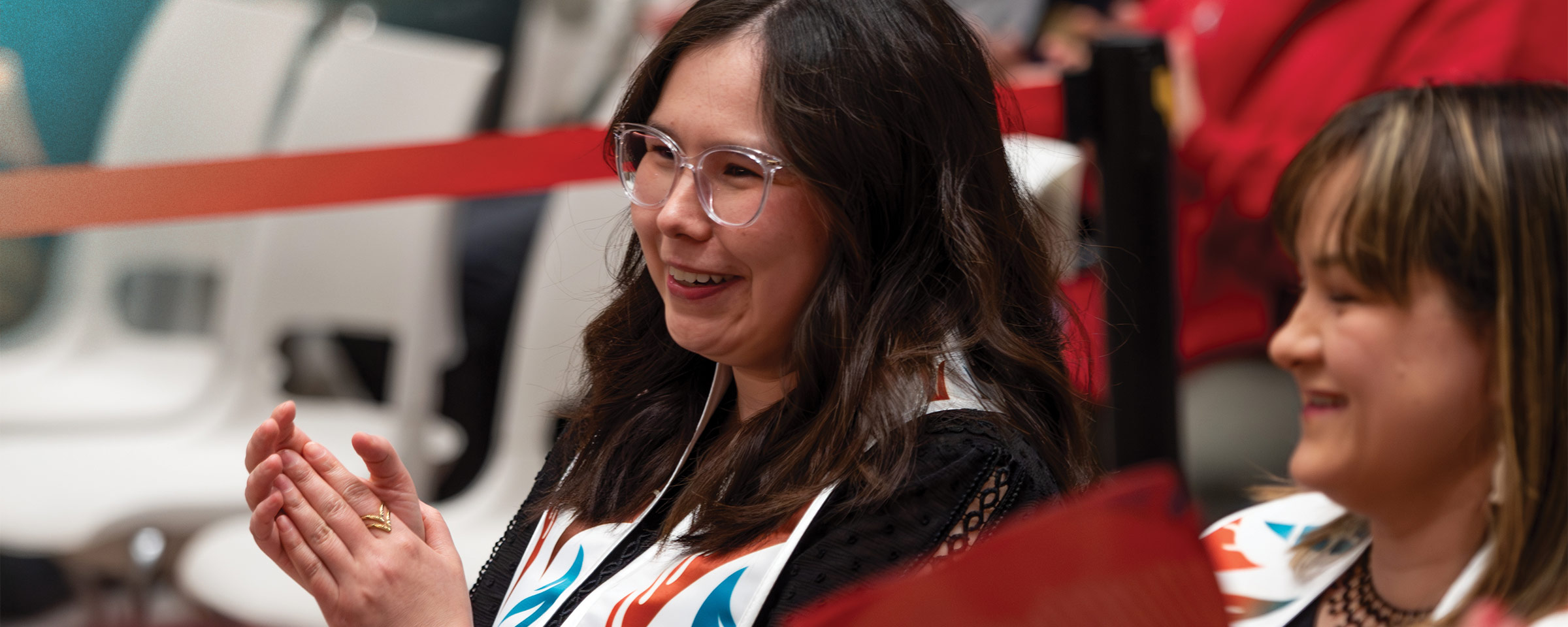
Smiling Indigenous graduate at convocation ceremony

Indigenous Education

Stories

Love for Indigenous Languages and Bannock Recipes
November 10, 2022

Staff and students had the chance to learn Anishinaabemowin in the kitchen.

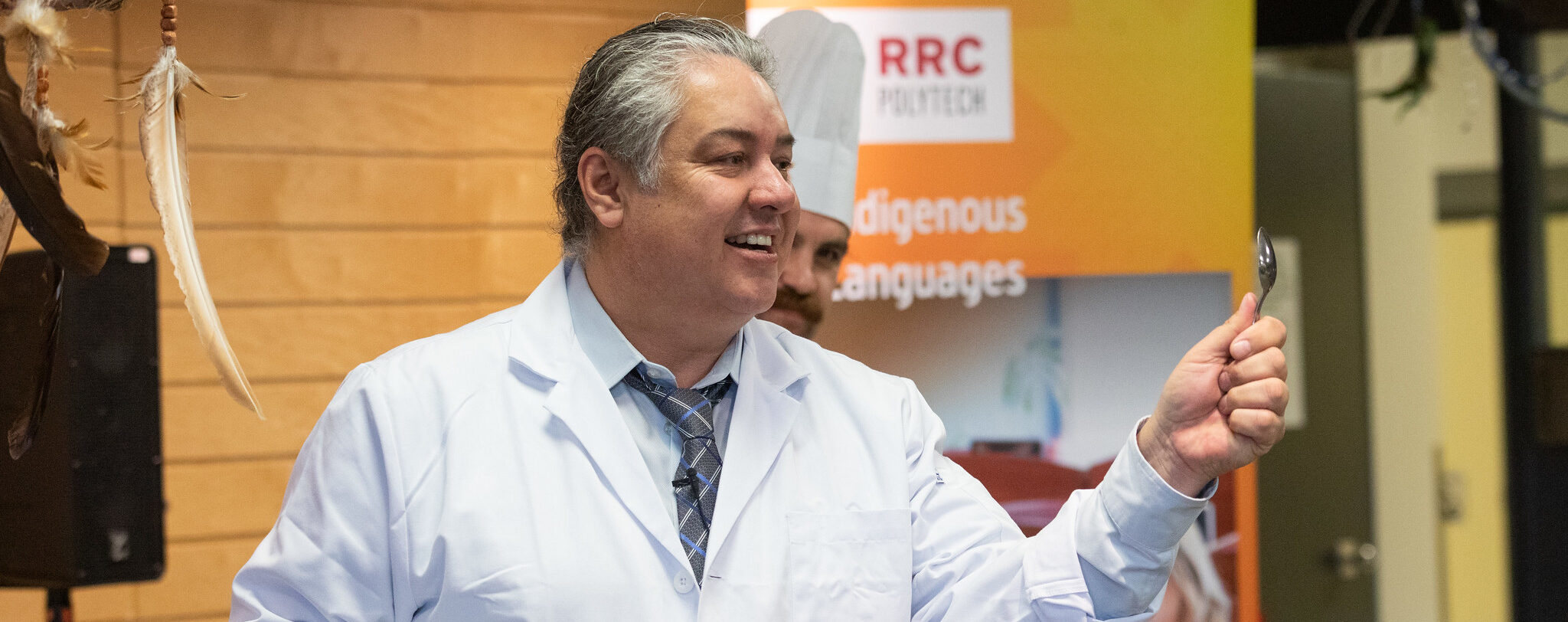
Instructor Corey Whitford held an Introduction to Indigenous Languages and Bannock Making session for staff and students on Wednesday, Nov. 2. Participants had the opportunity to learn greetings, ingredients, and actions related to baking Bannock in Anishinaabemowin. Corey guided participants through the pronunciation of the various Anishinaabemowin phrases and demonstrated how different gestures related to each phrase.

“I wanted to learn how to make Bannock the proper way,” said Matthew Fontaine. “All the extra love and care, his passion for it, that’s just a bonus.”

Chef Patrick of Culinary Skills helped demonstrate the proper technique for mixing, forming, and baking Bannock while Corey shared stories from his childhood on Sandy Bay First Nation. While waiting for the Bannock to rise and bake, participants received papers with Anishinaabemowin phrases and words or their English counterparts and paired up to translate their meanings. Corey challenged participants to organize the Anishinaabemowin alphabet with only the English alphabet as a frame of reference.

Participants grasped the concepts of phrases using the same method Corey’s kokum (grandmother) used to teach him when he was a kid: gestures that indicated concepts like water, oil, temperature, and folding the dough. That engagement of the body connected the words with physical expression.

“Corey’s animation makes it come alive,” said Marie Rogge. “I’m a language instructor, I teach English, so it was very interesting for me to see not just what he taught, but how he taught it.”

Prepped Bannock, jam, and refreshments were available to prime participants for what they could expect from the session. Everyone received a take-home package for a small Bannock loaf they could use to bake fresh Bannock in their own kitchens.

Future sessions could bring even more students and staff in to learn about Indigenous cultures and languages, using Bannock as the catalyst for curiosity.

“I’m hoping in the future that maybe somewhere we could bring our classes together, I think it would be really interesting for students from South America or China or somewhere in the world to come together with Indigenous students to share their stories and languages as an act of reconciliation,” said Marie.

Corey was excited to see so many people at the session.

“I am inspired that so many people are interested in our activities, and it’s important too because it builds a feeling of solidarity with our work culture and encourages embracing our traditions, our protocols… Thank you to everyone who attended that day,” said Corey.

Corey hopes to organize more Bannock-making sessions in the future to help get people interested in Indigenous languages, motivate people to learn more, and help spread a love for the languages.
From the North to Now

November 7, 2022

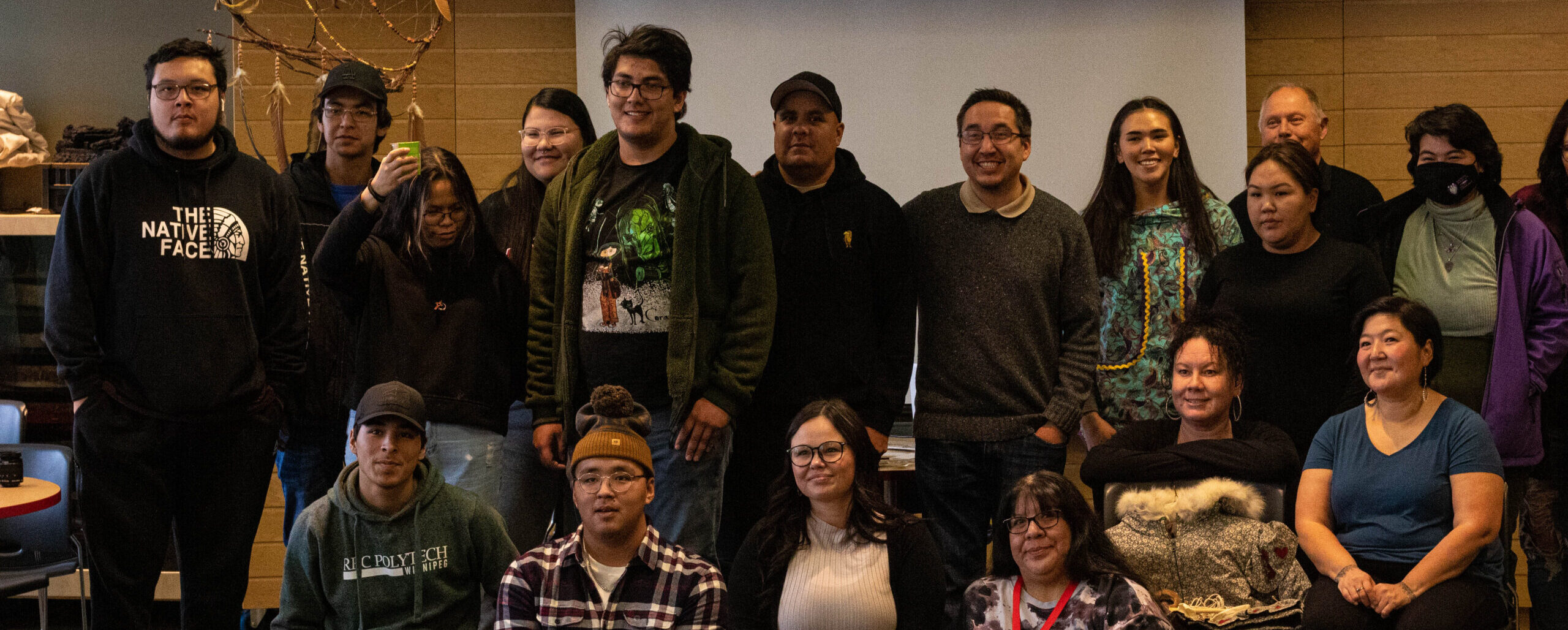
Today, RRC Polytech celebrated International Inuit Day with students, staff, faculty, and members of the Manitoba Inuit Association.

The event was livestreamed from Notre Dame Campus’s Indigenous Support Centre to the Exchange District Campus’s Indigenous Support Centre, where folks from both campuses enjoyed a pizza lunch, group activities, presentations, and a performance.

The celebration started with a three-song performance by Inuit throat singer Zeann Manernaluk. She explained that throat singing was invented by Inuit women while men were out hunting, and traditionally two women would throat sing together until they laughed or got tired.

Victoria, an Inuit Student Support Worker with the Manitoba Inuit Association, kicked off the group activities with a rundown of their role as an organization in Manitoba: a resource that supports any Inuit people in Manitoba and connects them with services to meet diverse and ever-evolving needs. Victoria presented traditional Inuit clothing and tools and the stories behind them. She demonstrated and invited everyone to compete in Inuit games to win prize packs from the Manitoba Inuit Association.

College Transition students Luke Kusugak and Andrew Owlijoot said a few words about being young Inuit men coming from Rankin Inlet, Nunavut: they’re learning to be more open about their emotions, coming from a place that doesn’t have the infrastructure to focus supports around mental wellbeing.

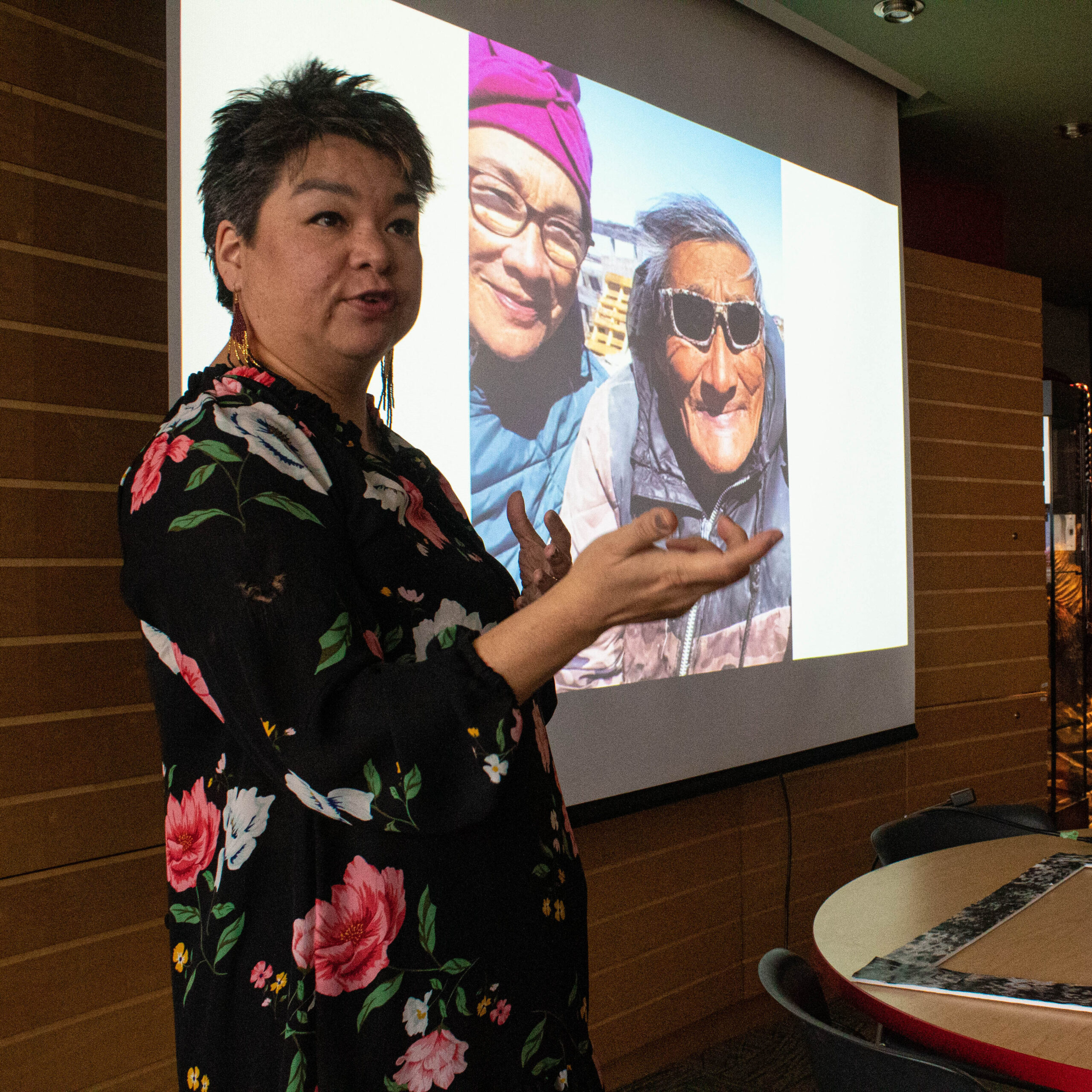
Chase Powell, another Inuit student in the College Transition program, prepared a PowerPoint presentation to share a brief history of his home Rankin Inlet, Nunavut and his life growing up on the west coast of the Hudson Bay. His mother Esther, who happened to be in Winnipeg for a medical appointment, joined him and shared a short family history and the nature of Inuit life before colonization. PowerPoint pictures depicted the landscape of the north, Chase’s cabin on the coast, caribou on their mating grounds, roads enveloped in blowing snow, and old black-and-white pictures of Chase’s and Esther’s ancestors.

Esther Chase, an Inuit woman from Rankin Inlet, points to a PowerPoint slide of a photo of her family members.
Esther sharing her family history.

Chase explained that the education in Rankin Inlet didn’t meet his expectations. Teaching was not based on students’ needs, but rather was based on the resources that were available. And resources were basic – there were no supports for students with special needs. The schools had some Inuktitut language classes but didn’t have any Inuit culture classes.

After high school, Chase decided to pursue education. Originally he had planned to attend the University of Winnipeg for a Bachelor’s Degree in Education, but his high school grades weren’t satisfactory. A guidance counsellor at his high school suggested that he try the College Transition program at RRC Polytech, because it would help him get his grades up and prepare him for college life in the south. He applied and has since started on his path to his future goals.

Chase hopes to get his master’s degree in education so he can become a principal. He explained that southerners come up to the north and fill up high-ranking positions in organizations and in government because they had easier access to quality, focused education. Chase wants to change that—having local representation in these positions is important because people who have grown up in the north have a lived experience that can more effectively contextualize the unique needs of learners in Nunavut. He wants to influence change in Nunavut’s education system as a future administrator, to help the learners of future generations obtain the education they need to get into these high-ranking, decision-making, community-impacting positions.

For now, Chase, Luke, Andrew, and their colleagues will continue with the College Transition program and work toward their professional and personal goals. We can’t wait to see where they’ll go!

RRC Polytech campuses are located on the lands of the Anishinaabeg, Ininiwak, Anishininwak, Dakota Oyate, and Denésuline, and the National Homeland of the Red River Métis.

We recognize and honour Treaty 3 Territory Shoal Lake 40 First Nation, the source of Winnipeg’s clean drinking water. In addition, we acknowledge Treaty Territories which provide us with access to electricity we use in both our personal and professional lives.