Indigenous Education

Stories

Full-Circle in Circuitry

November 21, 2025

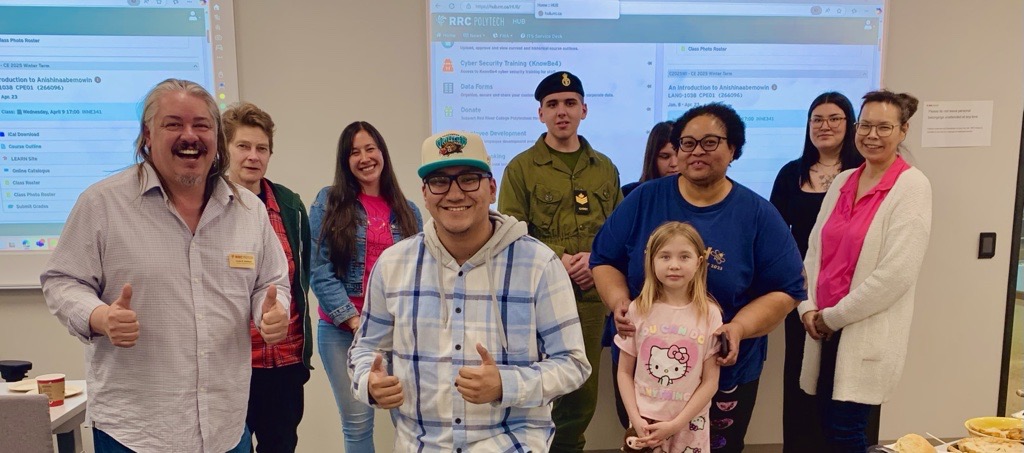
Electrical Alum Alfred Thompson returns to teach program he took in Fisher River Cree Nation

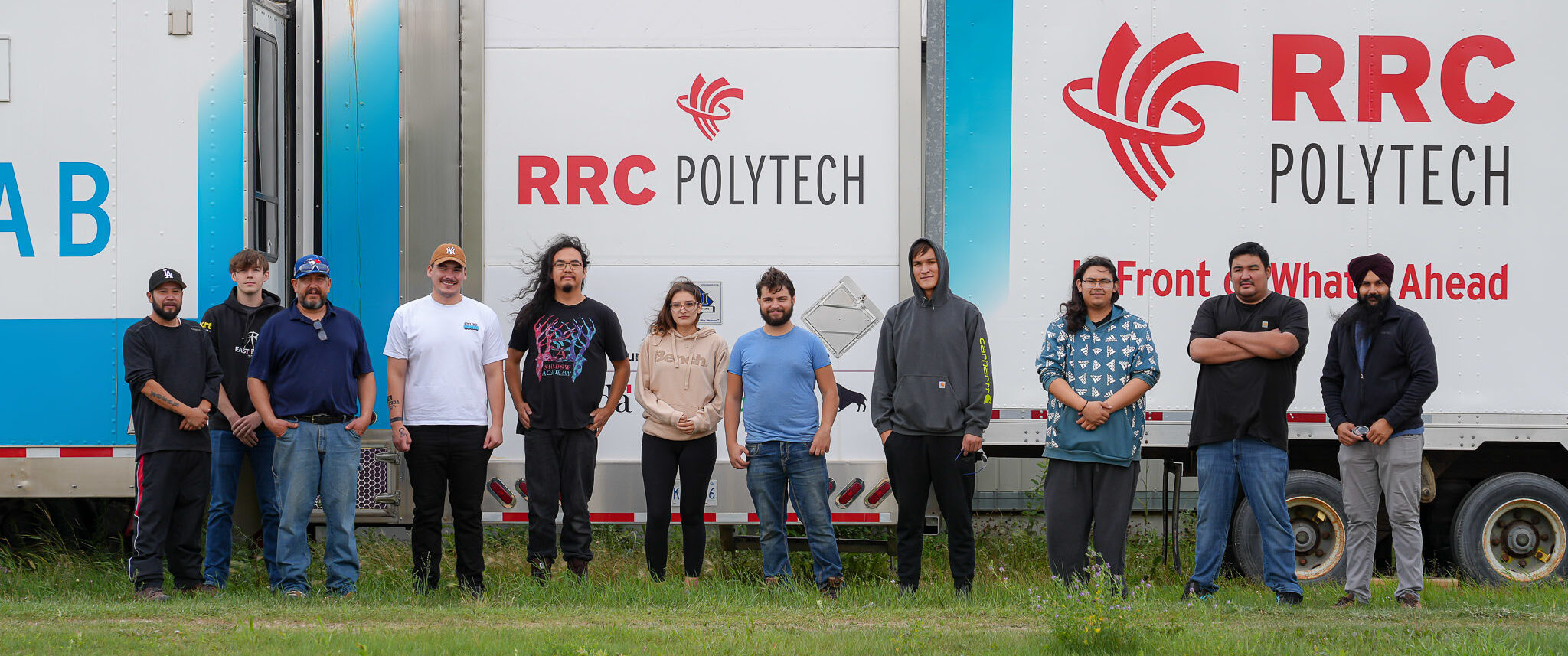
Alfred Thompson walked into the classroom this past spring for the first time in 11 years – and this time, rather than a student, he was the instructor.

In 2014, Thompson took the Electrical program at the RRC Polytech campus in Fisher River Cree Nation. His interest in the industry grew from the problem solving and independence he gained while working hands-on and the satisfaction of seeing results firsthand. Today, he’s in Peguis First Nation, teaching 14 students in the same five-month Electrical program being offered in community from April – November 2025 with extra time to incorporate student success strategies, including Elder support and Teachings.

“[Teaching is] pretty good – I’m myself around the students now. That first day, though, I was practicing before, and I was like, ‘oh man, I’m really gonna just go talk like this in front of other people.’ I was so nervous,” said Thompson.

Read the full story on the MarComm blog.

Speaking Life into Language: Second Level Anishinaabemowin Courses Build Fluency, Confidence, and Connection

July 28, 2025

At RRC Polytech, a new chapter in Indigenous language revitalization is underway.

This past spring, after two years of offering Introduction to Anishinaabemowin at no cost to students thanks to the generous support of CWB Financial Group, the Polytech launched its first delivery of Conversational Anishinaabemowin. The second-level course builds on the vocabulary and structure taught in the introductory class and moves learners toward greater fluency and comfort holding small conversations in Anishinaabemowin.

Eighteen students enrolled in the pilot session to transform memorized phrases into deeper understanding and meaningful interactions. Instructor Corey Whitford, who also teaches the introductory class, designed Conversational Anishinaabemowin to push students beyond repetition by immersing them in storytelling, language logic, and grammar patterns that don’t follow English conventions.

“One of the most important things we’re doing here is planting seeds,” says Whitford. “You can’t approach Anishinaabemowin the way you would a colonial language. The structure, the sound, even the philosophy behind it is different. It’s not just about translating words. It’s about learning how to think and speak in a completely different way.”

The course curriculum is grounded in Gidinwewin: Your Language by Roger Roulette, a comprehensive 174-page resource that guides students through sentence building, verb usage, and question formulation. The textbook includes a CD to help with pronunciation – an essential tool for a language where tone and syllable emphasis can change a word’s meaning entirely.

Students also received a supplemental guide created by Whitford called Coyote’s Notes, a quick-reference companion filled with essential phrases from each module.

But learning doesn’t stop at the page. Whitford brought lessons to life through interactive activities, like language-based poker games and Kookum Says – a version of Simon Says where students follow commands in Anishinaabemowin. These activities reinforce vocabulary and make the language fun, practical, and social.

For many students, language learning is about more than communication – it’s a deeply personal journey of reclamation and reconnection. Teddy Lands says that she can see regional differences between learning the Conversational Anishinaabemowin and the language she’s heard at home in Ontario.

“I really appreciated that this course offered more learning rooted in ‘you, us, we,’ those foundational conversation pieces. Even when I’ve asked my parents about certain words, I’ve noticed that the ways things are said in Ontario can be completely different. It reminded me how easily our language can be lost, especially since we don’t have many fluent speakers anymore,” says Lands.

Lands, who has a strong interest in policy, emphasized the importance of having fluent language speakers who can interpret and communicate policies in ways that are meaningful and accessible to Indigenous communities. She believes that incorporating Indigenous languages into formal and institutional spaces represents a meaningful step toward reconciliation. She says she hopes to see more immersive and advanced courses in the future – and perhaps even policy written in Anishinaabemowin someday.

“My mom and I were at a conference once, and one of the speakers said that language and culture aren’t connected. That really frustrated her. So much of our culture – how we speak to children, to elders, how we interact with each other – is rooted in the language. A lot of our cultural norms and practices come from it. Those that practice Midewiwin, for example, are held in such high regard in Anishinaabe culture because they’re Ceremonial Keepers, and their strength in the language comes from how they live the culture.”

For Boogie Mann, the course has been equally transformative.

“Taking the Intro first really helped me get the hang of pronunciation and seeing word patterns,” he says. “With Conversational, I was able to practice every night with the CD. Even just a little bit a day – planting that info in the brain – it really adds up.”

He’s already seeing the benefits ripple outward.

“I set up an online server for a small learning community to create a network of learners. And I’ve started teaching my four-year-old some words. She’s getting pretty good.”

Mann, who grew up hearing bits of the language in Lake Manitoba, says learning with Whitford has been a journey of self-discovery. He says that Whitford’s teaching style encourages deep personal reflection and helps students connect with their identity beyond just learning words. He’s looking forward to the third-level course and hopes it will include more immersive experiences and cultural teachings, which he says is essential to grounding learners in their heritage.

Both students pointed to the broader implications of Indigenous language resurgence: from community to post-secondary education, fluency in Anishinaabemowin strengthens cultural identity and builds resilience.

Lands envisions a future where immersion courses are common, where students can take an entire degree in their language, and where institutions like RRC Polytech have dedicated spaces like language rooms, Indigenous libraries, and cultural hubs where Indigenous languages are front-and-centre for students to explore their identities through language.

To register for Conversational Anishinaabemowin at no cost, visit the Course page. Chi-miigwech to CWB Financial for sponsoring Introduction to Anishinaabemowin and Conversational Anishinaabemowin and making language education accessible to the next generation of learners.

Mitakuye Oyasin Okciyape – All My Relations Helping Each Other

June 24, 2025

MITAH-koo-ya OYA-shin OAK-ah-pee

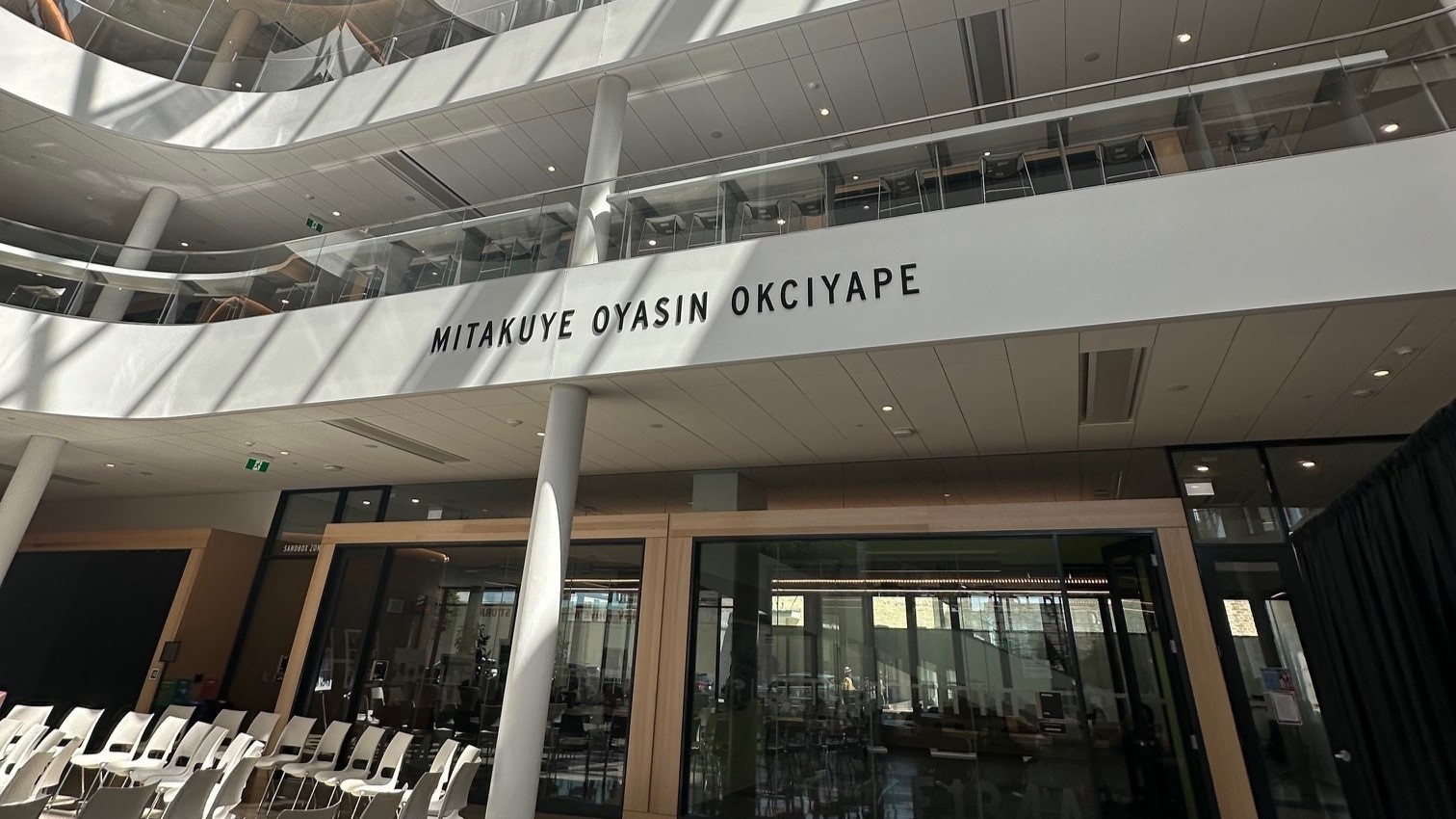
Mitakuye Oyasin Okciyape is the name for the large open space you walk into in Manitou a bi Bii daziigae. In Dakota, the name means All My Relations Helping Each Other.

On Friday, June 20, RRC Polytech marked an important moment in its journey of reconciliation and relationship-building. We gathered to honour the first anniversary of Mitakuye Oyasin Okciyape being gifted to the large open space at 319 Elgin Ave. in Manitou a bi Bii daziigae.

This ceremony was more than a celebration – it was a transfer of sacred responsibility. Kunshi Ivy, who had been holding and caring for the name, entrusted it to RRC Polytech by passing it into the care of four selected leaders. Each of them now carries the responsibility to honour the spirit of the name, uphold Dakota Ceremonial Protocols, and ensure the space continues to reflect the values of connection, respect, and shared responsibility.

This is the first time RRC Polytech has received a Dakota name, and it represents an act of trust from the Dakota Nation. Mitakuye Oyasin Okciyape is more than just a name on a door; it’s a prayer. It’s a reminder that we are all connected – to each other, to the land, to the past, and to the future. And now, it’s also a living commitment we carry forward together.

To read more about Mitakuye Oyasin Okciyape, check out the MarComm blog.

Putting Healing into Action

June 23, 2025

In the spring of 2022, Tabitha Harper was working as an assistant case manager at Kinonjeoshtegon’s Jordan’s Principle.

She had always been committed to helping her community, but she felt that she could do more – she just needed the right tools and knowledge.

Years earlier, she had applied to a social work program at a university and was rejected.

“That felt like a sign not to go down that path,” Harper recalled.

After working as an assistant case manager, she turned to Google to find some direction. She searched buzzwords like ‘Indigenous innovation,’ ‘working with people,’ and ‘social work.’

That’s when she discovered the Social Innovation and Community Development (SICD) program at RRC Polytech, and she applied that same spring.

At the time, she was using the last name Traverse, unaware that her legal surname was actually Harper – a discovery that added complexity to her application process. To qualify for the program, she had to complete entrance assessments and take an additional course. Despite the extra hurdles, she was drawn in by the program’s focus on creating change in both urban and rural communities. She could explore both the theory and practical skills she needed to engage in meaningful socioeconomic development.

When she began classes that fall, something clicked.

“One of my instructors asked, ‘What makes you angry?’” she said. “That question has been driving me ever since.”

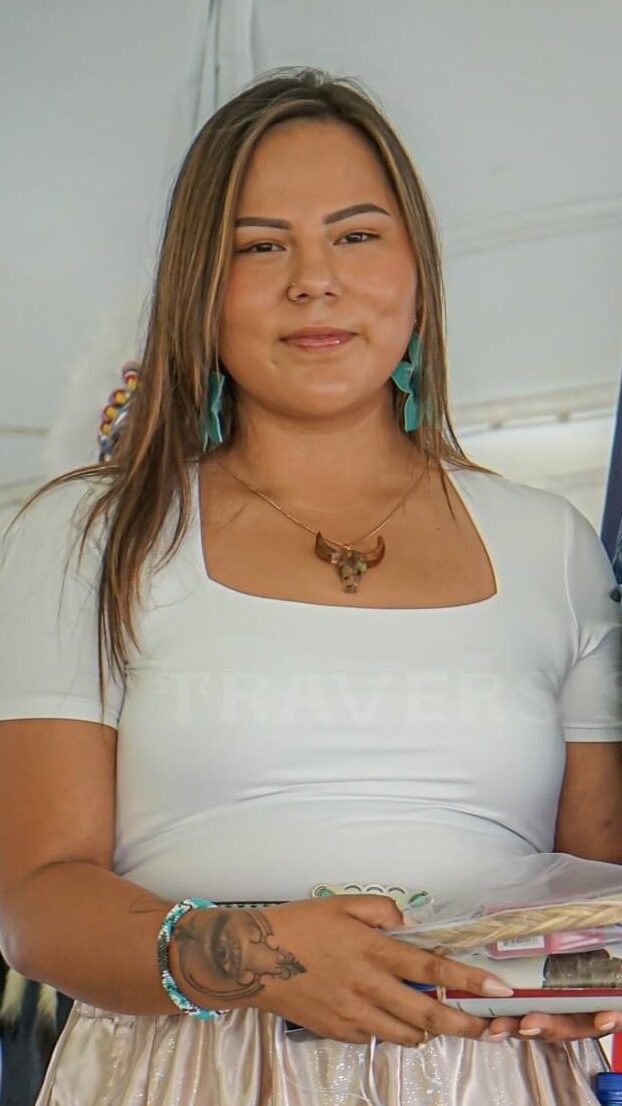
Tabitha Harper.
Credit: Desmond Travers, Travers Studios.

Harper made the choice between two second-year specializations – Indigenous Social Entrepreneurship or Community Development – to pursue the path that would allow her to create change from the ground up and at leadership levels through Indigenous Social Entrepreneurship.

“I had a lot of anger,” she said. “I saw the disparities Indigenous people face in my family, in my community, and in my own life. I didn’t understand why things were the way they were. I needed to find out.”

In her first year, Harper immersed herself in the history of the land now known as Canada and its relationship with Indigenous peoples. The more she learned, the more clarity – and fury – she gained.

“This has been happening for more than 400 years, and even more intensely in the last 150,” she said. “After the treaties were signed, we were betrayed. I realized I could hold onto this anger and stay in this pit of despair, or I could apply this anger and see how I can help.”

After graduating with a specialization in Indigenous Social Entrepreneurship, Harper joined the Manitoba Museum as the Museum Advisor for Indigenous Relations and Reconciliation.

Over the past year, she has carved out a unique and influential role functioning as a liaison between the museum and Indigenous communities, governments, and the museum’s senior leadership. Her focus is on reconciliation, cultural revitalization, and historical accountability.

“When I started, I was a little intimidated to work in museum spaces,” she said. “But as I settled into the role, I realized museums are often very static, even though they’re committed to education. My role is to help shift that.”

Her first six months were spent conducting environmental scans to learn about the museum industry’s past relationships and practices with Indigenous Peoples.

One of the proudest moments in her role came when the Manitoba Museum issued a formal apology for having housed human remains for decades, and began work on repatriating the remains to their kinship communities. Harper played a key role in shaping the apology, which was shared publicly and now lives on the museum’s website, along with acknowledgments from First Nations, Métis, and Inuit communities.

Today, she’s leading a revolutionary project: the first natural history research initiative conducted in partnership with her home community, Kinonjeoshtegon First Nation, which is located on the west shore on the interlake of Lake Winnipeg. The research focuses on paleontology, geology, botany, and other natural sciences – all through the lens of Indigenous knowledge. Harper is guiding the consultations and engagement efforts with the community to ensure ethical practices and culturally appropriate data use.

“This work is healing. It feels like this is what I was put on this Earth to do,” she said.

She credits SICD with putting her on this path and often encourages others to consider it.

“I share this all the time with people thinking about post-secondary: consider the SICD program. The instructors are so supportive and understanding. This program got me to where I am today – where I’m doing important work, healing the anger I carry while putting it into constructive action.”

Getting in Front of What’s Ahead in Community: Aboriginal Head Start in ECE Workplace

June 5, 2025

Logo created by Adele Sinclair, ECE Workplace. The image was used in a variety of ways, including in instructor-led presentations about the cohort and program, as the icon for the general Teams channel, and on invitations to the celebration evening held in December.

In January 2023, a bold and innovative journey began – one that has the potential to reshape how Early Childhood Education (ECE) Workplace training is delivered in First Nations communities across Manitoba.

The Aboriginal Head Start program, funded by Cree Nation Tribal Health and the First Nations Inuit Health Branch, was designed to provide First Nations students a fully online, workplace-based learning model tailored to their needs. What started with a cohort of 29 students soon evolved into something much more than an academic program – it became a transformative experience rooted in culture, connection, and compassion.

Following the standard ECE Workplace model, students would work at their jobs Monday through Wednesday to accumulate practicum hours, then they attended virtual classes on Thursdays and Fridays. From day one, though, it was clear that this cohort would be anything but standard.

Tanya Redford and Nettie Proulx, with an additional instructor each term, approached teaching with flexibility, empathy, and responsiveness. Although neither is Indigenous, both approached their roles with cultural humility and a commitment to walk alongside students in a spirit of respect and reciprocity. Elders were invited into virtual classrooms, Indigenous Teachings, perspective and ways of knowing were welcomed and embedded into the program, and learning extended beyond the students to include their families and communities.

For many students, their homes functioned as their classrooms – they learned in spaces they shared with children, partners, and relatives. One student even fed and cared for a newborn during class.

Redford noted the emotional challenges students faced: “In a typical classroom, maybe one or two students are going through life-changing events. In this cohort, everyone was going through something, often multiple things that compounded one another. And yet – they showed up. They succeeded.”

Sharon Hart from Fisher River Cree Nation says that what she learned in the program were things that she was already practicing in her career at the Fisher River Daycare Centre. She had cultivated skills in play and supporting children’s sensory and motor development through her career, and the program equipped her with tools to deepen her knowledge in play-based curriculum, guidance, relationships, and current child development research.

Hart says that learning online alongside other Indigenous students from different communities in similar circumstances created an environment in which everyone helped each other.

“We would talk about different situations, what’s going on in our centres, and give each other pointers and advice – we were able to address different things in our centres based on the experiences of other people in the class to see what solutions worked better than others,” said Hart.

Redford and Proulx were always conscious of ways to help students succeed. They recorded classes for those that couldn’t attend live, used feedback tools like surveys and informal discussions to shape curriculum delivery, established drop-in homework sessions in the evenings, and permitted students to resubmit assignments.

While some students were tech-savvy, others had never touched a laptop. At times, frustration with technology nearly led some to leave the program but with peer and instructor support, they adapted and persevered. Growth wasn’t just academic – it was personal, practical, and powerful, and students demonstrated that when they strived for excellence. Even students who earned 96% would resubmit assignments, aiming for 100% not for the grade, but for themselves.

Each term, the instructors hosted in-person gatherings at RRC Polytech’s Notre Dame and Exchange District Campuses. Students, families, and College leaders came together to share food, stories, and community. For those unable to attend, technology like OWL ensured remote participation.

By the program’s conclusion in December 2024, 15 students had completed their training. Twelve are preparing to walk the stage at Convocation in June and were honored in the graduation Pow Wow in May. A final celebration was held at Notre Dame Campus where students and instructors celebrated their achievements alongside College leaders, family members, and even Manitoba’s Minister of Advanced Education and Training, Renée Cable. Students who didn’t complete the program came to celebrate with their peers, underscoring the deep sense of community built throughout the program.

Thanks to the program’s success, a second, expanded cohort launched in 2025. The response was overwhelming with over 60 students from 25 different communities – just over double from the first cohort.

The door remains open for those who left the program early. Students who didn’t finish the first time are welcomed to rejoin in a later term and pick up where they left off. That commitment – to meet students where they are, in the places where the students are needed – is central to this program.

Hart says that since completing the program, she’s been promoted to full-time floor supervisor at the Fisher River Daycare Centre. She’s looking forward to the new centre opening in the community in the fall and she wants to get her Early Childhood Educator Level III.

“My proudest moment was when I got my marks back for an academic paper on child development. It’s been years since I’ve been in school, and I’d never written a paper before – I got tutoring and learned how to do research and cite sources. I aced it,” said Hart.

“If I had to go in person to Winnipeg, I think I would have had a harder time. I actually miss coming to class online now.”

This program is more than a model – it’s a movement toward equitable, culturally responsive education. It’s a demonstration of intergenerational learning and adapts to students’ lives. It recognizes that success looks different for everyone. And it proves that when we prioritize connection and compassion, incredible things happen.

“We have been able to implement a strengths-based approach to our program, and we are very thankful that our department (chairs, associate dean and dean) and the College have supported us in meeting the needs of each individual student. This may have been extending a due date, not taking marks off for a late assignment, or allowing students to submit assignments in ways that best support their way of demonstrating their learning and knowledge,” said Proulx.

About the Early Childhood Education Workplace Program

This program is specifically designed for experienced child care assistants (CCAs) working in licensed childcare programs across Manitoba.

Early Childhood Education Workplace is an accelerated program that provides the specialized training and credentials needed become an early childhood educator (ECE) Level II, enhance employment potential and achieve career goals while working.

Learn more on the Program Explorer.

Connecting Code and Culture

June 2, 2025

Information technology is part of our everyday lives, but getting a career started in a technical field can be difficult.

RRC Polytech’s Pathway to Information Technology program offers a meaningful first step for Indigenous students looking to build a future in the field of technology.

Pathway to IT Programs blends foundational academic learning with a strong focus on Indigenous culture, community, and practical applications of technology in Indigenous contexts. Students are introduced to essential learning techniques and technical skills that will equip them to succeed in information technology programs.

Cathrine Van Damme took high school courses such as design drafting, graphic communication, and communication technology and in grade 10, she gained more insight into the field when she took a summer job in the IT department on her reserve. At the time, she was more interested in becoming a graphic designer and had even been accepted into a graphic design program in grade 12. However, she realized that pursuing a diploma in graphic design wasn’t the right fit for her.

Her post-secondary coordinator introduced her to the Pathway to IT Programs and despite spending most of high school preparing for a career in art and design, she discovered that IT, especially web development, offered a creative outlet that she hadn’t expected.

She says that with full-stack development, she can apply her design interests and build and manage the back-end code infrastructure that creates websites. One of her future goals is to build a website for her reserve to share employment opportunities and community news.

Van Damme’s experience in the Pathway to IT Programs is one of many students’ who weren’t entirely sure what to expect – for many, IT combines creativity with a practical application that can be used by anyone.

One experience that stood out to Van Damme was hearing multiple presenters during the Pathway to IT program emphasize the importance of building friendships and connections with peers. At first, she was focused solely on academics and didn’t think much about networking. But in her second term, she realized that having friends in the program made a big difference – not only with getting help on assignments but also with staying motivated to attend class. Making friends helped her feel more engaged, especially during times when classes were online.

Tashina Henry didn’t know what to expect when she went into the program but she knew it would improve her technical skills and in turn give her the tools to improve the skills she was already using in her job as assistant to the director at her reserve’s health centre. The content was relevant to her position where she was already troubleshooting hardware and navigating software – but beyond that, the experience became a journey of self-discovery.

“I finished the program and learned so much more than I anticipated – more about myself than anything. It really gave me the push I needed to come out of my shell. It gave me my voice back,” said Henry.

This was Henry’s first time attending college, and she described the experience as “mind-blowing.” Enrolling in a program designed specifically for Indigenous students helped her feel more comfortable and supported. Since December, she has been working part-time in IT, and she says that combining hands-on experience with her studies has been incredibly rewarding.

“We’re all connected in some way,” she said. “It made it easier to make friends, and it made me feel safe enough to be more outgoing. It’s inspiring to see other Indigenous students taking steps toward their futures. A lot of us are breaking cycles created by residential schools and the intergenerational traumas that followed.”

Henry says she can be stubborn and is drawn to challenging subjects – she prefers to focus on the things she finds most difficult, because that’s where she wants to grow. She is considering pursuing full-stack development because of the challenge it presents.

She’s also interested in programming because of how it can benefit her community. After a conversation with the IT manager at her workplace, she realized tech can have real-world applications beyond websites – like installing sensors in water tanks to measure levels and reduce the need for weekly water truck deliveries. That kind of practical, community-focused tech work encourages her.

One thing that stood out to Henry was how effective and supportive the instructors were. As a child, she moved frequently and often had to change schools, which caused her to miss key units – especially in subjects like math. When she finally settled in Portage la Prairie for high school, she found herself behind and struggling to catch up academically.

“The instructors in this program have been very patient and clear with what they were teaching,” she said. “I really appreciated that.” Their support helped her close some of those educational gaps and build confidence in her abilities.

Beyond academics, participants benefit from career-focused support networks that encourage personal, social, and financial readiness. The goal is not only to help students transition into higher education but to empower them to thrive within it.

Graduates of the pathway program are eligible to apply for reserved seats in high-demand programs such as Application Development and Delivery andIT Operations and launching into rewarding, future-forward careers in technology.

By investing in this pathway, Indigenous students can unlock new possibilities, gain confidence, and build a solid foundation for lifelong success in the tech world.

About Pathways at RRC Polytech

Pathway to Information Technology Programs prepares Indigenous students to take the lead in technology and helps to jumpstart an education in technology. Pathways are exploratory and preparatory, ensuring that Indigenous students have the foundation to start strong in their post-secondary journeys. Pathways are for Indigenous students that haven’t experienced post-secondary education yet or want to build a starting point for an education in a particular industry. Pathway to IT students qualify for the IG Wealth Empower Your Tomorrow Indigenous Scholarship, which provides financial support and mentorship opportunities throughout students’ studies.

Nanda-Gikendan: Seek to Know It

May 1, 2025

CWB Financial Group supports continued delivery of Introduction to Anishinaabemowin (Ojibwe Language) at RRC Polytech.

For the second year in a row, RRC Polytech is proud to offer Introduction to Anishinaabemowin at no cost to students, thanks to the generous support of CWB Financial Group. This course is part of a broader commitment to Indigenous language revitalization – an effort that acknowledges the deep cultural significance of Anishinaabemowin and the urgent need to adapt and expand its use.

RRC Polytech is taking this commitment further with the launch of Conversational Anishinaabemowin, which is designed to deepen students’ engagement with the language. This course moves beyond foundational words and phrases and encourages learners to express more complex thoughts and sentiments, fostering fluency and confidence in a space where the language can truly come to life.

Language learning is more than memorization – it is an immersive, holistic experience that engages the body, mind, emotion, and spirit. The College, with support from CWB Financial Group, is embracing this approach to ensure that students not only learn Anishinaabemowin but also connect with it on a deeper level.

Corey Whitford, Anishinaabemowin instructor, says that his approach to teaching is rooted in engaging the senses and all parts of the self: the physical, mental, emotional, and spiritual.

Aambe oma! Come here!

Physical – Engaging Senses and Going Places.

The best way to learn a language is to be surrounded by it. In-person classes provide an environment where students can hear Anishinaabemowin spoken naturally, feel the words in their mouths, and engage in conversations with others on the same journey. Whether a student grew up hearing snippets of the language, is already fluent, or is speaking their first words, everyone shares a common goal: to listen, practice, and learn.

Whitford is a life-long speaker and teacher, and leads the way to help students build confidence as they join a growing community of language speakers. Coming to class and being in spaces with fellow learners will solidify learning.

Gikinawaabam. Learn by observation.

Mental – Building Knowledge and Taking Risks

Language learning requires dedication and mental engagement. Retaining vocabulary and sentence structures happens best in an immersive setting, where students are free from distractions and focused on the shared learning experience. It’s not just about attending class; it’s about showing up for the language and for one another. Making connections, taking risks, and actively participating in the learning process strengthens memory and reinforces knowledge. Learning Anishinaabemowin is an investment in yourself and in the future of the language.

“I had some aunts and uncles that spoke – I wish I picked the language up sooner. I practice what I learn every day with my son. At four years old, he’s at that stage where he copies everything you say,” says Boogie Mann, Automotive alum. He says that once he’s finished Introduction to Anishinaabemowin, he’s going directly into Conversational Anishinaabemowin in May to continue his studies.

Zaagichigaade. It is loved (by someone).

Emotional – Connecting with Passion and Purpose

We retain information best when we feel connected to what we are learning. Anishinaabemowin is more than just words – it carries history, identity, and cultural knowledge. Our classes are led by a passionate instructor who inspires students to step outside their comfort zones and embrace the challenge. By making space for the language, students are actively participating in its reclamation and revitalization, demonstrating the need for more accessible language learning opportunities for Indigenous communities worldwide. Learning the language is an act with purpose.

Wiidosendiwag. They walk together.

Spiritual – Embracing the Process with an Open Heart

One of the greatest challenges Indigenous people face in learning Anishinaabemowin is overcoming the internalized shame of not knowing the language. This is not a personal failing – it is the result of systemic efforts to erase Indigenous languages. Many learners struggle with the fear of failure, but true growth comes from embracing the process. By learning Anishinaabemowin, students are not only reclaiming something that was taken from their ancestors but also contributing to the survival of the language for future generations. Speaking the language is an act of resilience, a way to honor those who came before, and a gift to those who will come after.

“Go to people who have the language. The language lives with people who are fluent and people who have lived life through that linguistic experience,” said Whitford. “We encourage everyone who’s interested in our language to come and learn along with us and help us revitalize Anishinaabemowin.”

The journey of learning Anishinaabemowin is about more than just gaining a new skill – it is about reconnecting with identity, culture, and community. Every student who joins these classes plays a role in the larger movement of language revitalization. As we continue to offer free access to these courses, we reaffirm our commitment to ensuring that Anishinaabemowin not only survives but thrives.

By showing up, engaging, and embracing the language, students are making a powerful statement: this language matters, this culture is alive, and the future of Anishinaabemowin is worth fighting for.

To register for Introduction to Anishinaabemowin or Conversational Anishinaabemowin, generously support by CWB Financial Group, visit the Program Explorer page.

Ahaam sa, mi minik. Okay, that is all!

Sparking Connections and Careers at the Indigenous Career Fair

March 11, 2025

Breaking into a career in a chosen industry can be one of the most challenging steps in the education journey.

Thanks to support from RBC, the Indigenous Career Fair is a focal point of discovery, where students can network with each other, alumni, employers, and future career connections.

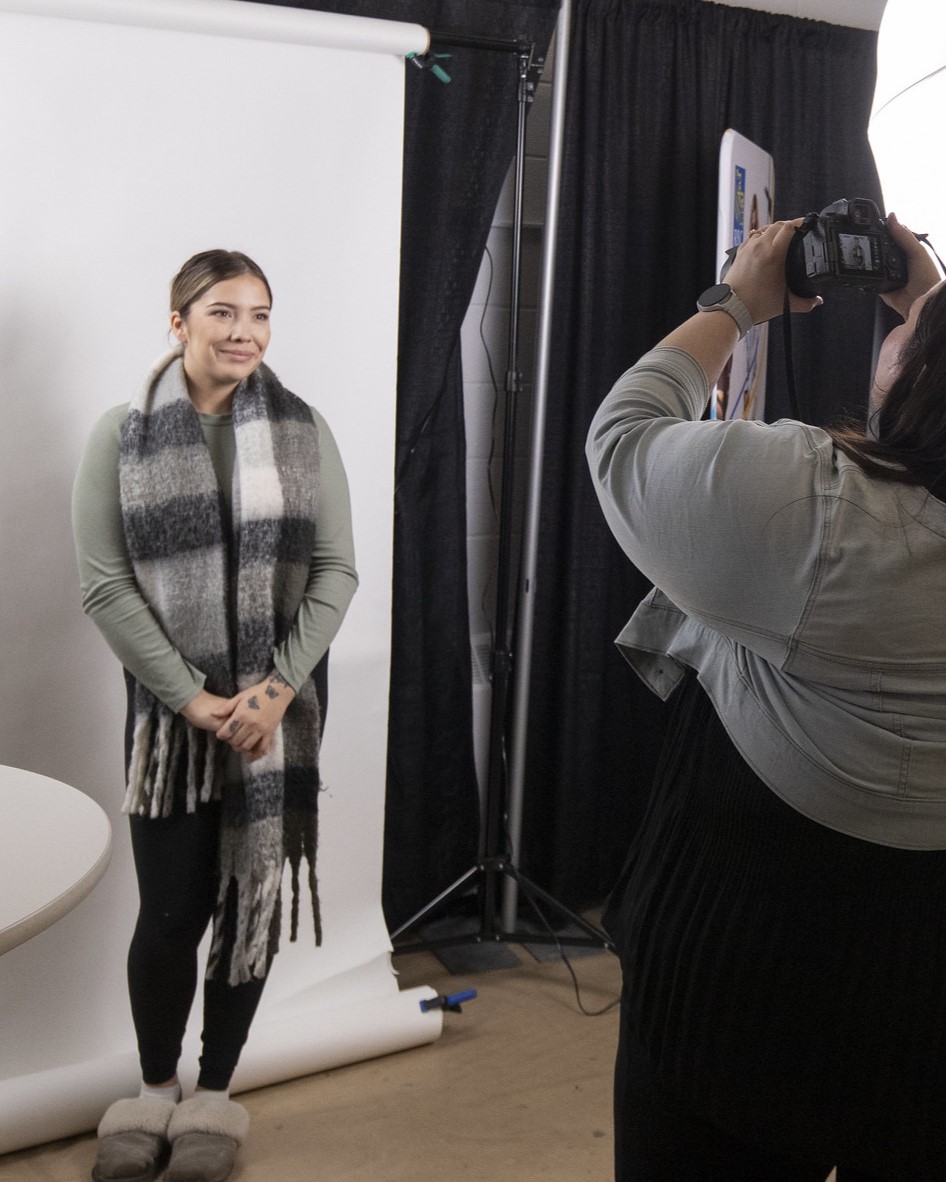
RBC Headshot Lounge.

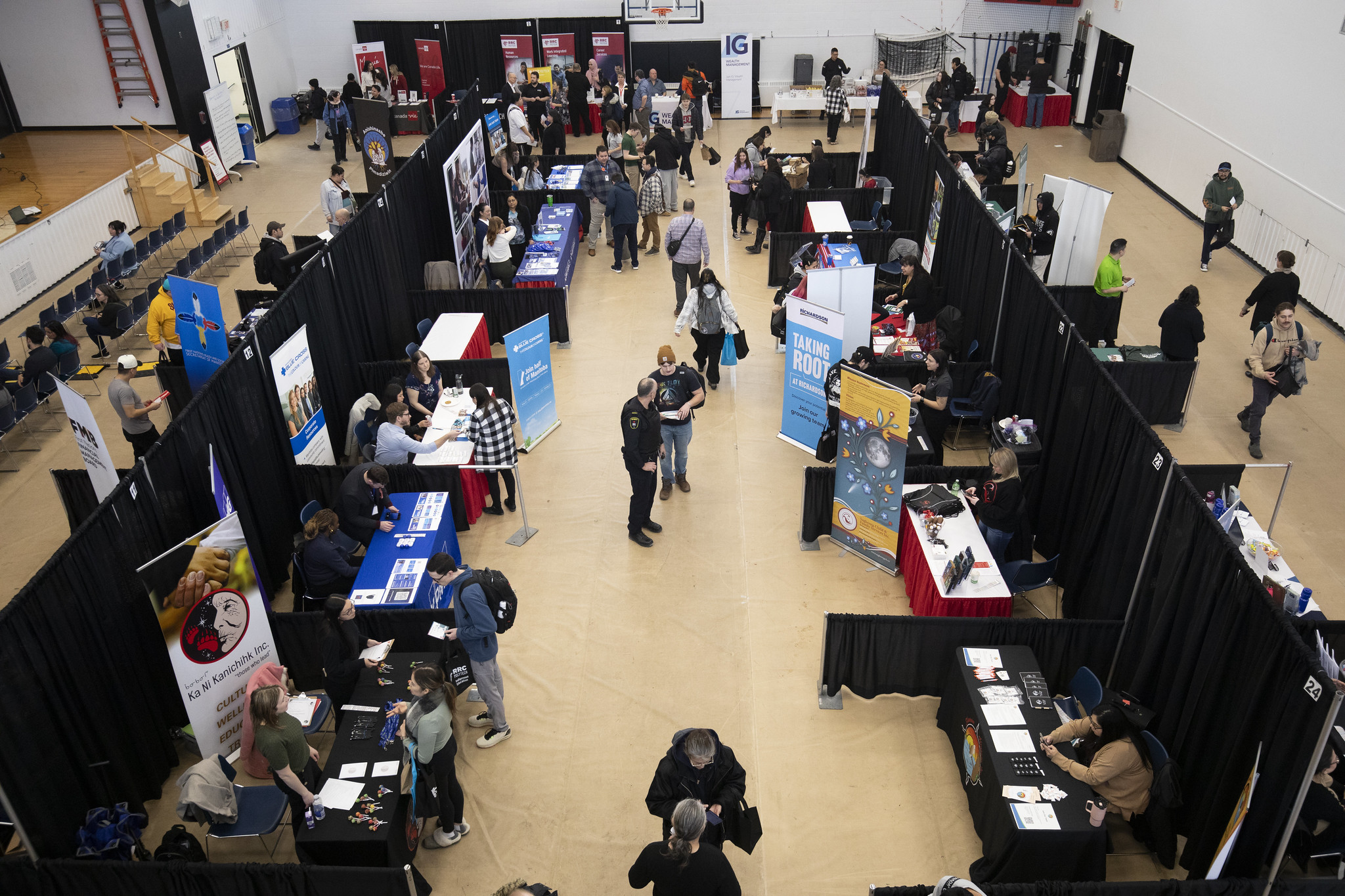
Every year, Indigenous students from all over the Red River College Polytechnic (the College) walk together through a variety of career options at the Indigenous Career Fair. More than thirty employers attended the Indigenous Career Fair on January 28, offering job openings and career opportunities for students to explore while gaining insight into the current job market and economic landscape. The RBC Headshot Lounge was available in addition to RBC’s event sponsorship, where students could capture professional headshots for their LinkedIn profiles and for other professional uses.

Justin Habinski, an Introduction to Trades and Plumbing graduate, had finished his program the week before but made time to check out the employers that were offering positions.

“I was probably one of the few that showed up after the end of the program,” said Habinski. “I’m glad I went, though – there were a couple of jobs that stuck out and gave me some ideas for my career.”

Providing opportunities for Indigenous students is a vital part of RRC Polytech’s commitment to reconciliation. True reconciliation means walking alongside students, ensuring they have equal access to opportunities while embracing and celebrating Indigenous values, cultures, and traditions.

Guy Gagnon, a second-year Disability and Community Support student, attended the career fair to explore different paths. While he has experience working at a ground level in community support, he aspires to create change at a higher level.

“The career fair was kind of overwhelming at first because there are so many paths to consider, but it was also eye-opening. There were a lot of roles that I’d been in before, and helped me reflect on where I want to make an impact. I think the career fair is a great way for students to either re-evaluate their paths or reaffirm what they want to do with their careers,” said Gagnon.

The event featured an interactive passport students could use as an icebreaker with employers – for every five employers they spoke to, they were entered into a draw. Students had the chance to score some amazing prizes, including a $500 Ticketmaster gift card generously provided by RBC.

“The icebreaker was a really fun incentive – it helped me speak to more employers than I thought I would,” said Keegan Thomas, Indigenous Culinary Skills student and grand prize winner. “I wasn’t expecting to win, but I’m looking forward to using the card for a show, maybe out of province.”

The Indigenous Career Fair, South Gym, Notre Dame Campus – Jan. 28.

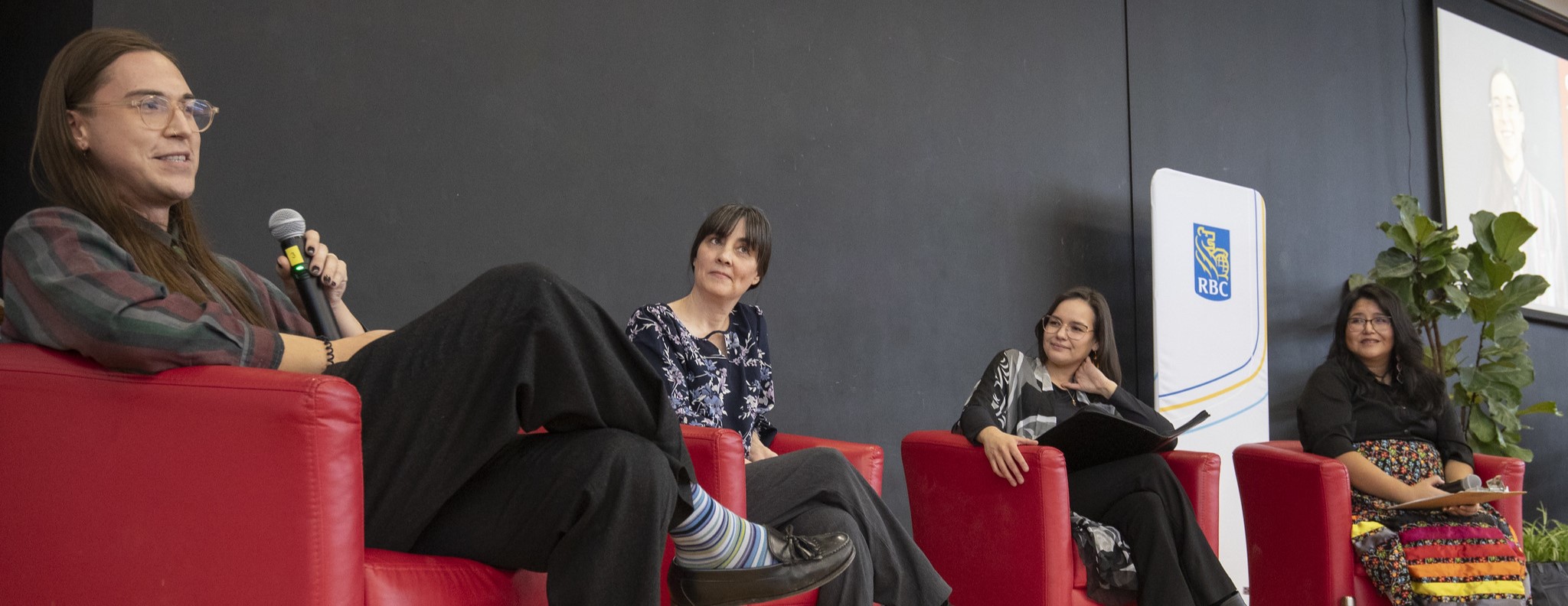
Students had an additional chance to win when they listened to the panel that was held at noon. The panel was led by Kelly Krakalovich, Mentorship Coordinator with the School of Indigenous Education. The panel was featured Darcie Bonwick, an Indigenous Entrepreneur, Mittohnee Pogo’otah; Katelyn Lawson, Relationship Manager, Commercial Banking, RBC; and Craig Fisher, Program Facilitator, School of Indigenous Education, RRC Polytech.

“The panel was a great way to bring together Indigenous professionals at different stages in their careers,” said Craig Fisher. “I was thrilled to be part of an event where students could envision themselves in these roles one day. As an advocate for Indigenous representation in underrepresented industries, I believe it’s essential for students to see and have the opportunity to connect with Indigenous folks who came before them.”

The panel event highlighted the balance between traditional knowledge and contemporary career pathways that Indigenous professionals navigate every day. The discussion explored themes of identity, learning, community impact, and wisdom for future generations. The panelists provided meaningful insight on Indigenous economic development, cultural resilience, and success beyond financial metrics, while demonstrating the value of mentorship and networking opportunities.

“I want to show Indigenous students just how valuable their presence is in industry. Working with First Nations communities as a First Nations woman myself has helped me to make deep connections with the people that I provide services to,” said Katelyn Lawson. “That sense of familiarity – with culture, with the challenges communities face, with the goals they’re working towards – is a powerful bridge, not only for your own career, but for making change in our communities.”

The Indigenous Career Fair reflects RRC Polytech’s commitment to empowering Indigenous students. With RBC’s support, this event leverages our role as an educational institution to foster meaningful, lasting connections between Indigenous students and organizations — creating opportunities that benefit not only the students but also their families, communities, and the broader industry.

2024 Mínwastánikéwin Award Recipients

October 29, 2024

The Mínwastánikéwin Award, named for the Cree word that means ‘to set it right’, was created in 2019 in partnership with RRC Polytech’s Campus Store during the first Truth and Reconciliation Week. Applicants were asked to write a one-page essay on what Truth and Reconciliation means to them as Residential and Day School Survivors and children of Survivors.

To this day, you might hear the words ‘Residential School legacy.’

‘Legacy’ is a Western concept, which means: ‘something transmitted by or received from an ancestor or predecessor or from the past.’

Countless Indigenous people have inherited the impacts that Residential Schools have had on parents, grandparents and great-grandparents – a legacy that none of them asked for.

Indigenous men, women, and Two Spirit people are uprooting the intergenerational cycles that were planted by the Residential School system.

Indigenous people are reclaiming their places in power.

Families are creating bright futures for their children.

Indigenous students are achieving their goals and finding ways to give back to their communities. They are creating new legacies for themselves, their children, and their communities.

The Mínwastánikéwin Truth and Reconciliation Award is named for the Ininimowin word that means “to set it right.”

As a post-secondary educational institution, RRC Polytech recognizes the role it plays in righting those wrongs. Every year, the Mínwastánikéwin Truth and Reconciliation Award is offered to Indigenous students who are willing to relate their experiences to Truth and Reconciliation and what it means to them.

Thanks to the generous support of the RRC Polytech community, funds for the Mínwastánikéwin Award are sourced from sales of original RRC Polytech Orange and Red shirts at the Campus Store.  Enough shirts were sold last year to support the award going to two students.

Peggy Guimond, a recent graduate of the Business Accounting and Management program, says she was motivated to apply for the award by the memory of her late grandfather, whom was a Residential School Survivor and witnessed the government’s apology issued in Ottawa in 2008.

“It still makes me emotional, thinking of my late grandfather being a Survivor. If he wasn’t one, I wouldn’t be here today,” said Guimond.

The impacts of colonial systems have affected her family for generations. From her grandfather’s experience in Residential School, to her mother attending day school, and her dad, a 60s Scoop Survivor, many people in her family did not get to grow up with their families in their own culture and teachings – something she is committed to changing.

Guimond says that she fostered several children and adopted her niece and nephew out of the Child and Family Services system – the same system which she had grown up in and aged out of. Though she calls herself a success story coming out of the system, she is familiar with the support young people need today and is determined to give back to her community by supporting them in an environment where they are loved and their culture is welcomed and celebrated.

She says being able to grow and get educated in her community was the greatest experience she had – one that was not afforded to her relatives, but one she wants to ensure younger generations would be able to experience once again.

Finding out she was a recipient of the Mínwastánikéwin Award pulled at her heartstrings, she said. Because of the award, she was able to complete her program with no financial barriers and she could focus on her family – something she is extremely grateful for.

These systems have shaped Guimond’s family for a long time, including her own experiences in the child welfare system, but she is breaking that cycle and finding ways to support the young people in her family so those impacts, and that legacy, don’t continue any further.

Camille Munro is a Nursing student from Winnipeg with status in Fox Lake Cree Nation and familial roots in Churchill, Manitoba. Her own family has been deeply impacted by the 60’s Scoop – of her thirteen aunties and uncles, twelve were taken and placed in foster care or adopted out to white families. Some of them had run away from those homes and they eventually found each other, which Munro credits to their resilience and determination.

Because of their will to find each other again, Munro grew up with her cousins – an opportunity she says she wouldn’t have had otherwise. Today, her own children are growing up alongside their cousins and relatives in a big, tight-knit family, which Munro says is something the whole family takes pride in.

As she got older, she began to truly understand the impacts that Residential and Day Schools had on her family and the way those impacts affected their experiences. When she started learning about her family and her culture later in her life, she came to know the extent of the impacts of the unresolved trauma in her family. She herself attended several different schools as a child, including a Christian private school and a Catholic private school, and later struggled with substance abuse as an adult.

She started her sobriety journey eight years ago when she began learning more about her culture, and she practiced the knowledge her mom gave her – she participated in Ceremony, learned teachings from Elders, and engaged in a lot of self-reflection on how to move her life forward in a good way.

Her biological mother passed away in January of this year when Munro had been recovering from her own major surgery in December – she was managing funeral expenses and the sacred fire for her mother all while juggling assignments and exams at school during her recovery period. Finances were tighter for her than they ever were. She says the award came to her at a time when she really needed support.

Munro is a single parent to four children and became a young mom at 18. She’s the sole provider for her children, so any financial support she earns goes to her family. She says funds like these are what keep the lights on in her home and food in the cupboard while she’s attending school full time.

Munro says her family has been invaluable to her journey. Her kids have been huge supports for her academic journey – her eldest daughter is her right hand and Munro says there’s no way she could have done it without her help. Her father passed away in June, and she says it’s been challenging to deal with the grief, but she pushes through it all with the support of her family.

Munro is chasing her dream of becoming a nurse and says she made a lot of connections during her time at the College. She gravitated towards her Indigenous peers who had shared a lot of common experiences, and her instructors were incredibly supportive of their academic journeys.

“We need to take up more space in these places – we have to fight, but it doesn’t mean we don’t belong there. I have my ancestors behind me. I want people to know that it’s never too late to chase your dreams. Use medicine, take care of yourself, go to Sweats. Learn about your family, your traditions – learn to be proud of your heritage and culture, take back your identity and learn your truth. You don’t have to wait,” said Munro.

Guimond and Munro, and many other Indigenous students, have faced barriers that so many others don’t even have to think about when they decide to go to school. That is why awards like this exist. It is an acknowledgement of those barriers and a response to “set it right.”

Getting an education on their terms and taking power back is how Guimond and Munro are ensuring that the future is better for themselves and their communities, their young people and their loved ones.

RRC Polytech recognizes its role as an education institution to advance Truth and Reconciliation and is honoured to support these two recipients and all Indigenous learners in their academic journeys.


To learn more about the Mínwastánikéwin Award, see the Awards, Bursaries and Scholarships catalogue.

Mino Bimaadiziwin – Living the Good Life at RRC Polytech

July 26, 2024

Mi – no Bi – MAH – di – zi – win: The Good Life

Over the course of three weeks in three-day blocks each week, staff and faculty at RRC Polytech had the opportunity to learn Anishinaabemowin and experience Anishinaabe ways of being with the guidance of gekinoo’amaaged, instructor, Corey Whitford of Sandy Bay First Nation and gichi-Anishinaabe, Elder, Paul Guimond of Sagkeeng First Nation.

Staff, now gikinoo’amawaaganag, or students, learned what it means to live authentically with the land, the seasons, and each other – what Anishinaabeg, the people, call Mino Bimaadiziwin, or the good life.

Whitford and Elder Guimond shared stories and memories, thoughts and feelings in a mix of Anishinaabemowin and English to expose students to the distinct cadences and inflections of either language. Much of Anishinaabe culture and history is rooted in the land, which Whitford heavily integrated into the course delivery – the pilot program was scheduled for early summer, so the Immersion Camp centred around the preparation for Sundance.

First week of camp included drumming and storytelling.

The first block comprised of storytelling and Teachings shared by Elder Guimond and Whitford to teach students about seasonal protocols associated with the six traditional Anishinaabe seasons and to associate Anishinaabemowin expressions with their meanings through experiential techniques, actions and gestures.

Whitford utilized the spaces at Notre Dame Campus to demonstrate that connection to space the language has – he guided students to the tiipii, or wigiyam, outside F Building and the Medicine Wheel Garden and the Sweat Lodge area, where Elder Guimond shared Teachings and histories about the traditional structures. Whitford outlined the next block deliveries in relation to the wigiyam and the Sweat Lodge, explaining how by the time the Immersion Camp came to a close, students will have helped prepare both a wigiyam and lodge for the Sundance in Sagkeeng First Nation in June.

“Corey taught us all the fundamentals of speaking, understanding the Anishinaabemowin alphabet and pronunciation, and the Teachings from Elder Paul about the wigiyam, the Buffalo Teachings, the Teachings about the Sweat Lodge, and Sundance Ceremony were incredible. The many sharing circles and discussions were community-building at its finest – we truly felt like family at the end of 9 days,” said Gerald Sereda, instructor.

Whitford coordinated several activities to relate the nature of Anishinaabe culture to participants – including the rope exercise, which he learned from an Inuk teacher. A thick rope is tied together at the ends to create a circle, which participants hold and lean back to create tension. A woman is lifted onto the rope, and walks around in a circle, touching the heads of the people holding the rope as she walks by. The exercise is meant to represent the strength that the community has, particularly men in the community, have and use and share to hold up the women in their lives.

Marie Rogge, instructor, says that the experience of walking the rope was spiritual and emotional.

“I was a bit speechless after stepping off the rope, but now wish I’d thanked the guys more and encouraged them to be strong for all the women in their lives – their grandmothers, mothers, wives or partners, daughters, friends, colleagues… Because we need each other to be all Creator meant us to be so partnerships, families, communities, colleges, businesses and nations can be strong and healthy,” said Rogge.

The second block comprised of harvesting the poles for the wigiyam.

The second block took place in Sagkeeng First Nation where students engaged in land-based learning and walked through raising a wigiyam. Students went out on the land to harvest cedar and birch before stripping the trunks of their branches, leaves and bark to prepare as poles, then returned to the Sundance grounds to set up the wigiyam under Whitford’s guidance.

Students returned to Sagkeeng First Nation for the third and final block, where they washed and prepared buffalo skulls for Sundance while learning the significance of the practice with two women from Sagkeeng.

“Participating in the washing of the buffalo skulls in preparation for Sundance felt incredibly special. Using cedar water to wash the skulls was a powerful and spiritual experience, one that almost defies words. I am on my own grieving journey, and being able to participate in this ceremony was impactful and healing for me,” said Haley Pratt, Navigation Coach.

The Immersion Camp closed with a Sweat Lodge Ceremony in the lodge that students helped build with Elder Guimond and Whitford.

Jonah Schroeder, a recent graduate of Whitford’s Introduction to Anishinaabemowin class this past spring, says that learning the language has been indispensable in creating new friends and the Immersion Camp was the perfect opportunity to practice the language with new learners.

“It feels good to be in a community of fellow language learners, with great diversity in our life journeys and in our individual knowledge of Anishinaabemowin. We all support each other and have a special place in the circle we share,” said Schroeder.

The third block comprised of building the wigiyam.

He shared that during one of his walks through downtown Winnipeg, he passed through Central Park, where he says is a lively hub of kids playing soccer and friends sharing stories in an assortment of languages. An Anishinaabe man and his wife seated at a picnic table said something to Schroeder in Anishinaabemowin, not expecting him to respond – instead, Schroeder gave him a friendly greeting: “Boozhoo, boozhoo! Aaniin ezhi-ayaayeg?” Hello, hello! How are you two?

The three struck up a conversation in a mix of English and Anishinaabemowin, discussing their families, their homes and communities; why the couple were in Winnipeg, and why Schroeder was learning the language.

Schroeder says they must have chatted for twenty minutes before the new friends parted ways.

“I have been trying to learn Anishinaabemowin for a few years on my own, but it is in community where the language really comes alive. We need to hear the sounds and feel the words. It opens doors…or perhaps better yet, it builds relationships – it creates family. At least, this has been my experience over and over again, and this story is but one example,” said Schroeder.

“Together, we all learned to motivate our activities using our relationality techniques –  we used our head to think; heart to feel;  and hands to do the task-at-hand; to present each activity in an Anishinaabe lens,” said Whitford.

Glossary

WordPronunciationTranslation
Anishinaabeah-nish-in-AH-bayperson
Anishinaabegah-nish-in-AH-bekpeople
Anishinaabemowinah-nish-in-AH-bay-mo-inthe language
Gekinoo’amaagedgeh-kin-OOH-(short pause)-ah-MAH-gedteacher, or instructor
Gichi-Anishinaabegih-chih-ah-nish-in-AH-bayold person, Elder
Gikinoo’amawaaganaggeh-kin-OOH-(short pause)-ah-MAH-WAH-gah-nawgstudent
Mino Bimaadiziwinmih-no bih-MAH-dih-zih-winthe Good Life
Wigiyamwih-gi-yahmtiipii
Aaniin ezhi-ayaayeg?ah-neen ezh-ih-(short pause)-ay-YAH-yeg?How are you? (plural/asking more than one person)

RRC Polytech campuses are located on the lands of the Anishinaabeg, Ininiwak, Anishininwak, Dakota Oyate, and Denésuline, and the National Homeland of the Red River Métis.

We recognize and honour Treaty 3 Territory Shoal Lake 40 First Nation, the source of Winnipeg’s clean drinking water. In addition, we acknowledge Treaty Territories which provide us with access to electricity we use in both our personal and professional lives.